On a street cluttered with flat, forgettable signs, 3D lettering gives your brand a real, physical presence that’s impossible to ignore. It’s the difference between a printed picture and a sculpture—one is an image, the other is an experience. The moment you add depth, shadow, and texture, a simple name transforms into a high-impact statement.
Why 3D Lettering Signs Cut Through the Noise
A flat sign can easily disappear into the visual chaos of a busy street or a long hallway. But a 3D sign breaks that pattern. By physically extending from the wall, it catches the light in interesting ways, creating natural shadows and highlights that shift throughout the day. This dynamic quality instinctively draws the eye, giving your brand a few extra, critical seconds to make its mark.
This isn’t just about aesthetics; it's a smart business move. Dimensional signage quietly communicates permanence, quality, and a serious attention to detail. It sends a powerful message that your business is established and invested in its image, building customer trust before they even step inside.
The Instant Impact of Depth
Think about the storefronts you actually remember. Chances are, they weren’t flat. They used dimensional elements to create a more engaging, professional look that sticks with you.
- Boosted Visibility: The physical depth keeps your name readable from multiple angles and distances, unlike a flat sign that can vanish when viewed from the side. For example, a restaurant on a corner property benefits immensely, as pedestrians approaching from either direction can see and read the sign clearly.
- A Polished Perception: A well-made 3D sign instantly upgrades your brand's image, signaling success and a commitment to quality.
- Unforgettable Branding: Its tactile, sculptural nature makes your logo and name far more memorable, helping you stay top-of-mind with potential customers.
The signage industry is seeing a huge demand for this kind of custom branding. The global market for signs was valued at around $26 billion in 2023 and is expected to hit $36 billion by 2030. A huge driver of that growth is businesses like yours looking for custom solutions to get noticed. You can check out more signage industry trends to see just how important custom work has become.
Actionable Insight: 3D lettering doesn't just display your name—it presents it. That small shift in dimension creates a massive shift in perception, turning your sign into a hardworking marketing tool.
Exploring Different Types of 3D Lettering
Picking the right 3D lettering signs is about more than just a font and a color. It’s about matching the sign’s construction to your goals, your brand, and your building. The world of dimensional signage has a few key players, and understanding what makes each one tick is the first step to creating a sign that doesn’t just look good—it gets results.
Not sure if 3D is even the right move? This quick flowchart can help clear things up.
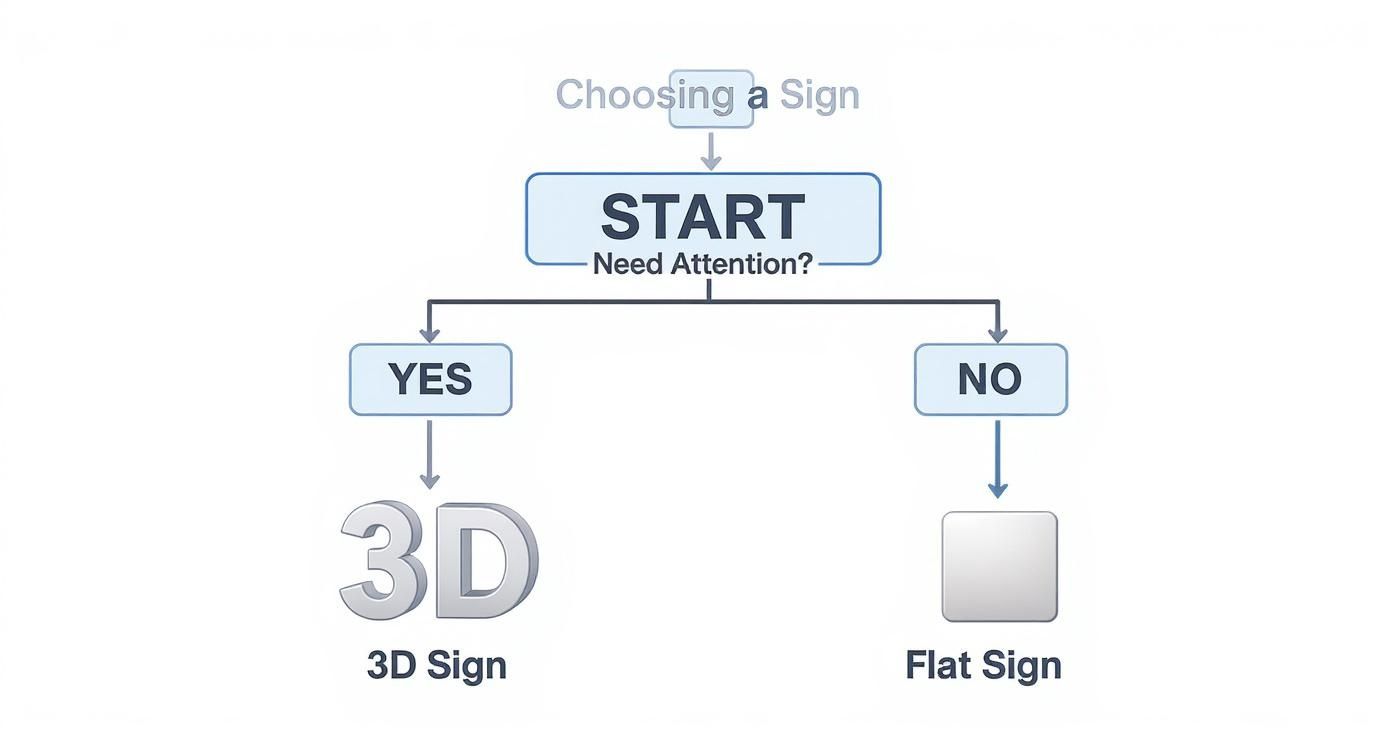
The bottom line is simple: if you need to grab attention and physically stand out from the visual noise around you, dimensional signage is the best tool for the job.
To help you navigate the options, we put together a quick comparison of the most popular 3D sign types. This table breaks down what each sign is best for, what you can expect in terms of cost, and how you can light it up.
Comparing Common 3D Lettering Sign Types
| Sign Type | Best For | Typical Cost | Illumination Options |
|---|---|---|---|
| Channel Letters | Storefronts needing 24/7 visibility; high-impact branding on busy streets. | $$ – $$$ | Internal (front-lit, halo-lit, or both). |
| Routed Letters | Professional lobbies, office suites, and exterior signs where a refined, solid look is key. | $$ – $$$ | External spotlights or backlighting for a halo effect. Not internally lit. |
| Dimensional Foam | Budget-friendly interior signs; trade show displays; lightweight applications. | $ – $$ | None. Often laminated with metal/acrylic to mimic other materials. |
Each of these options serves a different purpose. Channel letters are your go-to for making a statement after dark, while routed letters offer a touch of class up close. Dimensional foam provides a fantastic, budget-friendly way to bring your brand to life indoors. Let's break them down a bit further.
Channel Letters: The Illuminated Workhorse
Ever see a storefront logo glowing brightly against the night sky? You’re almost certainly looking at channel letters. Think of each letter as its own little metal box, usually made of aluminum, with a translucent acrylic face. This hollow construction is what allows us to pack them with energy-efficient LEDs, making them the undisputed champion for businesses that need to be seen around the clock.
Because every letter is a separate, self-contained piece, channel letters have a clean, substantial look that screams quality and permanence. They are the first choice for retail shops, restaurants, and any business on a main drag where catching eyes after sunset is non-negotiable.
- Practical Example: A modern urgent care clinic uses crisp, front-lit channel letters. The bright, clear illumination not only makes them easy to find but also communicates professionalism and reliability to anyone looking for help, day or night.
Routed Letters: The Solid and Sleek Option
Unlike their hollow cousins, routed letters (often just called dimensional letters) are solid. They’re precision-cut from a single, solid sheet of material, giving them sharp, clean edges and a premium, architectural feel. This makes them a perfect fit for places where sophistication matters more than nighttime glow.
The real beauty of routed letters is the sheer variety of materials you can use, opening up a ton of design possibilities.
- Popular Materials:
- Aluminum: Durable, modern, and perfect for both indoor and outdoor use when you want an industrial or tech-forward vibe.
- Acrylic: Gives you a glossy, polished finish in just about any color you can imagine, making it easy to match your brand palette perfectly.
- Stainless Steel: The high-end choice. It delivers an elegant, powerful look that’s ideal for corporate headquarters, law firms, and luxury retail.
Since they’re solid, you can't light them from the inside. But that doesn't mean they have to stay in the dark. We can hit them with external spotlights or mount them with standoffs to create a dramatic "halo" glow with backlighting. You’ll see them everywhere from lobby reception areas to upscale building exteriors. To see how they stack up against other options, check out our guide on the different types of commercial signs.
Actionable Insight: Routed letters communicate substance and precision. The solid form and crisp edges add a sense of authority and craftsmanship to your brand, making a powerful impression on anyone who sees them up close.
Dimensional Foam: A Lightweight and Versatile Choice
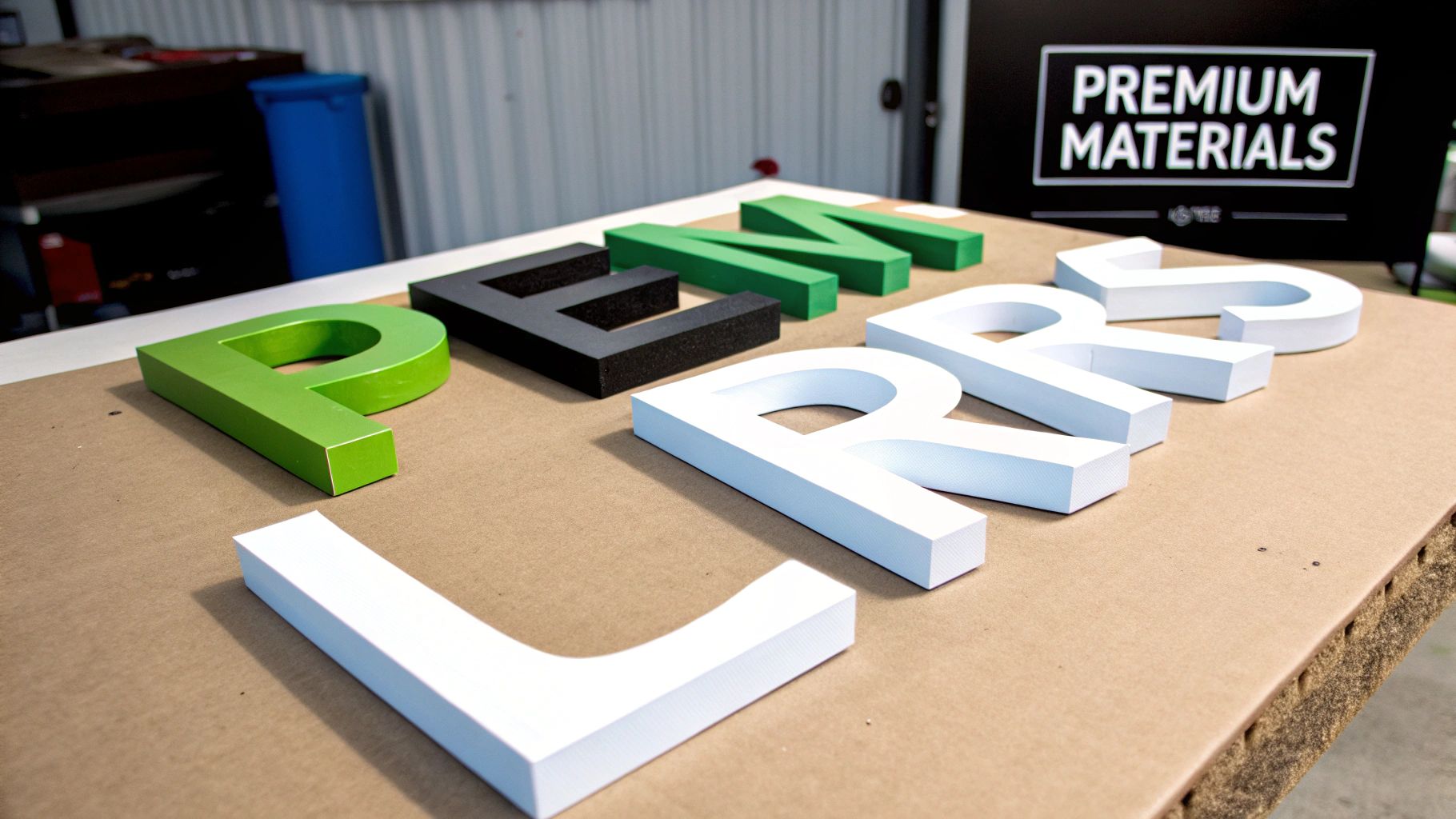
When you need big impact indoors without a big budget or heavy-duty installation, dimensional foam is a game-changer. These letters are crafted from high-density urethane (HDU), an incredibly lightweight material that’s still tough enough for any indoor setting. We can paint them any color or even add a thin metal or acrylic face to make them look just like their more expensive counterparts.
This flexibility makes foam perfect for displaying a company logo in a lobby, spelling out your mission statement on a conference room wall, or creating a portable, eye-catching display for a trade show. While they aren't meant for permanent outdoor use against the elements, their value and ease of installation make them a go-to for interior branding.
- Practical Example: A creative agency spells out its core values in huge, colorful foam letters across its main collaboration space. It adds a pop of modern energy to the office without needing to reinforce the wall for a heavy installation.
Illumination Options to Make Your Sign Shine
A great 3D lettering sign works hard for you during the day, but adding light turns it into a relentless, 24/7 brand ambassador. Illumination is about more than just being seen after sundown. It completely changes the mood of your storefront, dials up your brand's personality, and makes sure you’re capturing attention long after your competitors have gone dark.
Getting the lighting right is just as critical as choosing the sign’s font or color.
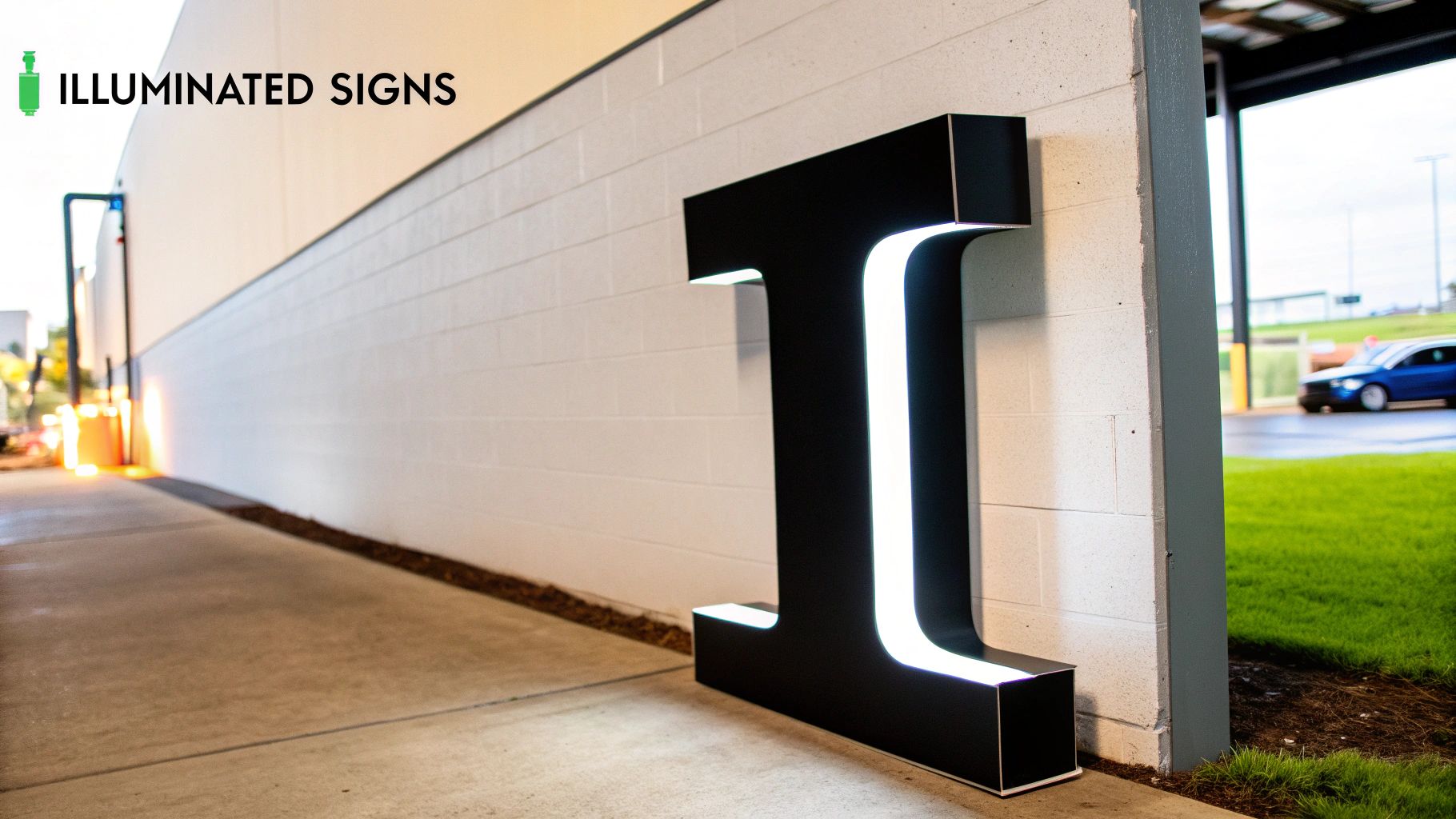
This is a huge reason why illuminated 3D signs have become the go-to choice for smart businesses. The depth and sophistication of dimensional letters are already powerful, but pairing them with modern LEDs has become the standard for anyone serious about visibility.
Front-Lit: The Classic and Bold Choice
When you picture a glowing sign on a storefront, chances are you're thinking of a front-lit channel letter. It's the most common and straightforward way to light up your name.
Inside each hollow letter, we place energy-efficient LEDs that shine forward through a translucent acrylic face. The result? Bright, crisp, and incredibly easy-to-read signage that’s impossible to ignore from a distance. It's the workhorse option for retail shops, restaurants, and any business on a busy street that needs to declare its presence with confidence.
- Practical Example: Think of a 24-hour pharmacy. They almost always use bright, white front-lit letters. That clean, intense glow ensures maximum readability from the road and sends a message of safety and reliability, no matter the time of night.
Back-Lit or Halo-Lit: The Sophisticated Glow
If you're aiming for something more subtle and upscale, back-lit signs are a fantastic choice. You'll also hear them called halo-lit signs.
With this style, the letters have solid, opaque faces. The magic happens when the internal LEDs point backward, casting light onto the wall the sign is mounted on. This technique creates a soft, elegant halo of light around each letter, giving it a high-end, architectural feel. It’s perfect for corporate headquarters, chic boutiques, and fine dining spots that want to convey quality without shouting.
Actionable Insight: By lighting up the surface behind the letters, a halo-lit sign creates a stunning visual separation from the building. This adds another layer of depth and makes your sign look like it's floating—an undeniably premium and memorable effect.
Face and Back-Lit: The Ultimate Impact
Why choose when you can have both? For businesses that want to make the strongest possible statement, a face and back-lit combo delivers unmatched visual punch.
This premium approach combines both lighting methods into one sign. The front of each letter shines brightly for clear readability, while the halo effect adds that beautiful, dimensional outline. It's a rich, layered look that stands out dramatically. While the construction is more complex, the result is an unforgettable brand statement that is simultaneously bold and refined.
For businesses exploring other ways to grab attention with light, you might also find our guide on outdoor lighted box signs helpful.
Choosing the Right Materials and Finishes
The material you choose for your 3D lettering signs does more than just spell out your name—it tells a story about your brand. Think about it: a heavy, brushed metal sign gives off a feeling of authority and permanence, while glossy, colorful acrylic feels energetic and modern. This decision is where aesthetics, budget, and durability all meet.
Picking the right material sets the foundation, but the finish is what pulls it all together. It's the final touch that ensures your sign isn't just a sign, but a true reflection of your business.
Aluminum: The All-Around Performer
When you need a sign that can handle the outdoors, aluminum is the undisputed champion. It’s tough as nails but surprisingly light, which makes installation easier and more affordable compared to heavyweights like steel. Best of all, it naturally resists rust and corrosion, so it won’t buckle under pressure from sun, rain, or snow.
Aluminum is also a total chameleon. We can paint it any color under the sun to perfectly match your brand or give it a finish that mimics more expensive metals. This flexibility makes it a reliable workhorse for just about anything, from bold storefront channel letters to sleek routed letters on a monument sign.
Acrylic: The Versatile Color Champion
If you're after vibrant, eye-popping color and a clean, modern look, acrylic is your go-to. This durable plastic is famous for its rich, consistent color and smooth, glossy finish. It's a fantastic choice for indoor lobby signs and retail displays where you need a splash of personality to make a big impression.
But acrylic really shines—literally—in illuminated signs. Its ability to diffuse light is second to none, making it the standard for the faces of front-lit channel letters. The result is bright, even, and attention-grabbing light that keeps your sign working long after the sun goes down.
Stainless Steel: For Modern Sophistication
For that premium, high-end feel that communicates strength and class, nothing beats stainless steel. It has a satisfying heft to it, and its refined finish options—like a soft brushed texture or a mirror-like polish—make it the top choice for corporate offices, law firms, and luxury brands that need their signage to radiate prestige.
While it comes with a higher price tag, its durability is unmatched. Stainless steel shrugs off the elements and maintains its sophisticated look for years with very little upkeep, making it a powerful long-term investment in your brand’s image.
High-Density Urethane Foam: The Lightweight Alternative
Need a massive sign for an indoor wall or a trade show where weight is a major concern? High-Density Urethane (HDU) foam is a brilliant solution. This material is incredibly lightweight and can be carved into thick, dimensional letters that would be way too heavy and costly if made from solid metal.
To get that high-end look, we often laminate the HDU with a thin face of aluminum or acrylic. This clever trick gives you the visual punch of a solid metal or plastic letter but at a fraction of the weight and cost. If you want to explore these options further, our guide on choosing the right sign board material goes into even more detail.
Actionable Insight: Don't forget that the finish you choose is just as important as the material itself. A brushed finish gives aluminum a soft, satin look, while a polished finish on stainless steel creates a brilliant shine. Custom paint allows for perfect brand color matching on almost any surface.
Ultimately, these finishes are what elevate your sign from a simple marker to a piece of architectural art. For outdoor signs, special protective coatings are key to shielding the finish from the elements. For maximum longevity, understanding ceramic coatings and other advanced protective layers can help preserve your sign's appearance for years to come.
Navigating Installation and Permitting
A brilliant 3d lettering sign is only half the battle. Its real power comes from a flawless installation and getting the green light from your local authorities. It’s easy to get caught up in the design, but these final steps are what keep you from facing costly delays, fines, or even having to take the sign down.
Getting this right—from how the letters attach to the wall to the specific codes you have to follow—is what turns a great idea into a lasting investment.
Understanding Common Mounting Methods
How your sign gets attached to the building is a big deal. It affects the final look, the complexity of the job, and even the cost. There are two main ways we approach this, and the right choice depends on your building's surface and the style you're going for.
It really comes down to balancing a super clean look with what’s practical for your specific wall.
-
Raceway Mounting: This is the go-to workhorse, especially for illuminated signs. Think of a raceway as a slim metal box that holds all the letters, wiring, and power components in one neat package. We mount the letters to this box in our shop, then mount the entire unit to your wall. This means fewer holes in your building and a much simpler electrical hookup, making it perfect for tricky surfaces like brick, stone, or corrugated metal.
-
Direct Mounting: If you want that high-end, architectural look, this is it. Also called flush mounting, each letter is attached individually to the wall. All the wiring is tucked away and fed through small, precise holes drilled directly behind each character. The result is a clean, professional finish where the letters look like they’re floating right on the building.
Actionable Insight: Direct mounting delivers that premium, seamless appearance, but a raceway is often the smarter, more efficient choice for challenging walls. A good sign partner will walk you through the pros and cons for your building, not just push one method over the other.
The Critical Role of Sign Permitting
Before a single screw goes into the wall, we have to talk about permits. Just about every city, town, and county has its own rulebook for signs, dictating what you can and can’t do. Trying to skip this step is a recipe for disaster—you could be forced to remove your brand-new sign and get hit with some hefty fines.
These regulations aren't there just to create paperwork. They exist to ensure public safety and keep the neighborhood looking good. Most codes will have rules about:
- Sign Size: How big your sign can be, usually tied to how much street frontage you have.
- Placement: How far the sign needs to be from the sidewalk or property lines.
- Illumination: Limits on brightness, or rules against flashing or certain colors.
- Height: The maximum height your sign can be installed off the ground.
Trying to figure all this out on your own can feel like a full-time job. That’s why working with an experienced sign company is so valuable. A professional team handles the entire permit headache for you, from creating the technical drawings to submitting the application and dealing with the city planners. To get a better handle on what's involved, check out our guide on understanding sign permit requirements.
Partnering with the Right Sign Company
Picking out the perfect materials and design for your 3D lettering signs is a huge step, but that vision only becomes real with the right sign company. Truthfully, choosing your partner is just as critical as choosing the sign itself. A great partner isn't just a vendor; they're your guide, helping you navigate tricky design choices, manufacturing details, and local codes to make sure everything goes smoothly.
Making the right choice from the start avoids expensive headaches down the road and ensures your investment looks great for years to come. You want a team that gets your business goals and has the hands-on expertise to deliver a sign that's durable, effective, and a true reflection of your brand.
What to Look for in a Sign Partner
Not all sign companies are built the same, especially when you get into the complexities of dimensional lettering. You need a team with a specific skill set and a solid history of success. When you're looking at potential companies, focus on a few key things that really separate the experts from everyone else.
A team with deep experience can see problems coming a mile away and fix them before they ever happen.
- A Strong Portfolio of 3D Projects: Don't just take their word for it—ask to see their work. Look for examples of 3D lettering projects that are similar to what you have in mind, paying close attention to the craftsmanship and final quality.
- In-House Capabilities: A company that handles everything—design, fabrication, and installation—under one roof offers far better quality control and much clearer communication. You get a single point of contact, which makes the whole process simpler.
- Proven Permitting Expertise: As we've covered, dealing with local sign codes is a big deal. A reputable partner will already know the local rules inside and out and will handle the entire permitting headache for you.
It's also helpful to know a bit about the tools they use. For example, skilled shops use specialized 3D modeling software to create exact digital mockups of your sign before they even touch a piece of metal or acrylic. This gives you a crystal-clear preview of the final product.
Key Questions to Ask Potential Vendors
Once you have a shortlist, it’s time to ask some direct questions. The right questions will tell you everything you need to know about their process, their standards, and how much they care about their clients. Think of it as an interview for a key business partner, because that's what it is.
Actionable Insight: A transparent and confident sign company will welcome your questions and provide clear, direct answers. If they seem vague or hesitant, it could be a red flag about their process or experience.
Here’s a practical checklist to guide that conversation:
- Can you walk me through your process, from design to installation? A professional team will have a clear, step-by-step workflow that includes design proofs, material samples, and a solid timeline.
- What materials do you recommend for my project, and why? Their answer here is a great test of their expertise. It shows if they know how to balance aesthetics, durability, and your budget.
- What kind of warranty do you offer on your signs? Look for a solid warranty that covers both the materials and the installation work for a reasonable amount of time.
- Are your installers licensed and insured? This is a non-negotiable. It protects your property and ensures the installation is done safely and professionally.
Finding a company that nails these points is the key to a great outcome. For more guidance, our article on finding the best channel letter sign companies near me offers some extra tips. By taking the time to properly vet your options, you can move forward with confidence, knowing your brand is in good hands.
Your Questions, Answered
Making an investment in a permanent piece of your brand's identity, like a 3D lettering sign, naturally brings up a few questions. We’ve answered the most common ones here to help you move forward with clarity and confidence.
How Much Do 3D Lettering Signs Typically Cost?
There's no one-size-fits-all price tag. The final cost really comes down to the specifics of your project—things like the overall size, the materials you land on, whether it lights up, and how complex the installation will be.
For example, a simple set of non-lit foam letters for an indoor reception area might just be a few hundred dollars. On the other end of the spectrum, a large, fully illuminated channel letter sign for a storefront could easily be several thousand. The only way to get a real number is to ask for a custom quote. A good sign partner can also walk you through different material or design options to hit your budget without sacrificing that "wow" factor.
How Long Do 3D Signs Last?
The durability of your sign is all about the materials and where it lives. A well-made exterior sign built from tough stuff like aluminum or stainless steel will easily stand up to the elements for 10 years or more. Interior signs, safe from wind and rain, can look great practically forever.
And if your sign is illuminated? The LEDs inside are workhorses. They’re typically rated for 50,000+ hours of continuous operation, which works out to years of reliable, bright performance before they'd ever need servicing. A little routine cleaning is all it takes to keep your sign looking brand new.
Can My Existing Logo Be Made into a 3D Sign?
Almost always, yes. Taking a 2D logo and giving it a three-dimensional life is what we do best. All a sign designer needs to get started is your logo in a vector file format (usually an .AI or .EPS file). This lets them scale it up or down without losing any sharpness and get it ready for fabrication.
Actionable Insight: Sometimes, logos with super-thin lines or extremely fine details need a little tweak to work in 3D. This is just to make sure the letters are strong enough to stand on their own and that any internal lighting fits properly. Any adjustments are always minor and done with great care to keep your brand's look and feel perfectly intact.
What Is the Turnaround Time for a Custom 3D Sign?
From start to finish, a custom 3D sign project usually takes anywhere from a few weeks to a couple of months. It’s a multi-step process that you can't rush if you want great results.
- Design & Approval: Nailing down the final look, materials, and getting your sign-off on mockups.
- Permitting: For exterior signs, this means submitting plans to the city and getting their official approval.
- Fabrication: This is the hands-on part where our team actually builds your sign.
- Installation: Scheduling our crew to come out and professionally install the finished product.
Things like custom paint matching or complex lighting can add to the timeline, but any professional sign company will give you a clear project schedule right from the start so you know exactly what to expect.
Ready to bring your brand to life with a stunning 3D sign? The team at On Display Signs, Inc. has the expertise to guide you through every step, from design and permitting to flawless installation. Explore our custom signage solutions today!