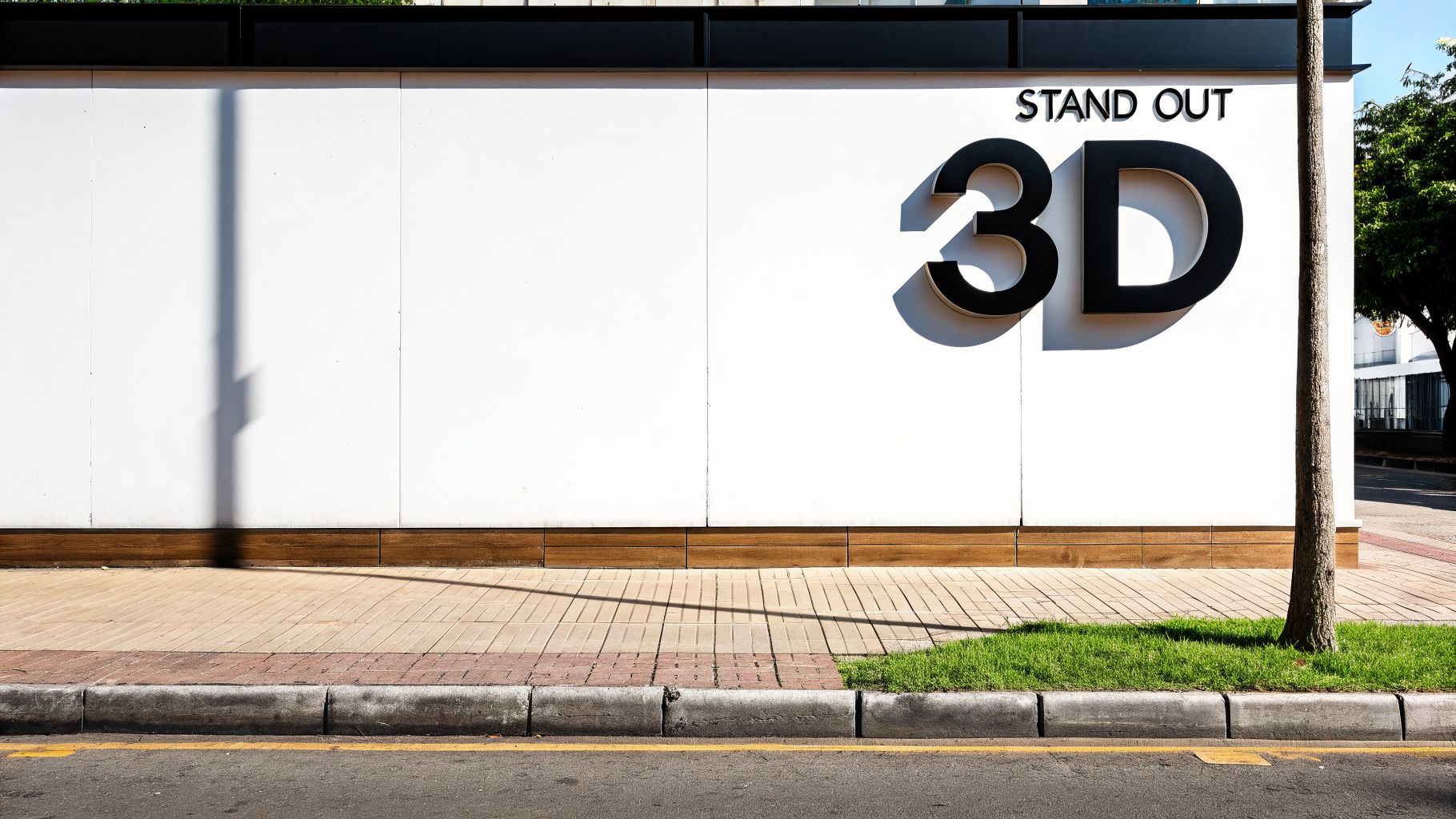
Imagine your business name doing more than just sitting flat on a wall—it projects forward, catching the light and casting shadows that demand a second look. That's the real-world power of 3D signs for businesses.
Think of it this way: a flat, printed sign is like a photograph, easily blending into the background. A 3D sign, on the other hand, is a sculpture. It has presence and makes your brand feel more substantial and permanent.
What Are 3D Signs and Why Does Your Business Need Them
Think of your sign as your business's very first handshake. A standard flat sign is a quick, forgettable gesture. In sharp contrast, 3D signs for businesses are that firm, confident handshake that says you mean business and leaves a real impression.
These signs are built from individual letters or logo shapes that have actual physical depth, pushing them out from the surface they’re mounted on. That depth does a lot more than just look impressive; it creates an immediate business advantage. The natural play of light and shadow across a three-dimensional form instinctively draws the human eye, making your name impossible to miss on a crowded street or in a busy lobby.
This isn't just a cosmetic choice—it's a strategic one. If you're exploring different signage options, you might find it helpful to check out our guide on the primary types of signage available.
From Visual Pop to Increased Profit
The bottom-line impact of dimensional signage is clear and measurable. The market shows an undeniable move toward more dynamic visuals—the global 3D display market hit USD 127.5 billion in 2023 and is on track to grow at a CAGR of over 15% through 2032.
More importantly, businesses report that 3D visuals can increase customer recall by up to 40% compared to flat signs. That boost in memory translates directly into more foot traffic and stronger brand recognition.
Consider these practical examples:
- For a Retail Boutique: A sleek, acrylic 3D sign on the storefront instantly signals a modern, high-end brand, attracting shoppers who appreciate quality.
- For a Corporate Office: A brushed metal 3D logo in the reception area establishes a powerful sense of stability and success, building confidence with clients from the moment they walk in.
- For a Restaurant: A bold, illuminated 3D sign cuts through the nighttime clutter, guiding hungry patrons to your door instead of a competitor’s.
A 3D sign acts as a silent, 24/7 salesperson for your brand. It communicates quality, grabs attention, and builds credibility before you ever interact with a customer.
Ultimately, investing in a 3D sign is about more than just putting your name on a building. It's about creating a physical landmark that embodies your brand's quality and ambition. It's an investment in being seen, being remembered, and being chosen over the competition.
Exploring the Most Popular Types of 3D Business Signage
Picking the right kind of 3D sign isn't just about looks—it's about matching the sign's function to your business's goals and the personality of your brand. The world of 3D signs for businesses isn't one-size-fits-all. There are a few key options, and knowing the difference is the first step to getting a sign that really works for you.
We'll walk through the main styles, from the clean, substantial look of dimensional letters to the can't-miss brightness of channel letters. Seeing how they're used in the real world will help you figure out what makes sense for your space, whether it's a quiet corporate lobby or a bustling storefront.
Dimensional Letters: Solid and Substantial
Think of dimensional letters as solid, sculpted characters. They’re custom-cut from a single, thick block of material—like metal, acrylic, or dense foam—and mounted directly onto a wall. Their magic comes from their clean, uniform depth, which creates a sophisticated look that says you're established and here to stay.
Because they're solid through and through, these letters don't have any internal lights. All their visual impact comes from how natural light and shadows play across their surface, giving them a powerful yet subtle presence. This makes them a fantastic choice for interior spaces where you already have good ambient lighting.
A practical example is a law firm's lobby with brushed aluminum letters behind the reception desk. The sign signals professionalism and permanence without needing to be flashy. On the other hand, a tech startup might use the same technique with bold, colorful acrylic letters to inject some energy and modern flair into their office.
Channel Letters: The Gold Standard for Visibility
Where dimensional letters are solid, channel letters are hollow. Think of each letter as a custom-built metal can with a face, sides (we call these "returns"), and a back. This creates an internal "channel" specifically designed to house lighting, usually modern, energy-efficient LEDs.
That internal glow is what makes channel letters the undisputed champion of nighttime visibility. If your business depends on attracting customers after dark—like a restaurant, movie theater, or retail hub—this is almost always the right choice. They make sure your brand shines bright and clear long after the sun goes down.
Actionable Insight: Channel letters are designed to be seen. Their internal structure allows for brilliant illumination, making them essential for any business that needs to capture attention around the clock, especially from a distance.
But "lit" doesn't mean just one thing. There are a few ways to light up channel letters, each creating a different vibe:
- Front-Lit: This is the classic approach. Light shines straight through a translucent acrylic face, making the letter itself glow. It delivers maximum brightness and readability.
- Back-Lit (or Halo-Lit): Instead of shining forward, light is cast out the back of the letters onto the wall. This creates an elegant, soft "halo" of light, often used for a more upscale and dramatic look.
- Combination-Lit: For the ultimate standout effect, this style combines both front and back lighting. You get a brightly lit letter face surrounded by a soft halo glow.
Custom 3D Logo Signs: Bringing Your Brand to Life
Sometimes your brand is more than just a name—it's a symbol. Custom 3D logo signs take that unique brand mark and turn it into a physical, dimensional object. We use the same fabrication methods as dimensional or channel letters, but everything is tailored to the exact shapes, curves, and colors of your logo.
For a coffee shop with a signature steaming cup logo, a 3D version becomes an instant visual landmark. For a gym with a dynamic, abstract symbol, a halo-lit 3D logo can communicate energy and motion at a glance. These signs transform your brand's visual identity into something tangible and memorable. This level of customization is key, and you can learn more by exploring the different types of outdoor signs for business that can be built around your brand.
To make the choice a little easier, here's a quick breakdown of how these popular options stack up against each other.
Comparing Popular 3D Sign Types
This table gives you a fast look at the most common 3D sign options, helping you match the right sign to your specific goals and environment.
| Sign Type | Best For | Illumination | Common Materials | Practical Use Case |
|---|---|---|---|---|
| Dimensional Letters | Sophisticated, permanent look; interiors | None (relies on ambient light) | Metal, Acrylic, Foam, PVC | Lobby signs, office reception, conference rooms |
| Front-Lit Channel Letters | Maximum visibility, day and night | Internal, shines through the face | Aluminum, Acrylic | Retail storefronts, restaurants, shopping centers |
| Back-Lit Channel Letters | Upscale, dramatic, and elegant feel | Internal, creates a "halo" effect | Aluminum, Acrylic | High-end boutiques, modern offices, spas |
| Custom 3D Logos | Reinforcing a unique brand identity | Can be non-lit or lit (any style) | Metal, Acrylic, Foam, PVC | Any business with a strong visual brand mark |
Each of these sign types serves a different purpose, but they all share one common goal: to turn your brand into a physical presence that people can’t ignore.
Choosing the Right Materials for Durability and Impact
The material you choose for your 3D sign is what gives it character. It’s the difference between a sign that just exists and one that makes a statement. This decision is about much more than just what looks good; it’s a strategic choice that balances your brand’s personality, the sign's lifespan, and your budget. It tells a story about quality and permanence.
More and more, businesses are realizing that a sign that lasts is a better investment. This push for durable, high-impact signage is fueling massive industry growth, with the global signage market climbing from USD 26 billion in 2023 to a projected USD 36 billion by 2030. It shows just how much businesses are prioritizing materials that look great on day one and keep reinforcing their brand for years to come.
Common Materials for 3D Signs
Let’s get into the most common materials we work with. Each one has its own unique strengths, and understanding them is the first step toward picking the right one for your specific project. For a closer look at durability and costs, exploring different metal cladding options can give you a deeper understanding of how these materials perform.
- Aluminum: This is the workhorse of the sign industry for a reason. It's lightweight but incredibly tough and weather-resistant. Critically, it doesn’t rust, making it a safe bet for outdoor signs almost anywhere. Practical insight: If your business is near the coast, specify marine-grade aluminum for crucial extra protection from salty air.
- Acrylic: If you’re going for a clean, modern look, acrylic is your answer. This versatile plastic comes in endless colors and finishes, from high-gloss to a soft, frosted look. It’s perfect for indoor signs and is the absolute standard for the faces of illuminated channel letters because of the beautiful way it glows.
- Stainless Steel: Nothing communicates a premium, high-end feel quite like stainless steel. It’s exceptionally strong and projects a sense of prestige and authority. While it is heavier and carries a higher price tag than aluminum, its sophisticated look is ideal for corporate offices, luxury retailers, and financial firms.
- High-Density Urethane (HDU): Think of HDU as a modern, super-powered replacement for wood. It’s a rigid foam that’s completely waterproof, so it will never rot, warp, or crack like wood can. It’s fantastic for carving intricate designs and is a cost-effective way to get that classic, dimensional look with a sandblasted or textured feel.
This simple flowchart can help point you in the right direction based on one key question: Do you need to be seen at night?
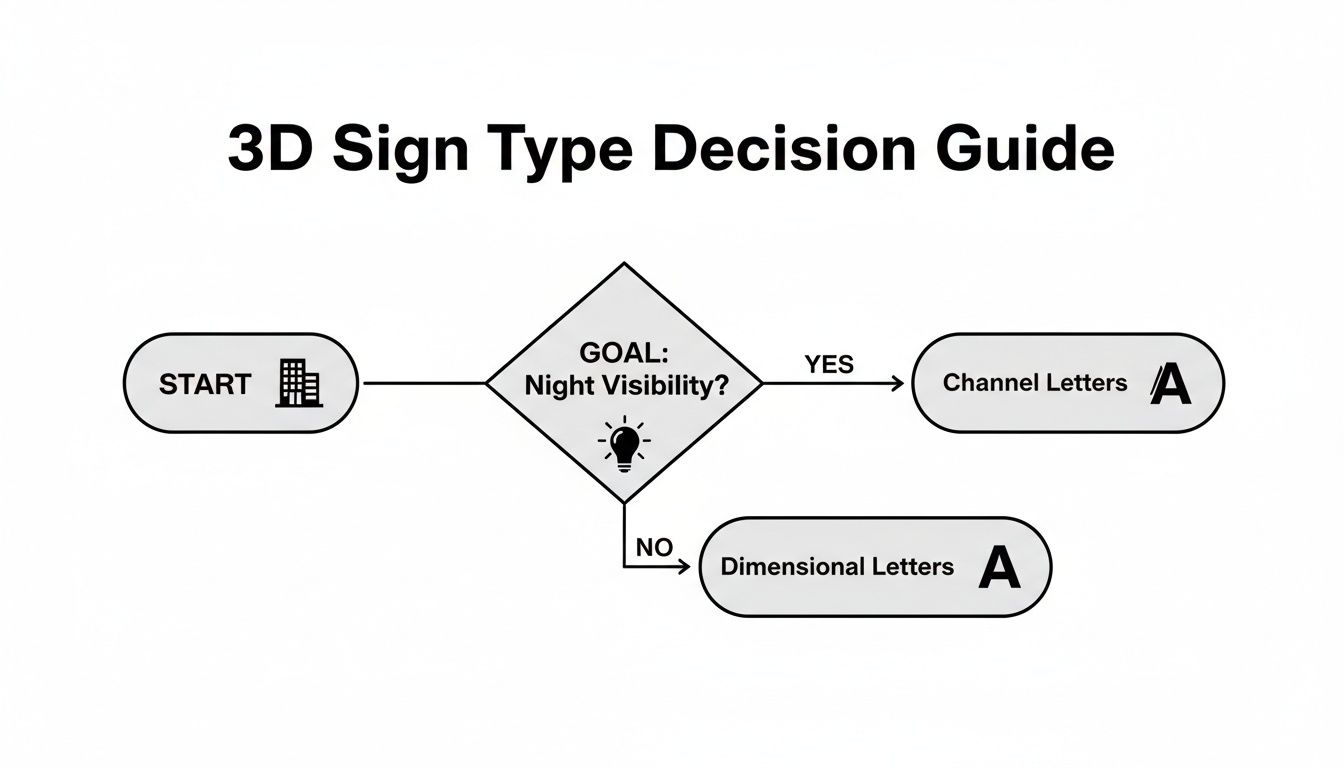
As you can see, if your business depends on nighttime visibility, illuminated channel letters are the way to go. Otherwise, dimensional letters provide incredible impact during the day.
Finishes That Define Your Brand
The finish is the final touch that truly brings your sign to life. It’s what elevates a piece of metal or plastic into something that truly expresses your brand’s personality.
Actionable Insight: Your sign's finish is a key part of its visual story. A brushed metal finish might suggest tradition and expertise, while a polished chrome finish can convey a modern, forward-thinking attitude.
Here are a few popular finishes we use all the time:
- Brushed Finish: This creates a sophisticated, textured appearance with fine lines. It’s often used on aluminum or stainless steel to soften glare and give the material a subtle, handcrafted feel.
- Polished Finish: A mirror-like, reflective surface that adds a touch of luxury and glamour. It’s a bold choice that is guaranteed to catch the eye.
- Powder Coating: This is an incredibly durable, paint-like finish. It's applied as a dry powder and then baked on, creating a tough shell that resists chipping and fading. Best of all, it comes in virtually any color imaginable for a perfect brand match.
Choosing the right material and finish isn’t just a detail—it’s essential for creating a sign that looks fantastic and works hard for your business for years. To go even deeper, check out our guide on the best material for outdoor signs.
Getting Sizing, Placement, and Permits Right
A beautiful 3D sign is a powerful investment, but its real-world impact comes down to logistics. An amazing sign in the wrong spot, or one that breaks local rules, is a wasted opportunity. Let's walk through the practical side of your project—the details that make sure your sign is seen, safe, and completely above board.
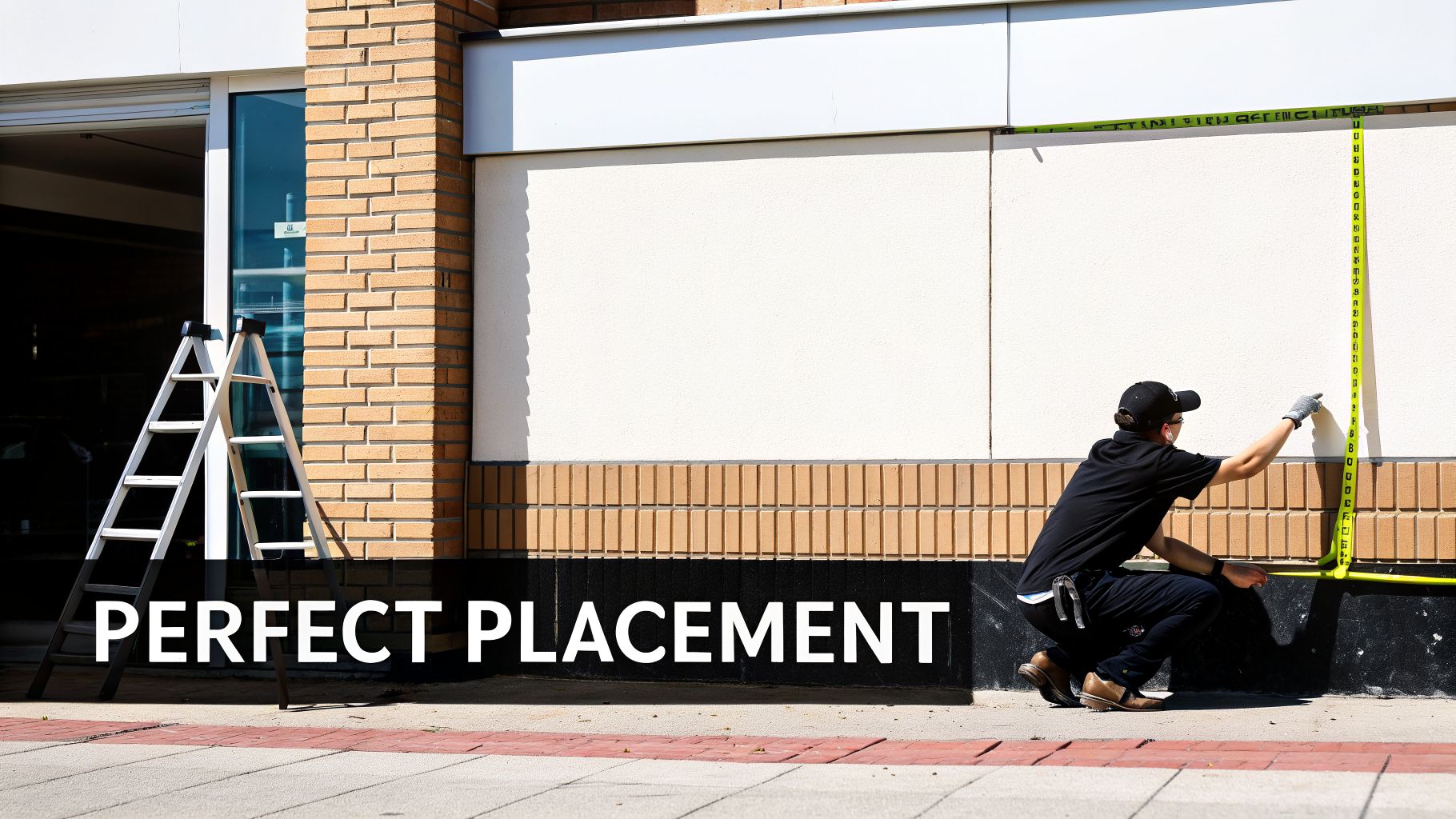
Getting these three things right—size, location, and legality—is what separates a sign that just hangs on a wall from one that actively grows your business.
How to Determine the Perfect Sign Size
Getting the size right is part art, part science. You want it big enough to be easily read from a distance, but not so large that it overpowers your storefront. A great rule of thumb we use in the field is the 10-foot-per-inch rule: for every 10 feet of viewing distance, your letters should have at least one inch of height.
For example, if you want to catch the eye of drivers 100 feet away, you'll need letters that are at least 10 inches tall. But for pedestrians walking just 30 feet from your door, 3-inch letters will do the trick.
Here's a practical checklist:
- Viewing Distance: Where is your audience? Get out a tape measure and check the distance from your storefront to the middle of the road or the main sidewalk.
- Travel Speed: People in cars need bigger, simpler text they can absorb in a split second. Pedestrians have more time to take in the details.
- Building Scale: Your sign should feel proportional to the wall it’s on. A giant sign on a small boutique looks out of place, just as a tiny sign on a huge warehouse gets completely lost.
Actionable Insight: Think of your sign as a natural extension of your building, not a loud afterthought. You’re aiming for a size that commands attention while complementing your property’s design.
Finding the Best Spot for Maximum Visibility
Where you hang your sign is just as critical as what it says. The right placement for your 3D signs for businesses guarantees you’re getting the most eyeballs on your brand every single day. The best spot is almost always where your customers are already looking.
High-impact placement zones usually include:
- Directly Above the Main Entrance: This is the classic spot for a reason. It instantly links your brand name with your front door.
- On a Facade Facing Traffic: If your building sits on a busy street or corner, use that prime real estate. Put your sign on the wall with the most exposure.
- On a Monument or Pylon Sign: For businesses set back from the road, a freestanding monument sign near the entrance is non-negotiable. It’s the beacon that guides customers in.
This is especially true in retail. In North America, the digital signage market share is 35%, and retail applications make up a leading 21% of that revenue. A whopping 62% of these indoor signs are used for branding and wayfinding, where clear visibility can cut customer confusion by up to 50%. You can dig deeper into these numbers by reviewing insights on the global signage market from Fortune Business Insights.
Navigating Permits and Red Tape
Let’s be honest: dealing with the legal side of signage can be a real headache. Nearly every town and city has its own rulebook for sign size, lighting, placement, and type. If you ignore them, you risk fines or even being forced to tear your brand-new sign down.
You’ll need to pay attention to a few key areas:
- Zoning Ordinances: These local laws spell out exactly what you can do—the maximum size, height, and number of signs your property is allowed. They vary wildly from one jurisdiction to the next.
- Building Codes: These are all about safety. They ensure the sign is installed securely, especially electrical codes for any illuminated signs.
- ADA Compliance: For interior signs that identify rooms or provide directions, the Americans with Disabilities Act (ADA) has strict rules on things like character height, braille, mounting location, and finish to ensure everyone can navigate the space.
Trying to figure all this out yourself is a frustrating, time-consuming process. This is where an experienced sign partner becomes invaluable. We handle the entire permitting process, from submitting the paperwork to ensuring the final installation ticks every box. For a deeper dive, you can read also our complete guide on sign permit requirements. It takes all the guesswork off your plate and ensures your project goes off without a hitch.
Budgeting for Your 3D Sign and Maximizing Your ROI
So, let's get to the bottom line: "How much is this going to cost?" While it's easy to get fixated on the price tag, a great 3D sign is never just an expense. It's an asset—a hardworking marketing tool that generates revenue for your business around the clock.
To really understand the investment, you have to look past the initial invoice. We’ll break down the choices that shape the final price and, more importantly, how to see the real financial return this investment brings.
Key Factors That Influence the Cost of Your 3D Sign
The final price of your 3D signs for businesses comes down to a handful of key decisions. Each one affects both the sign's visual punch and the budget, so knowing what they are helps you focus on what truly matters for your brand.
Here are the main cost drivers:
- Size: As you'd expect, bigger signs mean more materials and labor, which directly influences the cost. A massive sign on a warehouse is naturally a bigger investment than a small one for your lobby.
- Materials: Premium materials like stainless steel will cost more than standard aluminum or HDU. It's a balancing act between the look you want, the durability you need, and the budget you have.
- Complexity: A simple set of dimensional letters is going to be more affordable than a detailed, multi-colored 3D logo with intricate shapes. The more fabrication skill and time required, the higher the cost.
- Illumination: Adding light is one of the biggest factors. Internally lit channel letters—especially complex backlit or combination styles—need wiring, LEDs, and power supplies, making them a larger investment than their non-lit counterparts.
Actionable Insight: A common mistake is trying to save money by skimping on materials or lighting. This often leads to a sign that fades, fails, or just doesn't get noticed. It's almost always better to invest in a slightly smaller, high-quality sign than a huge one that’s cheaply made.
For a deeper dive into what goes into the price tag, you can learn more about the cost of signage for business in our complete guide. It’ll help you set a realistic budget for your project.
Shifting from Expense to Investment: The Power of ROI
The real value of a premium 3D sign is measured by its Return on Investment (ROI). This isn’t just a decoration; it’s a marketing engine that works for you 24/7. To see the true value of your investment, it's crucial to measure marketing ROI and track its impact on your bottom line.
Think about these practical examples:
- The Local Restaurant: A restaurant on a busy street puts up a bright, front-lit channel letter sign. Over the next six months, they track a 15% increase in dinner foot traffic by comparing sales data. That sign is directly putting people in seats and paying for itself.
- The Professional Services Firm: A law firm installs a sleek, brushed stainless steel logo in its reception area. Clients constantly mention the professional look, and the firm finds it easier to justify its premium rates. The sign quietly reinforces their authority and helps close higher-value deals.
- The Retail Boutique: A high-end shop uses a unique halo-lit sign that gives off a soft glow. The sign becomes an Instagrammable moment for shoppers, who post photos and tag the store. That's free advertising that drives brand awareness and brings in new customers.
In every case, the sign isn't a cost but a profit center. It pulls in customers, builds your brand's image, and directly adds to your revenue. By tracking metrics like foot traffic, customer feedback, or sales before and after installation, you can calculate the real financial impact of your sign and prove it was one of the smartest marketing moves you ever made.
Frequently Asked Questions About 3D Business Signs
It’s natural to have questions before making an investment in your brand's physical presence. Let's walk through some of the most common ones we hear from business owners, so you can move forward with a clear picture of the process.
How Long Does It Take to Make and Install a 3D Sign?
From start to finish, a custom 3D sign project usually takes between four to eight weeks. This isn't just fabrication time; it’s a complete process that includes design, approvals, sourcing materials, building the sign, and finally, professional installation.
If you’re planning an outdoor sign, the biggest variable is often the local permitting process. Navigating city approvals can add weeks to the timeline. A good sign partner handles all of this for you, but it’s a critical factor to build into your schedule. More complex signs with intricate lighting will naturally lean toward the longer end of that timeframe.
Can My Existing Logo Be Turned into a 3D Sign?
Absolutely. Taking a flat logo and giving it a three-dimensional form is what we do every day. It’s one of the most powerful ways to make your brand identity tangible.
Our designers work with your existing logo—ideally in a vector format like an .AI or .EPS file—to translate it into a physical object. We make sure it’s not only true to your brand but also structurally sound and designed to create the biggest possible impact.
What Kind of Maintenance Do 3D Signs Require?
The upkeep for your sign really depends on its construction and whether it’s illuminated. Think of it like a car—a little routine care goes a long way.
- Non-Illuminated Signs: Dimensional letters made from materials like aluminum, acrylic, or HDU are incredibly low-maintenance. A simple cleaning with mild soap and water every so often is all you need to keep them looking sharp.
- Illuminated Signs: For backlit or channel letters, we recommend an annual professional check-up. This ensures all the wiring, power supplies, and LEDs are running safely and at peak performance, keeping your sign shining bright.
Actionable Insight: A well-maintained sign is a reflection of a well-run business. Simple, routine care protects your investment and ensures your brand always looks its best.
Taking these small steps ensures your sign remains a vibrant, effective marketing tool for years to come.
Ready to make your brand stand out with a high-impact 3D sign? The team at On Display Signs, Inc. is here to manage your entire project, from initial design to final installation, ensuring a seamless and professional result.