When you want to project a modern, high-end image for your business, clear acrylic signage is the answer. It gives you the clean, sophisticated look of glass but with the toughness and flexibility of a modern polymer. It's the perfect canvas for your logo and brand message.
Why Businesses Choose Clear Acrylic Signage
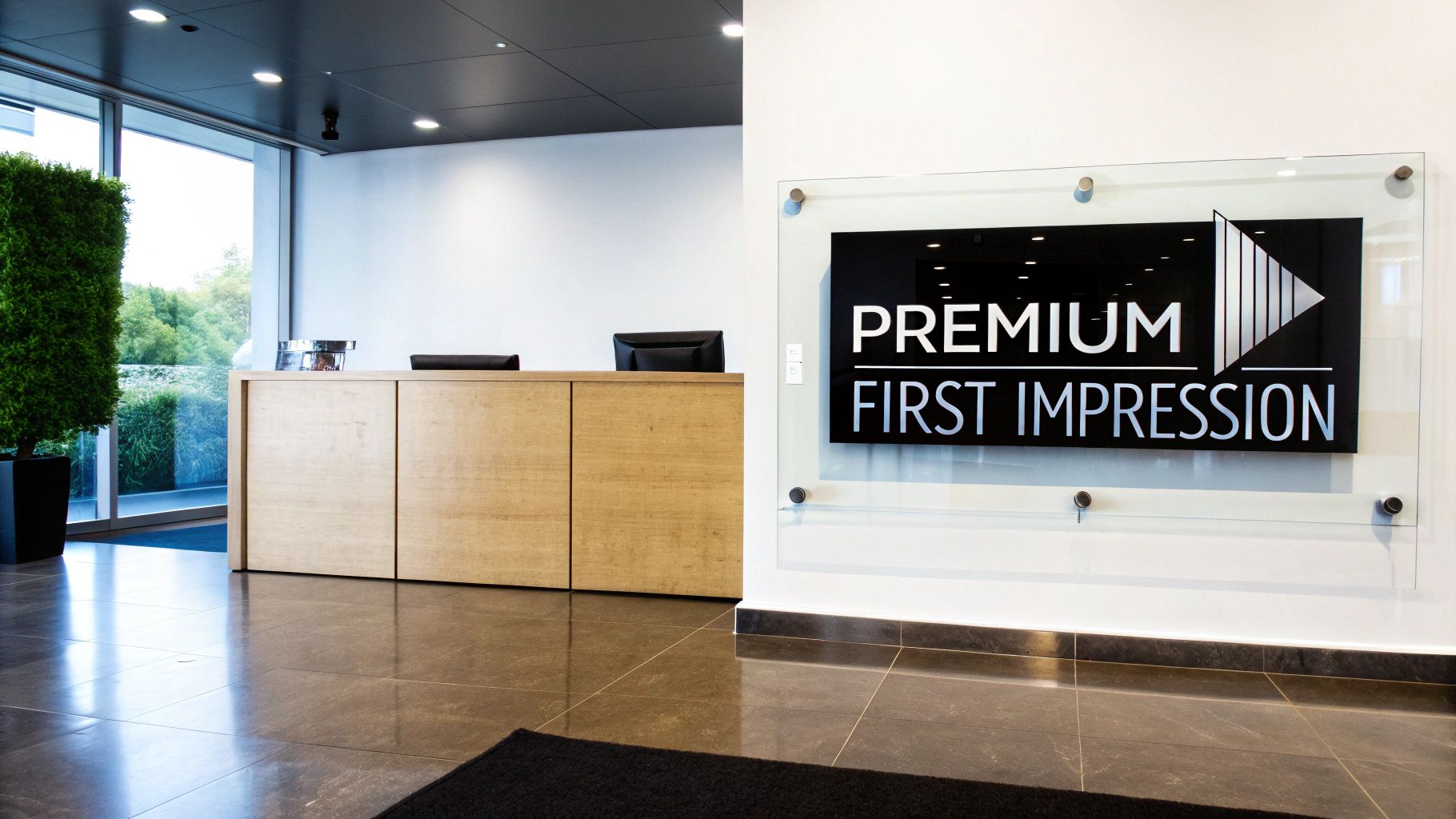
Picture walking into a corporate lobby where a stunning logo seems to float right off the wall, its polished edges catching the light. That’s the kind of immediate, unforgettable impact you get with clear acrylic. It stops being just a sign and becomes a core part of your interior design and brand story.
This powerful effect is exactly why so many businesses, from small retail shops to huge corporations, invest in acrylic. It nails that rare combination of good looks and real-world practicality that few other materials can touch.
Creating a Lasting First Impression
The biggest win with clear acrylic is its ability to communicate quality without saying a word. Cheap materials can make a business look dated, but acrylic delivers a crisp, contemporary feel that signals professionalism and a sharp eye for detail. From the moment a client walks in, that polished look starts building trust.
To really get how this works, it's worth exploring the concept of understanding brand activation, where physical things like signs are key to making a brand feel real.
A clear acrylic sign is your silent brand ambassador. Its crystal-clear finish and dimensional quality create a sense of permanence and success, reinforcing your brand's value on sight.
Think of it like choosing a premium, embossed business card over a flimsy, standard one. It’s a subtle but powerful signal of quality. For example, a law firm can use a thick, clear acrylic sign with polished edges and brass standoffs in their reception area to project an immediate sense of stability and success.
Versatility and Durability in One Package
Beyond its sharp looks, clear acrylic is incredibly practical. It’s way lighter and more shatter-resistant than glass, which means less risk of damage during shipping and installation. That built-in toughness makes it a smart and reliable choice for busy, high-traffic areas.
This flexibility also applies to how and where you can use it. Whether it's the main lobby sign, directional markers, or product displays, acrylic just works.
- Lobby and Reception Signs: Creates an impressive and welcoming centerpiece.
- Retail Displays: Makes products pop with sharp, modern backdrops.
- Office Environments: Perfect for room IDs and reinforcing your brand.
- Trade Show Exhibits: Grabs attention with portable, professional signage.
In the end, your material choice has a huge impact on how well your sign does its job. For a full breakdown of the different options out there, check out our guide on choosing the right sign board material. That versatility is what makes clear acrylic a smart, long-term investment for any business serious about its physical presence.
Understanding Your Acrylic Signage Options
To get the right sign, you need to know what goes into making it. The type of acrylic, how it’s cut, the finish, and even its thickness all play a huge role in the final look and feel. Nailing these details ensures the finished product is a perfect match for your brand.
Think of choosing your acrylic like picking out glass. On one hand, you have cast acrylic, which is like artisan, hand-poured glass. It's made by pouring liquid acrylic into a mold, giving it incredible optical clarity and a harder surface that’s a dream to work with. On the other, there's extruded acrylic, which is more like standard sheet glass. It’s pushed through a machine, making it cheaper and very consistent in size, though it's a bit softer and not quite as clear as its cast cousin.
Fabrication Techniques and Finishes
Once the raw material is chosen, it’s time to give it shape. There are two go-to methods for getting precise, professional results, and each one has its own strengths depending on what your design needs.
- Laser Cutting: This technique uses a high-powered laser to slice through the acrylic with pinpoint accuracy. It’s the best choice for intricate logos or complex shapes, and it leaves a beautiful, flame-polished edge that looks naturally smooth and glossy.
- CNC Routing: Here, a computer-guided cutting bit physically carves the acrylic. This method is perfect for thicker materials or for creating dimensional letters that need a sharp, clean-cut edge instead of a polished one.
The finish you choose can completely change the sign's personality. A polished finish on the edges delivers that classic, glass-like look that catches the light beautifully. A frosted or matte finish, usually done by sandblasting or using a special type of acrylic, diffuses light to cut down on glare. It's great for privacy or when you want a softer, more understated effect.
Comparing Acrylic Materials and Finishes
Use this table to compare cast vs. extruded acrylic and common finishes to select the best combination for your signage project.
| Attribute | Cast Acrylic | Extrued Acrylic | Best Use Case |
|---|---|---|---|
| Clarity | Superior optical clarity, almost perfectly clear. | Very clear, but slightly less than cast. | Cast is ideal for high-end lobby signs where pristine looks matter. |
| Hardness | Harder surface, more resistant to scratches. | Softer surface, can scratch more easily. | Cast is better for high-traffic areas or long-term displays. |
| Fabrication | Excellent for laser cutting and polishing. | Good for routing and thermoforming (bending). | Extruded is great for signs with simple shapes or bent elements. |
| Cost | More expensive due to the manufacturing process. | More budget-friendly and cost-effective. | Extruded is the go-to for large orders or budget-conscious projects. |
| Finishes | Takes a polish beautifully for a glass-like edge. | Can be polished, but the result is less premium. | Cast acrylic with a polished edge is the premium standard. |
Ultimately, cast acrylic is your top-tier choice for visual impact, while extruded acrylic offers a practical and affordable alternative without a major compromise in quality for most applications.
Choosing the Right Thickness
The thickness of your acrylic sign does more than just add durability—it’s a design choice that defines its presence. A thinner panel, like 1/8 inch, offers a sleek, understated look that works perfectly for smaller interior signs or simple nameplates. It's there, but it doesn't shout.
For a more substantial and permanent statement, you'll want to go thicker. A 1/4 inch or 3/8 inch thickness adds a real sense of weight and importance, making it a favorite for main lobby signs and key brand displays. This extra depth also creates more dramatic shadows, especially when you use standoff mounts. You can see great examples of how thickness and mounting work together in our guide to acrylic standoff signs.
The demand for transparent acrylic sheets—the very foundation of these signs—is booming. In 2023, the global market was valued at an impressive USD 4.52 billion, with signage being a primary driver. Projections show it climbing to over USD 7.28 billion by 2031.
This incredible growth, highlighted in market analysis by Consegic Business Intelligence, is no surprise. Acrylic is strong, lightweight, and resists UV damage, making it the perfect material for modern branding. By understanding these options, you're ready to specify a sign that not only looks fantastic but is built to last.
Creative Design and Application Ideas
A clear acrylic sign is so much more than a flat panel with letters on it. Think of it as a blank canvas, ready to bring your brand’s personality to life in a way that feels modern and sophisticated. By playing with different materials, printing methods, and clever layouts, you can turn a simple sign into something that genuinely tells a story.
And it’s not just a niche trend. The numbers tell the story: the clear acrylic signage market is on track to hit USD 1.86 billion in 2025 and is projected to jump to USD 3.41 billion by 2032. That’s a steady growth rate of 9.0% every year, driven by businesses in retail, hospitality, and corporate spaces who want that clean, eye-catching look.
Layering for Depth and Dimension
One of the best ways to get that high-end, premium feel is by layering. This technique involves stacking multiple acrylic panels, often with graphics printed on different layers, to create a real sense of depth. It’s a game-changer.
Picture a retail logo sign. We might use a clear front panel and print the main logo on the back of it (what we call second-surface printing). Then, we place a second panel behind it with a solid brand color or a subtle texture. When you mount the whole thing with standoffs, the layers create these fantastic shadows and a floating effect that’s impossible to ignore.
This adds a tangible, three-dimensional quality that you just can’t get from a flat sign. For an even bigger impact, you can add individual 3-D lettering signs directly onto the acrylic face.
Choosing the Right Graphic Technique
How you get your graphics onto the acrylic is just as important as the design itself. Each method gives you a completely different look, and picking the right one is key to making sure the final product matches what you had in mind.
- Direct UV Printing: This is where we print your full-color graphics right onto the acrylic. It’s perfect for detailed logos with gradients, vibrant photos, or any complex image. The ink is cured instantly with UV light, making it tough and scratch-resistant. Go this route when you need maximum color and visual punch.
- Applied Vinyl Lettering: If you’re after crisp, bold text or simple vector logos, applied vinyl is an incredible option. A machine precision-cuts your design from a sheet of colored vinyl, and we apply it meticulously to the acrylic. It delivers super sharp edges and a clean, solid color finish that’s ideal for minimalist designs.
Before you get to that stage, you have to decide between cast and extruded acrylic. This little decision tree makes it simple.
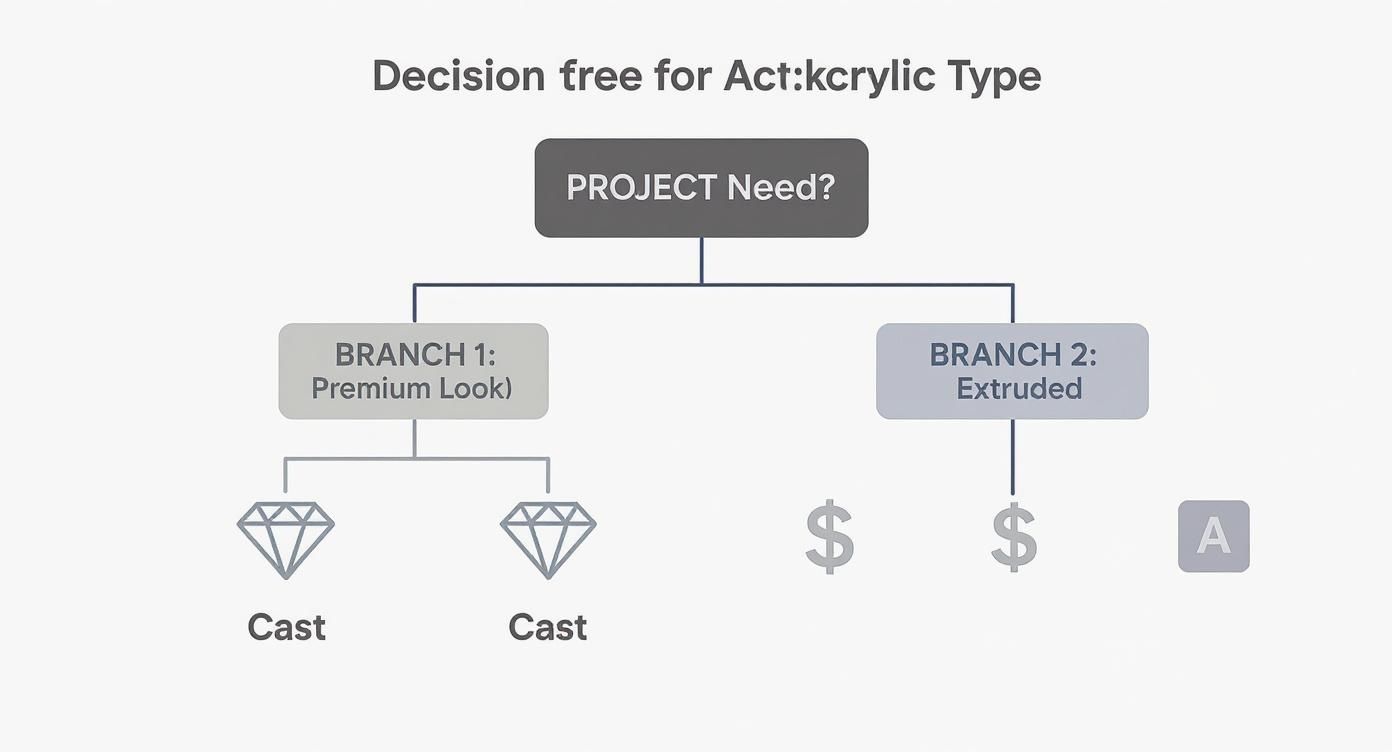
It really boils down to this: if you want a premium, flawless look, cast acrylic is your best bet. For more general, budget-friendly projects, extruded acrylic gets the job done well.
Creative Applications Across Industries
The beauty of clear acrylic is how easily it adapts to almost any environment. The trick is to match the design to the job it needs to do and the vibe of the space.
In a corporate office, frosted acrylic panels are a brilliant way to handle both branding and privacy. They work perfectly as elegant conference room signs or as large partitions that divide a space without blocking the light.
In retail, the game is all about grabbing attention and making products look great. Clear acrylic can be shaped into stunning point-of-purchase displays or branded backdrops that help your merchandise pop. For some great real-world examples, check out these captivating shop window display ideas.
When you start exploring these creative options, your sign stops being just a sign and becomes a powerful part of your brand.
How to Properly Install and Mount Your Sign
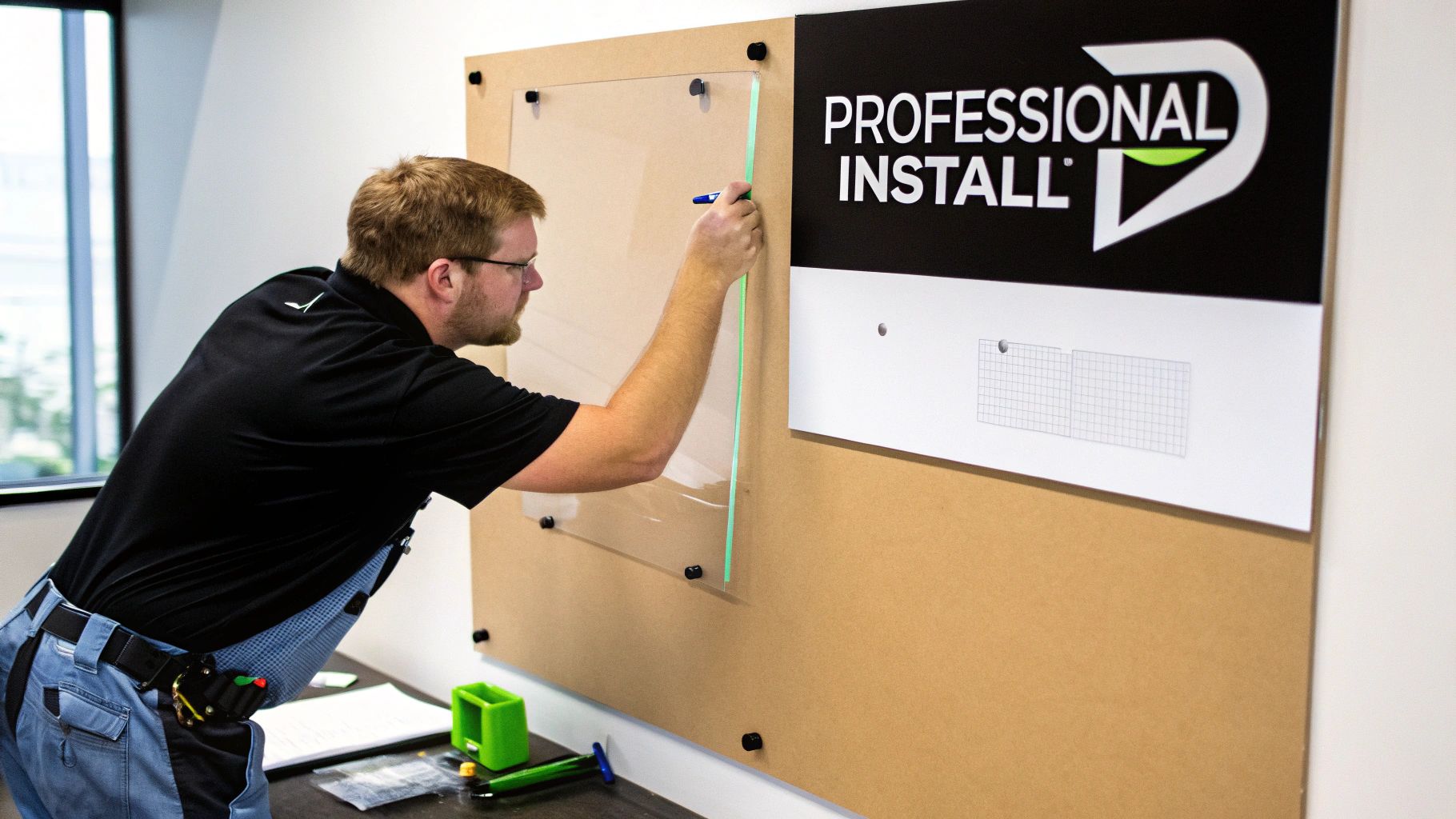
You can have the most stunning clear acrylic sign, but a sloppy installation will ruin the entire effect. Getting the mounting right is the final, crucial step that makes the difference between looking amateur and looking truly professional. It's not just about keeping the sign on the wall—it's about how it's presented.
The hardware and technique you choose will define the final aesthetic, whether you're going for a modern floating look or a sleek, seamless finish. Understanding your options is key to nailing that polished appearance that says you care about the details.
Using Standoffs for a Dimensional Look
Standoffs are hands-down the most popular way to mount clear acrylic, and for a good reason. These are small metal cylinders that hold the sign off the wall, creating a subtle shadow and a classy, three-dimensional "floating" look. That little bit of separation adds depth and makes the sign feel more substantial and important.
The hardware is simple: a barrel screws into the wall, and a cap screws through a hole in the acrylic to hold it firm. Standoffs come in all sorts of finishes to match your space.
- Chrome or Stainless Steel: The classic, polished choice that looks sharp in modern offices.
- Matte Black: A contemporary, high-contrast option that’s become incredibly popular.
- Brushed Gold or Brass: Adds a touch of warmth and luxury, perfect for upscale retail or hotels.
The secret to a great standoff installation is precision. If it's even slightly crooked, it will be obvious. Always use a level and a paper template of your sign to mark where you need to drill before you touch the wall.
For a flawless job, tape your paper template to the wall, get it perfectly level, and then drill your pilot holes right through the markings.
Achieving a Sleek Flush-Mounted Finish
If you want a more minimalist, built-in feel, flush-mounting is the way to go. This method sticks the sign directly to the wall with no visible hardware, creating a clean, seamless look. It's usually done with high-bond double-sided tape or a powerful construction adhesive.
This only works well on smooth, flat surfaces like painted drywall, metal, or finished wood. Forget about trying this on textured or porous walls like brick or raw concrete—the adhesive just won't get a secure enough grip. The size and weight of your acrylic sign will also be a deciding factor here.
Actionable Tip: When using adhesive tape, give both the back of the sign and the wall a quick wipe-down with isopropyl alcohol. This gets rid of any dust or oils that could mess with the bond and ensures it stays put.
Key Considerations for Installation and Compliance
Beyond just looking good, a proper installation has to be practical and follow the rules. The wall itself dictates what kind of hardware you need. For drywall, you'll want anchors so the screws have something solid to bite into. For brick or concrete, you’ll need to step it up to masonry anchors and a hammer drill.
You also have to think about accessibility. The Americans with Disabilities Act (ADA) has specific guidelines for signs, like requiring non-glare finishes and certain mounting heights so everyone can read them. While a decorative lobby sign has more wiggle room, any functional signage—like room numbers or directional signs—must be compliant.
And don't forget that some signs, especially outdoors, need a permit. It's always a good idea to check local sign permit requirements to make sure your project is above board. Taking care of these details ensures your sign is not just beautiful but also safe, legal, and accessible.
Budgeting for Your Clear Acrylic Signage
Let’s talk money. Understanding what goes into the cost of clear acrylic signage helps you plan your project without any last-minute surprises. The final price tag isn't just one number; it's a mix of a few key factors, from the raw plastic to the final polish.
Getting a handle on these cost drivers upfront lets you make smart choices that balance your design dreams with your budget. It’s all about knowing where your money is going so you can get the best possible sign for your investment.
Primary Cost Drivers to Consider
The biggest chunk of your budget will go toward the acrylic itself. The size, thickness, and type of acrylic you choose set the foundation for the final cost. It’s simple, really: a massive, thick sign will cost more than a small, thin one because it uses more material.
You also have a choice between cast and extruded acrylic, and that decision impacts the price. Cast acrylic is the premium option—it offers incredible clarity and toughness, making it perfect for a high-end lobby sign that needs to impress. On the other hand, extruded acrylic is a more budget-friendly choice that still looks great and works perfectly for a wide range of applications.
Clear acrylic is a powerhouse in the sign world for a reason—it’s both versatile and cost-effective. The global market for clear acrylic sheets, which includes signage, was valued at USD 2.12 billion in 2024 and is expected to hit USD 3.46 billion by 2033. That growth shows just how much businesses rely on this material to create signs that are both durable and impactful. You can dig into more market insights on Verified Market Reports.
How Fabrication and Design Complexity Affect Price
After the material, the next big thing that affects your price is how complicated your design is. A simple rectangle is one thing, but an intricate logo with lots of curves and cutouts requires more programming and machine time on the laser cutter, which adds to the cost.
The finishing touches also play a big role. Do you want those beautiful, glass-like polished edges? That’s an extra step that takes time and skill, so it adds to the labor cost. The same goes for graphics—applying layers of printed vinyl or doing a detailed second-surface print is more involved than a simple, one-color design.
Here’s a quick breakdown of what adds to the bill:
- Intricate Shapes: Custom-cut letters or complex logos take more time to fabricate.
- Polished Edges: This premium finish gives a sophisticated look but requires extra labor.
- Layered Designs: Signs made with multiple panels or dimensional elements are more complex to build.
- Graphic Application: Full-color printing or detailed vinyl work will naturally influence the budget.
Sample Cost Estimates for Clear Acrylic Signs
To give you a better idea of how these factors come together, here are some ballpark estimates for common types of clear acrylic signs. Remember, these are just starting points—your final cost will depend on the specifics of your project.
| Sign Type | Typical Size | Estimated Cost Range | Key Cost Factors |
|---|---|---|---|
| Simple Office Nameplate | 8" x 2" | $40 – $90 | Material thickness, edge finish, standoff hardware |
| Lobby Logo Sign | 36" x 24" | $350 – $900+ | Design complexity, layered elements, UV printing |
| Retail Point-of-Sale Sign | 12" x 18" | $120 – $250 | Full-color graphics, custom shape, quantity |
| Large Exterior Sign Panel | 48" x 96" | $800 – $2,000+ | UV-resistant acrylic, thickness, installation method |
These ranges can help you set a realistic budget, but the best way to get an accurate price is to talk to your sign provider with your design in mind.
Smart Tips for Maximizing Your Investment
Budgeting for your sign doesn't mean you have to settle for less. A few strategic decisions can give you that high-end look without breaking the bank. It really comes down to being efficient with your design and materials.
One of the easiest ways to save money is to design your sign to fit standard acrylic sheet sizes. Sign companies buy material in bulk, and if your design minimizes waste, that saving gets passed on to you. You can also simplify a super-complex design just a little to cut down on fabrication time and cost, often without losing any of the impact. The best move is always to have an open conversation with your sign company about your budget—they can help you find that sweet spot between your creative vision and your bottom line.
Care and Maintenance Tips for Lasting Quality
Your clear acrylic signage is an investment, and like any good investment, a little upkeep goes a long way. The great news is that keeping it looking brand new is simple.
Unlike glass, acrylic is a softer material, so the golden rule is to be gentle. Think of it less like a deep scrub and more like a routine dusting. A light, regular cleaning is all it takes to keep your sign’s crystal-clear finish from getting dulled by dust and fingerprints.
The Do's and Don'ts of Cleaning Acrylic
Here’s where a lot of people go wrong. Grabbing the wrong cloth or spray cleaner can do permanent damage, turning a stunning sign into a cloudy, scratched-up mess. The right approach is always the gentlest one.
Stick to these simple rules to get it right every time:
- DO use a soft, clean microfiber cloth. It’s designed to grab dust without grinding it into the surface and causing those tiny scratches.
- DO use a simple mix of mild soap and lukewarm water. That’s all you need to handle everyday smudges and keep it looking sharp.
- DON'T ever use paper towels, shop rags, or abrasive sponges. Their texture is too rough and will leave a web of fine scratches that build up over time.
- DON'T grab standard household cleaners. Products like Windex or anything with ammonia, alcohol, or harsh solvents are acrylic’s worst enemy. They’ll chemically damage the material, making it brittle and cloudy.
Always start with a dry microfiber cloth to gently wipe away any loose dust or grit. This simple first step stops you from scratching the surface when you follow up with a damp cloth.
Dealing with Minor Scratches and Scuffs
Even when you’re careful, a minor scuff can happen. Don’t panic—you can usually polish these out yourself without needing a whole new panel.
For those small surface scratches, a specialized acrylic polish is your best bet. These compounds are made to gently buff the surface and bring back that original, flawless shine. Just apply a small amount with a clean microfiber cloth and work it in with a soft, circular motion. It might take a little patience, but it’s a highly effective way to restore that perfect, glass-like finish and protect your investment.
Frequently Asked Questions
Even after going through all the details, you probably have a few specific questions about how clear acrylic signs will fit your space. No problem. We've put together some straight-to-the-point answers for the questions we hear most often.
This is the practical, real-world advice we’ve gathered from years of helping businesses just like yours. Think of it as a final check-in before you move forward.
Is Clear Acrylic Signage Suitable for Outdoor Use?
Absolutely. Clear acrylic is a fantastic choice for the outdoors because it’s built to handle the elements. Good quality acrylic has natural UV stability, which means it won’t turn yellow or get brittle after years in the sun. It also holds up against rain and changing temperatures without any trouble.
To make sure your outdoor sign lasts as long as possible, we always recommend a couple of things:
- Thicker Panels: Go for panels at least 1/4" thick. This adds the rigidity needed to stand up to wind and prevent any flexing.
- Robust Hardware: Always use high-quality stainless steel mounting hardware. It won't rust and ensures your sign stays put, no matter the weather.
How Does Acrylic Compare to Glass for Signage?
While glass definitely has a classic, premium feel, acrylic brings some major practical advantages to the table. In fact, modern acrylic with polished edges looks so much like glass that it’s hard to tell the difference—until you factor in safety and versatility.
The single biggest advantage is impact resistance. Acrylic is roughly 10 to 20 times stronger than standard glass of the same thickness. It’s far less likely to shatter, which is a huge safety benefit.
On top of that, acrylic weighs about half as much as glass. That’s a game-changer. It makes installation much easier, safer, and cheaper, especially for large signs or ones mounted high up on a wall. From a creative standpoint, acrylic is also way more flexible; we can laser-cut it into intricate logos and shapes that would be incredibly difficult or just plain impossible with glass.
What File Format Is Best for My Sign Design?
This one is non-negotiable: we need a vector file. The best formats are .AI (Adobe Illustrator), .EPS, or a vector-based .PDF. Using a vector file is the only way to guarantee a sharp, professional-looking sign.
Here’s why it matters so much. Vector graphics are made of mathematical lines and curves, not pixels. That means we can scale your design to any size—from a small desk plaque to a massive storefront sign—and it will stay perfectly crisp. Your logo won't get blurry or pixelated. One last tip: before you send the file over, make sure to convert all your fonts to outlines (or curves) to avoid any font issues on our end.
Ready to bring your brand to life with a stunning clear acrylic sign? The team at On Display Signs, Inc. is here to walk you through the whole process, from a simple idea to the final installation. Explore our custom sign solutions and get a quote today!