Effective signage is more than just a name on a building; it's a silent salesperson working 24/7 to attract customers, guide their experience, and build brand recognition. In today's competitive marketplace, the right signage can be the critical factor that turns a passerby into a loyal patron. A generic sign often gets ignored, but a well-designed, strategically placed one communicates professionalism, establishes trust, and directly impacts your bottom line. It's an essential component of your marketing and a physical embodiment of your brand's promise to the customer.
This guide moves beyond generic advice to provide a curated roundup of impactful signage ideas for business owners, whether you're a retail shop, a warehouse, or a national company. We will explore ten distinct types of signage, offering practical examples, actionable implementation tips, and key considerations to help you make informed decisions. To begin exploring the vast possibilities, consider an overview of different kinds of signage for your business, ranging from traditional to modern digital displays. This foundational knowledge will help you better understand the options available as we move forward.
From high-tech digital displays that capture attention to classic A-frames that drive foot traffic, you'll discover how to leverage each type to meet specific business goals. We will cover a range of options, including:
- Digital LED and interactive signs
- Dimensional lettering and illuminated signs
- Interior wayfinding and point-of-purchase displays
- Temporary banners and promotional A-frames
This listicle is designed to be a comprehensive resource, delving into materials, placement strategies, and design principles. Our goal is to ensure every sign you invest in delivers a powerful and measurable return. Let's explore the specific signage solutions that can elevate your brand and drive sustainable growth.
1. Digital LED Display Signs
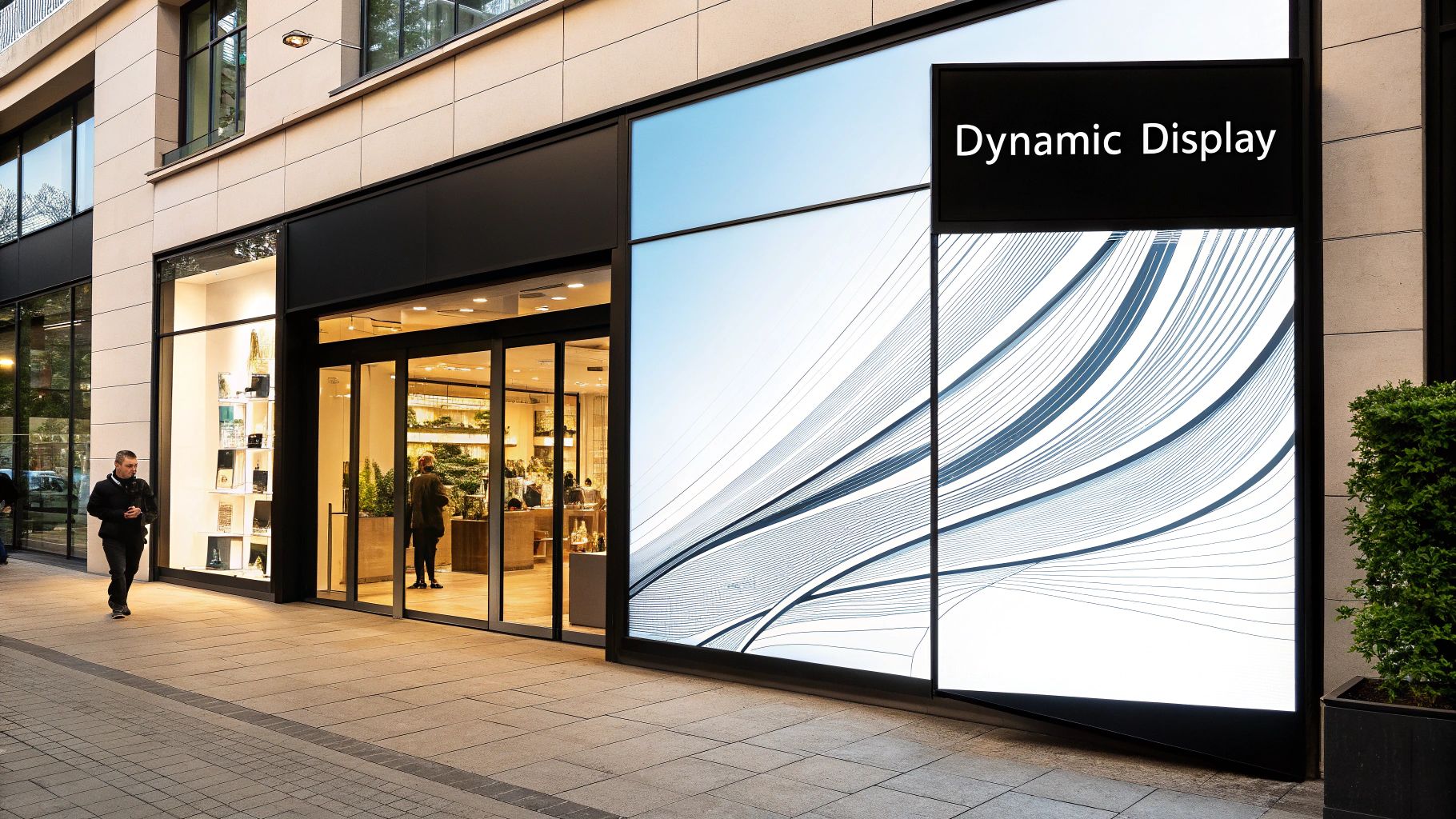
Digital LED display signs represent the pinnacle of dynamic, high-impact advertising. These electronic signs use Light Emitting Diode (LED) technology to showcase vibrant, moving content, including full-motion video, animations, and real-time information. Unlike static signs, their content can be updated remotely and instantly, allowing businesses to adapt their messaging on the fly for promotions, events, or time-of-day specials. This flexibility makes them a powerful tool for capturing attention in busy environments.
Why Choose Digital LED Displays?
The primary benefit is versatility. A restaurant can display breakfast specials in the morning, lunch deals at midday, and dinner promotions in the evening, all on the same sign. A car dealership can instantly update its display to feature new inventory arrivals or financing specials. This adaptability ensures your signage is always relevant, maximizing its return on investment. If you're looking for versatile signage ideas for business, digital displays are a top-tier choice.
Actionable Implementation Tips
To get the most out of your digital sign, follow these best practices:
- Prioritize Readability: Keep messages concise and use large, clear fonts. A passing driver or pedestrian has only seconds to absorb your content. For example, a message like "50% OFF All Tires – This Week Only!" is much more effective than a long paragraph.
- Use High-Contrast Colors: Bold color pairings like yellow on black or white on blue ensure your message stands out, even in bright daylight.
- Maintain Fresh Content: Regularly update your promotions, announcements, and visuals. Stale content makes the sign less effective and can be easily ignored. A hardware store could feature lawn care products in the spring and snow blowers in the winter.
- Strategic Placement: Position the display for maximum visibility. For storefronts, an eye-level screen can engage pedestrians directly, while a larger pylon sign is better for capturing traffic from a distance.
Investing in professional content creation ensures your animations and graphics look polished and effectively represent your brand. For a deeper dive into the technical specifications and benefits, you can discover more about Digital LED Display Signs on ondisplaysigns.com.
2. Window Display Signs
Window display signs transform your storefront glass into a dynamic billboard, serving as the first handshake between your brand and potential customers. This strategic signage leverages window space to showcase products, announce promotions, and communicate your brand's identity before a visitor even steps inside. From simple vinyl lettering to elaborate, multi-dimensional displays, these signs are crucial for converting pedestrian traffic into foot traffic and sales.
Why Choose Window Display Signs?
The primary advantage is their ability to create an immediate connection and set customer expectations. A high-end boutique might use minimalist, artful displays to convey luxury, while a local restaurant could use vibrant decals to showcase delicious menu highlights and create a welcoming atmosphere. This direct form of communication is incredibly cost-effective, turning existing architectural features into powerful advertising real estate. For businesses seeking signage ideas for business that offer high impact with a relatively low investment, window displays are an essential tool.
Actionable Implementation Tips
To maximize the effectiveness of your window displays, consider these key strategies:
- Keep Designs Uncluttered: Focus on a single, compelling message or product. A bakery might feature a large, high-quality image of its "Cake of the Month" rather than a list of every item it sells.
- Change Displays Seasonally: Regularly refreshing your window content keeps your storefront looking current and gives repeat visitors a reason to look again. A clothing store can switch from beachwear displays in summer to cozy sweaters in the fall.
- Illuminate for Nighttime Visibility: Use spotlights, backlighting, or neon elements to ensure your display captures attention 24/7, especially in areas with evening foot traffic.
- Include a Clear Call to Action: Guide the customer on what to do next. Simple messages like "Shop Our New Collection" or "25% Off Today Only" can significantly boost engagement.
Investing in professional design and high-quality materials ensures your displays look sharp and effectively represent your brand's standards. For more inspiration on creating compelling storefronts, you can explore some more retail window display ideas on ondisplaysigns.com.
3. Entrance/Exit Signs with Directional Markers
Entrance and exit signs, supported by clear directional markers, form the backbone of a building's wayfinding system. These signs are critical for guiding customer flow, ensuring safety, and creating an intuitive, stress-free experience. From identifying the main entrance in a large corporate office park to pointing the way to the nearest exit in a bustling retail store, this signage is fundamental to operational efficiency and legal compliance. They are not merely suggestions but essential navigational tools that prevent confusion and enhance accessibility.
Why Choose Clear Directional Signs?
The primary benefit is seamless navigation, which directly impacts customer satisfaction and safety. Hospitals rely on these signs to guide patients to different wings, while shopping malls use them to direct shoppers to anchor stores, restrooms, and parking garages. In an emergency, clearly marked exits are non-negotiable for safe evacuation. This type of signage is a foundational element for any business that manages public traffic, ensuring visitors can find their way in, around, and out of your facility with confidence and ease. As one of the most practical signage ideas for business, effective directional signs reflect a commitment to customer care and safety.
Actionable Implementation Tips
To ensure your directional signs are effective, follow these best practices:
- Follow ADA Guidelines: Strictly adhere to Americans with Disabilities Act (ADA) standards for placement height, font, and the inclusion of tactile text and braille where required.
- Use Universal Symbols: Incorporate universally recognized pictograms (like arrows or restroom symbols) alongside text to overcome language barriers and improve comprehension.
- Ensure High Contrast: Use a high-contrast color scheme, such as white text on a blue background, to maximize readability for all visitors.
- Test Sight Lines: Walk through your facility from a customer's perspective to ensure signs are visible from key decision points and are not obstructed by decor or architectural features. For instance, make sure a hanging plant doesn't block the view of a sign pointing to the restrooms.
Properly implemented directional signs are crucial for safety compliance. You can learn more about emergency exit signage requirements on ondisplaysigns.com to ensure your business meets all legal standards.
4. 3D and Dimensional Signage
3D and dimensional signage moves beyond flat surfaces to create depth, shadow, and a tangible sense of quality. These signs feature letters, logos, and graphics that are physically raised from a building facade or interior wall, adding a sophisticated and high-impact visual element. This three-dimensional effect naturally draws the eye and makes a brand feel more established and permanent.

Why Choose 3D and Dimensional Signage?
The primary advantage is the powerful visual statement it makes. Dimensional signs convey permanence and professionalism, which is why they are favored by professional services like law firms, luxury retailers, and upscale hospitality brands. A boutique hotel can use elegant, raised metal letters to create a sense of exclusivity at its entrance. This type of sign works exceptionally well in both daylight, where natural shadows enhance its depth, and at night when combined with strategic lighting. For businesses looking for signage ideas for business that exude confidence and quality, dimensional letters are a premier choice.
Actionable Implementation Tips
To ensure your dimensional sign makes the right impression, consider these key factors:
- Select Climate-Appropriate Materials: Choose materials like aluminum, acrylic, or high-density urethane (HDU) that can withstand your local weather conditions, from intense sun to freezing temperatures. A coastal business should opt for corrosion-resistant materials.
- Integrate Lighting Early: Plan for illumination during the initial design phase. Options like halo-lit (backlit) or face-lit letters can dramatically change the sign's nighttime appearance.
- Ensure Proper Scale: The size of the letters and logo should be proportional to the building facade. A sign that is too small will get lost, while one that is too large can look overwhelming.
- Work with Experienced Fabricators: The quality of a dimensional sign depends heavily on precise manufacturing and professional installation. Partner with a proven sign company to ensure a flawless finish.
Proper planning helps create a sign that not only looks impressive but also lasts for years. To see a gallery of options and learn about fabrication, you can find more about 3D and Dimensional Signage on ondisplaysigns.com.
5. Sandwich Board/A-Frame Signs
Sandwich boards, also known as A-frame signs, are classic, freestanding signs perfect for capturing the attention of sidewalk foot traffic. Their portable and affordable nature makes them a go-to solution for small and medium-sized businesses looking to advertise daily specials, promotions, or direct customers to their entrance. This type of signage is placed directly in the path of potential customers, making it an incredibly effective tool for spontaneous engagement.

Why Choose Sandwich Board/A-Frame Signs?
The primary advantage is their versatility and cost-effectiveness. A coffee shop can easily write its "latte of the day," a restaurant can display its lunch menu to entice passersby, and a retail boutique can announce a flash sale without investing in permanent fixtures. This quick-change capability keeps messaging fresh and relevant. For businesses seeking affordable and high-impact signage ideas for business, the A-frame sign offers a fantastic return by converting sidewalk browsers into paying customers.
Actionable Implementation Tips
To maximize the impact of your A-frame sign, consider these practical tips:
- Keep It Concise: Limit your message to 5-7 powerful words. For instance, "Happy Hour 4-6 PM" or "Fresh Bread Daily." Use large, legible fonts that can be read quickly from a distance.
- Update Content Daily: A sign that changes frequently signals that your business is active and has new things to offer. Even a small change, like the date, can make a difference.
- Strategic Placement: Position the sign in a high-traffic area without obstructing the walkway. Ensure it's secure, especially in windy conditions, to prevent it from becoming a hazard.
- Use Bold Visuals: Employ high-contrast, bright colors to make your sign pop. A simple illustration or a witty message can be more memorable than text alone.
- Check Local Regulations: Always verify city ordinances regarding sidewalk signs to ensure you are compliant with placement rules and avoid potential fines.
For businesses looking to explore different styles and materials, you can learn more about customizable outdoor A-frame signs on ondisplaysigns.com.
6. Illuminated Business Name Signs
Illuminated business name signs are a cornerstone of storefront branding, serving as a powerful beacon for your enterprise. These signs, often featuring channel letters or lightboxes, use internal lighting like LED to prominently display your business name on a building's facade. This ensures your brand is a key landmark, providing crucial visibility and brand recognition, especially after sunset. For any business operating in the evening or seeking to maintain a 24/7 presence, this type of signage is essential for attracting customers and reinforcing its place in the community.
Why Choose Illuminated Business Name Signs?
The core advantage is constant visibility. A restaurant or bar with a vibrant neon or LED sign becomes an inviting destination at night, while a hotel’s elegantly lit name offers a welcoming sight for weary travelers. Even professional service businesses like medical offices and law firms use sophisticated backlit signs to project an image of stability and availability. This continuous brand exposure works around the clock to build recognition and guide customers to your door, making it one of the most effective signage ideas for business owners aiming for high impact.
Actionable Implementation Tips
To maximize the effectiveness of your illuminated sign, consider these practical steps:
- Invest in Quality Materials: Use durable materials like aluminum and acrylic with high-quality, energy-efficient LEDs. This ensures longevity and reduces long-term maintenance costs.
- Match Style to Brand Identity: A sleek, halo-lit sign might suit a modern tech firm, while a classic front-lit sign could be perfect for a traditional retailer. Ensure the design reflects your brand's personality.
- Check Zoning and Brightness Codes: Local ordinances often regulate the size, placement, and brightness of illuminated signs. Verify these requirements before fabrication to avoid costly fines or modifications.
- Plan for Regular Maintenance: Schedule routine checks to clean the sign faces and inspect electrical components. A well-maintained sign reflects a well-run business.
For a comprehensive look at the different styles and options available, you can learn more about custom-lighted business signs on frontsigns.com.
7. Menu Boards and Product Display Signs
Menu boards and product display signs are essential tools for communicating offerings directly at the point of sale. These signs detail products, services, and pricing, guiding customers through their purchasing decisions. Whether static printed boards in a local cafe or dynamic digital screens in a national retail chain, they serve as a critical interface between your business and its customers, directly influencing sales and enhancing the overall customer experience.
Why Choose Menu and Product Displays?
Their primary advantage is their ability to inform and persuade. Quick-service restaurants use digital menu boards to seamlessly update promotions and feature high-margin items. Similarly, retail stores use clear product displays with associated signage to highlight features and prices, helping customers make informed choices without needing staff assistance. These signage ideas for business are designed to streamline the sales process and encourage upselling by making options clear and appealing.
Actionable Implementation Tips
To create effective menu boards and product displays, consider these key strategies:
- Focus on Visual Appeal: Use high-quality, professional photography of your products. When designing, it's crucial for your items to stand out. Tools offering background removal functionalities can help you achieve clean, focused visuals that pop.
- Keep it Scannable: Organize your offerings logically, using columns, boxes, and clear headings. An auto repair shop could group services under "Oil Changes," "Tire Services," and "Brake Repair."
- Ensure Readability: Use large, legible fonts and ensure there is high contrast between the text and the background. Test visibility from the distance where your customers will be standing.
- Update Strategically: Keep your displays current with seasonal specials, new arrivals, or promotional pricing. A coffee shop should feature pumpkin spice lattes in the fall and peppermint mochas in the winter.
8. Promotional and Seasonal Banners
Promotional and seasonal banners are a cost-effective and highly visible way to communicate timely messages. Typically made from durable vinyl or fabric, these temporary signs are perfect for advertising sales, grand openings, seasonal events, or special offers. Their versatility allows them to be hung on building facades, strung across storefronts, or mounted on poles, making them an excellent tool for capturing immediate attention for time-sensitive campaigns.
Why Choose Promotional and Seasonal Banners?
The main advantage is their affordability and temporary nature. A retail shop can use a bold "Black Friday Sale" banner to drive holiday traffic, while a newly renovated warehouse can announce its "Grand Re-Opening" to inform clients and vendors. These banners create a sense of urgency and excitement, encouraging customers to act quickly. For businesses looking for high-impact, low-commitment signage ideas for business, banners offer an unbeatable combination of price and visibility.
Actionable Implementation Tips
To ensure your banners are effective and professional, follow these key practices:
- Focus on a Singular Message: Keep your text concise, ideally to five words or less, like "Summer Clearance Sale" or "Now Hiring." This ensures readability from a distance.
- Use Bold Colors and Large Fonts: High-contrast color combinations and clean, large typography are crucial for grabbing the attention of passing traffic and pedestrians.
- Ensure Secure Installation: Always secure banners firmly with grommets and strong ties to prevent them from becoming a hazard in high winds. For outdoor use, consider mesh banners that allow wind to pass through.
- Plan for Longevity and Removal: Choose UV-resistant materials to prevent fading during the campaign. Equally important, establish a clear timeline for when the banner will be taken down to keep your storefront looking current.
Before installation, always check local ordinances, as some municipalities have specific regulations regarding the size and duration of temporary signage.
9. QR Code and Interactive Signage
QR code and interactive signage merge the physical and digital worlds, transforming a static sign into a dynamic portal for customer engagement. By incorporating technologies like QR codes or Near Field Communication (NFC), these signs invite passersby to connect with your brand using their smartphones. This bridge allows you to provide instant access to websites, exclusive promotions, detailed product information, or engaging digital content, creating a seamless and modern customer experience.
Why Choose QR Code and Interactive Signage?
The primary advantage is the ability to deliver rich, up-to-the-minute information without cluttering your sign. A restaurant can use a QR code on a window decal to link directly to its full online menu, allowing customers to browse before entering. A real estate agent can place a QR code on a "For Sale" sign that links to a virtual tour of the property. This approach not only provides value but also captures valuable data on customer interaction, making it one of the most measurable signage ideas for business.
Actionable Implementation Tips
To effectively integrate interactive elements, follow these guidelines:
- Prioritize Scan-ability: Ensure your QR code is large enough to be easily scanned from a typical viewing distance, with a minimum size of 1×1 inch. Use high-contrast colors to make it stand out.
- Provide Clear Instructions: Add a simple call to action like "Scan to View Our Menu" or "Tap for Today's Deals" so people know what to expect.
- Optimize the Destination: The linked webpage or content must be mobile-friendly, load quickly, and be directly relevant to the sign's message.
- Test and Track: Before installing the sign, thoroughly test the QR code or NFC tag with multiple devices. Use trackable links to measure scan rates and analyze customer engagement.
For those looking to explore how to generate and implement these tools, you can discover more about creating effective QR Codes on qr-code-generator.com.
10. Wayfinding and Location-Based Signage
Wayfinding and location-based signage systems are the unsung heroes of customer experience, designed to guide people seamlessly through complex physical spaces. These signs are more than just directions; they are a cohesive network of directories, maps, and directional markers that reduce confusion, alleviate stress, and improve overall satisfaction. In large venues like hospitals, shopping centers, corporate campuses, or distribution warehouses, an effective wayfinding system is critical for operational efficiency and creating a welcoming environment.
Why Choose Wayfinding Signage?
The core benefit is improved navigation and a better visitor experience. A hospital can use a color-coded system to direct patients to different departments, reducing missed appointments and anxiety. Similarly, a university campus can use strategically placed maps and directional posts to help new students find their classes. These thoughtful signage ideas for business prevent frustration and project an image of a well-organized and customer-centric organization. By making it easy for people to get where they need to go, you build trust and encourage repeat visits.
Actionable Implementation Tips
To develop an effective wayfinding system, consider these practical steps:
- Analyze Visitor Flow: Before designing, map out the common paths people take. Identify key decision points, such as lobby entrances, hallway intersections, and elevator banks, where directional information is most needed.
- Use Consistent Branding: Employ a consistent set of colors, fonts, and symbols throughout the entire system. This visual consistency helps people instantly recognize directional cues and process information quickly.
- Place Signs at Decision Points: Install signs where people need to make a choice, not halfway down a long corridor. This preemptive guidance prevents visitors from getting lost in the first place.
- Consider All User Types: Design with everyone in mind. Incorporate easy-to-read text, universally understood symbols, and ensure signs are placed at heights accessible to individuals in wheelchairs.
Regularly auditing and updating your wayfinding system is crucial to keep it accurate, especially after facility renovations or departmental moves. For a closer look at the principles behind effective navigation systems, you can learn more about Wayfinding and Directional Signs on fastsigns.com.
Top 10 Signage Ideas Comparison
| Sign Type | Implementation Complexity 🔄 | Resource Requirements ⚡ | Expected Outcomes ⭐ / 📊 | Ideal Use Cases 📊 | Key Advantages 💡 |
|---|---|---|---|---|---|
| Digital LED Display Signs | High 🔄🔄🔄 — electrical, mounting, software | High ⚡⚡⚡ — hardware, power, content team, maintenance | Very high ⭐⭐⭐⭐ — attention, flexible messaging, measurable engagement 📊 | Retail storefronts, airports, QSRs, corporate lobbies | Dynamic updates, high daylight visibility, reduces print waste |
| Window Display Signs | Low–Moderate 🔄🔄 — design and installation | Low ⚡ — vinyl/print materials, periodic replacement | Moderate ⭐⭐⭐ — immediate curb appeal, boosts foot traffic 📊 | Boutiques, restaurants, seasonal retail | Cost-effective, easy seasonal updates, builds brand presence |
| Entrance/Exit Signs with Directional Markers | Moderate 🔄🔄 — placement, compliance | Moderate ⚡⚡ — materials, ADA compliance, installation | High ⭐⭐⭐ — improved navigation and safety 📊 | Malls, hospitals, offices, transit hubs | Enhances wayfinding, ensures compliance, reduces confusion |
| 3D and Dimensional Signage | High 🔄🔄🔄 — custom fabrication, permits | High ⚡⚡⚡ — materials, pro installation, long-term maintenance | High ⭐⭐⭐⭐ — premium branding, strong visibility 📊 | Corporate campuses, premium retail, hospitality | Distinctive, durable, professional appearance |
| Sandwich Board/A-Frame Signs | Low 🔄 — portable, no install | Very low ⚡ — inexpensive, easy to update | Moderate ⭐⭐ — drives local foot traffic, testing ground 📊 | Cafes, small retailers, daily promotions | Affordable, mobile, quick message testing |
| Illuminated Business Name Signs | Moderate–High 🔄🔄🔄 — lighting and permits | High ⚡⚡⚡ — lighting, power, maintenance | Very high ⭐⭐⭐⭐ — 24/7 visibility and brand recognition 📊 | All business types, nightlife, hospitality | Strong night visibility, authoritative brand presence |
| Menu Boards and Product Display Signs | Moderate 🔄🔄 — design and updates | Moderate ⚡⚡ — printing or digital screens, design costs | High ⭐⭐⭐ — clearer choices, increased avg. sale 📊 | Restaurants, coffee shops, retail product areas | Reduces confusion, highlights best-sellers, digital real-time updates |
| Promotional and Seasonal Banners | Low 🔄 — temporary install | Low ⚡ — vinyl/print, quick turnaround | Moderate ⭐⭐ — high visibility for time-limited campaigns 📊 | Holiday sales, grand openings, events | Fast production, cost-effective, reusable |
| QR Code and Interactive Signage | Low–Moderate 🔄🔄 — design + digital integration | Low–Moderate ⚡⚡ — printing + web/analytics, occasional tech support | Moderate–High ⭐⭐⭐ — measurable engagement, digital conversions 📊 | Retail, events, hospitality, marketing campaigns | Bridges offline→online, trackable, personalized experiences |
| Wayfinding and Location-Based Signage | High 🔄🔄🔄 — planning, hierarchy, testing | High ⚡⚡⚡ — system-wide production, design, maintenance | Very high ⭐⭐⭐⭐ — reduces confusion, improves flow and satisfaction 📊 | Malls, hospitals, airports, campuses | Reduces staff load, consistent UX, safety-oriented |
Putting Your Best Sign Forward: Your Next Steps
Choosing the right signage is a strategic investment that directly impacts your brand's visibility, customer perception, and bottom line. As we've explored through the ten distinct signage ideas for business, the most effective approach rarely relies on a single sign. Instead, it involves creating a comprehensive system tailored to your specific location, industry, and strategic goals. Your signs are silent brand ambassadors, working 24/7 to attract, inform, and guide your audience.
The key takeaway is to view your signage not as an expense, but as a hard-working asset. It is an integral part of your marketing and operational framework. From the captivating glow of an illuminated channel letter sign that makes your storefront a beacon after dark, to the practical utility of wayfinding signs that eliminate customer confusion in a large warehouse or retail space, each element serves a critical purpose. This cohesive ecosystem of signs works together to build a seamless and professional brand experience at every single touchpoint.
Synthesizing Your Signage Strategy
Moving from inspiration to implementation can feel like a significant leap. Let's distill the core principles from the signage ideas we've covered into an actionable plan.
1. Conduct a Signage Audit:
Your first step is to perform a thorough audit of your current signage. Walk your property from the perspective of a first-time visitor.
- Exterior Evaluation: Is your main business sign easily visible from the road? Is it clean, well-lit, and reflective of your brand's quality? Are your window graphics current and compelling?
- Interior Assessment: Once inside, is it clear where to go? Are promotional signs, like banners or menu boards, up-to-date and easy to read? Does the dimensional signage behind your reception desk make a strong impression?
- Compliance Check: Are your entrance, exit, and accessibility signs compliant with local and ADA regulations? This is a non-negotiable step that protects both your customers and your business.
2. Prioritize Based on Impact:
You don't need to overhaul everything at once. Identify the one or two areas where an upgrade would deliver the most significant return on investment.
- For a retail shop in a high-foot-traffic area, upgrading to a digital LED display or adding a clever A-frame sign could immediately boost walk-ins.
- For a large manufacturing facility or distribution center, implementing a clear wayfinding system can dramatically improve operational efficiency and visitor safety.
- For a startup looking to establish credibility, investing in high-quality 3D and dimensional signage for the lobby creates a powerful first impression.
3. Align with Your Brand and Budget:
Every signage choice should reinforce your brand identity. The materials, colors, and fonts used in a promotional banner should feel consistent with your permanent illuminated sign. Likewise, be realistic about your budget. Fortunately, effective signage ideas for business exist at every price point. A well-designed sandwich board can be just as effective for its purpose as a sophisticated interactive display.
The True Value of Professional Execution
The journey from a concept to a professionally installed, code-compliant sign involves many critical steps: design, material selection, permit acquisition, fabrication, and installation. This complexity is why partnering with a signage expert is not a luxury; it is a strategic decision that saves time, prevents costly errors, and ensures a superior final product. An experienced sign company navigates the maze of local zoning ordinances and electrical codes on your behalf, ensuring your investment is both beautiful and built to last.
Ultimately, your signs do more than just display your name. They build trust, create landmark visibility, and actively drive business. By thoughtfully applying these signage ideas, you empower your business to communicate its value clearly and effectively, turning casual passersby into loyal customers.
Ready to transform your business's visibility with signage that makes a statement? The experts at On Display Signs, Inc. manage every phase of your project, from initial design concepts and permitting to precision fabrication and professional installation. Let us help you select and create the perfect signs to meet your goals and budget. Visit On Display Signs, Inc. to get started on your project today.