Imagine having a salesperson who works for you around the clock, never takes a break, and makes your business impossible to miss, day or night. That’s the power of a great outdoor lightbox sign. This guide provides actionable insights to help you transform your physical location into a beacon for customers.
Your 24/7 Salesperson: The Outdoor Lightbox Sign
Think of your storefront as the face of your business. An outdoor lightbox sign is its most powerful expression, working tirelessly to grab attention long after you’ve locked up for the day. While a static, unlit sign fades into the darkness, a lightbox actively broadcasts your presence, turning passing traffic into potential customers.
This constant visibility is more than just advertising—it's a smart investment in brand reinforcement. For example, every time someone sees your illuminated logo, whether during their morning commute or a late-night drive, it strengthens their awareness of your business. This consistent exposure builds familiarity and keeps your brand top-of-mind.
How Outdoor Lightbox Signs Impact Your Business
It's easy to dismiss these signs as simple fixtures, but their impact on a business is undeniable. They are a fundamental part of a strong local marketing strategy, providing a high return on investment by continuously drawing in foot traffic.
| Benefit | Actionable Insight |
|---|---|
| Around-the-Clock Visibility | Your business stays noticeable 24/7, maximizing marketing impressions even after business hours. |
| Increased Foot Traffic | An eye-catching, illuminated sign attracts impulse stops and draws in nearby customers. |
| Enhanced Brand Recognition | Constant exposure reinforces your logo and name, building brand recall within the community. |
| Professional Image | A well-lit, modern sign signals stability, quality, and professionalism to potential customers. |
In short, a lightbox sign is one of the hardest-working assets you can invest in for a physical location.
A Growing Trend in Local Advertising
The broader outdoor signage industry is growing rapidly for this exact reason. Projections show the market reaching USD 32.1 billion in 2025 and expanding to USD 69.8 billion by 2035, reflecting a major shift toward effective, high-visibility advertising.
To get the most out of your 24/7 salesperson, it helps to pair it with other smart small business advertising tips to create a cohesive marketing front. This guide will walk you through everything you need to know to make the right choice.
An effective outdoor lightbox sign doesn't just announce your location; it communicates your brand's confidence and reliability. It tells the world you are open, professional, and ready for business.
By understanding the different types, materials, and design principles, you can create a sign that not only looks great but also acts as a key driver of business growth. For more inspiration on how signage can elevate your brand, check out our guide on compelling business sign ideas.
Choosing the Right Type of Lightbox Sign
Not all lightbox signs are built the same. Just like every business has its own personality, different sign types send completely different messages. The key is picking one that matches your brand’s identity and makes the visual statement you’re going for.
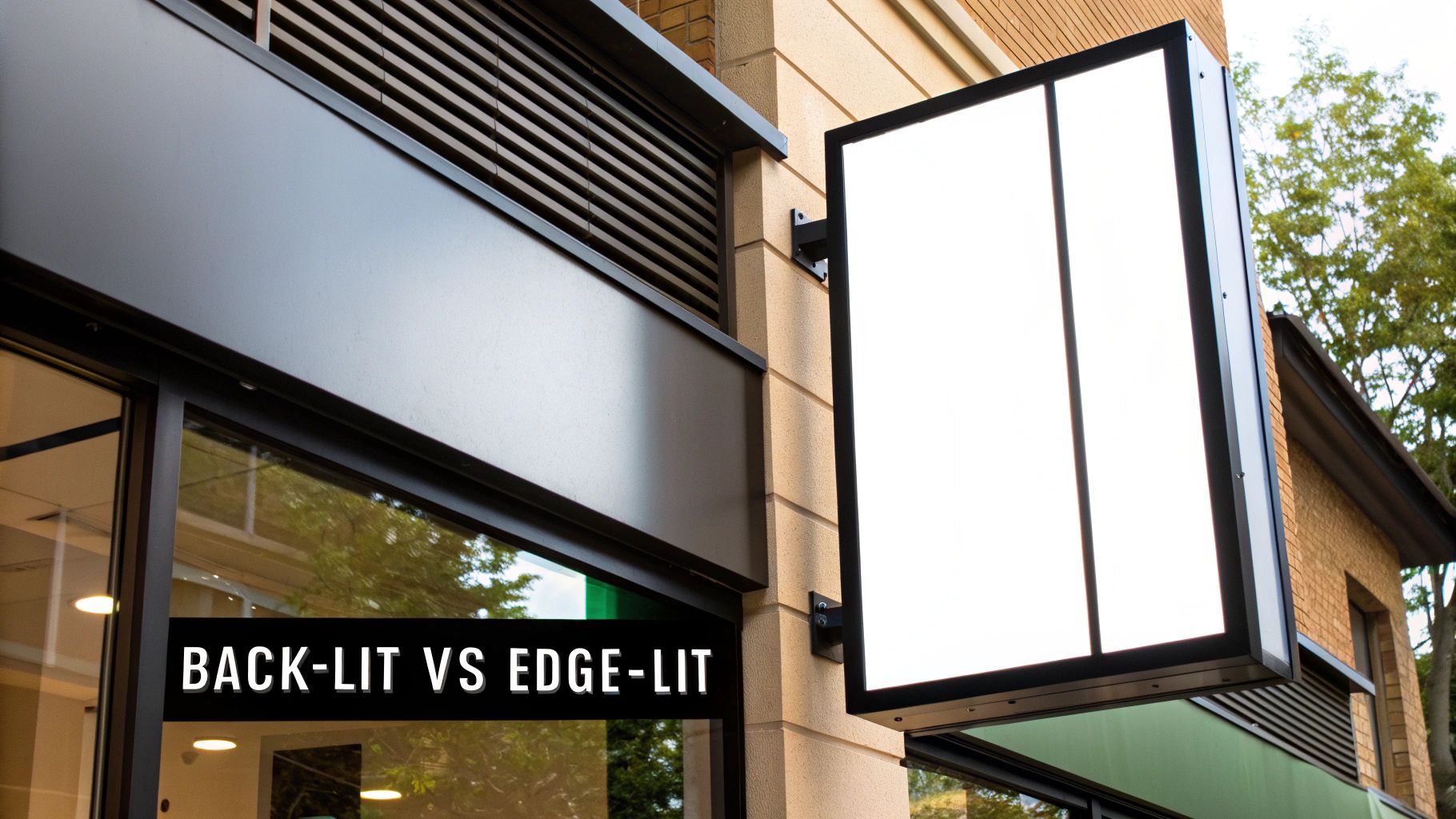
It really comes down to how the sign is lit. The two most popular styles, back-lit and edge-lit, create entirely different aesthetics. Once you understand what each one does best, you can start to picture the perfect sign for your storefront.
The Classic Appeal of Back-Lit Signs
Back-lit signs are the tried-and-true workhorses of illuminated signage. The construction is simple and effective: a powerful light source, usually a grid of LED modules, sits right behind a translucent graphic panel. This setup lights up the entire face of the sign from edge to edge, creating a bold, bright beacon that’s impossible to ignore.
Think of the warm, inviting glow of a classic diner sign or the clear, authoritative presence of a pharmacy's logo after dark. Back-lit signs are masters at projecting strong, even light that maximizes visibility from a distance. This makes them a fantastic choice for any business on a busy road or in a crowded commercial area.
- Best for Bold Statements: The full-face illumination makes your logo and text pop with incredible vibrancy, especially at night.
- High Visibility: Their powerful glow cuts right through the visual clutter, making them perfect for roadside businesses competing for eyeballs.
- Practical Example: A 24-hour convenience store uses a large, rectangular back-lit sign to clearly display its name, ensuring it’s a landmark for late-night drivers.
The Modern Look of Edge-Lit Signs
If you're aiming for a more subtle and refined look, an edge-lit sign is the way to go. In this design, the LEDs are placed along the perimeter of the sign box, shooting light inward across a specially treated acrylic panel. The light is then channeled to illuminate only the graphics that have been etched or engraved into the panel, resulting in a razor-sharp, clean appearance.
This technique creates a sleek "halo" effect, making the letters and logo look like they’re floating against the background. It’s a popular option for businesses that want to project a sophisticated, contemporary vibe.
An edge-lit sign communicates precision and elegance. It’s less about shouting for attention and more about making a confident, stylish statement that draws people in with its clean design.
Practical Example: A high-end salon or a modern tech company might choose an edge-lit sign with a crisp, glowing logo. It perfectly captures their brand personality, suggesting quality and meticulous attention to detail. While there are many types of outdoor business signs, the illumination style you pick will have the biggest impact on how it looks when the sun goes down.
Advanced LED Module Systems
No matter which style you lean toward, the technology inside is what really counts. Modern lightbox signs have almost completely moved away from old-school fluorescent tubes in favor of LED module systems. These systems are made of small, interconnected blocks of high-intensity LEDs, which are laid out strategically to guarantee flawless, even light without any distracting hot spots or shadows.
The demand for this tech is exploding, with the Outdoor LED Signage Panels market projected to hit around USD 12.5 billion in 2025. This growth just goes to show the industry-wide shift toward brighter, more dependable, and energy-efficient advertising. This advanced technology ensures your investment isn't just visually striking but is also built to perform for years to come.
Building a Sign That Lasts Through Any Weather
Your outdoor lightbox sign is a long-term investment that has to battle sun, rain, wind, and whatever else nature throws its way. A sign that fades, rusts, or cracks after just a few years isn't an asset; it's a liability.
Choosing the right materials from the start is the single most important factor in ensuring your sign looks fantastic and performs flawlessly for years to come.
The foundation of any durable lightbox is its frame, or "cabinet." This is the structure holding everything together, and it has to be rock-solid. When you talk to a sign provider, the conversation will almost always come down to two main options: aluminum and steel.
Choosing the Right Frame Material
Aluminum is the go-to choice for modern signs, and for good reason. It’s lightweight, which makes installation easier and puts less stress on your building's facade. More importantly, aluminum is naturally rust-proof, so you’ll never have to worry about ugly rust stains running down your wall after a few seasons of bad weather.
Steel, on the other hand, is all about brute strength. For exceptionally large signs or those in areas with extreme high winds, a steel frame might be the only option that offers enough structural integrity. The trade-off? It’s much heavier and needs special coatings to keep it from rusting.
For the vast majority of business applications, an aluminum frame offers the perfect balance of durability, weather resistance, and cost-effectiveness. It provides all the strength needed for typical sign sizes while guaranteeing a long, corrosion-free life.
This is why understanding what materials are made of is so important. To see how this works in other applications, you can explore how professionals use durable aluminum composite signage to get a premium, long-lasting finish.
Selecting the Perfect Sign Face
The "face" of your lightbox is the translucent panel where your graphics live. It needs to be tough enough to handle an impact but clear enough to let light shine through brightly and evenly. The two heavy hitters here are acrylic and polycarbonate.
- Acrylic (Plexiglass): This material is known for its incredible optical clarity and glossy finish, which makes colors pop. It's a fantastic choice for signs that are a bit sheltered or in areas without severe weather, delivering a high-end look without breaking the bank.
- Polycarbonate (Lexan): If durability is your absolute top priority, polycarbonate is the undisputed champion. It is up to 30 times more impact-resistant than acrylic, making it virtually shatterproof. This is the material you want for signs in high-traffic zones, places that get hail, or anywhere an accidental bump is a real possibility.
Making an Informed Decision
So, which combination is right for you? It really comes down to your environment. For a retail shop in a relatively calm urban area, an aluminum frame with a standard acrylic face is a reliable and professional choice that will look great for years.
Practical Example: If your business is located somewhere with harsh winters, frequent storms, or along a busy road where debris gets kicked up, investing in a polycarbonate face is a smart move. The slightly higher upfront cost is nothing compared to the peace of mind you get knowing your sign can take a serious hit without cracking. It's the difference between a powerful marketing tool and a future maintenance headache.
Understanding Modern Illumination and Energy Savings
The technology inside your outdoor lightbox sign is its beating heart. It determines how bright and eye-catching your sign is, and just as importantly, how much it costs to run and maintain every single month.
For years, fluorescent tubes were the go-to option. But today, modern LED technology is the undisputed champion for both performance and long-term value. Getting the difference is key to making a smart investment. Think of it like choosing between an old, gas-guzzling classic car and a new electric vehicle. The classic might look neat, but the EV is far more efficient, cheaper to run, and requires way less maintenance.
The Clear Winner: LED Technology
The industry-wide shift to LEDs really boils down to simple math. While an LED-illuminated sign might have a slightly higher upfront cost, the savings on the back end are huge. It's a major reason why the outdoor lighting signs market, valued at around USD 2.5 billion in 2025, continues to grow—businesses are actively seeking out energy-efficient solutions that look great and save them money.
LEDs use a fraction of the power their fluorescent cousins do, which means a much smaller number on your monthly electricity bill. For a sign that’s on all night, every night, those savings pile up fast.
The true value of an LED lightbox sign isn't just in its initial brightness, but in its sustained performance and low total cost of ownership over its entire lifespan. It's an investment that actively pays you back.
This incredible efficiency doesn’t mean you sacrifice performance. In fact, LEDs deliver a brighter, more even light that does away with the annoying flickering and dark spots you see with aging fluorescent tubes.
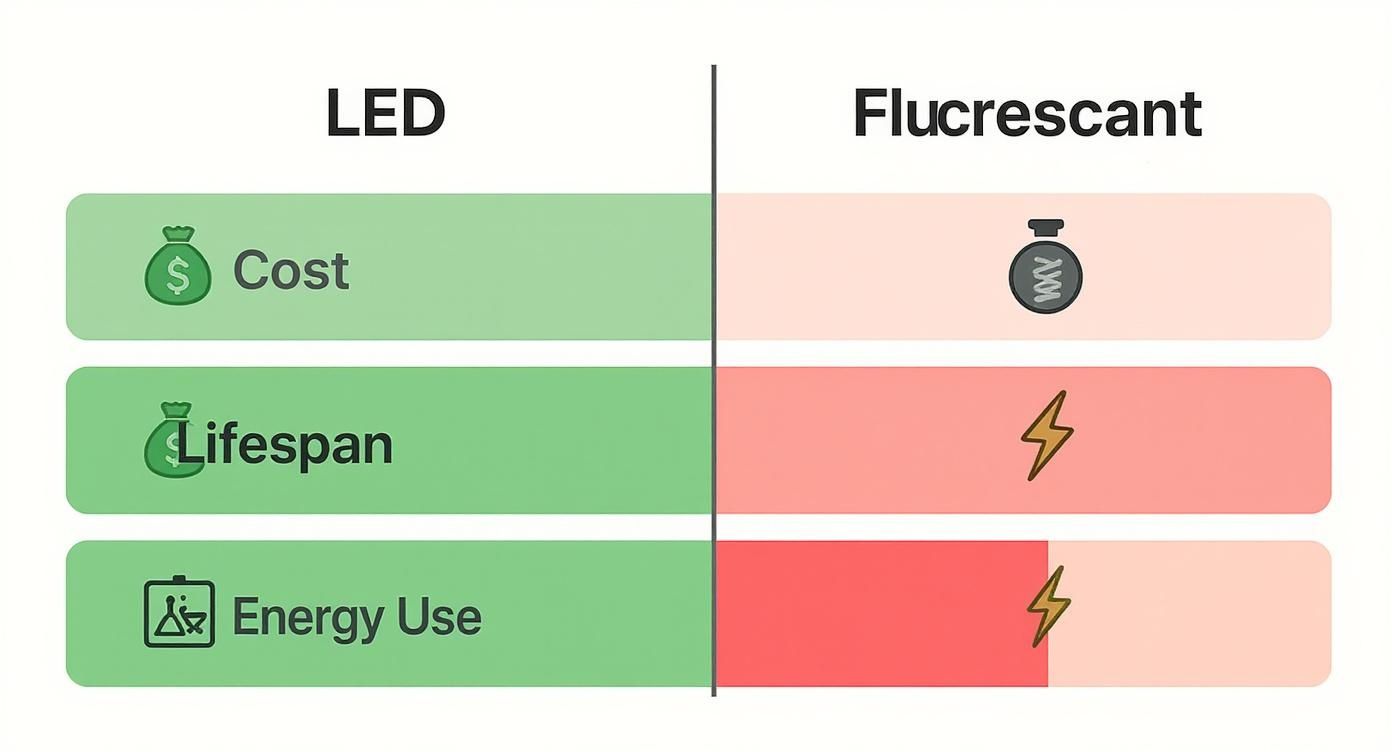
LED vs. Fluorescent: A Head-to-Head Comparison
To really see the difference, let’s put these two technologies side-by-side and see how they stack up in the areas that matter most to your business.
LED vs Fluorescent Illumination Comparison
Here's a straightforward look at how LEDs and fluorescent lighting compare for your lightbox sign.
| Feature | LED Lighting | Fluorescent Lighting |
|---|---|---|
| Energy Consumption | Uses up to 75% less energy, leading to significant savings on electricity bills. | High energy usage results in much higher monthly operating costs. |
| Lifespan | Extremely long lifespan, typically rated for 50,000 to 100,000 hours of continuous use. | Much shorter lifespan, often requiring replacement every 1-2 years. |
| Maintenance Needs | Virtually maintenance-free for years, eliminating replacement labor and material costs. | Frequent bulb replacements are needed, leading to ongoing maintenance expenses. |
| Performance | Provides instant, consistent brightness without flickering, even in cold weather. | Can flicker, dim in cold temperatures, and develop uneven "hot spots" over time. |
The difference is stark. With a fluorescent sign, you’re basically budgeting for regular service calls and a higher utility bill. With an LED sign, you get a reliable, high-performing asset that works for you with almost no intervention. Looking into durable outdoor LED lighting options, even for other uses, can give you a good sense of just how tough and reliable modern, weather-resistant tech has become.
Your Return on Investment
At the end of the day, choosing LED illumination for your outdoor lightbox is a strategic business move. The initial investment is quickly recovered through the dramatic drop in energy and maintenance costs. Over just a few years, an LED sign easily pays for itself.
This makes it a powerful asset with a strong return on investment. You get a brighter, more professional-looking sign that actively adds to your bottom line instead of draining your budget. For those looking to explore even more advanced applications, our guide on digital sign LED technology digs deeper into what’s possible with today’s illumination.
Creating a Design That Stops Traffic
An outdoor lightbox sign is so much more than a box with your name on it—it’s your silent salesperson working 24/7. Its design is the one thing that determines whether it just blends into the background or becomes a local landmark that actively pulls customers in off the street. To work, the design must be clean, legible, and instantly understood by someone driving past at 40 miles per hour.
Great sign design isn't about jamming in as much information as you can. It’s actually about strategic subtraction, boiling your message down to its absolute essence. Every choice, from the font you pick to the colors you use, has to serve one goal: immediate recognition. A cluttered or confusing sign is just a wasted opportunity.
Typography Legibility is Non-Negotiable
The single most critical piece of your sign's design is its typography. A beautiful, artistic font that’s impossible to read from a distance is completely useless. When you're choosing a font for your outdoor lightbox, you have to prioritize clarity over cleverness every single time.
Actionable Insight: Stick with clean, bold, and uncomplicated sans-serif fonts like Helvetica, Futura, or Arial. Their simple, uniform strokes make them easy to decipher from far away. Stay away from decorative, script, or overly thin fonts, as they tend to blur into an illegible mess, especially when lit up at night.
Your sign should get its message across in three seconds or less. If a potential customer has to squint or slow down just to read it, the design has already failed. Simplicity and legibility are your two greatest allies.
You also have to think about the spacing between letters, which is known as kerning. Letters packed too tightly become a single glowing blob, while letters set too far apart can make it hard to read them as a cohesive word. A professional sign designer will fine-tune this for optimal legibility, making sure your business name is perfectly clear.
Harnessing the Power of Color and Contrast
Color is the very first thing the human eye notices, and when it comes to signs, contrast is king. High contrast between your text and background is what makes your sign pop, whether it's a bright, sunny day or a dark, rainy night. It’s what grabs attention and ensures your message is easily absorbed.
The timeless combination of black text on a white or yellow background offers the highest contrast possible, but it’s far from your only choice. Consider these other powerful high-contrast pairings:
- White on Black: Gives you a modern, crisp, and authoritative look.
- Yellow on Black: Creates a sense of urgency and is incredibly visible.
- White on Blue: Evokes feelings of trust and dependability, a long-time favorite for service-based businesses.
- White on Red: A bold, energetic choice that demands immediate attention.
Avoid low-contrast combinations like gray on white or blue on green. They might look nice up close on a computer monitor, but they will completely wash out from a distance and become nearly invisible when illuminated. Remember, the goal is to cut through the visual noise of your surroundings.
Simplicity Wins Every Time
One of the biggest mistakes business owners make is trying to say way too much on their outdoor sign. Practical Example: Your business name, your logo, and maybe a single core service (like "Pharmacy," "Bakery," or "Auto Repair") is often all you need. Adding phone numbers, websites, or a long list of services just creates visual clutter that makes the entire sign unreadable.
Your sign’s job is simply to get people in the door; your team and your interior branding can tell them the rest. Think of your sign like a book cover—it needs to be compelling enough to make someone want to open it, not try to tell the entire story on the front. By embracing a "less is more" philosophy, you'll end up with a design that is clean, confident, and incredibly good at its primary job: stopping traffic.
Navigating Permits, Installation, and Maintenance
Getting your outdoor lightbox sign from a concept in your head to a landmark on your building involves more than just design. The real-world logistics—permitting, installation, and upkeep—are where a great sign becomes a lasting investment.
These steps can feel like a headache, but with a clear plan, they're completely manageable. By knowing the rules of the road upfront, you can skip the costly delays and make sure your new 24/7 salesperson has a smooth and successful launch.
Demystifying the Permitting Process
Before a single bolt is turned, you almost always need a permit. Every city and county has its own rulebook for outdoor signs, covering everything from size and placement to how bright they can be. Trying to bypass these rules is a recipe for fines and, worse, being forced to tear your brand new sign down.
Think of it like getting a building permit before adding a deck to your house. It’s a necessary step to ensure everything is safe, up to code, and built to last. These rules exist to keep communities looking good and, more importantly, to prevent safety hazards.
The permitting process isn't a roadblock; it's a safeguard. It ensures your investment is legally protected and properly installed, preventing future headaches and liabilities for your business.
Actionable Insight: Have your sign company handle the permitting process. They have the expertise to navigate local codes, draft technical drawings, and deal with planning departments, saving you time and preventing costly errors. You can get a clearer idea of the common hurdles with sign permit requirements and see why professional help is so critical.
Why Professional Installation is a Must
Once you have the green light from the city, it’s time for installation. It might be tempting to think about a DIY job to save a few dollars, but installing a heavy, electrified outdoor sign is strictly a job for the pros. This isn't just hanging a picture; it involves specialized lifts, deep electrical knowledge, and an understanding of structural engineering.
A professional installation guarantees a few critical things:
- Safety and Compliance: Technicians make sure every electrical connection is secure and weatherproof. They anchor the sign to withstand high winds and brutal weather, all while meeting local building codes.
- Structural Integrity: A pro team knows how to assess your building’s facade and use the right mounting hardware. This prevents damage to your property and ensures the sign isn't going anywhere.
- Longevity: When a sign is installed correctly, you avoid problems like water leaking into the electrical components or stress fractures in the frame, both of which can kill a sign long before its time.
A professional crew will use a bucket truck or lift to safely hoist a large lightbox into place. An amateur attempt could end in disaster, with the sign falling and causing serious injury or property damage. It’s a risk that’s never worth taking.
Simple Maintenance for Lasting Impact
Your sign is up and glowing, but the job isn’t totally finished. A little regular maintenance is all it takes to keep it looking sharp and professional. After all, a dirty, dim, or damaged sign sends the wrong message to everyone who sees it.
The good news is that modern lightbox signs with LED lighting are incredibly low-maintenance. Just follow this simple checklist:
- Routine Cleaning: Every few months, give the sign face a gentle wipe-down with a soft cloth, mild soap, and water. This keeps dirt and grime from dulling your vibrant graphics.
- Visual Inspections: Take a quick look every so often for cracks, flickering lights, or debris like bird nests that might have collected on top.
- Annual Professional Check-up: Once a year, it's smart to have a sign technician give it a once-over. They can inspect the electrical connections, seals, and mounting hardware to catch any small issues before they become big problems.
By staying on top of these simple steps, you ensure your sign remains a powerful and effective marketing tool for years to come.
Frequently Asked Questions About Lightbox Signs
Diving into the world of lightbox signs naturally brings up a few questions. Getting straight answers is the first step toward making a smart investment in your business's visibility. Here, we tackle the most common things we hear from business owners just like you.
We’ve pulled together the essential info you need on cost, durability, and customization to help you move forward with confidence.
How Much Do Outdoor Lightbox Signs Typically Cost?
There’s no one-size-fits-all price tag, as the final cost really depends on a few moving parts: the sign's size, the materials we use, the type of lighting inside, and how complex your design is.
A smaller, standard rectangular sign could start in the $1,000 to $2,500 ballpark. For larger, double-sided, or custom-shaped signs that need more hands-on fabrication, the cost can easily range from $3,000 to $10,000 or more. The key is to get a detailed quote that breaks down the entire project, including design, fabrication, help with permits, and the final installation.
How Long Do LED Lightbox Signs Last?
A professionally built lightbox sign is a long-term asset, not a short-term expense. When it’s made with a sturdy aluminum frame and a tough polycarbonate face, the sign's body can easily last a decade or longer out in the elements.
The real stars of the show are the internal LEDs. These are typically rated for an impressive 50,000 to 100,000 hours of continuous use. With a professional installation and a bit of routine maintenance (like an occasional cleaning), your lightbox sign will stay bright and effective for years to come.
Think of a quality lightbox sign not as a cost, but as a long-term investment in your physical location's marketing power. Its durability ensures it will deliver value year after year.
Can I Update the Design on My Lightbox Sign?
Absolutely—and this is one of the biggest practical perks of a lightbox. The graphic panel, or the "face," is designed to be swapped out. This is a game-changer for businesses that rebrand, change their name, or just want to run a seasonal promotion.
Instead of tearing down the whole sign, a sign company can just create a new acrylic or polycarbonate face with your updated graphics. It’s a much more affordable way to keep your signage fresh and ensure it always evolves right alongside your business.
What Is the Difference Between Single and Double-Sided Signs?
It really boils down to where the sign is mounted and which direction you need to capture attention from.
- Single-Sided Signs: These are built to mount flat against a building’s wall. They’re perfect for storefronts where you’re catching traffic coming from one primary direction.
- Double-Sided Signs: These signs stick out from a building on a bracket or are mounted on their own pole. With graphics on both sides, they’re designed to grab the attention of pedestrians and drivers coming from either direction down a street.
Double-sided signs are a fantastic choice for businesses on busy roads, in shopping plazas, or any spot where you need to maximize your visibility from multiple angles.
Ready to make your business impossible to miss? The team at On Display Signs, Inc. manages every step of the process, from design and permitting to professional installation and maintenance. Find out how we can create the perfect outdoor lightbox sign for your brand at https://www.ondisplaysigns.com.