Your storefront isn’t just a facade; it's the most critical piece of your marketing, a 24/7 billboard that speaks directly to potential customers. It sets expectations, communicates your brand's identity, and ultimately decides who walks through the door. A well-executed design can transform a passerby into a loyal patron, while a generic or poorly maintained exterior can render even the best interior and products invisible.
This guide moves beyond generic advice to provide a curated roundup of 10 powerful and practical retail storefront design ideas. We will explore a range of concepts, from minimalist displays with bold signage to interactive, experiential exteriors that engage the community. Each strategy is broken down into actionable insights to help you create a facade that not only captures attention but also drives tangible business results.
You will find specific implementation details, material and cost notes, and permit considerations tailored to retailers and commercial clients. We will cover unique approaches such as:
- Heritage and storytelling facades that build a narrative.
- Sustainable designs using eco-conscious materials.
- Modular systems for maximum flexibility.
- Luxury storefronts that communicate premium quality.
Whether you're launching a new venture, revitalizing an established brand, or developing a commercial property, these strategies provide the blueprint for building a storefront that works as hard as you do. This collection of retail storefront design ideas is designed to be a direct, functional tool for making immediate and impactful improvements to your physical presence.
1. Minimalist Window Display with Bold Signage
In retail, less is often more. This storefront design philosophy leverages negative space and a clean, uncluttered window display to make a powerful statement. Rather than overwhelming passersby with products, it focuses their attention on a few select items and, most importantly, on commanding, high-contrast signage that serves as the primary visual anchor. This minimalist approach reduces visual noise, allowing the brand message and premium signage to dominate the customer's attention, creating an aura of exclusivity and sophistication.
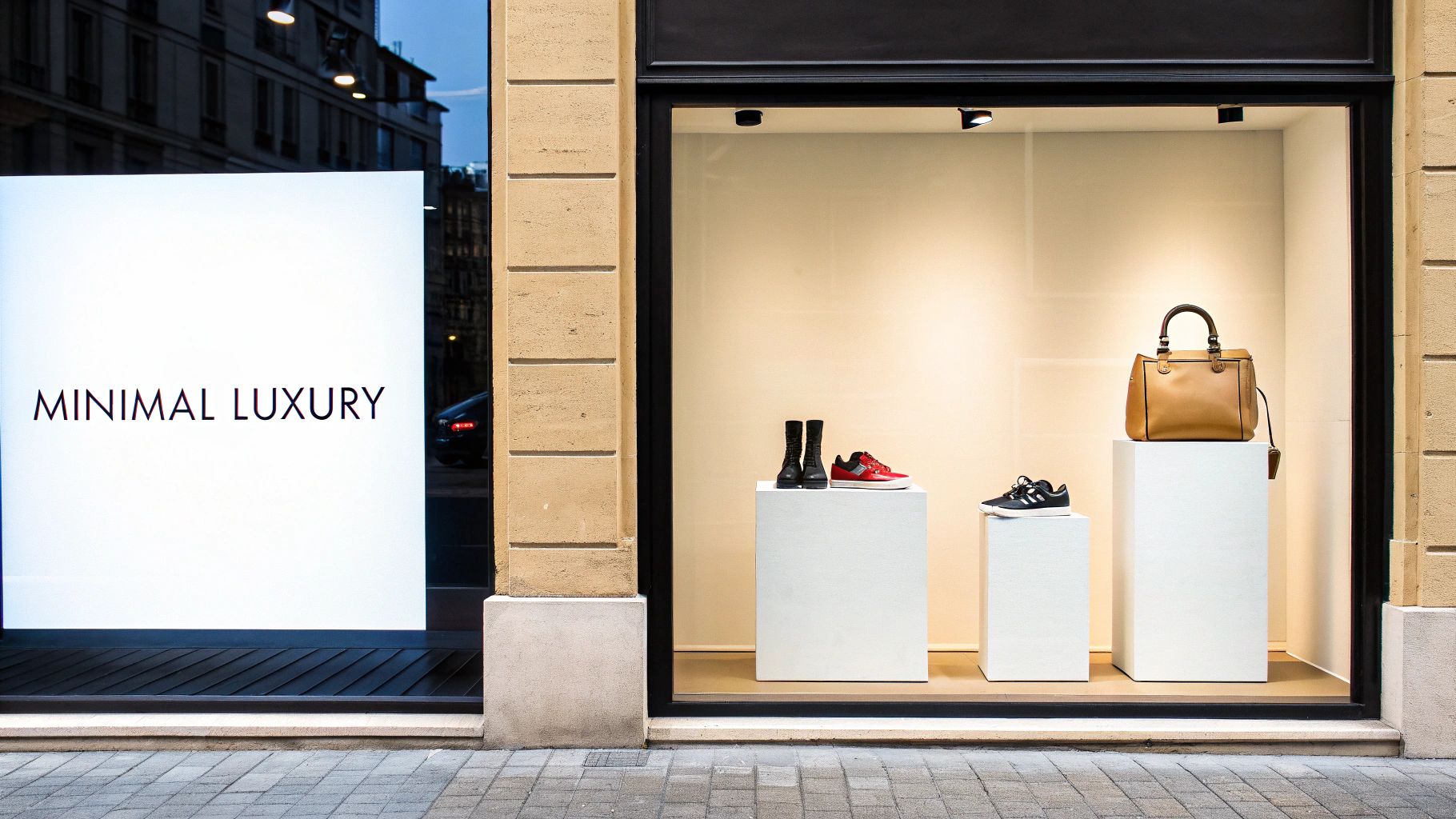
This method is one of the most effective retail storefront design ideas for brands wanting to project a premium, high-end image. It communicates confidence in the product’s quality, suggesting it doesn’t need a cluttered display to prove its worth. A practical example is a high-end watchmaker displaying a single, perfectly lit timepiece in a large window, with only the brand's illuminated metal logo above. This focused approach creates immense perceived value.
Implementation Tips
To execute this design effectively, focus on precision and quality over quantity. The signage becomes the art, and the product is the centerpiece.
- Invest in Premium Signage: Your sign is the main event. Opt for professional-grade illuminated signage like backlit channel letters or a sleek dimensional logo to create a memorable focal point, especially after dark.
- Strategic Lighting: Use focused lighting, such as adjustable track lights or spotlights, to meticulously highlight the featured product. This creates dramatic contrast against the darker, empty spaces in the window.
- Curate with Purpose: Select only one or two hero products for the display. The goal is to create intrigue and draw customers inside to see the full collection.
- Maintain Freshness: Keep your display from becoming stale by rotating the featured products quarterly or seasonally. This signals to repeat customers that there is always something new to discover. For more inspiration on keeping displays dynamic, you can learn more about retail window display ideas on ondisplaysigns.com.
- Ensure Compliance: All exterior signage must be clearly visible and meet local zoning and ADA (Americans with Disabilities Act) compliance standards for height, clearance, and illumination.
2. Experiential Interactive Storefront
Transforming a storefront from a static display into a dynamic, engaging destination is the core of an experiential design. This approach leverages technology to create an interactive experience that captures attention and invites participation before a customer even steps inside. By incorporating elements like motion-activated digital screens, scannable QR codes for exclusive content, and immersive visual displays, the storefront becomes a memorable brand touchpoint. It’s a powerful method for stopping foot traffic and converting passersby into engaged potential customers.
This strategy is one of the most forward-thinking retail storefront design ideas for modern brands looking to build a strong connection with a tech-savvy audience. It shifts the focus from passively viewing products to actively interacting with the brand's story. For example, a sporting goods store could feature a large screen where passersby can use their phones to "vote" on a famous sports moment, with the winning clip displayed in real-time.
Implementation Tips
Successfully launching an interactive storefront requires a blend of creative content and reliable technology. The goal is to create a seamless, intuitive experience that feels innovative, not complicated.
- Partner with Tech Experts: Work with a sign company experienced in commercial LED and digital display installation to ensure your technology is robust, weather-resistant, and properly integrated.
- Develop a Content Calendar: Plan your digital content in advance. Align displays with seasonal promotions, new product launches, or community events to keep the experience fresh and relevant.
- Test and Refine: Before a full rollout, test interactive elements with a small segment of your target demographic to gather feedback and work out any usability issues.
- Ensure All-Day Visibility: Choose high-brightness, anti-glare digital screens that are clearly visible in direct sunlight and deliver vibrant visuals after dark.
- Schedule Technology Audits: Perform regular maintenance and software updates to prevent glitches and ensure all interactive components are functioning correctly. For more technical specifications, you can learn about the options for digital signage and LED displays on ondisplaysigns.com.
3. Heritage and Storytelling Storefront
A powerful way to build an emotional connection with customers is to turn your storefront into a physical narrative of your brand's journey. This design approach uses vintage aesthetics, hand-crafted elements, and historical artifacts to tell a compelling story. Instead of just selling a product, it immerses passersby in the brand's history, craftsmanship, and values, making the business feel more authentic and established. This strategy transforms the storefront from a simple retail space into a destination that communicates legacy and passion.
This method is one of the most effective retail storefront design ideas for businesses with a rich history or a strong commitment to artisanal processes. Local coffee roasteries, craft breweries, and family-owned bakeries use this to showcase their unique origins and dedication to quality. A practical example is a bootmaker displaying the founder's original leatherworking tools in the window, accompanied by a small brass plaque telling the company's origin story. This creates a genuine connection that larger, more generic competitors cannot replicate.
Implementation Tips
To effectively bring your brand's story to life, focus on authenticity and quality in every detail. Your storefront should feel like a curated museum of your brand's history, not a manufactured theme.
- Commission Authentic Signage: Opt for signage that reflects craftsmanship. Hand-painted signs or custom-routed wooden signs add a tangible sense of authenticity and tradition. To see how these elements can enhance a heritage theme, explore different options for wood outdoor business signs on ondisplaysigns.com.
- Use Genuine Artifacts: Display real items from your company’s history, such as old tools, original packaging, or framed photographs of the founders. These artifacts serve as powerful, tangible storytellers.
- Select Quality Materials: Use high-quality, distressed, or reclaimed materials like aged wood, exposed brick, and wrought iron. These materials should look authentically worn and part of your story, not like cheap imitations.
- Keep the Narrative Fresh: While the core story remains, update the specific displays seasonally. For example, a bakery could showcase historical holiday recipes in winter, keeping the storefront engaging for repeat visitors.
- Integrate Digital Storytelling: Add QR codes next to key display items. These can link to a webpage with a more detailed history, a video of the founder, or a behind-the-scenes look at your craft, enriching the customer experience.
4. Sustainable and Eco-Conscious Storefront
This design philosophy moves beyond aesthetics to communicate a brand’s commitment to environmental responsibility. A sustainable storefront uses eco-friendly materials, energy-efficient technology, and green messaging to attract a growing segment of environmentally conscious consumers. The design itself becomes a tangible representation of company values, making a powerful statement before a customer even steps inside.
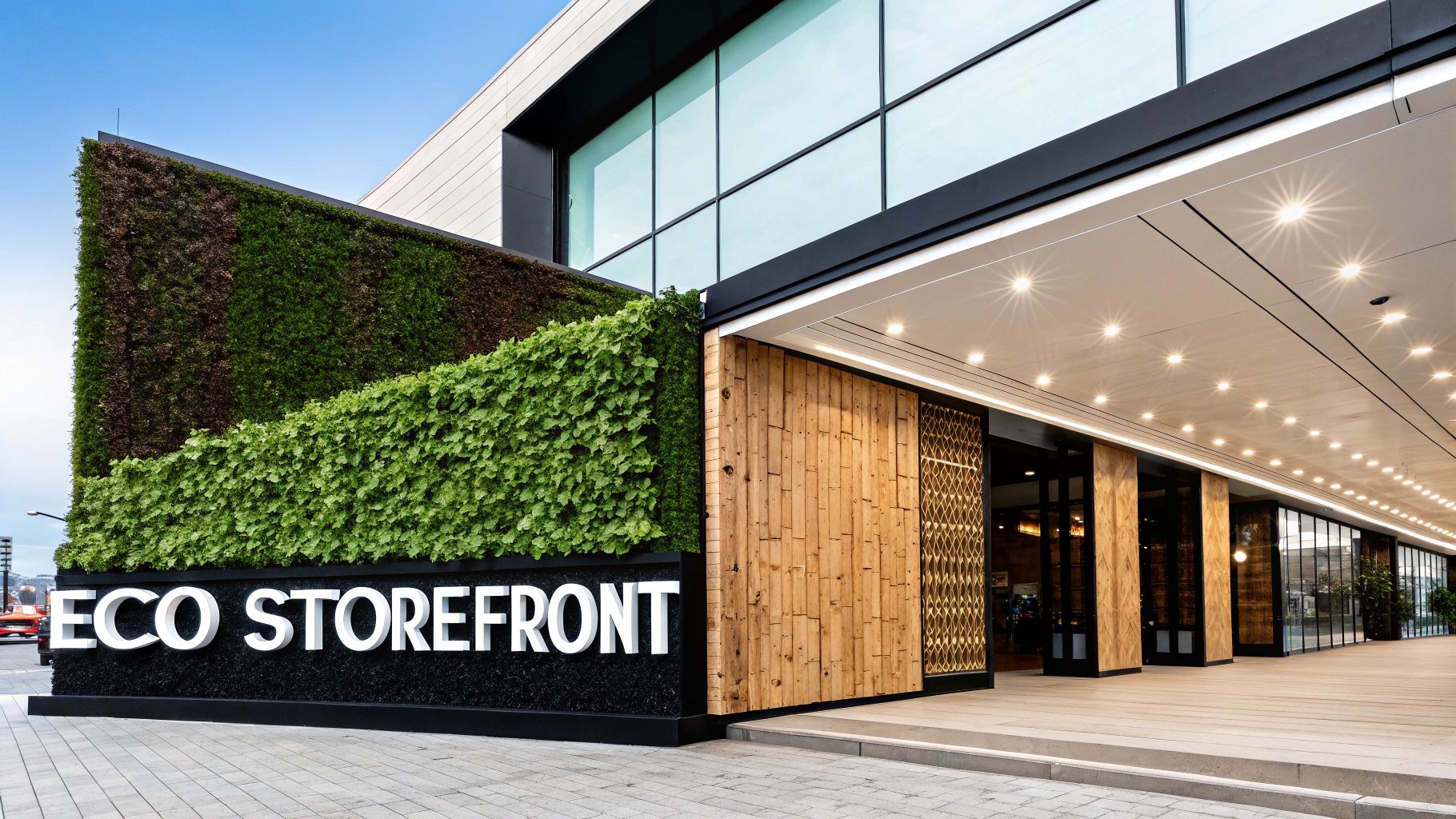
This approach is one of the most value-driven retail storefront design ideas, resonating deeply with shoppers who prioritize sustainability. Brands that sell natural or outdoor products have successfully integrated this ethos into their physical spaces. A practical example is a storefront featuring a "living wall" of native plants, signage made from reclaimed lumber, and a small, tasteful plaque explaining that the store is powered by solar panels. This doesn't just sell products; it showcases a commitment to the planet, building customer loyalty on a foundation of shared values.
Implementation Tips
To create an authentic eco-conscious storefront, every design choice should reflect your commitment to sustainability. Focus on longevity, efficiency, and responsible sourcing.
- Choose Sustainable Materials: Opt for materials with a low environmental impact, such as reclaimed wood, recycled metal, or Forest Stewardship Council (FSC) certified lumber for structural elements and signage. For a deeper dive into material options, you can learn more about durable and eco-friendly exterior sign materials on ondisplaysigns.com.
- Specify LED Lighting: Exclusively use LED lighting for all interior and exterior illumination, including signage. LEDs consume up to 75% less energy than incandescent bulbs and have a significantly longer lifespan, reducing both waste and operational costs.
- Incorporate Biophilic Design: Integrate natural elements like a living wall, potted plants, or window boxes. This not only enhances visual appeal but also improves air quality and creates a calming, natural atmosphere.
- Communicate Your Values: Use window graphics or a small, tasteful plaque to share your sustainability story. Mentioning your use of recycled materials, energy-efficient lighting, or ethical sourcing helps customers connect with your brand’s mission.
- Design for Longevity: Create a timeless design with durable, high-quality materials to minimize the need for frequent updates and replacements. This reduces waste and reinforces the idea of conscious consumption.
5. Open-Concept Glass Storefront with Strategic Signage
This modern retail storefront design idea uses extensive glazing to create a transparent, inviting façade that blurs the line between the street and the interior. By showcasing the entire retail space as the display, it leverages transparency to build curiosity and trust. The key to this approach is balancing the openness of the glass with strategically placed signage that establishes a clear brand identity without obstructing the view, creating a welcoming and sophisticated aesthetic.
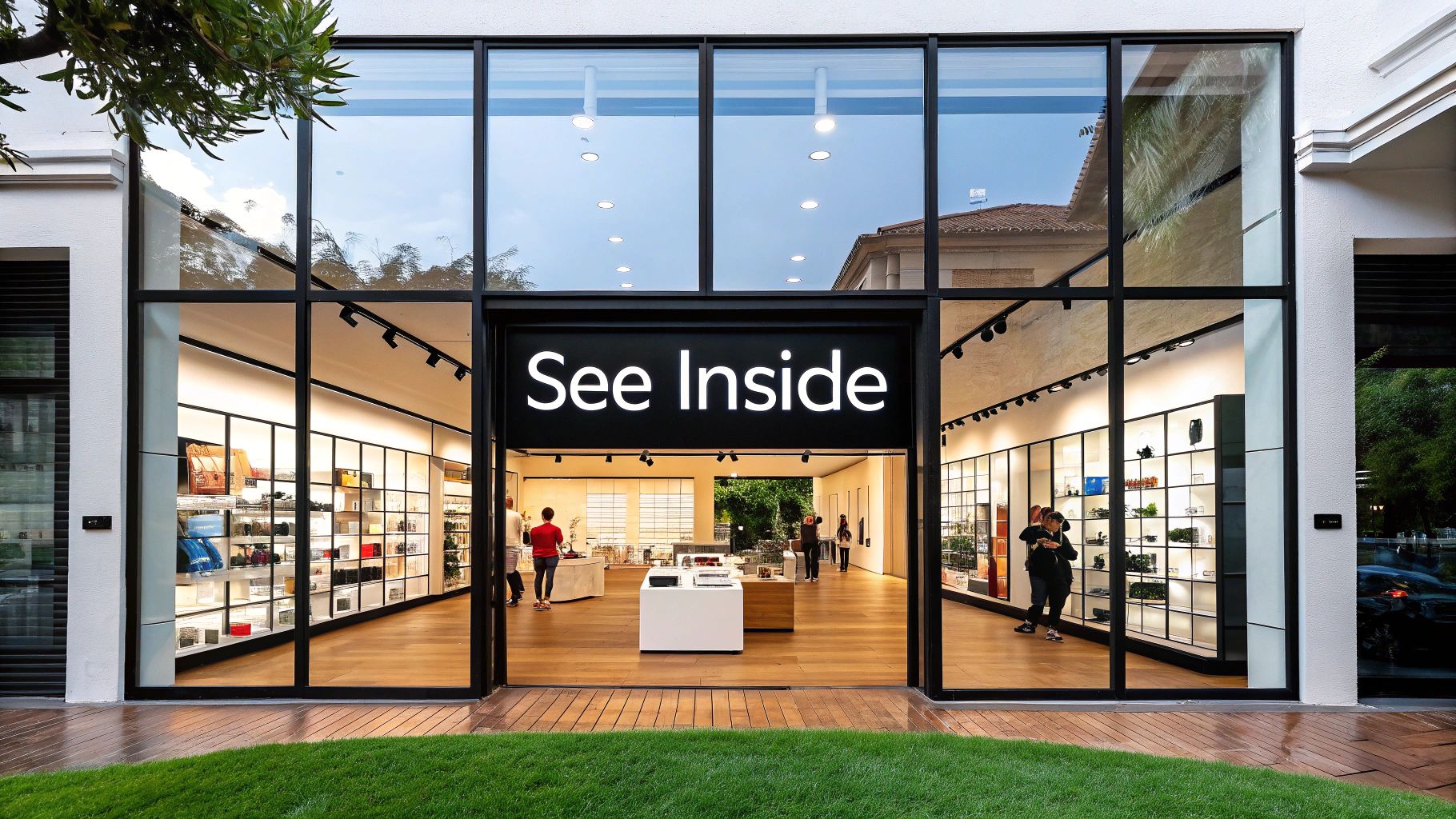
The open-concept glass storefront is highly effective for businesses that want to highlight their interior ambiance, dynamic product displays, or in-store activities. Technology companies popularized this style, using floor-to-ceiling glass to communicate modernity and transparency. A practical example is a high-end furniture showroom where the entire store is visible from the street, allowing passersby to see curated room layouts and inspiring them to imagine the products in their own homes.
Implementation Tips
Success with this design hinges on immaculate presentation and purposeful signage placement. The interior becomes your primary marketing tool, visible to every person who walks by.
- Invest in High-Quality Glazing: Use anti-reflective or low-iron glass to minimize glare and ensure maximum clarity. For added visual interest, you can explore various innovative specialty glass styles to create a unique look.
- Strategic Signage Placement: Position your primary logo and branding overhead (10-14 feet) or on a blade sign for street-level visibility. Use subtle window decals or vinyl lettering at eye level (60-66 inches) for promotions or hours of operation.
- Enhance with 3D Lettering: Use dimensional letters on an interior feature wall visible from the outside. This adds depth and reinforces branding without cluttering the glass. To see how this can be applied, learn more about 3D lettering signs on ondisplaysigns.com.
- Master Interior Lighting: Your interior lighting must work double duty, illuminating products while also making the storefront glow after dark. Use a layered lighting scheme with ambient, task, and accent lights to create a captivating scene.
- Maintain Impeccable Cleanliness: The vast glass surfaces must be kept spotless. Daily cleaning is often necessary to maintain a pristine, professional appearance that invites customers inside.
6. Vintage and Nostalgia-Driven Storefront
Tapping into the power of nostalgia is a potent strategy for creating an emotional connection with customers. This design approach deliberately evokes a specific time period or cultural moment, using retro signage, vintage color palettes, and period-appropriate materials to forge a memorable brand identity. It moves beyond just selling products and focuses on offering an authentic, immersive experience that resonates on a personal level.
This method is one of the most effective retail storefront design ideas for businesses aiming to stand out with a distinct character. It works exceptionally well for concept stores, themed cafes, vintage clothing boutiques, and craft breweries that want to communicate heritage or a unique story. A practical example is an old-fashioned candy shop with a classic striped awning, gold-leaf lettering on the window, and a vintage-style neon sign. This creates an inviting atmosphere that attracts customers seeking an experience, not just a transaction.
Implementation Tips
Successful execution of a nostalgia-driven design requires a commitment to authenticity and consistent detailing. Every element should reinforce the chosen era.
- Choose a Specific Era: Decide on a single, focused time period, whether it's the art deco glamour of the 1920s, the Americana optimism of the 1950s, or the industrial grit of the 1970s. A consistent theme is crucial.
- Invest in Authentic Signage: Your sign is the centerpiece of the vintage aesthetic. Work with specialty fabricators to create period-appropriate signage, such as exposed bulb signs, classic neon tubing, or hand-painted wooden signs.
- Use Period-Appropriate Materials: Incorporate materials that were common in your chosen era. This could include chrome detailing for a 50s diner, dark wood and brass for a Prohibition-era bar, or rustic, reclaimed wood for an old-world brewery.
- Research Historical Palettes: Color is a powerful tool for evoking a time period. Research and use color palettes that were popular during your chosen era to ensure the look feels genuine and not like a caricature.
- Tell a Story: Use the storefront and window displays to tell a story about the brand’s connection to the chosen period. This builds a deeper narrative that engages customers and makes the experience more meaningful.
- Maintain Quality Craftsmanship: A vintage look should never look cheap or poorly made. High-quality construction and finishing are essential to ensure the aesthetic is perceived as authentic and charming rather than kitschy.
7. Modular and Flexible Storefront System
In today’s fast-paced retail environment, adaptability is a key competitive advantage. A modular storefront system emphasizes flexibility, allowing businesses to refresh their appearance, promote new campaigns, or adapt to seasonal trends without requiring a complete overhaul. This design uses interchangeable components, such as swappable panels, adjustable shelving, and versatile signage frameworks, enabling rapid visual updates that keep the storefront looking current and dynamic.
This approach is one of the most practical retail storefront design ideas for businesses that thrive on newness, such as fast-fashion retailers or pop-up shops. It provides a cost-effective way to maintain a fresh look and respond quickly to market changes. For example, a sneaker store could use a pegboard-style facade with interchangeable shelves and graphic panels, allowing them to completely reconfigure the window display overnight for a new shoe launch.
Implementation Tips
Successful execution of a modular system hinges on a balance of smart design, durable materials, and streamlined operational planning.
- Design for Durability: Choose high-quality, weather-resistant materials for all interchangeable components. The mounting systems and frames must withstand frequent changes without showing wear and tear.
- Create Brand Guidelines: Develop a comprehensive guide that dictates how modular elements can be combined. This ensures a consistent and professional appearance across all variations and locations.
- Plan for Logistics: Modular systems require storage space for components not in use. Implement an inventory management system to track panels, signage, and fixtures, ensuring elements are available when needed.
- Document Everything: Create clear, easy-to-follow setup procedures with diagrams or videos. This allows staff at any location to execute updates correctly and efficiently without needing specialized teams.
- Invest in Quality Mounts: The hardware that holds the system together is critical. Use professional-grade mounting brackets and fasteners that are both secure and easy to adjust, preventing damage to the main facade over time.
8. Hyper-Local and Community-Integrated Storefront
This design approach forges a deep connection with the neighborhood by reflecting local culture, history, and community identity. Instead of a generic or corporate look, a hyper-local storefront uses regional materials, features work by local artists, and incorporates culturally relevant elements to show it's an authentic part of the community. This strategy moves beyond simple retail, positioning the business as a neighborhood partner and building a loyal customer base that values shared identity.
This method is one of the most powerful retail storefront design ideas for independent businesses seeking to stand out against larger chains. It communicates that the business isn't just in the community; it's of the community. A practical example is a hardware store that commissions a mural from a local artist depicting the town's founding, or a cafe that uses a community bulletin board on its exterior to promote nearby events. These actions turn the storefront into a genuine reflection of its surroundings.
Implementation Tips
To succeed with this approach, your design choices must be authentic and genuinely celebrate the local character. The storefront becomes a canvas for community storytelling.
- Partner with Local Artists: Commission a local artist to paint a mural on your façade or create unique, handcrafted signage. This not only supports the local creative economy but also gives your store a one-of-a-kind visual identity.
- Use Regional Materials: Incorporate building materials that are native to your region, such as local stone, reclaimed wood from a nearby historical building, or locally manufactured brick, to ground your design in its environment.
- Feature Community Stories: Use window displays or exterior chalkboards to spotlight local suppliers, celebrate neighborhood milestones, or promote upcoming community events. This shows active participation in the local scene.
- Incorporate Historical Elements: Research the history of your building or neighborhood and integrate subtle references into your design, such as vintage-style lettering or architectural details that honor the area's heritage.
- Engage the Community: Before finalizing a design, consider asking for feedback from local residents or community leaders to ensure the concept resonates authentically and respectfully with the people you aim to serve.
9. Luxury and Premium Material Storefront
This sophisticated storefront design approach treats the façade itself as a luxury product, using premium materials and architectural precision to communicate exclusivity. It relies on the inherent quality of materials like natural stone, polished metals, and hardwoods to create an impression of permanence, value, and craftsmanship. The design philosophy signals to discerning customers that the quality of the goods or services within is reflected in the meticulously crafted exterior.
This method is one of the most powerful retail storefront design ideas for establishing a high-end brand identity from the first glance. It moves beyond simple decoration to embody luxury through tangible quality. A practical example is a high-end jeweler whose storefront is clad in solid granite, with a heavy bronze-framed door and a single, elegant logo carved into the stone. The material integrity itself builds trust and desire before a customer even steps inside.
Implementation Tips
Executing a premium material storefront requires a commitment to quality in every detail, from design to installation. The goal is to create a seamless and sophisticated architectural statement.
- Specify Premium Materials: Commit to high-end materials for all visible components. Use natural stone like marble or granite for cladding, bronze or stainless steel for trim and door frames, and rich hardwoods for accents.
- Prioritize Precision Installation: The effect is lost without flawless execution. Work with fabricators and installers who specialize in luxury retail and can achieve minimal seams, perfect alignments, and no visible hardware.
- Integrate Architectural Lighting: Use professionally designed lighting to enhance the texture and richness of the materials. Grazing uplights on a stone wall or integrated lighting within a metal entryway can create stunning visual effects.
- Commission Bespoke Signage: Signage should be an integrated part of the architectural design, not an afterthought. Consider letters carved directly into stone or fabricated from solid blocks of metal to match the surrounding materials.
- Focus on Proportions and Scale: Elegant proportions are crucial. Ensure that the scale of the entrance, windows, and material panels feels balanced and intentional, creating a sense of grandeur and sophistication.
- Plan for Maintenance: Natural materials require proper care. Establish a rigorous maintenance schedule for cleaning stone, polishing metal, and treating wood to preserve the storefront’s pristine appearance over time.
10. Transparent Brand Values Storefront
This modern design approach moves beyond aesthetics to make a brand’s ethical commitments tangible and visible. A Transparent Brand Values Storefront uses visual storytelling to showcase sustainability practices, production methods, or social commitments right at the point of entry. It transforms abstract promises into concrete evidence, allowing customers to see proof of ethical sourcing, quality standards, or community impact before they even step inside. This philosophy uses transparency both literally and metaphorically to build immediate trust and differentiate through authenticity.
This is one of the most powerful retail storefront design ideas for purpose-driven brands looking to connect with a conscientious consumer base. It demonstrates that the business’s values are not just a marketing slogan but a core part of its operations. A practical example is a coffee shop that uses its main window to display a large, beautifully designed infographic tracing the journey of their coffee beans from a specific family farm, complete with photos of the farmers and details about their fair-trade practices.
Implementation Tips
To succeed with this design, authenticity is paramount. The goal is to create a compelling narrative that is both informative and visually engaging, turning your brand’s mission into a key design element.
- Create Visual Storytelling: Use infographics, displays of raw materials, or photographs of artisans to tell the story of your products. Make data about your impact visually appealing and easy to understand at a glance.
- Leverage Certifications: Prominently display certifications from credible third-party organizations like Fair Trade, B Corp, or Forest Stewardship Council (FSC). This adds an immediate layer of validated trust.
- Keep Information Current: Your impact story evolves. Regularly update any displayed statistics, impact metrics, or project information to maintain accuracy and show ongoing commitment.
- Incorporate Digital Integration: Use QR codes that link directly to detailed impact reports, behind-the-scenes videos, or web pages explaining your sourcing policies. This allows curious customers to dive deeper into your brand story.
- Feature Community Impact: Showcase customer testimonials or stories about the real-world impact of your business. This makes the brand’s mission more personal and relatable.
Top 10 Storefront Design Ideas Comparison
| Design Style | Implementation Complexity 🔄 | Resource Requirements ⚡ | Expected Outcomes 📊 | Ideal Use Cases | Key Advantages ⭐ | Quick Tip 💡 |
|---|---|---|---|---|---|---|
| Minimalist Window Display with Bold Signage | Moderate — precise curation & premium signage | Moderate — high-quality sign, lighting, few props | High brand clarity; perceived luxury | Luxury boutiques, flagship stores, jewelry | Directs focus; feels exclusive; low upkeep | Invest in professional illuminated channel letters |
| Experiential Interactive Storefront | High — tech integration & content workflows | High — digital displays, IT, ongoing content | Strong engagement; social sharing; higher dwell time | Sports, beauty, electronics, youth-focused brands | Memorable experiences; real-time updates | Maintain content calendar and tech audits |
| Heritage and Storytelling Storefront | High — detailed curation and authentic sourcing | Moderate–High — custom artifacts, artisanal work | Deep emotional connection; loyalty & differentiation | Artisanal food, family businesses, heritage brands | Authenticity-driven premium positioning | Use real artifacts and local craftspeople |
| Sustainable and Eco-Conscious Storefront | Moderate — sourcing and certification work | Moderate–High upfront; lower long-term operating cost | Positive brand perception; attracts eco-conscious customers | Outdoor, natural products, sustainable retailers | Reduced ops cost; green credentials; media appeal | Specify FSC materials and LED; avoid greenwashing |
| Open-Concept Glass Storefront with Strategic Signage | Moderate–High — glazing, lighting & signage coordination | High — premium glass, framing, lighting systems | Openness; strong product visibility; increased footfall | Fashion, tech showrooms, furniture, modern restaurants | Transparent, inviting, showcases interior activity | Use anti-reflective glass and daily cleaning routines |
| Vintage and Nostalgia-Driven Storefront | High — era-accurate execution required | Moderate–High — quality vintage materials or reproductions | Memorable personality; social buzz; niche appeal | Retro diners, vintage boutiques, themed venues | Distinctive identity; strong storytelling | Choose one era and execute consistently for authenticity |
| Modular and Flexible Storefront System | Moderate — heavy upfront planning for flexibility | Moderate — modular components, storage, management | Fast, cost-effective updates; consistent rollouts | Fast-fashion, pop-ups, seasonal retailers, multi-locs | Agility; scalable; reduces renovation costs | Document setups and track modular inventory |
| Hyper-Local and Community-Integrated Storefront | Moderate — requires relationship-building & curation | Low–Moderate — local art, community events, materials | Strong local loyalty; word-of-mouth growth | Neighborhood shops, cafés, community-oriented retailers | Deep community engagement; authentic differentiation | Partner with local artists and host community events |
| Luxury and Premium Material Storefront | Very High — precision fabrication & installation | Very High — natural stone, premium metals, skilled labor | Signals exclusivity; attracts affluent customers | High-end jewelry, watches, luxury fashion & autos | Timeless aesthetics; durable; justifies premium pricing | Work with high-end fabricators and maintain rigorously |
| Transparent Brand Values Storefront | High — requires verifiable data & ongoing updates | Moderate — display systems, certification costs | Builds trust; appeals to values-driven consumers | Ethical brands, sustainable retailers, social enterprises | Credibility; supports premium positioning; clear narrative | Display only verifiable metrics and use third-party certs |
From Idea to Impact: Executing Your Vision
Your storefront is far more than a physical entrance; it is the opening line in the conversation with your customers. It’s your brand’s first handshake, a visual promise of the experience waiting inside. Throughout this guide, we've explored a diverse palette of retail storefront design ideas, from the sleek sophistication of a minimalist facade to the engaging narrative of a heritage-driven concept. Each approach offers a unique pathway to capture attention and communicate value, but their true power is unlocked not in imitation, but in adaptation. The most successful storefronts are those that are not just seen but felt, creating a genuine connection that resonates with the local community and target audience.
The journey from a compelling idea to a tangible, traffic-driving reality is a complex one, paved with critical decisions in design, materials, and execution. The concepts we’ve covered, such as experiential interactive displays or sustainable eco-conscious designs, are not isolated tactics. They are strategic choices that must align with your core brand identity and operational goals. A vintage-inspired storefront, for example, must be more than just aesthetically pleasing; it needs to be built with durable materials that withstand the elements and comply with local building codes, all while functionally serving your business needs.
Bridging Concept and Construction
Successfully translating your vision requires a cohesive strategy that integrates every element, from window displays and lighting to your primary brand signage. Signage, in particular, acts as the anchor for your entire facade. It is the focal point that declares who you are and what you offer, guiding the customer's eye and setting the tone for their entire visit. This is where meticulous planning and professional execution become non-negotiable.
Consider these critical takeaways as you move forward:
- Authenticity Over Trends: While it's wise to be aware of design trends, your storefront’s primary goal is to be an authentic reflection of your brand. A luxury brand’s use of premium materials feels genuine, just as a community-focused shop’s hyper-local design builds trust.
- Integration is Key: The most impactful retail storefront design ideas treat the entire facade as a single, unified canvas. Your signage, lighting, window displays, and architectural elements must work in harmony, not compete for attention.
- Functionality Drives Form: An open-concept glass storefront is beautiful, but it must also be practical, offering security, energy efficiency, and a clear view of your merchandise. ADA compliance is not an afterthought but a foundational element of inclusive and effective design.
Your Action Plan for a Standout Storefront
The next step is to transform these ideas into a concrete plan. Begin by auditing your current storefront and identifying which concepts align most closely with your brand's future. Think about your customer journey before they even enter the store. What do you want them to think and feel? What action do you want them to take? Answering these questions will provide a clear direction for your design.
Executing ambitious retail projects often involves significant structural, electrical, and finishing work. To successfully bring ambitious storefront designs to life, it's essential to partner with the top commercial builders for retail projects who understand the specific needs of retail environments. These experts can ensure your project is built to last, meets all regulatory requirements, and is completed on schedule, preventing costly delays. Your storefront is a long-term investment in your brand’s visibility and success. By combining a powerful design concept with expert execution, you create more than just a beautiful facade; you build a powerful engine for customer acquisition and lasting brand loyalty.
Ready to turn your storefront vision into a landmark for your brand? The team at On Display Signs, Inc. specializes in translating ambitious retail storefront design ideas into high-quality, durable, and impactful signage solutions. From navigating permits to flawless installation, we are your end-to-end partner in making a powerful first impression. Visit On Display Signs, Inc. to see how we can bring your brand to life.