In a visually crowded world, standard signs are easily ignored. The difference between blending in and standing out often lies in strategic, memorable visual communication that goes far beyond a simple name on a building. This guide moves past basic concepts to explore 10 powerful types of creative signs and graphics that capture attention, guide customer journeys, and build a powerful brand identity. From illuminated channel letters to immersive wall wraps, we will dissect real-world applications to reveal the strategy behind their success.
This is not just a gallery of ideas; it's a strategic playbook. We will break down each example, providing deep analysis, actionable takeaways, and behind-the-scenes details you can replicate for your own business or clients. You will learn how innovative materials, thoughtful design, and expert execution can turn any surface into a compelling brand asset. Beyond traditional billboards, strategically chosen elements like event backdrops for hire can transform any space into a memorable brand experience, and the principles we cover apply to temporary and permanent installations alike. Prepare to see how the right visual solution can elevate a brand from being merely seen to being truly remembered.
1. 3D Channel Letters with LED Illumination
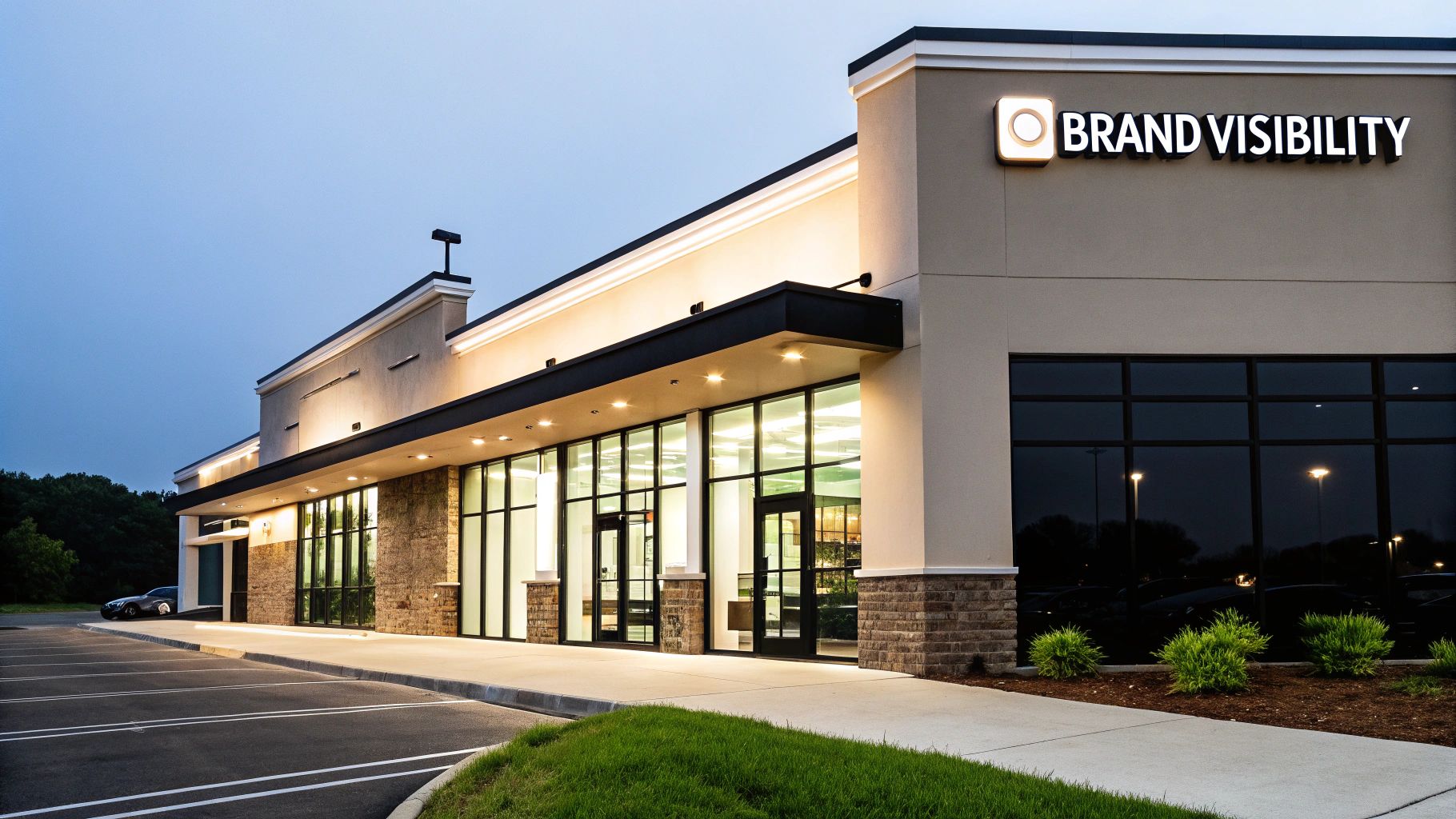
3D channel letters are individually fabricated, dimensional letters often used for storefronts and building facades to create a premium, high-impact brand presence. When integrated with LED technology, these creative signs and graphics provide outstanding visibility day and night, combining architectural depth with brilliant, energy-efficient illumination. This method ensures your brand name or logo literally stands out from the competition.
Strategic Analysis & Application
Channel letters are a powerful tool for establishing brand authority. The three-dimensional aspect conveys a sense of permanence and quality, making them ideal for businesses like high-end retailers, corporate offices, and hospitality chains seeking to project a professional image. For example, a law firm might use brushed aluminum, back-lit letters to convey sophistication, while a trendy boutique could use brightly colored, front-lit letters. LEDs offer significant advantages over traditional neon, including lower energy consumption, longer lifespan, and more consistent brightness, which reduces maintenance costs over time.
Key Insight: The primary function of illuminated channel letters is to turn your building into a 24/7 landmark. This constant visibility reinforces brand recognition and guides customers to your location, especially after dark or in high-traffic commercial areas.
Actionable Takeaways
- Lighting Style Matters: Choose between front-lit (standard), back-lit (halo effect), or a combination to match your brand's aesthetic. A halo effect often creates a more sophisticated, subtle look.
- Material and Finish: Select materials like aluminum and acrylic that withstand weather. The finish, whether brushed metal or a specific Pantone color, should align perfectly with your brand guidelines.
- Code Compliance is Crucial: Always verify local zoning ordinances and landlord requirements regarding sign size, brightness, and mounting methods before starting production.
- Professional Installation: Due to complex electrical wiring and mounting, always use a licensed and insured professional for installation to ensure safety, longevity, and code compliance.
For those looking to explore this option further, you can discover more about 3D letter sign options on ondisplaysigns.com.
2. Dynamic Digital Signage and Interactive Displays
Dynamic digital signage uses LED or LCD screens to display animated content, real-time information, and interactive elements. These advanced creative signs and graphics can be updated remotely, allowing businesses to show different messages based on the time of day, season, or specific promotions. This flexibility makes them ideal for high-traffic retail environments, corporate spaces, and public venues looking to engage audiences with timely and relevant content.
Strategic Analysis & Application
Digital displays transform static advertising into an engaging, adaptable communication channel. For retailers, this means instantly updating promotions and influencing purchase decisions at the point of sale. A practical example is a quick-service restaurant that displays breakfast menus in the morning and switches to lunch specials automatically at 11 AM. In corporate lobbies or manufacturing facilities, they can share brand stories, display key performance indicators, or communicate important internal announcements. This technology allows for unparalleled control over messaging, enabling A/B testing of content to see what resonates most with viewers.
Key Insight: The core advantage of digital signage is its ability to deliver context-aware content. By scheduling promotions, menus, or announcements, a business can maximize relevance and impact, ensuring the right message reaches the right audience at the right time.
Actionable Takeaways
- Develop a Content Strategy First: Before installation, outline your content goals. Plan what you will display, how often it will be updated, and who is responsible for managing it to maximize your return on investment.
- Prioritize Readability: Ensure screen brightness is adequate for the environment (especially for outdoor or window-facing units) and that text size and fonts are easily legible from a distance.
- Keep Content Fresh: Regularly update your visuals and messages to prevent audience fatigue and keep people engaged. Stale content quickly becomes invisible to repeat visitors.
- Integrate with Business Systems: Connect your signage to inventory, scheduling, or point-of-sale systems to display real-time data like product availability, upcoming appointments, or live menu changes automatically.
Restaurants, in particular, can greatly benefit from this technology. You can see more about the role of digital signage in restaurants on ondisplaysigns.com.
3. Large-Format Window Graphics and Wall Wraps
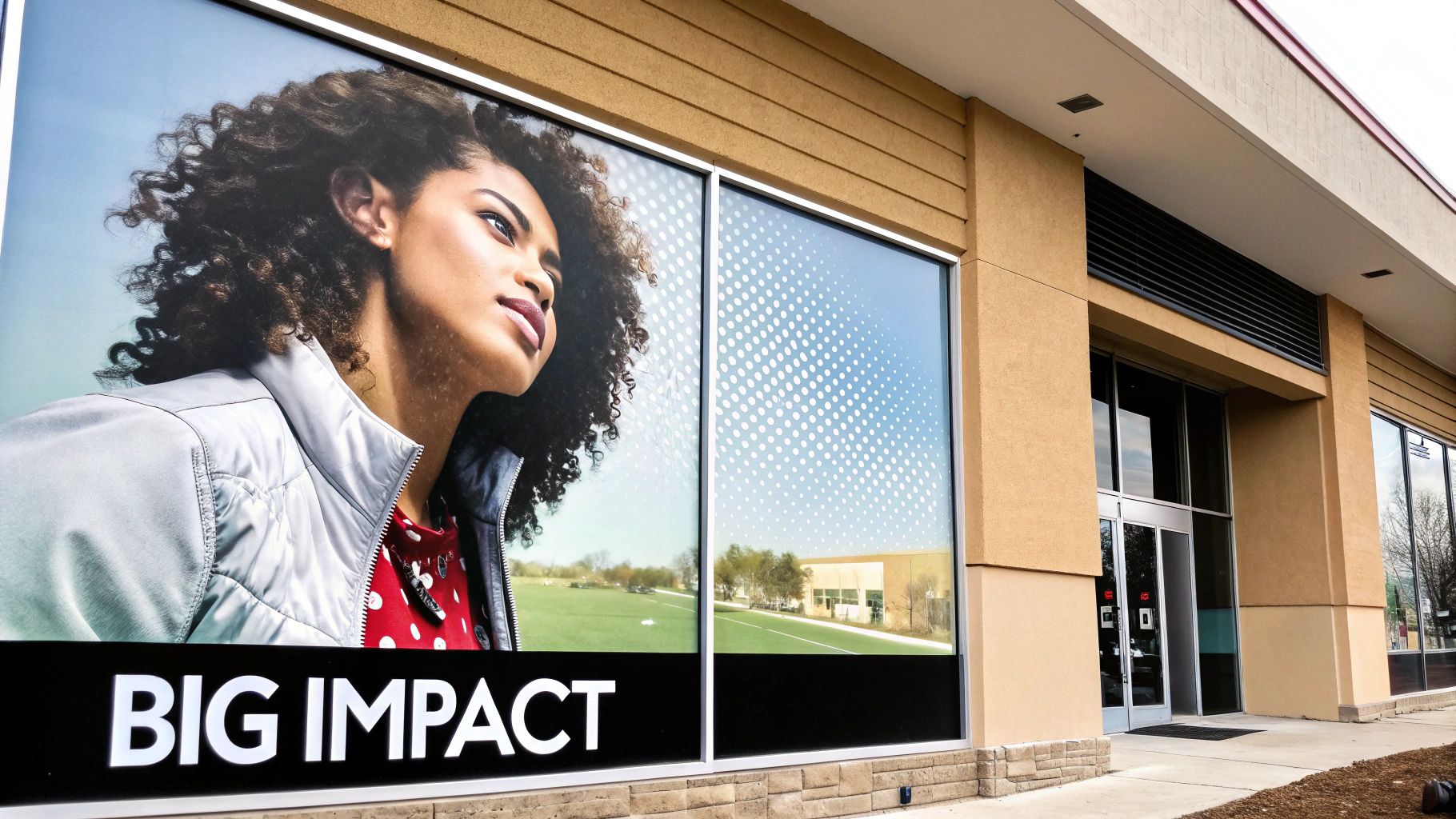
Large-format window graphics and wall wraps are custom-printed vinyl applications that transform entire surfaces into powerful marketing canvases. These creative signs and graphics can cover everything from a single storefront window to a massive building facade, turning unused space into a high-impact brand showcase. Window graphics can feature vibrant promotions or create privacy with perforated vinyl, while wall wraps make dramatic statements in corporate interiors or on construction barriers.
Strategic Analysis & Application
These wraps are a versatile and cost-effective solution for creating immersive brand environments or generating buzz for temporary events. For retail stores undergoing renovations, a full building wrap can conceal construction while advertising what's coming soon. For a practical example, a new restaurant could use teaser window graphics showing close-ups of their signature dishes to build anticipation before a grand opening. The sheer scale of these graphics makes them impossible to ignore, offering a significant ROI for capturing public attention in high-traffic areas.
Key Insight: The primary function of large-format wraps is to maximize visual real estate. They transform static architectural features into dynamic advertising, allowing businesses to tell a bigger brand story, announce major promotions, or completely change a location's aesthetic without permanent structural changes.
Actionable Takeaways
- Image Quality is Paramount: Use high-resolution imagery (at least 300 DPI at final size) to ensure the printed graphic is crisp and professional, not pixelated.
- Choose the Right Vinyl: Use perforated vinyl for windows to maintain one-way visibility and allow natural light in. For outdoor walls, select durable, UV-resistant vinyl and inks to prevent fading.
- Plan for Sightlines: Design the graphic considering how it will be viewed from different distances and angles, ensuring key messages are legible from the street or sidewalk.
- Rely on Professional Installers: A flawless, bubble-free application is critical for a professional appearance. Always hire experienced installers for large-scale projects to ensure proper adhesion and longevity.
To understand the technology behind these visuals, you can explore the details of what is large format printing on ondisplaysigns.com.
4. Monument and Pylon Signs with Monument Bases
Monument and pylon signs are large, freestanding structures designed for maximum visibility from a distance. Typically placed at property entrances or along busy roads, they act as powerful brand landmarks. Monument signs are shorter, built on a solid base of materials like brick or stone, while taller pylon signs are mounted on poles. Both serve as a primary identification point for shopping centers, corporate campuses, and multi-tenant properties.
Strategic Analysis & Application
These signs are indispensable for commercial real estate developers and property managers. For multi-tenant complexes, pylon signs not only establish the location's identity but also provide valuable advertising space for individual businesses. A practical example is a shopping plaza pylon sign with panels for the anchor grocery store, a bank, a salon, and a restaurant, guiding traffic into the complex. Monument signs project an image of stability and prestige, making them ideal for corporate headquarters, professional office parks, and community entrances. Their large scale makes them a crucial component of wayfinding and brand presence in sprawling commercial areas.
Key Insight: Monument and pylon signs function as navigational beacons. Their primary goal is to capture the attention of high-speed traffic, guiding potential customers to a location long before they pass it and establishing a dominant physical presence in a crowded commercial landscape.
Actionable Takeaways
- Zoning First: Begin by verifying local zoning regulations for height, size, and setback from the road. These codes will dictate the fundamental design parameters.
- Engineer the Foundation: A solid foundation is critical for safety and longevity. Work with a structural engineer to design footings that account for soil conditions and wind load.
- Plan for Tenant Changes: If designing for a multi-tenant property, use a system with easily interchangeable panels or digital displays to accommodate future tenant turnover without a complete sign overhaul.
- Integrate Landscaping: Enhance the sign's curb appeal and help it blend with the property by incorporating complementary landscaping, such as shrubs, flowers, or accent lighting, around its base.
To understand the specific applications and benefits of these signs, you can learn more about the details of a pylon sign on ondisplaysigns.com.
5. Modular and Portable Trade Show Booth Signage
Modular and portable trade show booth signage refers to custom-designed, lightweight systems built for temporary exhibitions. These creative signs and graphics include fabric backdrops, retractable banner stands, and hanging signs that can be assembled and disassembled quickly. Their modular nature allows for easy reconfiguration across different event footprints, offering a versatile and cost-effective solution for businesses with a recurring trade show presence.
Strategic Analysis & Application
In the competitive environment of a trade show, a booth must capture attention instantly and communicate a clear brand message. Modular systems are strategic assets that allow B2B marketers, tech companies, and real estate developers to create an immersive brand environment without the logistical nightmare of traditional custom builds. For example, a software company can use a large, back-lit fabric wall as a primary backdrop, two retractable banners for specific product features, and a branded podium for demonstrations. This setup can be managed by a small team and transported in wheeled cases.
Key Insight: The primary function of modular signage is to maximize impact while minimizing logistical costs and complexity. A well-designed system serves as a powerful sales tool, creating a branded space that draws in prospects and facilitates meaningful conversations on the show floor.
Actionable Takeaways
- Design for Reconfiguration: Create graphic elements that can be used independently or combined in different arrangements. This allows you to adapt a 20-foot display into a 10-foot booth for smaller events.
- Invest in Quality Hardware: Choose durable, lightweight hardware and high-quality carrying cases. This protects your investment during transport and ensures your display looks pristine at every show.
- Integrate Lighting: Plan for integrated LED lighting to make your graphics pop and stand out from neighboring booths. Proper illumination is critical in large, often dimly-lit convention halls.
- Choose Fabric Graphics: Tension fabric graphics are lightweight, machine-washable, and resistant to wrinkles and glare compared to traditional vinyl, making them ideal for repeated use and transport.
To see how these systems can be tailored for maximum impact, view examples of modular display solutions at ondisplaysigns.com.
6. Wayfinding and Directional Sign Systems
Wayfinding and directional sign systems are comprehensive, integrated solutions designed to guide people through complex physical environments. Ranging from campus maps and directional pylons to interior floor markers and room identifiers, these creative signs and graphics are essential for navigating large spaces like hospitals, airports, and corporate parks. An effective system reduces user frustration, enhances traffic flow, and improves the overall visitor experience.
Strategic Analysis & Application
Well-executed wayfinding is a form of silent customer service. By anticipating a visitor's journey and placing clear, consistent signage at key decision points, businesses can minimize confusion and anxiety. A practical example in a hospital is color-coding different wings (e.g., blue for cardiology, green for pediatrics) and using that color consistently on all overhead signs, wall directories, and room plaques. This is particularly critical in environments where stress levels are already high, or in large retail centers, where easy navigation directly impacts sales.
Key Insight: The primary goal of a wayfinding system is to empower visitors, giving them the confidence to navigate your space independently. This not only improves their experience but also frees up staff from constantly providing directions.
Actionable Takeaways
- Design for Consistency: Use a uniform system of colors, typography, and iconography across all signs to create a recognizable visual language that is easy for visitors to learn and follow.
- Prioritize Placement: Install signs at critical decision points, such as intersections, entrances, and elevator banks. Conduct a walk-through to identify potential points of confusion.
- Incorporate Accessibility Compliance: Ensure all signage, including room numbers and directional signs, meets federal and local requirements for text size, color contrast, and Braille from the very start of the project.
- Use a Clear Hierarchy: Differentiate between primary navigational signs (e.g., "Parking," "Main Lobby") and secondary identifiers (e.g., "Room 201") to help users process information logically.
For those looking to implement a new system, you can learn more about effective wayfinding signage solutions on ondisplaysigns.com.
7. Illuminated Neon and Flex Tube Signage
Illuminated neon and its modern counterpart, LED flex tubing, offer a vibrant and distinctive way to capture attention. Traditional neon uses gas-filled glass tubes to produce a warm, continuous glow, creating a classic or retro aesthetic. LED flex tubes mimic this look using flexible, durable silicone tubing with embedded LEDs, providing greater energy efficiency, durability, and design versatility for intricate, creative signs and graphics.
Strategic Analysis & Application
This type of signage is less about conveying detailed information and more about creating a mood, reinforcing brand personality, and generating visual appeal. It excels in environments like restaurants, bars, and boutique retail stores where ambiance is a key part of the customer experience. A practical example is a coffee shop using a warm white neon sign with its logo and a witty phrase like "Sip Happens" to create a cozy, photo-worthy corner for customers. The unique glow is highly photogenic, encouraging social media sharing and turning a simple sign into a powerful marketing tool.
Key Insight: Neon and flex tube signs act as functional art pieces that define a space's character. Their primary role is to create a memorable focal point that communicates brand identity and becomes an instantly recognizable brand asset.
Actionable Takeaways
- Choose the Right Technology: Use traditional glass neon for an authentic, upscale vintage feel in indoor settings. Opt for LED flex tubes for outdoor applications, complex designs, or high-traffic areas where durability is paramount.
- Design for Impact: Simple, bold text or clean geometric shapes are most effective. Complicated designs can become unreadable and difficult to fabricate, diminishing the sign's impact.
- Plan for Installation: Both types require professional installation. Real neon involves high-voltage transformers and specific ventilation considerations, while LED flex tubes need proper power supplies and secure mounting to ensure longevity.
- Support and Mounting: Consider the background surface. Mounting the sign on a clear acrylic panel or a custom-built frame can enhance its visibility and make installation easier on various wall types.
8. Custom Painted Murals and Hand-Lettered Graphics
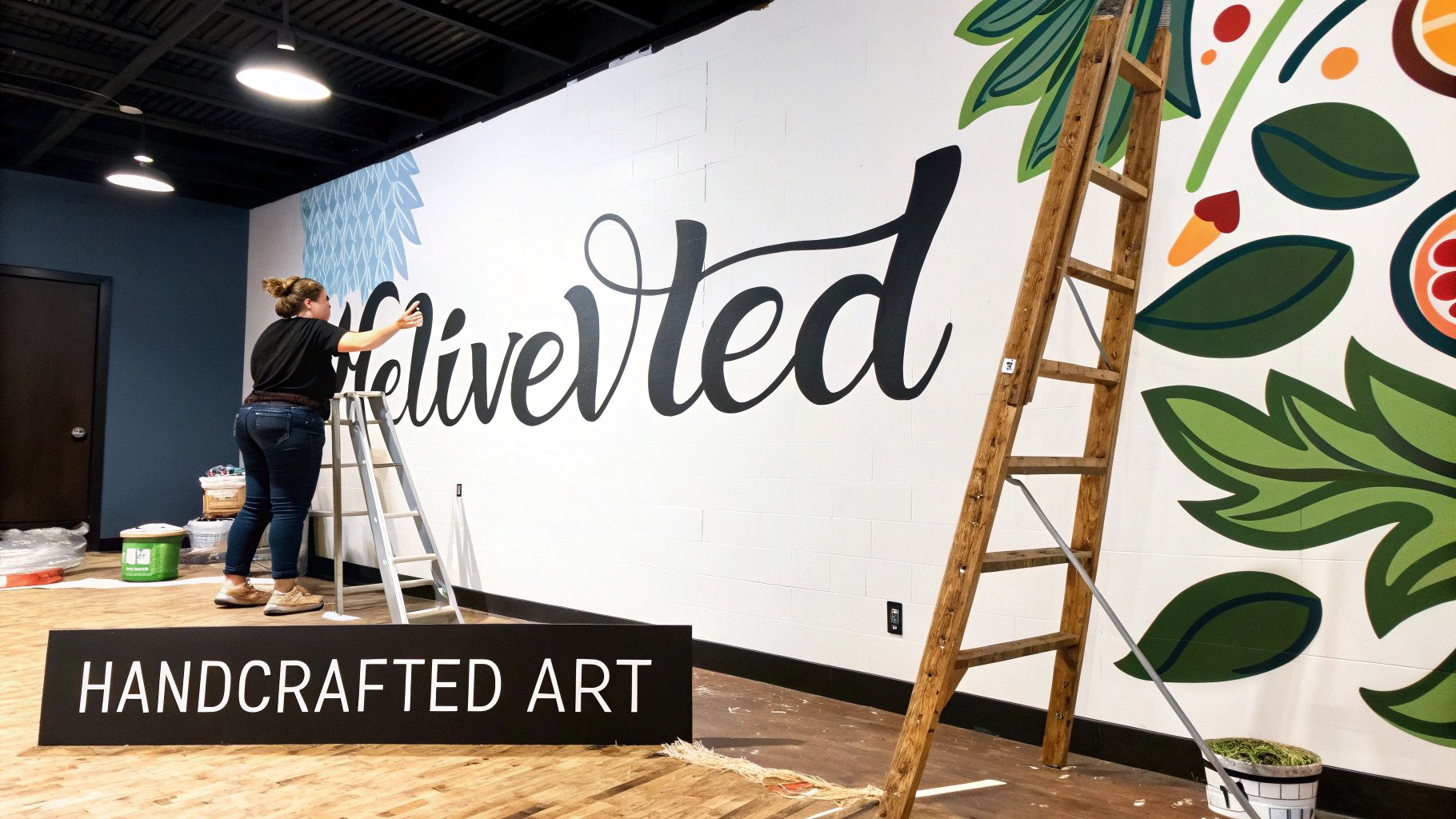
Custom painted murals and hand-lettered graphics are unique, artistic installations that transform a plain wall into a powerful brand statement. These large-scale creative signs and graphics can be hand-painted for an authentic, crafted feel or digitally rendered for photorealistic precision. They are exceptional for telling a brand’s story, enhancing an environment, and creating a memorable, shareable experience for customers and the community.
Strategic Analysis & Application
Murals are highly effective for businesses aiming to cultivate an authentic brand identity and strong community connection. Restaurants, independent retail shops, and craft breweries use them to visually narrate their history or values, turning a simple space into a destination. For example, a local gym could commission a mural on its exterior wall depicting silhouettes of athletes against a backdrop of local landmarks, reinforcing its community roots and active lifestyle brand. This can increase foot traffic and add significant cultural value to the asset.
Key Insight: A custom mural serves as an organic marketing tool by creating a compelling, "Instagrammable" backdrop. Customers are naturally inclined to share photos taken with the artwork, generating free user-generated content and brand promotion across social media.
Actionable Takeaways
- Partner with a Professional: Collaborate with an experienced muralist whose artistic style aligns with your brand. Review their portfolio to ensure they can execute your vision effectively.
- Plan the Design in Detail: Finalize a comprehensive design concept, including color palette and scale, before any paint is applied. This ensures the final piece is perfectly on-brand.
- Use Durable Materials: Opt for high-quality, weather-resistant paints and apply a protective UV and anti-graffiti sealant, especially for exterior murals, to ensure longevity.
- Engage the Community: Consider involving the local community in the mural's theme or creation process. This builds goodwill and strengthens the connection between your business and its neighborhood.
9. ADA-Compliant Tactile and Braille Signage
ADA-compliant signage combines tactile characters and Braille to ensure public spaces are accessible to everyone, including individuals with visual impairments. These signs are not just a legal requirement but a fundamental element of inclusive design, allowing for independent navigation in environments like hospitals, schools, and government buildings. Far from being purely functional, modern ADA signs can be integrated into a facility’s aesthetic, making them a seamless part of your creative signs and graphics strategy.
Strategic Analysis & Application
Integrating ADA-compliant signage is a non-negotiable aspect of public facility design and a powerful statement of corporate responsibility. For businesses like healthcare systems, educational institutions, and corporate offices, these signs are critical for creating a safe and welcoming environment. A practical example is a hotel ensuring that all room number plaques, restroom signs, and stairwell identifiers meet specific standards for font, raised lettering, Braille placement, and mounting height. Proper implementation ensures you meet strict guidelines, avoiding legal penalties while demonstrating a commitment to serving all members of the community.
Key Insight: ADA signage is a critical component of wayfinding that builds trust and safety. By making essential information universally accessible, you remove barriers and empower all visitors to navigate your space with confidence and dignity.
Actionable Takeaways
- Consult an Expert Early: Partner with an accessibility compliance specialist during the initial design phase to ensure all specifications for character height, spacing, finish, and mounting location are met.
- Prioritize Material and Contrast: Use non-glare finishes on all tactile signs to prevent reading difficulties. The characters must also have a high level of color contrast with their background for maximum visibility.
- Maintain Consistency: Install signs at a consistent height and location throughout your facility, typically on the latch side of the door, to make them predictable and easy for users to find.
- Plan for Updates: Include accessibility signage planning in all renovation and construction projects to ensure the entire facility remains compliant as it evolves.
To better understand the specific requirements, explore the resources on ADA-compliant interior signage available at ondisplaysigns.com.
10. Contextual 3D Dimensional Graphics and Sculptural Elements
Custom-fabricated three-dimensional graphics and sculptural elements move beyond traditional flat signage to create truly immersive brand experiences. These creative signs and graphics include everything from large-scale sculptural logos and brand mascots to artistic pieces fully integrated into a building's architecture. They serve as memorable, physical landmarks that engage audiences in a tangible and impressive way.
Strategic Analysis & Application
These dimensional elements are powerful placemaking tools, transforming ordinary spaces into unique destinations. They are ideal for corporate campuses, luxury hospitality venues, and master-planned communities aiming to establish a distinct identity. A practical example is a tech campus installing a large, interactive metal sculpture of its logo that visitors can walk through and photograph. Unlike a standard sign, a sculpture invites interaction, generating organic social media exposure and turning a location into a shareable experience. This approach communicates brand confidence, creativity, and a significant investment in the physical environment.
Key Insight: The goal of sculptural graphics is to create an environmental brand expression that feels like art. This elevates the brand beyond simple advertising and integrates it into the community's landscape, fostering a deeper, more emotional connection with visitors and residents.
Actionable Takeaways
- Integrate Early: Collaborate with architects and landscape designers during the initial planning phase to ensure the element feels like a natural part of the environment, not an afterthought.
- Plan for Durability: Select materials rated for local climate conditions, such as marine-grade aluminum, stainless steel, or architectural concrete, to ensure longevity and minimize maintenance.
- Lighting is Key: Use strategic uplighting or integrated LEDs to showcase the sculpture's dimensional qualities and ensure it remains a powerful landmark after dark.
- Consider All Angles: Design the piece to be visually compelling from multiple sight lines, considering how it will be viewed by pedestrians, drivers, and from inside adjacent buildings.
Creative Signs & Graphics — 10-Item Comparison
| Solution | Implementation Complexity 🔄 | Resource Requirements ⚡ | Expected Outcomes ⭐ | Ideal Use Cases 📊 | Key Advantages 💡 |
|---|---|---|---|---|---|
| 3D Channel Letters with LED Illumination | Medium–High — electrical & pro install 🔄 | Materials (aluminum/acrylic), electrician, permits, higher capex ⚡ | High visibility, 24/7 brand presence ⭐ | Retail storefronts, flagship locations, franchises 📊 | Premium look, energy-efficient LEDs, customizable |
| Dynamic Digital Signage and Interactive Displays | High — hardware + software + content management 🔄 | Screens, CMS, connectivity, content creators, power ⚡ | Flexible messaging, measurable engagement ⭐ | Malls, QSR menu boards, airports, corporate lobbies 📊 | Instant updates, analytics, interactivity |
| Large-Format Window Graphics and Wall Wraps | Low–Medium — printing + pro install 🔄 | Wide-format printing, installers, high-res artwork ⚡ | Big visual impact, cost-effective for large areas ⭐ | Storefront renovations, promotions, development sites 📊 | Fast install, scalable coverage, temporary or permanent |
| Monument and Pylon Signs with Monument Bases | Very High — engineering, foundation, permitting 🔄 | Structural materials, site work, heavy install, high capex ⚡ | Long-distance visibility, landmark status ⭐ | Shopping centers, office parks, multi-tenant complexes 📊 | Maximum visibility, durable, tenant flexibility |
| Modular and Portable Trade Show Booth Signage | Low–Medium — design + modular assembly 🔄 | Lightweight frames, graphics, cases, storage, transport ⚡ | Reusable, quick setup, professional event presence ⭐ | Trade shows, exhibitions, pop-up activations 📊 | Portable, quick assembly, cost-effective per event |
| Wayfinding and Directional Sign Systems | High — planning, accessibility compliance, system design 🔄 | Design teams, accessibility specialists, varied materials, site install ⚡ | Improved navigation, safety, reduced staff time ⭐ | Hospitals, campuses, airports, large complexes 📊 | Accessibility, reduced liability, scalable system |
| Illuminated Neon and Flex Tube Signage | Medium–High — custom fabrication & electrical 🔄 | Glass neon or LED flex, transformers, specialty installers ⚡ | Distinctive ambiance, strong nighttime presence ⭐ | Bars, restaurants, boutiques, experiential spaces 📊 | Memorable aesthetic, LED flex durability, ambiance |
| Custom Painted Murals and Hand-Lettered Graphics | Medium — artist time, site prep, weather considerations 🔄 | Professional artists, paints/sealers, scaffolding, longer timeline ⚡ | Unique brand expression, social engagement, long-term impact ⭐ | Interior accents, exterior facades, community projects 📊 | One-of-a-kind work, emotional connection, social buzz |
| ADA-Compliant Tactile and Braille Signage | High — strict standards and precise fabrication 🔄 | Specialized materials, accessibility expertise, certified fabrication ⚡ | Legal compliance, improved accessibility, reduced risk ⭐ | Healthcare, government, education, public buildings 📊 | Ensures compliance, accessibility, reduces liability |
| Contextual 3D Dimensional Graphics and Sculptural Elements | Very High — custom design, engineering, site integration 🔄 | Fabrication shops, materials, structural engineering, permits ⚡ | Memorable landmarks, immersive brand experiences ⭐ | Corporate campuses, resorts, experiential marketing sites 📊 | Landmark appeal, social draw, enduring brand statement |
Bringing Your Vision to Life with an Expert Partner
Throughout this showcase, we have explored ten distinct examples of creative signs and graphics, moving far beyond mere identification. From the commanding presence of illuminated 3D channel letters to the immersive experience of a full-scale wall wrap, it's clear that signage is a powerful fusion of art, engineering, and brand strategy. Each application serves a unique purpose, whether it's capturing attention from a distance, guiding visitors seamlessly through a facility, or creating an unforgettable brand environment at a trade show.
The common thread connecting these successful projects is the meticulous attention to detail at every stage. A dynamic digital display isn't just a screen; it's a content delivery system that must be programmed and maintained. An ADA-compliant sign isn't just a legal requirement; it's an integral part of an effective user experience that demands precision in fabrication. These examples prove that the most impactful creative signs and graphics are born from a deep understanding of materials, placement, and purpose.
From Concept to Concrete Reality
The journey from a great idea to a tangible, high-performing sign involves navigating a complex landscape of variables. Consider the practical challenges:
- Permitting and Compliance: Securing the necessary local permits for a large pylon or monument sign can be a significant hurdle. An expert partner understands municipal codes and can manage the process efficiently.
- Material Science: Choosing between neon and LED flex tubing or selecting the right vinyl for a window graphic requires knowledge of durability, energy consumption, and visual effect. The wrong material can lead to a sign that fades, fails, or misrepresents your brand.
- Structural Integrity: Installing a heavy dimensional logo or a large-format graphic requires engineering know-how to ensure it is secure, safe, and built to last against environmental factors.
Mastering these elements is not just about avoiding problems; it's about maximizing your investment. A well-executed sign does more than just announce your location. It builds trust, communicates quality, and actively contributes to your business goals by improving customer experience and reinforcing brand identity. To truly bring your vision to life and ensure impactful results, partnering with a provider offering comprehensive expert graphic design services is a critical first step in developing a professional and compelling visual concept.
Ultimately, the power of creative signs and graphics lies in their ability to transform a physical space into a branded experience. By thoughtfully combining design ingenuity with technical execution, you create assets that work for you 24/7, turning passersby into customers and customers into advocates.
Ready to transform your brand’s physical presence with stunning, strategic signage? The team at On Display Signs, Inc. specializes in turning ambitious concepts into reality, managing everything from design and fabrication to professional installation. Contact On Display Signs, Inc. today to discuss your project and discover how expert craftsmanship can elevate your vision.