Think of your outdoor business sign as your hardest-working employee. It’s on the clock 24/7, greeting every potential customer and making the first impression long before anyone ever steps inside. It’s not just a sign—it’s a powerful marketing tool that directly impacts whether someone driving by decides to stop in or keep on moving.
Why Your First Impression Is Your Best Marketing Tool
Picture this: a potential customer is driving down a busy street, scanning for a place to eat or shop. They see two businesses. One has a faded, cracked sign with a few burnt-out bulbs. The other has a bright, clean, professional sign that instantly communicates what they're all about. Which one are they going to choose?
That split-second decision is where the real power of outdoor business signs comes into play. It’s not just a marker with your name on it; it’s the first handshake, the welcome mat, and the opening line of your brand's story. A great sign sets the right expectations from the moment it's seen.
Building Immediate Brand Trust
Your sign is a direct reflection of your business's quality. A cheap banner or a poorly maintained sign can send the wrong message, suggesting a lack of care or success that might turn people away. For example, a restaurant with a dirty, peeling sign might make a potential diner question the cleanliness of the kitchen.
On the other hand, a sturdy, well-designed, and well-lit sign builds instant credibility. It tells passersby that you’re established, professional, and confident in what you do. This first interaction is vital for turning a glance into a visit. To amplify this effect, many businesses also use other outdoor promotional products to create a cohesive and inviting exterior.
Driving Crucial Foot Traffic
At the end of the day, the goal is to get people through the door. Studies have consistently shown that a huge percentage of first-time customers are drawn to a business based on its sign alone.
Think of your sign as a permanent, perfectly placed advertisement right at your point of sale. A compelling sign acts as a beacon, guiding new customers directly to your doorstep. If you want to dig deeper into the numbers, you can learn more about how effective signs can increase retail sales in our detailed guide.
Choosing the Right Sign Type for Maximum Impact
Picking the right outdoor business sign isn’t about just grabbing a style you like; it’s about choosing the right tool for the job. Every sign type has a specific strategic purpose, designed to send the right message to the right people. When you line up your choice with your location, brand, and business goals, a simple sign becomes your most powerful customer magnet.
And it's a tool businesses are investing in more than ever. The global outdoor signage market, valued at USD 32.1 billion in 2025, is expected to more than double, hitting USD 69.8 billion by 2035. This massive growth shows just how much companies rely on smart signage to cut through the noise and pull customers in the door.
This flowchart breaks down the lightning-fast decision every potential customer makes—from the moment they see your sign to the second they decide to either walk in or walk on by.
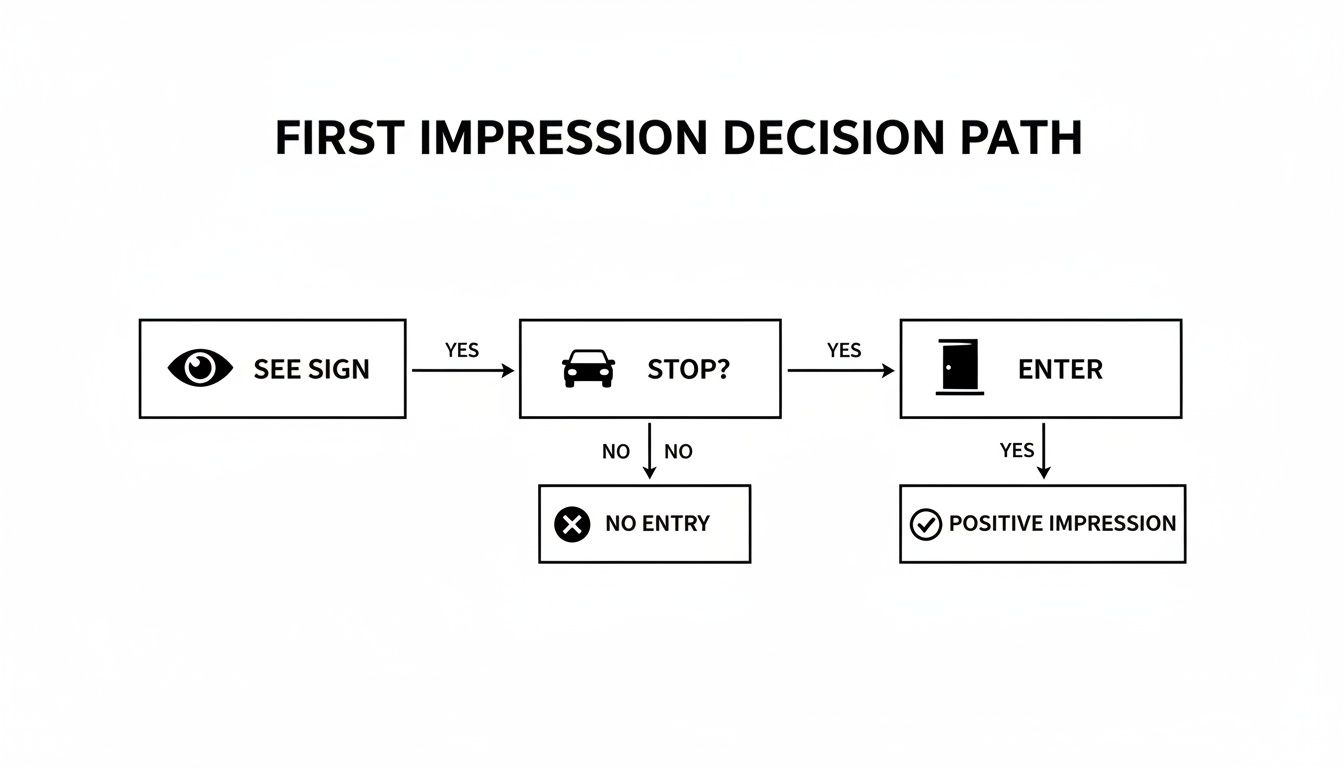
It’s a stark reminder that your sign is that critical first handshake. Its ability to get someone to act is what turns a random passerby into a paying customer.
To help you get it right, this quick comparison table breaks down the most common sign types and where they shine.
Outdoor Business Sign Comparison
| Sign Type | Best For | Typical Visibility | Common Applications |
|---|---|---|---|
| Channel Letters | Professionalism and storefront clarity, day or night. | Short to Medium (Up to 200 ft) | Retail stores, corporate offices, restaurants, medical practices. |
| Monument Signs | Establishing a permanent, credible, and premium presence at a property entrance. | Short to Medium (Up to 150 ft) | Corporate campuses, law firms, apartment complexes, business parks. |
| Pylon Signs | Maximum visibility from a long distance, especially for highway traffic. | Long (500+ ft) | Gas stations, hotels, fast food, shopping centers. |
| LED Displays | Dynamic, real-time messaging for promotions, events, and announcements. | Varies by size (100-500+ ft) | Schools, churches, event venues, auto shops, retail stores. |
This table gives you a bird's-eye view, but the real magic is in understanding the why behind each choice. Let's dig deeper.
Channel Letters for a Polished Storefront
When you picture a high-end retailer or a sleek corporate office, you're probably imagining channel letters. These are three-dimensional letters, individually crafted and often lit from the inside, mounted right onto your building.
Their crisp, professional look broadcasts a sense of quality and permanence that a flat sign just can't touch. For any business in a busy shopping center or downtown strip, channel letters make sure your name pops with a clean, sophisticated look that works around the clock.
A boutique clothing store, for example, uses glowing channel letters to create an upscale vibe that speaks directly to its ideal shoppers. A modern dental practice uses them to project a clean, trustworthy image before a patient even opens the door.
Monument Signs to Anchor Your Brand
A monument sign is a different beast altogether. It’s a freestanding sign, usually low to the ground and built on a solid base of brick, stone, or concrete. It’s not about shouting from a distance; it's about establishing a presence and communicating rock-solid stability.
Think of it as the anchor for your entire property. Monument signs are the go-to choice for corporate campuses, medical centers, and professional business parks where credibility is everything.
A monument sign at your entrance instantly creates a landmark. It tells visitors, "You have arrived," signaling a serious, established destination long before they see the front door.
A law firm might install a stately brick monument sign to reinforce its image of authority and reliability. It’s a formal, impressive welcome that builds confidence from the curb.
Pylon Signs for Maximum Highway Visibility
But what if your business is tucked away from a busy highway or main road? Your storefront sign will be invisible to fast-moving cars. That’s where pylon signs come in. These are the tall, freestanding signs that tower over everything else, often with a large illuminated box on top.
Their one job is to be seen from far, far away. Pylon signs are the workhorses for gas stations, hotels, and shopping centers that absolutely have to grab the attention of drivers and pull them off the road.
Take a hotel just off an interstate exit. Its tall, brightly lit pylon sign is the beacon travelers see first, signaling a place to rest long before the building itself comes into view. If you need to be seen from a distance, a pylon sign is the best money you'll spend. You can dig deeper into these options by exploring these different types of outdoor signs for business in our other guide.
Modern LED Displays for Dynamic Messaging
Finally, for any business that needs to share constantly changing information, LED displays offer flexibility that no other sign can match. These digital powerhouses let you update your messaging, promotions, and announcements instantly, grabbing attention with bright, moving content.
LED signs are perfect for venues that host events, retailers running daily deals, or any business with time-sensitive news to share.
- Schools can announce game schedules or registration deadlines.
- Churches can display service times and inspirational messages.
- Retailers can advertise flash sales or new arrivals the moment they happen.
A local auto shop, for instance, could flash a "20% Off Oil Changes This Week!" message on its LED sign. That sense of urgency drives immediate action in a way static signs simply can't. This ability to adapt on the fly makes LED signs a seriously powerful marketing tool.
Selecting Materials That Are Built to Last
Think of a great outdoor sign as a long-term investment, not a quick purchase. The materials you choose are the very foundation of its lifespan, dictating how it stands up to weather, keeps its color, and represents your brand for years to come. Getting this right from the start saves you a world of headaches and money on repairs or early replacements.
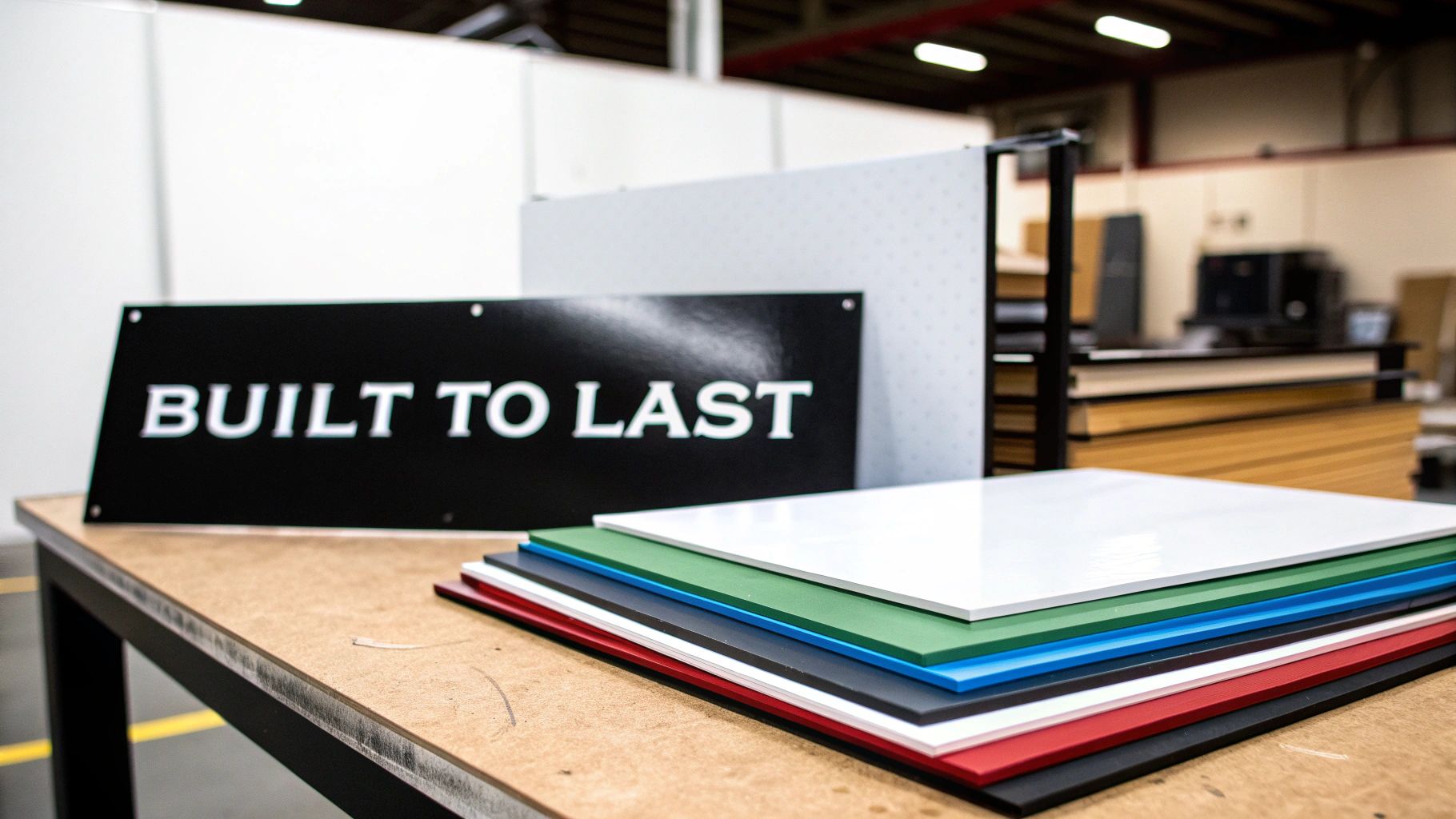
It’s a bit like choosing the right tires for a truck. You wouldn't put summer tires on a vehicle that has to drive through snow and ice. Similarly, your sign's materials need to be perfectly matched to its environment and purpose to perform well over the long haul.
Aluminum: The All-Weather Champion
When it comes to durability and pure versatility, aluminum is the undisputed king of outdoor sign materials. It's incredibly strong but also lightweight, and here's the kicker: it’s 100% rust-proof. That makes it the go-to choice for businesses anywhere, from humid, salty coastal areas to places with harsh winters.
Because it will never corrode, an aluminum sign keeps its shape and sharp looks for years with almost no maintenance. Its smooth finish is also the perfect canvas for high-quality paints and graphics, making sure your branding stays looking crisp and professional.
For instance, a real estate agency using signs made from an aluminum composite like Dibond can trust them to look just as sharp on day 100 as they did on day one, no matter how much sun or rain they've seen.
Acrylic for Brilliant Illumination
If you need your sign to light up and get noticed, acrylic is your best friend. You'll find it on the faces of most illuminated channel letters and lightboxes. This durable, transparent plastic, also known by brand names like Plexiglas, is fantastic at distributing light evenly.
The result is a bright, consistent glow that makes your business a beacon after dark. Modern acrylics are also UV-resistant, so they won’t turn yellow or get brittle from constant sun exposure.
A restaurant with illuminated channel letters made with acrylic faces ensures its name is impossible to miss for hungry customers at night. The acrylic diffuses the LED light inside, creating a premium, clean glow that a flat, unlit sign just can't match.
By combining a sturdy aluminum structure with acrylic faces, you get the best of both worlds: a sign that's built like a tank and looks stunning, day or night. For a deeper dive, you can learn more about the specifics of these durable exterior sign materials in our dedicated guide.
HDU: A Modern Take on Classic Wood
For businesses that love the classic, carved look of a wood sign but dread the upkeep, high-density urethane (HDU) is the answer. This engineered material is completely waterproof, rot-proof, and insect-proof.
Unlike real wood, HDU won't warp, crack, or split as temperatures and moisture levels change. It can be sandblasted, carved, and painted to perfectly mimic the rich texture of wood, giving you that timeless appeal with truly modern durability.
- Longevity: HDU signs can last for decades with very little attention.
- Versatility: It can be shaped into complex, detailed designs that would be incredibly difficult or expensive to achieve with real wood.
- Lightweight: Even though it's dense, HDU is lighter than wood, which makes installation much easier and safer.
A historic inn, for example, could use an HDU sign to get that charming, hand-carved aesthetic that fits its brand perfectly, all while knowing it will withstand the elements for years.
Designing a Sign That Sells From Miles Away
A truly great outdoor business sign does more than just show your name—it’s your silent salesperson, working 24/7. The best designs aren't always the most artistic ones. Instead, they’re the ones a potential customer can read and understand in the split second they have while driving by.
Getting this right boils down to a few core principles that guarantee your message cuts through the visual clutter of a busy street.
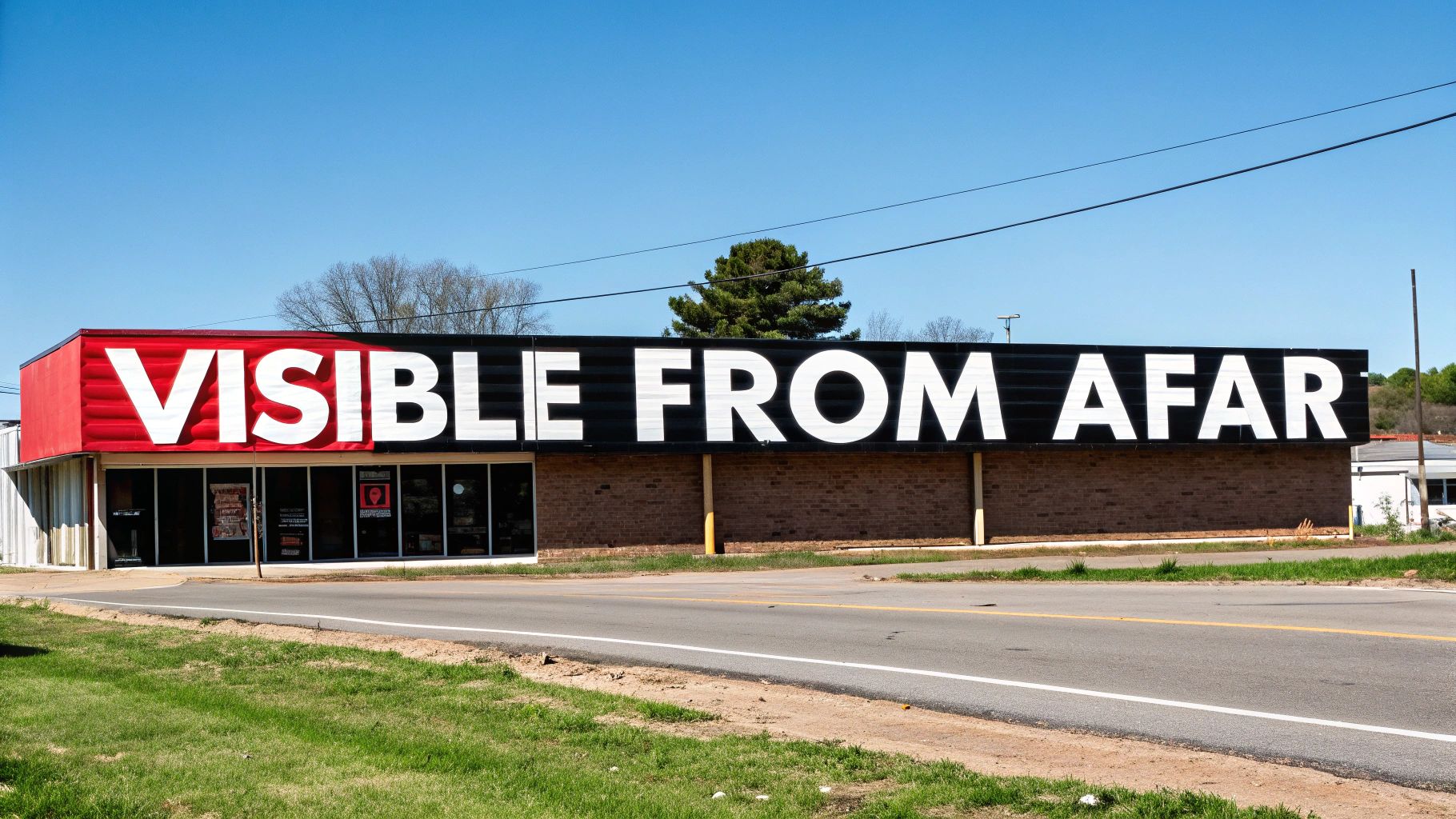
Think of your sign like a highway billboard. You have about three seconds to grab someone's attention and deliver a crystal-clear message. If a driver has to squint or wonder what you do, you’ve already lost them. That's why readability from a distance isn't just a nice-to-have; it's everything.
The Power of High-Contrast Colors
The single most critical factor for readability is contrast. Your background and text colors need to fight each other, creating a sharp visual separation that makes your message pop, whether it's in the glare of the afternoon sun or at dusk.
High-contrast pairings are your best friend. Time-tested combinations like black text on a white background, white on navy blue, or yellow on black are proven winners. Why? Because they create a clean divide that the human eye can process in an instant. Steer clear of low-contrast pairs like light gray on white or dark green on black, which just turn into a blurry mess from the road.
Imagine a bakery with a lovely pastel pink logo on a light beige sign. Up close, it's charming. From across the street, it’s an unreadable smudge. A far better choice would be putting that same pink logo on a deep charcoal or navy background to make sure it stands out.
Typography That Travels
Your font choice can make or break your sign. Those elegant, delicate scripts or ultra-thin fonts might look fantastic on a business card, but they are a disaster for outdoor signage. From a distance, they just blur together into an illegible shape.
The rule of thumb for sign typography is simple: bold, clean, and uncomplicated. Sans-serif fonts like Helvetica, Futura, or Arial are industry standards for good reason. Their even, consistent letterforms maintain their clarity even when viewed from hundreds of feet away.
Beyond the font itself, you have to consider the spacing between letters, known as kerning. Letters squished too tightly become a single blob, while letters spaced too far apart make it hard for the brain to register them as a single word. Any good sign designer will obsess over this detail to get it just right.
Simplicity Is Your Superpower
So many business owners fall into the trap of trying to cram everything onto their sign—phone number, website, slogan, a list of services. This is a huge mistake. A great outdoor sign really only needs to communicate one or two things: who you are and, maybe, what you do.
- Primary Message: Your business name. This should always be the biggest, most prominent element.
- Secondary Message: If needed, a simple, one-word descriptor like "Bakery," "Law Firm," or "Auto Repair."
That’s it. A cluttered sign is an ignored sign. A real estate agency should feature its name and logo, not an agent’s cell number. The goal is to build brand recognition so people can find you later, not to close a sale from the curb. Keeping the message clean makes it memorable. If you need some inspiration, check out these brilliant sign design ideas that have mastered the art of simplicity.
Ensuring Brand Consistency
Finally, your outdoor sign absolutely must be a seamless extension of your brand. The colors, fonts, and logo should feel instantly familiar, matching what customers see on your website, your social media, and your business cards.
This consistency is what builds trust and reinforces brand recall. When your physical sign aligns with every other touchpoint, it cements your identity in the customer’s mind. It turns your sign from a simple marker into a powerful piece of your brand’s story.
Navigating Permits and Local Codes Without Headaches
Getting a permit for your new business sign can feel like wading through red tape, but it’s a critical step you absolutely can't skip. Think of it like getting the official blueprints approved before building a house—going rogue can lead to expensive fines, being forced to tear down your brand-new sign, and delays that stop your business cold.
These local codes exist for a good reason: to ensure public safety and keep the community looking its best. The good news is that with a solid plan, the process is perfectly manageable. The goal is just to get it right the first time and avoid those frustrating setbacks.
Decoding Your Local Zoning Ordinances
Before you even think about finalizing a design, your first job is to understand the rules of the game. Every city, county, and even specific business district has its own set of sign ordinances that will dictate nearly everything about your sign.
You'll need to dig into what your municipality allows for things like:
- Sign Size and Height: There will be strict maximum dimensions, often tied to your building's street frontage or the size of your property.
- Placement and Setbacks: These rules define exactly how far your sign must be from the road, sidewalks, and property lines.
- Illumination: Local codes often get very specific about brightness, colors, and the type of lighting allowed (e.g., internal glow vs. external spotlights, flashing vs. static lights).
- Sign Type: Some zones might outright ban certain signs, like towering pylon signs, or have specific aesthetic requirements for things like monument signs.
Assembling Your Permit Application Package
Once you know the local rules, it's time to gather the paperwork for your application. Submitting an incomplete package is the number one reason for delays. While the exact requirements vary from place to place, most applications demand a fairly standard set of documents.
A complete, professional application signals to city planners that you've done your homework. It dramatically increases the chances of a smooth and speedy approval.
Here’s a typical checklist of what you'll need to have ready:
- Completed Permit Application Form: The official document from your local planning or building department.
- Site Plan: A detailed drawing of your property that shows the building, property lines, and the precise, proposed location of the sign.
- Sign Design Mockups: Scaled drawings of the sign itself, complete with dimensions, materials, colors, and any electrical illumination details.
- Landlord Approval: If you lease your space, you'll need a signed letter from the property owner giving you the green light for the installation.
This is where having a professional sign partner in your corner is a game-changer. A good sign company won't just help you design a compliant sign—they can manage the entire permitting headache for you, from research to submission. To get a better sense of what's involved, you can look over our guide to common sign permit requirements.
Even temporary signs have to play by the rules. The market for temporary wayfinding signage, for instance, is projected to grow from USD 2.91 billion in 2026 to USD 4.25 billion by 2030. This boom is fueled by large-scale urban projects where clear, compliant navigation is essential for safety, proving that even temporary installations must meet local codes. You can discover more insights about the temporary signage market on researchandmarkets.com.
Installation, Maintenance, and Measuring Your Return
Getting your sign fabricated is a huge step, but the journey isn't over yet. The final stages—professional installation, simple ongoing care, and actually measuring its business impact—are what turn a beautifully crafted object into a hardworking, revenue-driving asset for your business.
Why Professional Installation Is Non-Negotiable
Trying to DIY a permanent outdoor sign installation is one of the costliest mistakes a business can make. This isn't just about hanging something on a wall; it's about public safety, code compliance, and ensuring your sign actually works as intended.
A professional crew makes sure the sign is anchored to handle high winds and whatever else the weather throws at it, preventing a potential catastrophe. For anything illuminated, like channel letters or an LED board, the electrical work is even more critical. Licensed installers handle the wiring safely, making sure you’re up to code and eliminating fire hazards. Getting it right the first time protects your property, your customers, and your investment.
A Simple Maintenance Checklist to Protect Your Investment
Just like a company vehicle, your sign needs a little routine care to keep it looking sharp and working correctly. A simple maintenance plan goes a long way, extending its lifespan and stopping small problems from becoming expensive headaches.
Here’s a practical checklist to keep things in top shape:
- Regular Cleaning: A couple of times a year, give the sign a gentle cleaning to wash off the dirt, pollen, and grime. For most materials, a simple mix of mild soap and water does the trick perfectly.
- Inspect for Damage: After a big storm, it’s smart to do a quick visual check for cracks, loose parts, or any other weather-related damage. Catching these things early can stop water from getting into the electrical parts.
- Check Lighting: For illuminated signs, make it a habit to look for burnt-out bulbs or flickering LEDs. A sign with dark spots or missing letters sends the wrong message about your attention to detail.
Think of sign maintenance like changing the oil in a company car. It’s a small, proactive task that prevents a major breakdown and keeps your brand image running smoothly.
How to Calculate Your Sign's Return on Investment
It’s easy to see your sign as an expense, but it's really a marketing machine. Measuring its return on investment (ROI) helps prove its value, and it's simpler than you might think. You just need to track a few key things to see the direct impact on your bottom line.
Start by asking new customers how they found you. A simple question at the checkout, like, "What brought you in today?" can tell you a lot. If just 10 new customers a month say they saw your sign, and the average customer spends $50, that’s $500 in new revenue every single month.
Over the course of a year, that adds up to $6,000—often enough to pay for the sign several times over. This simple tracking method flips the script, turning your sign from a cost into a measurable source of new business.
Your Top Questions About Outdoor Signs Answered
Getting a new sign is a big step, and it’s natural to have questions. You want to make a smart investment that looks great and lasts for years. Let's walk through some of the most common questions business owners ask when they get started.
How Much Should I Budget for a New Business Sign?
The truth is, the cost of an outdoor sign can be all over the map. It really comes down to the size, materials, and complexity of what you need. A simple banner might only set you back a few hundred dollars, while a large, illuminated pylon sign for a shopping center can easily run into the tens of thousands.
Think of it this way: your sign isn't just a purchase; it’s your hardest-working employee, greeting customers 24/7. Factors like intricate designs, durable materials, and any electrical work for lighting will shape the final price.
A pro tip: Always ask for a detailed quote that breaks everything down—design, materials, permit fees, and the final installation. This way, you can budget properly and avoid any last-minute surprises.
What’s the Toughest, Most Durable Material for Outdoor Signs?
When it comes to pure, all-around durability, aluminum is the undisputed champion. It’s strong but lightweight, won’t rust, and stands up to just about any weather you can throw at it. For any kind of illuminated sign, aluminum is the go-to, usually paired with tough acrylic or polycarbonate faces for a professional finish that lasts.
Looking for that classic, carved wood look without the endless upkeep? High-density urethane (HDU) is your best friend. It gives you that timeless, sandblasted feel but is completely waterproof and rot-proof, blending traditional charm with modern resilience. The right material always comes down to your brand, budget, and local climate.
How Long Does the Whole Process Take, From Idea to Installation?
From the first design sketch to the final bolt being tightened, a custom outdoor sign project typically takes anywhere from 4 to 12 weeks. This timeframe covers every critical step in the journey.
Here’s a rough breakdown of how that time is spent:
- Design and Approval (1-2 weeks): You'll work back and forth with a designer to nail down the perfect look.
- Permit Application (2-6 weeks): This is the wildcard. The timeline depends entirely on how quickly your local city or county offices work.
- Fabrication (2-4 weeks): Once the permits are approved, the sign shop gets to work building your sign.
- Installation (1-2 days): The final step is usually the quickest, with the crew getting your sign securely in place.
Working with an experienced sign company is key here—they know the local permit offices and can help keep the project moving smoothly.
Do I Really Need a Permit for My Sign?
Yes, almost without exception. Any permanent outdoor business sign will require a permit from your local government. Cities and counties have very specific rules about sign size, height, placement, and lighting to keep the community safe and looking good.
Trying to skip the permit process is a recipe for disaster. It can lead to hefty fines, an order to tear the sign down (at your cost), and massive delays. A professional sign company will handle the entire permitting maze for you, ensuring your sign is 100% compliant from day one.
Ready to create an outdoor business sign that drives traffic and builds your brand? The experts at On Display Signs, Inc. manage the entire process, from design and permitting to fabrication and installation, ensuring a seamless experience and a stunning final product. Start your signage project today.