Imagine your logo doing more than just sitting on a wall—it projects forward, making a statement of quality and permanence before anyone even says a word. That's the real-world power of 3D logo signage. This isn't just about making your logo bigger; it's about giving it physical depth that flat, two-dimensional signs simply can't replicate.
What Is 3D Logo Signage and Why It Works
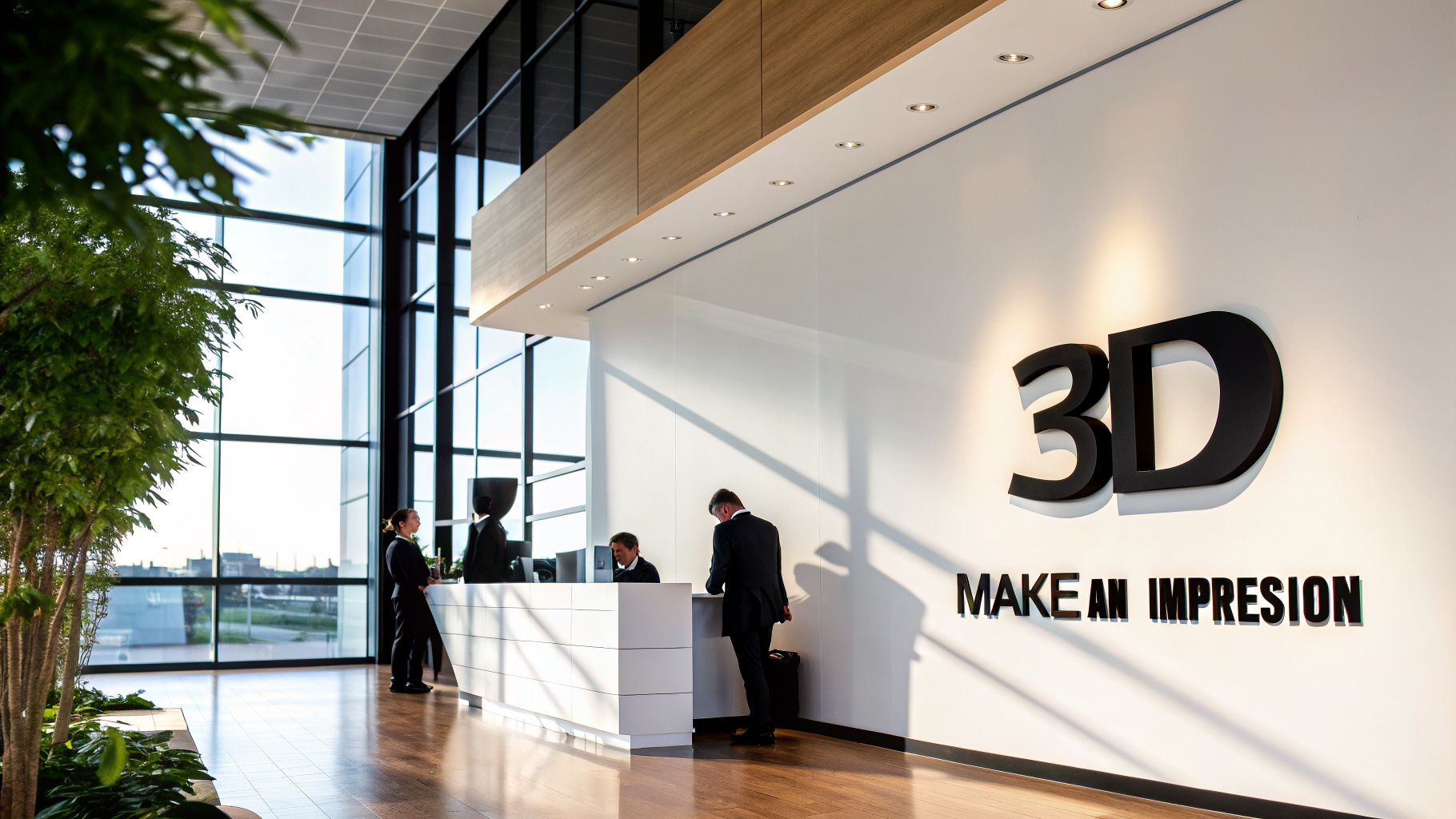
Think of a standard flat sign like a business card. It gets the job done, but it can easily get lost in the shuffle. A 3d logo signage installation, on the other hand, is like a firm, confident handshake. It’s substantial, memorable, and immediately signals that you mean business.
This physical depth translates directly into how people perceive your brand. When a client or visitor sees a logo with real dimension, it creates a powerful first impression. Our eyes are naturally drawn to objects with depth and shadow, making 3D signs inherently more engaging and making your brand appear more established and successful.
Turning Your Logo Into an Architectural Feature
A great 3D sign doesn’t just display your logo; it becomes a seamless part of your building’s design. Whether it’s mounted in a lobby, on an exterior wall, or in a conference room, it adds a layer of texture and sophistication to the space itself.
For example, a law firm might choose brushed metal dimensional letters to project an image of stability and authority. A creative tech startup, by contrast, could use sleek, colorful acrylic to communicate a dynamic and forward-thinking identity. In both scenarios, the sign is a storytelling tool.
The core function of 3D signage is to tell a story of stability and success before a single word is spoken. It transforms a simple logo into a statement of permanence that resonates with everyone who sees it.
The Immediate Benefits of Adding Dimension
Adding that third dimension to your brand’s logo offers some very clear advantages. It elevates your presence and helps you stand out in a visually crowded world. The impact of high-quality signs in advertising is undeniable, shaping customer perception from the very first glance.
Here are the key benefits:
- Enhanced Visibility: The natural shadows and highlights created by 3D elements make your logo pop, making it more noticeable from different angles and distances.
- Increased Professionalism: A substantial, well-crafted sign tells people you’re a serious business that cares about the details.
- Greater Memorability: A unique, dimensional sign is far more likely to stick in someone's memory than a generic flat one.
- Brand Reinforcement: It physically embodies the quality and substance you want your brand to be known for.
Ultimately, investing in 3D logo signage is a strategic move to build a stronger, more impressive brand identity. It acts as your silent ambassador, working 24/7 to make a lasting impression.
Exploring the Main Types of 3D Logo Signage
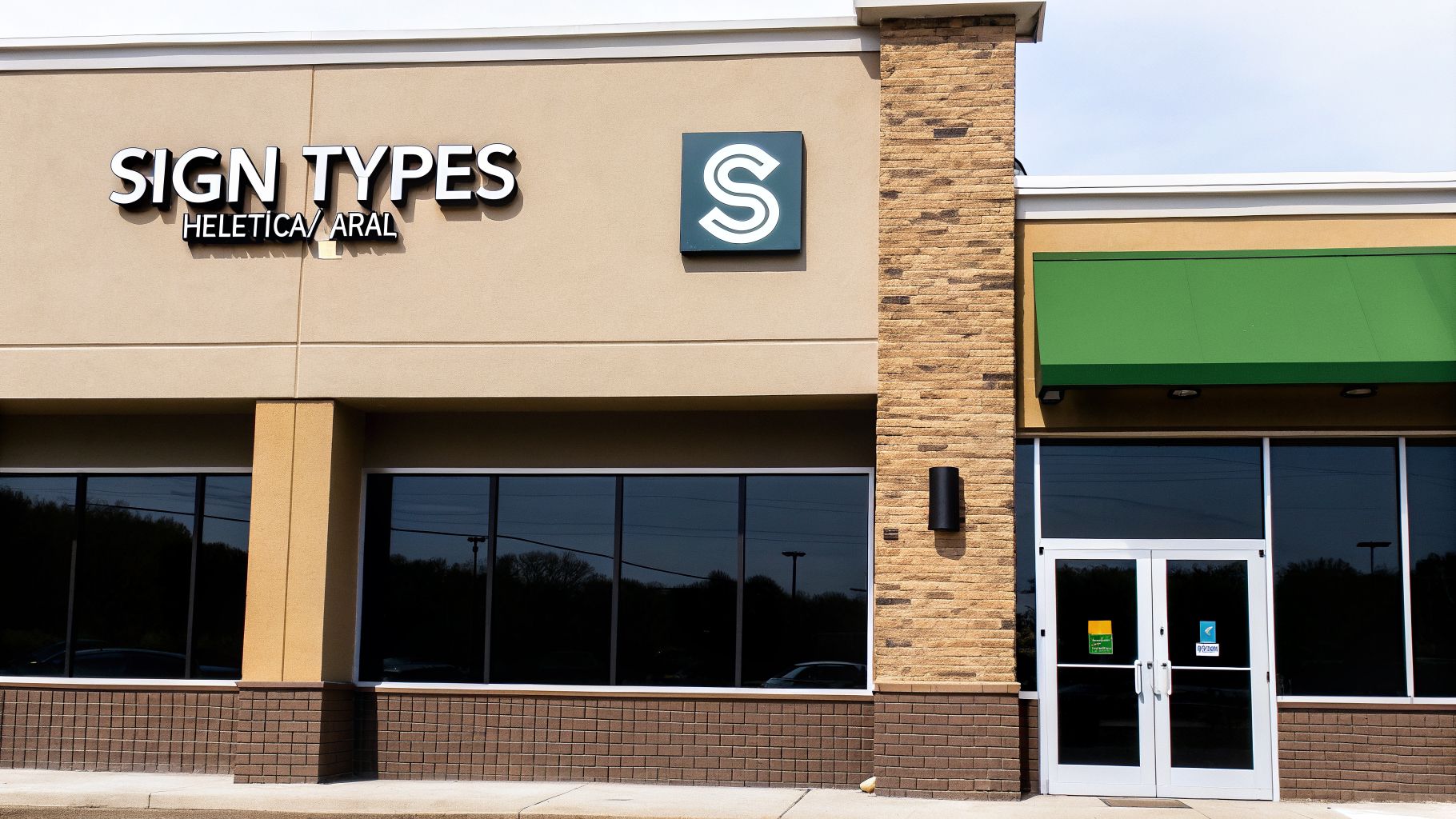
When you decide on 3D logo signage, it’s important to know that you’re not just picking one single product. You’re choosing from a family of signs, where each type has its own distinct personality, look, and job to do. Knowing the difference is the first real step to finding the perfect sign that actually works for your brand and your space.
Let’s walk through the main categories, starting with the solid, sophisticated workhorses and moving up to the illuminated giants that own the night. This will help you get a real feel for what’s possible and zero in on the right fit for your business.
Dimensional Letters: The Solid Foundation
Think of dimensional letters as the most direct and classic form of 3D signage. These are solid, custom-cut letters or logo shapes crafted from durable materials like acrylic, metal, or PVC. Unlike other types, they aren't hollow and aren't built for internal lighting.
Their power comes from their clean, substantial presence. They create real depth and shadow, adding a layer of class and permanence to any wall they’re mounted on. This makes them a fantastic choice for any indoor space where you want to project professionalism and authority.
A perfect example is the crisp, solid logo behind a reception desk in a high-end corporate office or law firm. The sign just feels stable and confident, no flashing lights needed. They’re also great for exterior walls on upscale retail stores or professional buildings that don’t need 24/7 visibility.
Channel Letters: The Illuminated Powerhouse
Now, let's talk about channel letters. These are, without a doubt, the go-to choice for any business that absolutely needs to be seen, day or night. The key is in how they’re built: each letter is a three-dimensional "channel" or "can," typically made of aluminum, with a translucent face made of acrylic.
That hollow design is there for one reason: to house internal lighting, usually energy-efficient LEDs. This is what lets the sign blaze brightly after dark, making your storefront impossible to miss. They are the undisputed workhorses of exterior signage for restaurants, retail chains, and any business competing for attention on a busy street.
Channel letters are less like a sign and more like a beacon. Their main job is to grab attention from a distance, pull customers in, and keep your brand visible around the clock.
Channel letters also give you options for different lighting styles. A front-lit letter shines right through the face for maximum pop and brightness. A halo-lit letter, on the other hand, pushes light out from the back, casting a soft, elegant glow onto the wall behind it. You can even combine both for a completely custom look.
Routed Signs: The Artisanal Approach
Finally, we have routed signs. With this technique, instead of fabricating individual letters, we carve or "route" your entire logo and text out of a single, solid panel of material like high-density urethane (HDU), wood, or PVC. The result is a cohesive, layered, and often sculptural sign.
This approach is perfect for creating signs with intricate details or a more organic, handcrafted feel that you just can't get with separate letters. A routed sign can feature recessed letters (carved into the panel) or raised letters (where the background is carved away).
For instance, an exclusive golf club might use a routed HDU sign with a faux-wood grain to create a classic, elegant entrance marker. A historic bed and breakfast could use a routed sign to capture a charming, traditional look. You get a single, unified piece that feels both substantial and artfully crafted. When exploring all the types of signage, this one really stands out for its integrated, custom appearance.
To make comparing these options a bit easier, here’s a quick rundown of where each one shines.
Comparing 3D Signage Types at a Glance
| Signage Type | Best Use Case | Illumination Style | Common Placement |
|---|---|---|---|
| Dimensional Letters | Sophisticated indoor branding; upscale exteriors | Non-illuminated (creates natural shadow) | Lobby walls, reception areas, conference rooms |
| Channel Letters | High-visibility storefronts needing 24/7 impact | Internally illuminated (front-lit or halo-lit) | Building exteriors, shopping centers, roadside retail |
| Routed Signs | Detailed or artisanal looks with a unified feel | Can be unlit or externally lit | Monument signs, historic districts, natural settings |
Ultimately, each of these types offers a different tool to tell your brand’s story. Whether you need the quiet confidence of dimensional letters or the bright beacon of a channel letter sign, the right choice is the one that best reflects who you are.
Choosing Materials That Reflect Your Brand
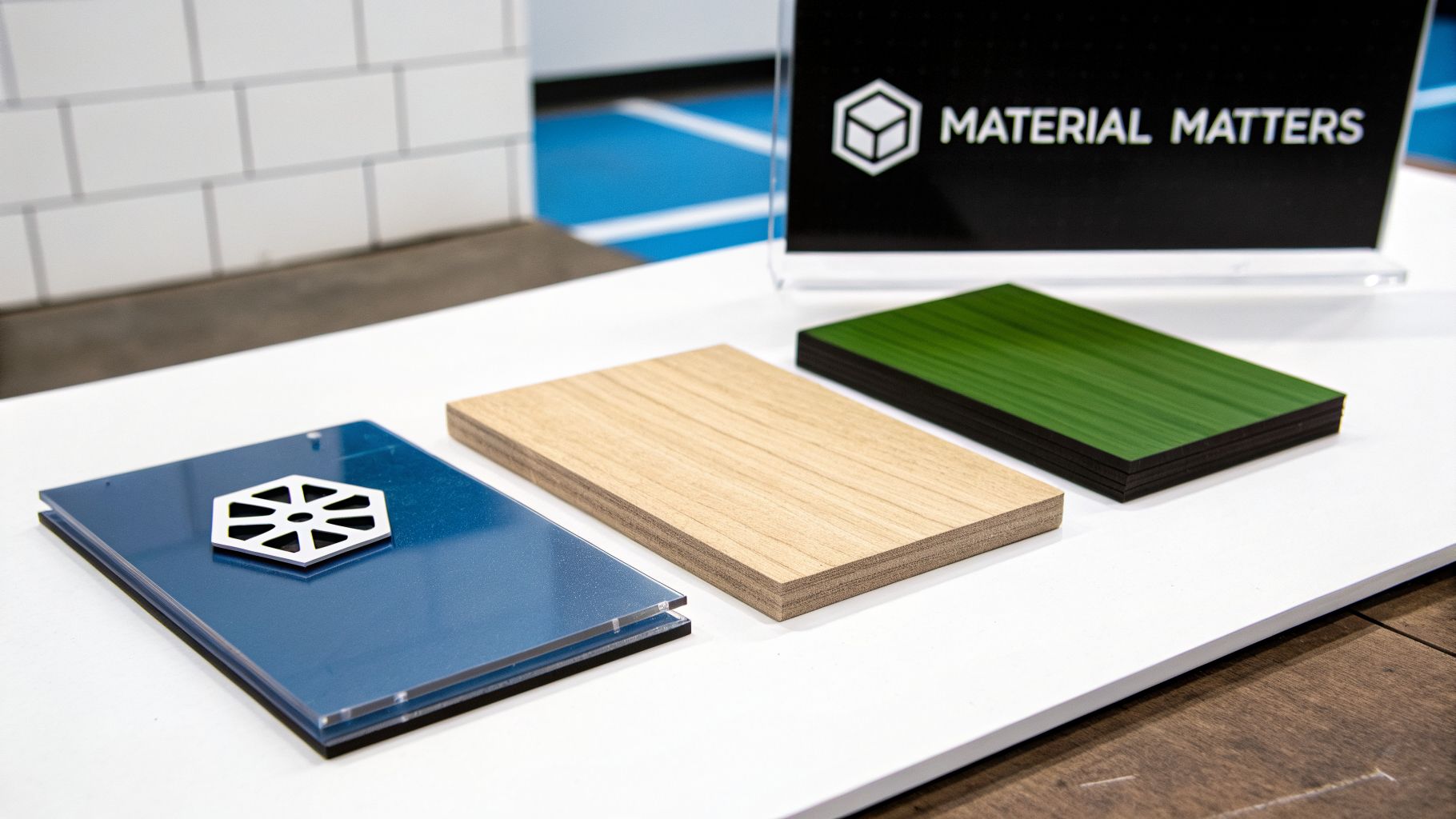
The material you choose for your 3D logo signage is every bit as important as the design itself. Think of it as the suit your brand wears—it speaks volumes about quality, personality, and permanence long before anyone reads the name. Get it right, and your sign won't just look good; it will feel authentic to who you are.
Picking a material is really an exercise in brand storytelling. A sleek tech firm needs something entirely different from a rustic brewery, and the right choice makes all the difference. Let's walk through the most common options and see how they can bring your brand's physical identity to life.
Common Materials and Their Brand Personalities
Different materials send different signals. Understanding that subconscious language is the key to picking a sign that connects with your audience on the right level.
Here are some of the most popular choices and the personality they project:
- Acrylic: Famous for its clean, polished look and endless color options, acrylic is the go-to for versatility. It’s a perfect match for modern, professional brands—think marketing agencies, medical clinics, or tech companies. A thick 20mm acrylic sign with a printed face creates a high-end feel for any reception area.
- Aluminum: This material is a true workhorse. It’s lightweight, incredibly durable, and won’t rust, making it ideal for both indoor and outdoor use. Its crisp, metallic finish communicates precision and forward-thinking, which is why it's a favorite of architectural firms and financial institutions.
- Stainless Steel: When you need to make a powerful, premium statement, nothing beats stainless steel. It’s heavier and pricier than aluminum, but it delivers an unmistakable sense of luxury and permanence. You’ll see it used by top-tier law firms, corporate headquarters, and luxury retailers that want to project authority.
- PVC (Polyvinyl Chloride): A smart, budget-friendly choice, PVC is a lightweight material great for indoor dimensional logos. While it’s not as tough as metal for outdoor applications, it can be painted any color you can imagine, offering huge design flexibility for retail displays and office interiors.
- Wood: For brands aiming to convey warmth, tradition, or a connection to nature, wood is unmatched. A routed wooden sign gives a craft brewery, artisan coffee shop, or boutique an authentic, grounded feeling that no other material can replicate.
Seeing these options side-by-side, you can understand how material choice is a direct extension of your brand strategy. To go even deeper, you can learn more about durable exterior sign materials built to handle the elements.
The Impact of Finishes on Your Sign's Look
Beyond the base material, the finish is what truly completes the look of your 3D logo signage. It’s the final touch that can completely transform how your sign feels and interacts with its environment.
A finish isn’t just a protective coat; it’s a strategic choice that controls how your sign plays with light. This one decision affects everything from readability to the overall mood your sign creates.
The finish on a 3D sign is like the final edit on a photograph—it sharpens the details, sets the tone, and ensures the subject is seen in the best possible light. A matte finish absorbs light for a subtle, understated look, while a gloss finish reflects it for a bold, eye-catching effect.
Let’s break down the most common finishes:
- Matte: This non-reflective finish offers a soft, sophisticated look. It’s fantastic for cutting down glare in bright lobbies or under direct sunlight, making sure your logo is always clear and easy to read.
- Gloss: A high-shine, reflective surface that makes colors pop and creates a polished, modern feel. Gloss finishes are excellent for grabbing attention, but you need to place them carefully to avoid distracting reflections.
- Brushed: Usually applied to metals like aluminum or stainless steel, a brushed finish creates a fine-grained, textured appearance. It adds a touch of craftsmanship and does a great job of hiding fingerprints and minor scratches, making it a practical choice for high-traffic areas.
For a real-world example, imagine a golf club wanting an elegant, timeless look for its tournament winner boards. By using brushed aluminum, they achieve an upscale tone that feels both classic and modern, communicating quality while standing up to frequent updates.
Illumination Options to Make Your Logo Shine
Lighting your 3D logo does more than just keep it visible after sunset. It transforms your sign from a daytime marker into a 24/7 brand ambassador. An unlit sign works a shift, but an illuminated one works around the clock, actively pulling in eyes and carving out your spot on the block. Let's break down the world of lighted signs so you can pick the perfect way to make your brand shine.
The engine behind almost every modern illuminated sign is LED (Light Emitting Diode) technology. Gone are the days of fragile, power-hungry neon and fluorescent tubes. LEDs are brighter, last for an incredible amount of time (often over 50,000 hours), and use up to 80% less energy. This isn't just a small upgrade; it means dramatically lower utility bills and a much smaller environmental footprint for your business.
Front-Lit Illumination for Maximum Visibility
Front-lit illumination is the boldest, most direct way to light up your 3D logo. This is the go-to style for channel letters, where we place LEDs inside the hollow letterform to shine out through a translucent acrylic face. The effect is a bright, vibrant, and evenly lit sign that’s impossible to miss, even from a distance.
This style is a must-have for any business that needs to cut through the visual clutter of a busy commercial street.
- Retail Stores: In a crowded shopping plaza, a bright front-lit sign acts like a beacon, guiding customers right to your front door.
- Fast-Food Chains & Restaurants: For businesses that thrive on evening and late-night customers, front-lit signs are non-negotiable for attracting hungry patrons.
- Gas Stations & Convenience Stores: These locations need to be unmistakable landmarks for travelers, and front-lit signage ensures they are seen from far down the road.
Think of your favorite fast-food spot on a busy highway. Its logo is bright and instantly recognizable, making it an easy, obvious choice. That's the real-world power of front-lit illumination.
Halo-Lit Illumination for Sophisticated Ambiance
Halo-lit, which you’ll also hear called "reverse-lit," takes a more subtle and elegant approach. Instead of shining forward, the LEDs inside the letters are aimed backward, casting a soft glow onto the wall the sign is mounted on. This creates a beautiful "halo" of light that outlines your logo.
This technique is less about shouting and more about setting a mood. It adds a layer of depth and sophistication, making it perfect for brands that want to communicate a premium, high-end image.
A halo-lit sign doesn't just display your brand; it frames it. The soft glow makes the logo appear to float just off the wall, creating an architectural feature that conveys quality and prestige.
This style is a top choice for:
- Upscale Boutiques & Salons: The refined glow elevates the atmosphere, reinforcing a luxurious and exclusive feeling.
- Corporate Headquarters: A halo-lit logo in a lobby or boardroom communicates stability and success without being overly flashy.
- High-End Restaurants & Bars: The ambient light helps create a more intimate and sophisticated dining experience.
The secret to a great halo-lit sign is the contrast between the sign and the surface behind it. The effect is most dramatic when mounted against a textured wall like brick or a darker paint color, which really makes the light pop. When looking into electric signs for business, the halo effect delivers a distinctive look that truly separates your brand from the pack.
Combination Lighting for a Truly Custom Look
Why settle for one when you can have both? Combination lighting is exactly what it sounds like—it brings together front-lit and halo-lit techniques in a single, powerful sign. This approach gives you the ultimate in customization and visual pop, creating a layered, dynamic look that's impossible to ignore.
For instance, you could have your company name front-lit for bold, clear readability while an iconic part of your logo is halo-lit to give it a distinct, floating effect. This method lets you play with emphasis, highlight different parts of your brand identity, and create a truly memorable piece of 3D logo signage.
Your Project Roadmap: From Design to Installation
Taking a 3D logo signage project from a sketch on a napkin to a finished landmark on your wall is a clear, structured journey. Knowing the path ahead demystifies the whole process and gives you the confidence that every detail is being handled by experts.
The entire project moves through four distinct phases. We start by translating your vision into a concrete plan, move to the hands-on creation of your sign, clear all the legal hurdles, and finish with a safe, perfect installation. Let's walk through each step.
Step 1: Discovery and Design
It all starts with a conversation. This first step is all about getting to the core of your goals, your brand, and the physical space where your sign will live. We'll talk through your vision, budget, and timeline to build a solid foundation for the entire project.
This is where your ideas start to become real. Our designers will create digital mockups that show you exactly how your 3D logo will look on your building or lobby wall. We’ll go over material samples, color options, and lighting styles to ensure the final design is a perfect match for your brand.
For example, if you need a sign for your new office, you’d send us photos of the lobby and your logo file. From there, we might suggest a 20mm thick acrylic sign with a brushed metal face to create a premium feel that complements your modern decor. It's a collaborative process to make sure you love the plan before we cut a single piece of material.
Step 2: Permitting and Code Compliance
Before we can start building, there's a critical checkpoint, especially for exterior signs. Every city and county has a rulebook—the sign code—that dictates what’s allowed. These regulations control everything from a sign’s maximum size and height to how bright it can be.
Honestly, navigating this bureaucracy can be one of the most frustrating parts of any signage project. An experienced sign partner handles all of it for you. We manage the paperwork, submit applications to the local planning department, and make sure your sign is 100% compliant.
Think of the permitting phase as getting a building permit for a new deck. It’s a non-negotiable step that ensures your investment is safe, legal, and built to code, protecting you from potential fines or orders to remove the sign later.
This can take anywhere from a few weeks to over a month, depending on your local government. By taking it off your plate, we keep the project moving while you stay focused on your business.
Step 3: Fabrication
With the design approved and permits in hand, your 3D logo sign moves to the production floor. This is where skilled craftspeople and precision machinery bring your vision to life. The exact process depends on the type of sign we’re creating.
- Dimensional Letters: Materials like acrylic, metal, or PVC are cut with incredible accuracy using CNC routers and lasers.
- Channel Letters: We bend aluminum to form the letter's sides (the "can"), carefully wire the internal LEDs, and then attach the acrylic face.
- Routed Signs: A solid panel of material is expertly carved, creating the raised or engraved elements of your design.
During fabrication, your sign is also painted, finished, and wired for any illumination. We perform quality checks at every single stage to ensure the final product is a perfect match to the proofs, from the exact color shade to the structural integrity.
This graphic breaks down the two most common illumination methods, showing how light can be used for bold visibility or a subtle, premium glow.

It’s easy to see the difference between a front-lit sign that shines light forward and a halo-lit sign that casts a soft glow onto the wall behind it.
Step 4: Installation
The final step is the most rewarding one: bringing your finished sign to your location and installing it. A professional installation is all about precision, safety, and making sure we don't disrupt your business. Our team arrives with the right equipment and a detailed plan based on our initial site survey.
We use a paper mounting template to guarantee perfect placement before a single hole is drilled. All electrical work is handled safely by qualified technicians, and the sign is securely fastened to the structure. For a deeper dive, our guide on professional sign installation services explains exactly what to expect on installation day.
From the first conversation to the moment you flip the switch, this four-step roadmap ensures your 3D logo signage project is a smooth, successful, and stress-free experience.
Your 3D Signage Questions, Answered
Making a big investment in your brand's physical presence always comes with questions. It's a big decision, and you need clear, straightforward answers to feel confident moving forward.
We’ve put together this section to tackle the most common things business owners ask us, covering everything from budget and timelines to exactly what you need for a quote.
How Much Does 3D Logo Signage Typically Cost?
Let's get right to it: the first question on everyone's mind is cost. There’s no single price tag for 3D signage because every project is custom. The final cost is a blend of a few key ingredients.
The main cost drivers include:
- Size: The overall dimensions of your sign are the biggest factor. Simply put, a larger sign requires more material and more labor, which drives up the price.
- Material Choice: The materials you choose are where the budget can really swing. A sign made from durable PVC will be a more budget-friendly option, while one crafted from premium brushed stainless steel will represent a higher investment.
- Design Complexity: A simple, clean logo with block letters is less expensive to produce than an intricate script or a multi-layered design. The more complex the shape, the more machine and hand-finishing time is required.
- Illumination: A non-lit dimensional sign is the most cost-effective path. Adding lighting—whether it's front-lit channel letters or a sophisticated halo-lit effect—increases the cost due to the LED components, wiring, and specialized labor.
To give you a real-world picture, a small, non-lit acrylic logo for an indoor reception wall is a modest investment. A large, halo-lit channel letter sign on the exterior of a commercial building is a completely different scope and will naturally fall into a higher budget category.
What Is the Timeline for a Custom 3D Sign Project?
Knowing the timeline helps you plan everything else, especially if you're coordinating with a grand opening or construction schedule. A custom 3D sign project typically unfolds in four phases, and while some are predictable, others can have major variables.
Here’s a typical timeline breakdown:
- Design and Approval (1–2 weeks): This is the creative kickoff. We'll consult with you, create digital proofs, finalize materials, and get your official sign-off on the design.
- Permitting (2–6 weeks or more): For any exterior sign, this is the biggest wild card. The time it takes to secure a permit from your local city or county is entirely out of our hands and depends on their current workload and processes.
- Fabrication (3–4 weeks): Once the design is locked and permits are in hand, your sign hits the production floor. This is a highly predictable phase where our craftspeople get to work building and finishing your sign.
- Installation (1–2 days): The final step is bringing the sign to your location. Most installations are completed in a single day, though very large or complex projects might stretch into a second day.
Understanding this flow is crucial. Working with an experienced sign company can make all the difference, especially when it comes to navigating the tricky and often frustrating permitting stage.
What Information Do I Need to Get a Quote?
You can help us give you a fast, accurate quote by having a few key details ready. Coming to the first conversation with this information allows our team to give you solid recommendations and pricing from the get-go.
Think of getting a quote like visiting a doctor. The more information you can provide about your symptoms (or in this case, your needs), the faster and more accurate the diagnosis (or quote) will be. A vector logo and a photo of the wall are the most powerful tools you can bring to the first conversation.
Here’s a quick checklist of what’s most useful:
- Your Logo in a Vector File: This is the single most important item. A vector file (usually ending in .AI, .EPS, or .PDF) lets us scale your logo perfectly without any loss of quality.
- Installation Address: Knowing the location is critical. It allows us to immediately look up local sign codes and regulations that could impact the design.
- Photos and Measurements: A few quick photos of the wall or building where the sign will go are invaluable. If you can also provide rough measurements of the installation area, that’s even better.
- Your Vision: Don't be afraid to share your ideas! Any thoughts on the general size, the style you're going for (like modern, rustic, industrial), or whether you want it lit helps us narrow down the best options for you.
Having this ready makes the whole process smoother and ensures the proposal we create is perfectly in line with what you need.
Can You Manage Sign Projects in Different States?
Yes, absolutely. Managing national sign projects is a core part of what we do, especially for franchises and businesses with multiple locations. Whether you’re launching a new branch across the country or rolling out a brand update, we ensure total consistency everywhere.
We handle this by coordinating with our vetted network of certified and insured professional installers all over the country. Our central project management team takes care of all the logistics—from navigating dozens of different local sign codes to arranging installation schedules. You get a single point of contact, saving you the massive headache of finding and vetting vendors in cities you've never been to. It guarantees your brand looks professional and consistent, no matter where you do business.
Ready to bring your brand to life with stunning 3D logo signage? The team at On Display Signs, Inc. is here to manage every step, from design to installation. Contact us today to start your project.