Imagine your business name doing more than just sitting on a wall—it projects forward, making a statement of quality and permanence before anyone even says a word. That's the real-world power of signage 3D letters.
While a flat, printed sign is a standard handshake, dimensional letters are the firm, confident one that turns a simple building into a landmark. It’s a powerful visual cue that tells the world your business is built to last.
What Are Signage 3D Letters and Why They Work
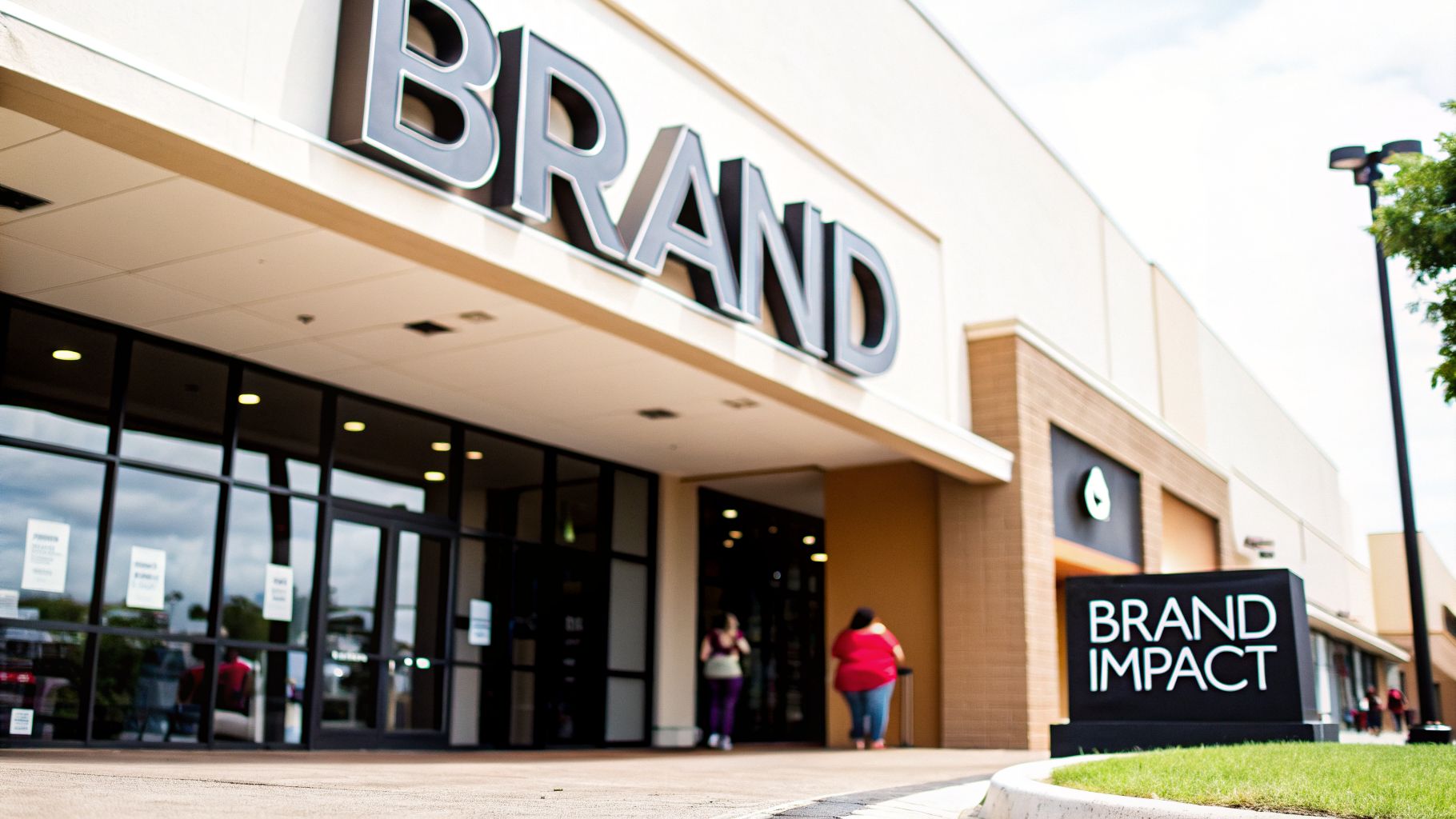
Unlike flat signs where graphics are simply printed on a surface, 3D letters are individual characters with real depth. This physical dimension makes them pop, creating natural shadows and highlights that catch the eye from every angle. They literally stand out.
Think of it this way: a flat sign is a photograph of your brand, but 3D letters are a sculpture of it. That tangible quality instantly communicates a sense of stability and professionalism—a powerful message that connects with customers before they even reach your door.
The Immediate Impact on Brand Perception
Choosing dimensional signage isn't just an aesthetic choice; it’s a strategic move that directly shapes how customers see your brand. A well-crafted 3D sign is an investment in your identity, signaling that you value quality and don't cut corners.
This isn’t just a feeling, either. The demand for eye-catching, dimensional signage is a key driver in the global digital signage market, which is on track to hit $34.7 billion by 2026. In competitive retail environments, a premium look from high-quality signage can directly influence foot traffic. For example, a well-lit, professional 3D sign can make a business stand out in a busy shopping center, drawing more potential customers away from competitors.
For a business owner, this means 3D letters are more than an expense—they're a 24/7 marketing asset. They build brand equity and drive business long after you've locked up for the night.
Key Benefits That Drive Business Growth
Beyond just looking impressive, 3D sign letters deliver real-world advantages that directly impact your bottom line. They are a functional tool for improving how your business shows up in the physical world.
- Superior Visibility: The physical depth of 3D letters ensures they are clear and legible from greater distances and wider angles, making your business unmissable on a busy street. For example, a restaurant with dimensional lettering on its facade will be more easily spotted by drivers than a competitor with a flat banner.
- Enhanced Professionalism: High-quality dimensional lettering sends a strong message of success and permanence, which helps build immediate trust with customers and partners. A law firm with cast metal 3D letters on its building immediately conveys a sense of stability and authority.
- Brand Reinforcement: By bringing your logo to life, you create a stronger, more memorable brand presence that sticks in the minds of everyone who passes by.
These advantages make dimensional lettering a cornerstone of any serious signage strategy. To understand how they fit with other options, take a look at our guide on the different types of signage available. Ultimately, investing in 3D letters is a decision to make your brand impossible to ignore.
Choosing the Right Materials for Your 3D Letters
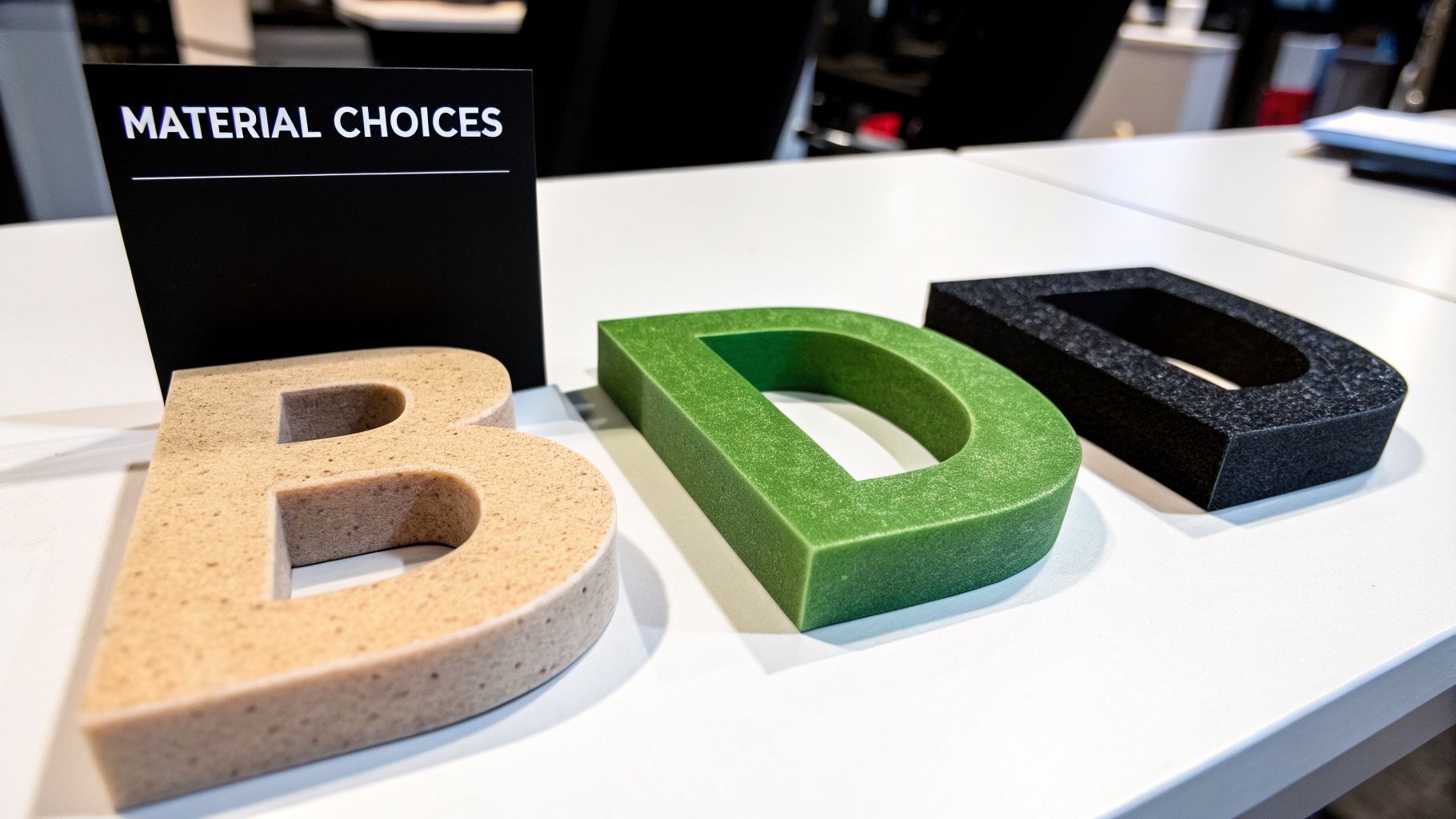
The material you pick for your signage 3D letters does more than just form the shape—it defines its character, its durability, and the very message it sends about your brand. Think of it as the raw ingredient that determines the final flavor of your sign. A smart choice ensures your sign looks fantastic for years, while the wrong one can quickly lead to a tired appearance and a costly do-over.
This decision is the cornerstone of your project, directly influencing the sign's visual punch, how it holds up against the weather, and where it lands on your budget. Let’s walk through the most common options to find the perfect fit for your business.
Durable Metals for a Professional Look
When you need to project an image of permanence, quality, and timeless professionalism, nothing beats metal. Metal letters feel substantial and established, making them a go-to for businesses that want to communicate trust and authority.
Aluminum is the workhorse of the sign industry for good reason. It’s light enough to make installation straightforward but tough enough to handle the outdoors without rusting or corroding. This makes it a fantastic, low-maintenance choice for businesses dealing with anything from relentless sun to salty coastal air. Plus, it can be finished with a brushed or polished look, or painted to hit your exact brand color.
Stainless steel takes things up a notch, delivering a premium, sleek aesthetic that’s hard to match. While it's heavier and carries a higher price tag than aluminum, it offers unparalleled durability and a look of pure sophistication. It’s the perfect choice for corporate headquarters, law firms, and luxury brands aiming for an impressive, lasting statement.
Vibrant and Versatile Acrylic
If you’re looking to grab attention with bold color or brilliant illumination, acrylic is your best friend. Cut from solid, colored sheets, acrylic letters have sharp, clean edges and a glossy finish that looks incredibly modern and polished.
The biggest win with acrylic is its massive color library. You can get it in standard hues or have it custom-matched to a specific Pantone color, guaranteeing perfect brand consistency. Its natural translucence also makes it the default material for signage 3D letters with lighting, as it diffuses LEDs for a bright, consistent glow in front-lit designs.
Think about a busy retail plaza. A boutique using vibrant, glowing acrylic letters can instantly cut through the visual noise of its neighbors, pulling the eyes of shoppers and drawing them right to the front door.
Cost-Effective and Lightweight Foam
For interior signs, especially in lobbies or reception areas where budget and wall strength are key factors, high-density urethane (HDU) foam is a brilliant solution. This rigid, waterproof material is significantly lighter and more affordable than metal or acrylic.
Foam letters can be cut into any design and painted any color. A popular technique is to add a thin metal or acrylic laminate to the face, giving you the high-end appearance of those materials without the weight or the cost.
- Best Use: Reception logos, conference room branding, and any indoor wall application.
- Key Advantage: You can achieve incredible depth—up to several inches thick—without needing major wall reinforcement.
- Limitation: It's not built for the outdoors. It's more vulnerable to impact damage and weather than its harder-surfaced cousins.
For a deeper comparison of how different materials stand up to the elements, our guide on durable exterior sign materials is a great resource.
3D Letter Material Comparison
To make the choice a little clearer, here’s a quick breakdown of how the most common materials stack up against each other.
| Material | Best For | Durability | Cost Level | Aesthetic |
|---|---|---|---|---|
| Aluminum | Versatile indoor/outdoor use, professional look | High (rust-proof) | Mid-Range | Modern, clean, professional |
| Stainless Steel | High-end corporate and luxury branding | Very High | High | Premium, sophisticated, sleek |
| Acrylic | Illuminated signs and vibrant, colorful branding | Good (can scratch) | Mid-Range | Glossy, modern, colorful |
| HDU Foam | Budget-friendly indoor signs, adding depth | Low (for interiors only) | Low | Lightweight, versatile with laminates |
Ultimately, the best material is the one that aligns your brand’s aesthetic with your practical needs and budget.
Fabricated vs. Routed Construction
Finally, it’s not just about what the letters are made of, but how they're made. The two primary methods are fabricated and routed, and the choice impacts both look and function.
Routed letters are cut directly from a single, solid sheet of material, whether it's metal, acrylic, or foam. They are dense and solid all the way through, which is perfect for non-illuminated signs or when you want a clean, sleek profile.
Fabricated letters, which you might know as channel letters, are hollow. They're built by attaching a metal "return" (the side of the letter) to a letter "face." That hollow construction is what makes internal lighting possible, creating a channel to house the LEDs. This is the standard method for almost all illuminated signage 3D letters you see on storefronts and buildings.
Illuminating Your Brand with Lighted 3D Signage
A well-made sign looks great during the day, but adding light turns your signage 3D letters into a silent salesperson that works for your brand 24/7. Illumination isn't just about being seen after dark; it’s about creating an atmosphere that tells your brand’s story around the clock.
Choosing how to light your sign is just as important as the materials you pick. Each style creates a completely different feeling, so let's walk through the main options to figure out which one fits the impression you want to make.
Front-Lit Letters for Maximum Visibility
Front-lit letters are the industry go-to for one simple reason: they are bright, bold, and impossible to ignore. For this style, we place LED lights inside each hollow letter and cover it with a translucent face. When you flip the switch, the entire face of the letter lights up with a brilliant, even glow.
This method is all about making a direct impact. It’s the perfect choice for any business on a busy street, in a packed shopping center, or anywhere you need to shout your presence from a distance.
- Think of a retail store in a crowded strip mall. Using bright, front-lit red letters helps it stand out from dozens of other signs, ensuring customers can find it instantly, day or night.
- If your business relies on high-volume traffic or needs to be seen from the highway, the powerful, direct glow of front-lit letters is your best bet for pure visibility.
Halo-Lit Letters for an Elegant Glow
Halo-lit letters, sometimes called reverse-lit, create a much more subtle and high-end effect. Here, the face of the letter is solid metal, and the light is aimed backward onto the wall or mounting surface. The result is a soft, distinguished glow—or "halo"—that outlines each letter.
This technique adds a real sense of depth and prestige, which is why it's a favorite for upscale brands that want to communicate sophistication rather than just demand attention. The glow is softer and more architectural, enhancing the building itself.
A high-end restaurant or a corporate headquarters might choose halo-lit signage 3D letters to project an image of exclusivity and quality. The gentle glow creates an inviting yet premium ambiance before a guest even steps inside.
The right lighting does more than just look good—it drives real business. Modern signage 3D letters are absolute traffic magnets. As LEDs become the norm, dimensional designs give off a high-end vibe that builds trust instantly, especially when backlit for a vibrant look without high energy bills.
Other Illumination Styles
While front-lit and halo-lit are the most popular, you have other options for creating a unique look. Some signs even combine both, lighting up the face while also casting a halo for maximum dimension and drama. Another technique is edge-lighting, where only the thin edges of acrylic letters are lit, creating a sharp, modern outline. You can even create dynamic visuals with programmable LEDs or explore other advanced displays like 3D LED screens for inspiration.
Ultimately, how you light your signage 3D letters is a huge part of your brand's story. To get a better handle on the financial side of these options, check out our guide on channel letter sign costs. When you choose wisely, you make sure your sign doesn't just get seen—it gets remembered.
Your Step-by-Step Guide From Design to Installation
Taking your signage 3D letters from an idea to a finished installation is a clear, phased process. It's the journey of turning a brand concept into a physical asset that stops customers in their tracks. Understanding these steps demystifies the project, helps you manage it effectively, and makes sure the final sign is exactly what you envisioned.
This journey doesn't start with cutting metal or plastic, but with a simple conversation. It's all about translating your brand's personality and business goals into a design that works in the real world.
Phase 1: The Design and Consultation Blueprint
The first real step is the design consultation. Think of this as the discovery phase, where a sign partner gets to know your brand—your logo, your colors, and the feeling you want to convey. It's also where the practical side kicks in, looking at your building's facade, local sign codes, and, of course, your budget.
A great consultation goes far beyond just asking for your logo file. It's a strategic discussion about your target audience and what you want your sign to do. For instance, a high-end boutique aiming for an exclusive, sophisticated feel needs a completely different sign than a quick-service cafe focused on high visibility and grabbing attention.
Think of this stage as creating the blueprint for your sign. You wouldn't build a house without a detailed plan, and you shouldn’t fabricate a sign without a clear, approved design that reflects your brand and meets all technical requirements.
During this phase, you’ll see digital proofs that show exactly how your signage 3d letters will look on your building. This is your chance to make crucial decisions on size, placement, and color before a single piece of material is touched.
Phase 2: Fabrication and Production
Once you’ve signed off on the final design, your project moves into the workshop. This is where your digital blueprint becomes a tangible object, created with a blend of skilled craftsmanship and powerful technology.
For example, automated channel letter benders ensure perfect curves on intricate halo-lit letters. For franchises or businesses with multiple locations, CNC routers guarantee every raised logo is absolutely identical, locking in that crucial brand consistency.
The specific steps depend on your chosen materials and lighting. Fabricated metal letters will have their returns bent and welded, while routed letters are precision-cut from solid sheets of acrylic or aluminum. If your sign is illuminated, this is where the LEDs, wiring, and power supplies are meticulously fitted and tested.
Phase 3: Navigating Permits and Codes
Before a single hole is drilled, your sign needs a permit. Nearly every city and county has strict rules about the size, placement, and type of signs allowed. Ignoring them is a recipe for expensive fines or even being forced to tear your new sign down.
A professional sign partner should manage this entire process for you. They’ll prepare and submit all the required paperwork, including detailed drawings and engineering specs, to the local planning or building department. It’s a critical step that protects your investment and guarantees your sign is 100% compliant.
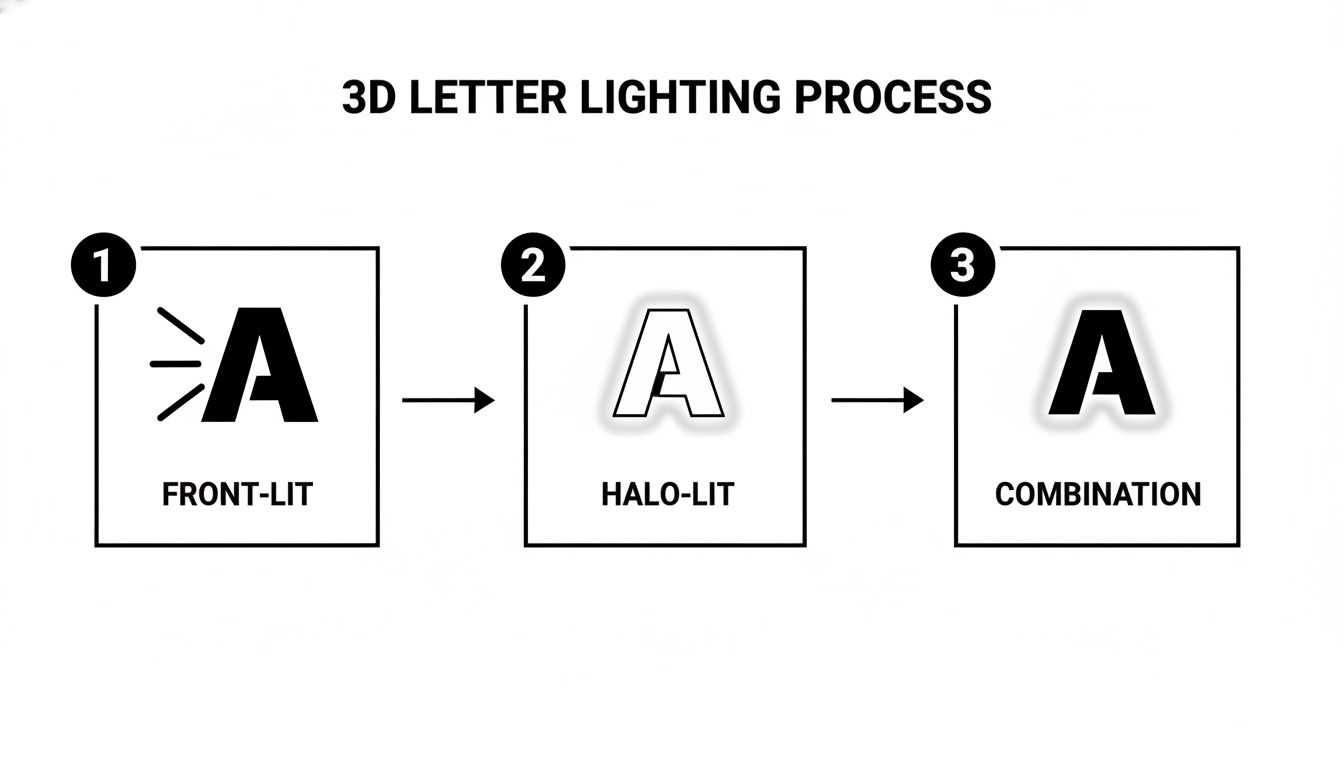
This diagram shows how different lighting choices affect the fabrication process. While both front-lit and halo-lit letters start from the same design, the construction path splits to create either direct, forward-facing light or a subtle, elegant glow from behind.
Phase 4: Mounting and Installation
This is the final, most exciting step: installation day. The two most common ways to mount signage 3D letters are direct-to-wall or on a raceway.
Direct-to-Wall Mounting: Each letter is attached individually to the building. This delivers a super clean, seamless look but requires more drilling and complex wiring behind the wall for each letter.
Raceway Mounting: The letters come pre-mounted onto a metal box (the "raceway") that houses all the electrical components. This entire unit is then mounted to the wall, which means fewer holes and much simpler wiring.
A raceway is usually painted to match the building, making it blend in. It’s a fantastic solution for brick or historic buildings where you want to minimize drilling. If you want to dive deeper into the nitty-gritty of how signs are put together, check out our guide on how to make a sign.
Budgeting for Your 3D Signage and Maximizing Its Return
So, let's get down to it: how much does a great 3D sign cost? The honest answer is that it varies, but the most common mistake is viewing your signage 3D letters as a one-time expense. It’s not. It's a hardworking asset, a silent salesperson that pays you back in brand visibility and customer foot traffic for years to come.
Knowing what drives the price tag helps you make smart choices that balance your budget with your business goals. It’s all about creating a plan that gets you the most value, not just the lowest upfront cost.
Breaking Down the Key Cost Factors
The final price on a proposal for signage 3D letters isn't a single random number. It’s a total built from several key decisions you'll make along the way. Getting a handle on these elements is the first step to smart budgeting.
Here’s what really shapes the cost of your project:
- Size and Complexity: This one's pretty simple—bigger signs with intricate, custom fonts or layered logo designs need more materials and more hands-on fabrication time. A clean, block-letter name will always be more budget-friendly than a flowing, multi-part script logo.
- Material Choice: As we've covered, the material you choose plays a huge role. A lightweight HDU foam sign for an indoor lobby is worlds apart in cost from a premium, polished stainless steel sign designed for a corporate headquarters.
- Illumination: Lighting is one of the biggest cost drivers, and for good reason. Adding LEDs means you’re not just paying for the lights themselves, but also for the power supplies, wiring, and the more complex fabrication needed to house it all.
- Installation Method: How the sign gets on the wall matters. A direct-to-wall mount might require more precise labor on-site, whereas a raceway-mounted sign can sometimes streamline the electrical work and installation, affecting the final labor costs. The site's accessibility—think second-story facade versus ground-floor wall—also plays a part.
Shifting Your Focus from Upfront Cost to Long-Term Value
It’s always tempting to go for the cheapest quote, but focusing only on that initial price can be a classic rookie mistake. The smarter play is to think about the sign’s total cost of ownership over its entire lifespan. A quality investment upfront almost always saves you money down the road.
Think of it like this: A low-quality sign that looks faded after two years, needs constant repairs, or runs up your energy bill is no bargain. A durable, well-made sign that looks perfect for a decade with almost no upkeep delivers a far better return on your investment.
Choosing durable materials like aluminum and energy-efficient LEDs might have a higher initial cost, but the savings add up fast. Modern LEDs, for instance, can use up to 50% less energy than older lighting and last for tens of thousands of hours. That means lower electricity bills and no calls to a sign tech for years.
Simple Maintenance Tips to Protect Your Investment
Once your beautiful new sign is up, a little basic care will go a long way in protecting your investment and keeping it looking as good as the day it was installed. These simple steps ensure your signage 3D letters continue to represent your brand professionally.
Actionable Cleaning Steps:
- Safety First: If your sign is illuminated, disconnect the power source before starting any cleaning.
- Remove Debris: Use a soft-bristled brush or compressed air to gently remove loose dirt and grit. This prevents scratching the surface during washing.
- Prepare a Gentle Solution: Mix a small amount of mild dish soap with warm water. Avoid abrasive cleaners, solvents, or harsh chemicals, as they can damage the finish.
- Wash Gently: Using a soft, non-abrasive cloth (like microfiber), wipe down the letters.
- Rinse and Dry: Rinse thoroughly with clean water to remove all soap residue. Let it air dry or gently pat it dry with a fresh microfiber cloth to prevent water spots.
A few cleanings a year is all it takes to prevent buildup and keep your sign looking brand new. To get a more complete picture of how signage fits into a business budget, check out our detailed guide to the cost of signage for a business.
Frequently Asked Questions About Signage 3D Letters
Investing in your brand's physical identity is a big decision, so it's natural to have questions. Getting the details right is what separates a good sign from a great one. Here are some practical, straightforward answers to the things we hear most often from business owners about signage 3D letters.
How Long Will My 3D Letters Last?
This is one of the most important questions, and the answer comes down to two key things: material choice and environment. A well-made sign isn’t a temporary fix; it's a long-term asset built to work for your brand for years.
For outdoor signs, you can expect professionally fabricated aluminum or stainless steel letters to last for a decade or even longer. These metals are the go-to choice because they’re built to resist rust, corrosion, and fading. High-quality acrylics also hold up incredibly well outside, though they can be more prone to scratching from direct physical impact over the years.
When you bring the sign inside for a lobby or reception area, the lifespan gets even longer. Shielded from weather, direct UV rays, and harsh temperature swings, materials like HDU foam, metal, and acrylic can look brand new for many years with just a little bit of care.
Are There Any Limitations on My Design?
While signage 3D letters give you a ton of creative runway, there are a few practical realities to consider. The main constraints usually revolve around the intricacy of your design and the physical size of the letters.
- Very Thin or Intricate Fonts: Extremely delicate script fonts can be tough to produce, especially at smaller sizes. The thinnest parts might be too fragile to cut or weld securely and often don't provide enough surface area for proper mounting.
- Internal Illumination: For illuminated letters, we need enough space inside the "channel" to fit the LED modules. This means very small letters (usually under a few inches tall) or those with super-thin strokes might not work for front-lit or halo-lit styles.
- Building and Code Restrictions: Your biggest design "limitation" will often come from your local city ordinances or even your lease agreement. These rules dictate everything from the maximum sign size and how far it can stick out from the wall to the approved colors and brightness.
The key is to have a flexible design approach. A good sign professional can almost always find a way to make a complex logo or font work, often with minor tweaks that preserve your brand's look and feel while ensuring a flawless fabrication.
How Much Do Signage 3D Letters Cost?
The cost of signage 3D letters varies a lot, depending on a handful of factors: size, materials, illumination, complexity, and installation needs. But thinking in terms of realistic ranges can help you set a practical budget.
Here’s a simplified breakdown to give you a general idea:
- Small, Non-Illuminated Interior Signs: For simple foam or acrylic letters in a lobby, you might budget anywhere from the low-to-mid hundreds to the low thousands.
- Medium-Sized Exterior Non-Illuminated Signs: For routed aluminum or acrylic letters on a storefront, costs often run from the low-to-mid thousands.
- Illuminated Storefront Signs: Standard front-lit or halo-lit channel letters for a retail business typically fall into the mid-thousands or higher, depending heavily on the sign's size and complexity.
Keep in mind, these are just ballpark figures. The only way to get a firm price is to request a custom quote based on your specific design.
Getting quick answers to common questions can help you make a confident decision. Here’s a fast-reference table to guide you.
Quick FAQ Guide for Signage 3D Letters
| Question | Short Answer |
|---|---|
| How long will they last? | 10+ years for outdoor metal; even longer for interior signs. Longevity depends entirely on the material and environment. |
| Are there design limits? | Yes, mainly related to very thin fonts, the size needed for internal lighting, and local city codes. |
| What's the average cost? | From a few hundred for simple interior signs to several thousand for large, illuminated exterior signs. |
| What's the project timeline? | Typically 4 to 8 weeks from design approval to installation, with permitting often being the longest step. |
| Can I install it myself? | It's strongly discouraged due to safety risks, warranty issues, and local code requirements for licensed installers. |
This table provides a quick overview, but your signage partner can walk you through the specifics for your project.
How Long Does the Whole Process Take?
From your first call to the final installation, a typical custom signage project follows a clear path. While every job is unique, you can generally expect the process to take anywhere from four to eight weeks on average.
Here’s what that timeline usually looks like:
- Design & Consultation (1-2 weeks): This is where we finalize the design, make any needed revisions, and get your approval on the final proofs.
- Permitting (1-4 weeks): This step is the biggest variable. Depending on your municipality, securing a sign permit can be quick or it can take a few weeks.
- Fabrication (2-3 weeks): Once the permit is in hand, your sign goes into production. The timeline here depends on material availability and how complex the job is.
- Installation (1-2 days): The on-site installation is usually the fastest part of the entire process.
To keep things running smoothly, it's always smart to start the process as early as you can, especially if you have a grand opening or another deadline on the calendar.
Can I Install the Sign Myself to Save Money?
While the DIY spirit is great for many things, installing your own exterior signage 3D letters is one of those jobs best left to the pros. First and foremost is safety. Sign installation involves working with electrical wiring, often at significant heights, which requires specialized training and equipment to do correctly.
Second, an improper installation can void your sign’s warranty. Even worse, it could damage your building’s exterior, potentially leading to leaks or other structural problems. Finally, most cities require commercial signs to be installed by a licensed and insured contractor to ensure they meet all safety codes. A professional handles all of this, making sure your investment is safe, secure, and looks exactly as it should.
Ready to transform your brand's presence with high-impact dimensional signage? The team at On Display Signs, Inc. manages the entire process for you, from expert design and fabrication to permitting and professional installation. Start your project today by visiting https://www.ondisplaysigns.com.