Your service vans are already driving your sales territory. They sit at lights on Northwest Expressway, merge onto I-40, park at job sites, and idle in front of customers’ buildings. The question is whether they look like anonymous work vehicles or branded assets that help bring in the next call.
That is why so many practical business owners start looking into vehicle wraps oklahoma city ok. A wrap turns a normal truck, van, or fleet car into something that works long after the first install is done. Instead of renting attention for a short campaign, you put your brand on an asset you already own or operate.
National articles often stop at broad marketing advice. Oklahoma City businesses need more than that. They need to know what wrap coverage makes sense, how local weather affects longevity, what installation timelines look like, what rules can affect design choices, and how to judge whether a provider is worth trusting with a company vehicle.
Turn Your Company Vehicles into Mobile Billboards
If your team spends part of the day on the road, you already paid for visibility. Fuel, insurance, payroll, and vehicle costs are already part of doing business. A wrap helps that same vehicle pull double duty.
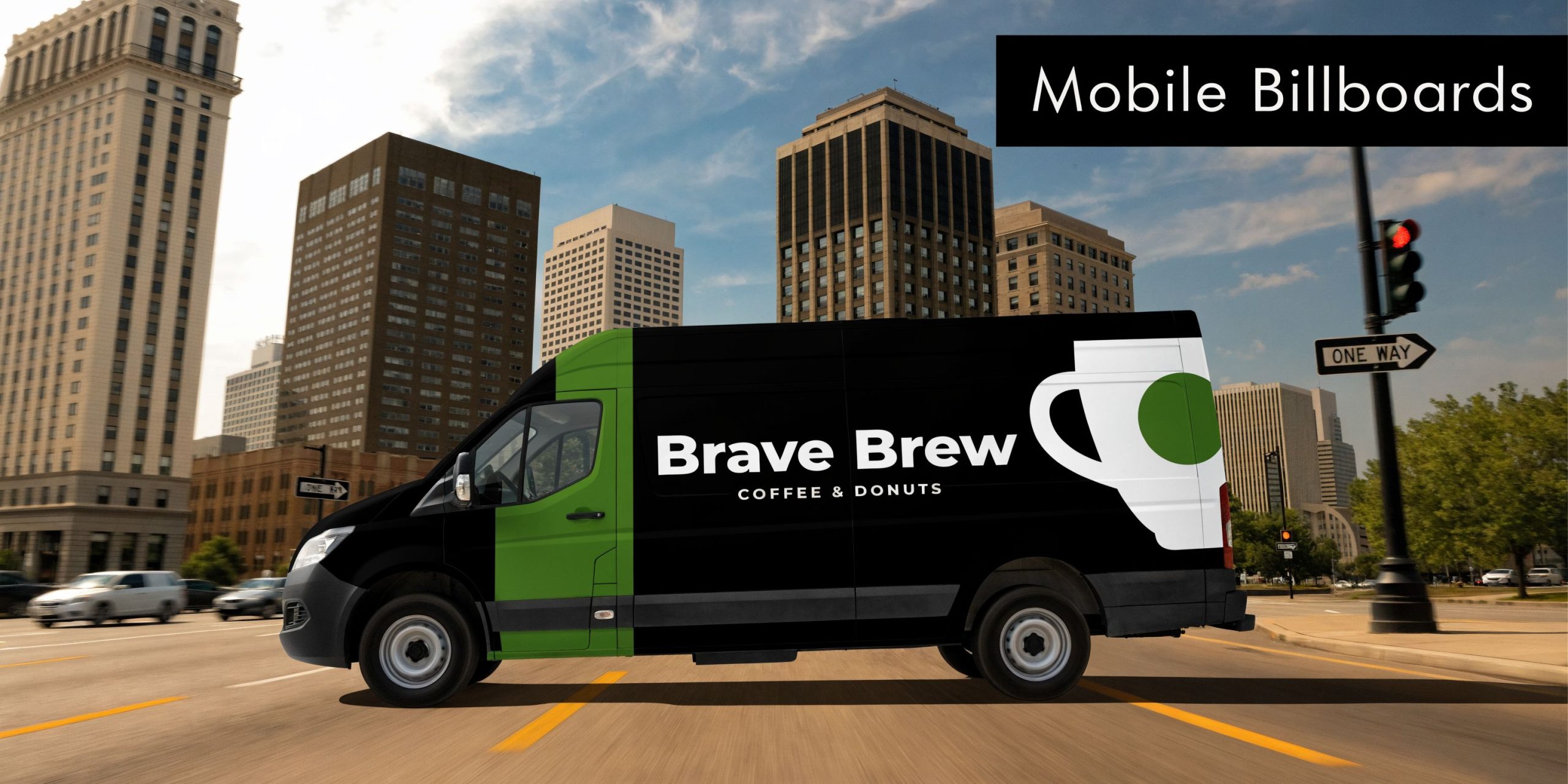
A static billboard reaches one location. A wrapped vehicle reaches the roads your customers already use. In a market like Oklahoma City, a single wrapped vehicle can generate between 30,000 and 70,000 impressions daily, and fleet vehicle advertising boosts name recognition 15 times greater than any other advertising media, according to Fleet Wrap HQ’s Oklahoma City vehicle wrap page.
Why this matters to an owner
Think about a plumber, HVAC contractor, electrical company, church shuttle, warehouse delivery van, or retail service truck. That vehicle travels through neighborhoods, commercial corridors, industrial areas, and customer parking lots. A plain white van says nothing. A wrapped van says who you are, what you do, and how to contact you.
That matters because buyers often do not search for a provider the first time they notice one. They remember the name later. Vehicle graphics help with that memory.
Practical takeaway: A company vehicle should answer three questions at a glance. Who are you, what do you do, and how can someone reach you?
What a good mobile message looks like
The best-performing wraps are usually simple. They are not overloaded with every service, every slogan, and every phone number possible.
A smart layout usually includes:
- Business name and logo: Make it readable from a distance.
- Primary service line: “Commercial Roofing,” “Emergency Plumbing,” or another plain description.
- Contact method: Most businesses use a phone number, website, or both.
- Brand colors: Strong contrast helps readability in motion.
If you want a good example of how branding extends across moving assets, this page on car wraps for business branding shows the broader thinking behind mobile graphics programs.
A wrap works best when you treat it like a moving storefront, not a rolling brochure.
Choosing Your Coverage Full Partial or Color Change Wraps
Not every vehicle needs the same level of coverage. Some businesses need a full branded statement. Others need a more selective design that puts the budget where the eye naturally goes.
Start with the business goal
A wrap choice should follow the job the vehicle needs to do.
- A full wrap covers nearly the entire exterior printable surface. This is the strongest option for brand impact.
- A partial wrap covers selected areas such as side panels, rear doors, or a large portion of the body.
- A color change wrap changes the vehicle’s appearance without focusing on advertising. This is more aesthetic than promotional.
A simple analogy helps. A full wrap is like a custom uniform. A partial wrap is a sharp jacket and hat that still makes the brand obvious. A color change wrap is a repaint alternative.
Vehicle Wrap Options at a Glance
| Wrap Type | Typical Coverage | Estimated Cost (OKC Market) | Best For |
|---|---|---|---|
| Full Wrap | Most exterior surfaces | $2,000 to $5,000 per vehicle in projects cited for major U.S. markets like Oklahoma City from Signs Now Oklahoma City vehicle wraps | Strong brand presence, new launches, service fleets |
| Partial Wrap | Selected high-visibility panels | Lower than full coverage, depends on design and vehicle complexity | Budget-conscious branding, focused side and rear messaging |
| Color Change Wrap | Exterior color-focused coverage | Varies by vehicle and finish | Appearance upgrades, executive vehicles, non-promotional use |
When full wraps make sense
Use a full wrap when the vehicle itself is a major brand touchpoint. Delivery vans, route trucks, food service vehicles, and field service fleets usually fit this category.
A full wrap also works well when the base vehicle color fights your brand palette. If your company colors are dark blue and orange, but your fleet is a mix of white, silver, and red, a full wrap creates a consistent look across all units.
When partial wraps are the smarter buy
Many owners assume partial means compromised. It often does not.
In practice, a partial wrap can be the best value when the most important message lives on the sides and rear. On sedans, pickups, and vans, those are often the panels people notice first in traffic or in a parking lot.
If your budget is tight, put the money into bold design, readable lettering, and smart panel placement rather than trying to force full coverage onto every vehicle.
Tip: If your trucks back into job sites or sit in traffic often, the rear doors deserve as much attention as the side panels.
For businesses that also use enclosed cargo units, fleet branding principles overlap with trailer signage strategy, especially when side and rear visibility drive the message.
Where color change wraps fit
A color change wrap is different. It is usually about aesthetics, resale considerations, paint protection, or giving a vehicle a new finish. That can make sense for executive vehicles or specialty applications, but it is not the same as a sales-focused commercial wrap.
If lead generation is your goal, choose a branding-first approach. If visual refresh is your goal, color change may be appropriate.
Built to Last Materials and Durability in Oklahomas Climate
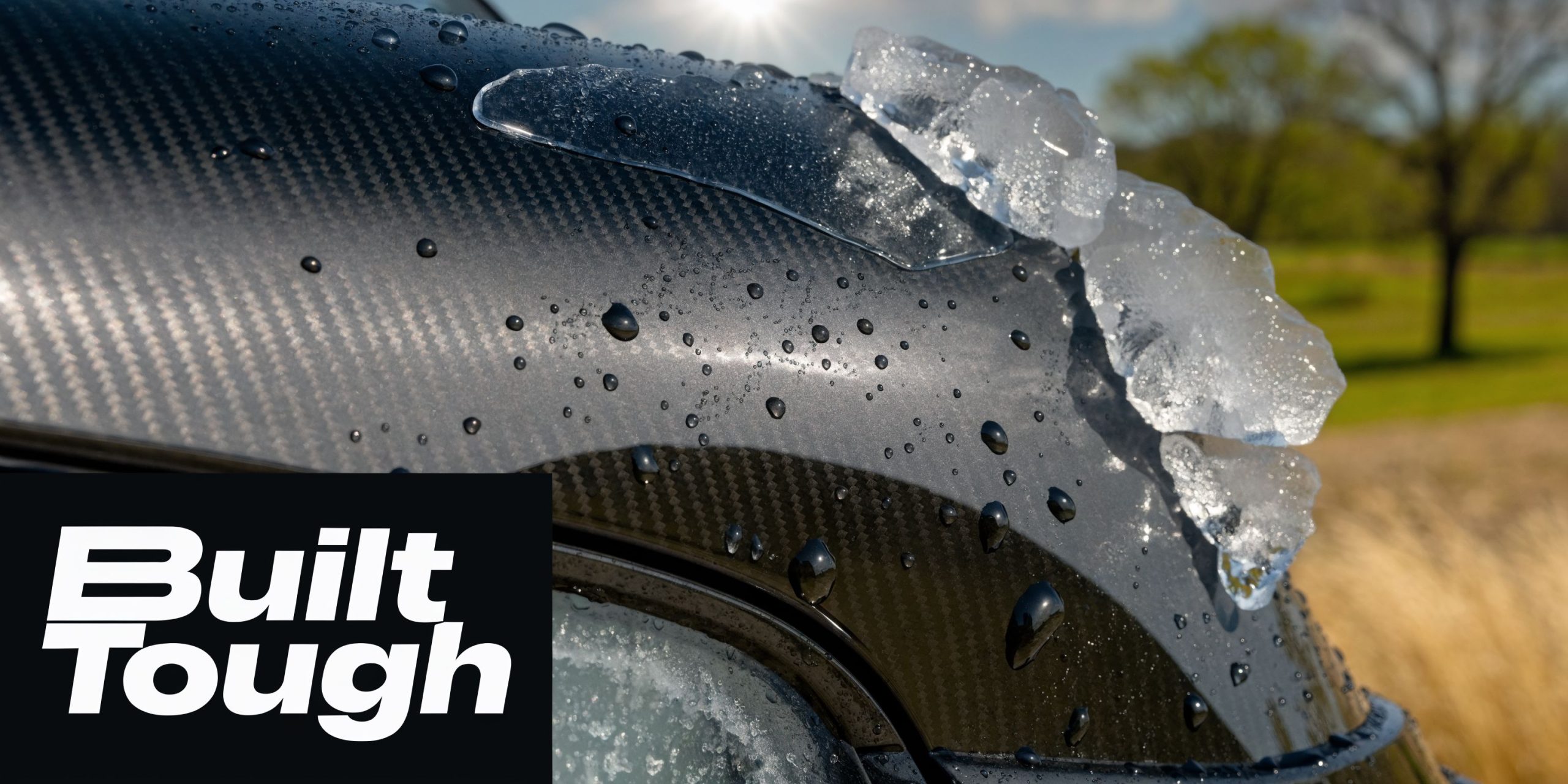
Oklahoma weather is not gentle on exterior materials. Heat, cold, sun, wind, and hail all test the quality of a wrap job, making material choice and installation discipline more important than most buyers realize.
Why cheap vinyl fails first
Business owners sometimes compare wrap quotes as if they are buying the same product from every shop. They are not.
Lower-grade materials may look acceptable on day one, but they are less forgiving on curves, recesses, rivets, door seams, and body channels. Those are the exact spots where peeling usually starts.
Professional wrap systems use material and process together. That means quality film, proper surface prep, the right laminate, and installers who know how to handle edges and tension.
What protects a wrap in Oklahoma City
The most important durability features are usually invisible to the buyer.
According to Signs Now Oklahoma City, Oklahoma's temperature fluctuations induce thermal expansion differences between vinyl and metal, but professional wraps use multi-polymer air-release channels and edge-seal primers to mitigate delamination risks by 85%, ensuring longevity with less than 2% failure in the first 36 months on properly prepped surfaces.
That sounds technical, but the business meaning is simple. Oklahoma heat and cold make materials move. Good wrap systems are designed to move without failing.
Material choices owners should ask about
When you talk to a provider, ask what they use and why. Good answers should mention specific products or product classes, not vague claims about “premium vinyl.”
Key points to ask about:
- Vinyl type: Cast films are generally preferred for complex vehicle surfaces because they conform better.
- Laminate: A UV-protective overlaminate helps defend against fading and surface wear.
- Air-release technology: This helps reduce bubbles and improves finish quality.
- Edge treatment: Edges are where many failures start, so primer and proper finishing matter.
If you want a broader look at how material selection affects outdoor sign life, this guide to the best material for outdoor signs helps frame the same durability logic.
Weather reality in OKC
Oklahoma City businesses also worry about fading. That concern is reasonable. The local climate puts wraps through long sun exposure and major seasonal swings.
For owners, the lesson is not “avoid wraps.” It is “avoid bargain work that ignores local conditions.”
Key takeaway: A wrap is only as durable as its prep, film, laminate, and edge finishing. Design gets attention, but installation quality protects the investment.
A wrap should look good on the day you pick it up. It also needs to keep looking professional after months of heat, dust, washing, and road use.
Your Vehicle Wrap Project Timeline From Design to Drive-Away
Most frustration in a wrap project comes from uncertainty, not from the wrap itself. Owners want to know how long the vehicle will be out of service, when they will see design proofs, and who is keeping the process moving.
Step one begins with strategy
The first conversation should cover more than color preferences. A useful consultation addresses the vehicle type, service area, audience, parking habits, and what the vehicle needs to communicate fast.
A contractor’s van parked in front of homes needs a different message hierarchy than a warehouse shuttle or a multi-location delivery unit.
Design proofing prevents expensive mistakes
Good wrap design is not just logo placement on a vehicle template. It is scaling, panel transitions, door seams, handles, windows, and readability while the vehicle is moving.
You should expect digital proofs and revisions before production starts. This stage matters because changing a proof is easy. Changing printed material is not.
Production and installation are separate stages
Once a design is approved, the graphics are printed and laminated before install. In Oklahoma City providers commonly note that typical wrap installation timelines range from 1 to 2 days depending on vehicle size and wrap complexity, as described in the BBB directory summary for Oklahoma City vehicle wrap services.
That install window usually comes after design approval and production, not including the earlier planning time.
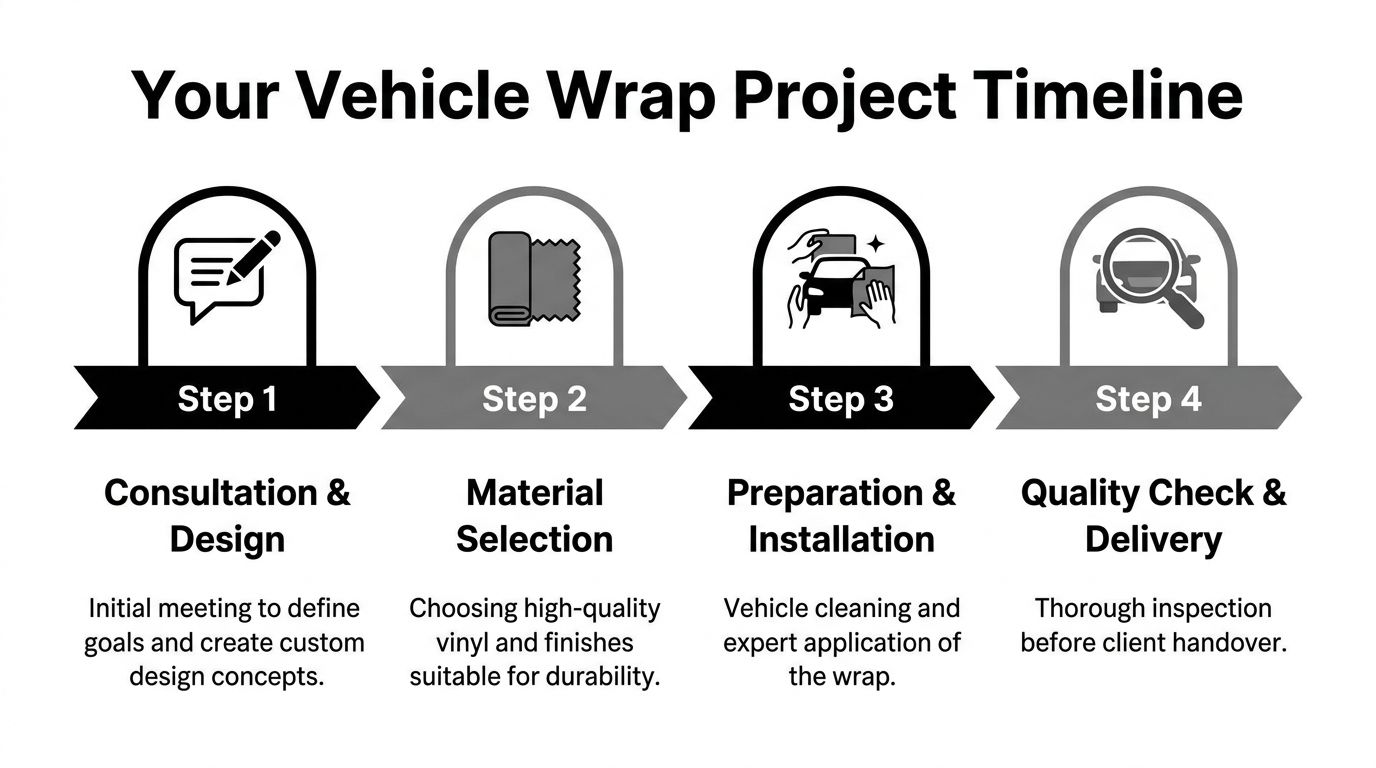
A simple way to think about the process
Consultation and goals
You define what the vehicle needs to accomplish.Design and proof approval
The wrap is mapped to the vehicle and refined before print.Printing and lamination
Materials are produced and protected for installation.Vehicle prep and install
The vehicle is cleaned, prepped, and wrapped by installers.Final review and handoff
The finished vehicle is inspected before it returns to service.
For companies juggling several moving parts, organized signage project management becomes especially important. Fleets, multi-site companies, and businesses with strict downtime windows benefit from having one person coordinate approvals, scheduling, and communication.
Practical tip: Before booking install, decide which vehicle can be offline with the least disruption. Operational timing matters almost as much as design quality.
The best projects feel predictable. You know what is happening, when it is happening, and who is responsible for the next step.
Navigating Vehicle Wrap Costs and Regulations in OKC
Two concerns come up early in almost every wrap conversation. What will this cost, and can anything in the design create a compliance issue?
What shapes the final price
Vehicle wrap pricing in Oklahoma City depends on coverage level, vehicle size, body complexity, design requirements, and material selection.
The broad market range most often cited for commercial vehicle projects in major U.S. markets like Oklahoma City is $2,000 to $5,000 per vehicle, based on the project details referenced by Signs Now in Oklahoma City. That does not mean every vehicle falls neatly into one price. A pickup with simple panels is different from a van with deep recesses or a box truck with large printable surfaces.
A practical way to budget is to ask for pricing based on three scenarios:
- Minimal brand coverage
- High-visibility partial coverage
- Full commercial coverage
That gives you a decision range instead of one all-or-nothing quote.
Local rules owners often miss
Regulation is where national guides usually get thin. Local compliance can affect materials and design choices.
The Oklahoma City-related guidance cited by Signs Now includes a code example involving no reflective glare over 1000 cd/m². Providers also offer window wraps on perforated, street-legal vinyl that preserves outward visibility while showing graphics from the outside, as described in the Oklahoma City market notes tied to local providers.
Those details matter because a design that looks great on a screen can create a problem if it uses overly reflective finishes or improper window coverage.
Questions to raise before approval
Ask these before print:
- Will any finish create glare concerns?
- Is the rear window treatment street-legal for this vehicle type?
- Does this design affect leased vehicle return requirements?
- Who checks local code or permitting issues if they apply?
If you want a broader view of compliance workflows, this overview of sign permit requirements shows how experienced sign partners handle local rules before they become expensive surprises.
The safest approach is simple. Treat compliance as part of design, not as a last-minute box to check.
How to Select a Reputable OKC Vehicle Wrap Provider
Oklahoma City has options. That is good for competition, but it also means owners need a vetting process.
The market is active. The Better Business Bureau lists 79 results for vehicle wrap services in the Oklahoma City area, and some national providers with local operations report over 16,000 commercial vehicles wrapped across their network, according to the BBB Oklahoma City vehicle wrap directory.
What separates a solid provider from a risky one
A wrap provider is not just selling printed vinyl. They are handling your brand, your vehicle downtime, and your asset condition.
A reputable shop should be able to explain:
- the materials they install
- how they prep vehicles
- what their warranty covers
- what happens if an edge lifts or a panel fails
- how they handle reprints or panel replacement later
If they get vague when you ask specific questions, that is a warning sign.
Questions worth asking in the first conversation
Use this checklist and listen carefully to the answers.
What brand and series of vinyl do you use?
Specific product names signal real process knowledge.How do you prep the vehicle before install?
Prep is where long-term performance starts.What does your warranty cover?
Ask about fading, peeling, edge failure, and exclusions.Can I see work similar to my vehicle type?
A cargo van, pickup, shuttle, and box truck each present different installation challenges.Who handles design revisions and approval?
You want accountability, not confusion.Can you support multiple vehicles or multiple locations if I expand later?
This matters for growing businesses and regional fleets.
Watch for process maturity
A good provider has an organized workflow. Files are named clearly. Proofs are documented. Install scheduling is realistic. Communication is steady.
A weak provider often relies on verbal promises, rough mockups, and loose scheduling. That can still produce a decent-looking vehicle. It can also produce expensive inconsistency across a fleet.
Expert advice: Choose the provider who can explain the process clearly, not just the one who shows the prettiest mockup.
You are not only buying a wrap. You are choosing who gets to represent your brand on the road.
Protecting Your Investment and Next Steps
Once the wrap is installed, the next job is simple. Keep it looking sharp so the vehicle keeps presenting the right image.
Daily habits that extend wrap life
Most wrap care is straightforward.
- Wash gently: Hand washing is usually the safest routine for wrapped surfaces.
- Clean contaminants quickly: Fuel drips, bird droppings, bug residue, and tree sap should not sit on the film.
- Watch the edges: If you notice lifting near seams or corners, address it early.
- Park smart when possible: Shade and covered parking can help reduce long-term exposure.
Aggressive wash methods can be rough on edges and seams. The problem is not cleaning the vehicle. The problem is cleaning it in a way that stresses the film.
Why maintenance matters more in Oklahoma
Longevity is a major local concern. According to material and market commentary collected on The Lab OK vinyl wraps page, Google Trends shows a 40% spike in searches for "vehicle wrap fading Oklahoma" in the last year, new 3M materials offer up to 7-10 year lifespans, and premature peeling appears in over 70% of negative local reviews.
That tells you two things. First, buyers are actively worried about weather-related wear. Second, maintenance and material choices can make a visible difference.
A simple owner checklist
Use this after installation:
Inspect the vehicle during routine washes
Look at edges, corners, and high-contact areas.Train drivers on basic care
A fleet wrap program fails faster if drivers treat wrapped surfaces like bare painted metal.Keep installer details on file
If a panel is damaged, matching and replacing one section is easier when the original specs are documented.Address small issues early
One loose edge is usually easier to fix than a larger failure after weeks of weather exposure.
A wrap works best when treated like a branded exterior finish, not like a disposable layer.
For an Oklahoma City business, that means combining good design, strong materials, proper installation, and ordinary upkeep. Do that, and the vehicle remains a useful sales tool long after the install day.
Frequently Asked Questions About OKC Vehicle Wraps
Will a wrap damage my paint?
A professionally installed wrap on a sound factory finish is generally intended to sit on top of the paint, not ruin it. Problems are more likely when paint is already failing, repainted surfaces were not stable, or removal is handled poorly.
How long is my vehicle out of service?
Install time often depends on size and complexity. For many commercial wraps in the local market, installation is commonly described as taking 1 to 2 days after design approval and production are complete, as noted earlier.
Can I wrap windows too?
Some providers offer perforated, street-legal window film that allows outward visibility while displaying graphics from the outside. This needs to be handled correctly so the vehicle remains compliant and usable.
Do wraps help protect the vehicle?
They can help shield the painted surface from normal wear exposure. That is one reason some businesses prefer wraps over repainting for service fleets.
Should I wrap one vehicle first or do the whole fleet?
If you are unsure about design, workflow, or operational downtime, starting with one unit is often the practical move. It lets you test the message, layout, and internal approval process before wider rollout.
What is the most common mistake owners make?
Trying to fit too much onto the vehicle. A wrap is seen quickly, often at a distance or in motion. Fewer, larger, clearer elements usually perform better than dense lists of services.
Is a partial wrap enough?
It can be. For many businesses, a partial wrap with strong side and rear messaging is the smartest balance between visibility and budget.
If your business is weighing vehicle wraps oklahoma city ok and you want expert help with design, project coordination, permitting support, fabrication, installation, or a broader multi-location signage strategy, contact On Display Signs, Inc. for a no-obligation consultation. They manage signage projects from concept to completion and can help you plan a branded vehicle program that fits your goals, timeline, and operational needs.