When you manage a multi-unit residential complex or a corporate headquarters, your building needs to command attention without losing its professional appeal. Standard signage often fades into the background after dark, costing you valuable brand visibility. Back-lit—or halo-lit—signs solve this by delivering a sophisticated, premium aesthetic that ensures your property stands out 24 hours a day.
At On Display Signs, we specialize in electrical building signage. Creating a halo-lit sign involves complex design, fabrication, and installation, but your dedicated project manager will handle every part of the process for you. From initial consulting to final installation, we guide developers and commercial businesses to ensure your new sign is effective, engaging, and exactly what your brand deserves.
The Mechanics and Aesthetic of Halo-Lit Signage
How Halo Illumination Reverses the Standard Approach
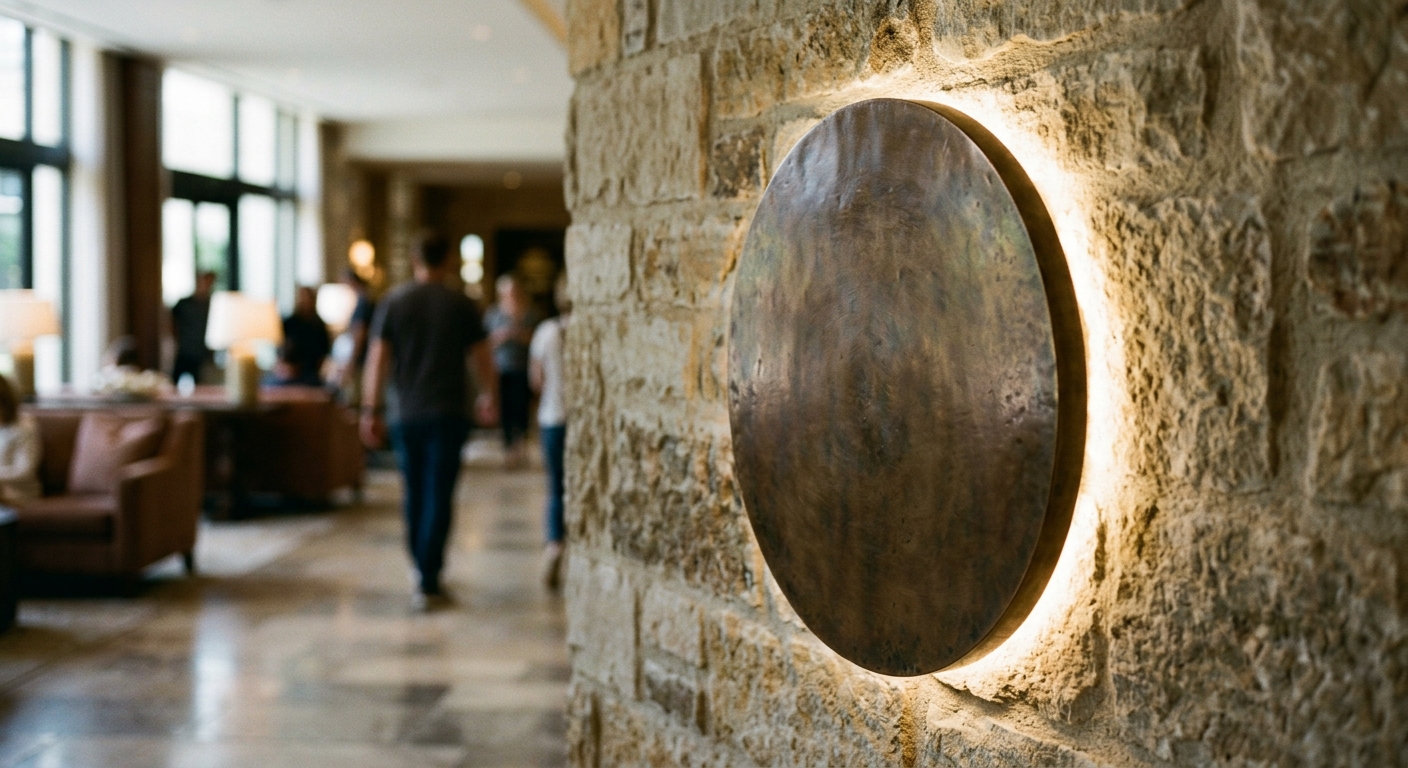
Standard illuminated signs, such as traditional channel letters or illuminated cabinet signs, push light outward through a translucent front face. Back-lit signs—frequently referred to as halo-lit signs—reverse this mechanical approach. When we fabricate these signs, we build them with solid, opaque faces, typically utilizing durable materials like routed aluminum. Instead of shining forward, the internal electrical LED lighting projects backward through a clear polycarbonate backer or an open back.
When this light strikes the mounting surface behind the sign, it reflects outward, creating a soft, continuous glow that borders each dimensional letter or logo element. This distinct aesthetic provides excellent 24-hour visibility while delivering a more subdued, premium look compared to the bright, direct glare of standard face-lit options. For the national developers and property managers we serve, this upscale appearance is highly sought after for branding multi-unit residential complexes and corporate headquarters.
| Feature | Standard Face-Lit Signs | Back-Lit (Halo-Lit) Signs |
|---|---|---|
| Light Direction | Projects forward through a translucent face | Projects backward against the mounting surface |
| Sign Face Material | Translucent acrylic or polycarbonate | Opaque metal or painted acrylic |
| Visual Aesthetic | Bright, bold, and direct | Elegant, sophisticated, and premium |
| Mounting Style | Often flush to the wall or on a raceway | Requires standoff mounts to create a gap |
Engineering the Perfect Halo Effect
To achieve the signature glow of a back-lit sign, the physical installation is just as important as the fabrication. We cannot mount these electrical building signs flush against the wall. Instead, we use specialized standoff hardware to float the dimensional letters a precise distance away from the surface.
The exact depth of this standoff space dictates the spread and intensity of the halo. A shorter standoff distance traps the light, creating a tight, sharp ring of illumination. A deeper standoff allows the light to spread, producing a softer, more diffused glow. By adjusting these mechanics, we can tailor the 24-hour visibility of the sign to match the exact aesthetic your company deserves.
Environmental Factors That Impact the Glow
Because back-lit commercial signs rely entirely on the mounting surface to reflect light, the condition of your building's exterior plays a critical role in the final product. There is a lot to creating a sign, but your dedicated Project Manager will handle every part for you, evaluating the following site-specific factors to ensure your sign is effective and engaging:
- Surface Texture: Smooth architectural panels reflect light evenly for a uniform halo. Heavily textured walls, such as rough masonry or corrugated metal, can create irregular shadow patterns.
- Wall Finish: Matte exterior paints diffuse the halo softly. Conversely, glossy finishes can cause unwanted mirror-like reflections that expose the individual LED nodes hidden inside the sign.
- Background Color: Dark walls absorb illumination, which may require brighter LEDs to achieve the desired effect. Light-colored walls reflect light efficiently, maximizing the halo's brightness.
- Concealed Wiring: Because the sign floats off the wall, all electrical components must be routed directly through the wall surface behind each letter to maintain a clean, high-end appearance without exposed conduit.
To achieve a flawless halo effect, the mounting surface must be carefully evaluated, as dark background colors or highly reflective glossy finishes can severely diminish the impact of your back-lit sign.
Elevating Corporate Offices and Residential Complexes
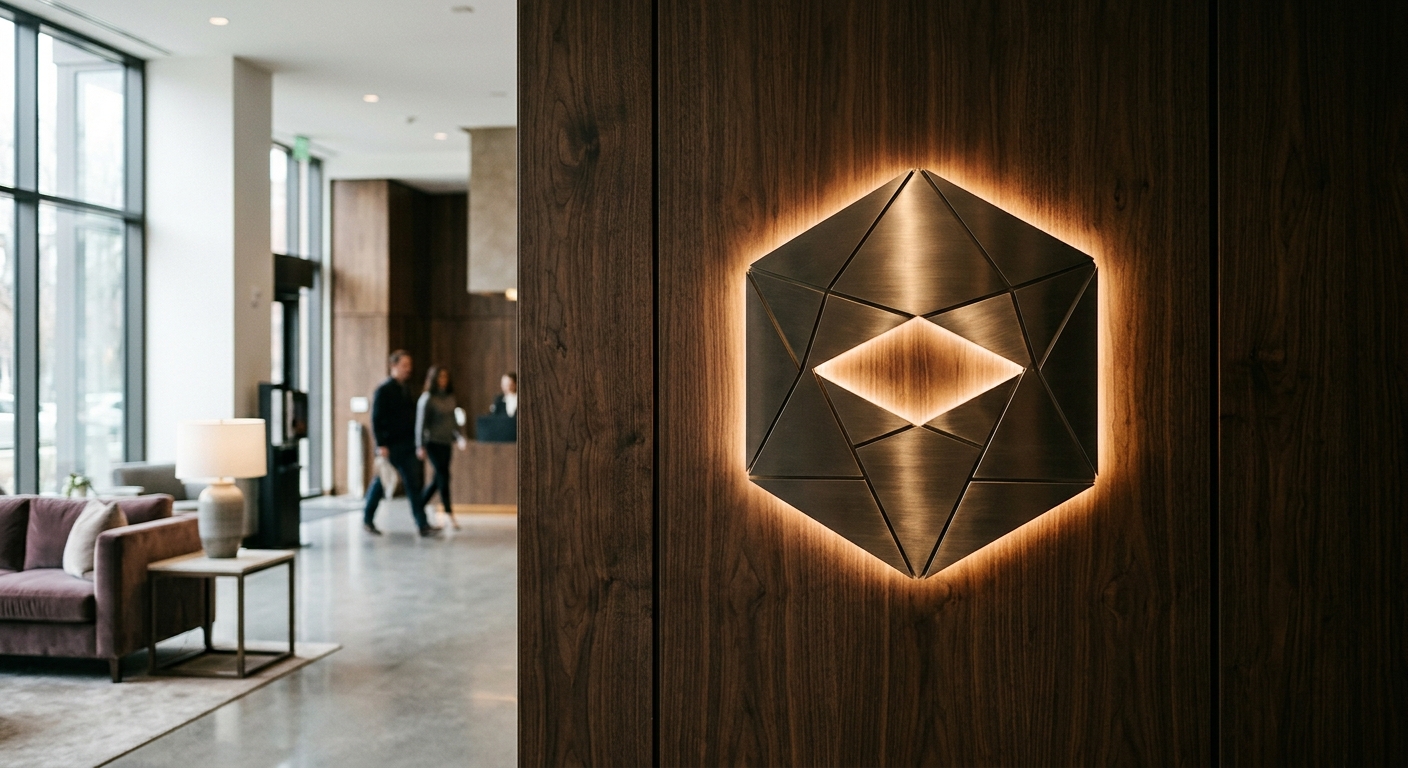
National developers and property managers consistently choose back-lit signs when they need to establish a high-end, luxury branding presence. Whether you are branding a newly constructed multi-unit residential complex or upgrading a corporate headquarters in Kentucky or Indiana, the signage you choose sets the tone for how tenants, investors, and visitors perceive the property. We have experience designing signs for every size business, and we know that a well-executed sign communicates quality before a visitor even walks through the doors.
Creating a Luxury Identity for Multi-Unit Residential Complexes
At On Display Signs, branding multi-unit residential complexes is one of our specialties. For these properties, the entrance monument sign or exterior building sign is often the first impression for prospective tenants. Back-lit signs provide a sophisticated, floating glow that elevates the perceived value of the entire property.
Property managers and developers prefer this style for multi-unit living spaces because it offers:
- Subtle elegance: The indirect halo effect avoids the harsh glare of direct lighting, aligning perfectly with upscale residential branding.
- 24/7 visibility: The illumination ensures the property name is legible, safe, and welcoming at night, improving both aesthetics and wayfinding.
- Architectural integration: Back-lit dimensional letters and logos mount seamlessly to brick, stone, or architectural metal, complementing the building's exterior design rather than distracting from it.
- Lasting durability: Built to withstand the weather in our service area, these signs maintain their premium look year after year.
Establishing Authority for Corporate Headquarters
Large corporations and successful start-ups also rely on back-lit signage to project stability, professionalism, and authority. When we work with commercial businesses to design, fabricate, and install exterior signage for their headquarters, the goal is to create a commanding yet polished presence. A back-lit sign achieves this by outlining the company's logo in a crisp ring of light against the building's facade, making the brand look established and modern.
There is a lot to creating a custom sign of this scale, but our smooth, stress-free process ensures you get a sign that you love. Because every client gets one dedicated Project Manager, we handle every part for you. We will work with you and guide you to ensure the final product matches your exact corporate branding guidelines, is highly effective, and stays within your budget. You will have consistent communication throughout the entire project, from the initial consultation to the final installation.
Comparing High-End Signage Options
When deciding how to brand a corporate office or luxury apartment complex, it helps to weigh back-lit signs against other illuminated options we fabricate and install.
| Sign Type | Visual Effect | Best Application | Brand Vibe |
|---|---|---|---|
| Back-Lit (Halo-Lit) Signs | Soft glow behind dark or solid letters | Luxury apartments, corporate headquarters | Upscale, sophisticated, modern |
| Standard Channel Letters | Bright, direct front illumination | Retail centers, high-traffic commercial buildings | Bold, highly visible, energetic |
| Illuminated Cabinet Signs | Large, glowing branded box | Business parks, multi-tenant directory monuments | Practical, traditional, informative |
Because back-lit signs rely on the contrast between the unlit face of the lettering and the illuminated glow behind it, always mount them against a contrasting wall color or backer panel to ensure your branding remains highly legible.
Design Considerations for Optimal Back-Lit Illumination
Surface Texture and Light Reflection
When we design back-lit signs, we must evaluate the surface where the sign will be installed. The wall behind your signage acts as a reflector for the LEDs, meaning its texture directly influences how the halo effect appears. Because we frequently install on the exteriors of multi-unit residential complexes and commercial buildings throughout Kentucky and Indiana, we encounter a wide variety of architectural surfaces that require different lighting strategies.
| Wall Texture | Halo Effect | Design Recommendation |
|---|---|---|
| Smooth (Drywall, Flat Metal) | Crisp, uniform, and highly predictable glow. | Standard LED spacing and standard standoff mounts work perfectly. |
| Matte Brick or Rough Stone | Diffused, slightly uneven glow with subtle shadows. | Increase LED intensity or adjust standoff distance to bridge gaps in the texture. |
| Glossy Tile or Polished Stone | Sharp reflections that can expose individual LED bulbs. | Use a diffuser on the back of the letters or increase standoff distance to blur the light. |
| Corrugated Metal | Banded or striped light patterns. | Requires strategic placement of letters and careful standoff depth to minimize shadows. |
Color Contrast and Light Absorption
Beyond texture, the color of the mounting surface dictates how well your branding stands out. A white halo glow will lose its impact against a white or brightly painted wall, while a dark background will behave entirely differently.
When working with your dedicated Project Manager to finalize your design, we evaluate contrast based on several specific factors:
- Wall Color Absorption: Darker walls absorb light, which means we often need to specify higher-output LEDs to achieve the desired brightness. Lighter walls reflect light efficiently but require a contrasting LED color to ensure the glow remains distinct.
- Brand Color Matching: If your brand guidelines require specific colored LEDs, we must ensure those colors do not clash with or get lost against the building's exterior paint or masonry.
- Ambient Lighting: Existing streetlights, parking lot lights, or landscape lighting can wash out a back-lit sign if the contrast between the wall and the halo is not high enough.
Material Choices for Sign Faces
The materials used to fabricate your sign dictate how light is directed. For the most pronounced halo effect, we use opaque materials for the sign face and returns (the sides of the letters). When we fabricate custom dimensional letters, the opaque face completely blocks forward light transmission, forcing all of the LED illumination out the back to wash over the wall.
We also frequently use custom acrylic for back-lit branding. Thick acrylic letters can be manufactured with an opaque face—often painted or finished with a brushed metal laminate—while leaving the back frosted. This frosted acrylic backing acts as a built-in diffuser, softening the LED light before it hits the wall and eliminating harsh hotspots. Selecting the right combination of acrylic or metal ensures the final product is effective, engaging, and perfectly aligned with your budget.
Failing to account for a highly reflective or heavily textured mounting wall is the most common mistake in halo-lit sign design, resulting in visible LED bulbs or an uneven, shadowed glow.
Navigating Fabrication and Electrical Sign Permitting
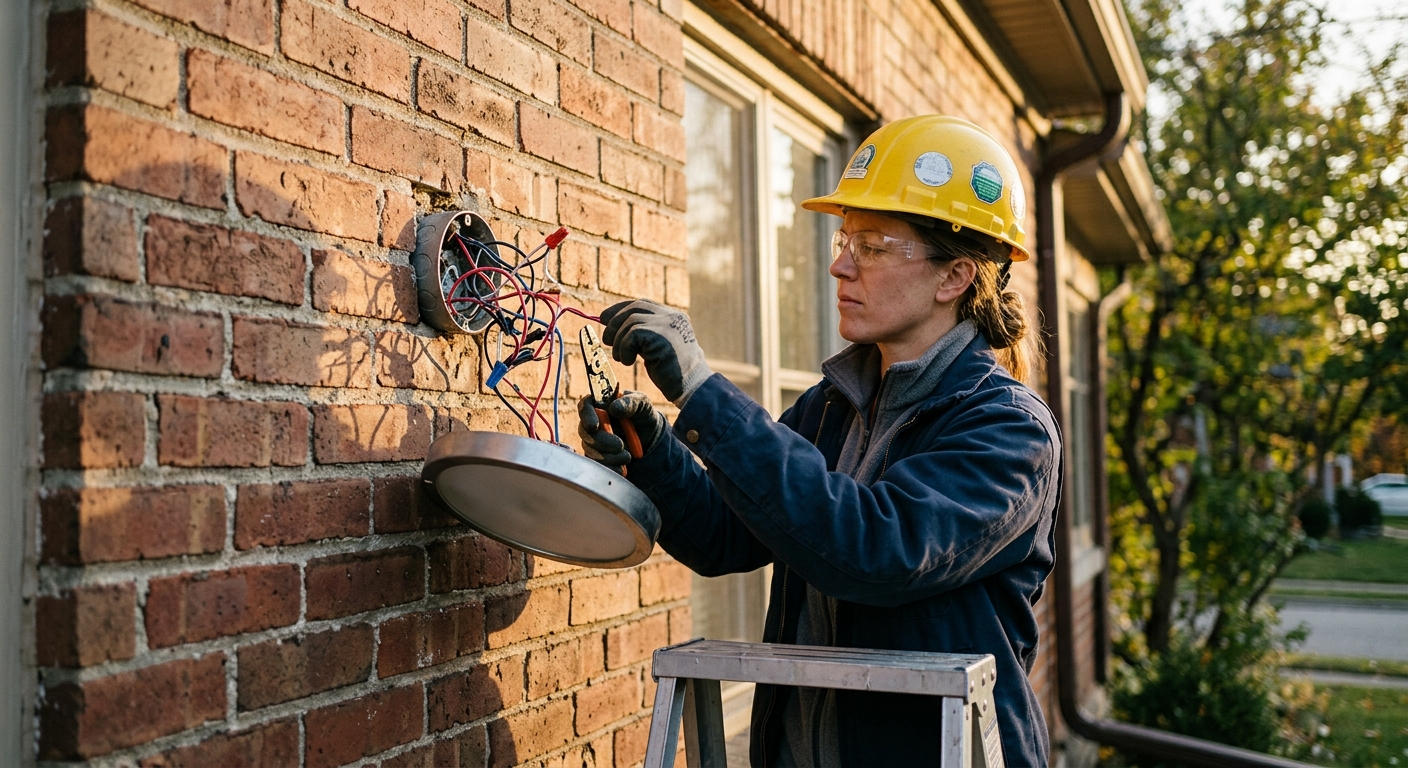
Precision in Fabricating Back-Lit Signs
Creating an electrical back-lit sign involves much more than shaping metal or acrylic. For halo-lit channel letters or illuminated monument signs, fabrication requires precise routing, careful placement of LED modules, and strategic wiring to ensure the "halo" effect casts an even glow against the mounting surface. At On Display Signs, we handle the technical side of bringing your brand to life. Because we specialize in electrical building and monument signs, our fabrication team understands exactly how to balance illumination, materials, and power supplies.
Instead of leaving you to coordinate between designers, fabricators, and electricians, we assign you one dedicated Project Manager. Your Project Manager oversees every detail on the shop floor, ensuring the final product matches the approved design, maintains the highest quality standards, and stays strictly within your budget.
Managing the Permitting Process
Before a single illuminated sign can be installed on your commercial building or multi-unit residential complex, it must clear local zoning and building regulations. Because back-lit signs require dedicated power, the permitting process is heavily regulated across our Kentucky and Indiana service areas.
Your Project Manager handles the entire application process from start to finish, preventing costly delays and keeping your project entirely stress-free. To secure municipal approval for electrical signage, we compile and submit several technical documents on your behalf:
- Detailed site plans: Showing the exact placement of the sign on your property, monument base, or building facade.
- Electrical schematics: Demonstrating how the sign will safely connect to the building's primary power source.
- Engineered drawings: Proving the sign's structural integrity, mounting methods, and wind-load resistance.
- Property manager approvals: Ensuring the design complies with specific lease agreements or master sign programs for national developers.
Standard vs. Electrical Sign Requirements
Adding illumination to your branding significantly changes what is required behind the scenes. Our project management approach ensures you never have to navigate these added complexities alone. Here is a breakdown of how fabricating and permitting an electrical back-lit sign compares to standard, non-illuminated signage:
| Requirement Dimension | Standard Non-Illuminated Signs | Electrical Back-Lit Signs |
|---|---|---|
| Fabrication Focus | Material shaping, painting, and surface finishing. | LED integration, internal wiring, and exact light-diffusion spacing. |
| Permit Types | Typically requires only a basic zoning or sign permit. | Requires zoning, building, and specific electrical permits. |
| Documentation | Basic dimensional drawings and property mockups. | Full electrical schematics and certified engineering documents. |
| Installation Prep | Standard structural mounting hardware. | Concealed conduit routing and primary power access planning. |
Through consistent communication, your Project Manager keeps you updated as your sign moves from the fabrication floor through final municipal approvals. We take on the heavy lifting of compliance and construction so you can focus on running your business.
Attempting to fabricate and install an electrical back-lit sign without securing the proper municipal permits can result in heavy fines, forced removal of the sign, and dangerous electrical hazards.
Seamless Installation for Lasting 24-Hour Visibility
Guided by Your Dedicated Project Manager
At On Display Signs, we know that coordinating an on-site installation can feel overwhelming, especially when managing an active commercial business or a busy multi-unit residential complex. To ensure a completely stress-free process, every client works with one dedicated Project Manager from start to finish. There is a lot involved in putting up an electrical sign, but your Project Manager handles every part of the logistics for you. You will have consistent communication throughout this final phase, meaning you always know when our installation crews will arrive, what site preparation is needed, and when the power will be connected. Whether you are an individual with a startup or a national developer, we will work with you and guide you to ensure the final product is installed exactly as planned.
Secure Mounting and Electrical Safety
Back-lit signs rely on precise physical placement and secure electrical connections to maintain their signature halo effect. Because we specialize in electrical building and monument signs throughout Kentucky and Indiana, our installation process is designed to protect both the delicate signage components and your commercial property. Properly securing these elements prevents weather damage and electrical shorts, which is essential for signs that run continuously.
Our on-site installation process includes several critical steps to ensure lasting 24-hour visibility:
- Site Verification: We inspect the wall condition, structural supports, and primary electrical access points before any drilling or mounting begins.
- Precision Standoff Mounting: The dimensional letters or logo elements are mounted on specialized standoffs at the exact distance from the wall required to achieve an even, continuous light spread.
- Wiring Concealment: All electrical components, including power supplies and wiring, are safely routed behind the mounting surface. This protects the electronics from the elements and keeps the visual focus entirely on your branding.
- Illumination Testing: Once mounted, we power on the sign to verify that the electrical components are functioning safely and that the back-lighting is consistent across the entire display.
Adapting to Your Installation Environment
The specific location of your sign dictates how we handle the physical mounting and electrical wiring. We have experience installing signs for every size business, adapting our methods to suit the unique architecture of your property.
| Mounting Environment | Wiring Access and Concealment | Typical Application |
|---|---|---|
| Exterior Building Fascia | Wiring is routed directly through the exterior wall into an interior ceiling or wall cavity. | Large corporate headquarters and commercial retail buildings. |
| Monument Signs | Electrical components are safely housed within the internal structure of the monument base. | Entrances for multi-unit residential complexes and national developers. |
| Architectural Panels | Wiring is concealed behind a custom backer panel, requiring fewer penetrations into the main wall. | Interior lobbies or exterior masonry walls with limited structural access. |
Working with a single dedicated project manager to oversee the secure mounting and wiring of your back-lit sign ensures your branding remains safely and reliably illuminated around the clock.