Getting a new commercial sign involves much more than just approving a design. Between navigating local zoning ordinances, finalizing electrical requirements, and coordinating site preparation, the process can quickly become overwhelming for property managers and business owners.
At On Display Signs, we remove that stress by assigning you a single, dedicated project manager. From your initial consultation to the final installation of your monument or illuminated building sign, your project manager handles every detail and provides consistent communication so you never have to guess where your project stands.
Knowing what to expect helps keep your branding efforts on track and within your budget. Here is a look at the timeline and the specific stages involved in bringing your commercial signage to life.
Phase One: Initial Consultation and Custom Sign Design

The timeline for your commercial signage project begins with a focused consultation. At On Display Signs, we know that creating a sign involves a lot of moving parts, which is why your project starts by pairing you with one dedicated Project Manager. This single point of contact will handle every part of the process for you, ensuring consistent communication from day one.
Discussing Your Branding Goals and Budget
During the first few weeks, your Project Manager will sit down with you to understand your specific needs. Whether you are an individual launching a startup or a national developer branding a multi-unit residential complex in Kentucky or Indiana, we evaluate your site and your objectives. We will work with you to make sure your sign is effective, engaging, and aligned with your financial parameters.
In this initial consultation, we typically cover:
- Brand Identity: How your logo, colors, and typography will translate into physical graphics.
- Target Audience: Who needs to see the sign, and from what distance or traffic speed.
- Budgeting: Establishing clear financial expectations to guide the design process without surprises.
- Site Constraints: Evaluating your building facade or property line for proper exterior signage placement.
Selecting the Right Sign Type
Because we have experience designing signs for every size business in every industry, we use this phase to narrow down the best products for your location. Your Project Manager will guide you through our fabrication options to find the perfect fit for your commercial property.
Here is how we generally compare some of our most common exterior signage solutions during the consultation:
| Sign Type | Ideal Location | Typical Application |
|---|---|---|
| Channel Letters | Building facades | High-visibility, illuminated storefront branding |
| Monument Signs | Ground level, property entrances | Multi-unit residential complexes and corporate parks |
| Illuminated Cabinets | Exterior walls or on pylon poles | Cost-effective, highly visible branding for commercial businesses |
Custom Sign Design and Approval
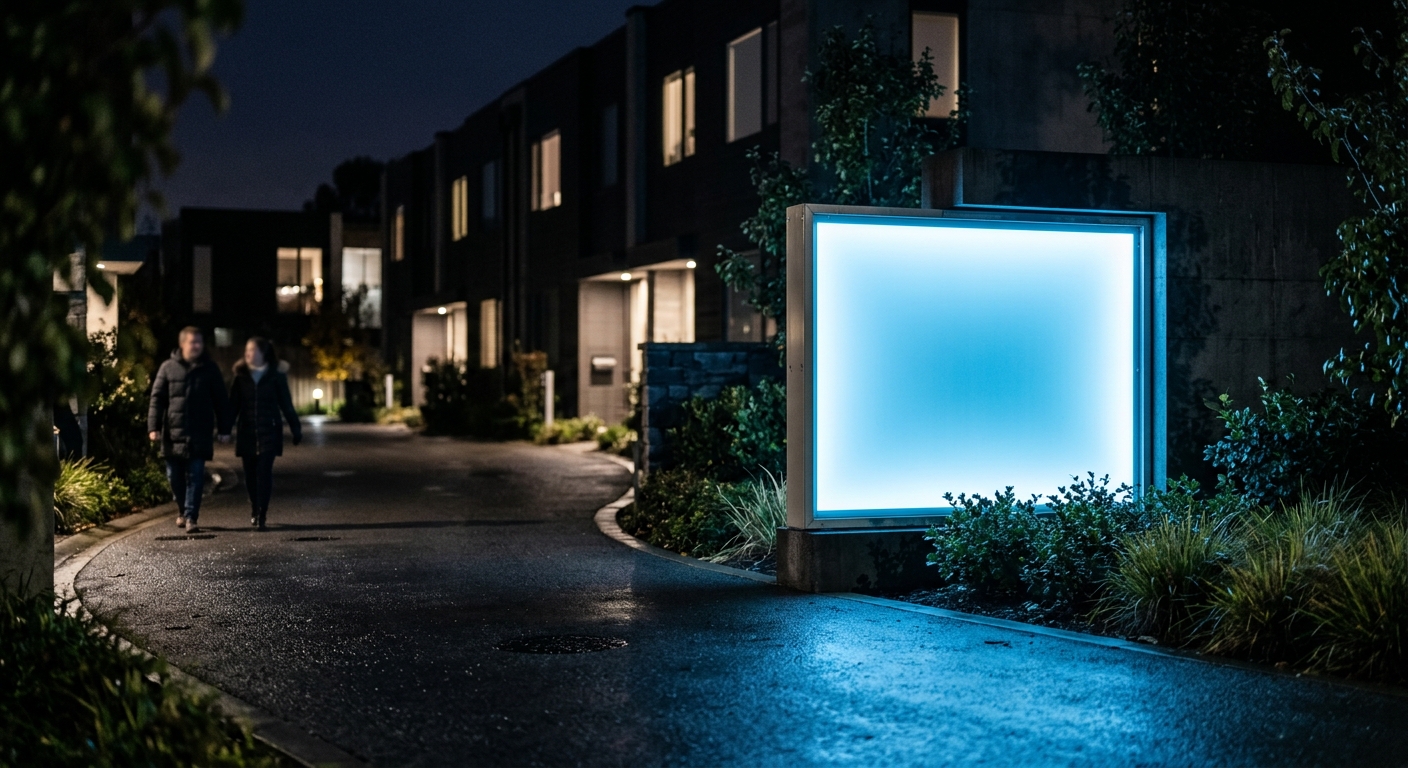
Once we understand your goals and have selected the appropriate sign type, we move into the custom design phase. We do not just take a logo and put it on a board; we consult on the specific materials, lighting methods, and scale needed to make your branding successful. For example, if we are designing a monument sign for a new apartment complex, we ensure the architectural elements complement the property's landscaping. If you need channel letters or an illuminated cabinet sign, we carefully plan the electrical components for optimal daytime and nighttime visibility.
Your Project Manager will present detailed design proofs for your review. This is a highly collaborative period in the timeline. We will work with you and guide you to ensure the final product is exactly the sign your company deserves. Our goal is to provide a smooth, stress-free process, meaning we will adjust the designs until you get a sign that you love and that helps promote your brand effectively. Once you approve the final design and the associated budget, we lock in the specifications to prepare for the upcoming phases.
Rushing the initial consultation can lead to a sign that fails to maximize your brand's visibility, so take the time early on to clearly communicate your budget and aesthetic goals with your dedicated Project Manager.
Phase Two: Securing Local Permits and Approvals

Once your custom sign design is finalized, we cannot immediately move to the fabrication stage. The next critical step is securing the required permissions to install your new signage. Because we handle commercial projects across Kentucky and Indiana, we know firsthand that this phase introduces the most variability into a project's timeline. Fortunately, your dedicated Project Manager handles every part of this process for you, providing consistent communication as we navigate the paperwork.
Landlord and Property Management Approvals
Before local governments will review a permit application, you typically need formal approval from your property owner. National developers and property managers—who make up our best customers—usually enforce strict sign criteria to maintain a cohesive look across multi-unit residential complexes or commercial retail spaces. We submit the design proofs, mounting details, and electrical specifications directly to them on your behalf. Review times depend entirely on the property management team's internal schedule, but having a professional sign company manage the submission helps prevent unnecessary delays caused by missing technical details.
Local Municipality Permits
After securing landlord consent, we submit the application to the local municipality. Whether your business is in Louisville, elsewhere in Kentucky, or across the state line in Indiana, local zoning boards heavily regulate commercial signage. They review applications for overall size, property line setbacks, illumination levels, and structural safety. For electrical building signs, cloud signs, and illuminated monument signs, this step also involves securing specific electrical permits.
| Approval Type | Primary Focus | Key Application Requirements |
|---|---|---|
| Landlord / Property Manager | Brand consistency, lease compliance, aesthetics | Design mockups, dimensions, master sign criteria |
| Local Municipality | Zoning laws, public safety, electrical codes | Scaled drawings, engineering specs, property surveys |
Factors That Affect Your Permitting Timeline
Building on our existing guide to the commercial sign permit process for developers, it is important to understand that municipal review times are not standardized. While some local offices might process permits for simple non-illuminated acrylic signs, dimensional letters, or post & panel signs in a matter of days, more complex installations take longer.
Several variables can extend this phase of the timeline:
- Sign Type and Scale: Large pylon signs or heavy channel letter signs often require stamped engineering drawings to prove structural integrity and wind-load resistance before a permit is issued.
- Zoning Variances: If your desired sign exceeds the standard size, height, or placement limits for your specific zoning district, we must apply for a variance. This process requires a formal public hearing before a zoning board, which can add several weeks or even months to the schedule.
- Historic Districts: Properties located in historic overlays face much stricter design, material, and lighting reviews from architectural review boards.
- Electrical Requirements: Illuminated cabinet signs, back-lit signs, and other electrical displays must comply with local brightness ordinances and require dedicated electrical reviews.
Never authorize the fabrication of a commercial sign until all local permits and landlord approvals are officially secured, as a rejected application or forced design change could render a costly custom sign unusable.
Phase Three: Fabrication of Your Exterior and Interior Signs
Once your local municipality approves the necessary permits, your dedicated Project Manager signals our fabrication team to begin building your custom signage. Because we operate as a full-service national signage and graphics company located in Louisville, KY, we closely monitor every stage of construction. You will have consistent communication throughout the process, ensuring a smooth, stress-free experience while we turn your approved concepts into physical reality.
Estimated Fabrication Timelines by Sign Type
How long it takes our expert team to fabricate your approved design depends heavily on the materials, scale, and electrical requirements of your project. An individual start-up requiring a single acrylic sign will move through our shop much faster than a national developer needing comprehensive branding for a new multi-unit residential complex.
| Sign Category | Examples | Complexity | Relative Fabrication Timeline |
|---|---|---|---|
| Interior & Wayfinding | ADA Signs, Acrylic Signs | Low to Moderate | Shortest turnaround |
| Non-Illuminated Exterior | 3D Dimensional Letters, Post & Panel Signs | Moderate | Standard turnaround |
| Electrical & Building | Channel Letter Signs, Illuminated Cabinet Signs, Cloud Signs | High (Requires internal wiring) | Extended turnaround |
| Freestanding Structures | Monument Signs, Pylon Signs | Very High (Structural framing and masonry) | Longest turnaround |
Building Large Exterior Signage
For our core specialties—electrical building and monument signs—fabrication involves heavy-duty materials built to withstand weather conditions across Kentucky, Indiana, and beyond. When constructing a large electrical monument sign for an apartment complex or a pylon sign for a commercial plaza, our process includes several critical stages:
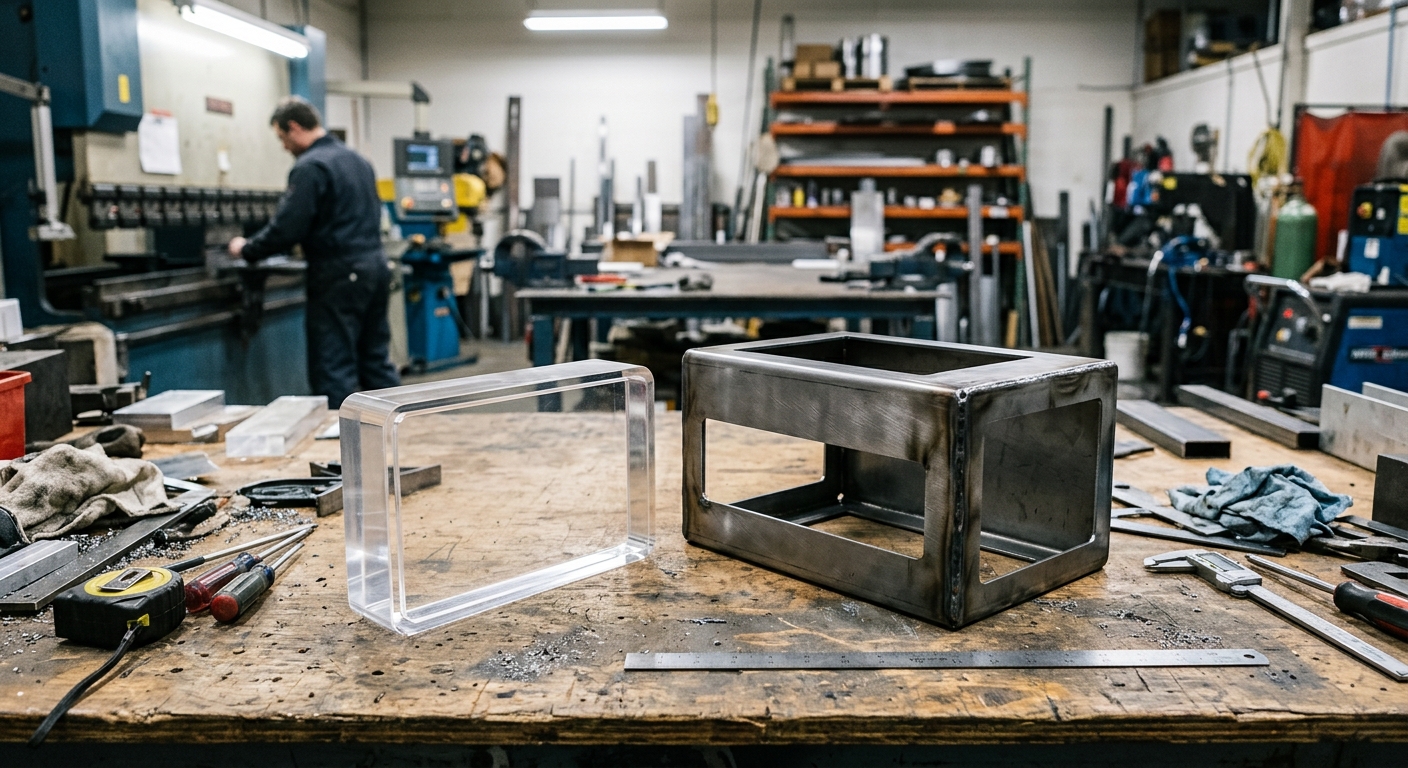
- Structural Metal Fabrication: We cut, bend, and weld aluminum or steel to create a highly durable inner skeleton that serves as the foundation of your sign.
- Electrical Integration: For back-lit signs, cloud signs, and illuminated cabinets, our technicians install and test all lighting components, power supplies, and wiring to guarantee proper illumination and safety.
- Skinning and Assembly: We apply the outer faces—such as precision-routed aluminum panels or durable translucent acrylic—securely to the structural frame.
- Custom Finishing: The structure is sanded, primed, and painted with commercial-grade coatings to perfectly match your corporate branding.
Crafting Interior and Architectural Signage
Interior branding requires a different set of fabrication techniques focused on up-close aesthetics and strict regulatory compliance. Whether we are producing precision-cut 3D dimensional letters for a corporate lobby or tactile ADA signs for office corridors, the process is highly detailed. Our team uses precision routing equipment to shape acrylics and metals. Edges are polished, mounting hardware is prepared, and vinyl graphics are applied with exact alignment. Throughout this phase, your Project Manager works with you to ensure the final product is effective, engaging, and exactly the sign your company deserves.
Because structural and electrical components require meticulous assembly and testing to guarantee safety, the most important step you can take is finalizing your design approvals early to accommodate the longer fabrication timelines of complex exterior signs.
Phase Four: Professional Sign Installation at Your Property
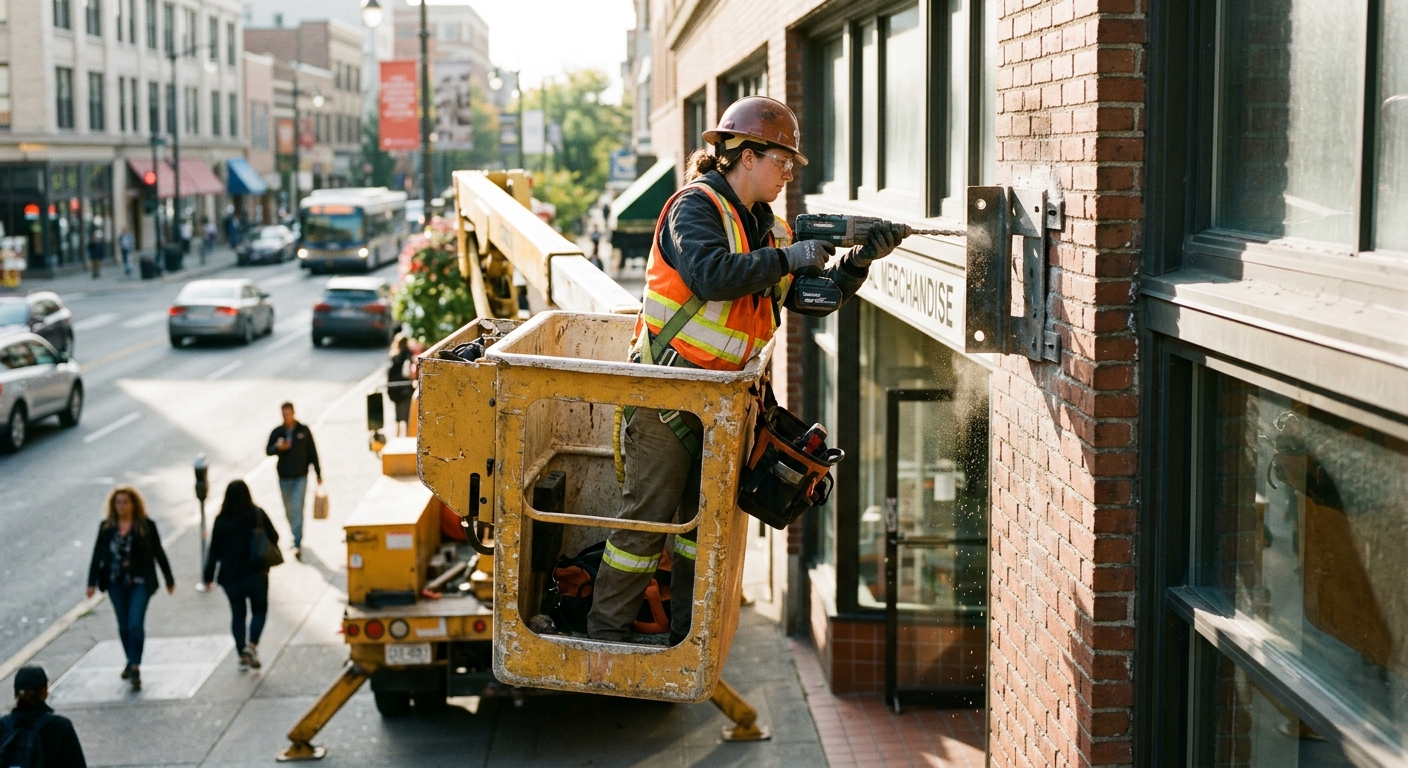
Once your channel letters, monument signs, or interior graphics are fully fabricated, we move to the final physical step of your project: installation. At On Display Signs, this phase is managed by the exact same dedicated Project Manager you have worked with since your initial consultation, ensuring a smooth transition from the shop to your property.
Coordinating Your Installation Schedule
We know that installing signage at an active commercial business or a busy multi-unit residential complex can be a logistical concern. Your Project Manager coordinates directly with you, your property managers, or your developers to schedule an installation window that makes sense for your daily operations. Our primary goal is to ensure your new exterior or interior signage is put in place safely and efficiently, with minimal disruption to your workflow, tenants, or customers.
Whether you are a startup opening your first location or a large corporation rebranding across Kentucky and Indiana, you will have consistent communication throughout this process. Because you have one dedicated point of contact, you will always know exactly when our crew will arrive, what equipment they will bring, and how long the installation will take.
What Our Installation Team Handles
Installing commercial signage involves precise mounting, structural integrity, and often, complex electrical work. As experts in electrical building and monument signs, our team manages every physical requirement on site so you do not have to worry about the details.
During your scheduled installation, our crew will manage:
- Site preparation: Setting up safety perimeters and staging equipment to protect your staff, tenants, and visitors.
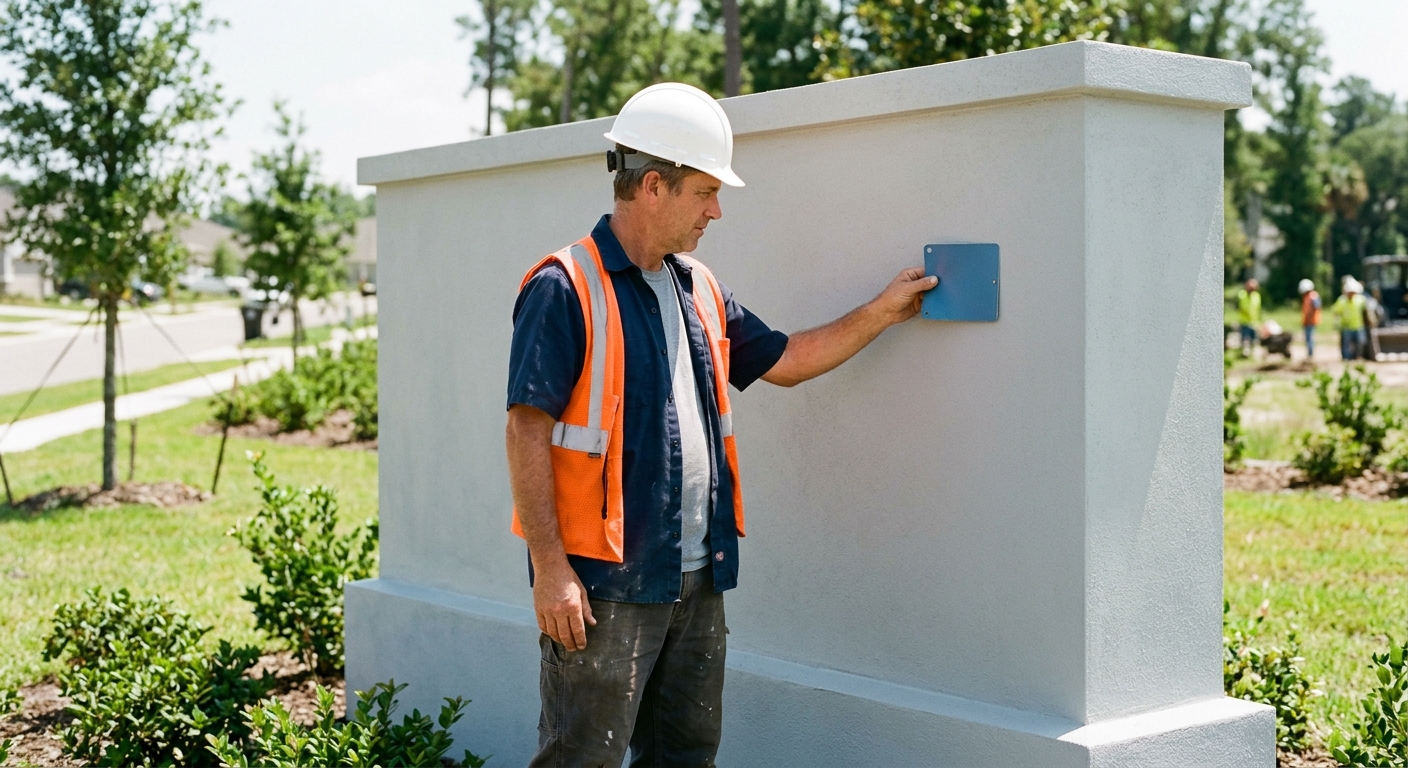
- Structural mounting: Digging and pouring concrete footings for heavy exterior signage, or securing dimensional letters directly to your building's facade.
- Electrical integration: Safely wiring illuminated cabinet signs, back-lit signs, and cloud signs to your property's power source.
- Quality assurance: Verifying that every element is level, securely fastened, and functioning properly.
- Site cleanup: Removing all debris and packaging so your property looks immaculate and your new branding takes center stage.
Installation Expectations by Sign Type
Different products require distinct installation methods, equipment, and timeframes. Below is a comparison of what you can expect when we install various types of signs at your facility.
| Sign Category | Installation Method | Typical Site Impact |
|---|---|---|
| Monument & Pylon Signs | Excavation, pouring concrete footings, and utilizing heavy lifting equipment | Moderate; requires ground access, utility checks, and clearance near property entrances |
| Channel Letters & Cloud Signs | Facade drilling, structural mounting hardware, and electrical wiring | Low to Moderate; requires bucket truck or lift access to the building exterior |
| ADA Signs & Acrylic Signs | Flush wall mounting and precise measuring to meet strict compliance standards | Low; quiet interior installation with a minimal footprint in your hallways or lobbies |
| Post & Panel Signs | Post hole digging, setting supports, and attaching architectural panels | Low; localized ground work usually contained to property borders or parking areas |
Relying on your single dedicated Project Manager to oversee all structural mounting and electrical wiring ensures your sign is installed safely and correctly without the stress of managing multiple outside contractors.