When you start budgeting for new signage, the numbers can seem all over the map. The typical cost of signage for business can run anywhere from a few hundred dollars for a simple banner to over $20,000 for a large, illuminated monument sign. The final price tag really comes down to the size, materials, and complexity of what you need.
It helps to think of your sign not as a one-off purchase but as your hardest-working employee—the one that’s out there 24/7 attracting customers and building your brand.
Your Guide to Understanding Business Signage Costs
Before you even ask for a quote, it’s crucial to understand the whole picture. A sign’s price isn’t just one number; it’s a mix of creative design, tough materials, skilled fabrication, and professional installation. This guide will break down that total investment so you can make a smart decision that actually helps you grow.
Understanding the value behind the cost is everything. A professionally designed and installed sign is an engine for your business. It's the first impression you make and a constant reminder of who you are.
Framing Your Signage as an Investment
Viewing your sign as a long-term asset instead of just another expense completely changes the conversation. It’s a core piece of your marketing that directly impacts how customers see you and whether they decide to walk through your door. A cheap, flimsy sign can quietly turn people away, while a quality sign telegraphs professionalism and builds immediate trust. The goal is to find the best value, not just the rock-bottom price.
This mindset is backed by a massive global industry valued at around $52.7 billion as of 2025, and it's projected to climb to $97.3 billion by 2035. That growth tells you one thing: businesses everywhere recognize that good signage is a critical tool for getting seen and getting customers.
Estimated Price Ranges for Common Business Sign Types
To give you a starting point for your budget, it's helpful to look at some ballpark figures. Just remember, these are starting points. Customizations, your specific location, and add-ons like lighting will shift the final cost. The good news is that there are effective signage for small businesses options available for almost any budget.
A business sign is your silent salesperson. It works tirelessly to announce your presence, communicate your brand, and invite customers inside. Investing in a quality sign is investing directly in your visibility and sales potential.
The table below gives you a quick snapshot of what you might expect to invest in different types of popular business signs. Think of this as a baseline before we dig into the specific factors that drive these prices up or down.
Estimated Price Ranges for Common Business Sign Types
| Sign Type | Typical Price Range (Low End) | Typical Price Range (High End) | Best For |
|---|---|---|---|
| Storefront Signs | $500 | $15,000+ | Retail stores, restaurants, and professional service offices. |
| Channel Letters | $2,500 | $20,000+ | High-visibility locations, professional buildings, and brand-focused businesses. |
| Monument Signs | $5,000 | $25,000+ | Business parks, shopping centers, and properties set back from the road. |
| Pylon Signs | $10,000 | $100,000+ | Businesses needing to attract attention from highways or major roads. |
| Banners & Flags | $100 | $1,000 | Grand openings, special promotions, events, and temporary needs. |
These ranges give you a solid foundation for what to expect. In the next sections, we'll break down exactly what goes into these numbers, from materials and fabrication to permits and installation.
Breaking Down the Core Cost Factors of Business Signs
Ever wondered why two signs of the same size can have wildly different price tags? The final cost of a business sign is rarely about one single thing; it’s a mix of several key ingredients. Understanding what drives the price is the first step to setting a realistic budget and making a smart investment.
Think of it like building a custom home versus buying a prefab shed. Both give you shelter, but the materials, complexity, and finish work lead to completely different costs. A simple, flat panel sign for a warehouse is your shed—functional and straightforward. A complex, multi-layered illuminated sign for a high-end retailer? That’s the custom home, demanding special materials, intricate craftsmanship, and careful planning.
Let's break down the four main factors that really determine the price of your sign.
The Foundation Your Sign Is Built On
The materials you choose are the most direct influence on your sign's cost and how it holds up over the long haul. This decision impacts not just the upfront price but also how well your sign will stand up to sun, rain, and time.
- Aluminum: A workhorse material for a reason. Aluminum is cost-effective, lightweight, rust-proof, and durable, making it a versatile base for everything from simple printed panels to the structural "cans" for channel letters.
- Acrylic: Known for its clean, modern look and the way it beautifully diffuses light, acrylic is the go-to for illuminated signs and dimensional logos. It's a step up in price from basic aluminum but delivers a high-end finish.
- Wood: Nothing beats wood for a classic, rustic, or traditional vibe. However, high-quality, weather-resistant woods like cedar or redwood come at a premium and require more maintenance to keep them looking sharp.
- High-Density Urethane (HDU): This is a fantastic alternative to wood. HDU foam can be carved and finished to mimic wood perfectly, but it's completely waterproof and won't rot or crack. You get the aesthetic of wood without the long-term upkeep.
Each material has a different price point and its own set of benefits. To find the right balance between your budget and durability, you can explore our guide on the best exterior sign materials for your project.
From Simple Shapes to Intricate Designs
The complexity of fabrication is the next big piece of the puzzle. This is all about the amount of skilled labor and machine time needed to turn raw materials into your finished sign. A basic rectangular sign with simple printed text? That requires minimal labor.
But a sign featuring a custom-cut logo with multiple layers, tricky curves, and hand-painted details requires hours of an expert's time. The more detailed and unique your design, the more it will add to the final cost. This is where skilled fabricators earn their keep, turning a concept on a screen into a physical statement for your brand.
The Power of Illumination
Deciding whether to light your sign is a major budget consideration. An unlit sign will always be the cheaper option upfront, but an illuminated sign works for you 24/7.
An illuminated sign is one of the single most effective ways to boost your business's visibility. It acts as a beacon, drawing attention day and night, in clear weather and on dreary, overcast days.
The extra cost comes from a few key components:
- LED Modules: Modern signs almost exclusively use energy-efficient LEDs, which have an incredible lifespan of 50,000 hours or more. While they add to the initial cost, their low energy use makes them a savvy long-term investment.
- Wiring and Power Supplies: Getting power to a sign safely and correctly requires specialized components and real electrical expertise.
- Labor: The process of installing lighting components inside sign structures, like individual channel letters, is detailed and time-consuming work that adds to the fabrication cost.
That investment in illumination often pays for itself quickly through more visibility and foot traffic, especially for businesses that are open after dark.
How Size and Scale Impact Price
Finally, the physical size of your sign has a snowball effect on the cost. It’s not just about using more materials.
A bigger sign needs more of everything—more structural support to hold it up, more engineering to handle wind loads, and more complex logistics for transport and installation. For instance, a massive pylon sign for a shopping center might require a crane and a deep concrete footing, which are significant costs on top of the sign itself. The sheer scale of a project directly bumps up the labor, equipment, and even permit requirements, all of which get factored into the final price.
A Detailed Cost Analysis of Popular Sign Types
Okay, we’ve covered the core ingredients that go into a sign's price tag. Now, let's put some real numbers behind the most popular options out there. Knowing the typical investment for each sign type is the first step in matching your vision with a realistic budget.
This breakdown will give you the clarity you need to pick the right sign for your business. After all, the visibility needs of a small boutique are worlds away from those of a massive industrial park, and their signage investment will reflect that difference.
Channel Letters: The Professional Standard
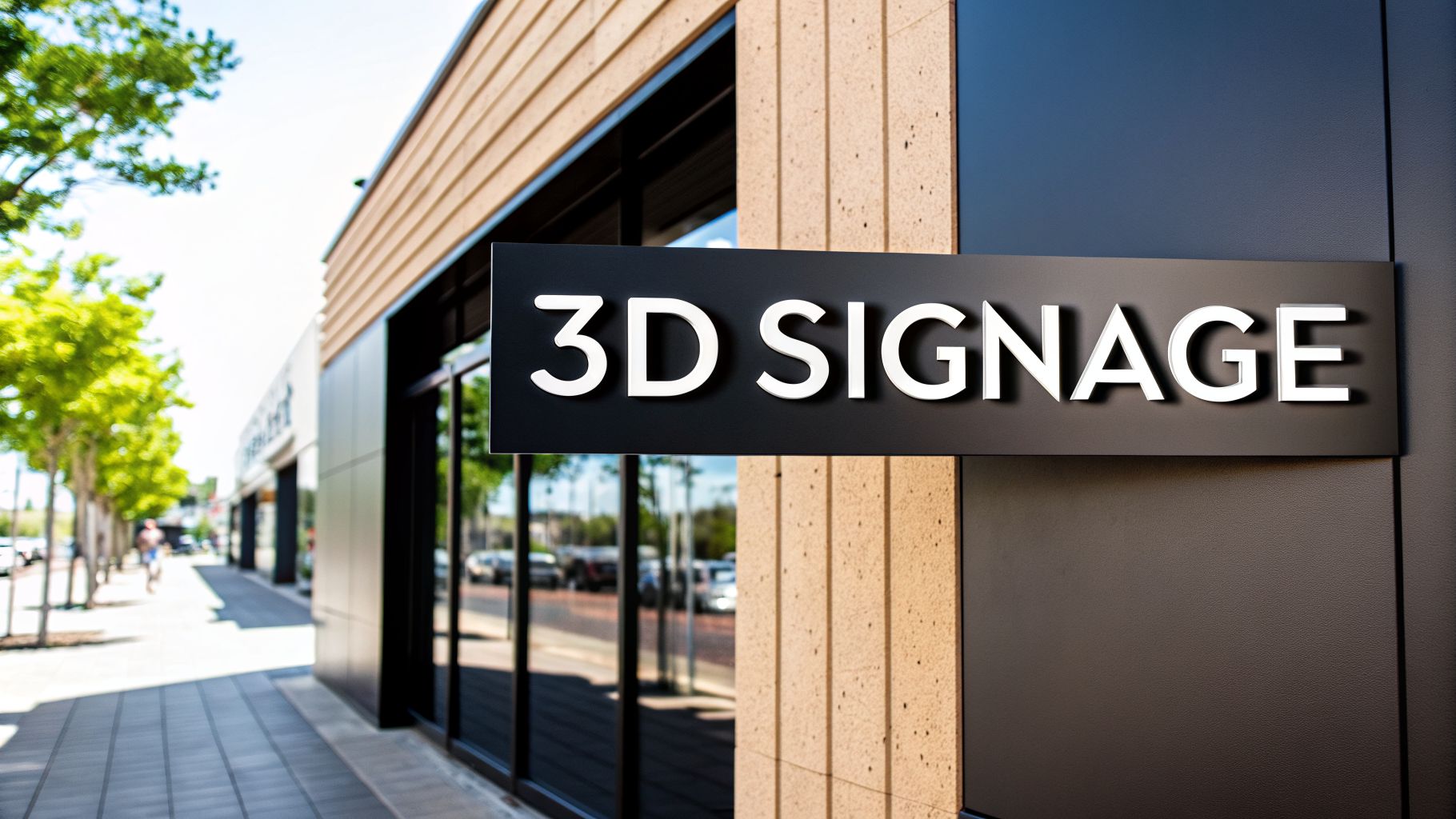
Channel letters are those classic, three-dimensional letters you see on professional buildings and high-end storefronts. They’re individually crafted and project a clean, sophisticated look that tells customers you’re an established and trustworthy business. You can get them with or without internal LED lighting for 24/7 pop.
- Non-Illuminated Channel Letters: A good starting point is somewhere between $2,500 and $7,000. These are a fantastic choice for businesses that mainly operate during the day or are located in already well-lit shopping areas. For example, a law office in a busy downtown area might choose these to project a classic, professional look.
- Illuminated Channel Letters: Here, you’re typically looking at a range of $4,000 to $20,000+. That extra investment covers the LED components and specialized labor, but it pays for itself by making sure your business gets noticed. A restaurant open for dinner service would see an immediate benefit from this type of sign, drawing in evening patrons.
The final price really comes down to the details—how many letters you need, how complex the font is, and the lighting style you choose. A standard front-lit sign will cost less than a sign with a dramatic back-lit "halo" effect.
This visual gives you a quick snapshot of the key factors that move the needle on a sign's final cost.
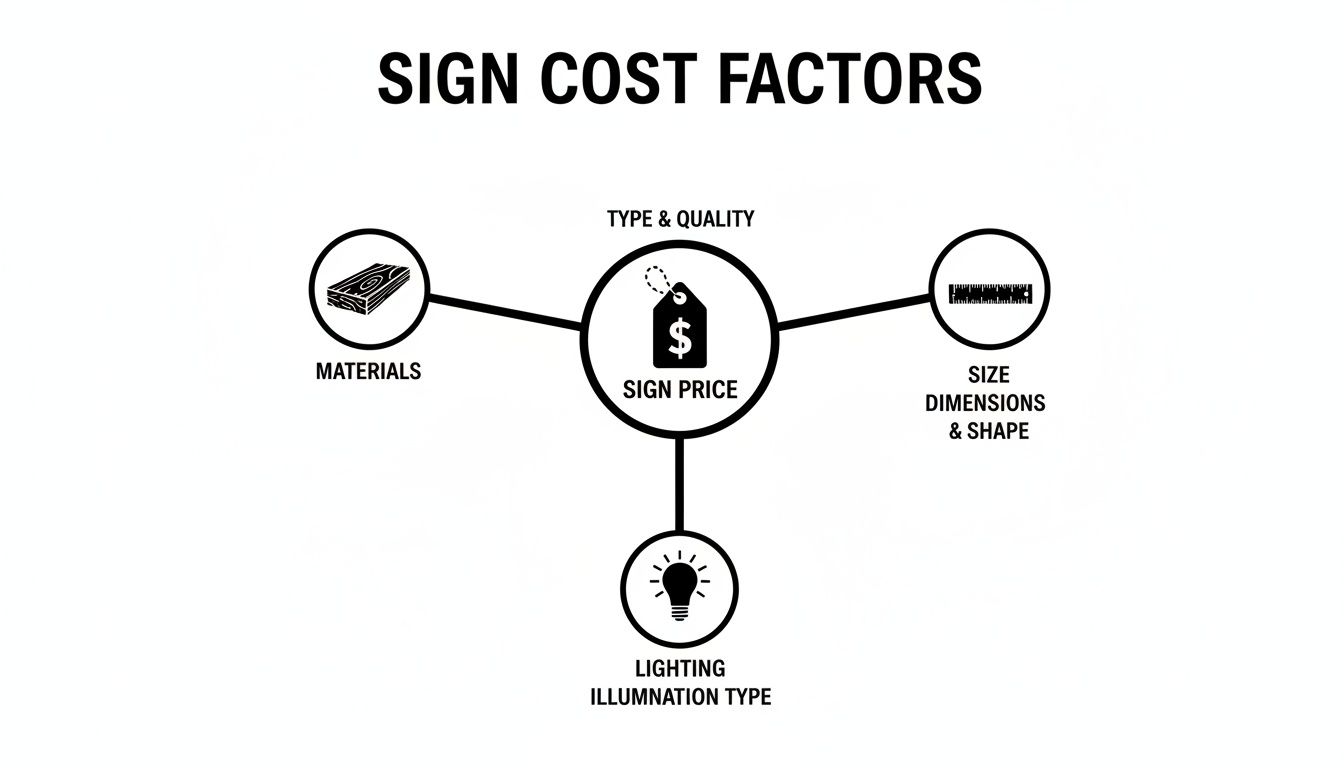
As you can see, every decision, from materials to lighting, has a direct impact on the budget. That’s why a well-thought-out plan is so critical.
Monument and Pylon Signs: Making a Landmark Statement
Monument and pylon signs are the heavy hitters of the sign world. These are freestanding structures built to be seen from a distance, making them perfect for properties set back from the road, shopping plazas, or any business fighting for attention on a busy street.
Monument signs sit low to the ground and usually have a solid base made of materials like brick, stone, or stucco. They project a feeling of permanence and quality.
Typical Monument Sign Cost: $5,000 – $25,000+
The base is a huge variable here. A simple precast foam base is far more budget-friendly than a custom-built brick or stone foundation, which can easily add thousands to the final bill.
Pylon signs, often called pole signs, are the tall giants you see along highways, frequently displaying panels for multiple tenants. Their height makes them impossible to ignore.
Typical Pylon Sign Cost: $10,000 – $100,000+
The main drivers for pylon sign costs are height, the engineering needed to withstand wind, and whether it’s a single or double-sided display. Installing these signs is a major operation that often requires cranes and other heavy equipment, which also factors into the price.
To get a better feel for the full range of options, take a look at our guide covering the different types of signage that can make your brand stand out.
Digital LED Displays: The Future of On-Site Marketing
Digital signs, also known as Electronic Message Centers (EMCs), give you something no static sign can: the power to change your message on the fly. You can run promotions, announce events, and display eye-catching videos, giving you incredible marketing flexibility right at your doorstep. For instance, a church can display service times and upcoming community events, changing the message weekly without any added cost.
This adaptability is exactly why the digital segment now makes up over 50% of the total revenue in the signage industry. Retailers have seen sales jump by as much as 33% and foot traffic increase by 24% after installing a digital display. The results speak for themselves.
- Typical Digital LED Display Cost: $15,000 – $150,000+
The biggest factor influencing the price of a digital sign is its pixel pitch—the tiny distance between each LED bulb. A smaller pixel pitch means higher resolution and a crisper image, but it also requires more LEDs, which drives up the cost. The overall screen size and whether it's full-color or single-color will also play a major role in the final investment.
Uncovering the Hidden and Ongoing Signage Costs
The number on your initial sign quote is a huge piece of the puzzle, but it’s almost never the complete picture. To get a real handle on what your signage will cost, you have to look past the price tag on the sign itself and account for the other critical, and often forgotten, expenses.
These so-called "hidden" costs are a totally normal part of any professional sign project. Knowing about them from the start is the key to a smooth process without any budget surprises.
Navigating Permits and Compliance
Before a single bolt is turned, your sign has to get the green light from your local municipality. The permitting process is a non-negotiable step that brings its own costs.
Every city, county, and township has its own rulebook dictating everything from sign size and height to placement and even how it’s lit. The paperwork can be complex, and the fees for applications, engineering drawings, and inspections can easily add several hundred to a few thousand dollars to your project. This is where a full-service sign partner really earns their keep by handling all of that red tape for you.
You can dive deeper into the complexities of local rules by checking out our guide on sign permit requirements.
The Price of Professional Installation
Once your sign is built and the permits are approved, it’s time to get it up on the wall. Professional installation isn't just an add-on service; it's what protects your investment and guarantees your sign works perfectly for years to come.
The cost of installation can swing wildly depending on a few key factors:
- Site Accessibility: Is it a straightforward job on a ground-floor wall? Or does the site require a crane or a bucket truck to reach a high-rise facade?
- Mounting Surface: Bolting a sign onto a simple brick wall is a very different job from installing one on a delicate historic facade or a complex architectural surface.
- Electrical Work: For any illuminated sign, a licensed electrician has to safely wire everything into your building’s power. That’s a specialized trade with its own associated cost.
Trying to DIY an installation to save money is a classic mistake. It often leads to a damaged sign, safety risks, and premature failure, making professional installation one of the smartest investments you can make.
A sign that is improperly installed not only looks unprofessional but can also pose a serious safety risk. The cost of professional installation is a small price to pay for the peace of mind that comes with knowing your sign is secure and built to last.
Planning for Long-Term Maintenance and Repairs
Your sign’s journey doesn’t stop once it’s installed. Just like any other asset your business owns, it needs care to keep looking sharp and working correctly. Factoring in long-term care is crucial for understanding the total cost of ownership.
Routine upkeep can be as simple as professional cleaning to wash away dirt and grime—which is especially important for illuminated signs where buildup can make your sign look dim. Down the road, you might also need repairs, like swapping out LED modules after a storm or fixing a wiring issue.
While modern signs are built to be incredibly durable, setting aside a small amount in your annual budget for potential upkeep is smart. It ensures your sign stays a bright, crisp reflection of your brand for its entire life and prevents minor issues from becoming major expenses.
How to Maximize Your Signage Budget and ROI
Getting the right sign for your business isn’t about having the biggest budget—it’s about spending that budget wisely. A smart investment means making strategic choices from day one that pay you back for years. Think of this as your playbook for becoming a savvy sign buyer, ensuring every dollar you spend works hard for your bottom line.
A smart process starts with how you get your quotes. To get true apples-to-apples comparisons, give every potential sign partner a detailed project brief. This document should spell out everything: your desired sign type, dimensions, preferred materials, and any specific design elements you have in mind.
Vague requests get you vague, confusing pricing. When you provide clear specs, you force vendors to give you precise, detailed proposals. This makes it much easier to see who’s offering the best long-term value, not just the lowest price tag.
Prioritize Durability for Long-Term Savings
One of the smartest ways to manage the long-term cost of signage for business is to choose durable materials from the start. It's tempting to save a few hundred dollars on a cheaper material, but that’s a classic rookie mistake that often backfires.
Flimsier materials will quickly fall victim to fading, warping, and weather damage. Before you know it, you're paying for repairs or a full replacement much sooner than you ever expected.
Instead, consider these high-value material choices that pay for themselves:
- Aluminum and HDU: These workhorses resist rust, rot, and moisture, making sure your sign looks professional for years with almost no upkeep.
- Quality LEDs: Investing in high-grade LED components for illuminated signs gets you a much longer lifespan—often 50,000 hours or more. They're also far more energy-efficient, which directly lowers your monthly utility bills.
Choosing quality upfront is the best defense against the recurring headache and cost of fixing a failing sign.
Making a High-Impact Sign Affordable
A premium sign can feel like a big upfront hit, but smart financing can make it completely manageable. Many sign companies offer payment plans that let you spread the cost over several months or even years. This is a great way to protect your cash flow while still getting the high-impact sign your business needs to attract customers right now.
At the same time, a strong warranty is non-negotiable. It's your safety net against defects in materials or craftsmanship. A reputable sign provider will always stand behind their work with a solid warranty, giving you peace of mind that your investment is protected from the unexpected.
Think of a good warranty as an insurance policy for your marketing investment. It ensures that if something goes wrong, you won't be on the hook for costly repairs, protecting your budget and your brand's image.
For businesses with multiple locations, a phased rollout is a brilliant way to manage cash flow. Instead of footing a massive bill to upgrade all locations at once, you can schedule installations over several quarters or years. This approach gives you a predictable budget while ensuring brand consistency is rolled out across all your sites. To get the most from your budget, it helps to understand the bigger picture of how to improve marketing ROI across all your efforts.
Calculating the True Return on Your Signage Investment
It’s time to stop asking, "How much does a sign cost?" and start asking, "How much money will this sign make me?" When you see your sign as a revenue-generating asset, you start to understand its real power.
A great sign isn’t an expense; it’s your hardest-working salesperson, on the clock 24/7, pulling customers through your door.
The return on investment (ROI) becomes crystal clear when you connect it to real business growth. Imagine a local restaurant invests in a bright, modern illuminated sign. If they see a 15% jump in dinner reservations over the next few months, that’s a direct line you can draw back to their new visibility.
Measuring the Impact on Your Bottom Line
Sure, measuring the ROI of a physical sign isn’t as simple as tracking clicks on a digital ad, but it’s absolutely possible. The trick is to start tracking key business metrics before and after your new sign goes up.
Take a plumbing company, for example. After they install a clean, professional storefront sign, they can track the number of inbound calls from new local customers. A sudden spike in calls from the immediate area is a pretty clear signal that the sign is doing its job.
Your business sign is a fundamental marketing tool. Its effectiveness should be measured by its ability to increase foot traffic, strengthen brand recognition, and ultimately, drive higher sales.
If you want to get serious about calculating the return, it helps to understand the basic financial metrics. Learning how to calculate return on ad spend for digital ads gives you a solid framework you can adapt to your physical sign, treating it as the powerful advertising medium it is.
From First Impression to Final Sale
Ultimately, a quality sign lays the groundwork for getting new customers. It makes that crucial first impression, builds credibility, and pulls people in. From that point on, your products and services have to close the deal.
The connection is simple: better visibility creates more opportunities to sell. You can learn more about turning that newfound attention into dollars by exploring tactics to increase retail sales.
This guide has walked you through every piece of the puzzle, from materials and fabrication to permits and long-term upkeep. If you take one thing away, let it be this: a sign is not a purchase, it's a strategic investment in your future. Partnering with a sign professional ensures you’re not just buying a sign, but building a strategy that delivers measurable success for years to come.
Your Signage Cost Questions, Answered
When you're finalizing the budget for a new sign, a few key questions always come up. Here are some straight, practical answers to help you lock in your numbers with confidence.
How Much Should a Small Business Budget for a Startup Sign?
For a brand-new business, a realistic starting point for your main storefront sign is somewhere between $2,500 and $10,000. That's a healthy range that can get you a fantastic non-illuminated dimensional letter sign or a solid, dependable illuminated sign box.
Of course, the final number is shaped by things like local permit fees, the size of your sign, and how tricky the installation is. It's critical to see this as a core marketing investment, not just another startup cost. The best move is to talk with a professional sign company early on. They can give you a real quote based on your building and your vision, helping you find a solution that gets customers in the door from day one without breaking the bank.
Are Illuminated Signs Worth the Extra Cost?
Almost every single time, the answer is yes. While you’ll pay more upfront—typically 20% to 40% more than a similar non-lit sign—you're buying 24/7 visibility. That’s a massive marketing advantage. Your sign becomes a constant advertisement, grabbing attention long after the sun goes down and on those dreary, overcast days.
This is a no-brainer for restaurants, retail shops, or any business that keeps evening hours. Plus, modern LED lighting is incredibly energy-efficient and built to last (50,000+ hours). The tiny operational cost is nothing compared to the continuous brand exposure and foot traffic it brings in. The ROI from being seen at all hours almost always dwarfs the initial price jump.
What Is the Biggest Mistake Businesses Make When Buying a Sign?
Hands down, the single biggest mistake is picking a sign company just because they have the lowest price. A cheap sign almost always means cheap materials, a rushed fabrication job, and a sloppy installation. That bargain quickly turns into a headache of fading colors, cracked faces, and electrical failures.
A quality sign is a long-term capital asset. The smarter approach is to focus on the best value, not the lowest price. That means weighing the quality of the materials, the provider's reputation, the strength of their warranty, and their experience navigating permits and installation.
A cheap sign costs you more in the long run with repairs, an early replacement, and the poor image it gives your brand. Investing a little more upfront with a reputable partner means you get a durable, effective sign that works for you for years. It's the difference between buying an asset and getting stuck with a liability.
Ready to invest in signage that delivers real results? The team at On Display Signs, Inc. manages every step of the process, from design to installation, ensuring you get the best value and a sign that makes your brand stand out. Start your signage project with us today.