Think of an electric sign not as an expense, but as your most reliable salesperson—one that works 24/7 to grab attention and build your brand. These signs are far more than just illuminated logos; they are powerful marketing assets that turn your physical location into a constant beacon.
Why Electric Signs Are a Smart Business Investment
Picture a busy commercial street after dark. Most businesses have faded into the background, their standard signs unreadable. But the ones with illuminated signage? They stand out, broadcasting a clear message: "We're here, and we're open for business."
That’s the fundamental advantage of an electric sign. While a non-lit sign does its job during the day, it completely disappears at night. An illuminated sign keeps working, transforming your storefront into a landmark that communicates professionalism and stability long after competitors have gone dark. For any business with evening hours, like a restaurant or retail shop, this isn't just a nice-to-have—it's essential for pulling in foot traffic.
Here is a quick look at how illuminated signs directly benefit your business.
Key Benefits of Electric Signage at a Glance
| Benefit | Impact on Your Business |
|---|---|
| 24/7 Visibility | Your brand is always on display, attracting customers day and night, regardless of weather conditions. |
| Increased Foot Traffic | A bright, inviting sign can dramatically increase impulse stops from passing cars and pedestrians. |
| Competitive Edge | Stand out from neighboring businesses in a crowded commercial space and capture a larger share of attention. |
| Enhanced Brand Image | A modern, well-maintained electric sign projects a professional and successful image, building customer trust. |
| Cost-Effective Marketing | Works tirelessly as a one-time investment that pays dividends for years, unlike recurring ad spends. |
Ultimately, a quality sign turns your physical presence into a powerful, always-on marketing tool.
Your Hardest-Working Marketing Employee
Imagine hiring someone who never takes a break, never calls in sick, and tirelessly promotes your brand to every single person who passes by. That's exactly what a good electric sign does. It constantly reinforces your brand in the minds of the local community, making sure you're the first one they think of.
This isn't just about visibility; it's about turning that visibility into customers. A vibrant sign does more than just look good—it actively works for you:
- It Builds Your Brand Around the Clock: Day or night, your name and logo are cementing themselves in the local consciousness.
- It Boosts Your Curb Appeal: A sharp, modern sign makes your entire storefront look more professional and inviting.
- It Helps You Stand Out: In a strip mall or busy downtown, an illuminated sign is the easiest way to cut through the visual clutter and get noticed.
Of course, your physical sign is just one piece of the puzzle. It works best when it supports your wider internet online marketing efforts, creating a cohesive brand experience from the street to the screen.
The proof is in the numbers. The global digital signage market was valued at USD 28.83 billion in 2024 and is expected to hit USD 45.94 billion by 2030. As you can see in the full market analysis on GrandViewResearch.com, this isn't a passing fad. Investing in modern signage is a strategic move that aligns your business with where the market is headed. Even a classic and reliable outdoor lighted box sign is a fantastic way to get started.
Choosing the Right Type of Electric Business Sign
Picking the perfect electric sign for your business isn't just about getting noticed—it's about making the right first impression. Think of your sign like a uniform for your building; you want it to look professional, fit the environment, and tell people exactly who you are at a single glance.
Some signs are built for a premium, architectural feel, while others are all about practical, hard-working visibility. Getting a handle on these differences is the first step toward a smart investment that will keep paying you back for years. Let's dig into the most common options.
Channel Letters: The Professional Standard
Think of channel letters as the tailored suit of the signage world. They are individual, three-dimensional letters, logos, or numbers, each with its own internal light. Most of the time, they’re mounted directly to a building's facade, creating a sharp, sophisticated look that screams quality.
Because every letter is custom-made, you get total control over the font, color, and size, letting you nail your brand identity perfectly. This makes them a top choice for any business trying to project an image of permanence and professionalism.
- Best For: Professional services like law firms and accountants, upscale retail shops, and restaurants that want a polished, high-end feel.
- Practical Example: Picture a modern dental clinic with sleek, white-lit channel letters on a dark brick wall. The sign immediately communicates a clean, trustworthy, and professional brand.
This is the kind of custom sign that reinforces who you are in a way few other options can.
The diagram below breaks down how electric signs become a core part of your growth engine, attracting customers and keeping your brand top-of-mind 24/7.
As you can see, it all comes down to continuous brand reinforcement and customer attraction—two pillars of growth for any brick-and-mortar business.
Lightbox Signs: The Versatile Workhorse
If channel letters are the custom suit, then a lightbox sign is the reliable, clean-cut uniform. Also known as cabinet signs, they're essentially enclosed boxes with a translucent face (usually acrylic) that’s lit from the inside. Graphics and logos are applied right onto the face, making it simple to display more complex designs.
Lightboxes are incredibly versatile and cost-effective, which is why you see them everywhere in shopping centers and plazas. They might not have the dimensional pop of channel letters, but their massive, glowing surface provides fantastic visibility from a distance.
Actionable Insight: Lightbox signs are one of the most budget-friendly illuminated options out there. They offer a great balance of impact, durability, and cost, making them a go-to for new and growing businesses. For example, a new pizza parlor in a strip mall can use a lightbox to display its full-color logo and phone number, getting maximum visibility for a minimal investment.
Monument and Pylon Signs: The Attention Grabbers
Sometimes, a sign on your building just isn't enough, especially if you’re set back from the road or tucked away in a business park. That's where monument and pylon signs come in to save the day.
- Monument Signs: These are low-profile signs built right at ground level, often with a solid base made of brick, stone, or metal that complements the building's architecture. They mark the entrance to a property and give off a feeling of stability and prestige—perfect for corporate campuses, apartment complexes, and medical centers.
- Pylon Signs: These are the tall giants you see towering over highways and busy streets. Also called pole signs, pylons are designed for one thing: maximum visibility from far away. This makes them absolutely essential for businesses that depend on drive-by traffic, like hotels, gas stations, and fast-food chains.
Both often serve as a home for other sign types, like a lightbox listing tenants or an LED message board displaying dynamic content. To get a feel for the full range of possibilities, you can explore the many types of signage available and find what fits your location.
LED Message Centers: The Dynamic Communicator
Finally, we have LED message centers—the digital billboards of storefront advertising. These are programmable electronic signs that let you display moving text, graphics, and even animations. Their biggest advantage is the ability to change your message on a whim.
You can announce a flash sale, promote a daily special, or share a community update instantly. That real-time flexibility makes them an incredibly powerful tool for any business that needs to share timely information. For an extra pop, you can even design your messages with a vibrant neon style to give them a classic, eye-catching glow.
What to Consider Before You Buy an Electric Sign
Putting up a new electric sign is a huge move. Getting it right from the start means you're investing in a powerful marketing tool, not just an expensive light fixture. Before you pull the trigger, a few key decisions will ultimately determine whether your sign becomes a beacon for customers or just fades into the background.

The process is more than just picking a design. It starts with matching the sign's personality to your brand and then gets real with the nuts and bolts of placement, visibility, and long-term running costs. A little forethought here saves a lot of headaches (and money) down the road.
Nail Your Design and Branding
Think of your sign as the first handshake you have with every potential customer. It needs to tell them who you are in a single glance. This is about more than just slapping your logo on a box; it's about choosing the right style, colors, and materials to create an immediate, intentional impression.
What's the vibe you're going for? A high-end law firm might lean toward sleek, backlit channel letters to communicate authority and trust. A quirky local boutique, on the other hand, could go for a custom-shaped sign with bold, vibrant colors to scream creativity and fun.
The materials you choose are just as critical as the design itself. High-quality materials don't just look sharper; they're built to withstand sun, wind, and rain, protecting your investment for years to come. Getting a handle on how different metals and plastics perform is key. You can learn more about picking the right exterior sign materials to make sure your sign is built to last.
Maximize Placement and Visibility
An incredible sign in a terrible spot is an invisible sign. When it comes to electric signs for business, strategic placement is absolutely everything. You have to put yourself in your customers' shoes—or car seats—and figure out exactly how they'll see it.
Start by scoping out the location from every possible angle:
- Traffic Patterns: Where is the main flow of cars and foot traffic coming from? Your sign needs to face them head-on.
- Sightlines: Look for obstructions. Are there trees, power lines, or other buildings that will block the view from a distance?
- Viewing Distance: How far away will people be when they first spot your sign? The lettering and overall size need to be big enough to be perfectly legible from that key distance.
Actionable Insight: Don't just stand on the sidewalk in front of your building. Get in your car and drive past from both directions, both during the day and after dark. This simple gut check will instantly reveal blind spots and help you pinpoint the best height and angle. For instance, a coffee shop might realize their sign is blocked by a large tree when viewed from the eastbound lane, prompting them to install it higher on the facade.
Compare Energy Use and Long-Term Costs
The initial price tag is one thing, but the ongoing operational costs are what really define the total cost of ownership over the sign's lifetime. This is where modern illumination technologies really pull away from the pack.
When looking at the different options, it's clear that older technologies just can't keep up with the efficiency and longevity of LEDs.
LED vs. Traditional Illumination Technology Comparison
| Feature | LED Signs | Fluorescent/Neon Signs |
|---|---|---|
| Energy Consumption | Extremely low. Uses up to 80% less power. | High. Leads to significantly larger electricity bills. |
| Lifespan | 50,000 – 100,000+ hours. | 10,000 – 25,000 hours. Requires frequent replacements. |
| Maintenance | Virtually maintenance-free. | Needs regular bulb/tube replacements and gas refills. |
| Durability | Solid-state lighting is highly resistant to shock/vibration. | Fragile glass tubes are easily broken. |
| Brightness & Color | Brighter, with crisp, consistent color. Dimmable. | Can dim or flicker over time. Limited color palette. |
| Upfront Cost | Higher initial investment. | Lower initial investment. |
| Total Cost of Ownership | Much lower due to energy savings and minimal maintenance. | Much higher due to energy use and constant upkeep. |
The takeaway is clear: while you might pay more upfront for an LED sign, the long-term savings on your power bill and maintenance costs deliver a much better return on your investment.
LEDs are the undisputed champs of efficiency, and for a standard storefront sign, that can mean an operating cost of just a few dollars a month. This technology is a huge reason why digital signage adoption in retail jumped 41% between 2018 and 2022. As the tech gets better and cheaper, more businesses are making the switch. You can dig into more data on the future of digital signage market growth on posterbooking.com. By choosing LED, you're not just saving money; you're ensuring your sign remains a modern and effective tool for years.
Navigating Local Sign Permits and Codes
Trying to get an electric sign approved can feel like you're untangling a giant knot of paperwork and local rules. But these codes aren’t there to block you; they exist to keep the public safe and make sure new signs fit the community's look and feel. Once you understand the path from application to installation, the whole thing becomes much less intimidating.
Think of it like building a house—you wouldn't just start digging without an approved blueprint and the right permits. An electric sign for business is a permanent structure on your property, and it demands the same careful planning. Skipping the rules can lead to frustrating delays, big fines, or even an order to tear down your brand-new sign.
The Standard Permitting Roadmap
While every town has its own quirks, the permitting process usually follows the same basic steps. It all kicks off with a detailed application package that’s way more than just a quick sketch. Your local planning or building department needs all the specifics to confirm your sign is both safe and compliant.
This is where having your ducks in a row really matters. A complete application usually includes:
- Detailed Site Plans: Drawings showing your property lines and exactly where the sign will sit on the building or land.
- Engineering Drawings: These are the technical specs that cover the sign’s construction, what it’s made of, how much it weighs, and how it will be mounted.
- Electrical Plans: For any illuminated sign, you'll need a plan outlining power needs and connection details, all up to electrical code.
- Landlord Approval: If you're a tenant, you’ll need written permission from the property owner before you do anything.
After you submit everything, the city reviews your plans. Once they give the green light, the permit is issued, and only then can your sign company start building and installing. The final step is an inspection after the sign is up to make sure it matches the approved plans exactly.
Avoiding Common Pitfalls and Delays
It’s the little details that often trip people up and put a permit on hold. Simple oversights are the number one reason for delays, which can throw off your grand opening or rebranding launch. Knowing what to watch out for is half the battle.
Actionable Insight: The most common reasons for a permit rejection are issues with a sign's size, brightness, or placement. Before designing, get a copy of your local sign code from the city's website or planning office. Check the specific square footage allowed for your building's frontage and any rules about illumination (e.g., no flashing lights). This prevents you from designing a sign that is destined for rejection.
Other frequent problems include using the wrong zoning information, submitting incomplete engineering specs, or not following special guidelines for historic districts. Every single mistake means you have to revise and resubmit, which can add weeks or even months to your project timeline.
The Value of a Professional Partner
This is exactly why working with an experienced sign company is a game-changer. A true professional doesn't just build you a sign; they navigate the entire bureaucratic maze for you. They already have relationships with local planning departments and know the ins and outs of the codes in your specific area.
An expert partner handles it all—from the initial site survey and preparing permit-ready drawings to submitting the paperwork and communicating with city officials. This saves you an enormous amount of stress, helps you avoid expensive mistakes, and frees you from getting bogged down in regulations you've never dealt with before. When you let the pros handle the red tape, you can stay focused on what you do best: running your business.
Installation and Maintenance Best Practices
A beautifully designed electric sign is only half the job. Its real-world performance depends entirely on professional installation and regular upkeep. Think of the installation as the foundation of your investment—getting it right ensures your sign is safe, secure, and works perfectly from day one.
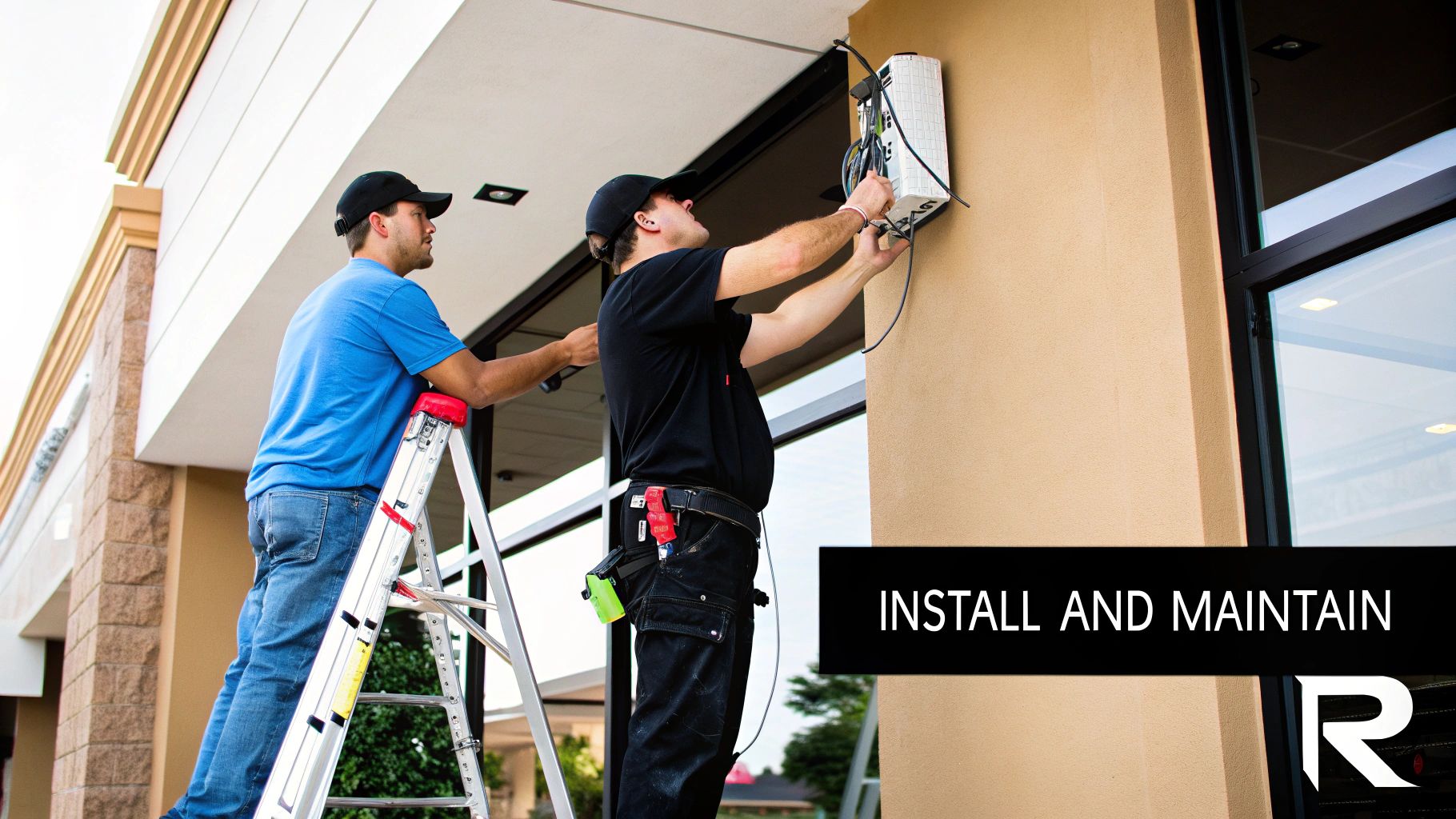
This is way more complicated than just hanging a sign on a wall. A professional crew handles everything from secure structural mounting to safe electrical connections that meet all local codes. They finish with quality checks to guarantee every single component is working as it should. Cutting corners here is a recipe for expensive repairs and serious safety hazards.
Vetting Your Installation Partner
Choosing the right team to install your sign is a critical decision. You need a partner with proven expertise, the right credentials, and a genuine commitment to quality work, not just a crew that can lift heavy things.
To make sure you’re working with a true professional, use this simple checklist:
- Licensing and Insurance: Always verify they hold the proper electrical and contractor licenses for your area. They also need to carry comprehensive liability insurance to protect your property while they’re on site.
- Proven Experience: Ask to see their portfolio of projects similar to yours. An experienced installer will have a solid track record they’re proud to show off.
- Safety Certifications: Inquire about their safety protocols and any certifications their technicians hold. A company that prioritizes safety is a company you can trust.
Actionable Insight: In a crowded market, the best sign companies stand out by offering end-to-end services. They manage everything from fabrication and permitting to installation and maintenance, giving you a single, reliable point of contact for the entire life of your sign. Look for a company that proactively offers a maintenance plan; it shows they stand behind their work long-term.
The sign industry is surprisingly competitive. While there are nearly 40,000 sign shops in the U.S., the industry's overall revenue has actually seen a slight dip. This points to a major shift: businesses are now seeking comprehensive partners for high-value electric signs instead of just one-off sign makers. You can find more on this in the full U.S. sign industry report on IBISWorld.com. For a deeper dive into what a professional installation actually involves, our guide on commercial sign installation is a great resource.
Protecting Your Investment with Routine Maintenance
Once your sign is up and running, a simple maintenance routine is the best way to protect your investment. Just like a company vehicle, your sign needs regular care to perform at its best and avoid costly breakdowns.
Here’s an easy-to-follow schedule to extend the life of your sign:
- Regular Cleaning (Quarterly): Gently clean the sign faces and housing with mild soap and water to get rid of dirt and grime. This simple step keeps colors vibrant and ensures your sign shines as brightly as possible.
- Visual Inspection (Monthly): Do a quick walk-around and look for any obvious issues. Check for cracked faces, peeling paint, or signs of water getting inside, especially after a big storm.
- Check Illumination (Weekly): Make it a habit to check that all the lights are working properly. Look for any flickering bulbs or sections that seem dimmer than others—these are early warning signs that a component needs attention.
- Inspect Structural Integrity (Annually): Check for loose bolts, brackets, or any signs of rust on the mounting hardware. Making sure the sign is securely attached is absolutely critical for safety.
Common Questions About Electric Business Signs
When you're ready to invest in an electric sign, a few practical questions always come up. It's perfectly normal. Getting straight answers to these common concerns is the final step before you can move forward with total confidence in your decision.
We've heard them all over the years, so let's tackle the big ones head-on.
How Much Does an Electric Business Sign Cost to Run?
This is usually the first question on everyone's mind, and the answer is always a pleasant surprise: not much at all. Thanks to modern LED technology, running an electric sign is incredibly affordable. An average-sized LED storefront sign running 12 hours a day will often only add $5 to $10 per month to your electricity bill.
That's because LEDs are insanely efficient, using up to 80% less power than the old-school neon or fluorescent bulbs. So while the upfront cost for a quality LED sign might be higher, the rock-bottom running costs and long lifespan mean you save a ton of money over time.
Practical Example: A small cafe with a 20-square-foot LED sign might barely notice an extra $5 on their monthly power bill. Compare that to the cost of a single newspaper ad, and you can see how the sign delivers nonstop advertising for pennies a day.
How Long Do Electric Signs Typically Last?
The lifespan of your sign really boils down to the tech inside it. When it comes to durability, modern LED signs are in a class of their own. They are built to be workhorses, lasting for years with minimal attention.
- LED Signs: There's a reason they're the industry standard. A well-made LED sign has an operational lifespan of 50,000 to 100,000 hours. In the real world, that’s about 6 to 12 years of continuous, worry-free operation before you even have to think about servicing it.
- Neon and Fluorescent Signs: These older technologies just can't keep up. Their lifespans are much shorter, usually between 10,000 to 25,000 hours. They're also far more fragile and demand frequent maintenance, like replacing glass tubes or refilling gas.
What Is the Maintenance for an Electric Sign?
Keeping an electric sign in prime condition is way easier than most people think, especially with LEDs. A simple, proactive routine is all it takes to protect your investment and ensure it always looks as good as the day it was installed.
Here’s a basic schedule that works for most businesses:
- Quarterly Cleaning: Give the sign's face and housing a gentle wash to get rid of any road grime, dust, or pollen.
- Monthly Visual Checks: Take a quick walk around the sign. Look for any cracks, peeling, or signs that moisture might be getting inside.
- Annual Professional Inspection: Once a year, it's smart to have a sign technician check the electrical connections and mounting hardware to make sure everything is still secure and up to code.
This little bit of effort goes a long way. It helps you catch small issues before they turn into expensive repairs and ensures your sign is always making a great first impression.
Ready to create a sign that captures attention and drives growth? The expert team at On Display Signs, Inc. manages the entire process for you—from design and permitting to professional installation and maintenance. Find the perfect signage solution for your business at https://www.ondisplaysigns.com.