Choosing the right exterior sign material is more than an aesthetic decision—it's a critical investment in your brand's future. Think of it as the foundation of your sign; it has to look great and perform flawlessly, no matter what the weather throws at it.
The best materials create a perfect blend of durability, cost-effectiveness, and brand identity, with options ranging from classic metals like aluminum to versatile modern choices like acrylic.
Why Your Sign Material Matters Most
Your outdoor sign is your silent salesperson, working 24/7 to attract customers and build trust. The material you choose is its uniform, and it dictates how well that salesperson performs over time.
A flimsy, faded sign suggests a lack of attention to detail, but a robust, vibrant one projects strength and professionalism. The right material ensures your investment endures, standing strong against sun, rain, and wind. This decision impacts not just the initial look but also the long-term costs of maintenance and eventual replacement. Get it right, and you'll save money while preserving your brand image for years.
The Foundation Of A Lasting Impression
Ever wonder why so many of the signs you see on a daily basis are made from plastic? It's not a coincidence. Recent analysis shows that plastic commands a whopping 52.6% market share in the outdoor signage sector, and for good reason.
Materials like acrylic and PVC are engineered for the outdoors, offering a potent mix of durability, weather resistance, and incredible design flexibility. They've become the go-to for a reason.
Ultimately, picking the right material comes down to balancing three key factors:
- Weather Resistance: Can it handle your local climate? Think intense UV rays, freezing temperatures, heavy rain, and high winds. For example, a sign in coastal Florida needs to resist salt air and sun, while a sign in Chicago must withstand freezing winters.
- Brand Alignment: Does the material's look and feel match your company's identity? A rustic wooden sign is perfect for a cozy cafe but feels out of place for a modern tech firm. A practical example is a law firm choosing brushed aluminum letters to convey stability and professionalism.
- Budget: What is the total cost of ownership? This includes the initial purchase, installation, and any future upkeep or repairs. An actionable insight is to calculate the cost per year of the sign's expected lifespan, not just the upfront price.
Selecting the correct exterior sign materials is the first—and most important—step in creating signage that truly works. To see how these choices influence the final product, our guide on exterior building signage design offers some valuable perspective.
To give you a head start, here’s a quick overview of some of the most popular materials we work with every day.
Quick Comparison Of Common Exterior Sign Materials
Get a quick overview of popular sign materials, their typical lifespan, and where they shine to help you frame your decision.
| Material | Typical Lifespan | Best For |
|---|---|---|
| Aluminum | 10+ years | Durable, lightweight signs; professional building lettering. |
| Dibond/ACM | 10+ years | Large-format signs needing rigidity without the weight. |
| Acrylic | 5-10 years | Illuminated signs, modern logos, and high-gloss finishes. |
| HDU/Foam | 10+ years | Carved, sandblasted, and dimensional signs with texture. |
| PVC | 5-7 years | Cost-effective short- to mid-term signs and lettering. |
| Wood | 5-10+ years (varies) | Rustic, traditional, or high-end natural aesthetics. |
This table is just a starting point. The best material for your project depends on your specific location, design, and long-term goals.
Exploring The Most Common Exterior Sign Materials
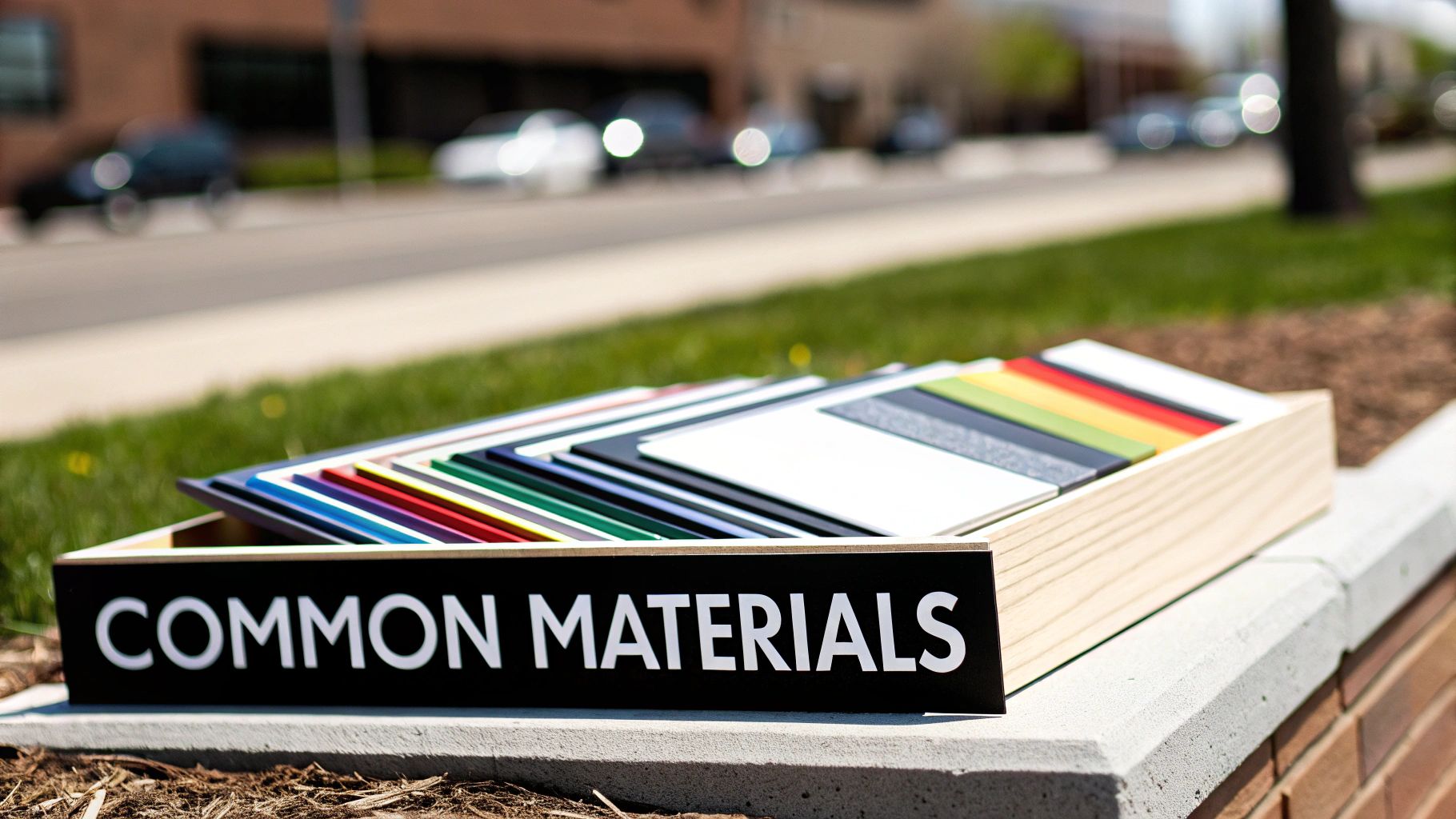
Choosing the right material is where your sign's story begins. Each option brings a different mix of strength, style, and staying power to the table. Let's break down the workhorses of the industry and see what makes each one the right fit for the job.
Aluminum The Lightweight Champion
When you picture a classic, professional business sign, there's a good chance you're thinking of aluminum. It's a long-standing favorite among exterior sign materials for a simple reason: it just works. No fuss, no compromises.
Unlike steel, aluminum is naturally rust-proof, making it a fantastic choice for any climate—especially humid or coastal areas where salt air is a constant battle. It’s also incredibly lightweight yet rigid, which makes installation easier and reduces the structural load on your building. This blend of strength and low weight is perfect for large panel signs, custom-cut logos, and crisp building lettering.
Aluminum also gives you a clean, modern look and can be finished in a few key ways:
- Brushed Finish: Offers a sophisticated, textured look that subtly plays with the light.
- Painted Finish: Can be coated in any color imaginable to lock in your brand standards.
- Reflective Overlays: The go-to for traffic and parking signs that need to be seen at night.
Practical Insight: For a sleek corporate headquarters or a business park directory, brushed aluminum is the gold standard. Its professional vibe and low-maintenance needs mean it will look sharp for a decade or more, making it a sound investment.
Dibond The Rigid And Reliable Composite
Now, imagine taking the best parts of aluminum—its durability and clean finish—and engineering it to be even more rigid and perfectly flat over large areas. That's Dibond, also known as Aluminum Composite Material (ACM).
Dibond is basically a solid plastic core sandwiched between two thin sheets of aluminum. This structure creates a panel that is way stronger and less likely to bend or warp than a solid aluminum sheet of the same thickness. That rigidity is its superpower.
This makes Dibond the go-to for large-format signs that can't afford to look wavy, like big storefront signs, post-and-panel signs for real estate developments, or outdoor informational displays. You can dive deeper into its uses in our guide to aluminum composite signage.
Acrylic The Clear Choice For Illumination
When your sign needs to light up and grab attention after dark, acrylic is almost always the answer. This versatile plastic has incredible optical clarity, much like glass, but it's far tougher and lighter.
Its main job in outdoor signage is for illuminated channel letters and lightboxes. The material diffuses light beautifully, creating a brilliant, even glow that makes your business name pop. Acrylic can be colored or have translucent vinyl applied, opening the door for vibrant designs that work 24/7.
It's tough, but you have to choose the right thickness. Thinner sheets can become brittle and crack from impacts or harsh weather, so always opt for a professional-grade thickness for anything going outdoors. For example, a storefront in a high-traffic pedestrian area should use a thicker gauge of acrylic to resist accidental impacts.
HDU The Modern Alternative To Wood
For businesses that love the classic, dimensional look of a carved wooden sign but dread the upkeep, High-Density Urethane (HDU) foam is the perfect solution. Think of it as a kind of "super wood" engineered for the outdoors.
HDU is completely waterproof and won't rot, warp, or crack when exposed to the elements. It’s also totally unappetizing to insects like termites, a common threat to traditional wood. This makes it an incredibly stable choice for signs that need depth and texture.
Its real magic is how easy it is to work with. HDU can be:
- Sandblasted: This creates a beautiful textured background that makes letters and logos stand out in relief.
- Carved: You can get intricate, 3D designs with sharp, clean edges.
- Routed: Perfect for creating dimensional lettering and detailed graphics.
Because of this, HDU is the top material for distinguished monument signs, historic district signage, and any sign that needs a handcrafted feel.
PVC The Cost-Effective Contender
PVC (Polyvinyl Chloride) is a lightweight and affordable plastic that's great for short- to mid-term outdoor signs. It gives you a smooth, professional finish and is easy to cut into custom shapes and letters.
It’s an excellent choice for temporary signage, directional signs, or smaller storefront signs where budget is the main driver. While it's not as tough as aluminum or HDU in the long run, PVC holds up well in moderate climates. A good UV-protective finish can keep it from fading for several years.
Just be aware, it can become brittle in extreme cold, so it might not be the best pick for regions with harsh winters. A practical example would be using PVC for a "Coming Soon" banner but choosing aluminum for the permanent business sign that replaces it.
Steel The Heavy-Duty Powerhouse
When a sign absolutely has to have maximum strength and impact resistance, steel is the only way to go. It’s often used for the hidden framework of massive pylon signs or the posts for monument signs that need to withstand serious wind loads.
Metal has been the backbone of signs for over a century, evolving from hammered tin in the 1920s to the sleek alloys we use today. In the US Billboard & Sign Manufacturing industry, metal components drive a $16.7 billion market, with over 5,837 businesses nationwide specializing in these durable builds.
But while it's incredibly strong, standard steel will rust if you let it. To prevent that, it has to be galvanized or coated with high-performance industrial paints to seal it from the elements. To get a better sense of all the material options out there, you can explore their comprehensive product catalog for a wider view.
How To Compare Materials Based On Key Factors
With so many exterior sign materials out there, it’s easy to feel a bit lost. But the right choice becomes crystal clear once you start measuring your options against four key factors. Think of it as a practical framework for picking a material that won't just look good, but will actually perform for your business.
This isn't about getting bogged down in technical specs. It's about focusing on real-world value. The four pillars of a smart decision are durability, cost, aesthetics, and maintenance—let’s break down what each one really means for your sign.
Durability Unpacking True Weather Resistance
Durability isn't just about how long a sign lasts. It's about how good it looks while it's lasting. Outdoor signs are in a constant battle with the elements, and a sign that looks fantastic on day one but cracks, fades, or warps after a single harsh season is a failed investment.
Think about the specific challenges your sign will face:
- UV Exposure: Nonstop sunlight is the biggest enemy of vibrant color, and it can make plastics brittle over time. That's why materials like acrylic with built-in UV protection or properly coated aluminum are engineered to stand up to the sun's abuse.
- Moisture and Humidity: Rain, snow, and salty air are brutal on the wrong materials. Unprotected steel will rust and wood will eventually rot, which is why rust-proof aluminum and completely waterproof HDU are go-to choices for coastal or rainy climates.
- Wind Load: A large sign, especially one mounted high on a building or pylon, basically acts like a sail. You need rigid, tough materials like Dibond (ACM) or steel to keep it from bending, flexing, or worse.
Cost The Total Cost Of Ownership
Don't just look at the initial price tag—that’s only one part of the equation. A cheap material might save you a little money today, but it can end up costing you a lot more in repairs and replacements down the road. The smarter way to look at it is the total cost of ownership.
This means factoring in the initial purchase and fabrication costs, plus any maintenance you'll have to do over the sign's entire lifespan. For instance, a basic PVC sign might seem like a bargain compared to an aluminum one. But if you have to replace that PVC sign twice in the time the aluminum one is still going strong, you haven't actually saved anything.
Key Takeaway: A sign with a 10-year lifespan that costs more upfront is almost always a better financial move than a cheaper sign with a 3-year lifespan that you have to replace over and over. Always think long-term value.
In-Depth Exterior Sign Material Feature Comparison
Making a direct comparison can simplify the decision process. This table breaks down the key materials across the factors we've discussed, giving you a clear, at-a-glance guide to finding the perfect fit for your project and budget.
| Material | Relative Cost | Durability Rating | Available Finishes | Maintenance Needs |
|---|---|---|---|---|
| Aluminum | Moderate | ★★★★★ (Excellent) | Brushed, Polished, Painted, Anodized | Low (Occasional Cleaning) |
| Dibond (ACM) | Moderate | ★★★★★ (Excellent) | Painted, Brushed Metal, Mirrored, Digital Prints | Very Low (Occasional Cleaning) |
| Acrylic | Moderate-High | ★★★★☆ (Very Good) | Glossy, Matte, Frosted, Huge Color Range | Low (Gentle Cleaning) |
| HDU/Foam | High | ★★★★★ (Excellent) | Carved, Sandblasted, Smooth Paint | Very Low (Occasional Cleaning) |
| PVC | Low | ★★★☆☆ (Good) | Smooth, Matte, Color-Through | Low (Can Stain) |
| Steel | High | ★★★★☆ (Very Good) | Powder Coated, Corten (Weathering), Polished | Varies (Coating Dependent) |
| Wood | Varies Widely | ★★☆☆☆ (Fair-Good) | Stained, Painted, Carved, Natural | High (Requires Sealing) |
| Stone | Very High | ★★★★★ (Excellent) | Engraved, Polished, Honed, Natural | Very Low (Pressure Wash) |
Remember, this is a starting point. The "best" material is always the one that best aligns with your brand's specific needs, location, and long-term goals.
Aesthetics Telling Your Brand Story
The material you choose is a huge part of your sign's personality. It sends a message to customers before they even read a single word.
- Modern and Professional: Think brushed aluminum or sleek acrylic. These materials project a clean, high-tech image that’s perfect for finance, tech, or contemporary retail brands.
- Classic and Traditional: Carved HDU or natural wood gives off a warm, established vibe. It’s a great fit for businesses in historic districts, boutique shops, or professional services like law firms that want to convey timelessness.
- Bold and Vibrant: If you want to grab attention, you need a material that makes color pop. Painted Dibond and illuminated acrylic are fantastic for creating a high-impact, can't-miss statement.
The finish is just as critical as the material itself. Just as there's a big difference between brick staining and painting for a building's exterior, the finish on your sign has a massive impact on its appearance and longevity.
Maintenance Keeping Your Sign Sharp
Finally, let's get practical. How much time and money do you really want to spend on upkeep? Some materials are practically hands-off, while others need a little TLC to stay looking sharp.
For example, aluminum, Dibond, and HDU signs are incredibly low-maintenance. A simple wash with soap and water every so often is usually all they need. A natural wood sign, on the other hand, will likely need to be re-sealed or re-stained every few years to keep it protected from the weather. Our guide on making metal signs dives deeper into how these choices at the start directly impact care requirements over the long haul.
Matching The Right Material To Your Sign And Location
This is where the rubber meets the road. Connecting the right materials to the right application is what separates a good sign from a great one. A material that’s perfect for a small, sheltered storefront sign would fail spectacularly on a massive pylon towering over a highway.
It’s all about matching the material’s strengths to the demands of the sign and its environment. Think of the sign's job and its physical location as two sides of the same coin. A pylon sign has to be engineered for brute strength, while a monument sign in a historic district needs to balance classic charm with modern durability.
High-Impact Signs For High-Traffic Areas
Picture a massive pylon sign right next to a busy highway. Its only job is to get seen from a distance and withstand constant, punishing wind. This is a job for heavy-duty materials where structural integrity isn't just important—it's everything.
Steel provides the powerful internal skeleton needed to hold the sign's weight and fight back against wind loads, which can exert an incredible amount of force. The sign faces themselves are often aluminum or a flexible-face vinyl stretched tight across the frame, ensuring they stay perfectly readable without buckling under pressure.
This same thinking applies to large monument signs marking the entrance to a business park. While the core might be built from concrete blocks, the visible panels and lettering are often made from thick, durable Dibond or routed aluminum for a crisp, professional look that refuses to warp or fade. For a more premium aesthetic, you can't go wrong with the refined look of brushed aluminum signs, which deliver a truly sophisticated finish.
Making the right call often comes down to what you value most. This quick visual guide can help you sort through the decision-making process by focusing on durability, budget, and style.
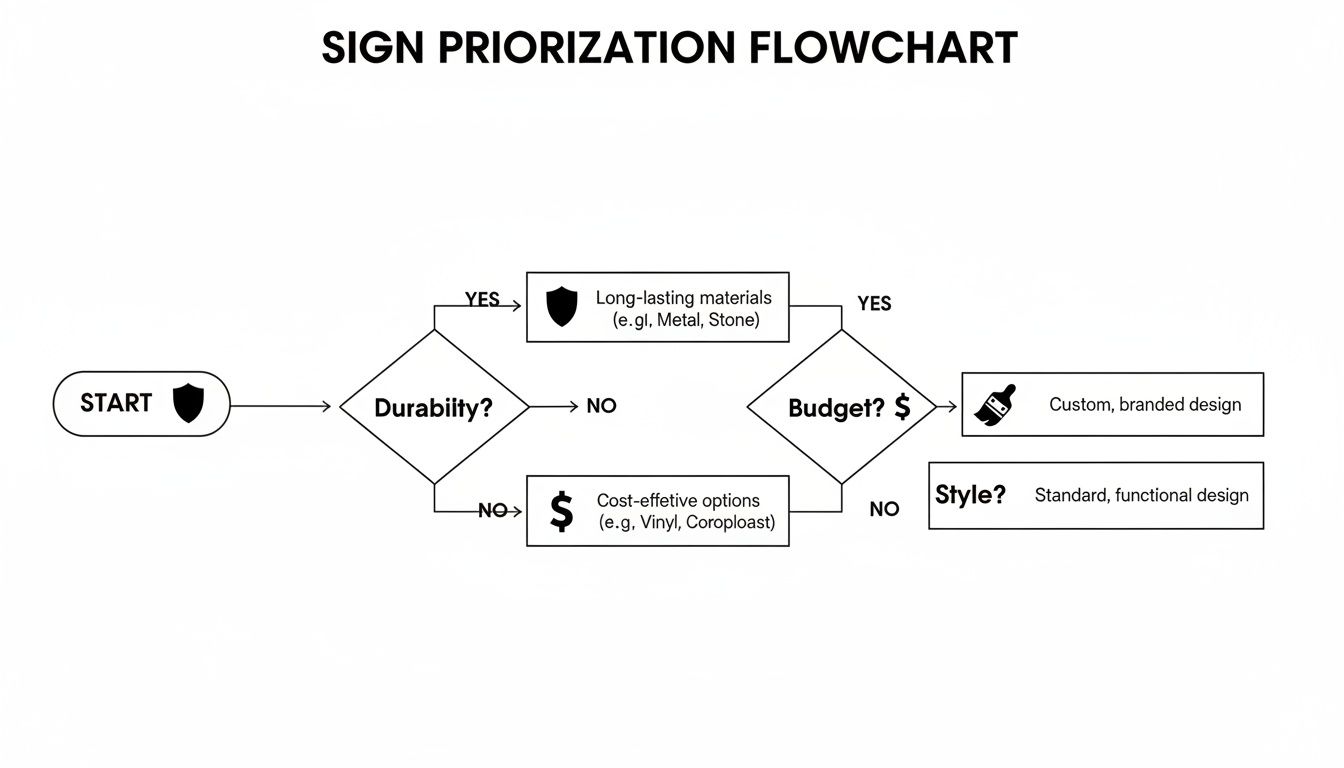
This decision tree shows how starting with your biggest priority—whether that's longevity, cost, or pure aesthetics—can quickly narrow down your best material options.
Adapting Materials To Your Local Climate
Your local weather is a huge factor in choosing a sign material. Something that holds up beautifully in a dry, temperate climate might quickly fall apart in a salty coastal town or a place with brutal winters.
-
Coastal and Humid Regions: Salt in the air is incredibly corrosive and will eat away at unprotected metals. Here, rust-proof aluminum is the only real choice for any metal components. HDU is another fantastic option because it's completely waterproof and won't rot, swell, or warp in the constant dampness.
-
Hot, Sunny Climates: Intense UV radiation is the enemy of color and plastics. You need materials with built-in UV resistance. Acrylic is a strong performer, as are aluminum signs finished with a tough, UV-cured paint that resists fading and chalking over time.
-
Regions with Extreme Cold: Frigid temperatures can make certain plastics, like standard PVC, brittle and easy to crack on impact. For these climates, you need tougher materials like aluminum, Dibond, or HDU. They remain stable and reliable through constant freeze-thaw cycles.
Blending In With The Architectural Style
Finally, your sign needs to look like it belongs. A sleek, modern sign for a new tech campus calls for a completely different material than a sign for a quaint boutique on a historic main street.
For a classic, upscale look that gives you traditional charm without the maintenance headaches, HDU is a perfect match. It can be sandblasted or carved to look just like traditional wood. Speaking of wood, while it may not have the massive 52.6% market share of plastics, it still carves out a solid 10-15% in premium applications, especially for those who want the authentic, warm feel of a carved monument sign.
By thinking carefully about your sign's purpose, its climate, and its architectural home, you can pick a material that not only looks fantastic but is built to last.
Understanding Permits And Long-Term Sign Management
A beautiful, durable sign is a great start, but it's only truly effective if it's legally compliant and managed well over its entire life. This is the logistical side of the sign world that often gets overlooked, but it's where a project's success is really cemented. Your choice of exterior sign material plays a direct role here, influencing everything from structural engineering needs to local aesthetic rules.
This is where working with an experienced sign company really pays off. They know how to navigate the complex paperwork and ensure every detail is right, taking a huge weight off your shoulders. It’s the difference between a smooth approval process and getting stuck in frustrating delays.
Navigating Sign Permits And Material Choice
Before a single hole is dug or a bracket is mounted, you’ll need a permit from your local city or county. These rules aren't just red tape; they're in place to keep the public safe and make sure new signs fit the local environment. Your sign's material is a huge part of this conversation.
For example, if you’re installing a massive pylon sign, the city will want to see detailed engineering plans proving it can withstand a storm. The weight and strength of materials like steel and aluminum are core to these wind-load calculations. On the other hand, if your business is in a historic district, you’ll likely face strict rules that limit you to materials like hand-carved HDU or specific metals to maintain the area's architectural feel.
An experienced sign partner knows these local quirks inside and out. They can steer you toward materials that not only match your brand but also sail through the permitting process, preventing expensive redesigns and headaches down the road.
Getting a handle on these local rules is non-negotiable, which is why our detailed guide to sign permit requirements is a great place to start.
Planning For The Full Lifecycle
Think of your sign as a long-term asset, not just a one-time purchase. Planning for its entire lifecycle from day one ensures you get the absolute most out of your investment.
First, dig into the warranties. A high-quality automotive-grade paint finish on an aluminum sign might be warrantied against fading for up to a decade, which gives you incredible peace of mind.
Next, you need a simple maintenance plan. While tough materials like Dibond or HDU just need a good cleaning every now and then, other options might require more attention. Knowing what to expect helps you budget for the total cost of ownership, not just the upfront price tag.
Finally, think about what happens at the end of the sign’s life. Materials like aluminum are highly recyclable, which is a great sustainable option when it's eventually time for an update. Thinking through these factors ensures your sign stays a powerful marketing tool for years and years.
Making Your Final Decision With Confidence
Choosing the right exterior sign material doesn't have to be overwhelming. At the end of the day, it’s a strategic balancing act between three things: durability, brand aesthetics, and your budget. Find the sweet spot where those three overlap, and you’ve found your perfect material.
To get there, you just need to answer a few honest questions. This isn't complicated, but it cuts through the noise and helps you zero in on what truly matters for your specific project. It’s about making sure your final choice aligns with both your vision and your reality.
A Practical Checklist for Your Final Choice
Before you pull the trigger, run through this quick gut check. Think of it as the last inspection before your sign moves from a plan on paper to a physical asset out front.
- Durability and Climate: Let’s be real about the local weather. Will this material hold up to the sun, rain, or ice we get here for at least 5-10 years without looking tired and worn out?
- Brand Aesthetics: Does the texture and finish of this material actually feel like my brand? Is this a look I’ll still be happy with five years from now?
- Budget and Long-Term Value: Am I just looking at the initial price tag, or the total cost of ownership? It often makes sense to spend a bit more upfront for a tougher material if it saves me from replacement costs and maintenance headaches down the road.
The best sign material is simply the one that solves your problem. It has to be tough enough for your location, look the part for your brand, and make financial sense over its entire life.
Let Our Experts Guide You
Getting to a confident "yes" on those questions is the goal, but you don't have to figure it all out on your own. This is what we do. Our project managers are experts at taking a complex decision like this and making it simple.
We’re here to be your partner, walking you through the options to find that perfect fit. When you lean on our experience, you can be sure the final product won't just meet your expectations—it will become a lasting landmark for your business. Let’s work together and get it right.
Frequently Asked Questions About Exterior Sign Materials
When it comes to picking the right exterior sign materials, a few key questions always come up. We've heard them all, so here are the straightforward answers you need to make a smart decision for your business.
What Is The Most Durable Material For An Outdoor Sign?
If you're looking for a sign that can take a beating from the elements and still look great, you can't go wrong with metal. Materials like aluminum and steel are the heavyweights of durability, often lasting 10+ years with barely any maintenance. Aluminum is a fantastic choice because it will never rust, while a properly coated steel sign gives you serious structural muscle for larger-than-life installations.
What about illuminated signs? In that case, high-impact polycarbonate is another tough-as-nails option. It’s far more resistant to cracking than standard acrylic, making it perfect for storefronts or high-traffic areas where an accidental bump is a real possibility.
How Does My Local Climate Affect My Choice Of Sign Material?
Your local weather isn't just a small detail—it's one of the most important factors in choosing your sign material. The right material will shrug off what your climate throws at it, while the wrong one will fail fast.
- Blazing Sun & UV Rays: In sunny climates like Florida or Arizona, you need a material that won't fade into a washed-out mess. Acrylic is naturally UV-resistant, and signs finished with automotive-grade paint will hold their color for years.
- Harsh Winters: If you deal with brutal freeze-thaw cycles, HDU foam is an excellent pick. It doesn't absorb moisture, so it won’t crack or warp when the temperature plummets.
- Salty Coastal Air: For businesses near the coast, salt spray is a killer. You absolutely need rust-proof aluminum or materials with a marine-grade treatment to prevent corrosion from eating away at your investment.
What Is The Most Cost-Effective Exterior Sign Material?
If you're purely looking at the upfront price tag, materials like PVC are often the cheapest way to get a professional-looking sign. They work well for short-term needs or temporary applications.
But if you want the best long-term value, the conversation changes. Aluminum or Aluminum Composite Material (ACM) often deliver the biggest bang for your buck. While they cost a bit more initially, their incredible lifespan and nearly non-existent maintenance needs give them a much lower total cost of ownership. Think of it this way: investing in one sign that lasts a decade is almost always cheaper than replacing a less expensive sign three times over the same period.
Ready to choose a material that will make your brand stand out for years? The team at On Display Signs, Inc. has the expertise to guide you to the perfect solution for your needs and budget. Contact us today to start your project.