Faded monument signs, flickering channel letters, and missing ADA plaques do more than hurt your curb appeal—they create safety hazards and dilute your brand. For property managers overseeing multi-unit residential complexes or commercial spaces, keeping track of every sign's condition can easily fall through the cracks.
That is where a commercial signage audit comes in. A routine assessment of your existing signs is an essential tool to catch maintenance issues early and ensure your messaging remains consistent across the entire property.
At On Display Signs, we help national developers and property managers across Kentucky and Indiana protect their branding. Conducting a thorough audit ensures your complex remains safe, compliant, and visually engaging for every resident and visitor.
Evaluating the Physical Condition of Your Exterior and Interior Signs
A thorough signage audit requires looking closely at the physical state of your branding assets. Because our service area across Kentucky and Indiana experiences varying weather conditions, exterior signs are particularly vulnerable to wear over time.
Inspecting Monument and Pylon Signs
Monument signs and pylon signs are significant investments, often serving as the first point of contact for large corporations, multi-unit residential complexes, and commercial businesses. When evaluating these freestanding structures, you need to look for specific signs of environmental and structural degradation. Check the base of monument signs for cracks or settling, which can occur after years of ground freezing and thawing. For pylon signs, inspect the main support poles for rust and ensure the illuminated cabinet signs at the top have not sustained wind damage.
| Sign Type | Common Weather Damage | Structural Wear Symptoms | Potential Electrical Issues |
|---|---|---|---|
| Monument Signs | Faded paint, cracked masonry or stucco from freeze/thaw cycles | Settling foundations, leaning structures, loose panels | Ground-level moisture shorting out internal cabinet components |
| Pylon Signs | Wind damage to faces, sun-faded acrylic | Rust on support poles, compromised welding, loose fasteners | Failing ballasts, damaged wiring from high winds, flickering |
| Channel Letters | Brittle or cracked acrylic faces, severe water intrusion | Peeling trim caps, loose wall anchors, damaged raceways | Burned-out LEDs, failing power supplies, uneven illumination |
Evaluating Channel Letters and Illuminated Displays
Channel letters, cloud signs, and back-lit signs require regular electrical and structural inspections. Check for water intrusion, which can lead to electrical shorts. Since we specialize in electrical building signs, we know that uneven lighting or completely dark letters severely impact your brand's visibility. Look closely at the acrylic faces and the trim caps holding them in place; UV exposure can make these materials brittle. If an electrical sign fails to light properly, it may be a simple power supply issue, or it could indicate deeper wiring problems.
Assessing Interior Signs and Next Steps
While interior signs are protected from the elements, they still experience daily wear. ADA signs, dimensional letters, and acrylic signs in high-traffic commercial environments are prone to accidental damage.
When auditing your interior and exterior signage, follow this checklist to identify issues:
- Examine all acrylic faces for cracks, fading, or yellowing caused by age.
- Test all illuminated components at night to easily spot burned-out LEDs or flickering cabinets.
- Check the mounting hardware on post and panel signs and dimensional letters to ensure nothing is loose.
- Verify that the tactile elements and Braille on ADA signs remain intact and compliant.
As you document these issues, your dedicated Project Manager can help you evaluate the findings. If you discover that your signage has severe structural degradation or persistent electrical failures, repairs may no longer be cost-effective. In these cases, refer to our guide to sign replacement when damage is extensive to determine the best path forward. We will work with you to ensure your updated signage is effective, engaging, and within your budget.
Never ignore signs of water intrusion or flickering lights in your electrical signs, as these minor symptoms often point to serious safety hazards and impending component failure.
Testing Sign Visibility, Lighting, and Line of Sight

Assessing Line of Sight from Main Traffic Routes
A commercial sign is only effective if your customers can see and read it in time to safely react. Start your visibility audit by stepping completely off your property. To accurately assess line of sight, you need to walk and drive past your location from all main traffic routes. If you manage a multi-unit residential complex or a large corporate facility, approach the primary entrances from multiple directions to simulate the exact experience of a new visitor or prospective tenant.
During this daytime assessment, pay close attention to the environment surrounding your signage. Ask yourself the following questions:
- Are your exterior monument signs or pylon signs currently obscured by overgrown landscaping, parked commercial vehicles, or new neighboring construction?
- Is the text on your post and panel signs easily legible to drivers traveling at the posted speed limit?
- Do the colors on your acrylic signs still contrast sharply with the background, or has sun exposure caused fading that impacts readability from a distance?
Testing Illumination for Nighttime Readability
Many businesses only evaluate their signage during normal operating hours, missing crucial visibility issues that only appear after dark. You must conduct a separate nighttime audit to ensure your electrical building signs perform exactly as intended. For national developers and property managers throughout Kentucky and Indiana, well-lit signage is critical for tenant safety, clear wayfinding, and consistent brand promotion.
When reviewing your signage at night, check that the lighting remains uniform across the entire display. An illuminated cabinet sign with a dark corner or a back-lit sign with a dim halo effect can severely damage your brand’s professional image. At On Display Signs, we frequently help clients correct lighting failures that make a business name completely unreadable to nighttime traffic.
Identifying Specific Lighting Failures
Different types of illuminated signs display distinct symptoms when their electrical components or faces begin to fail. As you review your exterior signage, document any specific lighting issues. We recommend taking clear photos during your night audit so your dedicated project manager can accurately assess the problem. We will work with you to ensure the final product is repaired or replaced within your budget.
| Visual Symptom | Commonly Affected Sign Types | Likely Cause |
|---|---|---|
| Dark spots or uneven "hot spots" | Illuminated Cabinet Signs, Cloud Signs | Failing internal lamps, degraded acrylic faces, or improper light spacing |
| Flickering letters or sections | Channel Letter Signs, Back-lit Signs | Faulty power supply, loose wiring, or failing LED modules |
| Complete outage of a single letter | Channel Letter Signs | Broken electrical circuit or failed internal LED strand within that specific letter |
| Dim overall appearance | Monument Signs, Pylon Signs | Aging lighting components or heavily faded translucent vinyl faces |
Never assume your signage is visible just because it is large; always physically drive past your property at night to verify that electrical outages or overgrown trees haven't rendered your signs unreadable.
Auditing for Brand Consistency Across Multi-Unit Properties
Establishing Your Baseline Brand Guidelines
For national developers and property managers, maintaining a unified brand identity across multi-unit residential complexes is critical. When auditing your properties in Kentucky and Indiana, the first step is to establish a clear baseline using your current corporate branding guidelines. We recommend a straightforward framework to evaluate your existing signage:
- Consolidate brand assets: Gather your most recent corporate style guides, including approved Pantone colors, primary and secondary typography, and logo proportions.
- Map the property: Create a comprehensive inventory of all interior and exterior signs across your multi-unit complex.
- Evaluate and document: Photograph each sign and compare its current state directly against your brand assets, noting any deviations in color, font, or material.
Auditing Specific Sign Types for Compliance
Multi-unit properties rely on a diverse mix of signage to guide residents and reinforce the community's identity. During your audit, you must evaluate how different materials and sign formats represent your brand. Acrylic signs, dimensional letters, and ADA signs each present unique challenges when aligning with corporate color schemes and design standards.
Use the following criteria to audit these specific sign types across your properties:
| Sign Type | Color & Finish Audit | Typography & Layout Audit |
|---|---|---|
| Acrylic Signs | Check for UV fading or mismatched vinyl graphics that deviate from your approved corporate Pantone colors. | Ensure logo proportions, spacing, and printed fonts precisely match your current corporate guidelines. |
| Dimensional Letters | Verify that the material finish (such as painted acrylic or brushed metal) aligns with your designated brand aesthetics. | Confirm that the letter spacing (kerning) and 3D depth match your approved architectural design profile. |
| ADA Signs | Ensure background and text contrast meets both your brand color palettes and strict accessibility requirements. | Check that tactile characters and Braille comply with federal regulations while complementing your overall brand typography. |
Streamlining the Update Process Across Your Portfolio
If your audit reveals disjointed branding across your properties, correcting those inconsistencies does not have to be an overwhelming task. Because there is a lot to creating a sign, we pair every client with one dedicated Project Manager who handles every part of the process for you.
For large corporations and property managers, having consistent communication is vital when rolling out a rebranding effort or updating non-compliant signs. Your Project Manager will work with you to ensure that every new piece of signage is effective, engaging, and within your budget. From initial consulting and design through fabrication and installation, this single point of contact ensures a smooth, stress-free process. We will guide you to ensure the final product across all your properties perfectly matches your corporate guidelines and is the sign your company deserves.
Overlooking federal accessibility regulations while updating your brand colors is a common mistake; always verify that your new corporate color scheme maintains the legally required contrast ratios on all ADA signs.
Reviewing ADA Compliance and Local Signage Regulations
Assessing ADA Signage Compliance
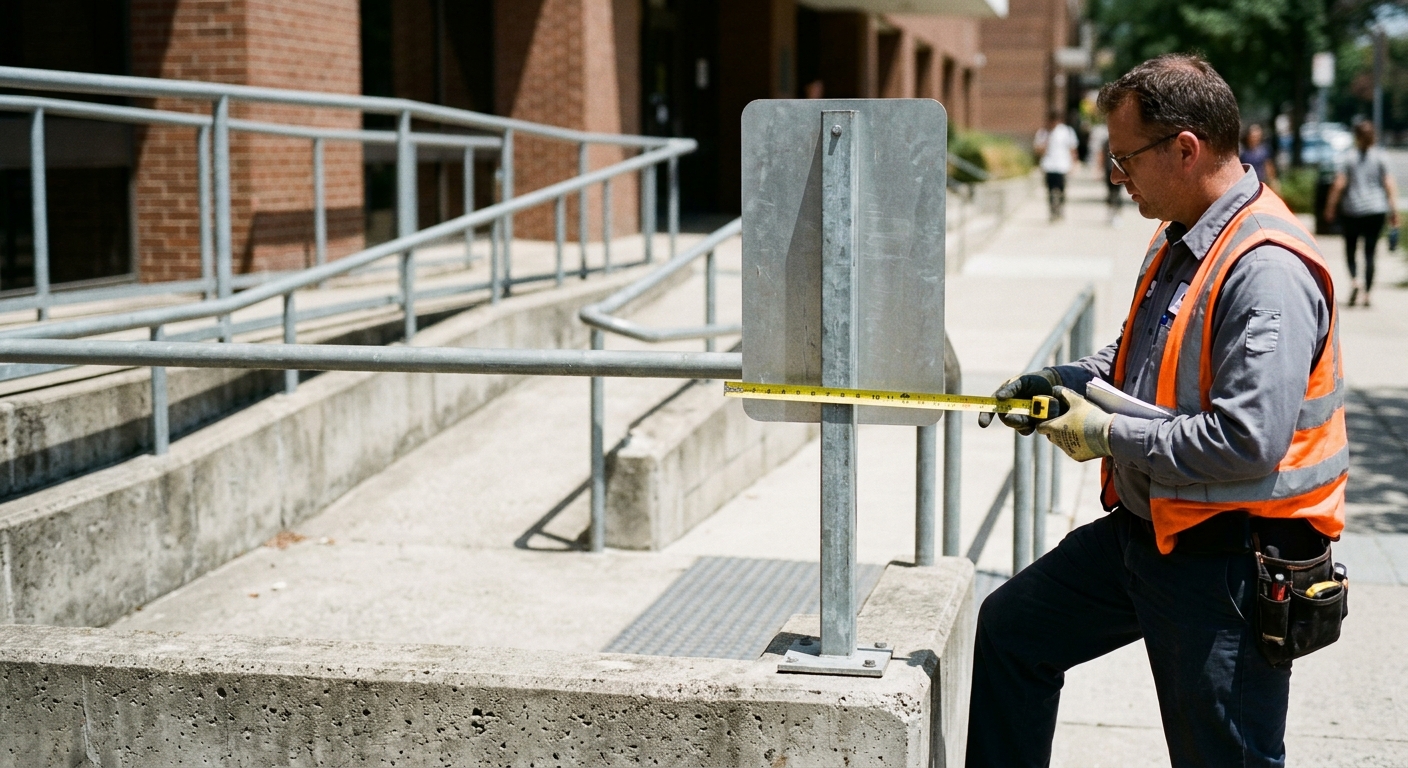
When managing multi-unit residential complexes or commercial facilities, auditing for Americans with Disabilities Act (ADA) compliance is a strict necessity. We fabricate and install ADA signs for businesses across Kentucky and Indiana, and we know exactly what inspectors look for. During your audit, evaluate all permanent rooms, common spaces, parking areas, and stairwells to ensure your existing signage meets current federal accessibility standards.
Property managers should check the following elements during their walkthrough:
- Mounting Height and Location: Verify that all tactile characters are positioned between 48 inches and 60 inches above the finished floor. Interior signs should typically be mounted on the latch side of the door.
- Visual Contrast: Check that the characters and the sign background have a non-glare finish and contrast sharply with one another to aid visual readability.
- Tactile and Braille Elements: Ensure raised characters are elevated by at least 1/32 inch from the sign face and are accompanied by valid Grade 2 Braille.
- Font and Character Proportions: Confirm that the text uses sans serif fonts and meets specific width-to-height ratio requirements.
Navigating Local Zoning Laws and Permits
Local signage regulations dictate exactly what you can display on the exterior of your property. Zoning codes change over time, meaning an electrical building sign, monument sign, or pylon sign that was compliant a decade ago might face new restrictions if you plan to update or replace it. Review your current exterior signs against municipal codes regarding maximum square footage, property setback distances, height limits, and illumination restrictions.
Because we specialize in electrical building and monument signs, our project managers regularly navigate these local zoning laws. We build on our existing permit process resources to help you determine if your current signage requires retroactive permitting, or if planned updates to your channel letter signs will trigger new zoning reviews.
Comparing ADA and Zoning Audit Requirements
Property managers must evaluate two entirely distinct sets of rules during a signage audit. Here is a breakdown of how ADA requirements and local zoning laws differ in scope and application:
| Compliance Area | Primary Scope | Key Specifications to Audit | Enforcement Level |
|---|---|---|---|
| ADA Guidelines | Interior spaces, parking lots, permanent rooms | Mounting heights, Braille, tactile depth, contrast | Federal civil rights law |
| Local Zoning Laws | Exterior property, building facades, street frontage | Square footage, setback distance, height, illumination | Municipal code enforcement |
Streamlining the Update Process
If your audit reveals non-compliant signs, bringing them up to code does not have to disrupt your daily operations. There is a lot to creating a compliant sign, but your dedicated Project Manager at On Display Signs will handle every part for you. From designing compliant interior acrylic signs to securing the necessary municipal permits for an updated illuminated cabinet sign, we will work with you to ensure the final product is effective, engaging, and within your budget. Our smooth, stress-free process ensures you maintain consistent communication while we bring your property up to current standards.
Failing to address non-compliant ADA signage or local zoning violations during your audit leaves your property vulnerable to costly municipal fines and legal liabilities.
Partnering with a Dedicated Project Manager for Signage Updates
Developing a Prioritized Action Plan
Once your audit is complete, you will have a comprehensive list of signs that need repair, replacement, or a complete redesign. Compiling these findings into a structured action plan is the bridge between identifying problems and actually installing your new signs. An effective plan ensures you address the most critical issues first while allocating your budget appropriately over the coming quarters.
We recommend organizing your signage updates into the following priority levels:
- Critical Replacements: Address immediate safety hazards, electrical failures in illuminated cabinet signs, and ADA compliance violations first to protect your business from liability.
- High-Impact Branding: Prioritize main identification signs, such as pylon signs or electrical monument signs at the entrances of multi-unit residential complexes, as these drive primary first impressions.
- Aesthetic Upgrades: Schedule updates for faded acrylic signs, outdated directional post and panel signs, or interior dimensional letters that no longer match your current corporate brand guidelines.
- Routine Maintenance: Plan for minor, ongoing servicing, such as cleaning channel letter signs or replacing individual lighting modules in back-lit signs.
Working with a Dedicated Project Manager
Executing a signage action plan across a commercial property involves coordinating design, permitting, fabrication, and installation. For national developers and property managers managing sites in Kentucky and Indiana, juggling multiple vendors or city departments can quickly become overwhelming and lead to costly delays.
At On Display Signs, we assign each client one dedicated person they work with. There is a lot to creating a sign, but your Project Manager will handle every part for you. After reviewing your audit action plan, your project manager will consult with you to design signs tailored to your specific industry. We oversee the fabrication of your new graphics and coordinate the final installation schedule to minimize disruption to your property. This single point of contact guarantees consistent communication throughout the entire process. We will work with you and guide you to ensure the final product is the sign your company deserves. Our smooth, stress-free process ensures that you get an effective, engaging sign that helps promote your brand while staying within your budget.
Selecting the Right Signage Upgrades
Your project manager will help you determine the best replacement options based on your audit data. Consider how different sign types solve specific issues identified on your property:
| Sign Type | Best Used For | Typical Audit Trigger for Replacement |
|---|---|---|
| Monument Signs | Primary property entrances and multi-unit residential branding | Existing sign is structurally damaged, lacks visibility, or has outdated masonry. |
| Channel Letter Signs | High-visibility exterior building identification | Electrical components are failing, or letters are missing acrylic faces. |
| Post & Panel Signs | Wayfinding and secondary directional signage | Paint is peeling, panels are dented, or traffic flow requires new directions. |
| ADA Signs | Interior room identification and accessibility compliance | Signs are missing tactile lettering, Braille is damaged, or color contrast is poor. |
Attempting to manage a comprehensive signage overhaul across a large commercial property without a dedicated project manager often results in inconsistent branding, blown budgets, and installation delays.