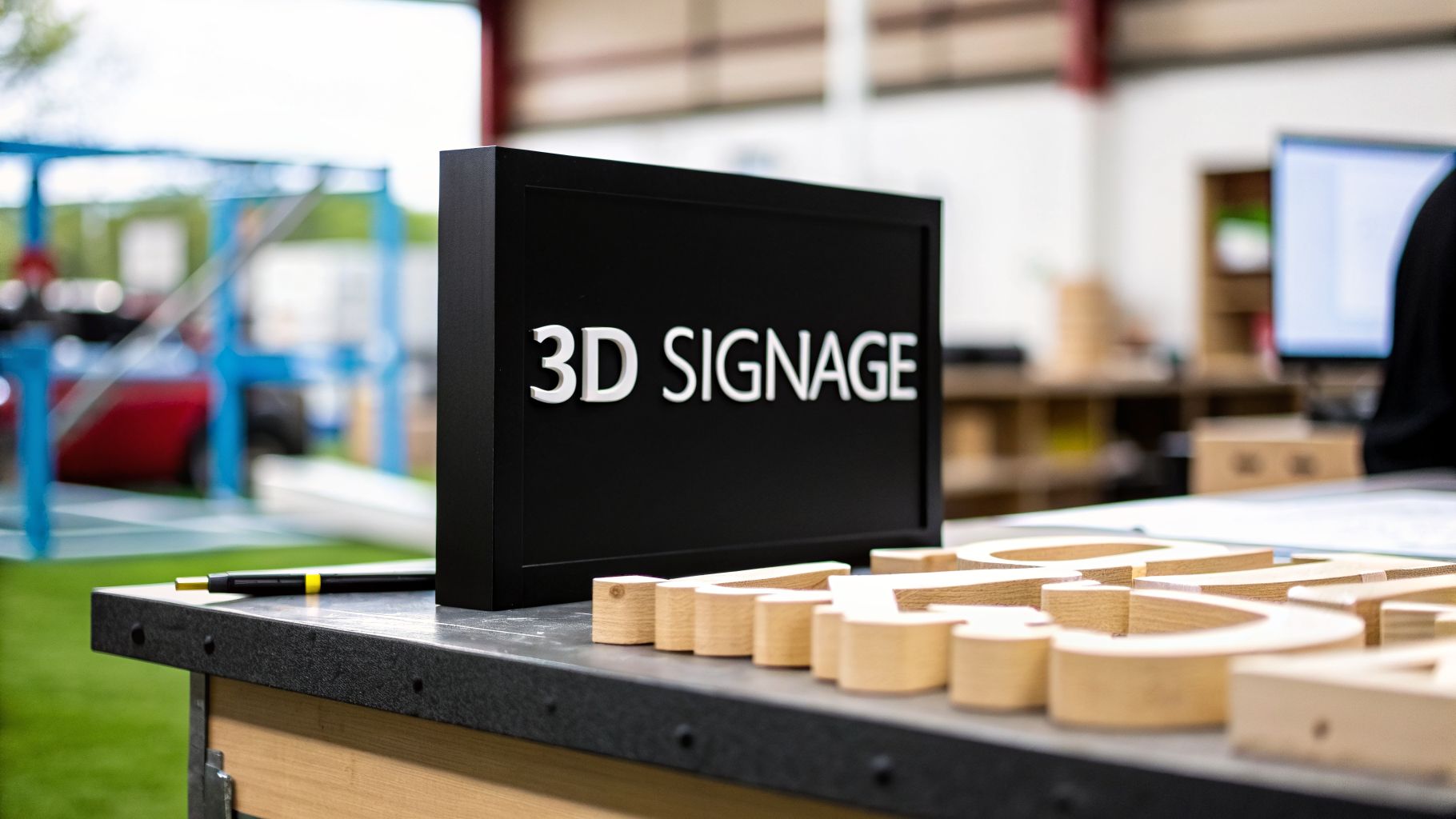
If you want to know how to increase retail sales, you have to accept a simple truth: your work begins long before a customer walks through the door. The journey from casual passerby to paying customer starts on the sidewalk. That makes your storefront the most important—and most overlooked—salesperson you have.
Your Storefront Is Your Most Important Salesperson
Long before a customer ever speaks to your staff or touches a product, your storefront has already made its pitch. It's the silent ambassador for your brand, working 24/7 to either invite people in or convince them to keep walking. A powerful storefront doesn't just display a name; it communicates your brand's promise, builds curiosity, and turns passive foot traffic into engaged shoppers.
This is where so many retailers miss a huge opportunity. They see their exterior as just a marker of their location, not as an active tool for winning customers. The single most direct way to boost your bottom line is to transform your curb appeal from a static backdrop into a dynamic customer magnet.
The Power of High-Impact Outdoor Signage
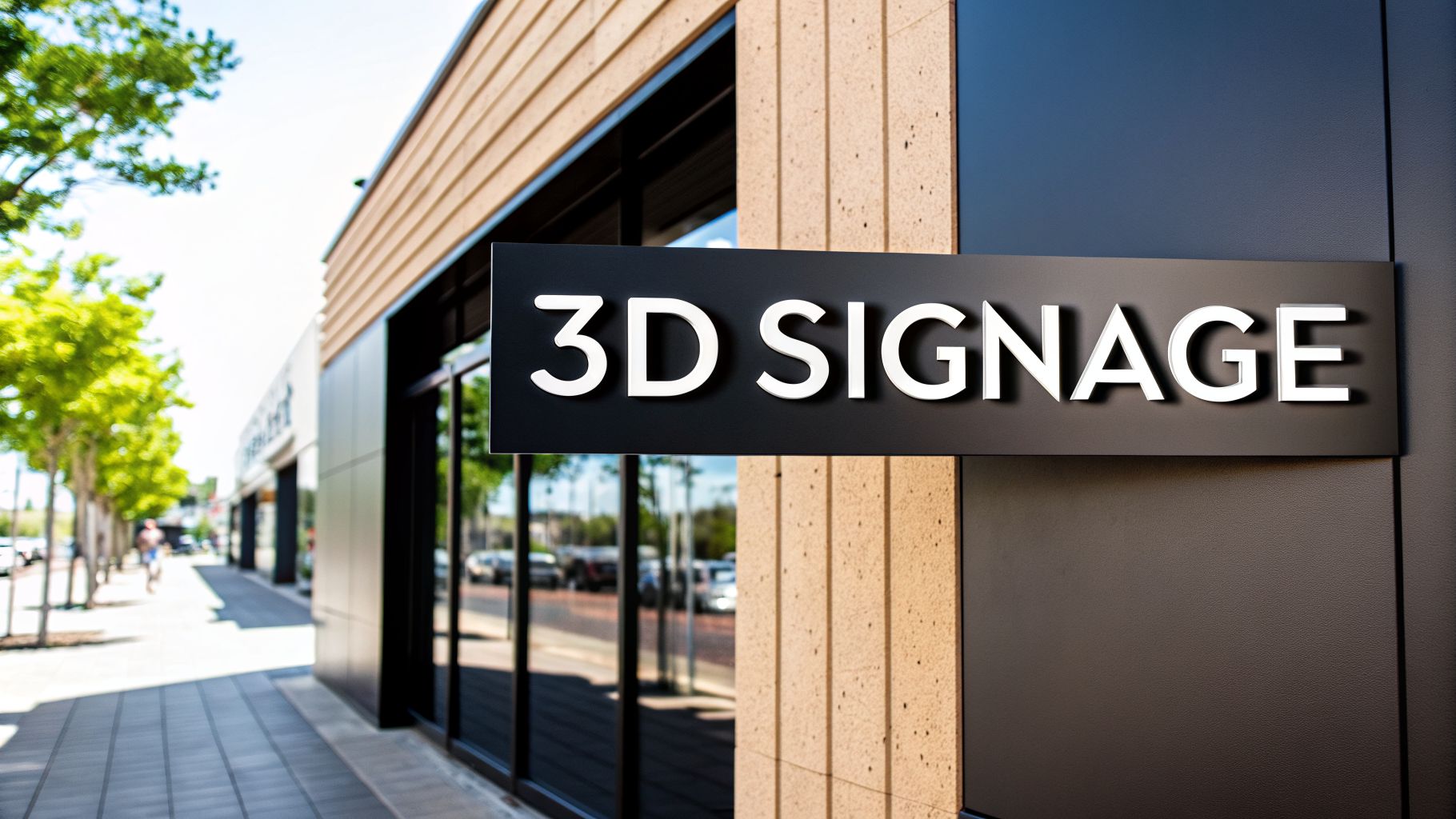
Think of your main building sign as the headline for your business—it's the beacon that guides people to your door. High-impact options like illuminated channel letters or impossible-to-miss pylon signs are designed to grab attention from a distance, making your location a landmark. They cut through the visual clutter of a busy street and build brand recognition day after day.
The style has to match the substance. A high-end boutique might opt for a sophisticated, projecting blade sign to convey a sense of classic craftsmanship. Meanwhile, a modern tech store would probably choose sleek, backlit channel letters to create a clean, high-tech vibe. The materials, lighting, and design of your sign must align with the experience you're promising inside.
It's not just about looks; it's about results. Retail industry data consistently shows that businesses investing in high-visibility outdoor signs get a significant return. Reports show that upgrading to options like monument signs and LED-illuminated displays can spike foot traffic by an average of 25-30% in the first few months. In major U.S. markets, retailers making that switch saw a 15-20% lift in in-store sales, tied directly to better brand awareness.
Creating an Irresistible Welcome
Beyond your main sign, your windows and entryway complete that crucial first impression. They're the "preview trailer" for your store, giving people a compelling reason to stop and step inside.
- Dynamic Window Displays: These are for so much more than just mannequins. Use bold window graphics to announce new arrivals, promote a flash sale, or tell a seasonal story. For example, a local bakery could use vibrant vinyl clings of a new autumn apple spice pastry to make mouths water from the sidewalk.
- A-Frame Sidewalk Signs: These are your secret weapon for creating urgency right at the point of entry. Announce a "Deal of the Day" or a special event to snag the attention of people who are literally walking right past your door. A bookstore could write "Author Signing Today at 2 PM!" to draw in book lovers.
- A Welcoming Entry: The area around your entrance needs to be flawless. A clean, well-lit doorway with a fresh welcome mat and easy-to-read hours of operation removes any hesitation a potential customer might feel.
This whole process is about creating a clear path from the street to your sales floor. Effective signage grabs their attention, compelling windows draw them closer, and an inviting entry pulls them inside.
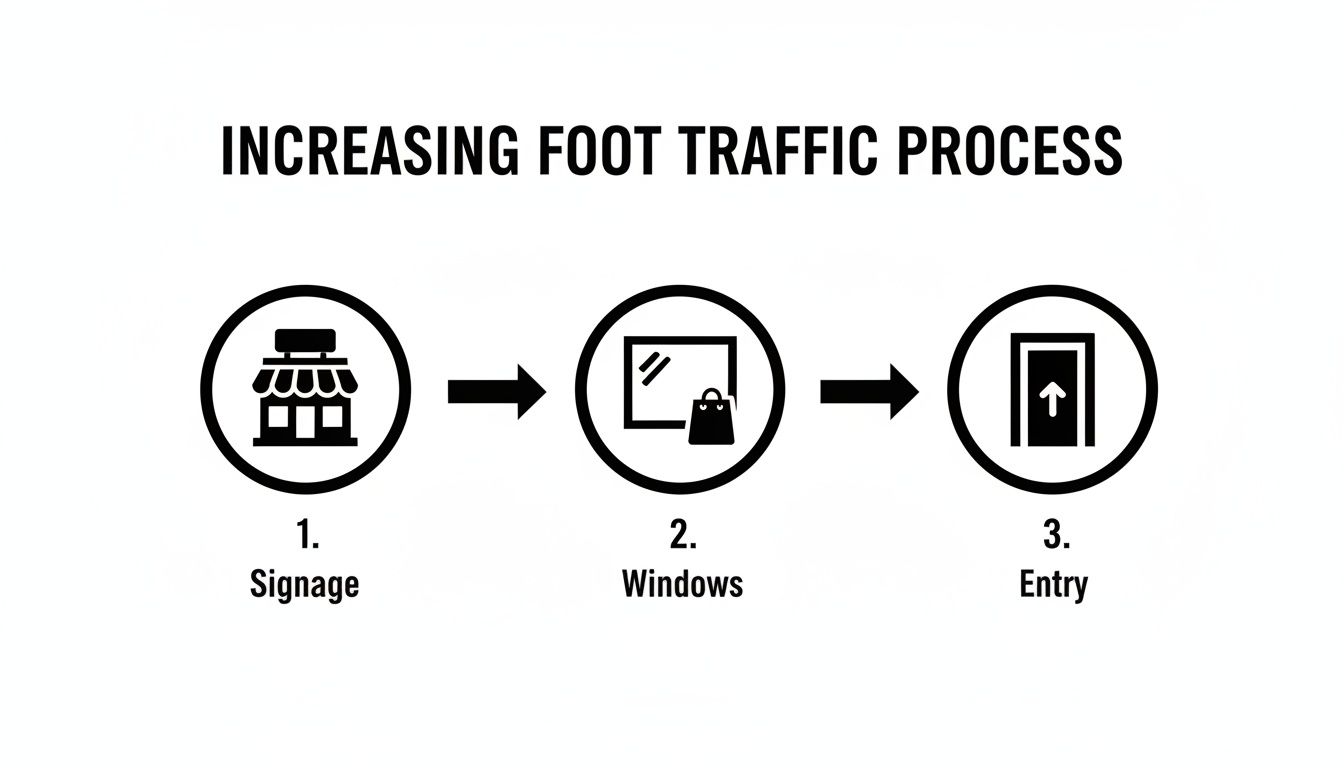
Each element builds on the last, creating a seamless and persuasive invitation that customers can't resist. You can find more inspiration by exploring these powerful retail storefront design ideas.
Designing an In-Store Experience That Sells Itself
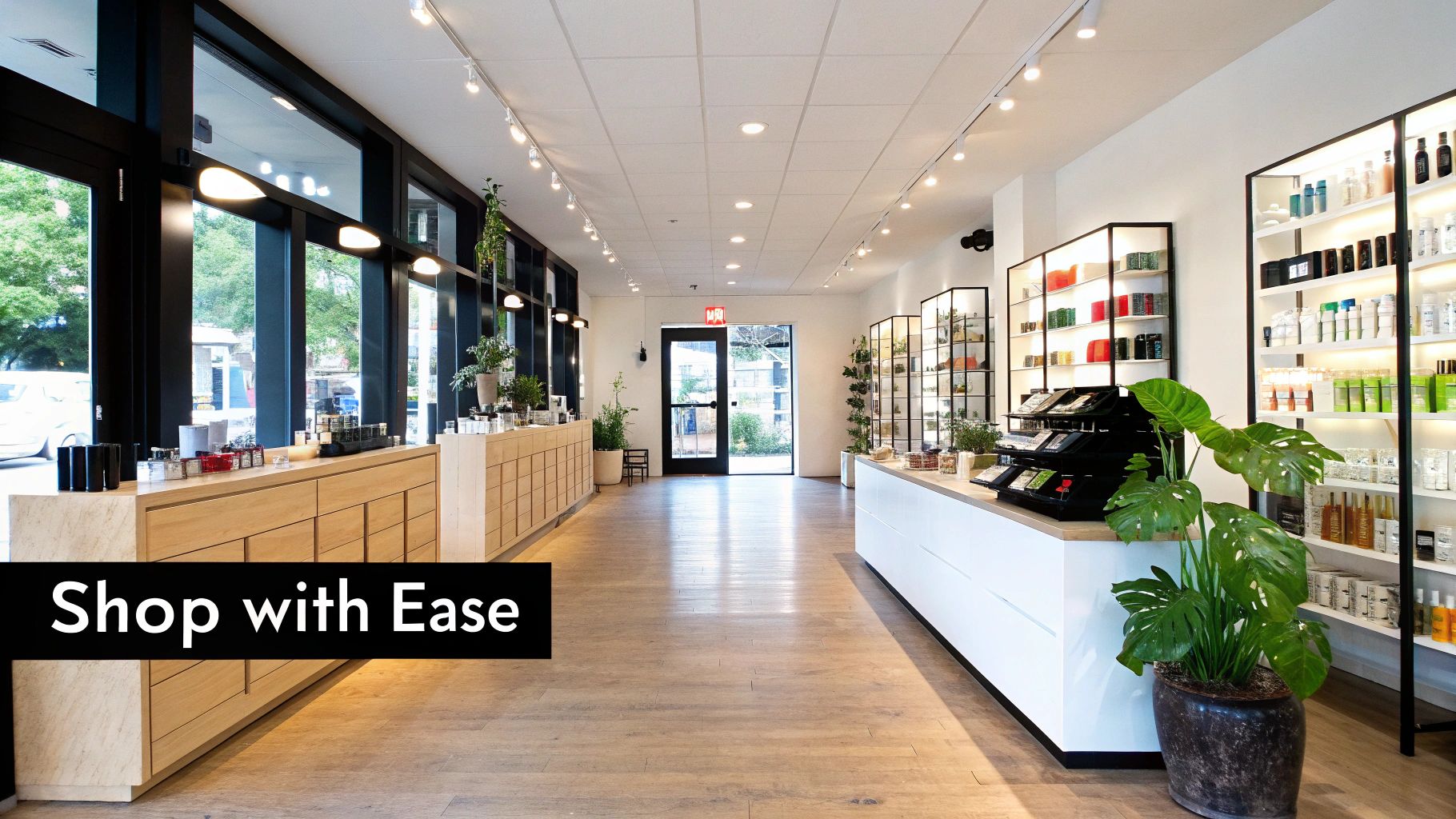
Getting customers through the door is a huge win, but the real work starts the moment they step inside. Your store's environment can either be your best salesperson or your biggest obstacle, guiding shoppers toward a purchase or sending them away frustrated. A well-designed in-store experience acts as a silent guide, making shopping feel natural and enjoyable.
The goal is to turn a simple transaction into a memorable experience. This isn't magic; it's a smart combination of store layout, visual merchandising, and interior signage working together to tell your brand's story. Getting inside your customer's head and planning their journey is fundamental to increasing sales from the inside out.
Master Your Store Layout and Traffic Flow
The path a customer takes through your store should never be left to chance. It's a well-known fact in retail that most shoppers naturally turn right upon entering. This makes the area just inside your door to the right the most valuable real estate in your store. Use it for new arrivals, high-demand items, or seasonal promotions to grab their attention immediately.
From that first impression, you want to create a clear, circular path that leads them through the entire space. Dead ends and cluttered aisles are sales killers. They cause confusion and ensure shoppers miss whole sections of your merchandise. This main pathway is your opportunity to guide the customer's journey and expose them to the maximum number of products in a logical sequence.
A well-planned traffic flow isn't just about avoiding congestion; it's about maximizing product exposure. By guiding customers along a specific route, you control the narrative and ensure your most important products get seen.
Think of it as telling a story. A hardware store, for instance, might arrange its aisles to lead from common DIY project supplies to the tools needed to complete them, then finally to finishing products like paint or sealants. This logical flow doesn't just help the customer—it actively encourages those extra, unplanned purchases.
Using Visual Merchandising to Drive Sales
Visual merchandising is the art and science of using product displays to attract, engage, and ultimately convince customers to buy. It’s about creating focal points that draw the eye and make your products irresistible.
This goes way beyond just lining items up on a shelf. It’s about strategic presentation that influences buying behavior on a subconscious level. Here are a few actionable insights that work every time:
- Make End Caps Your Superstars: The displays at the end of your aisles have the highest visibility. Use them for high-margin products, special promotions, or bundled deals you want to move fast. A grocery store might place pasta, sauce, and parmesan on an end cap for a quick "dinner tonight" solution.
- Create "Speed Bumps": Place eye-catching tables or freestanding displays in wider parts of your main pathway. These "speed bumps" get customers to slow down, pause, and look at items they might have otherwise breezed past.
- Embrace the Rule of Three: Grouping products in sets of three is visually appealing and creates a sense of balance. Displaying a shirt, scarf, and handbag together, for example, suggests a complete look and makes it easier for the customer to buy all three.
Don't forget the checkout counter. It's your last chance to add to the sale with low-cost, high-impulse items. Think small accessories, gift cards, or specialty snacks—anything a customer can grab without a second thought.
The Role of Impactful Interior Signage
Think of interior signs as the unsung heroes of your store. They do more than just point the way; they inform, persuade, and reinforce what your brand is all about. Clear, well-designed signage cuts down on customer frustration and empowers them to find what they need on their own.
Directional signs are the basics, but the real magic happens when you get creative. Custom wall graphics and backdrops can turn a plain wall into a branded, memorable environment. A local bakery could use a custom wall mural to create a cozy, Instagrammable corner that people can't help but share online. A tech store might use sleek, dimensional letters to give product categories a modern, professional feel.
This visual storytelling should start before anyone even walks in. A truly compelling customer journey begins at the curb and flows seamlessly inside, which is why having great retail window display ideas is so crucial for connecting your exterior to your interior experience.
Smart Pricing and Promotions That Drive Action
A price tag is never just a number. It’s a powerful signal that tells customers everything about a product’s value, and getting it right is one of the fastest ways to increase how much each person spends in your store.
This isn’t about running constant, margin-killing discounts that devalue your brand. It's about using smart psychology to make customers feel like they're getting a fantastic deal—one that encourages them to add just one more item to their cart. Mastering these techniques is a direct path to boosting your average transaction value (ATV) without sacrificing profits.
Tap Into Pricing Psychology
Even tiny tweaks to how you display prices can have an outsized impact on a customer's decision to buy. These aren't tricks; they're proven methods that play on how our brains instinctively process numbers and value.
One of the oldest and most effective tactics is charm pricing. The simple act of pricing an item at $19.95 instead of $20.00 makes it feel significantly cheaper. Our brains anchor to that first digit, "19," and the price registers as lower than it really is. It works.
Another great strategy is product bundling. By grouping complementary items together for a single, slightly reduced price, you increase the perceived value for the customer while moving more inventory off your shelves. It's a win-win.
Think about it: a bookstore could bundle a hot new release with a classic from the same author and a branded bookmark. The bundle feels like a special, curated offer, and you've just turned a one-item sale into a three-item sale.
Build a Real Promotional Calendar
Effective promotions are planned, not panicked. If you're constantly throwing a "20% Off Everything" sale every other week, you're just training your customers to wait for a discount. It kills your margins and tells people your regular prices aren't real.
The key is to build a thoughtful promotional calendar that lines up with seasonal trends, holidays, and your own customer buying patterns. This makes your offers feel timely and relevant, not desperate.
- Seasonal Campaigns: Look beyond the big holidays. A hardware store should be running a "Get Your Garden Ready" event in early spring. A clothing boutique can own the "Back to School" season in late summer.
- Loyalty-Based Offers: Your best customers deserve the best deals. Give them exclusive early access to sales or special "members-only" discounts to build goodwill and keep them coming back.
- Flash Sales: Nothing creates urgency like a ticking clock. A "24-Hour Flash Sale" on a specific category can drive a huge burst of traffic and is a fantastic way to clear out lingering stock.
Announce Your Offers with Impact
A brilliant promotion is useless if nobody knows about it. This is where your signage becomes the voice of your sales strategy, creating excitement and driving action right at the point of decision.
Use a mix of different signs to broadcast your message loud and clear. Big, bold window clings are perfect for grabbing the attention of passersby and announcing a store-wide event. Inside, smaller signs and shelf talkers can highlight specific deals and guide shoppers to the right products.
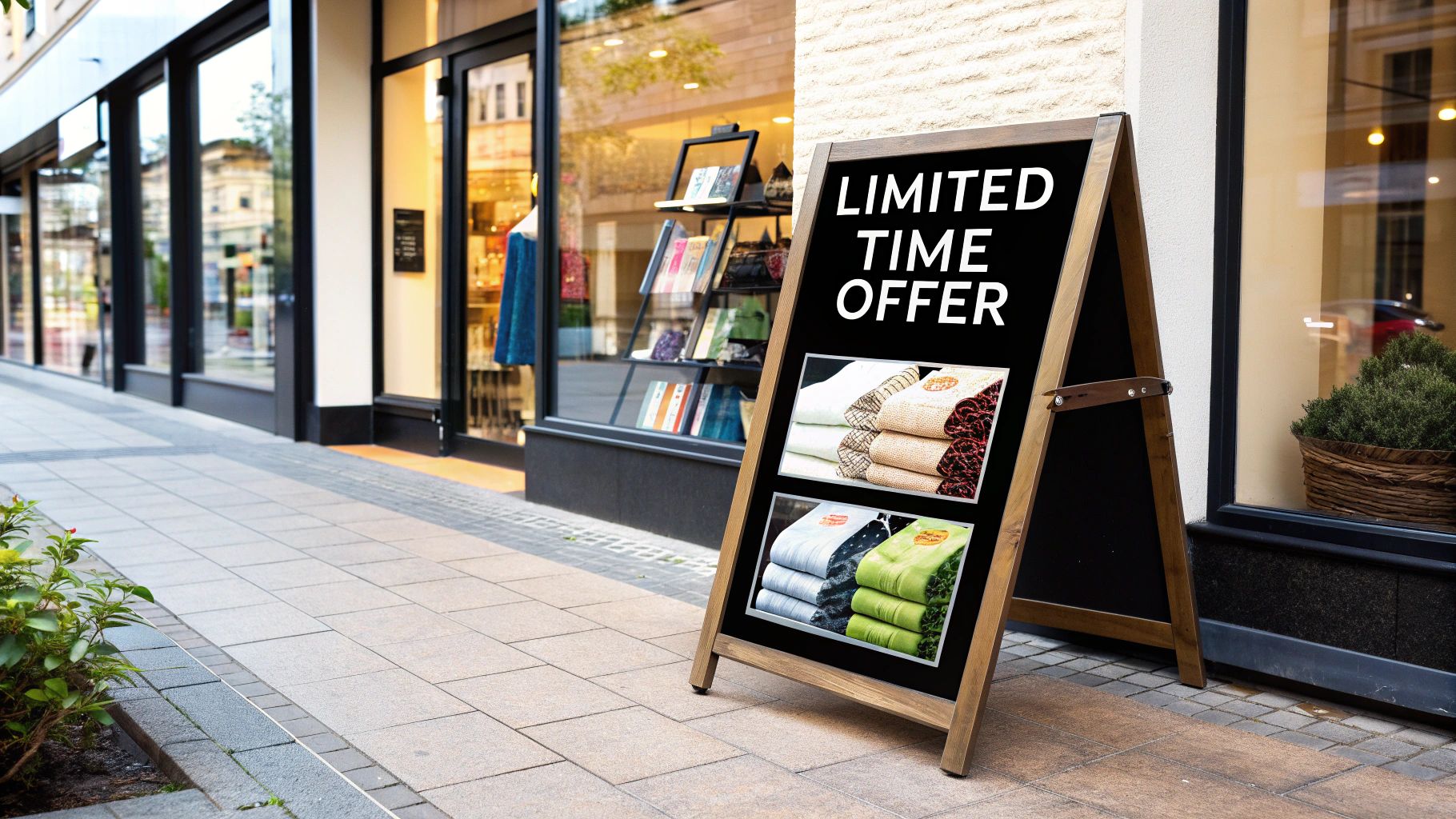
Sidewalk A-frame signs are your secret weapon for creating urgency. A well-placed A-frame screaming a "Limited Time Offer" can be the final nudge a hesitant shopper needs to step inside. You can find more ways to craft compelling messages by exploring different options for customizable message board signs.
When you combine smart pricing, a strategic promotional calendar, and clear, compelling signage, you create a powerful system that consistently drives sales.
Turning Your Staff into Sales Superstars
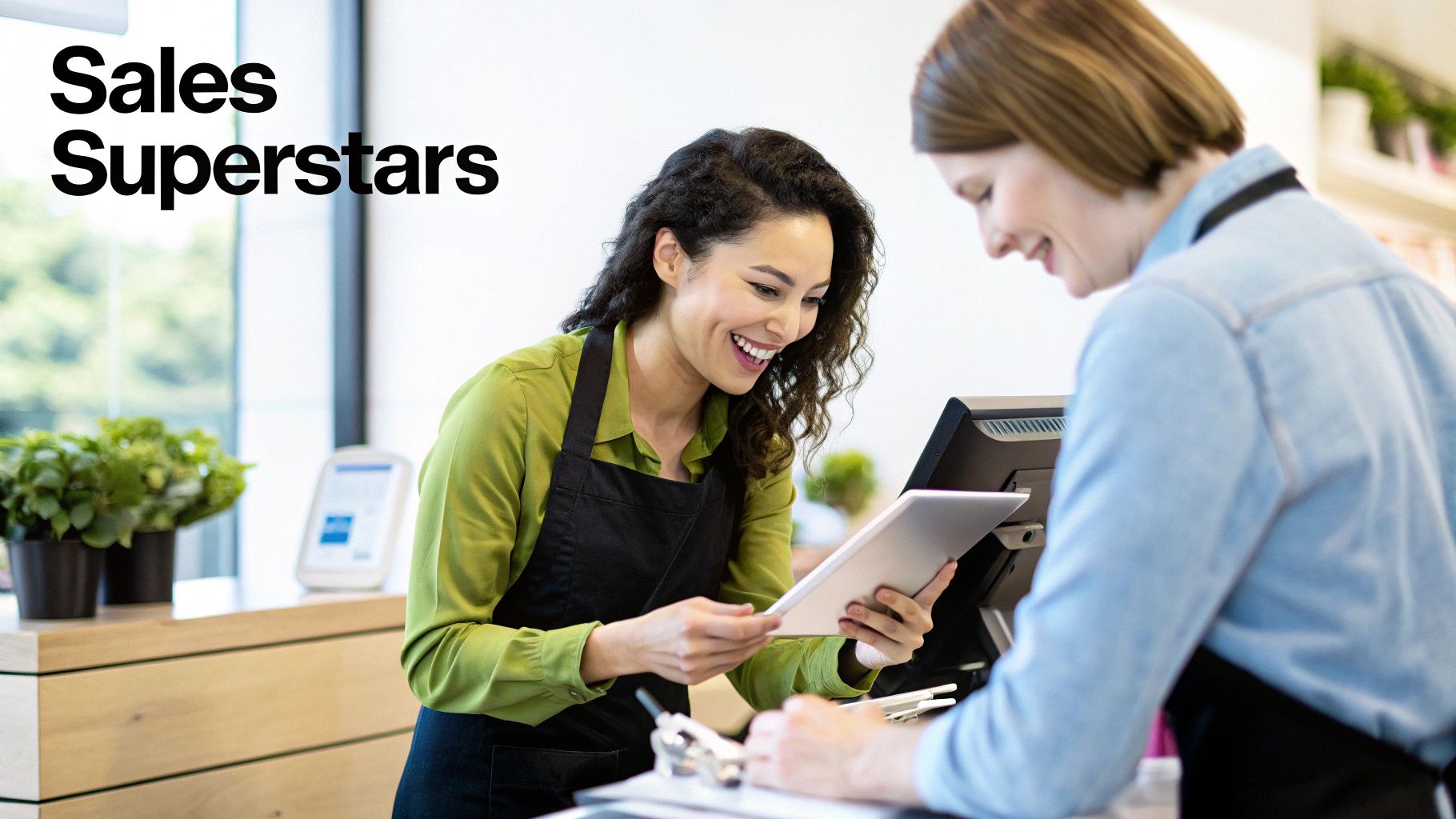
You can have the most beautiful store layout and the slickest promotions, but it all falls apart if your team isn’t on board. Stop thinking of your employees as just staff—they are the living, breathing heart of your customer experience. In fact, they’re your single most valuable sales tool, and they're almost always underused.
Turning your team into sales superstars isn’t about teaching aggressive sales pitches. It’s about arming them with the knowledge, skills, and confidence to make every customer interaction a great one. This is how you move them from just running the register to being true ambassadors for your brand.
Cultivating Deep Product Knowledge
Nothing kills a potential sale faster than an employee who can’t answer a basic product question. It’s frustrating for the customer and instantly erodes trust. But when your staff knows the inventory inside and out, they speak with a genuine authority that builds confidence and closes sales.
This isn’t about memorizing features off a box. It’s about knowing the why behind every product. Why is one brand of running shoe better for trail running? What ingredient makes that particular skincare product so effective for dry skin?
The goal is to turn your team into problem-solvers. When an employee can listen to a customer's need and confidently recommend the perfect solution, they aren't just selling a product; they are providing a valuable service.
Forget the dusty training manuals. Bite-sized, regular training sessions are far more effective than a single, overwhelming info-dump. Create simple one-page cheat sheets for new products or promotions that your team can review in minutes. For a hardware store, this might be a quick guide on three paint finishes and their best uses.
Training for Proactive Engagement
The difference between a simple transaction and a memorable experience comes down to one thing: proactive service. A great employee doesn't wait to be asked for help. They know how to approach shoppers in a way that feels genuinely helpful, not intrusive.
It all starts with teaching your team to spot buying signals. See a customer comparing two different blenders? That’s the perfect moment to step in and offer a quick comparison. Spot someone looking puzzled in the clothing section? They probably need a hand finding a size or matching an outfit.
Role-playing is hands-down the best way to build this skill. Set up common scenarios and let your team practice their approach until it feels natural.
- The Browser: A customer is just looking around. Practice open-ended questions like, "Finding everything okay today? Just let me know if any questions pop up while you're looking."
- The Indecisive Buyer: A customer is holding two items. An employee can practice saying, "I see you're looking at both of our top-selling coffee makers. The one on the left is great for speed, while the other is known for its brewing temperature control. What’s most important to you in your morning coffee?"
This small shift turns a passive clerk into an active consultant—a critical step in boosting sales right from the floor.
Mastering the Art of the Upsell
When done right, upselling and cross-selling don't just increase the ticket size; they actually improve the customer's purchase. The secret is to make suggestions that are genuinely useful and make perfect sense. A pushy upsell feels greedy. A helpful suggestion feels like great service.
Train your staff to think in terms of "complete solutions."
- If someone is buying a new digital camera, the obvious and helpful cross-sell is a memory card, a camera bag, and maybe a lens cleaning kit.
- A customer buying a suit should always be asked if they need a new shirt, tie, or belt to go with it.
- At checkout, a simple, "Did you need batteries for that?" when someone buys an electronic toy is a helpful reminder that almost always results in another sale.
Relevance is everything. This requires listening to what the customer has already picked out and thinking one step ahead to what they'll need next. This thoughtful approach doesn't just increase your average transaction value—it leaves customers feeling understood and cared for, which is exactly what brings them back.
Using Digital Marketing to Boost In-Store Foot Traffic
Let's face it: the journey to your front door almost always starts on a screen. Today's customers don't just wander into stores; they research, compare, and decide where to shop long before they grab their keys. This makes your digital presence a powerful engine for driving real-world foot traffic.
If your online and offline worlds aren't speaking to each other, you're leaving money on the table. A smart omnichannel strategy builds a seamless bridge between your website, social media, and your physical store, ensuring your digital efforts translate directly into in-store sales. It all begins with being impossible to miss for local customers who are actively looking for what you sell.
Win the “Near Me” Search
When a potential customer pulls out their phone and searches for "hardware store near me" or "boutique in [your town]," you absolutely have to be at the top of that list. This isn't just luck—it’s the result of mastering local search engine optimization (SEO).
Your most powerful tool here is your Google Business Profile (GBP). Think of your GBP listing as your digital storefront. An incomplete or outdated profile is the online equivalent of having a "Closed" sign hanging on your door during business hours. To really capture local customers, you need solid digital marketing strategies for local businesses that make discovery dead simple.
Treat this profile as an active, living marketing channel:
- Keep Information Flawless: Your address, phone number, and hours must be 100% accurate. Nothing sends a potential customer straight to a competitor faster than driving to your store only to find it closed.
- Upload High-Quality Photos: Show off your beautiful storefront, your inviting interior, and your best-selling products. Help people picture themselves shopping with you before they even arrive.
- Use Google Posts: This feature is like a mini-blog for your business. Use it to announce new arrivals, promote an in-store event, or share a special offer to create some buzz.
A fully optimized Google Business Profile is no longer optional—it's the bedrock of modern retail marketing. For any local business, it is the single most important factor in turning online searches into offline customers.
Create a Buzz That Pulls People In
Once people can find you, you need to give them a compelling reason to visit right now. This is where social media and email marketing really shine. These channels are perfect for creating the kind of urgency and community that a static website just can't match.
Don't just post product pictures. Use these platforms to create excitement around in-store exclusives. Announce a "subscriber-only" flash sale or a "social media follower" appreciation event. This makes your audience feel like they're part of an exclusive club and gives them a clear, timely reason to come into the store.
A local bookstore, for example, could host an in-person author signing and promote it exclusively to their email list and social followers for a week before announcing it to the public. It rewards loyalty and drives immediate traffic.
Of course, these campaigns aren't free. It’s smart to plan ahead and figure out what a realistic small business marketing budget looks like to support these efforts effectively.
Bridge the Online-Offline Gap
Building a strong connection between your digital marketing and in-store experience is critical. This is where omnichannel tactics come into play, creating a smooth transition that encourages online browsers to become in-store shoppers.
Key Omnichannel Strategies and Their Impact
| Omnichannel Tactic | Primary Goal | Key In-Store Component |
|---|---|---|
| BOPIS (Buy Online, Pick Up In-Store) | Drive guaranteed foot traffic & increase basket size. | Dedicated, clearly marked pickup counter with fast service. |
| In-Store Event Promotion | Create urgency and build community. | Event signage, special displays, and knowledgeable staff. |
| Click-to-Brick Promotions | Convert online interest into immediate sales. | In-store signage honoring digital coupons or exclusive offers. |
| Local Inventory Ads | Show what's in stock right now to solve immediate needs. | Accurate inventory system and easy-to-find products on the sales floor. |
These strategies work because they blend the convenience of online browsing with the tangible benefits of a physical store, making the customer's life easier and boosting your bottom line.
Make Pickup Painless With BOPIS
One of the most powerful omnichannel tactics is Buy Online, Pick Up In-Store (BOPIS). It gives customers the best of both worlds: the ease of online shopping with the instant gratification of getting their items immediately, all while skipping the shipping costs. For you, it's a guaranteed way to get a motivated, ready-to-buy customer through your door.
But a successful BOPIS program depends entirely on a frictionless experience. The pickup process has to be fast, easy, and completely obvious.
This is where clear, dedicated signage becomes non-negotiable. Use window clings to advertise that you offer in-store pickup. Inside, place prominent signs that direct customers to a dedicated pickup area so they don't have to wander around lost. A messy, confusing pickup process completely defeats the purpose of convenience and can sour the customer experience, costing you a lot more than just that one sale.
Common Questions About Boosting Retail Sales
Even the best-laid plans run into real-world questions. Once you start putting these strategies into action, you’ll naturally wonder where to focus your energy and how to track what’s working. Let’s tackle some of the most common questions with direct, practical advice.
What Is the Single Most Impactful Change to Quickly Increase Sales?
While long-term growth comes from a mix of strategies, the fastest win almost always comes from upgrading your storefront visibility with professional outdoor signage. A bright, clear sign or a compelling window graphic is your 24/7 salesperson, grabbing the attention of people who would otherwise walk right by.
Think of it this way: this single action directly fills the top of your sales funnel. Once you have more people walking through the door, your in-store merchandising and well-trained staff get more chances to turn that new foot traffic into actual sales. It's the first and most critical domino to fall.
How Can I Measure the ROI on New Signage or Merchandising?
You can't just guess—you need hard data to know if your investments are paying off. To measure the return on investment (ROI), you have to track specific metrics before and after you make a change.
- For New Signage: The simplest way is to install a door counter to track foot traffic. At the same time, keep an eye on your point-of-sale (POS) data for a jump in "new customer" sales.
- For Merchandising Changes: This is even more direct. Watch the sales data for the specific products you moved to a high-traffic display. You should also track your average transaction value (ATV) after adding new point-of-purchase displays right at the checkout.
By comparing the 3-6 months of data before the investment to the 3-6 months after, you’ll get a clear, undeniable picture of the lift in traffic and revenue. This isn't just about justifying one purchase; it's about building a data-driven mindset for all future decisions.
Where Should I Focus First if My Budget Is Limited?
When money is tight, you have to be strategic. Focus on the high-impact, low-cost moves that improve the customer’s perception of your store. You don't need a massive budget to see real results.
Start with the basics: make sure your storefront is absolutely spotless and inviting. A simple, affordable A-frame sign can work wonders for advertising a daily special or a new arrival. Inside, the goal is clarity. Declutter your space to create wide, welcoming pathways so shoppers can move freely and discover more of what you offer.
The most powerful no-cost strategy? Training your staff. Pour your time into teaching proactive customer engagement and upselling techniques. Finally, make sure your free Google Business Profile is completely filled out and regularly updated. These steps cost next to nothing but can significantly lift sales by improving the customer experience.
How Important Is a Digital Presence for a Physical Store?
It's absolutely essential. In today’s world, the customer journey almost always starts online, even if the final purchase happens in your store. People use Google to find local shops, read reviews, and browse your offerings before they even think about leaving the house.
A clean website, an active social media presence, and solid local SEO act as your digital front door, driving qualified customers to your physical one. These aren’t just marketing fluff; they are tools that let you build a community, announce products, and talk directly to your customers. While this guide focuses heavily on in-store tactics, many retailers can also learn from broader strategies to raise sales that blend the physical and digital worlds.
The connection between your online presence and your physical storefront is critical. To make that link as strong as possible, it helps to understand all the types of signage available that can turn that digital interest into real-world foot traffic.
Ready to transform your storefront into a customer magnet? The team at On Display Signs, Inc. delivers end-to-end signage solutions that get your brand noticed. From eye-catching outdoor signs to impactful interior graphics, we manage everything from design to installation so you can focus on running your business. Get a free quote today.