Think of a message board sign as more than just a fixture. It's your most reliable employee—a dynamic, 24/7 marketing tool that gives your business a powerful voice. It works tirelessly to capture attention, announce promotions, and share vital information with everyone who passes by. A well-chosen sign isn't an expense; it's a direct investment in customer engagement and increased foot traffic.
How Message Board Signs Drive Business Growth
Imagine your storefront having a direct, ever-changing conversation with the community. That's the real power of a message board sign. Unlike static signage that says the same thing day in and day out, these displays let you adapt your communication in real-time, making them a must-have for any physical business.
This adaptability means you can react instantly to almost anything. A restaurant can advertise a patio special on a sunny afternoon, or a hardware store can promote snow shovels the moment a storm is forecast. This immediate relevance makes your business feel more connected and responsive to what your customers actually need right now.
The Strategic Value of Dynamic Messaging
The true power of message board signs is their ability to wear multiple hats at once. They aren't just for announcing a sale; they're tools for building brand personality, fostering community connections, and driving immediate action.
Think of your sign as a primary communication channel that accomplishes several key goals:
- Grabbing Attention Instantly: A sign with changing text or bright lights naturally draws the eye, cutting through the visual clutter of a busy street and making your business stand out.
- Announcing Timely Promotions: Easily update your sign to reflect daily specials, flash sales, or seasonal offers. This creates a sense of urgency that encourages impulse visits. For example, a bakery could post "Fresh Hot Bread – Out of the Oven Now!"
- Building Community Engagement: Use your sign to share messages that matter locally, like wishing the high school football team good luck or announcing a charity drive. This positions your business as a friendly neighbor.
- Sharing Essential Information: From updated store hours to event schedules, a message board ensures your customers always have the most current information, which reduces confusion and improves their experience.
A well-executed message board sign is a silent salesperson. It communicates value, creates urgency, and invites customers inside without you ever having to say a word. It's a fundamental part of local marketing.
Ultimately, the goal is to convert passersby into paying customers. By presenting clear, compelling, and timely information, your sign acts as the first step in your sales funnel. It sparks interest, provides a reason to stop, and directs traffic right through your doors. To see how different signs can achieve these goals, explore these signage ideas for business and get inspired.
Choosing the Right Type of Message Board Sign
Picking the right message board sign for your business isn't a one-size-fits-all decision. The best choice is a strategic one that balances your goals, budget, and the specific personality of your brand. Let's walk through the most common options so you can find the perfect match for what you need to say.
From old-school classics to high-tech attention-grabbers, each style has its own strengths. The truth is, public messaging has been around forever—think town criers and public notices nailed to a post. But the core idea remains the same: get the right information to the right people.
Changeable Letter Boards: The Timeless Classic
Changeable letter boards are all about that tangible, retro vibe. Their hands-on approach is perfect for businesses going for a classic, personal, or even quirky feel. Think of a local coffee shop's "Soup of the Day" sign or a historic theater listing showtimes—it just feels authentic.
These signs are loved for their affordability and bulletproof reliability. With no electronics to fail, they're incredibly durable and need little more than a quick wipe-down. The manual process of swapping out letters also forces you to be thoughtful and concise with your message, which is often a hidden benefit.
A small boutique, for example, might use one to share a clever quote that perfectly captures its brand voice. It's a charming touch that digital signs simply can't replicate.
Digital LED Signs: The Dynamic Powerhouse
On the other end of the spectrum, you have digital LED message board signs, often called electronic message centers. These are the modern workhorses of on-site advertising, delivering unmatched flexibility and eye-popping visual impact. Their superpower is the ability to change messages instantly from anywhere.
This is a game-changer for businesses with fast-moving information. A gas station can update fuel prices throughout the day without anyone leaving the counter. An event venue can welcome a corporate group in the morning and promote a rock concert that night—all scheduled ahead of time from a laptop.
Digital signs give you the power to react in real time. You can A/B test different promotions, respond to a sudden change in weather, or launch a flash sale with a few clicks, giving you hard data on what works.
Their bright, vivid displays are impossible to ignore, day or night, making them a powerful tool for grabbing the attention of anyone passing by.
Chalkboard and Whiteboard Signs: Rustic and Personal
For businesses that run on a handcrafted, personal aesthetic, chalkboards and whiteboards are a natural fit. You'll see them everywhere in restaurants, cafes, and local shops where daily updates and a little artistic flair are part of the charm.
Picture a neighborhood pub scrawling its rotating craft beer list on a big chalkboard behind the bar, or a flower shop using a whiteboard A-frame to announce a fresh shipment of tulips. These signs feel approachable and inviting.
- Chalkboards bring a rustic, artistic feel with that classic chalk-on-slate texture.
- Whiteboards offer a cleaner, more modern look with the pop of colorful dry-erase markers.
Both are incredibly cost-effective and practically beg for creativity, letting you refresh your message as often as you want with zero fuss.
Cork and Fabric Notice Boards: The Community Hub
Finally, we have cork and fabric notice boards—the go-to choice for indoor, community-driven communication. While you won't see them advertising a sale out front, they are the unsung heroes of internal engagement.
You'll find them in office break rooms sharing company updates, in library foyers promoting local events, and in apartment building lobbies for resident announcements. These message board signs are all about creating a central spot for people to share information by pinning up flyers, posters, and notes. They're simple, functional, and perfect for building a sense of community.
To see how these fit into the broader landscape, check out our guide on the primary types of signage available.
Comparing Popular Message Board Signs
With all these options, it can be tough to keep them straight. Here’s a quick side-by-side look at the four main types to help you decide which one makes the most sense for you.
| Sign Type | Best For | Upfront Cost | Update Method | Visual Impact |
|---|---|---|---|---|
| Changeable Letter Board | Cafes, boutiques, churches; creating a retro, personal vibe. | Low | Manual (slow) | Moderate |
| Digital LED Sign | Gas stations, schools, event venues; dynamic, time-sensitive ads. | High | Remote (instant) | High |
| Chalkboard/Whiteboard | Restaurants, pubs, retail; daily specials and creative updates. | Very Low | Manual (fast) | Moderate |
| Cork/Notice Board | Offices, community centers, libraries; internal communication. | Very Low | Manual (pinning) | Low |
Ultimately, the best message board sign is the one that aligns with your operational needs and speaks your brand's language—whether that's with a classic font, a bright animation, or a hand-drawn illustration.
Designing Messages That Actually Get Noticed
Putting up a powerful message board sign with a weak, cluttered, or confusing message is a completely wasted opportunity. The best signs get their point across in a heartbeat. You really only have a few seconds to grab the attention of someone driving or walking by.
This tiny window of opportunity is what we in the industry call the “3-second rule.” Your message has to be so clear and punchy that it can be read, understood, and acted upon in the time it takes for a car to pass. Nailing this rule is what turns your sign from a simple fixture into a hardworking sales tool.
To keep your messages timely and effective, a little planning goes a long way. This is where developing a comprehensive marketing content calendar comes in handy, letting you schedule promotions, events, and announcements well in advance so you're never scrambling.
Core Design Principles For Maximum Readability
Great sign design isn't just about what you say; it's about how you present it. Following a few core principles will make sure your message is legible and impactful, even from a distance. These fundamentals are just as true for arranging plastic letters as they are for programming a digital display.
Three elements are absolutely critical for success:
- Contrast is King: High contrast between your text and the background is non-negotiable. Black text on a white or yellow background, or white text on a black or dark blue background, are classic combos for a reason—they work. Low-contrast pairings like light gray on white or red on blue are just asking to be ignored.
- Embrace Negative Space: Don't feel the need to cram every inch of your sign with text. That empty area around your words, or "negative space," gives your message room to breathe. A cluttered sign is an unreadable sign, while a clean, spacious layout directs the eye exactly where you want it.
- Font Choice Matters: Stick with simple, bold, and easy-to-read fonts. San-serif fonts like Arial or Helvetica are almost always better for distance viewing than fancy script fonts. If you're working with other types of signs, understanding the best fonts for metal signs can offer some great insights into what works for legibility across the board.
This decision tree gives you a quick visual for how your budget, message needs, and location can point you toward the right type of sign.
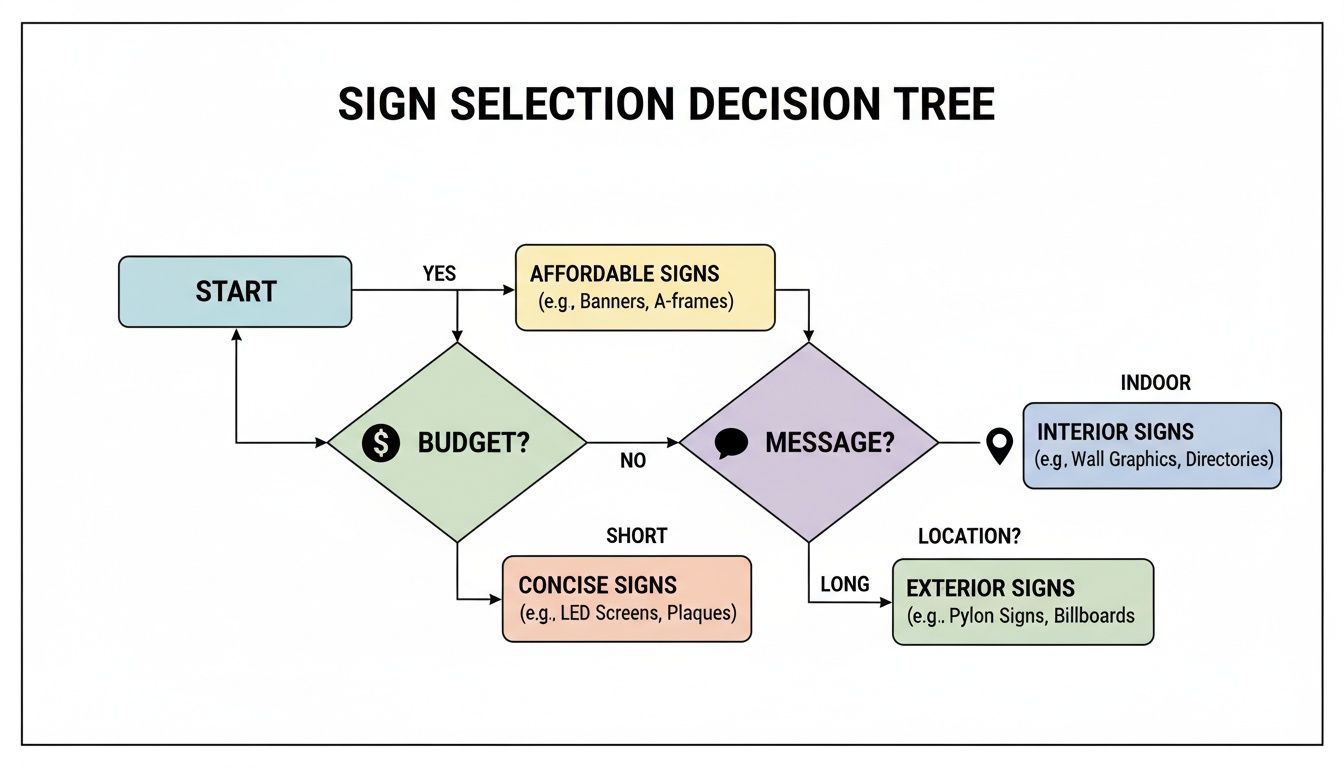
As you can see, your specific day-to-day needs directly influence which sign will give you the best bang for your buck.
Actionable Do's and Don'ts
Putting these principles into practice is pretty straightforward. The goal is always clarity over cleverness. If your message is too complex or tries to do too much, it will absolutely fail the 3-second test.
A sign's message should be a headline, not a paragraph. If you can't read it and get it in three seconds, it's not working. Your objective is to create an instant call to action.
Here are some clear guidelines to live by:
Message Board Design Do's:
- Keep it Short: Aim for seven words or less. Think like a billboard. "Hot Coffee & Fresh Donuts Now" is perfect.
- Use a Clear Call to Action: Tell people exactly what you want them to do. "Stop In For Our 50% Off Sale" is direct and gets results.
- Focus on One Idea: Each message needs a single, clear purpose. Trying to announce a sale and new hours just creates confusion.
Message Board Design Don'ts:
- Avoid Clutter: On a letter board, don't fill every single track. On a digital sign, resist the urge to use multiple fonts and colors. Less is more.
- Use Animation Sparingly: For digital signs, flashing or scrolling text can be more distracting than helpful, and sometimes even dangerous for drivers. A simple, static message is often safer and more effective.
- Don't Use All Caps: It might seem like it would be easier to read, but text in ALL CAPS can actually be harder for our brains to process quickly. Use standard title case for much better readability.
Navigating Permits and Installation Rules
Before you can hang that last letter or flip the switch on your new message board sign, there's a crucial step you absolutely cannot skip: getting friendly with the local rules. This isn't just about tedious paperwork; it's a process built to keep businesses safe and public spaces uncluttered. Skipping this step can lead to some serious headaches, including hefty fines, being forced to take your sign down, and major project delays.
Think of sign permits as the "building codes" for your advertising. Just about every city and county has zoning ordinances that spell out exactly what you can and can't do with exterior signs. These rules are there for a reason—to maintain the look and feel of a commercial district, keep drivers from getting distracted, and ensure everyone’s safety.
Understanding Local Zoning and Sign Ordinances
Your first move should always be a call to your local city or county planning department. They're the ones who hold the rulebook for your specific address. Never assume the rules for the business down the street apply to you, because they can change dramatically from one property to the next.
You'll almost certainly run into restrictions on a few key things:
- Size Limitations: Most ordinances tie the maximum square footage of your sign to the length of your storefront or property line.
- Height and Setback Rules: Expect strict limits on how tall your sign can be and how far back it must sit from the road or sidewalk.
- Placement Restrictions: You might find you can't place a sign where it could block the view at an intersection or create a blind spot.
When it comes to digital message board signs, the rules usually get even tighter. Many towns have specific limits on brightness (measured in nits) to prevent blinding glare, especially after dark. Some also control how often you can change the message or ban certain animations to keep driver distraction to a minimum.
Trying to figure out local sign codes can feel like a maze. A professional sign company often takes care of the whole permitting process, from filling out the application to scheduling the final inspection. It saves you time and helps you dodge the common mistakes that can completely derail a project.
ADA Compliance for Interior Signs
While most of the permit talk centers on outdoor signs, don't overlook what’s required inside. If your message board is used for wayfinding inside your building—like pointing people to different departments—it has to comply with the Americans with Disabilities Act (ADA).
This means following specific rules for fonts, color contrast, and including tactile text and braille so that everyone can read the information. A quirky chalkboard sign in a cafe probably doesn't need to meet these standards, but a permanent directory sign absolutely does. Getting everything approved can be a complex process, but understanding the basics of sign permit requirements is the best way to get started on the right foot.
The need for clear, regulated signage isn't a new concept. Variable Message Signs (VMS), a type of electronic message board, became common in the mid-20th century for traffic control. By the 1990s and 2000s, thousands were installed on highways worldwide. The history of these public digital signs helped create many of the rules that businesses have to follow today.
Budgeting and Measuring Your Sign's ROI
Buying a new message board sign is a big move, and to make a smart one, you need to understand the numbers behind it. It’s about more than just the upfront cost; it's about seeing that sign as a hardworking asset that actually generates revenue. The goal here is to stop thinking of it as an expense and start seeing it as a profitable marketing tool with a clear Return on Investment (ROI).
Of course, the initial price tag is shaped by a few key things. The type of sign you land on—a classic letter board versus a high-tech digital display—will be the biggest factor. From there, size, material quality, and any cool digital features like remote scheduling software will also influence the final cost.
Breaking Down the Costs and Value
The total investment goes beyond just the sign itself. It's easy to forget about costs like professional installation, any permits your city might require, and the potential for electrical work if you choose an illuminated or digital sign. Think of these as part of the package for creating a durable, long-term asset for your business.
To get a real sense of your sign's impact, it’s crucial to know how to measure marketing ROI properly. This gives you a framework to connect what you spend with the revenue it brings back in. Message boards are a surprisingly big piece of this puzzle, forming a multi-billion dollar industry that powers everything from small-town notice boards to massive digital ad networks.
How to Calculate Your Sign's ROI
Figuring out the ROI on a message board sign doesn't require an accounting degree. It’s really just about watching how the sign changes customer behavior and connecting those changes to your bottom line. You can use some pretty simple, direct methods to see the results unfold.
Here’s a straightforward way to track a specific promotion:
- Create a Sign-Exclusive Offer: Come up with a special deal that you only advertise on your message board. A mechanic, for example, could post something like, "Mention This Sign For 10% Off an Oil Change."
- Track Redemptions: Keep a simple tally of every customer who mentions the sign to get the deal.
- Calculate the Revenue: Multiply the number of redemptions by what you typically make on that service.
- Compare to Cost: See how fast that new stream of revenue pays back the initial cost of the sign.
A sign that pays for itself within the first year is a powerful marketing tool. By running exclusive promotions, you create a direct line between the message on your sign and the money in your register.
This simple method gives you hard data, proving your sign is actively pulling customers through the door. For larger, more permanent installations, you might want to explore the high-impact options offered by business monument signs.
Practical ROI Scenarios
Let’s see how this works in the real world. A restaurant invests in a new digital message board sign and immediately starts advertising a "Taco Tuesday" special. The owner can track the jump in Tuesday sales compared to the weeks before the sign went up and directly attribute that new revenue to their new sign. It's that simple.
Or, think about a local church that uses its new letter board to promote a community bake sale. By counting how many people mention they saw the sign, the church can measure how effective it was at boosting attendance and donations. These examples prove that whether you're driving sales or just community engagement, a sign’s value is something you can actually see and measure.
Real-World Examples from Different Industries
Theory is great, but seeing how real organizations put these signs to work is where the magic happens. The best message board signs aren't just displays; they're problem-solvers, whether that means pulling in the lunch crowd or building a little school spirit. Let's look at a few examples where the right sign made all the difference.
You'll see how each one was a strategic choice, picked to match a specific goal and audience. From high-tech screens to old-school letter boards, the right sign becomes a core part of their daily operations and their connection to the community.
The School Celebrating Student Success
An elementary school was struggling to get important information to parents during the chaos of drop-off and pickup. They also wanted a public way to celebrate their students' wins and get the word out about events like school plays and fundraisers.
The fix? A digital LED sign installed right by the main entrance. This single investment gave them the power to:
- Schedule reminders for holiday breaks or early dismissals weeks in advance.
- Showcase colorful graphics congratulating the "Student of the Month."
- Promote ticket sales for the spring musical with eye-catching animations.
The sign quickly became a point of pride. Parents felt more in the loop, and the kids were thrilled to see their achievements up in lights. It turned a communication problem into a powerful tool for building a more engaged community.
The Church Connecting with Its Community
A historic church on a quiet corner felt a flashy digital sign would clash with its classic, stone architecture. Their goal was connection, not distraction. They chose a traditional, enclosed changeable letter board set in a handsome wood frame that complemented the building's character.
This simple choice allowed them to have a weekly conversation with the neighborhood in a way that felt authentic and personal. Each week, they'd update it with:
- Service times and the upcoming Sunday's sermon topic.
- Uplifting quotes that gave passersby a moment of reflection.
- Announcements for community food drives or volunteer days.
The classic letter board reinforced the church's timeless, welcoming vibe and became a beloved local landmark. It proved that a simple, heartfelt message can be just as powerful as a dynamic one.
The most effective sign isn't always the most technologically advanced. It's the one that best reflects your organization's identity and speaks directly to the community you serve.
The Retail Store Driving Urgent Sales
A trendy boutique in a busy downtown district needed a way to create excitement and compete with the instant gratification of online shopping. They installed a bright, vertical LED sign right next to their main window, perfect for high-impact, short-term promotions.
Now, on a slow Tuesday afternoon, the manager can instantly create a burst of foot traffic by posting a message like, "FLASH SALE! 40% OFF ALL JEANS – TODAY ONLY!" The vibrant, impossible-to-ignore display literally stops people on the sidewalk, turning window shoppers into paying customers. This direct, immediate call to action transforms quiet moments into profitable ones.
Common Questions About Message Board Signs
Whenever you're thinking about a new sign, a few questions always pop up. It's smart to ask them. Getting solid answers is what turns a purchase into a confident investment that works for your business.
Let's walk through some of the most common things business owners want to know. Getting these details right is the key to picking a sign that becomes a reliable marketing workhorse for years to come.
How Long Do LED Message Board Signs Last?
Modern commercial-grade LED message board signs are built to be permanent fixtures, not temporary solutions. A high-quality display is often rated for 100,000 hours or more, which works out to over a decade of continuous, round-the-clock operation.
Of course, that number assumes normal conditions. Things like severe weather and how well you keep up with maintenance will play a part in its actual lifespan. The best rule of thumb is to look for a strong manufacturer's warranty—that’s a direct reflection of the company’s confidence in its own product.
The most significant advantage of today's digital signs is the ability to control them from anywhere. This remote access transforms how businesses can respond to market changes, making message updates instant and effortless.
Can I Update a Digital Sign From Anywhere?
You absolutely can, and it's a game-changer. The old way of updating signs is gone. Modern digital signs connect to the internet and run on cloud-based software you can access from pretty much any device with a web browser.
This means you can schedule an entire week of promotions from your office desktop, tweak a message from your tablet at home, or even push a last-minute special from your phone while you're out running errands. It gives you the agility to react to business opportunities in real-time.
Think about a restaurant owner who gets a great deal on fresh fish from a supplier. They can create and publish a new "Catch of the Day" special right from their phone, and it can be live on their sign before they even get back to the kitchen.
What Is the Best Way to Maintain a Changeable Letter Sign?
The classic changeable letter sign has a timeless appeal, and keeping it looking sharp just takes a little routine care. A few simple habits will prevent it from looking dated and ensure your message is always crisp and easy to read.
Here are a few practical tips to follow:
- Clean the Sign Face Gently: Every so often, wipe down the sign face and letter tracks with a soft cloth and some mild, soapy water. Stay away from harsh chemicals or abrasive sponges, which can permanently scratch the surface.
- Store Letters Properly: Don't just toss your letters in a bucket. Keep them organized in a proper storage case, laid flat and out of direct sun. This simple step prevents them from warping, getting brittle, or fading.
- Keep Tracks Clear: Debris loves to collect in the letter tracks. Regularly check for dirt, leaves, or cobwebs that make sliding letters in and out a pain. A small, stiff brush works perfectly for clearing them out.
Good maintenance doesn't just make your sign look better; it also makes your letter sets last longer, which saves you money on replacements down the road.
Ready to put a powerful message to work for your business? The team at On Display Signs, Inc. manages everything from design to installation, ensuring you get the perfect sign to attract more customers. Find out more at https://www.ondisplaysigns.com.