An outdoor lighted box sign is one of the most powerful and practical marketing tools you can invest in. At its core, it's a self-contained cabinet with internal lighting that makes your branded sign face glow. Often called a cabinet sign, it’s designed to work around the clock, making sure your business gets seen no matter the weather, day or night. That constant presence makes it one of the smartest investments for building local awareness.
Why Your Business Needs an Outdoor Lighted Box Sign
Picture your business on a busy street. Without a bright, guiding light, potential customers can easily drive right past, especially after the sun goes down. An outdoor lighted box sign is your lighthouse—a constant, reliable beacon that cuts through the visual clutter and makes your location impossible to miss.
It acts as your silent, 24/7 salesperson, working tirelessly to grab attention and pull foot traffic right to your front door. This isn't just about visibility; it's about cementing a professional and permanent presence in your community. For example, a new dental office on a major road can use a crisp, brightly lit sign to immediately establish itself as a legitimate, professional choice, attracting new patients who see it on their daily commute.
The Impact of Constant Visibility
A well-designed sign does more than just show your name. It builds customer trust and elevates how people see your brand. When your business is brightly lit and clearly marked in the evening, it signals stability, safety, and success.
This constant visibility has a direct impact on your bottom line. The global market for these signs is valued at over USD 1,235.75 million for a reason—they work. In North America especially, illuminated signs are proven to boost foot traffic by as much as 20-30% for retail businesses, making them a true powerhouse. An actionable insight here is to budget for an illuminated sign as part of your startup costs, not as an afterthought, to maximize your location's potential from day one.
A lighted box sign is more than just an advertisement; it's a landmark. It helps customers find you, remember you, and choose you over the competition lurking in the shadows.
As a critical part of your property, your sign's upkeep should be included in your regular commercial building maintenance checklist. Keeping it clean and functional protects an investment that consistently delivers returns. You can explore more options for physical branding by reading our guide on building signs for business.
To really drive the point home, let's break down the core benefits.
Key Benefits of an Outdoor Lighted Box Sign
This simple table summarizes the value an illuminated cabinet sign brings to the table, turning a one-time cost into a long-term asset.
| Benefit | Business Impact |
|---|---|
| 24/7 Visibility | Attracts customers day and night, maximizing your exposure. |
| Increased Foot Traffic | Directly guides potential buyers to your physical location. |
| Enhanced Brand Image | A professional, illuminated sign builds trust and credibility. |
| Cost-Effective Marketing | Provides continuous advertising for a one-time investment. |
Each of these benefits translates directly into more opportunities, more customers, and a stronger brand presence in your local market.
Understanding the Anatomy of a Lighted Box Sign
From the street, an outdoor lighted box sign looks simple enough. But its real strength comes from a few core components working together—just like a well-built house needs a solid frame, good siding, and reliable power to stand up to the weather. For a cabinet sign, it all comes down to the frame, the face, and the lights inside.
Each piece is essential. Get the combination right, and you have a sign that not only looks fantastic but also lasts for years, through rain, wind, and sun. Understanding how these parts fit together helps you make a much smarter investment in your business's visibility.
This quick map shows you exactly how a well-made sign pays off.
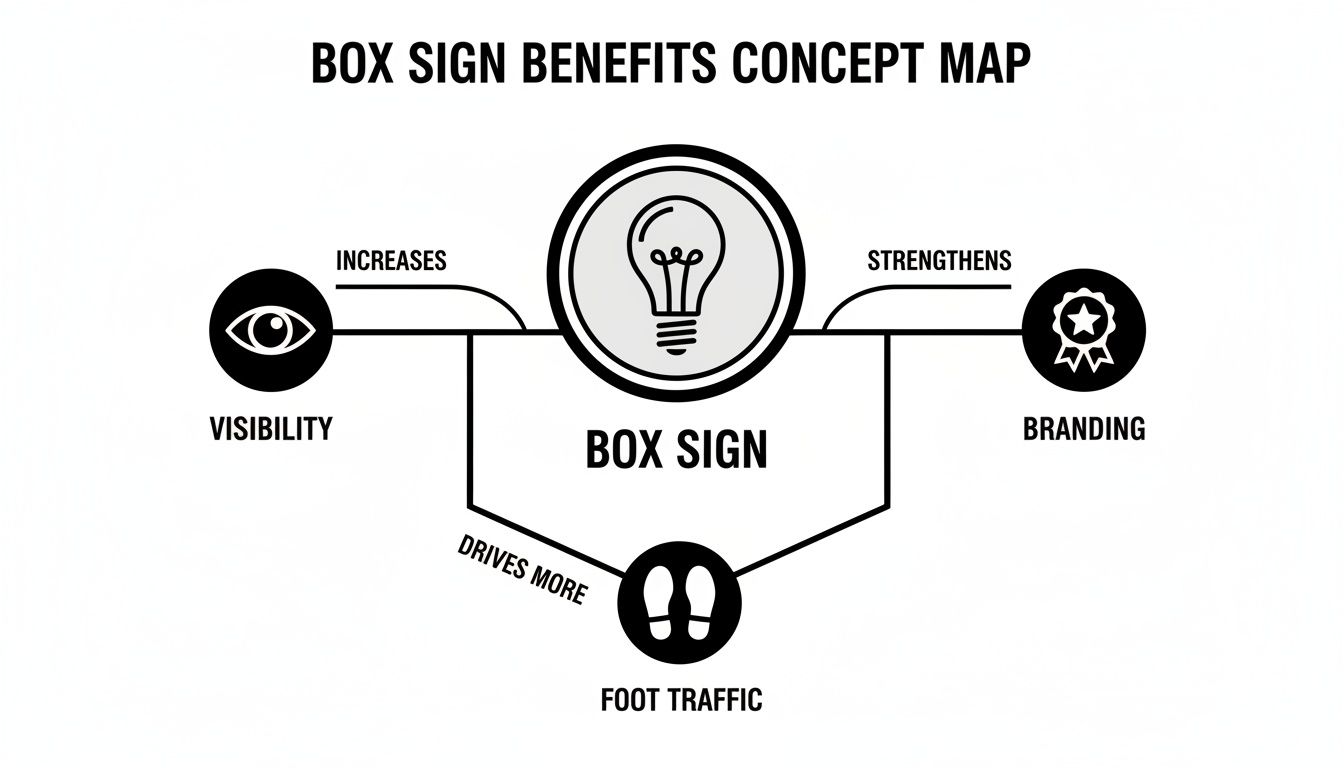
As you can see, it’s a direct line from a quality sign to real business results: better visibility, stronger branding, and more people walking through your door.
The Foundation: The Sign Cabinet
The cabinet is the backbone of your sign. It’s the metal box that holds all the lighting components and supports the sign face. The material you choose here is crucial for durability, especially when it’s up against wind, rain, and shifting temperatures year after year.
There are really two main choices for the cabinet:
- Aluminum: This is the industry go-to for a reason. It's lightweight, incredibly resistant to corrosion, and versatile. Aluminum won't rust, which makes it a low-maintenance and long-lasting choice, especially in places with a lot of rain or humidity. A practical example is a coastal business that must contend with salty air; an aluminum cabinet is the only sensible choice to prevent rapid deterioration.
- Steel: For huge signs or those installed in notoriously high-wind areas, steel is the answer. It offers unmatched strength and rigidity. The trade-off is that it's much heavier and needs special protective coatings to keep rust at bay.
For most businesses, an aluminum cabinet hits that sweet spot of strength, longevity, and cost.
The Face: Presenting Your Brand to the World
The sign face is where your brand finally comes to life. It’s the translucent panel that lights up with your logo and message, and the material you pick has a huge impact on both its look and its toughness. The graphics are typically applied using a high-performance translucent vinyl or are printed directly onto the face itself.
Your sign face is the first impression you make on countless potential customers. Choosing a material that resists yellowing, cracking, and fading is essential for maintaining a professional image.
Two materials have really proven themselves in the industry:
- Acrylic: Known for its sharp, glossy finish and fantastic light diffusion, acrylic gives you a crisp, high-end look. It's an excellent choice for most standard-sized storefront signs where a clean appearance is the top priority.
- Polycarbonate: This stuff is the undisputed champion of toughness. It’s virtually unbreakable, making it the perfect pick for signs in high-traffic areas, places that get hail, or anywhere vandalism might be a concern. A practical example is a sign for a gas station located right next to a busy highway, where flying debris from trucks could easily shatter a less durable material.
The right material for your sign face really comes down to where it will be installed and what your priorities are. Picking the right material isn't just about looks; it's a strategic decision that balances aesthetics, function, and your budget.
Sign Face Material Comparison
To make the choice clearer, here’s a quick breakdown of how these materials stack up.
| Material | Best For | Key Advantages | Considerations |
|---|---|---|---|
| Acrylic | Standard storefronts, high-end look | Excellent clarity, glossy finish, superior light diffusion | Can become brittle in extreme cold, less impact-resistant |
| Polycarbonate | High-traffic areas, large signs, hail-prone regions | Virtually unbreakable, excellent impact resistance, UV resistant | More expensive than acrylic, can sometimes scratch more easily |
Ultimately, both are great options, but one is usually a better fit depending on your location and specific needs.
You can dive deeper into the properties and best uses for different materials in our complete guide to sign board materials.
The Graphics: How Your Brand Gets Seen
How your logo and text are applied is just as important as the material they’re on. Translucent vinyl graphics are cut to shape and laid on the face, giving you vibrant, solid colors that really pop when the lights come on. For more complex designs with photos or color gradients, we use full-color digital prints to capture every last detail.
This focus on quality is driving the whole industry. In fact, the outdoor lighted signs market is expected to hit $2.5 billion by 2025, largely because businesses across North America and Europe demand signs that are both durable and visually impressive.
Choosing Your Illumination: LED vs. Fluorescent
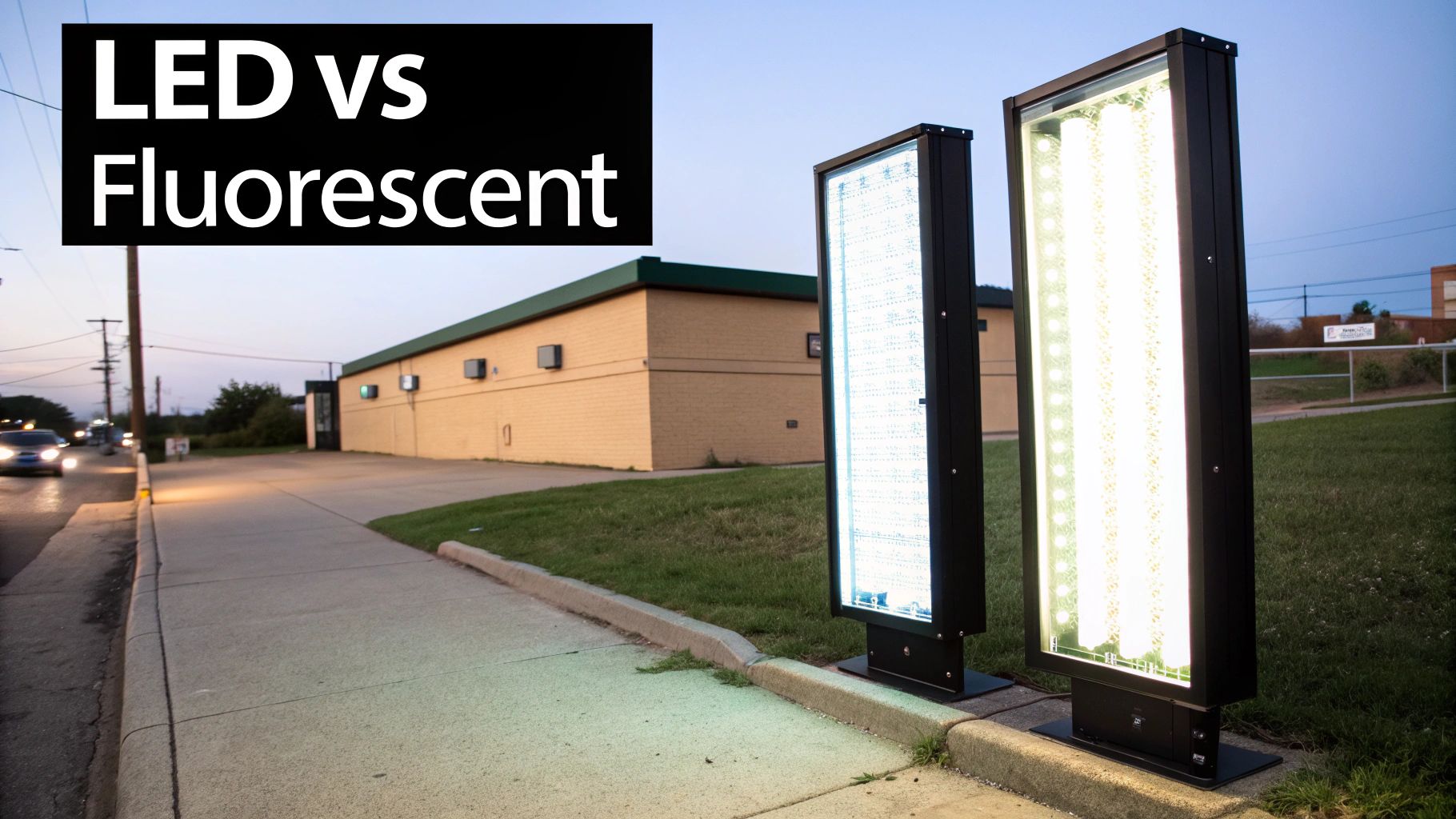
The light inside your outdoor lighted box sign is its engine—it’s what makes your brand shine and grabs the attention of every passerby. While both fluorescent and LED technologies can light up a sign, the choice between them is a big one. This decision impacts not just how your sign looks tonight, but how much it costs to run and maintain for years to come.
Think of it like choosing between an old, gas-guzzling car and a modern, efficient electric one. Both get you from A to B, but one does it with far greater reliability, efficiency, and long-term savings. In the world of sign illumination, LED is that modern, high-performance option.
The Financial Case for LED Lighting
The most compelling argument for choosing LED lighting is the direct and substantial impact on your bottom line. Energy-efficient LED technology is a game-changer, slashing power costs by up to 80% compared to older fluorescent systems. As regulations continue to push for greater efficiency, LEDs have become the undisputed industry standard.
Let's translate that into real money. Imagine your old fluorescent sign costs about $45 per month to operate. A comparable LED-powered sign could drop that cost to just $10 per month. Over a single year, that’s a savings of $420, and over a decade, it adds up to a staggering $4,200. Those are real dollars you can put right back into your business.
Longevity and Lower Maintenance
Beyond the monthly energy bill, the lifespan of your sign's lighting has a massive effect on its total cost of ownership. Maintenance isn't free—it requires time, labor, and often specialized equipment like a bucket truck to access your sign.
Here’s how the two technologies stack up:
- LED Lifespan: LEDs are built for the long haul, rated for 50,000 to 100,000 hours of continuous operation. That’s easily over a decade of nightly use without needing a replacement.
- Fluorescent Lifespan: Fluorescent bulbs have a much shorter life, typically lasting around 10,000 to 15,000 hours. This means you'll be replacing bulbs and ballasts every couple of years.
Each time a fluorescent bulb burns out, it creates an unprofessional look with dark spots on your sign. With LEDs, you get a reliable, worry-free solution that keeps your sign looking perfect for years, eliminating the recurring cost and hassle of frequent service calls.
Choosing LED isn't just an upgrade; it's a strategic investment in reliability. You’re buying peace of mind and ensuring your brand's first impression is always bright and consistent.
Superior Performance and Visual Quality
An outdoor lighted box sign has to perform flawlessly in all conditions, from freezing winter nights to scorching summer days. This is another area where LED technology leaves fluorescent in the dust.
Fluorescent lights are notoriously sensitive to cold weather. Their brightness can dim significantly, and they often flicker or fail to start at all in low temperatures. In contrast, LEDs are solid-state devices that are completely unaffected by the cold, delivering consistent, brilliant light no matter the season. For a business in a northern climate like Minneapolis or Chicago, this reliability is not a luxury—it's a necessity for year-round marketing.
Furthermore, LEDs provide a cleaner, more uniform light across the entire sign face. This prevents the "hot spots" or shadowy areas so common with aging fluorescent tubes, ensuring your logo and message are always crisp, clear, and easy to read. The bright, vivid illumination from a modern digital LED sign makes a huge difference in how customers perceive your brand from a distance.
Navigating Sign Permits and Installation
A brilliant outdoor lighted box sign is a huge win for your business, but getting it from a great idea to a glowing reality involves more than just design. Before it can light up your storefront, you have to get through the maze of local regulations, permits, and professional installation. This is the part business owners often overlook, but it’s what makes sure your sign is legal, safe, and built to last.
Think of the permit process like getting blueprints approved before you build a house. You can't just add a new room without the city's blessing, and you can't install a commercial sign without following local codes. Trying to skip this step is a recipe for disaster—it can lead to hefty fines, being forced to tear the sign down, and a completely wasted investment.
Understanding Local Sign Codes and Zoning Laws
Every single city, county, and sometimes even specific shopping districts have their own rulebook, known as zoning ordinances and sign codes. These rules control just about every part of your outdoor lighted box sign, and trying to decipher them on your own can be a real headache. That’s where a professional sign partner becomes essential.
Here are a few of the common restrictions you’ll run into:
- Size and Height: Cities have strict limits on a sign’s maximum square footage and how high it can be mounted. A sign for a small shop in a historic district will have totally different size rules than one for a massive warehouse in an industrial park.
- Placement and Setbacks: Codes dictate how far a sign has to be from the road, property lines, and other signs. This is all about preventing visual clutter and keeping things safe for the public.
- Brightness (Nit Rating): Nobody wants a sign that blinds drivers or keeps the neighbors up at night. Many cities regulate how bright an illuminated sign can be, especially after dark.
- Projections: There are almost always rules about how far a sign can stick out from the building, particularly if it hangs over a public sidewalk.
The global outdoor signage industry is booming, with forecasts expecting it to hit USD 69.8 billion by 2035. This massive growth has led to even tighter regulations, making professional guidance more important than ever. You can dive deeper into how to get a sign permit and manage these requirements in our detailed guide on the topic.
The Permit Application Process
Getting a sign permit isn't a casual request; it’s a formal process that requires a stack of detailed paperwork and a solid grasp of how the city works. This is where partnering with an experienced sign company like On Display Signs really pays off. We handle all the nitty-gritty details so you don't have to.
Our typical workflow looks like this:
- Code Research: We start by digging into the specific sign codes for your exact address. No guesswork allowed.
- Technical Drawings: Our team creates professional blueprints—"sign drawings"—that detail everything: dimensions, materials, mounting methods, and electrical specs.
- Application Submission: We put together the entire application package, including the drawings, property owner consent forms, and any other required documents, and submit it to the local planning or building department.
- City Review and Approval: We become the point of contact with city officials, fielding any technical questions and steering the application through the approval process for you.
A correctly filed permit application is your project's passport to approval. Missing information or incorrect specifications can lead to costly delays and rejections, highlighting the importance of professional management.
Safe Installation and Electrical Work
Once the permit is in hand, it's time for installation. This is absolutely not a DIY job. It requires skilled technicians who have the right equipment and a deep understanding of structural and electrical safety.
The two most common ways to mount an outdoor lighted box sign are flush-mounting, where the sign is attached flat against the building, and pole-mounting, where it’s raised up on one or more poles to be seen from a distance. An actionable insight is to confirm your lease agreement allows for the type of mounting you desire; some landlords prohibit pole signs or have strict rules for facade attachments.
Getting the electrical work right is just as crucial. A licensed electrician has to run the wiring to power your sign, making sure every connection meets all outdoor electrical codes. This ensures your sign runs safely and efficiently, without any risk of shorts or fire hazards. By managing the permits and installation, we make sure your project is smooth and compliant from start to finish.
How Different Businesses Win with Lighted Box Signs
A lighted box sign isn't a one-size-fits-all tool. It's a chameleon, adapting its purpose to match the goals of entirely different industries. While the nuts and bolts of the sign might be the same, the strategy behind how a retail shop, a restaurant, or a law firm uses it couldn't be more different. These real-world examples show how a simple cabinet sign becomes a powerhouse for business growth.
Driving Foot Traffic for Retailers
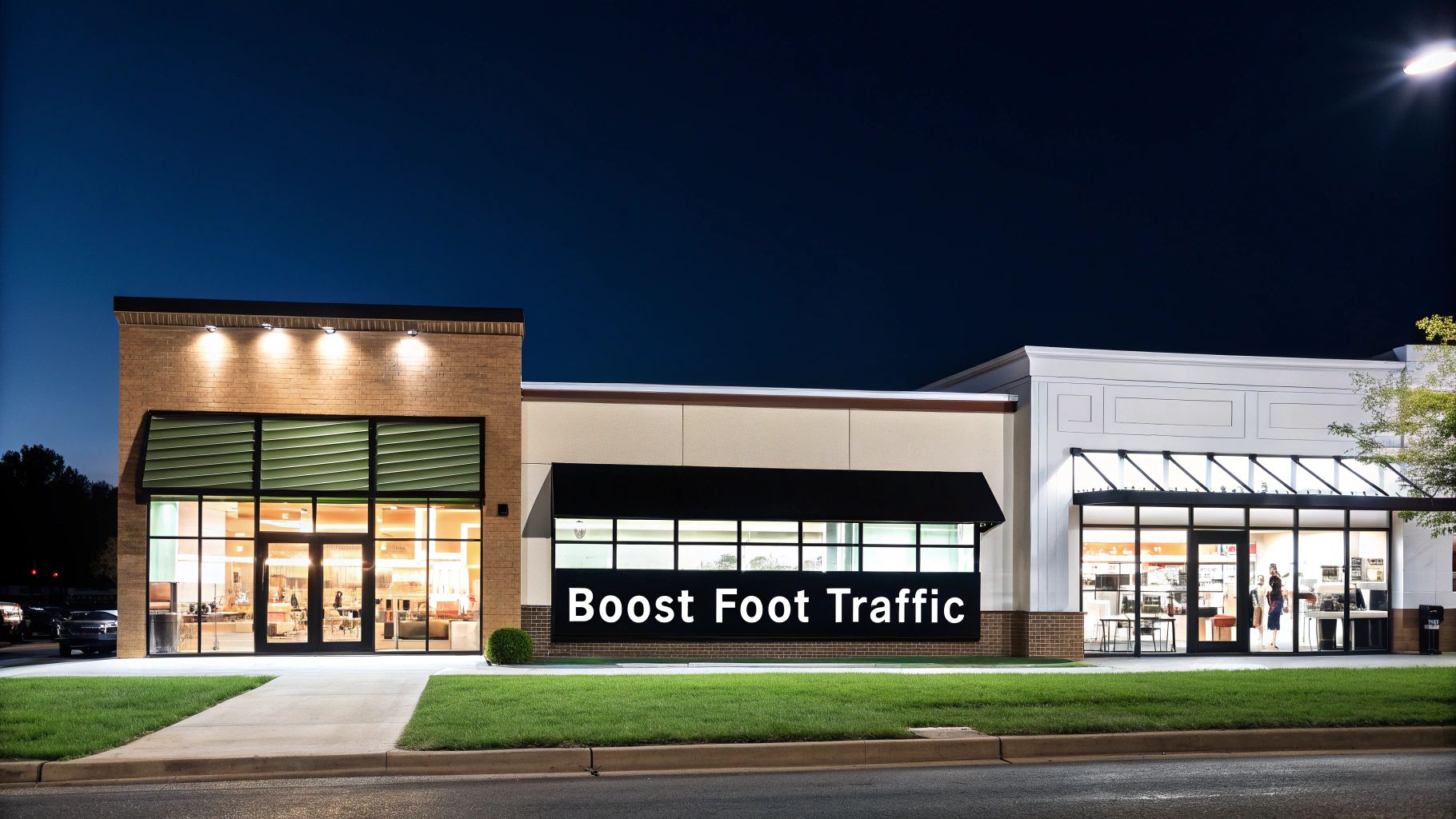
For any retail store in a busy shopping center, the biggest fight is for attention. You're competing with dozens of other storefronts, trying to catch the eye of distracted shoppers and passing cars. A vibrant lighted box sign, especially one hoisted high on a pylon, acts as a powerful beacon. It cuts right through the visual clutter and becomes a landmark.
Picture a clothing boutique tucked away in a sprawling strip mall. Its brightly lit logo on a cabinet sign makes it impossible to miss from the main road, guiding customers straight to its location before they even see the front door. That constant visibility keeps the store top-of-mind, turning passing traffic into paying customers.
Creating Ambiance for Restaurants
Restaurants sell an experience, and that experience starts right at the curb. An outdoor lighted box sign is often the very first impression, setting the tone for the entire meal. A warmly lit sign with an appetizing logo can be the single deciding factor for a hungry family trying to choose between you and the place next door.
A family-owned Italian restaurant, for example, can use a sign with warm, soft light to broadcast a cozy and welcoming vibe. It builds an emotional connection, promising a comfortable dining experience before anyone even steps inside. You can see more strategies like this in our guide to the perfect outdoor restaurant sign.
A restaurant's lighted sign does more than state its name; it sells an experience. The color, brightness, and design work together to communicate the brand's personality and promise of quality.
Building Trust for Professional Services
For professional services like law firms, dental clinics, or financial advisors, the sign plays a totally different role. The goal isn't just to get noticed; it's to build credibility and trust. A sleek, modern lighted box sign projects an image of professionalism, stability, and expertise.
Think about a medical clinic with a clean, minimalist cabinet sign—crisp lettering and a simple, illuminated logo. This polished presentation immediately reassures potential patients they're in a capable and trustworthy place. The sign’s understated quality reflects the high standard of care found inside, quietly reinforcing the brand's identity.
Your Signage Project From Concept to Reality
Bringing a great idea for a sign to life is a journey. It’s a real partnership that moves from a simple conversation all the way to a finished, glowing sign on your building. We've built our entire process around making that journey transparent, collaborative, and honestly, pretty painless for you.
Our job is to handle all the tricky details behind the scenes so you can stay focused on running your business. Let's walk through how we get it done.
Step 1 Consultation and Design
Everything starts with a conversation. We sit down to really listen and understand your business, your brand, and what you need this sign to accomplish. It’s about more than just slapping a logo on a box; we want to know the message you’re sending to every person who drives by.
Once we have that foundation, our designers get to work, creating a visual proof that shows you exactly how the final outdoor lighted box sign will look on your building. This isn't just a sketch—it's a preview of the finished product, making sure we're all on the same page before a single piece of metal is cut.
Step 2 Permitting and Approvals
Next up is the part everyone dreads: permits. Navigating municipal sign codes can be a maze of paperwork, technical drawings, and confusing regulations. We take that entire burden off your shoulders.
Think of us as your project's ambassador to the city. We handle the paperwork, follow up on the application's status, and resolve any questions from planners, ensuring a smooth and timely approval without you ever having to step foot in a municipal office.
Our team knows the process inside and out. We manage the applications, communicate with city officials, and make sure everything is compliant, preventing the delays and headaches that can easily derail a project.
Step 3 Fabrication and Craftsmanship
With the city's green light, your sign moves into our production facility. This is where the design on the screen becomes a physical reality. Our skilled craftspeople use only top-notch materials, from the structural aluminum for the cabinet to the tough polycarbonate or acrylic for the sign face.
Every sign is built with an eye for detail and durability:
- Precision Cutting: We use advanced equipment to cut every component to exact specifications, ensuring a perfect, seamless fit.
- Expert Assembly: Our team carefully builds the sign cabinet and installs the bright, energy-efficient LED lighting systems.
- Graphic Application: We apply your branding using high-performance translucent vinyls or digital prints that deliver vibrant, fade-resistant color for years to come.
Step 4 Professional Installation
The final piece of the puzzle is installation. Our professional crew arrives on-site to mount your sign safely, securely, and exactly where it’s supposed to go. They’re trained to handle any mounting challenge and manage the final, crucial electrical hookups to bring your sign to life.
This complete, end-to-end process guarantees your project is a smooth experience, delivering a final product that helps your business stand out and get noticed.
Common Questions About Outdoor Lighted Box Signs
It makes sense to have questions before investing in a new marketing asset. An outdoor lighted box sign is a significant purchase, but once you understand its long-term value, durability, and flexibility, you see just how powerful of a tool it is.
We’ve gathered a few of the most common questions we hear to give you clear, straightforward answers and help you make the best decision for your business.
What Is the Typical Cost?
Trying to nail down an exact price for a lighted box sign is tricky because so much depends on the final specs. The final cost comes down to a few key variables: the overall size, the face materials you choose (like acrylic vs. impact-resistant polycarbonate), and how complex your custom graphics are.
But it’s more useful to think of it as a long-term investment, not an expense. A one-time investment in a quality lighted sign gives you continuous advertising, 24 hours a day, for years to come. When you stack that up against the recurring monthly bills for digital ads or print campaigns, the return on a cabinet sign becomes obvious. It pays for itself over and over in visibility and foot traffic.
How Long Will My Sign Last?
A properly built outdoor lighted box sign is made to be a workhorse. It’s engineered for durability and designed to last for well over a decade. The aluminum cabinet is completely rust-proof and built to handle whatever the weather throws at it, while modern LED lights are rated for 50,000 hours or more. That’s years of bright, reliable nightly operation before you even have to think about them.
A little bit of simple maintenance goes a long way, too. To make sure your sign always looks sharp and your message shines bright, a regular cleaning of the face is all it takes. An actionable tip is to schedule a professional cleaning twice a year, typically in the spring and fall, to remove grime and ensure maximum brightness. You can find some great professional tips for keeping exterior glass and acrylic surfaces streak-free that will help. With just minimal upkeep, your sign will stay a vibrant and effective marketing tool for a very, very long time.
Can I Update My Existing Sign Graphics?
Absolutely. In fact, this is one of the biggest advantages of an outdoor lighted box sign. If your business rebrands, changes its name, or you just want to freshen up your look, you don’t need to start from scratch and replace the whole thing.
The ability to easily swap out the sign face means your initial investment in the cabinet and lighting continues to pay dividends. Your sign can evolve right alongside your business.
We simply create a new sign face with your updated graphics and install it into the cabinet you already have. This approach is far less expensive and much faster than a full sign replacement, making it a smart, flexible solution for any growing business.
Ready to make your business impossible to miss? The team at On Display Signs, Inc. manages the entire process—from design and permitting to fabrication and installation—to deliver a stunning outdoor lighted box sign that works for you 24/7. Get your free quote today