Your outdoor wall sign is more than just a name on a building; it’s your business's very first handshake. It’s a silent salesperson out there working 24/7, building your brand, announcing your location, and pulling people in off the street. In a crowded marketplace, a well-made sign is what makes you stand out.
Your Guide to Outdoor Wall Signage
Think of your sign as the cover of a book. Long before anyone decides to walk through your doors, they’ve already sized you up based on what they see outside. A faded, cracked, or poorly designed sign screams neglect. But a sharp, clean, and professional sign instantly communicates quality and an eye for detail. It’s one of the most critical investments you can make in how customers perceive you.
This isn’t just an opinion—it's a massive, growing market. The global outdoor signage industry is expected to jump from USD 32.1 billion in 2025 to almost USD 69.8 billion by 2035. That’s a steady growth rate of about 8% every year, fueled by new city infrastructure and better sign technology. You can discover more insights about the signage market on futuremarketinsights.com.
The Real Jobs Your Sign Does
To get the right sign, you need to know what it’s supposed to be doing for you. It's not just there to look good; it's a strategic asset with a few very specific jobs. A truly effective sign pulls its weight by mastering three key functions at once.
- Builds Your Brand Identity: Your sign is the most public face of your brand. Its colors, typography, and the materials it's made from should perfectly match your company's vibe. For example, a law firm might choose classic, brushed metal letters to convey stability, while a new café might opt for a brightly colored, illuminated sign to create an inviting, energetic feel.
- Announces Your Location: This is the most basic job, but it’s vital. A sign quite literally tells people, "We are right here." For businesses buried in strip malls or located on hectic streets, a clear, visible sign is the only way to cut through the visual clutter and help customers find you without frustration.
- Drives Foot Traffic: A great sign doesn't just identify; it invites. Studies have shown that a huge percentage of first-time customers walk into a business based on its sign alone. It's a direct call to action, turning people just passing by into actual customers.
A great outdoor wall sign doesn’t just mark a location; it creates a destination. It’s the visual cue that transforms a simple address into a place of business, inviting interaction and building recognition from the moment it’s seen.
When you start thinking about these three core functions, your sign stops looking like an expense. You begin to see it for what it is: a hard-working investment in your brand’s daily success.
Choosing the Right Materials for Durability and Style
The foundation of a great outdoor sign isn’t just the design—it’s the material you build it from. Think of it like building a house; you’d never use interior drywall for an exterior wall facing the elements. The same logic applies here. The right material makes sure your sign not only looks professional on day one but also holds up to years of sun, rain, and wind.
Picking the right material is really a balancing act between four key factors: durability, aesthetics, weight, and cost. Each option brings a different mix of these traits to the table, so the goal is to match the material to your specific location, your brand’s personality, and your budget. What works for a sleek tech company in a modern office park might be all wrong for a rustic cafe on a historic main street.
At the end of the day, your sign has three core jobs to do. It establishes your brand, announces your presence, and gets people in the door. The material you choose has a direct impact on how well it pulls off all three.
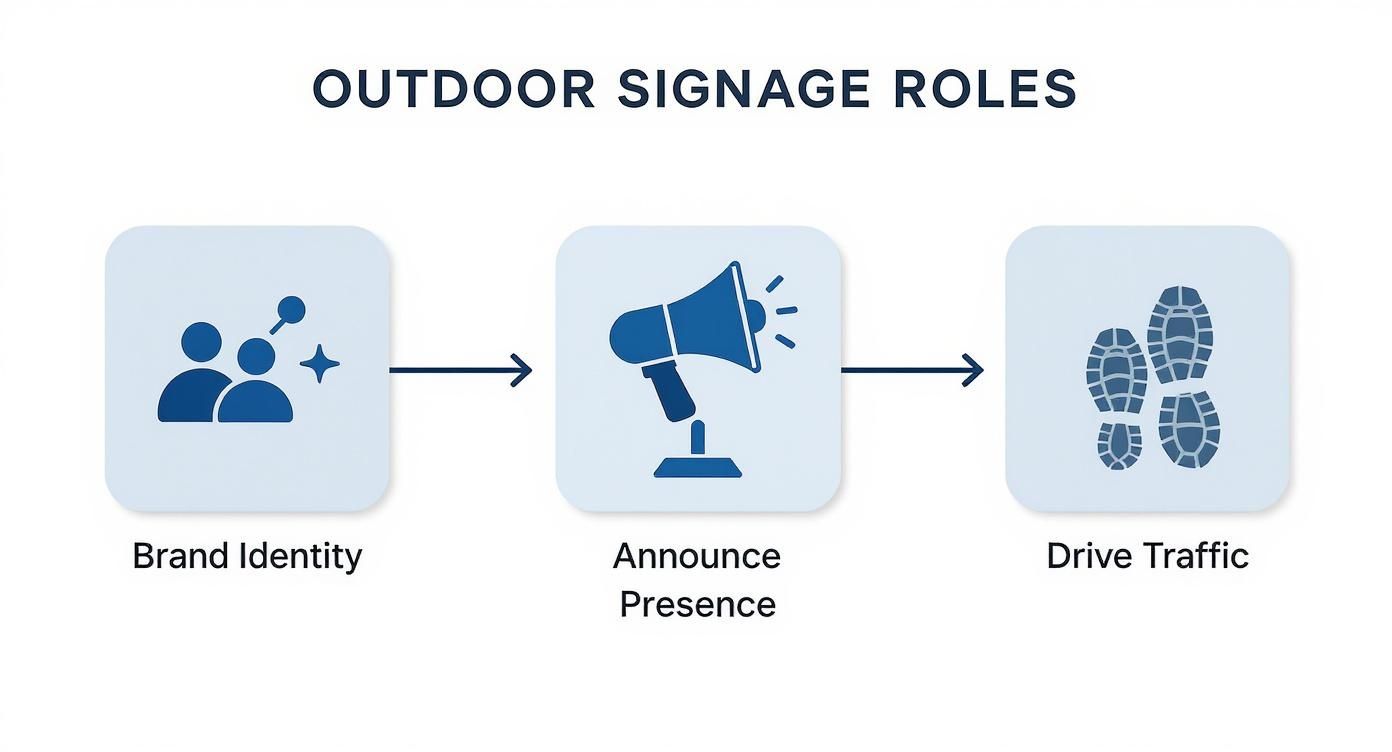
As you can see, these fundamentals are what drive real-world results, and your material choice is the very first step in making that happen.
Choosing the right material for your outdoor sign can feel overwhelming, but breaking it down by their core strengths makes the decision much clearer. Below is a quick comparison of the most common options to help you see how they stack up against each other.
Comparing Popular Outdoor Signage Materials
A practical comparison of common materials for outdoor wall signage, detailing their durability, cost, and best applications to help you choose wisely.
| Material | Key Benefits | Common Applications | Relative Cost |
|---|---|---|---|
| Aluminum Composite (ACM) | Lightweight yet rigid; smooth, modern finish; highly weather-resistant. | Storefronts, real estate signs, modern architectural signage. | $$ |
| Acrylic | Glass-like appearance; vibrant colors; excellent for 3D and lit signs. | Dimensional logos, high-end retail, illuminated channel letters. | $$$ |
| Stainless Steel | Extremely durable; premium, timeless look; resists rust and corrosion. | Corporate buildings, banks, law firms, prestige architectural signs. | $$$$ |
| Brushed Aluminum | Sophisticated, clean aesthetic; lightweight and corrosion-resistant. | Interior and exterior logos, directional signs, professional offices. | $$$ |
| HDU (High-Density Urethane) | Looks like wood but won't rot or crack; easily carved and painted. | Historic districts, parks, rustic-themed businesses, carved signs. | $$$ |
Each of these materials tells a different story about your brand. Let's dig a little deeper into what makes each one unique.
Aluminum Composite Material for a Modern Edge
Aluminum Composite Material, usually just called ACM, is a go-to for modern outdoor wall signage. It’s built like a sandwich: a solid plastic core pressed between two thin sheets of aluminum. This smart construction makes it incredibly light but also surprisingly strong and flat.
That perfectly smooth surface is an ideal canvas for crisp graphics and clean lettering, giving any business a sharp, professional look. Better yet, ACM is built to resist weather, rust, and fading from UV light, which means you get a long-lasting sign with minimal upkeep. It’s the perfect pick for businesses that want a contemporary vibe without the high cost or heavy weight of solid metal. If you're interested in this versatile option, you can learn more about the benefits of aluminum composite signage in our detailed guide.
Key Insight: The true value of a material isn't just its upfront price, but its total cost over time. A cheaper material that needs frequent repairs or a full replacement in a few years will ultimately cost more than a durable option that lasts for a decade or more.
Acrylic for Depth and Vibrancy
When you want your colors to really pop with a glossy, almost liquid finish, acrylic is the clear winner. Acrylic signs are known for that vibrant, high-end look and can be fabricated to create stunning 3D effects that literally stand out from the wall.
The material is naturally tough against weather and UV rays, which helps it keep its color and clarity for years without yellowing. Because you can cut it into detailed shapes and logos, acrylic gives you a ton of design freedom. It's often the top choice for dimensional letters mounted right onto a building’s facade, creating an upscale look that immediately catches the eye.
Durable Metals for a Timeless Statement
For a look that communicates permanence, trust, and strength, nothing beats classic metals like aluminum, stainless steel, or bronze. These materials offer unmatched durability and a premium feel that speaks for itself. They typically cost more upfront, but their incredible longevity often makes them a smart long-term investment.
- Brushed Aluminum: Gives you a sophisticated, modern aesthetic that’s both lightweight and naturally corrosion-resistant.
- Stainless Steel: Delivers a powerful, classic appearance and is exceptionally tough against rust and wear, even in harsh climates.
- High-Density Urethane (HDU): This is the modern answer to classic wood. HDU is a rigid foam that can be carved, sandblasted, and painted to perfectly mimic a rustic wood sign, but it won't rot, warp, or crack when exposed to the elements.
Ultimately, the best material for your outdoor wall sign is one that feels true to your brand, can handle your local climate, and makes sense for your long-term budget.
Illumination Options That Maximize Your Visibility
An outdoor wall sign that goes dark at sunset is only doing half its job. Lighting transforms your sign from a simple daytime marker into a 24/7 beacon for your brand. This is about more than just being seen—it’s about projecting professionalism and making sure your business never misses a chance to make an impression.
Choosing the right illumination is a balancing act between aesthetics, your specific location, and your budget. The real goal is to grab attention without being obnoxious. A sign on a busy highway needs a completely different level of brightness than one on a quiet, historic street. Thankfully, modern tech—especially LEDs—gives us incredible flexibility to get it just right.
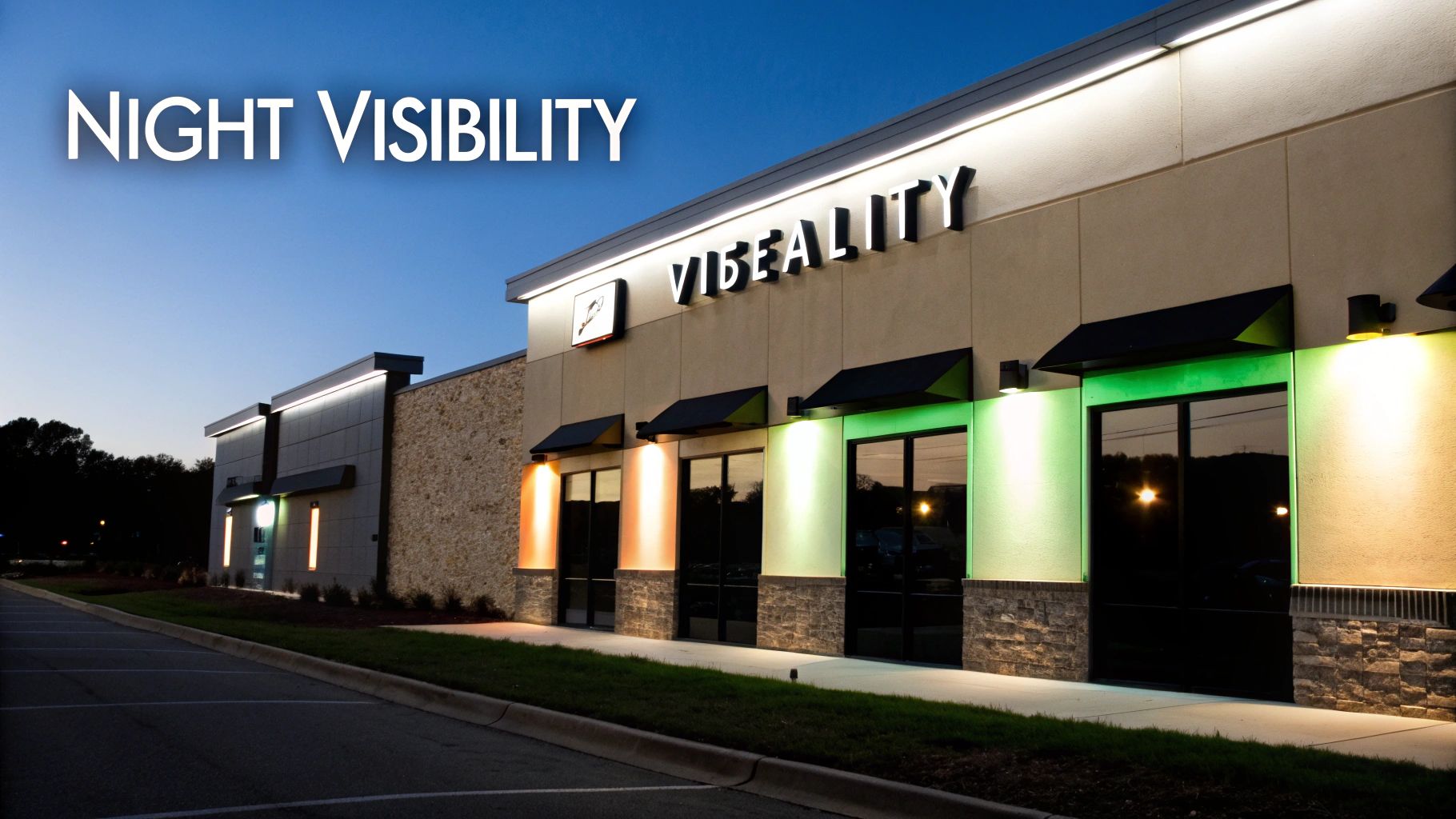
We've come a long way with sign lighting, making high-impact visibility more affordable than ever. The days of fragile neon tubes and power-hungry fluorescent bulbs are behind us. Today, LED technology is the undisputed champion, hands down. It's wildly more energy-efficient, has a much longer lifespan, and offers far more design freedom. An LED-lit sign can easily last for 50,000 hours or more, which means huge savings on maintenance and energy bills over time.
Front-Lit Channel Letters for Bold Impact
When you need your brand name or logo to be unmistakably bright and clear, front-lit channel letters are the industry standard. Think of them as individual, three-dimensional letters with a translucent acrylic face. The LEDs inside shine straight through the front, creating a bold, vibrant glow that’s super easy to read from a distance.
There's a reason this method is so popular—it works. It’s the go-to choice for retail storefronts, restaurants, and pretty much any business that needs to stand out in a crowded commercial strip. The colors pop, and the direct light makes the sign perfectly legible, day or night.
Halo-Lit Letters for a Sophisticated Glow
For a more subtle and elegant vibe, halo-lit (also called reverse-lit) channel letters deliver a premium look. Instead of shining forward, the LEDs are aimed backward, casting light onto the wall the sign is mounted on. This creates a soft, ambient glow—a "halo"—that outlines each letter.
Halo lighting transforms your sign from a simple advertisement into an architectural feature. It suggests quality, sophistication, and attention to detail, making it a perfect match for professional services, upscale boutiques, and high-end hospitality brands.
This technique adds serious depth and dimension, making the letters appear to float right off the wall. The effect is both dramatic and refined, helping position your brand as established and trustworthy.
Internally Lit Sign Cabinets
An internally lit sign cabinet, often just called a lightbox, is a classic and highly effective way to get maximum brightness. It’s essentially a durable box, usually aluminum, with a translucent panel for a face. Rows of LEDs light up the entire face from inside, turning it into a brilliant, eye-catching beacon. If this style interests you, there are some great examples of outdoor lighted box signs that show just how effective they can be.
These signs are fantastic for displaying complex logos, multiple lines of text, or detailed graphics. Because the whole surface glows, they offer outstanding visibility, especially from far away or in high-traffic areas.
Choosing between these options really comes down to your brand’s personality and what you want to achieve. Do you want to shout your presence with bold, direct light, or whisper it with a sophisticated glow? Each technique tells a different story, ensuring your outdoor wall signage perfectly represents your business long after the sun goes down.
Navigating Permits and Structural Requirements
Before your sign can even think about greeting customers, it has to clear two major hurdles: the physical reality of your building and the legal maze of your local government. Trying to skip these steps is one of the costliest mistakes you can make, often ending in fines, a forced tear-down, or even a damaged storefront. A great installation is a compliant one—grounded in solid engineering and a firm grasp of the rules.
Getting a sign from a digital design to a physical wall is about more than just a few screws. It takes real planning to account for the sign's weight, what your wall is made of, and how to safely run power for illumination. This upfront work makes sure your sign isn't just eye-catching, but safe and secure for years to come.
Mounting Methods That Matter
How your sign actually attaches to the wall is a huge decision. It affects the final look, how easy it is to service down the road, and even the permitting process itself. For dimensional letters and logos, there are two main ways to get the job done, each with its own pros and cons.
-
Direct-to-Wall Mounting: This is exactly what it sounds like—each letter or logo piece is attached straight to the building's facade. It creates the cleanest, most integrated look, as if the sign was part of the original architecture. The downside? It means more complex wiring and more holes in your wall, which isn’t always ideal for surfaces like historic brick or uneven stone.
-
Raceway Mounting: With this approach, the letters are first mounted to a thin metal box called a "raceway," which neatly contains all the wiring and electrical guts. That whole unit is then mounted to the wall. It might not look quite as seamless, but a raceway drastically reduces the number of holes drilled into the building, makes installation and maintenance a breeze, and is often the preferred method for landlords.
Key Takeaway: Choosing between direct and raceway mounting isn't just about looks. It's a practical call based on your wall type, electrical needs, and what your landlord will allow. A good sign partner will always start with a site survey to recommend the smartest and safest option for your building.
Demystifying the Sign Permitting Process
Getting a permit can feel like the most intimidating part of the project, but it is 100% necessary. Every town and city regulates outdoor signs to ensure public safety and maintain the look of the community. These rules—often buried in zoning codes and ordinances—control everything from your sign’s maximum size and height to how bright it can be. Beyond just the sign itself, understanding the broader commercial building permit requirements is key to making sure your project is compliant from every angle.
The rules can change dramatically from one town to the next. A sign that’s perfectly fine in one zip code could be totally illegal just a few miles down the road. For example, some historic districts might ban all internally lit signs, while a busy commercial strip on a highway will have much looser rules on size and brightness. For a closer look at what to expect, check out our guide on understanding sign permit requirements.
Most permit applications will require a specific set of documents, including:
- Site Plan: A clear drawing that shows your building on the property and exactly where the sign will go.
- Sign Renderings: To-scale drawings of the sign itself, spelling out its dimensions, materials, colors, and how it will be illuminated.
- Structural Engineering Documents: Certified plans that prove the sign and its mounting are structurally sound and won’t pose a hazard.
This is where a reputable sign company proves its worth. They’ll handle this entire headache for you—from preparing the paperwork and submitting the application to talking with city officials. It's the best way to ensure your outdoor wall signage is fully compliant right from day one.
Understanding Costs and Calculating Your ROI
If you see your outdoor wall sign as just another expense, you're missing the big picture. A quality sign is a hardworking asset—an investment that works around the clock to grab attention, drive traffic, and grow your business. To make a smart decision, you have to look past the initial price tag and understand the long-term value it delivers.
The price of a sign isn't one-size-fits-all. It’s a sum of its parts, where every choice you make—from the size of the letters to the style of lighting—shapes the final cost. It's a lot like spec'ing out a new truck; the base model has one price, but adding bigger wheels, a more powerful engine, or custom paint will change the bottom line.
Breaking Down the Key Cost Factors
To put together a realistic budget, you need to know what drives the price. The main variables are pretty straightforward, and they all work together to determine your total investment.
- Size and Complexity: This is the most obvious factor. A massive sign with a tricky, intricate logo will always require more materials and fabrication hours than a simple, smaller design.
- Materials: As we've covered, the price range for materials is huge. A simple flat panel sign is a budget-friendly starting point, while dimensional letters crafted from premium brushed aluminum or acrylic sit at the higher end. You can dig into a detailed breakdown of different sign board material options to see how they stack up.
- Illumination: Lighting up your sign boosts its visibility, but it also adds to the cost. An unlit sign is the most economical option, while elegant halo-lit letters are a premium investment because of the complex wiring and skilled labor needed to get that perfect glow.
- Installation: How the sign gets on the wall matters, too. A simple installation on a flat, easily accessible surface will cost less than a complex job that requires a crane and a specialized crew for a high-rise building.
Reframing Cost as a Long-Term Investment
Once you have a handle on the costs, it's time to measure the return. A great sign will pay for itself many times over simply by getting new customers in the door. A common advertising metric, Cost Per Thousand Impressions (CPM), makes this easy to see.
Let's say your sign costs $7,000 and you expect it to last 10 years (that's 3,650 days). If your business is on a street that gets 5,000 views a day from passing traffic, the math is simple:
First, find the total impressions over the sign's lifespan:
5,000 views/day x 3,650 days = 18,250,000 total impressions
Next, calculate the cost to reach a thousand people:
($7,000 / 18,250,000 impressions) x 1,000 = $0.38 CPM
At just 38 cents per thousand views, your sign is almost certainly one of the most cost-effective marketing tools you'll ever own. This incredible ROI is exactly why the standalone outdoor signage market, which includes wall signs, is growing so fast, with forecasts projecting it to hit a valuation of around USD 25.5 billion by 2025. You can read the full research about outdoor signage market growth.
This kind of data changes the conversation entirely. It’s no longer about, "How much does a sign cost?" Instead, it becomes, "How much value can this sign generate?" When you're armed with these numbers, you can easily justify the investment and make a strategic choice that builds your brand and brings customers to your door for years to come.
Finding the Right Signage Partner
Let's be honest: picking your signage partner is just as important as picking the sign's design or materials. The right company is more than just a vendor who sends you an invoice. They’re your guide, the expert who will handle everything from the first sketch to the final installation while navigating all the messy legal and technical stuff in between.
The difference between a great partner and a bad one is the difference between a smooth, painless project and a series of expensive headaches.

An experienced partner brings everything under one roof: design, fabrication, installation, and even ongoing maintenance. This one-stop-shop approach gives you a single point of contact, keeps communication simple, and ensures the final product is exactly what you envisioned.
Evaluating Potential Sign Companies
When you start looking at different sign companies, you have to look past the price tag. A company's real-world portfolio, their technical skills, and—crucially—their grasp of local rules are worth far more in the long run.
First, dig into their past work. Look for projects that feel similar to what you want for your own business. Do they have a track record with the materials, scale, and lighting style you're after? A solid portfolio isn't just a sales tool; it's hard proof of what they can actually deliver.
Next, see how well they know your area. A professional, reputable company will have a strong local presence, including something as basic as an optimized Google Business Profile. More importantly, they should have a deep, practical understanding of your city's specific zoning laws and permit requirements.
Key Questions to Ask a Signage Partner
Go into your conversations prepared. Arm yourself with the right questions to figure out if you're dealing with a true professional or just a salesperson. Don't be shy about digging into the details of their process, experience, and what happens after the sign is up on the wall.
Here are a few questions you absolutely need to ask:
- Can you manage the entire permitting process for us? A "yes" to this one will save you a world of pain and paperwork.
- Do you handle fabrication and installation in-house, or do you use subcontractors? In-house teams almost always mean better quality control and accountability.
- What kind of warranty do you offer on materials and workmanship? You want to see a solid warranty, especially on critical parts like LEDs and power supplies. It shows they stand behind their work.
- What does your maintenance and service plan include after installation? Knowing how they handle future repairs is key to protecting your investment for years to come.
A true signage partner invests in your success. Their job isn't just to sell you a sign; it's to deliver a complete solution that enhances your brand's visibility and helps you achieve your business goals.
Finding a local expert is essential, especially for more complex jobs like channel letters. If that’s the style you’re leaning toward, checking out a pre-vetted list of channel letter sign companies near me is a great way to start your search. A partner with proven experience ensures your outdoor wall signage is not just beautiful but also built to last.
Your Top Questions Answered
Even with all the details covered, a few practical questions almost always come up before starting a new signage project. We've gathered the most common ones here to give you clear, straightforward answers.
How Long Will My Outdoor Sign Last?
This is the big one, and the answer comes down to three things: the materials you choose, your local weather, and how well it's installed. A properly fabricated sign made from durable materials like aluminum, acrylic, or stainless steel can easily give you 10-15 years of service, and sometimes even more with a little TLC.
Of course, a sign baking in the Arizona sun all day or getting blasted with salty coastal air will face more stress than one in a milder climate. That's why matching the material to the environment isn't just a detail—it's the key to getting real long-term value from your investment.
What Kind of Maintenance Does a Sign Need?
Modern signs are built to be low-maintenance, but a little preventative care makes a huge difference in how they look and perform over time. The basics are pretty simple:
- Routine Cleaning: A gentle wash with mild soap and water a couple of times a year is usually all it takes to clear away dust and grime, keeping your brand colors looking sharp.
- Electrical Checks: If your sign is illuminated, it’s a good idea to have a professional check the wiring and power supply once a year. This keeps everything running safely and efficiently.
- Damage Inspection: After a big storm, take a quick look to make sure everything is still tight and secure. Catching a loose fastener early can prevent bigger problems down the road.
Think about a maintenance plan with your signage partner. It's a small step that protects your investment and ensures your sign represents your business perfectly, year after year.
Can I Install the Sign Myself to Save Money?
We get why you'd ask, but this is one area where trying to cut corners is almost never a good idea. Installing professional-grade outdoor signage is a specialized skill with real risks—you could damage the sign, your building's facade, or worse, create a fire hazard with faulty wiring.
Professional installation is non-negotiable for a few key reasons:
- Safety First: Trained installers have the right safety gear and equipment to manage heavy, awkward signs at height.
- Code Compliance: They know the local building codes inside and out, ensuring every mounting and electrical connection is done by the book.
- Warranty Protection: Most manufacturers' warranties are immediately voided if the sign isn't installed by a certified professional.
In the grand scheme of things, professional installation is a small fraction of the total cost. It’s the final step that guarantees your sign is safe, secure, and built to last, giving you total peace of mind.
Ready to create outdoor wall signage that gets noticed? The team at On Display Signs, Inc. manages the entire process, from design and permitting to fabrication and installation, ensuring a high-quality result that elevates your brand. Start your signage project with us today.