When developing a commercial property or multi-unit residential complex, your exterior signage is often the first interaction people have with your brand. You need a structure that captures attention from the road, but deciding exactly how to display that brand isn't always straightforward.
For most developers and property managers, the choice comes down to pylon signs or monument signs. While pylon signs offer towering visibility for highway traffic, monument signs provide a sleek, ground-level aesthetic that integrates seamlessly into your landscaping.
Making the right choice depends heavily on your specific visibility needs and local zoning ordinances. At On Display Signs, we help clients across Kentucky and Indiana navigate these requirements to ensure you get an effective, engaging sign that fits your budget.
Visibility and Height Requirements for Your Location

When evaluating which sign will best serve your property, the speed and distance of the traffic passing by are your primary guides. A sign designed for pedestrians will be invisible to highway drivers, while a towering structure might overwhelm a quiet residential street. At On Display Signs, we guide commercial businesses across Kentucky and Indiana through these exact visibility challenges.
Capturing Highway Traffic with Pylon Signs
If your property is located near a major interstate or a high-speed commercial corridor, your sign needs to command attention from a distance. Pylon signs are engineered for this exact purpose. Their towering height elevates your branding above physical obstructions like trees, buildings, and overpasses, creating a clear line of sight for motorists traveling at highway speeds.
To effectively capture fast-moving traffic, a pylon sign provides several visibility advantages:
- Extended reaction time: Drivers need several seconds to notice your sign, process the information, and safely change lanes or decelerate. The height of a pylon sign gives them this necessary window.
- Multi-business capacity: The vertical space allows for multiple tenant panels, making pylon signs highly effective for large commercial developments housing several businesses.
- Obstruction clearance: High-elevation placement ensures your branding remains visible even if large delivery trucks or roadside foliage block the lower sightlines.
Engaging Local Traffic with Monument Signs
For properties situated on local roads, suburban streets, or pedestrian-heavy areas, towering height is less important than an eye-level connection. Monument signs sit closer to the ground, aligning perfectly with the natural sightline of drivers navigating slower, local traffic.
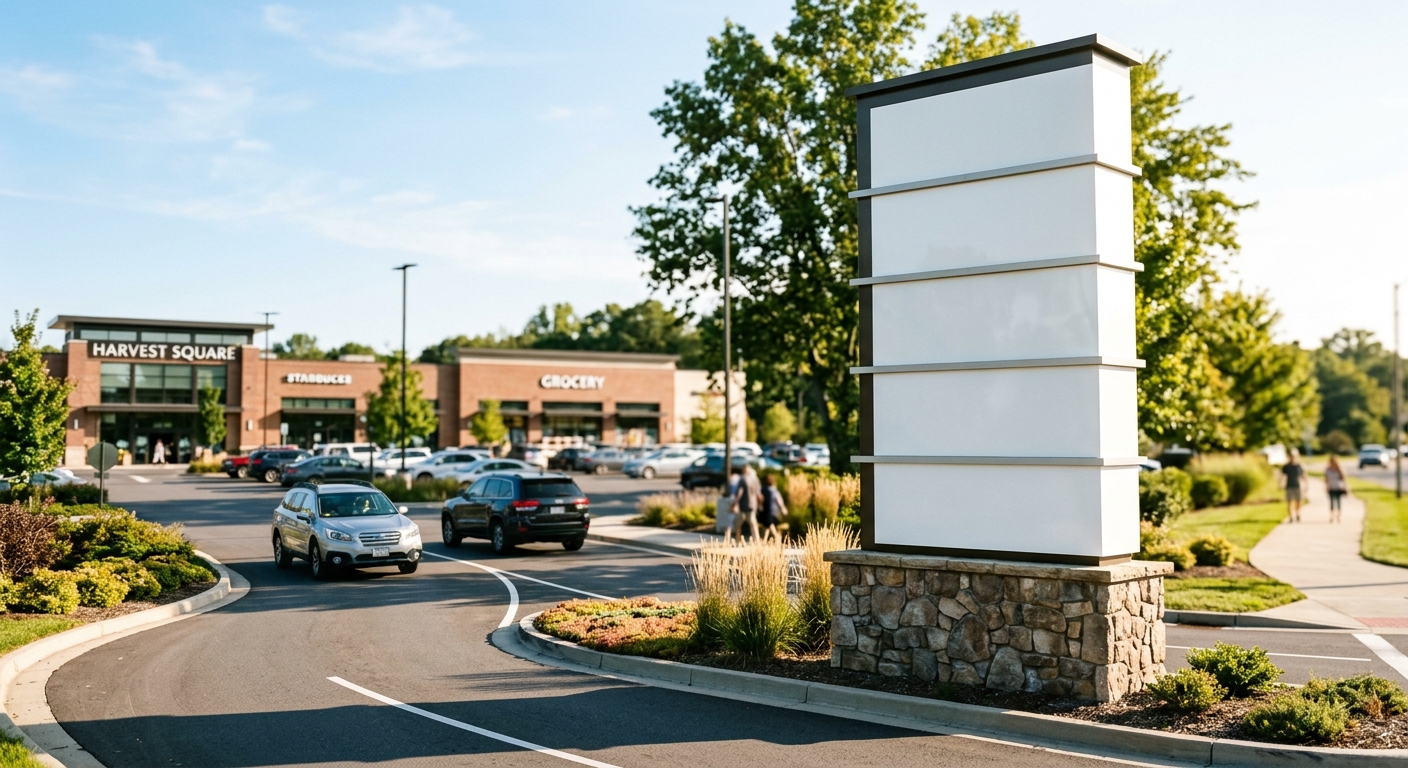
Because we specialize in branding multi-unit residential complexes, we frequently design and fabricate monument signs for property entrances. When traffic is moving at 35 miles per hour or less, an eye-level sign provides a substantial, permanent, and welcoming presence. Pedestrians and local commuters can easily read the dimensional letters or illuminated panels without straining to look up. Monument signs integrate seamlessly into the surrounding landscaping, offering a sophisticated aesthetic that suits corporate campuses, neighborhood developments, and stand-alone commercial spaces.
Comparing Visibility Profiles
Choosing between these two options comes down to matching the physical profile of the sign with the specific traffic conditions of your location. Your dedicated Project Manager will evaluate your site to determine which structure will be most effective for your brand.
| Visibility Factor | Pylon Signs | Monument Signs |
|---|---|---|
| Primary Audience | Highway and high-speed motorists | Slow-moving local traffic and pedestrians |
| Line of Sight | Elevated above roadside obstructions | Direct eye-level integration |
| Visibility Range | Long-distance (often visible from miles away) | Short to medium distance |
| Best Use Cases | Highway exits, auto malls, large shopping centers | Multi-unit residential complexes, corporate offices |
Before committing to a specific sign type based on your visibility preferences, verify your local zoning ordinances, as municipal regulations strictly govern the maximum allowable height for commercial signage.
Navigating Zoning Laws and Local Sign Ordinances
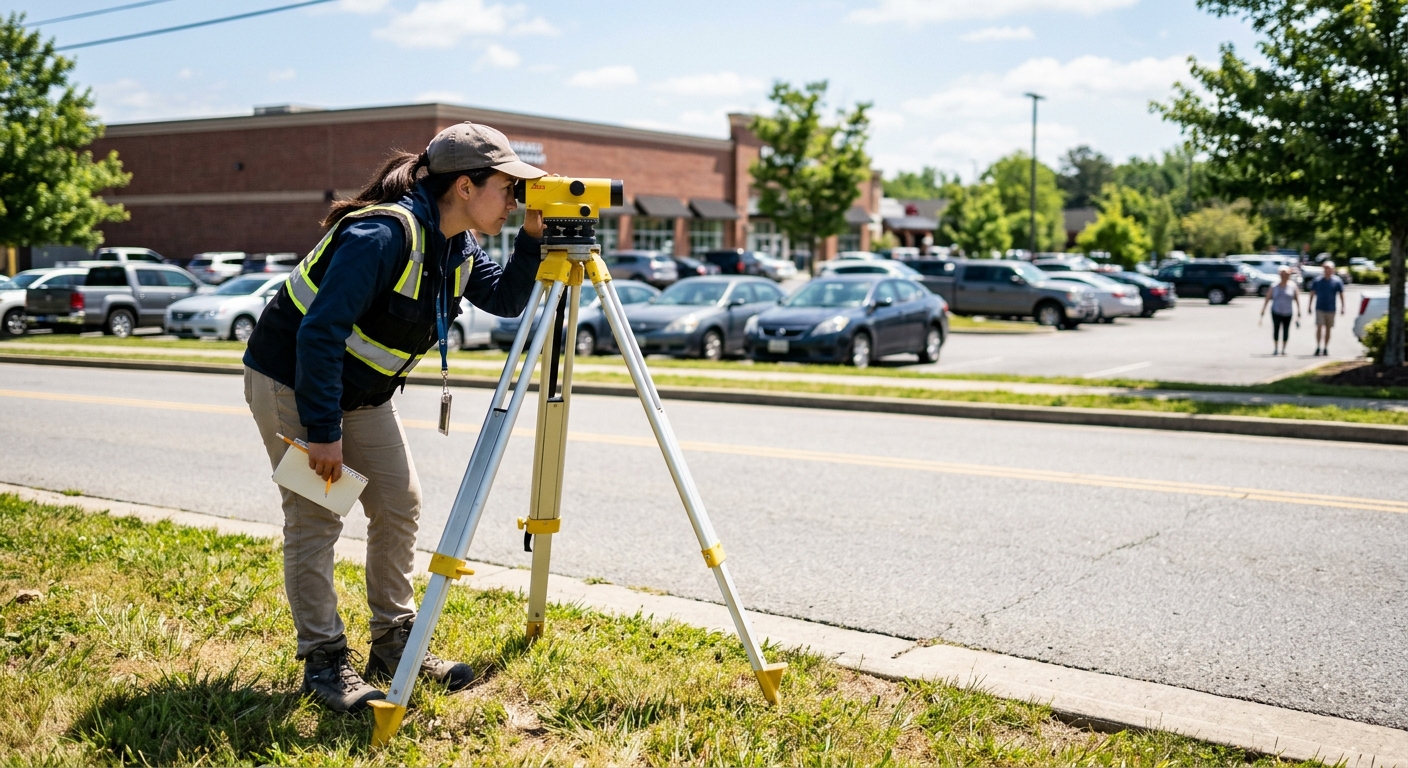
Before you decide on the perfect sign to brand your commercial business or multi-unit residential complex, you must determine what your local municipality allows. In Kentucky and Indiana, city and county zoning regulations play a major role in deciding whether you can install a towering pylon sign or if you are restricted to a low-profile monument sign. Local ordinances exist to maintain neighborhood aesthetics, ensure driver safety, and prevent visual clutter, meaning your property's specific zoning classification will heavily influence your signage options.
Key Factors in Local Sign Ordinances
When we consult with national developers and property managers, the first step is always reviewing the local code. Municipalities do not treat all freestanding signs equally. Because pylon signs are highly visible from a distance, they are often heavily regulated or outright banned in certain districts. Monument signs, which sit close to the ground, are generally accepted in a wider variety of zones.
Local zoning boards and planning commissions typically evaluate proposed signs based on several strict criteria:
- Zoning District: Commercial and industrial zones usually permit taller structures, while residential or mixed-use zones often mandate low-profile monument signs.
- Setback Requirements: The distance your sign must be placed from the property line or right-of-way can dictate the allowable size and type.
- Square Footage Limits: Ordinances restrict the total allowable sign face area, which may force a choice between a tall, narrow pylon or a wider, shorter monument sign.
- Line of Sight: Traffic safety regulations prohibit signs that block a driver's view at intersections or driveway entrances.
Comparing Zoning Allowances by Sign Type
Understanding how local codes view these two structures helps set realistic expectations for your branding project. While specific rules vary widely between different cities, the table below outlines how zoning codes generally differentiate between pylon and monument signs in Kentucky and Indiana.
| Regulatory Factor | Pylon Signs | Monument Signs |
|---|---|---|
| Typical Height Allowances | Often capped between 20 to 100 feet, depending on highway proximity. | Usually restricted to a maximum of 6 to 10 feet tall. |
| Permitted Zoning Districts | Highway commercial, industrial, and major retail corridors. | Almost all districts, including residential complexes and strict historic zones. |
| Setback Impact | May require a larger setback from the road due to fall zones and height. | Often permitted closer to the property line if driver line-of-sight is maintained. |
| Design Mandates | Primarily focused on structural engineering and wind load compliance. | Often require masonry or architectural bases matching the main building. |
Streamlining the Permitting Process
Navigating local sign ordinances can feel overwhelming. Fortunately, each client gets one dedicated person they work with. There’s a lot to creating a sign, but your Project Manager will handle every part for you. From researching local zoning laws to securing the necessary permits, you’ll have consistent communication throughout the process.
We have experience designing signs for every size business in every industry. We will work with you and guide you to ensure the final product is the sign your company deserves. Our smooth, stress-free process ensures that you get a sign that you love, complies with local ordinances, and helps promote your brand.
Always verify your property's specific zoning ordinances and setback requirements before finalizing a design, as local codes will ultimately dictate whether a pylon or monument sign is legally permitted on your site.
Architectural Integration and Property Aesthetics
Monument Signs for Multi-Unit Residential Complexes
When we work with national developers and property managers to brand multi-unit residential complexes, the aesthetic goal is usually seamless integration. Monument signs are grounded structures that sit at eye level, allowing them to act as a direct extension of the property. Instead of looking like an afterthought, a well-designed monument sign feels like a built-in feature of your landscaping and architecture.
We achieve this cohesive look by fabricating the sign's base and structure to mirror the materials used on your buildings. If your apartment complex features red brick and limestone accents, we can replicate those exact textures on the sign. By incorporating dimensional letters or acrylic signs onto a masonry or stucco base, we establish a high-end, welcoming entrance that elevates the perceived value of the residential community.
Pylon Signs for Commercial Plazas
Conversely, commercial plazas and large retail centers require structural prominence. While residential signs need to blend in, pylon signs are engineered to stand out and anchor a large commercial footprint. The architectural purpose of a pylon sign is to project authority and scale, signaling to visitors that they have arrived at a major business destination.
For these locations across Kentucky and Indiana, we design pylon structures that complement the commercial environment without getting lost in it. These signs typically utilize heavy-duty steel poles and large illuminated cabinet signs. While they are built for height and visibility, we still ensure the architectural lines, pole covers, and cabinet colors align with the broader aesthetic of the shopping center or business park.
Aligning Signage with Your Property
There is a lot to creating a sign, but your dedicated Project Manager will handle every part for you, including the aesthetic integration. To ensure your sign is effective, engaging, and fits your physical space, we evaluate several site-specific details:
- Existing architecture: We identify the dominant building materials on your property to determine if the sign should utilize masonry, architectural aluminum, or specific paint finishes.
- Landscape integration: We review your property line to ensure the sign's footprint works cleanly with your hardscaping, retaining walls, and planting beds.
- Lighting conditions: We match the illumination method—such as channel letter signs, back-lit signs, or cloud signs—to the ambient light and nighttime vibe of your property.
| Feature | Monument Signs | Pylon Signs |
|---|---|---|
| Primary Aesthetic | Seamless architectural integration | Structural prominence and scale |
| Best Property Match | Multi-unit residential complexes, corporate offices | Commercial plazas, large retail centers |
| Typical Construction | Brick, stone, stucco base with dimensional letters | Steel poles, aluminum covers, illuminated cabinets |
| Visual Impression | Grounded, permanent, welcoming | Towering, commercial, high-impact |
Choosing a sign structure that clashes with your property's architecture—like putting a massive commercial pylon at a quiet residential entrance—will undermine your brand and confuse your visitors.
Multi-Tenant Capabilities and Branding Space
Accommodating Multiple Businesses
When you manage a commercial property, your signage must balance the overall identity of the complex with the individual branding needs of your tenants. National developers and property managers frequently come to us needing a solution that provides clear, legible exposure for everyone from large anchor stores to individual startups. Both pylon and monument signs can be engineered to display multiple business listings, but they organize and present this branding space in fundamentally different ways. Your dedicated Project Manager will guide you through these options to ensure your sign is effective, engaging, and within your budget.
The Stacked Lightboxes of Pylon Signs
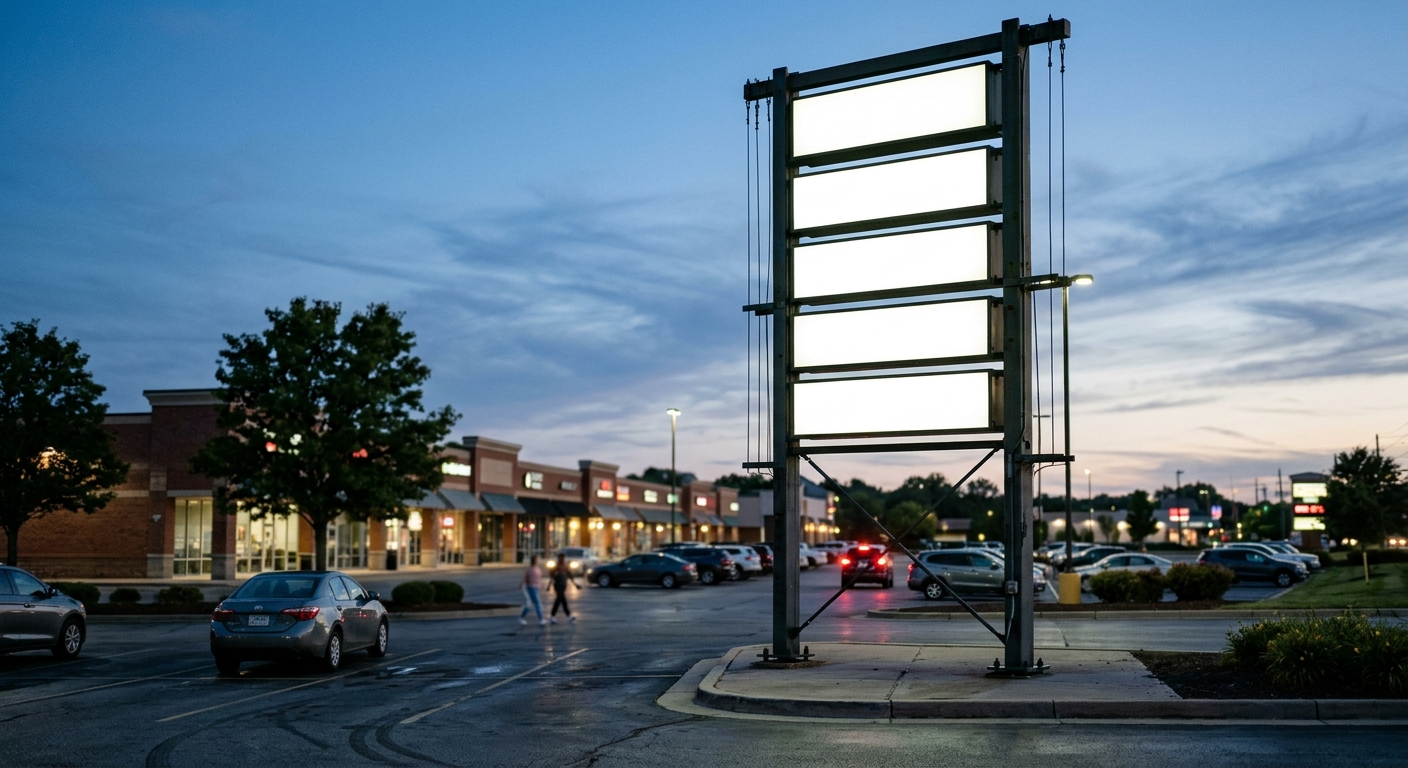
Pylon signs are built for vertical visibility, making them highly effective for commercial plazas and retail centers. To accommodate multiple listings, these signs typically utilize a series of stacked illuminated cabinet signs mounted on or between tall steel poles.
This vertical layout offers several practical advantages for property managers:
- Hierarchical Branding: Anchor tenants can be assigned larger, prominent lightboxes at the top of the structure, while smaller businesses occupy uniform cabinets below.
- Independent Maintenance: Separate stacked cabinets can often be serviced individually. If one cabinet requires maintenance, it does not necessarily disrupt the entire display.
- Straightforward Updates: When a commercial tenant leaves, our team can simply remove the acrylic face of their specific lightbox and install a new one, leaving the rest of the pylon undisturbed.
Consolidated Directory Style of Monument Signs
Large monument signs take a ground-level approach to multi-tenant branding. Rather than using separate stacked boxes, they generally rely on a consolidated directory style. This is often constructed as a single, large illuminated cabinet divided by structural retainer bars, or as a wide architectural base featuring dimensional letters, post & panel inserts, or individual acrylic signs.
Sitting at eye level, monument signs are ideal for multi-unit residential complexes, corporate office parks, and locations where vehicle traffic is slowing down. The branding space is usually arranged in a neat grid or a clean vertical list. While they do not offer the towering reach of a pylon, their consolidated format creates a cohesive, professional look that seamlessly blends with the property's landscaping.
Comparing Multi-Tenant Capabilities
| Feature | Pylon Signs | Monument Signs |
|---|---|---|
| Layout Structure | Vertical, featuring stacked illuminated cabinets | Broad or horizontal, using a consolidated directory style |
| Tenant Hierarchy | Top-down ranking with oversized anchor boxes | Grid or list format, often with uniform sizing for all listings |
| Panel Updates | Swap individual cabinet faces independently | Replace specific directory strips, acrylic signs, or inserts |
| Best Application | Highway-facing retail centers and large commercial plazas | Office parks, multi-unit residential complexes, and property entrances |
Establish a standardized panel size for your non-anchor tenants during the initial design phase to ensure future sign updates remain uniform, stress-free, and cost-effective when businesses turn over.
Streamlining Your Signage Project From Design to Install
A Dedicated Project Manager for Your Development
When national developers and property managers are coordinating a new commercial build or multi-unit residential complex, signage is just one piece of a massive puzzle. To keep your project moving without adding to your workload, we assign you a single, dedicated Project Manager. There is a lot to creating a sign, but instead of bouncing between a separate designer, a permit expeditor, a fabrication shop, and an installation crew, you work with one person from start to finish.
Each client gets one dedicated person they work with to ensure consistent communication throughout the entire process. Your Project Manager acts as your guide, working closely with you to ensure the final product is the exact sign your company deserves.
Guiding You Through Every Phase
Our smooth, stress-free process is designed to take the burden off your team while keeping your project on time and ensuring the result is effective, engaging, and within your budget. Whether you are selecting a towering pylon sign for highway visibility or an electrical monument sign to brand a multi-unit residential complex, your Project Manager handles every step:
- Consultation and Selection: We review your property layout, budget, and branding goals to help you choose the most effective sign type for your specific commercial site.
- Custom Design: We have experience designing signs for every size business in every industry. We ensure the aesthetics perfectly align with your corporate identity.
- Permitting and Approvals: We navigate the local regulations in Kentucky and Indiana, securing the necessary permits and handling zoning approvals so you do not have to.
- Fabrication: Our team builds your sign to exact specifications, whether it requires heavy-duty steel structures for a pylon or custom acrylic and masonry for a monument sign.
- Professional Installation: We coordinate the heavy equipment, electrical connections, and site safety required to put your final sign in place securely.
Logistical Differences in Your Sign Project
While your Project Manager manages the heavy lifting for both sign types, the design, fabrication, and installation requirements will vary based on the structure you select. Here is how the logistics compare when planning your property sign:
| Project Factor | Pylon Sign Logistics | Monument Sign Logistics |
|---|---|---|
| Engineering & Design | Requires extensive structural engineering to account for extreme wind loads and height requirements. | Focuses heavily on architectural integration, masonry, and matching building materials. |
| Permitting Focus | Heavily scrutinized for maximum height restrictions, fall zones, and highway visibility regulations. | Scrutinized for setback requirements, line-of-sight at intersections, and landscaping integration. |
| Installation Equipment | Requires large cranes, deep concrete footings, and specialized high-reach equipment for electrical connections. | Typically requires standard lifting equipment, shallow concrete pads, and ground-level electrical work. |
Relying on a single point of contact prevents the miscommunications and costly delays that often happen when a signage project is handed off between separate design, permitting, and installation vendors.