Your retail window is more than just glass; it's your business's first handshake, a silent salesperson working 24/7 to capture attention and invite customers inside. An effective display can stop pedestrians in their tracks, convey your brand's story in a single glance, and turn casual passersby into loyal patrons. In a competitive market, a generic arrangement of products simply isn't enough. It demands creativity, strategy, and a clear understanding of what resonates with your target audience.
This comprehensive guide moves beyond basic advice to provide a strategic toolkit of retail window display ideas designed to elevate your storefront from forgettable to phenomenal. We will explore ten distinct and powerful concepts that you can implement immediately, regardless of your industry or budget. From leveraging interactive technology and minimalist design to crafting compelling narratives and sustainable showcases, these actionable strategies offer fresh perspectives for every business objective.
Inside this listicle, you will discover the what, why, and how of each concept. We provide tangible tips, specific material suggestions, and practical examples to help you execute displays that not only look incredible but also drive measurable results. Consider this your go-to resource for transforming your most valuable marketing real estate into a powerful customer-attraction engine.
1. Seasonal Themed Displays
Seasonal displays are a cornerstone of retail window design, aligning your storefront with the calendar to capture the specific moods, holidays, and shopping occasions that drive consumer behavior. These displays tap into the collective consciousness, creating an immediate sense of relevance and urgency. From the festive cheer of the winter holidays to the vibrant energy of summer, a seasonal approach makes your brand part of the customer's real-time experience.
This strategy is effective because it leverages pre-existing emotional connections. A back-to-school theme, for instance, instantly resonates with families preparing for the new academic year, while a Valentine's Day display appeals to those celebrating romantic connections. Practical examples include a home goods store creating a cozy autumn scene with blankets, mugs, and faux pumpkins, or a sporting goods store setting up a summer beach scene with swimwear, towels, and volleyball nets.
How to Implement This Idea
- Plan Ahead: Begin conceptualizing and sourcing materials 2-3 months before a major season. For a winter holiday display, this means ordering props and graphics in September. This lead time is crucial for creating a polished, high-impact display rather than a last-minute effort.
- Incorporate Modern Trends: Don't just rely on traditional motifs. Research current color palettes and popular themes for the upcoming season. For example, instead of just red and green for Christmas, consider a trendy monochromatic winter white theme.
- Use High-Quality Props: Authenticity matters. Use realistic props and high-quality materials to build a believable and immersive scene. For instance, leveraging festive Christmas window stickers for shops can create an inviting atmosphere without requiring extensive construction.
- Keep It Fresh: During peak seasons like Christmas, consider small weekly updates. Swapping a featured product or changing a small prop can keep the window looking dynamic and encourage repeat visits. You can use versatile signage like outdoor A-frame signs on the sidewalk to announce new arrivals that complement the seasonal window theme.
2. Interactive and Digital Displays
Interactive and digital displays transform the traditional storefront window into a dynamic, engaging experience that captures modern consumer attention. By incorporating technology like touchscreens, motion sensors, or video walls, these retail window display ideas invite passersby to participate rather than just observe. This strategy effectively blurs the line between the physical and digital retail worlds, creating a memorable "wow" factor that drives foot traffic.
This approach is powerful because it turns passive viewing into an active experience. When customers can interact with a display, it forges a stronger, more personal connection to the brand. Practical examples include a shoe store with a motion-sensor screen that displays different shoe styles as people walk by, or a cosmetics shop with a QR code that launches a "virtual try-on" filter on a shopper's phone. These displays position a brand as innovative and customer-centric.
How to Implement This Idea
- Enhance, Don't Overwhelm: The technology should complement your products, not overshadow them. Ensure the interactive element has a clear purpose, such as showcasing product features or telling a brand story. A real estate office, for example, could use a touchscreen to let users browse property listings 24/7.
- Prioritize Intuitive Design: The user interface must be simple. A passerby should know how to interact with the display in seconds. Use clear, concise on-screen instructions like "Touch Here to Begin" or "Wave to Change Colors."
- Test Rigorously: Before going live, thoroughly test all hardware and software to prevent glitches. A non-functional interactive display is worse than a static one. Plan for ongoing technical support and maintenance.
- Keep Content Fresh: One of the biggest advantages of digital displays is the ability to update content easily. To learn more about the versatile options available, you can explore the technology behind modern digital and LED signs. A restaurant could update a digital menu board in its window daily with specials.
3. Minimalist and Negative Space Displays
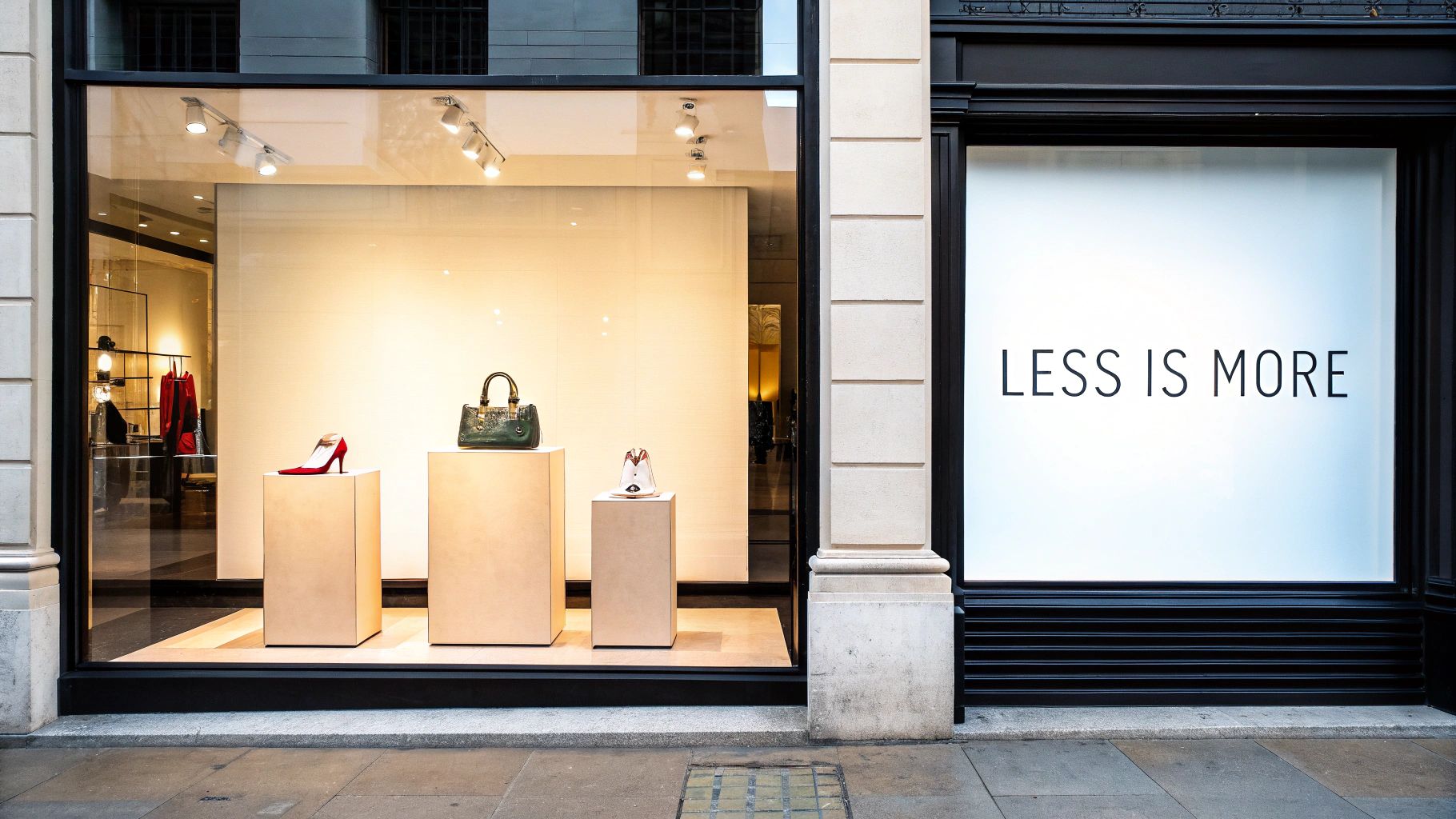
In a world saturated with visual noise, a minimalist approach to window displays offers a powerful way to cut through the clutter. This "less is more" philosophy uses strategic empty space, limited color palettes, and a few carefully chosen items to create a sophisticated, uncluttered aesthetic. By prioritizing quality over quantity, minimalist displays elevate individual products into works of art, commanding attention through sheer elegance and restraint.
This strategy is particularly effective for luxury brands, tech companies, and high-end boutiques aiming to convey exclusivity and superior craftsmanship. It communicates confidence in the product itself. Practical examples include a high-end jewelry store displaying a single necklace on a velvet bust under a focused spotlight, or an electronics store placing a new laptop on a clean, white pedestal with no other distractions.
How to Implement This Idea
- Select a Hero Product: Choose one or two products that are design statements on their own. The item must be strong enough to capture interest without supporting elements. A unique handbag or a sleek piece of technology works perfectly.
- Invest in Quality Fixtures: The few elements you do use must be impeccable. Invest in high-quality pedestals, lighting, and platforms. Focus on materials like polished metal, clear acrylic, or natural stone to enhance the premium feel.
- Master the Use of Light: Lighting is a primary design tool here. Use focused spotlights to create dramatic shadows, highlight product textures, and guide the viewer's eye exactly where you want it.
- Embrace Negative Space: Give your products generous breathing room. The empty space around an item makes it appear more significant and valuable. Avoid the temptation to fill every corner. For clean, floating text or logos that complement this aesthetic, you can explore elegant signage options such as the custom acrylic standoff signs on ondisplaysigns.com.
4. Narrative and Storytelling Displays
Narrative and storytelling displays transform a window from a simple product showcase into a captivating scene, creating an emotional connection with passersby. This approach uses products, props, and visual cues to tell a cohesive story, inviting customers to see themselves within a lifestyle, brand heritage, or aspirational narrative. Storytelling turns static merchandising into dynamic theater.
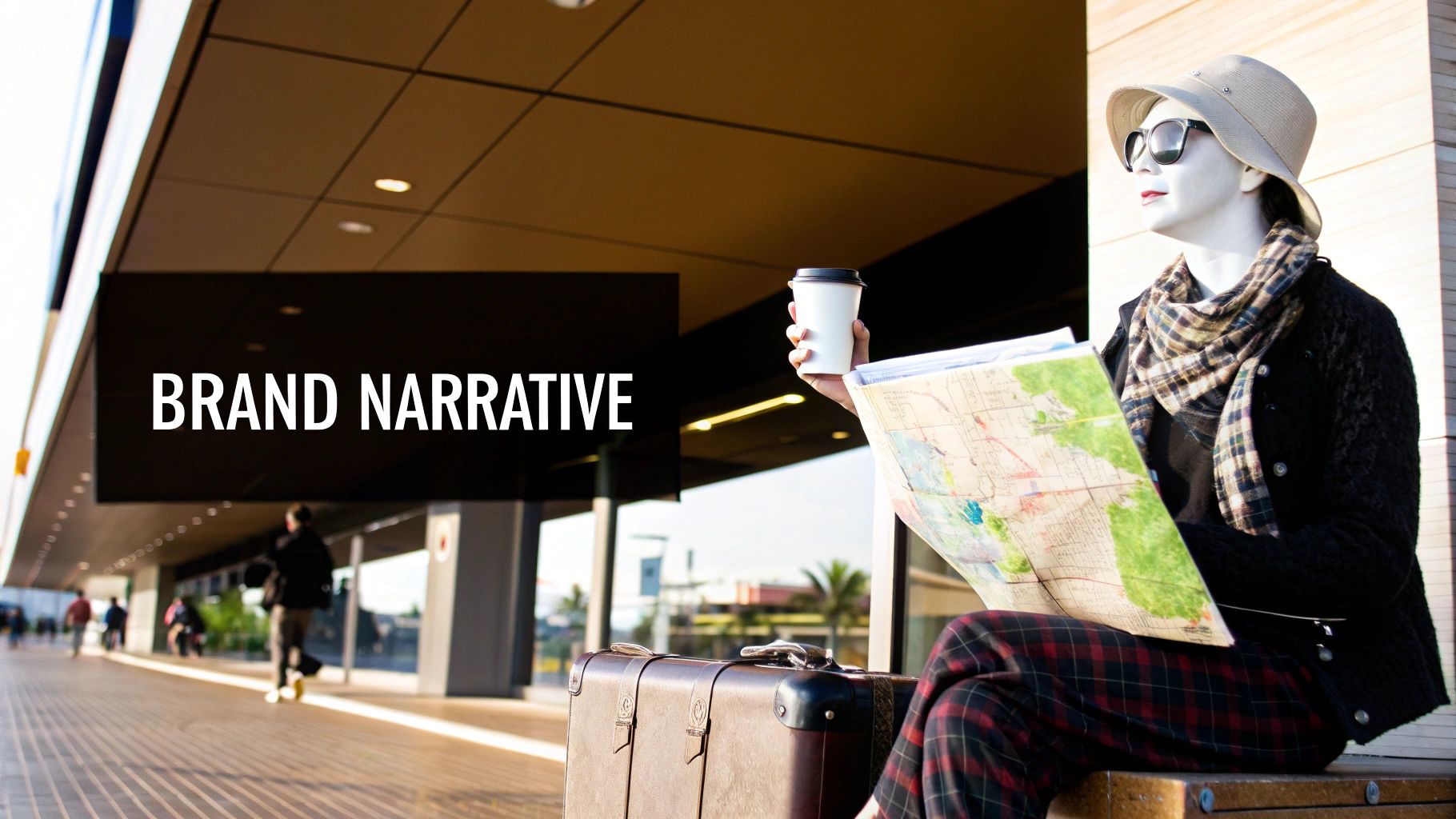
This strategy is powerful because it builds brand identity and humanizes products. A display showing a mannequin dressed for an outdoor adventure, complete with camping gear and a scenic backdrop, tells a more compelling story about durability than a standalone jacket. Practical examples include a kitchen supply store setting a full dinner table scene for a family holiday, or a bookstore recreating a famous scene from a classic novel using books and props. These immersive retail window display ideas make products feel essential to a customer’s own life story.
How to Implement This Idea
- Develop a Clear Story Brief: Before designing, outline the narrative. For example: "A young professional prepares for their first big presentation." Define the main character (mannequin), the setting (an office), and the goal (confidence). This ensures every element serves the story.
- Use Authentic Props: Select props that add authenticity. For a heritage-themed display, use vintage-style items. For a "day at the beach" story, use real sand, seashells, and a beach chair.
- Guide the Viewer's Eye: Use strategic lighting and placement to create a focal point. Spotlight the key product—like the briefcase in the professional's story—to ensure the commercial message is clear.
- Integrate Products Naturally: Weave products into the scene in a way that feels organic. A beautifully set dining table should feature your brand’s dinnerware as the centerpiece of a family gathering narrative.
- Connect to Broader Campaigns: Align your window's story with current brand campaigns. If you're running a "Summer Adventure" campaign online, your window display should reflect that same theme and message.
5. Color-Blocking and Bold Graphics
Color-blocking and bold graphics are powerful retail window display ideas designed to stop pedestrians in their tracks. This strategy uses large, solid blocks of contrasting or complementary colors alongside oversized graphic elements to create an immediate, high-energy visual impact. It prioritizes vibrancy and clarity, making the window display pop from across the street.
This approach is highly effective because it communicates a brand's personality quickly. It is well-suited for fashion, beauty, and lifestyle brands that want to project a trendy, dynamic image. Practical examples include a clothing store using large, painted panels of hot pink and electric blue as a backdrop for mannequins dressed in neutral colors, or a children's toy store using giant, colorful geometric shapes to create a playful environment.
How to Implement This Idea
- Limit Your Palette: To maximize impact, stick to a disciplined color scheme of three to four dominant colors. This prevents the display from looking chaotic. Use a color wheel to find high-contrast combinations like yellow and purple or blue and orange.
- Go Big with Graphics: Think oversized letters spelling "SALE," abstract shapes, or large-scale patterns painted on the back wall. For lightweight and vibrant graphic panels, you can explore the benefits of printing on coroplast.
- Prioritize Hierarchy: Use your boldest color or largest graphic to highlight the most important part of your display, whether it’s a hero product or a promotional message. The colors should guide the viewer's gaze intentionally.
- Test Lighting Conditions: Bold colors can appear dramatically different under various lighting conditions. Test your chosen palette in your window during both day and night to ensure it maintains its visual punch and that any text remains readable.
6. Sustainable and Eco-Conscious Displays
Sustainable window displays go beyond aesthetics to communicate a brand's commitment to environmental responsibility. This approach uses recycled materials, energy-efficient lighting, and natural elements to create displays that are both visually appealing and ethically aligned with eco-conscious values. This can attract and build loyalty with a growing segment of environmentally aware consumers.
This strategy is effective because it transforms the window display into a tangible statement of corporate values. A display built from reclaimed wood or upcycled products tells a powerful story about resourcefulness. Practical examples include a fashion brand creating mannequins from recycled newspapers, or a home goods store using crates and pallets to build display stands, accessorized with live plants.
How to Implement This Idea
- Source Mindfully: Prioritize materials that are recycled, upcycled, or renewable. Use discarded cardboard for structural elements, create backdrops from old fabric, or incorporate live plants that can be repurposed.
- Design for Disassembly: Plan your display with its entire lifecycle in mind. Create modular components that can be easily taken apart, stored, and reused for future installations, which minimizes waste and reduces long-term costs.
- Tell Your Story: Use small, elegant signage to explain the sustainable elements. A simple card stating, "This display was created using 100% post-consumer recycled paper," educates passersby and reinforces your brand’s commitment.
- Choose Eco-Friendly Signage: Your choice of signage material is a key part of your sustainable message. Exploring various eco-friendly sign board material options allows you to select durable, recyclable, or biodegradable substrates. For a deeper dive, explore a guide on sustainable interior design materials.
7. Multi-Sensory and Experiential Displays
Multi-sensory and experiential displays move beyond the purely visual to engage customers on a deeper, more memorable level. This approach transforms your window into an immersive environment by incorporating sound, scent, texture, and movement. By appealing to multiple senses, you create a powerful brand narrative that forges a strong emotional connection with passersby.
This strategy is effective because it taps into the brain's powerful link between senses and memory. Practical examples include a coffee shop using a small, safe device to waft the scent of fresh-brewed coffee onto the sidewalk, or a store selling raincoats creating a display with the sound of gentle rain and a mesmerizing video of water droplets on a screen.
How to Implement This Idea
- Integrate Scent Strategically: Use scent diffusers to emit a fragrance that complements the products or theme. For a bakery, it could be the smell of fresh bread; for a home goods store, a calming lavender scent. Ensure the aroma is pleasant and not overpowering.
- Incorporate Sound and Music: Add a sound element that matches the mood. This could be calming nature sounds for an outdoor-themed window or upbeat music for a fashion display. Use high-quality, directional speakers to contain the sound and avoid creating a public nuisance.
- Add Kinetic Elements: Introduce movement to draw the eye. This can range from simple rotating turntables showcasing a product to more complex features like a fan gently blowing on a display of lightweight scarves.
- Balance and Test All Elements: The key to a successful multi-sensory display is balance. Before going live, test how all the elements (light, sound, scent, movement) work together to create a cohesive and inviting experience rather than a chaotic one.
8. Product Focus and Close-Up Detail Displays
This strategy elevates a single product from a mere item for sale into an object of art and engineering. By focusing on extreme close-ups, magnified details, or cutaway views, these displays reveal the intricate craftsmanship, superior materials, and design precision that justify a premium price point. It’s an educational approach that speaks directly to discerning customers who value quality.
The effectiveness of this method lies in its ability to build perceived value. When a brand is confident enough to showcase the inner workings of a watch or the specific weave of a fabric, it communicates transparency. Practical examples include a luggage company displaying a cutaway of a suitcase to show its durable layers and construction, or a high-end shoe brand featuring one shoe alongside a large, high-resolution photo of its intricate stitching. These retail window display ideas transform a simple viewing into an appreciation of masterful detail.
How to Implement This Idea
- Invest in Macro Imagery: Use high-resolution, professional macro photography to capture the stunning details of your product. These large-format graphics become the centerpiece, drawing viewers in for a closer look.
- Create a “Museum” Vibe: Treat the product like a gallery exhibit. Place the actual item on a clean, well-lit pedestal next to its magnified image. Use small, elegant labels to explain key features, like "Italian Leather" or "Hand-Stitched Seam."
- Show, Don't Just Tell: Pair the close-up visuals with tangible elements. For instance, display a swatch of the raw, high-quality leather next to the finished handbag, or show a loose, magnified gemstone beside the final ring setting.
- Use Strategic Lighting: Employ focused spotlights to highlight the specific textures and details you want to emphasize. Dramatic lighting can make the texture of a fabric or the polish on metal truly stand out.
9. Gamification and Contest-Based Displays
Gamification transforms a standard window display from a passive viewing experience into an active, engaging challenge. These displays incorporate games, contests, or puzzles that invite passersby to participate directly with your brand. By turning your storefront into a destination for fun, you create memorable interactions that can drive store traffic and boost social media engagement.
This strategy is highly effective because it taps into the human desire for play and reward. A practical example is a toy store creating a scavenger hunt where clues are hidden within the window scene, with a sign prompting "Find all 5 hidden robots to get 10% off inside!" Another example is a clothing store placing a QR code on the window that leads to a "spin-to-win" digital prize wheel.
How to Implement This Idea
- Keep It Simple: The game or contest should be intuitive and easy to understand in seconds. Complex rules will deter participation. A simple "guess the number of jellybeans in the jar" contest works well.
- Provide Clear Instructions: Use bold, easy-to-read window decals or signage to explain the rules, how to enter, and what the prize is. For instance: "Scan the QR code to enter our weekly giveaway!"
- Offer Attractive Prizes: The reward should be compelling enough to motivate participation. This could range from a significant discount or a free product to a larger grand prize.
- Amplify on Social Media: Promote the contest on your social media channels to draw people to your physical location. Encourage participants to share their entries online with a specific hashtag to broaden your reach.
- Ensure Legal Compliance: Be aware of local regulations regarding contests and giveaways. Clearly state the terms and conditions to ensure transparency and protect your business.
10. Artistic Collaboration and Limited Edition Displays
Artistic collaborations transform a retail window from a commercial showcase into a cultural destination. This approach involves partnering with local artists or designers to create unique, often limited-edition displays that blend art with commerce. Such installations generate buzz, attract attention, and position the brand as a supporter of the local arts community.
This strategy is effective because it introduces an element of scarcity and storytelling that commodity products cannot match. It draws in new audiences who may be more interested in art and culture than traditional retail. Practical examples include a local boutique collaborating with a painter to create a custom backdrop for its window display, or a coffee shop featuring a rotating gallery of works by local ceramic artists, with their pieces used as props and also available for sale.
How to Implement This Idea
- Select a Cohesive Partner: Choose a local artist whose style and values align with your brand's identity. The collaboration should feel authentic and enhance your brand story.
- Plan Extensively: These projects often require a lead time of several months for artist selection, concept development, and production of the display.
- Create a Compelling Narrative: Document the collaborative process. Use behind-the-scenes content and artist interviews on social media to build anticipation and give customers a deeper connection to the project.
- Promote Through Niche Channels: Beyond your standard marketing, promote the collaboration through local art blogs and community groups. Consider hosting a small launch event to meet the artist, which can maximize exposure and reinforce the display's cultural significance.
Comparison of 10 Retail Window Display Ideas
| Display Type | 🔄 Implementation Complexity | ⚡ Resource Requirements | 📊⭐ Expected Outcomes | 💡 Ideal Use Cases | ⭐ Key Advantages | 💡 Quick Tips |
|---|---|---|---|---|---|---|
| Seasonal Themed Displays | Medium–High — recurring redesigns & coordination | Moderate — props, storage, seasonal inventory, labor | High seasonal traffic & conversions; strong emotional pull | Holidays, back-to-school, seasonal promotions | Time-sensitive relevance; proven peak-period ROI | Plan 2–3 months ahead; refresh weekly during peaks |
| Interactive and Digital Displays | High — tech integration, UX & maintenance | High — hardware, software, ongoing support | Very high engagement, social shares, data capture | Flagship stores, product try-ons, youth-focused brands | Differentiation; measurable interactions | Test thoroughly; schedule maintenance & content updates |
| Minimalist & Negative Space Displays | Low–Medium — simple build but needs strong design | Low — few props, lower production & storage costs | Strong luxury perception; product-focused visibility | Luxury boutiques, premium product launches | Timeless elegance; easy upkeep | Use quality materials, strategic lighting, generous spacing |
| Narrative & Storytelling Displays | High — creative direction & sequential staging | Moderate — props, set design, occasional staffing | Deep engagement, longer dwell time, shareability | Brand heritage, lifestyle campaigns, seasonal storytelling | Emotional connection; memorable experiences | Create a clear story brief; keep products visible |
| Color-Blocking & Bold Graphics | Medium — design-heavy but straightforward build | Moderate — printing, panels, color testing | High curb appeal and instant recognition; photo-friendly | Trend-driven fashion, youth retail, seasonal pops | Immediate attention; energetic brand image | Limit palette to 3–4 colors; test under store lighting |
| Sustainable & Eco-Conscious Displays | Medium — sourcing and documentation add steps | Variable — up-front effort; potential long-term savings | Positive PR; attracts eco-conscious customers | Brands with sustainability positioning, CSR activations | Aligns with values; supports circularity | Source locally; design for disassembly and reuse |
| Multi-Sensory & Experiential Displays | Very High — sensory design, compliance & sync | High — scent/sound systems, climate control, upkeep | Very memorable; increased dwell time & social sharing | Fragrance, luxury, experiential flagship stores | Immersive emotional engagement; standout experiences | Pilot sensory elements; avoid overload; ensure accessibility |
| Product Focus & Close-Up Detail Displays | Medium — needs photography & precise presentation | Moderate — professional macro photography & prints | Highlights craftsmanship; justifies premium pricing | Watches, jewelry, tech, premium materials | Educates customers; emphasizes quality & detail | Invest in macro shots; include context labels & samples |
| Gamification & Contest-Based Displays | Medium — UX, rules, legal & prize logistics | Low–Moderate — QR codes, prizes, management | High participation, UGC and repeat visits; data capture | Promotions, social campaigns, youth engagement | Drives engagement and data collection | Keep mechanics simple; publish clear rules; ensure compliance |
| Artistic Collaboration & Limited Edition Displays | High — artist coordination & bespoke fabrication | High — artist fees, custom builds, logistics | Strong PR, cultural relevance, premium sales | Luxury drops, gallery-style windows, launch events | Elevates brand prestige; media attention | Align artist to brand values; plan 6–12 months ahead |
Bringing Your Vision to Life: Your Next Steps
Your retail window is far more than just glass and a frame; it is a blank canvas, a stage for your brand's story, and one of the most powerful marketing tools at your disposal. Throughout this guide, we have explored a diverse range of retail window display ideas, from the vibrant and timely appeal of seasonal themes to the sophisticated allure of minimalist designs. We’ve seen how storytelling can forge an emotional connection with passersby and how interactive elements can transform passive viewers into active participants.
The journey from a brilliant concept to a traffic-stopping reality is where strategy meets execution. The core lesson is that successful displays are never accidental. They are the result of intentional planning, a deep understanding of the target audience, and a commitment to quality craftsmanship. Whether you are captivated by the bold statement of color-blocking, the authentic appeal of sustainable materials, or the competitive fun of a gamified display, the principles remain the same: clarity, creativity, and compelling execution.
Key Takeaways for High-Impact Displays
To translate these ideas into tangible results, it’s crucial to distill them into an actionable checklist. As you plan your next display, keep these foundational pillars in mind to ensure your efforts yield the maximum return on investment.
- Define Your "Why": Before selecting props or colors, pinpoint the primary goal of your display. Is it to drive foot traffic for a specific sale, build brand awareness, highlight a new product, or simply create a memorable experience? A clear objective will guide every subsequent decision.
- Balance Creativity with Clarity: An artistic, abstract display can be intriguing, but it fails if viewers don't understand what you sell or what you want them to do. Ensure your creative vision supports, rather than obscures, your core message and product offering.
- Quality is Non-Negotiable: Your window display is a direct reflection of your brand's quality. Faded graphics, poorly constructed props, or malfunctioning digital screens can communicate the wrong message. Investing in professional-grade materials and fabrication is an investment in your brand's reputation.
- Think Beyond the Visual: The most memorable displays often engage more than just the sense of sight. Consider how subtle audio, textural elements, or even carefully chosen scents (where appropriate) can create a more immersive and unforgettable multi-sensory experience.
From Inspiration to Installation: Your Action Plan
Now is the time to move from passive learning to active implementation. A fantastic idea remains just an idea without a clear path forward. The most successful retailers and brand managers approach their window displays with a structured, strategic process.
- Audit and Brainstorm: Start by looking at your current display with fresh eyes. What’s working? What isn’t? Then, revisit the retail window display ideas in this article and select two or three that align with your brand identity and upcoming marketing calendar.
- Sketch and Plan: Create a simple sketch or digital mockup of your chosen concept. Define the key elements: the hero product, the central prop, the color palette, and the necessary signage. This visual plan will be your blueprint.
- Source Your Materials and Partners: This is the most critical step. Identify where you will get your custom graphics, structural elements, lighting, and props. For ambitious or complex designs, partnering with a professional fabricator is essential to bridge the gap between your vision and a flawless final product. A specialist can advise on the best materials for durability and visual impact, ensuring your display looks as good on day thirty as it did on day one.
Ultimately, mastering the art of the window display is about transforming your storefront into a dynamic conversation starter. It’s your opportunity to make a powerful first impression, stop pedestrians in their tracks, and invite them to become a part of your brand's world. By combining a compelling creative concept with professional execution, you ensure that your window doesn't just display products, it drives business.
Ready to turn your most ambitious retail window display ideas into a stunning reality? The experts at On Display Signs, Inc. specialize in high-quality fabrication and nationwide installation of everything from vibrant window graphics to custom-built props and signage. Partner with us to ensure your vision is executed flawlessly, on time, and on budget. Visit our website to see our portfolio and start your project today. On Display Signs, Inc.