Think of the jump from a static, printed poster to a digital sign board as the difference between a one-time announcement and a continuous conversation. It's like trading a megaphone that shouts one message for a smartphone that can adapt, interact, and show exactly what people need to see, right when they need to see it.
This technology turns your storefront, lobby, or roadside location from a passive space into an active communication hub, grabbing attention and turning passersby into paying customers.
Why Digital Sign Boards Are a Game Changer for Businesses
In a world overflowing with ads, simply being seen isn't enough. You have to be relevant. A digital sign is the difference between a poster that’s outdated the minute you hang it and a vibrant screen that can change its message with a few clicks. This speed and flexibility is its real power.
For instance, a restaurant can run a breakfast menu in the morning, switch to lunch specials at noon, and then advertise happy hour in the afternoon—all automatically. A corporate office can welcome a key client by name, while a retail store can launch a flash sale across all its locations in an instant. This kind of responsiveness was simply impossible with old-school signs.
To see just how different these two approaches are, here's a quick comparison.
Static Signs vs Digital Sign Boards a Quick Comparison
| Feature | Traditional Static Sign | Modern Digital Sign Board |
|---|---|---|
| Content | Fixed, single message | Dynamic, unlimited messages |
| Updates | Manual, costly, and slow (requires re-printing and installation) | Instant, remote updates via software |
| Engagement | Passive; easy for viewers to ignore | High-impact with motion, video, and vibrant color |
| Relevance | Cannot be timed for specific audiences or events | Can be scheduled to show specific content by time of day |
| Long-Term Cost | Ongoing costs for printing, shipping, and installation | One-time hardware cost, minimal recurring software fees |
| Brand Image | Can look dated quickly | Modern, professional, and forward-thinking |
This table makes it clear: while a static sign has its place, a digital sign board is a strategic tool built for today's fast-paced environment.
The Clear Shift to Dynamic Messaging
The market itself tells the story. The global digital signage market was valued at $29.19 billion in 2025 and is projected to skyrocket to $45.94 billion by 2030. Meanwhile, traditional print signage is facing a steady decline, proving that the industry is moving decisively toward smarter, more effective technology.
This isn't just about swapping out old hardware. It’s about unlocking entirely new ways to connect with your audience. A digital display gives you the power to:
- Actually Grab Attention: The human eye is wired to notice motion and bright colors. A digital sign is almost impossible to ignore.
- Boost Foot Traffic and Sales: Well-timed promotions and mouth-watering visuals directly influence buying decisions and get people in the door.
- Slash Long-Term Costs: Say goodbye to the endless cycle of printing, shipping, and installation fees. The initial investment pays for itself over time.
- Look Like a Leader: A sleek, modern display instantly signals that your business is current, professional, and focused on the customer experience.
A digital sign board isn't just another piece of equipment; it's a strategic asset that makes your advertising work harder. It gives you the power to deliver the perfect message to the right person at the perfect time.
Ultimately, this technology gives you a serious competitive edge. By learning to harness dynamic content, you can create more memorable customer interactions and see a real return on your investment. Understanding the fundamental role of signs in advertising is the first step toward building a communication strategy that truly works.
Exploring the Types of Digital Sign Boards
Choosing the right digital sign is like picking the right tool from the toolbox—each type is built for a specific job and shines in a different environment. Picking the right one ensures your message doesn't just get seen, but makes a real impact. A sign board digital solution isn't one-size-fits-all; it's about matching the technology to your business goals.
Let's break down the main options. The first big difference is between signs made for the great outdoors and those designed for indoor spaces. Think of it as the difference between a massive stadium screen and the crystal-clear TV in your living room. Each is engineered for its viewing environment, and you can’t just swap one for the other.
Outdoor vs Indoor Displays
Outdoor digital sign boards are the heavy-duty workhorses of the signage world. They’re built tough to handle rain, snow, and scorching heat, but their real superpower is brightness. These signs have to go head-to-head with direct sunlight, so their brightness, measured in nits, is incredibly high. An outdoor display often starts at 5,000 nits or more, making your content pop even on the sunniest days.
A practical example is a car dealership with a big LED sign right on the highway. That intense brightness makes sure every ad for a new truck is sharp and unmissable to passing drivers, day or night. Or think of a church using a durable outdoor sign to share service times and community events, no matter the weather.
On the other hand, indoor digital signs are all about detail and are meant for up-close viewing in controlled settings. Since they don't have to fight the sun, their brightness is much lower, usually between 350 to 700 nits. Their strength lies in super-high resolution, which keeps content sharp and detailed even when you're standing just a few feet away.
For instance, a hospital might use a sleek indoor video wall in its lobby to welcome visitors, offer directions, and share health tips. The high resolution makes every word easy to read and videos look flawless, creating a professional and reassuring atmosphere.
Core Digital Sign Technologies
Beyond just indoor versus outdoor, the actual screen technology is the next choice you’ll make. The two most dominant players are LED and LCD, and they each bring something different to the table.
LED (Light Emitting Diode) Signs: These are the undisputed champions of large-scale and outdoor advertising. LED signs are built from tiny clusters of red, green, and blue diodes that work together to form a brilliant, full-color picture. They are exceptionally bright, energy-efficient, and last a long time, making them the go-to for any sign viewed from a distance. Think of a stadium scoreboard or the towering pylon sign for a shopping mall—that’s classic LED power. Some new technologies, like industrial flex LED lighting, even allow for curved and uniquely shaped displays.
LCD (Liquid Crystal Display) Screens: This is the same screen technology you find in modern TVs and computer monitors. LCDs win when it comes to close-up resolution, making them perfect for displaying detailed content indoors. Think of a digital menu board in a restaurant where customers need to read every ingredient, or an interactive kiosk in a retail store showing product specs.
Video Walls: A video wall is created by tiling multiple LCD or LED screens together to form one giant, seamless canvas. This approach delivers an immersive, high-impact experience that’s perfect for flagship retail stores, corporate lobbies, or entertainment venues. Imagine a fashion brand with a floor-to-ceiling video wall showcasing runway shows—it’s a brand moment nobody will forget.
The right technology comes down to your application. For grabbing attention from a distance, nothing beats the raw power of a bright LED sign. For engaging customers up close with detailed content, a high-resolution LCD screen is the clear choice.
Understanding these key differences is the first step toward a smart investment. For a closer look at one of the most effective options available, you might be interested in our guide on what a digital sign LED can do for your business. It will help you match the hardware to your goals and make sure your message shines bright.
The Proven Impact of Digital Signage on Business Growth
All the technical features are impressive, but let’s get straight to the real question: does investing in a sign board digital display actually make you money?
The answer we see time and again with our clients is a resounding yes. A dynamic screen doesn't just sit there—it actively influences customer behavior at the most critical moments, leading to real, measurable boosts in foot traffic, engagement, and sales. It's because our brains are wired to notice movement and color; it's why visual ads outperform text-only campaigns. A vibrant, moving image simply grabs attention in a way static print never could.
Driving Foot Traffic and First-Time Visits
Think of your storefront sign as the very first handshake with every potential customer who passes by. A dynamic digital display turns that handshake into an irresistible invitation, acting as a magnet for sidewalk traffic.
The numbers back this up, showing just how powerful this effect is.
- An incredible 80% of customers report entering a store for the first time specifically because a digital sign caught their eye.
- 76% of consumers have visited a business they'd never been to before based only on its sign.
- Even better, 83% of people can recall a business just from seeing its sign.
What this tells us is that a great sign board digital display isn't just an expense—it's one of the most effective customer acquisition tools you can have.
A well-placed digital sign doesn’t just advertise your business—it actively pulls customers through your door. It transforms a passive location into an active participant in your sales process.
Boosting Sales and Influencing Decisions
Once customers are inside, digital signage gets to work as your silent, most effective salesperson. It's the perfect tool for influencing what people buy at the point of sale, whether you’re upselling, cross-selling, or just shining a spotlight on a high-margin product.
Here are actionable insights from real-world scenarios:
The Restaurant Upsell: A fast-food spot wants to push a new premium combo. Instead of a tiny line on a static menu, they feature it on a bright digital board with mouth-watering video clips. The result? A 32% sales lift for that combo in the first month. We see this all the time—check out our deep dive into how digital signage works in restaurants.
The Retail Impulse Buy: A clothing store puts a screen in its window showing off a new collection. The motion and rich colors stop people in their tracks, pulling them inside to "just take a look"—which often turns into a sale. A practical tip is to show a short video loop of a popular item being unboxed or worn.
The Service-Based Promotion: A bank uses its lobby screens to highlight a limited-time mortgage rate. A simple graphic of a happy family moving into a new home makes the offer feel personal and urgent, driving a noticeable spike in loan inquiries.
In every case, the sign board digital display does more than just share information. It creates desire and prompts action. This is how a one-time investment in hardware becomes a powerful revenue-generating machine, delivering a clear and impressive return.
How to Choose the Right Digital Sign Board for Your Business
Choosing the right digital sign board can feel a bit like buying a new TV—the technical specs can be dizzying. But don't worry. We're going to cut through the jargon and focus on what these specs actually mean for your business, so you can make a choice you feel great about.
The goal is to match the technology to your specific needs. Getting just a few key details right will make all the difference in how customers see and respond to your message.
Resolution and Pixel Pitch: Getting a Clear Picture
Think of resolution and pixel pitch as two ways of describing the same thing: image sharpness. Resolution is the total number of tiny lights (pixels) on the screen, while pixel pitch is the physical distance between them, measured in millimeters.
Here’s the simple rule: the closer your audience is, the smaller the pixel pitch needs to be. For an indoor sign in a lobby or retail store where people are just feet away, a tight pixel pitch (1.9mm to 4mm) is key. This packs the pixels closely together, creating a smooth, crisp image with no visible dots.
But for a massive outdoor sign on a highway, a much larger pixel pitch (10mm to 20mm or more) is perfectly fine. From hundreds of feet away, the human eye blends those pixels together, and the image looks sharp and clear.
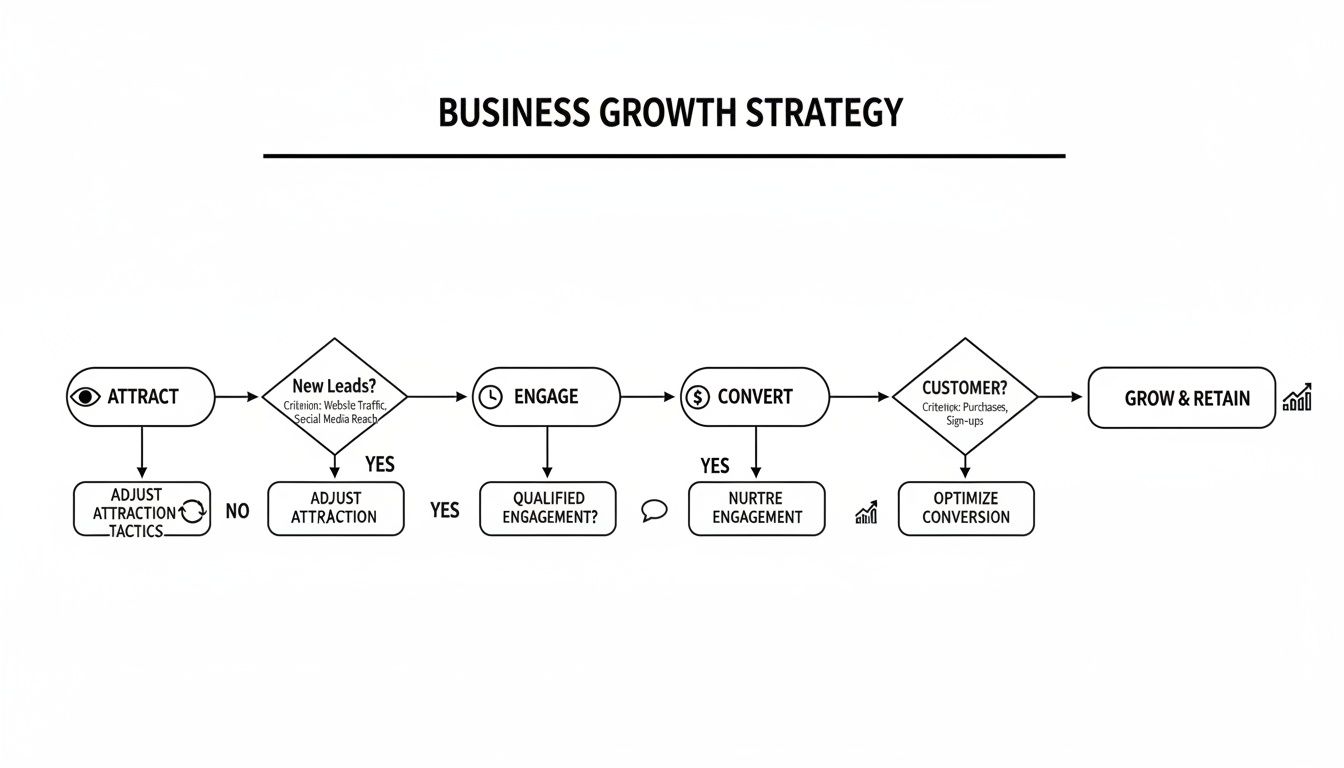
As you can see, a digital sign isn't just an ad—it’s a powerful tool that can guide customers through every step of their journey with your business.
Brightness and Location: Winning the Battle Against the Sun
Brightness, measured in nits, is one of the most important specs, especially for outdoor signs. A typical indoor screen produces around 350-700 nits, which looks fantastic in a controlled environment like a shop or waiting room.
Take that same screen outside, though, and it becomes a washed-out, unreadable mess. Outdoor signs have to fight against direct sunlight to stay visible. You'll need at least 2,500 nits for a sign in a shaded area and 5,000 nits or more for one that gets hit with direct sun. This ensures your message stays vibrant and eye-catching all day long.
The sign’s location also dictates its ideal size. A huge screen will overwhelm a small boutique, while a tiny display will get lost on the side of a large commercial building. These placement decisions are just as critical as choosing the right sign board materials to withstand the elements.
The CMS: The Brains Behind the Screen
The screen itself is only half the battle. Your Content Management System (CMS) is the software that brings it all to life. It’s what you’ll use to create, schedule, and update your messages.
A complicated CMS is a recipe for a failed investment. If your team can’t update the sign as easily as they post on social media, your expensive new display will end up showing the same stale content for months.
Look for a cloud-based CMS that lets you manage your signs from anywhere. A good system will allow you to schedule promotions to run at specific times, set ads to expire automatically, and update a whole network of signs with just a few clicks. It’s what turns your digital sign board from a simple screen into a dynamic, real-time marketing powerhouse.
To make sense of all this, here’s a quick-reference table breaking down the most important specifications.
Key Specifications to Consider for Your Digital Sign
| Specification | What to Look For | Why It Matters |
|---|---|---|
| Pixel Pitch | Low numbers (e.g., 1.9mm-4mm) for close viewing; higher numbers (10mm+) for distance. | Determines how sharp and clear the image looks from the intended viewing distance. |
| Brightness (Nits) | 350-700 nits for indoors; 2,500-5,000+ nits for outdoors. | Ensures your sign is readable and vibrant, whether in a lobby or in direct sunlight. |
| Screen Size | Proportional to the viewing distance and the scale of the building or space. | A properly sized sign has maximum impact without overwhelming the environment. |
| Connectivity | Wi-Fi, Ethernet, or cellular options. Cloud-based access is a huge plus. | Determines how you will send new content to the sign. Cloud access offers the most flexibility. |
| CMS Software | An intuitive, user-friendly interface that doesn't require technical expertise. | The easier it is to use, the more likely you are to keep your content fresh and effective. |
Thinking through these factors is the first step toward finding a digital sign that doesn't just look good, but works hard for your business.
Crafting a Winning Content Strategy for Your Digital Display
A brilliant digital sign board with dull, lifeless content is a massive wasted opportunity. It’s like owning a race car but never taking it out of first gear. To get the powerful results you're after, you need a content strategy that actually grabs your audience's attention and connects directly to your business goals.
This isn’t about fuzzy marketing theory; it’s about practical, real-world action. Your content has to be built for quick glances. That means minimal text, high-contrast colors that pop, and smooth motion that naturally draws the eye. The goal is simple: deliver a clear message in just a few seconds.
Content Playbooks for Different Industries
The beauty of a digital sign is its incredible flexibility. The old "one-size-fits-all" message is not only outdated, it's completely ineffective. Now, you can create a content plan that speaks directly to your specific audience at different times of the day or week.
Let's look at a few practical examples to see how this works.
For a Retail Store: Run a weekly schedule of promotions. A actionable insight is to feature a "Deal of the Day" on Mondays, highlight new arrivals with unboxing videos on Wednesdays, and push a weekend-only flash sale on Fridays. This keeps your messaging fresh and gives customers a reason to keep looking.
For a Restaurant: Showcase a daily special with a mouth-watering video. In the afternoon, switch the content to promote happy hour drinks and appetizers. On weekends, you can advertise upcoming events like live music or a brunch special.
For a Church: Use the sign to display service times and warm welcome messages on Sunday mornings. During the week, it can pivot to sharing community news, volunteer opportunities, or inspirational quotes. This turns the sign from a simple notice board into a true hub for community connection.
The most successful digital sign content is never static. It's a living, breathing part of your communication strategy that adapts to the time of day, the day of the week, and your current business needs.
The Power of Content Scheduling
This dynamic approach is made easy with your Content Management System (CMS). The ability to schedule content in advance is arguably the most powerful feature of any modern sign board digital system. You can plan out your promotions for an entire week or month and just let the software do the work.
For a practical example, think about that restaurant again. The manager doesn't need to manually change the screen every few hours. They just set a simple schedule in the CMS:
- 6:00 AM – 11:00 AM: Run the "Breakfast Burrito & Coffee" special.
- 11:00 AM – 4:00 PM: Switch to the "Lunch Combo" ad.
- 4:00 PM – 7:00 PM: Automatically display the "Happy Hour" promotion.
This simple setup ensures your message is always relevant and impactful, all without adding to your team's daily workload.
Best Practices for Captivating Content
Creating content that really works comes down to a few core principles. Keep these tips front and center as you build out your strategy.
| Best Practice | How to Apply It | Why It Works |
|---|---|---|
| Brevity is Key | Stick to five to seven words maximum per screen. | People are often moving and only have seconds to read. A short, bold message is far more effective. |
| High-Contrast Colors | Pair light text with a dark background, or vice-versa. Avoid busy, low-contrast combinations. | This makes your text instantly readable from a distance, even in bright sunlight or tricky lighting. |
| Focus on One Idea | Each screen or "slide" should have a single, clear purpose or call to action. | Cramming too much information onto one screen just confuses people and weakens your main message. |
| Use Quality Media | Always use high-resolution images and professionally shot video when you can. | Grainy, low-quality visuals make your brand look unprofessional and cheapen the investment you made in your sign. |
By building a thoughtful content plan and using scheduling to your advantage, you transform your sign from a piece of technology into an automated marketing machine. To dive deeper into putting these ideas into practice, check out our resources on digital signage education. This will help you craft messages that not only get seen but also drive real action.
Bringing Your Digital Sign to Life
You've seen what a modern sign board digital display can do. Now, it’s time to put that power to work for your business. But turning a big idea into a real-world, revenue-driving asset can feel overwhelming. That’s where a true partner comes in.
We don’t just sell you a screen; we manage the entire project from start to finish. Our job at On Display Signs is to handle every single detail so you can stay focused on running your business.
We’re Your End-to-End Signage Partner
Think of us as your single point of contact for the entire journey. Whether you're a local shop owner or a project manager rolling out signs nationwide, our process is designed to be straightforward and clear.
It all starts with a simple conversation to understand your goals. From there, we handle the rest:
- Design & Strategy: We collaborate with you to craft visuals that don’t just look good—they stop traffic and get your message across instantly.
- Permitting & Compliance: Navigating local codes and zoning laws is a headache. Our team takes care of all the paperwork and approvals for you.
- Fabrication & Installation: We build your sign with durable, high-quality materials, and our certified technicians ensure it’s installed securely and professionally.
- Training & Support: Once your sign is live, we give you the training to manage your content with confidence and the ongoing support to keep your investment running perfectly.
Choosing a sign company isn’t about buying hardware. It’s about finding a partner who can manage all the moving parts and make sure your vision is brought to life flawlessly, from the first sketch to the day you flip the switch.
Making a Smart, Secure Investment
We get it—a new sign board digital display is a significant investment. That's why we make the process as accessible and secure as possible. We stand behind our work with clear, comprehensive warranties that protect your hardware and give you complete peace of mind.
To make sure a great sign fits your budget, we also offer flexible financing options. This way, you can get the powerful communication tool your business needs now without disrupting your cash flow.
Ready to see how a digital sign can change the way you communicate? Let's talk. We're here to make the process simple, transparent, and successful.
Frequently Asked Questions
Stepping into the world of digital signs for the first time can feel like a big move, and it’s natural to have questions. We’ve put together straightforward answers to the things business owners ask us most, so you can feel confident about what comes next.
How Much Does a Digital Sign Board Cost and What Is the ROI?
The cost of a digital sign can range from a few thousand dollars for a simple indoor menu screen to a significant investment for a massive, high-resolution pylon sign on a busy highway. The price really depends on the size, screen type, and where it’s going.
But the conversation shouldn't stop at cost—it's about the return. A great sign isn't an expense; it's a revenue-generating asset. Studies show that 8 out of 10 customers walk into a store simply because a digital sign caught their eye. Even better, many retailers report an average sales bump of 32% after installation. Your sign can pay for itself, and we can show you how with detailed quotes and financing options that fit your budget.
How Difficult Is It to Update Content on a Digital Sign?
This is where the magic happens. If you can update your business's Facebook page, you can manage your digital sign. Gone are the days of needing a tech wizard to make a simple change.
Modern signs run on cloud-based software called a Content Management System (CMS). From any computer with an internet connection, you can log in to your dashboard to upload new graphics, change your text, or schedule a video. You can even plan your content weeks in advance, setting your Monday morning special to run automatically while you’re still having your first cup of coffee. We provide full training to make sure you and your team are ready to go from day one.
What Is Involved in the Installation and Permitting Process?
The paperwork and logistics can look intimidating from the outside, which is why having a partner to handle it all is a game-changer. We manage the entire project from start to finish so you can stay focused on running your business.
It all starts with a site survey where we check out the location and make sure everything is up to local code. From there, we take care of every single step:
- Permit Applications: We handle all the tedious paperwork and submissions to the city on your behalf.
- Fabrication: Your sign is built to spec with durable, high-quality materials right here in our shop.
- Installation: Our certified technicians manage everything, from the foundation and structural work to the final electrical connections.
Think of us as your single point of contact. We take the complexity out of the equation and deliver a smooth, predictable, and hassle-free project. We make sure your digital sign board is done right.
Ready to turn your business into a landmark and drive real growth? The team at On Display Signs, Inc. is here to manage every detail, from the first sketch to the final flip of the switch. Let's build a powerful sign that gets people in the door. Start your project with us today!