Your Guide to Signage That Sells: Transforming Visibility into Value
A sign is more than just a nameplate. It's your primary handshake with the community, a silent salesperson working 24/7. Effective signage can elevate a brand from obscurity to a local landmark, driving foot traffic and building trust before a customer even steps inside. For any small business, the right sign is a critical investment, turning physical presence into tangible profit. Choosing the correct signage, however, involves more than just picking a font and color; it requires a strategic approach to materials, placement, and purpose.
This guide delivers actionable small business sign ideas designed to produce measurable results. We will move beyond generic advice to offer a practical roundup of options tailored for different needs and budgets. You will discover how to make an impact with everything from bold storefront channel letters to affordable and effective window graphics. Our goal is to equip you with the knowledge to make informed decisions that boost your visibility and support your bottom line.
Whether you operate a retail shop, manage a professional office, run a distribution warehouse, or lead a faith-based organization, the following sections provide the insights you need. We'll cover specific sign types, industry examples, and key considerations like permitting and maintenance. By understanding these options, you can build a sign strategy that not only announces your location but also actively grows your business.
1. Channel Letters for Storefront Branding
Channel letters are one of the most professional and high-impact small business sign ideas for establishing a strong brand presence. These three-dimensional, individually fabricated letters or logos are mounted to a storefront, creating a clean, modern aesthetic. Typically constructed from aluminum and acrylic, channel letters are prized for their durability and premium appearance.
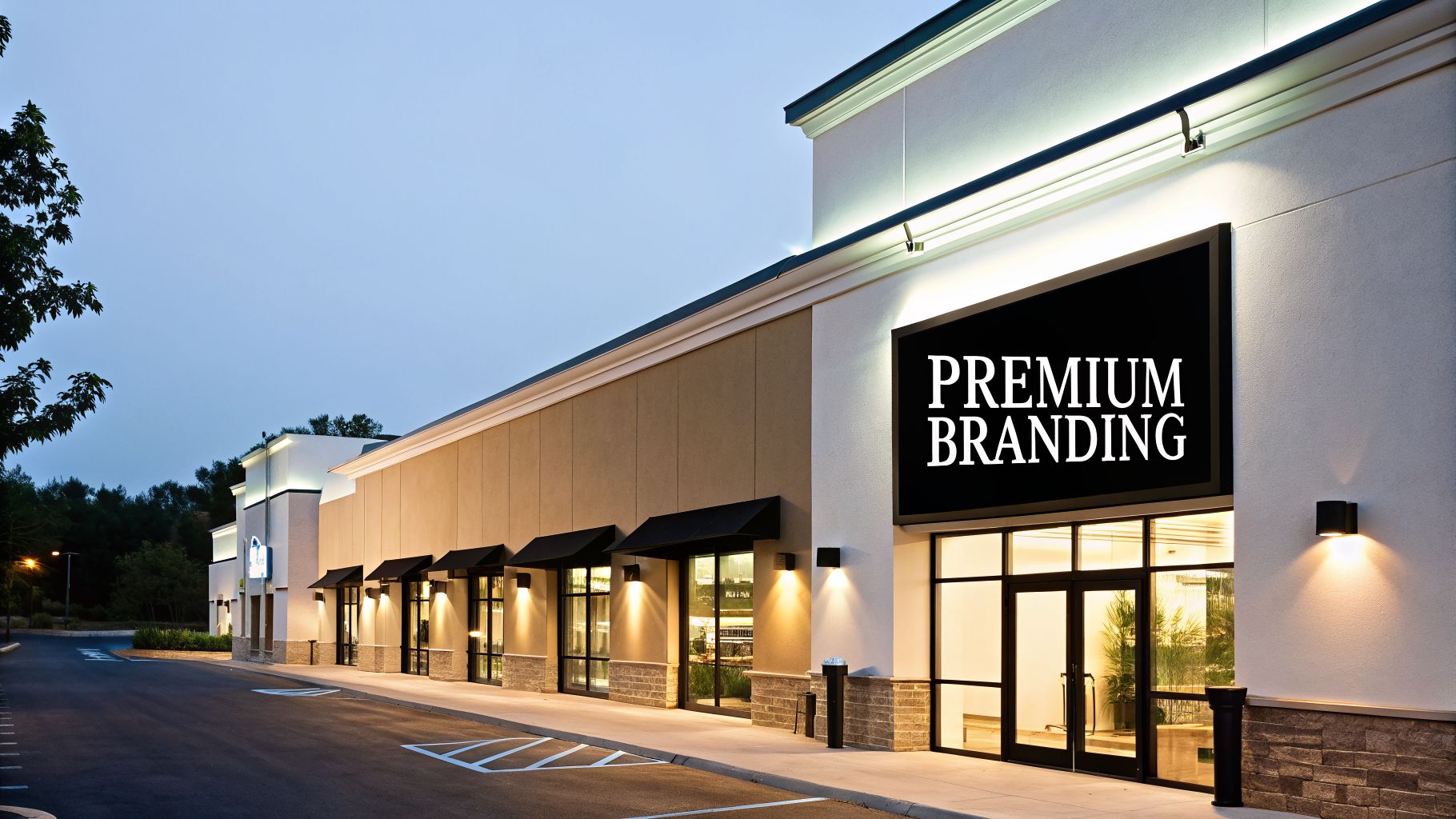
Their primary advantage lies in their visibility, especially when internally illuminated with LED lighting. This ensures your business name is bright and legible 24/7, capturing attention from passing traffic day and night. For example, a restaurant with illuminated channel letters stands out in a crowded dining district after dark. The crisp, distinct nature of channel letters communicates stability and quality, making them a popular choice for businesses looking to project a polished image.
When to Use Channel Letters
This signage type is exceptionally effective for brick-and-mortar businesses where street-level visibility is critical. Consider channel letters if your business is a:
- Retail Store: Attract shoppers in bustling plazas or on main streets.
- Restaurant: Create an inviting and memorable facade for diners.
- Medical or Dental Office: Convey professionalism and establish trust.
- Financial Institution: Project an image of security and permanence.
Key Insight: Channel letters directly connect your physical location to your brand identity. They are not just a sign; they are an architectural extension of your business, working around the clock to build brand recognition.
Actionable Tips for Implementation
- Balance Proportions: Work with a sign professional to scale the letter height and stroke width appropriately for your building's facade. The goal is visibility without overwhelming the architecture.
- Plan for Power: Illumination requires an electrical connection. Ensure this is planned early in the design phase to avoid costly retrofitting. For instance, have an electrician run conduit to the sign location before any exterior finishing is completed.
- Verify Ordinances: Before finalizing your design, check local zoning laws and landlord requirements. Many municipalities have strict rules on sign size, illumination, and projection from the building.
- Choose Smart Lighting: Opt for LED illumination. It offers superior energy efficiency, a longer lifespan, and lower maintenance costs compared to older neon or fluorescent options.
2. Monument Signs for Property Identification
Monument signs are substantial, ground-mounted structures that serve as a primary identifier for a property or business complex. Typically standing between four and eight feet tall, these signs are installed at property entrances to command attention from street level. Built from durable materials like brick, stone, or high-density urethane, they project an image of permanence and credibility.
Their main benefit is establishing a clear, high-end landmark for your location. Unlike building-mounted signs, monuments capture attention at eye level for passing motorists, guiding them to your entrance. A practical example is a medical complex using a monument sign with a clean design to direct patients confidently from a busy road. They are also highly versatile, capable of displaying a single brand or accommodating multiple tenants with modular panels.
When to Use Monument Signs
This type of sign is ideal for businesses that are set back from the road or located within a larger commercial park where clear identification is essential. Consider a monument sign if your location is a:
- Corporate Campus or Office Park: Clearly identify the property and list multiple tenants.
- Hospital or Medical Center: Provide clear, professional wayfinding from the main road.
- Shopping Plaza: Attract drivers and showcase anchor stores.
- Residential Community: Create a stately entrance that adds value and identity.
- Industrial Park: Guide truck traffic and visitors to the correct facility.
Key Insight: A monument sign acts as the official "handshake" for your property. It’s the first impression you make on visitors, establishing your presence long before they reach the front door.
Actionable Tips for Implementation
- Integrate with Landscaping: Collaborate with landscape designers to ensure the sign’s materials and placement complement the surrounding environment for a cohesive, professional look.
- Verify Setback Requirements: Before design work begins, check with your local municipality on zoning rules for height restrictions and setback distances from the road.
- Analyze Sight Lines: Place the sign where it will be most visible to oncoming traffic from all directions, avoiding obstruction from trees or other structures.
- Plan for Tenant Flexibility: If you anticipate multiple tenants, design the sign with modular, easily replaceable panels to simplify future updates without a complete rebuild.
- Budget for the Foundation: Proper installation requires a concrete foundation and professional expertise. Factor these significant costs into your overall project budget.
3. LED Pylon Signs for High-Visibility Branding
LED pylon signs are towering, ground-mounted structures designed to serve as major visual landmarks. Ranging from 20 to over 60 feet tall, these signs are built for maximum impact from a distance, making them one of the most powerful small business sign ideas for businesses located near highways, along busy commercial corridors, or within large multi-tenant properties.
Their core feature is the integrated LED display, which allows for dynamic, changing content. This digital capability means a business can display multiple messages, promotions, the time and temperature, or even full-motion video, ensuring the sign is always relevant and engaging. Constructed from steel and aluminum with durable enclosures, these signs are built to withstand the elements while projecting a modern, authoritative image.
The primary benefit is their immense visibility and versatility. A pylon sign acts as a beacon, guiding customers directly to your location from far away. The digital component captures attention far more effectively than a static sign, allowing for real-time advertising. For example, a hotel can display its nightly rate and vacancy status to attract travelers from a nearby interstate.
When to Use LED Pylon Signs
This type of signage is a significant investment best suited for businesses where capturing attention from high-speed or distant traffic is essential for success. Consider an LED pylon sign if your business is a:
- Gas Station or Fast Food Restaurant: Attract drivers from the highway with fuel prices and meal deals.
- Multi-Tenant Commercial Center: List all tenants and feature individual business promotions.
- Car Dealership: Showcase new inventory, financing offers, and branding.
- Shopping Mall or Entertainment Venue: Announce events, movie times, and store directories.
Key Insight: An LED pylon sign is more than just a sign; it's a dynamic advertising platform. It gives your business a powerful voice in a crowded landscape, allowing you to communicate directly with a massive audience 24/7.
Actionable Tips for Implementation
- Verify Local Regulations: Before committing, thoroughly investigate local ordinances. Many municipalities have strict rules on sign height, brightness levels, and how frequently digital messages can change.
- Plan for Engineering: These structures require comprehensive planning for the foundation, structural integrity, and electrical supply. Engage with engineers and sign professionals early in the process.
- Choose a Certified Manufacturer: Opt for a reputable LED display manufacturer that offers strong warranties and technical support. This protects your investment and ensures long-term performance.
- Implement a Content System: A user-friendly content management system (CMS) is critical for easy updates. For instance, ensure your team is trained to schedule a week's worth of promotions in advance.
4. Window and Wall Graphics for Interior and Exterior Branding
Window and wall graphics are one of the most versatile and cost-effective small business sign ideas available. These custom vinyl, perforated, or printed decals are applied directly to glass surfaces or walls, transforming unused space into powerful branding and informational assets. They can display anything from your logo and hours of operation to intricate designs and promotional messaging.
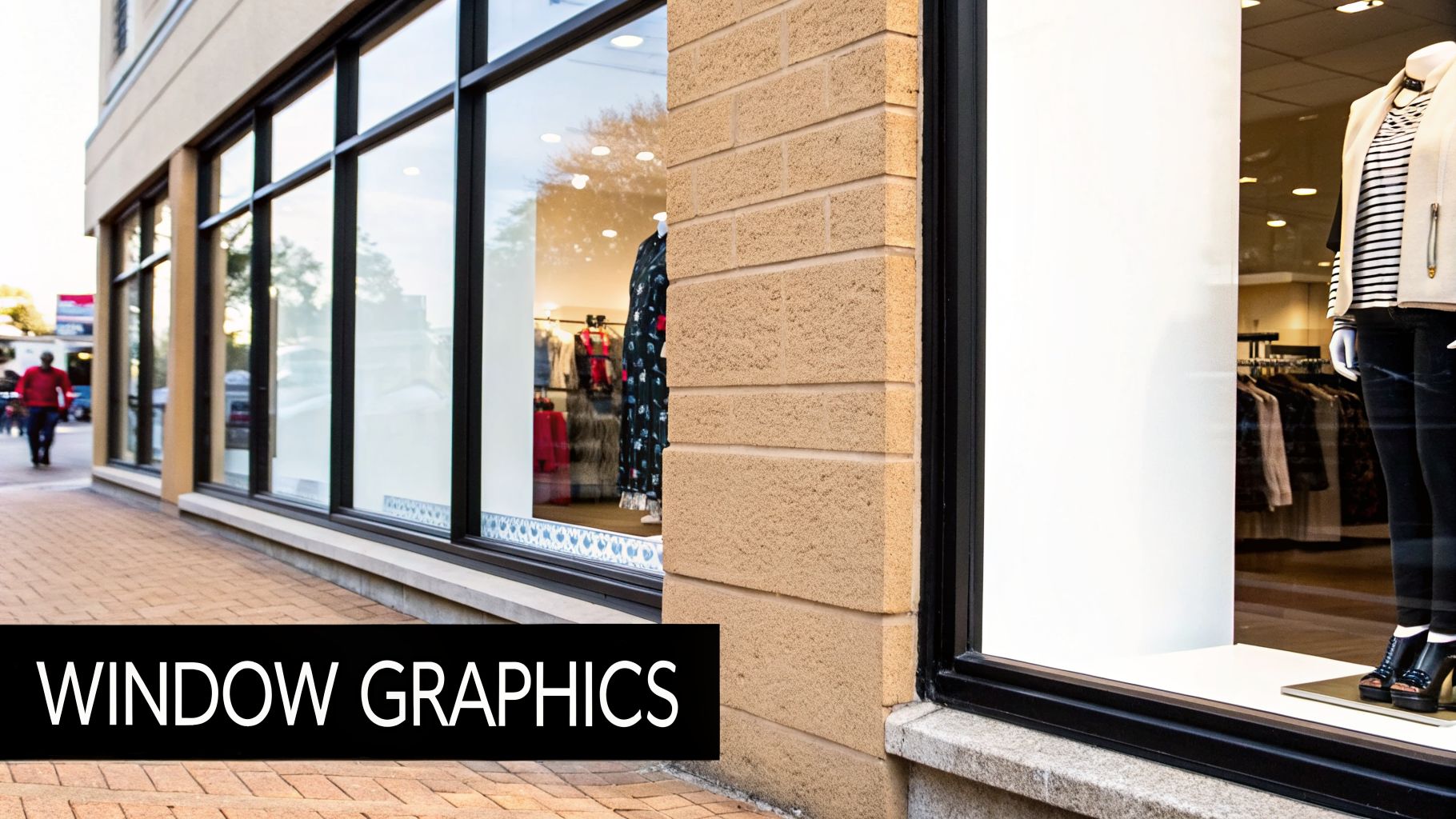
The primary advantage of graphics is their flexibility. Unlike permanent signs, they can be changed with relative ease, making them perfect for seasonal promotions, special events, or brand refreshes. A coffee shop, for example, can apply vinyl graphics to announce a "Pumpkin Spice Latte" in the fall and easily remove them when the season ends. This adaptability allows businesses to keep their messaging current without a significant investment in new hardware.
When to Use Window and Wall Graphics
This signage is ideal for businesses that want to maximize their existing real estate for communication and branding. Consider using graphics if your business is a:
- Retail Store: Announce sales, feature new products, and create eye-catching window displays.
- Restaurant: Display your menu, hours, and daily specials directly on your door or windows.
- Office Space: Add privacy to glass-walled conference rooms or brand interior walls with company values.
- Service-Based Business: List services, contact information, and certifications to build credibility with walk-in customers.
Key Insight: Window and wall graphics turn your storefront and interior surfaces into a dynamic canvas. They offer an immediate way to communicate with customers before they even step inside, driving interest and conveying important information at a glance.
Actionable Tips for Implementation
- Select the Right Material: For windows where you need to see out, use perforated vinyl. It displays a solid image on the outside while remaining transparent from the inside.
- Prioritize Durability: Ensure any exterior graphics are printed with UV-resistant inks to prevent fading and cracking from sun exposure.
- Plan for Professional Installation: While small decals are easy to apply, large-scale graphics require professional installation to avoid bubbles, wrinkles, and misalignment.
- Use High-Resolution Artwork: For crisp, clear results, your design files must be high resolution (e.g., 300 DPI at full size). Pixelated images will look unprofessional and detract from your brand.
5. ADA Compliance and Safety Signage for Legal Requirements
While not as glamorous as storefront branding, compliance signage is one of the most critical small business sign ideas for any public-facing company. These specialized signs are designed to meet legal standards like the Americans with Disabilities Act (ADA) and OSHA safety rules. They feature tactile letters, braille, high-contrast colors, and specific symbols to ensure accessibility and safety for all visitors and employees.
This category includes everything from restroom and emergency exit signs to hazard warnings and accessibility information. Investing in proper compliance signage is not just about avoiding fines; it demonstrates a genuine commitment to safety and the well-being of every person who enters your facility. Understanding and adhering to legal requirements, such as ADA Compliance, is vital for safety and accessibility.
When to Use Compliance and Safety Signage
Compliance signage is mandatory for nearly all businesses that serve the public or have employees. It is a foundational element of a building’s wayfinding and safety system. This signage is essential for:
- Any Public Building: Restrooms, exits, and stairways require compliant identification.
- Workplaces: Warehouses and manufacturing sites need clear hazard warnings (e.g., "High Voltage," "Forklift Traffic").
- Healthcare Facilities: Clear directional and room identification signs are crucial for patient navigation.
- Retail and Hospitality: Signs indicating accessible parking, entrances, and service animal policies create a welcoming environment.
Key Insight: Compliance signage is non-negotiable infrastructure. It functions as a silent guide, ensuring your business is safe, accessible, and welcoming to everyone, while protecting you from legal liability.
Actionable Tips for Implementation
- Conduct a Facility Audit: Walk through your entire property to identify every location where a compliance or safety sign is needed. Create a checklist for restrooms, exits, stairwells, parking lots, and areas with potential hazards.
- Work with a Certified Expert: Partner with a sign manufacturer that specializes in ADA and OSHA-compliant signage. They will ensure your signs meet all requirements for text height, braille placement, and mounting location.
- Use Standardized Symbols: Employ universally recognized pictograms for restrooms, exits, and accessibility to overcome language barriers and ensure immediate comprehension.
- Schedule Annual Reviews: Laws and building layouts can change. Review your compliance signage annually to make necessary updates and document your efforts for any regulatory inspections.
- Ensure Proper Installation: ADA signs have strict rules for mounting height and location (e.g., on the latch side of the door). Incorrect installation can render a compliant sign non-compliant.
6. Yard and Sidewalk Signs for Location Awareness and Foot Traffic
Yard and sidewalk signs are ground-level, portable solutions designed to capture immediate attention from pedestrians and local traffic. These dynamic signs, such as A-frame sandwich boards, feather flags, and promotional yard stakes, are placed directly in the customer's path to announce services, direct foot traffic, or highlight specials. Their main strength is their ability to deliver a timely, targeted message at the point of decision.

Unlike permanent building signage, sidewalk signs offer flexibility. They can be updated daily, moved to optimize visibility, and stored overnight. For instance, a bakery can use a chalkboard A-frame to advertise "Fresh Bread at 7 AM" and change it to "Half-Price Pastries at 4 PM" later in the day. This makes them a cost-effective and highly responsive tool for driving impulse visits and communicating time-sensitive information.
When to Use Yard and Sidewalk Signs
This type of signage is ideal for businesses that depend on local foot traffic or need to guide customers to a location that isn't immediately obvious from the main road. They are perfect for:
- Restaurants & Cafés: Announcing daily specials, happy hour times, or simply "We're Open!"
- Retail Stores: Promoting sales, new arrivals, or clearance events to shoppers already nearby.
- Service Providers: Guiding clients to an office entrance in a multi-tenant building.
- Churches & Nonprofits: Directing attendees to events, services, or registration tables.
- Real Estate: Using directional signs to guide potential buyers to an open house.
Key Insight: Sidewalk signs are your business's "street-level salesperson." They start a conversation with potential customers right on the pavement, giving them a compelling reason to step inside at that very moment.
Actionable Tips for Implementation
- Prioritize Readability: Keep your message short (3-5 words), bold, and easy to read in 3-5 seconds. A pedestrian won't stop to read a novel.
- Be Strategic with Placement: Position signs in high-traffic areas where they are most visible without obstructing the walkway. Observe foot traffic patterns to find the sweet spot.
- Check Local Ordinances: Before purchasing, verify your municipality’s rules regarding sidewalk signs. Many cities have regulations on size, placement, and hours of use.
- Invest in Durability: Choose signs made from weather-resistant materials like treated wood, heavy-duty plastic, or metal. Consider a weighted base or sandbags for wind resistance.
- Keep it Fresh: Regularly update the message on chalkboards or changeable-letter signs. A sign that never changes becomes part of the background noise.
7. Banners and Flags for Seasonal and Event Marketing
Banners and flags are versatile and cost-effective small business sign ideas perfect for temporary messaging. These large-format signs, typically printed on vinyl or fabric, are excellent for announcing specific events, promotions, or seasonal campaigns. Their ability to be produced and installed quickly makes them a go-to solution for time-sensitive communication.
The primary benefit of banners is their high-impact visibility at a lower cost compared to permanent signage. Whether mounted to a building facade, hung from poles, or displayed on a stand, they command attention with bold graphics and concise text. A church can use a large banner to announce its "Community Fall Festival" dates, creating widespread awareness for a fraction of the cost of a permanent sign.
When to Use Banners and Flags
This type of signage is a great fit for any organization needing to communicate a message that has a clear start and end date. Consider using banners and flags for your:
- Grand Opening: Announce your new business to the community in a big way.
- Seasonal Promotions: Advertise holiday sales, new seasonal inventory, or special offers.
- Event Promotion: Market upcoming festivals, fundraisers, or community gatherings.
- Organizational Messaging: Churches and nonprofits can share service times or campaign goals.
- Construction Sites: Display "Coming Soon" information or identify the companies involved.
Key Insight: Banners and flags provide tactical flexibility. They allow you to add a dynamic layer to your marketing that can be changed out frequently to keep your messaging fresh and relevant without the commitment of permanent installations.
Actionable Tips for Implementation
- Design for Distance: Keep your message simple and your text large. A banner should be instantly readable from a distance by people in moving vehicles or across a parking lot.
- Invest in Quality Materials: Choose heavy-duty vinyl and UV-resistant inks, especially for outdoor use. This prevents rapid fading from sun exposure and ensures the banner withstands the elements.
- Secure the Installation: Use all provided grommets with strong zip ties or rope to ensure the banner is taut and secure. For high-wind areas, ask your sign provider about "wind slits" to reduce stress on the material.
- Rotate Your Message: To avoid "banner blindness" where locals stop noticing your sign, refresh your designs seasonally or for each new promotion. An old, tattered banner can negatively affect your business's image.
8. Trade Show Booths and Large-Format Prints for Event Marketing
Trade show booths and large-format prints are essential small business sign ideas that transform a temporary event space into a powerful branding environment. These portable systems combine a structural framework with high-resolution custom graphic panels, backdrops, and banners. This creates a professional and immersive experience at conferences, trade shows, and industry exhibitions.
The chief benefit of this signage is its ability to make your brand stand out in a crowded, competitive setting. A well-designed booth acts as a physical destination, attracting prospects and facilitating meaningful conversations. These systems are reusable, modular, and designed for transport, making them a cost-effective marketing tool. A B2B software company, for example, can reuse its booth at a dozen industry events per year, amortizing the initial cost while generating consistent leads.
When to Use Trade Show Booths
This signage is critical for any business that relies on in-person networking and lead generation to drive growth. Consider this approach if your business is in:
- B2B Manufacturing or Distribution: Showcase products and build relationships with potential partners.
- Technology and Software: Provide live demonstrations and capture qualified sales leads.
- Healthcare and Medical Devices: Present new innovations to industry professionals and institutions.
- Franchise or Retail Operations: Attract potential franchisees or corporate partners at recruitment events.
Key Insight: A trade show booth is more than signage; it's a portable brand headquarters. It gives your sales team a professional, branded backdrop to generate leads, build relationships, and close deals far from your home office.
Actionable Tips for Implementation
- Invest in Modularity: Choose a modular booth system that can be reconfigured for different booth sizes (e.g., 10×10, 10×20). This flexibility maximizes your investment across various events.
- Design for Traffic Flow: Plan your layout to guide visitors naturally through the space. Position key messages and interactive elements in high-visibility zones based on common aisle traffic patterns.
- Prioritize Print Quality: Use high-resolution, large-format printing for all graphics. Crisp, vibrant visuals communicate professionalism and prevent your display from looking amateurish.
- Incorporate Strategic Lighting: Use spotlights or integrated LED backlighting to make your booth pop. Highlighting your main logo, key products, or message walls draws immediate attention. A comprehensive strategy for your trade show booth involves more than just impressive prints; it also requires understanding overall effective trade show marketing strategies.
9. Custom Printing and Promotional Products for Extended Brand Reach
Effective branding extends beyond your primary sign. Custom printing and promotional products are powerful small business sign ideas that take your brand message off-site and into the hands of your audience. This category includes everything from essential business cards and letterhead to branded merchandise like t-shirts, pens, and coffee mugs. These items create a cohesive and consistent brand experience across every customer interaction.
The primary advantage of this approach is its ability to boost brand recall and create lasting impressions. While a storefront sign captures attention at your location, a well-chosen promotional item travels with the customer, serving as a constant reminder of your business. For instance, a local hardware store that gives away branded tape measures ensures their name is seen every time a customer starts a home project. This strategy turns everyday objects into miniature billboards.
When to Use Custom Printing & Promotional Products
These materials are fundamental for any business that interacts with customers, partners, or employees. They reinforce professionalism and serve as tangible marketing tools. Consider this approach for:
- Professional Services: Accountants, lawyers, and consultants use branded stationery and high-quality business cards to convey credibility.
- Retail Stores: Branded tote bags or custom apparel can turn customers into walking advertisements.
- Trade Services: Contractors and technicians can leave behind branded pens or magnets after a service call, keeping their contact info handy.
- Events & Trade Shows: Giveaways like branded notebooks and drinkware attract visitors to your booth and keep your brand top-of-mind post-event.
Key Insight: Promotional products and custom printing transform passive brand awareness into active engagement. They provide a physical touchpoint that reinforces your identity and builds a stronger connection with your audience.
Actionable Tips for Implementation
- Align Items with Your Audience: Choose promotional products that your target customers will actually use. A tech company might offer branded USB drives, while a coffee shop could provide custom mugs.
- Maintain Brand Consistency: Ensure your logo, color palette, and fonts are identical across all printed materials and promotional goods. This consistency is critical for building a strong, recognizable brand.
- Order Strategically: Buying in bulk often reduces the cost per unit, but it's wise to test new items with a smaller order first. This helps you confirm quality and gauge audience reception before a larger investment.
- Plan Your Distribution: Don't just order products; have a clear plan for getting them into the right hands. For example, include a branded pen with every invoice you mail or give a free tote bag with purchases over a certain amount.
10. Real Estate and Construction Site Signage for Property Marketing
For businesses in real estate and construction, specialized signage is not just an advertisement; it is a critical sales and marketing tool. These signs are designed to capture attention, provide essential information, and drive action for properties under development or for sale. This category includes everything from simple "For Sale" signs to large, detailed displays showcasing a future commercial development.
The primary function of these signs is to convert passing interest into qualified leads. For construction sites, they establish the project's identity and brand the companies involved. For real estate, they direct potential buyers, announce open houses, and create a sense of urgency. For example, a large sign with a rendering of a future shopping center can help a commercial realtor pre-lease spaces long before construction is complete.
When to Use Real Estate & Construction Signs
This signage is indispensable for any business involved in buying, selling, or developing property. Consider these signs if your business is focused on:
- Residential Real Estate: Announcing properties for sale, open houses, and successful sales.
- Commercial Property: Marketing available lease spaces, land for development, or buildings for sale.
- Construction & Development: Identifying project sites, showcasing renderings, and promoting the firms involved.
- Property Management: Advertising available rental units or commercial spaces within a larger complex.
Key Insight: Site-specific signs act as your 24/7 salesperson on the property. They provide the first impression and crucial details needed to move a potential buyer or tenant from passive observation to active inquiry.
Actionable Tips for Implementation
- Design for Readability: Most people will see these signs from a moving vehicle. Use large, bold fonts, high-contrast colors, and minimal text to ensure key information like the property status and a phone number is legible in seconds.
- Include a Clear Call to Action: Don't just announce the property; tell people what to do next. Phrases like "Call for a Tour," "Visit Our Website," or "Now Leasing" guide potential clients.
- Use Professional Imagery: For development projects, high-quality architectural renderings are essential. For properties for sale, professional photography makes a significant difference in perceived value.
- Ensure Durability: These signs must endure weather for weeks, months, or even years. Choose durable, weather-resistant materials like MDO plywood, Alumalite, or heavy-duty vinyl banners to maintain a professional appearance.
- Plan for Updates: The status of a property changes. Use sign riders or overlays that can be easily swapped to show "Sale Pending" or "Sold" without needing a whole new sign.
10-Option Comparison: Small Business Sign Ideas
| Sign Type | Implementation Complexity 🔄 | Resource Requirements ⚡ | Expected Outcomes 📊 | Ideal Use Cases 💡 | Key Advantages ⭐ |
|---|---|---|---|---|---|
| Channel Letters for Storefront Branding | Medium–High — professional install, electrical and permit coordination | Moderate–High cost; LED power; skilled fabrication & maintenance | Premium day/night visibility; strong street-level brand presence | Retail, restaurants, professional offices, hospitality, healthcare | High visibility; customizable illuminated branding |
| Monument Signs for Property Identification | High — foundation work, construction & complex permitting | High cost; heavy materials (stone/brick/composite); contractor expertise | Long-term curb appeal; durable property identification; strong ROI | Office parks, medical centers, shopping centers, subdivisions | Permanent, credible presence; multi-tenant capability |
| LED Pylon Signs for High-Visibility Branding | Very High — structural engineering, electrical, strict zoning | Very high cost; significant power & technical maintenance; permits | Exceptional distant visibility; dynamic messaging; ad revenue potential | Highway-adjacent businesses, multi-tenant centers, gas stations, dealerships | Maximum visibility; dynamic content; revenue opportunities |
| Window and Wall Graphics for Interior and Exterior Branding | Low–Medium — printing and professional application | Low cost; vinyl/perforated materials; quick production | Flexible seasonal promotions; cost-effective brand refreshes | Retail, restaurants, startups, real estate, healthcare | Affordable, fast updates; highly customizable visuals |
| ADA Compliance and Safety Signage for Legal Requirements | Low–Medium — must meet regulatory specs and proper placement | Low cost; compliant materials; certified manufacturers | Legal compliance; improved accessibility; liability protection | All businesses, healthcare, manufacturing, warehouses | Mandatory compliance; reduces legal risk; accessible design |
| Yard and Sidewalk Signs for Location Awareness and Foot Traffic | Low — portable and simple setup; daily handling | Very low cost; lightweight materials; frequent replacement | Immediate pedestrian attention; short-term promotional impact | Cafés, small retailers, real estate open houses, local events | Extremely affordable; flexible messaging; immediate effect |
| Banners and Flags for Seasonal and Event Marketing | Low — simple installation but need secure fastening | Low–Medium cost; fabric/vinyl; quick production | High temporary visibility for events and promotions | Grand openings, seasonal sales, events, churches | Cost-effective; quick turnaround; scalable sizes |
| Trade Show Booths & Large-Format Prints for Event Marketing | Medium–High — modular design, transport and setup logistics | Medium–High cost; storage/transport; staffing and assembly | Strong lead generation and brand presence at events | Trade shows, conferences, expos, B2B marketing | Reusable investment; high visual impact; configurable |
| Custom Printing & Promotional Products for Extended Brand Reach | Low — design and ordering; manage suppliers and lead times | Low cost per unit; bulk orders; storage needs | Extended brand recall; tangible customer touchpoints | All businesses, startups, corporate events, giveaways | Wide distribution; low per-unit cost; supports retention |
| Real Estate & Construction Site Signage for Property Marketing | Low–Medium — temporary installs; frequent updates | Low–Medium cost; durable outdoor materials; quick production | Drives inquiries; visible property identification; short campaign lifespan | Real estate listings, construction projects, developers | Targeted property marketing; quick to produce; flexible messaging |
Bringing Your Vision to Life: Your Next Steps to a Standout Sign
This guide has walked through a wide array of small business sign ideas, from the commanding presence of a pylon sign to the immediate appeal of custom window graphics. We've explored how different signs serve distinct purposes, whether it's establishing your brand identity, guiding customers with ADA-compliant signage, or capturing attention at a trade show. The central lesson is clear: your sign is not just a marker; it is a vital piece of your marketing and a silent salesperson working for you around the clock.
The right signage does more than just announce your name. It builds trust, communicates quality, and creates a critical first impression that can turn a passerby into a loyal customer. A well-placed monument sign can lend a sense of permanence and authority to a corporate park, while a vibrant banner can create excitement for a seasonal sale. Each choice you make contributes directly to your brand’s visibility and your business's bottom line.
From Idea to Installation: A Strategic Approach
Turning these small business sign ideas into a physical reality requires a thoughtful plan. Now that you are equipped with a better understanding of the options available, the next phase is to move from abstract concepts to concrete action. The success of your signage project depends on careful execution, from initial design to final installation.
Here are the critical next steps to bring your vision to life:
Define Your Primary Goal: What is the number one thing you need your sign to achieve? Is it to increase foot traffic from a busy road, reinforce brand prestige, or simply help people find your entrance? Answering this question will narrow down your options significantly. For example, if visibility from a distance is paramount, a tall pylon sign is a better investment than simple window lettering.
Audit Your Location: Walk around your property and its surroundings. Note the viewing angles, traffic patterns, and any obstructions like trees or other buildings. Consider both daytime and nighttime visibility. This audit will help you determine the optimal placement, size, and whether illumination is a necessity or just a nice-to-have feature.
Set a Realistic Budget: Your budget will influence material choices, size, and complexity. Remember that a business sign is an investment, not just an expense. Factor in the potential return on investment from increased visibility and customer acquisition when deciding how much to allocate. Consider the long-term value of durable, high-quality materials over a cheaper, short-term solution that may require frequent replacement.
Investigate Local Regulations: Before you get too attached to a specific design, research your local zoning ordinances and permitting requirements. Many municipalities have strict rules regarding sign size, height, placement, and illumination. Understanding these rules early in the process prevents costly delays and redesigns. A professional sign company can be an invaluable partner in managing this complex step.
Choosing the right sign is a significant decision that directly impacts how the public perceives your business. It is the handshake that greets every potential customer, a constant affirmation of your brand’s presence in the community. By moving forward with a clear strategy, you ensure this powerful asset works effectively for you for years to come.
Ready to turn your sign ideas into a professional, high-impact reality? The experts at On Display Signs, Inc. specialize in helping businesses like yours manage the entire process, from design and fabrication to navigating permits and final installation. Contact On Display Signs, Inc. today to ensure your vision is executed flawlessly.