Your storefront sign is the most crucial, hardworking marketing tool you own. It's the handshake before the hello, the silent salesperson working 24/7 to attract customers, communicate your brand's promise, and drive foot traffic. A generic, poorly maintained, or outdated sign is more than just a missed opportunity; it’s a silent signal that can deter potential customers before they even consider walking through your door. Conversely, a strategic investment in the right signage is a direct driver of revenue and brand recognition.
This guide moves beyond generic advice to provide a practical roundup of 10 powerful storefront signage ideas. We'll break down everything you need to make an informed decision, including:
- Best use cases for different business types (retail, office, restaurant).
- Material and illumination options.
- Estimated budget ranges and key maintenance tips.
- Critical permitting and placement considerations.
Our goal is to equip you with actionable insights to select a sign that elevates your brand and delivers a measurable return. While the right signage is key, a critical component of making a memorable initial impression is the overall cleanliness of your business's exterior. To ensure your entire facade is inviting, consider investing in professional commercial window cleaning services to maintain a pristine look. By combining a compelling sign with a well-kept storefront, you create an unbeatable first impression that turns passersby into loyal customers. Let's explore the options that will make your business stand out.
1. LED Channel Letters
A top choice for businesses seeking high visibility and a professional look, LED channel letters are individual, three-dimensional letters illuminated from within. Each letter is crafted from durable materials like aluminum or stainless steel and mounted directly to a storefront facade or a raceway, creating a clean, high-end appearance. This method is one of the most effective storefront signage ideas for establishing a strong brand presence that is visible 24/7.
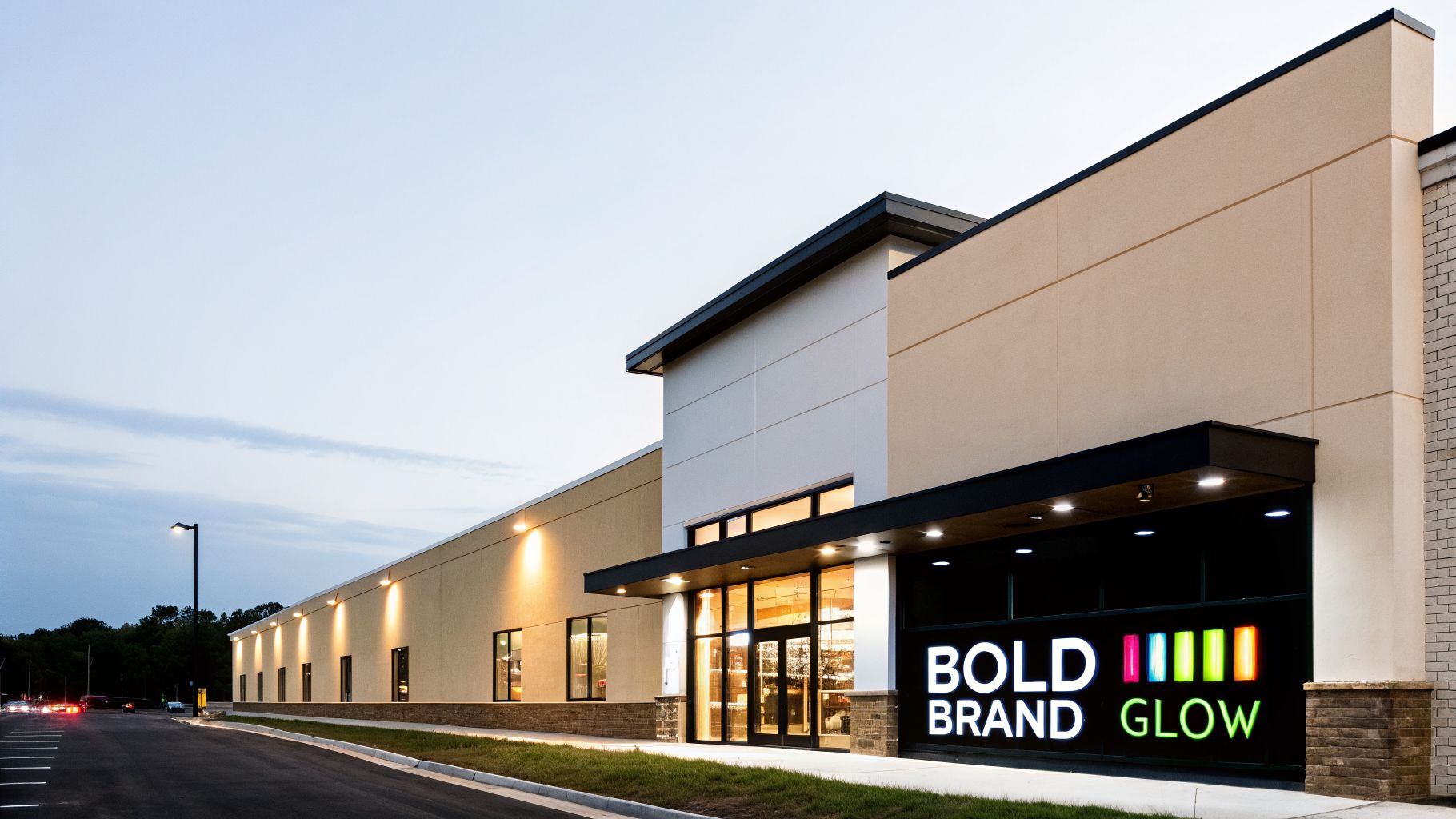
The internal LED lighting makes them shine brightly after dark, attracting attention from a distance and ensuring your business never fades into the background. Because they can be produced in nearly any font, color, or size, they offer exceptional design flexibility to perfectly match your brand’s visual identity.
Best Use Cases & Practical Tips
Channel letters are a versatile solution fitting for many business types. Fast-casual restaurants use them to display bold logos, downtown retail shops rely on them to stand out on a busy street, and professional services like law firms and medical offices use their polished look to convey trust and stability.
To get the most out of your investment, follow these practical steps:
- Size for Distance: Ensure your letters are large enough to be legible from the primary viewing distance, like a main road or across a parking lot. For example, a sign viewed from 100 feet away needs letters at least 10 inches tall for good readability.
- Contrast is Key: Use high-contrast color combinations between the letter face and trim for maximum daytime readability. A practical example is blue letters with a white trim, which stands out clearly.
- Mind the Glow: Check local ordinances for restrictions on sign brightness or hours of illumination to remain compliant.
- Plan Installation: Schedule the sign installation during off-peak hours to minimize disruption to your business operations.
Key Insight: The long-term value of channel letters comes from their durability and low energy consumption. The upfront cost is offset by years of effective, low-maintenance brand promotion. For a detailed breakdown, you can explore the typical channel letter sign cost.
2. Monument Signs
Monument signs are large, ground-level freestanding structures positioned at property entrances or along roadsides to serve as a dignified, permanent marker. Often built from durable materials like brick, stone, or concrete, they convey a sense of stability, permanence, and professionalism. This type of sign is an exceptional choice for businesses located away from the main road or within a larger complex, as it directs traffic and establishes a strong first impression right at the property line.
These signs are not attached to a building, giving them a distinct and substantial presence that captures attention from passing vehicles. Because they are low to the ground, they blend seamlessly with landscaping and architecture, adding to the property's aesthetic appeal. This makes them a great option among storefront signage ideas for establishing a distinguished brand identity before a visitor even reaches the front door.
Best Use Cases & Practical Tips
Monument signs are exceptionally well-suited for properties that need to identify a location from the street. Corporate office parks use them to list multiple tenants, medical complexes place them at main entrances to guide patients, and retail shopping centers rely on them to mark their location and attract shoppers. They are also common for churches, educational institutions, and residential communities.
Follow these practical tips to maximize your sign's impact:
- Location is Everything: Conduct a site survey to determine the optimal placement for visibility from key traffic routes, paying attention to sight lines and potential obstructions like trees or other signs.
- Integrate with Design: Ensure the monument's materials and style complement the existing architecture and landscaping for a cohesive, upscale look. For instance, a brick monument sign is an excellent match for a brick office building.
- Plan for the Future: If you're in a multi-tenant building, design the sign with interchangeable panels or space to easily add or remove tenant names.
- Incorporate Illumination: Use subtle external ground lighting or internal illumination to ensure the sign remains visible and professional after dark.
Key Insight: The true strength of a monument sign is its ability to create a landmark. It acts as a permanent, architectural element of your property, building brand recognition and projecting an image of credibility and long-term stability. For more information, you can explore designs and options for business monument signs.
3. Window Graphics and Decals
A dynamic and cost-effective signage solution, window graphics involve applying large-format, digitally printed vinyl directly onto glass surfaces. This transforms storefront windows into vibrant advertising spaces, perfect for displaying product imagery, brand visuals, or promotional messages. Graphics can be designed to be opaque, translucent, or perforated, giving businesses control over interior visibility and natural light. This method is one of the most flexible storefront signage ideas for seasonal campaigns or permanent branding without requiring structural changes.
These graphics turn your largest and most visible asset-your windows-into a direct communication channel with passersby. Because they are printed digitally, the design possibilities are nearly limitless, allowing for full-color photographs, intricate logos, and bold text that grab attention and drive foot traffic. They are an excellent way to keep your storefront looking fresh and relevant throughout the year.
Best Use Cases & Practical Tips
Window graphics are widely used across many industries. Retail boutiques use them to announce sales and showcase seasonal collections, while coffee shops display menu items and create an inviting atmosphere. Real estate offices also find them valuable for featuring available properties and agent information directly at street level.
To get the best results from your window graphics, consider these tips:
- Prep the Surface: A clean, smooth surface is essential for proper adhesion. Before applying new graphics, it's critical to ensure the glass is free of all residues. This may even involve knowing how to remove paint from window glass for a perfectly clean slate.
- Choose Quality Vinyl: Use a high-quality vinyl rated for exterior durability to withstand sun, rain, and temperature changes without fading or peeling.
- Professional Installation: Employ professional installers to ensure a smooth, bubble-free application. Misalignment or trapped air can detract from the professional look.
- Design for Distance: Create designs with clear focal points and legible text that can be easily understood by someone walking or driving by. For example, a "50% OFF" decal should be large and bold.
- Stay Fresh: Update your messaging seasonally or for special promotions to keep your storefront engaging and give customers a reason to look again.
Key Insight: Window graphics offer a high-impact advertising tool with a low barrier to entry. They allow businesses to test messaging, run limited-time offers, and completely refresh their look for a fraction of the cost of permanent signage. For a deeper dive into options, you can explore the world of business window graphics.
4. Pylon Signs
Pylon signs are tall, freestanding structures designed for maximum visibility from a significant distance. Often positioned at the entrance to shopping centers, along major highway corridors, or at the edge of large commercial properties, these signs command attention with their impressive height, which typically ranges from 15 to over 50 feet. Their vertical design allows them to rise above surrounding obstacles, making them a beacon for your brand.
These monumental signs are especially effective for businesses set back from the road or located in high-traffic areas where drivers need to make quick decisions. Featuring either single-tenant branding or multiple panels for different businesses, they create immediate landmark recognition and guide customers directly to your doorstep. Pylon signs are among the most impactful storefront signage ideas for establishing a dominant presence.
Best Use Cases & Practical Tips
Pylon signs are the go-to choice for businesses requiring long-distance visibility. Gas stations and travel plazas on interstate highways rely on them to attract travelers, while car dealerships use their height to dominate busy corridors. They are also indispensable for multi-tenant commercial developments and professional office parks, providing a clear directory for visitors.
To ensure your pylon sign is a powerful asset, consider these practical tips:
- Check Regulations First: Thoroughly research local zoning ordinances and height restrictions before starting the design process. These regulations heavily influence what you can build.
- Prioritize Readability: Design the sign faces with large, clear fonts and high-contrast colors so they are easily readable by drivers moving at high speeds. A simple, bold logo is more effective than cluttered text.
- Plan the Hierarchy: For multi-tenant signs, create a clear visual hierarchy to organize the panels logically and prevent a cluttered look. Anchor tenants usually get top or larger billing.
- Consider a Message Center: Incorporating an electronic message center (EMC) provides the flexibility to display promotions, community messages, or dynamic content.
Key Insight: The primary value of a pylon sign is its ability to act as a landmark. It’s an investment in geographic dominance, capturing attention from far greater distances than any building-mounted sign ever could. For a deeper dive into this sign type, you can find more information on what a pylon sign is.
5. Interactive Digital Displays and Digital Menu Boards
Representing the dynamic side of modern advertising, interactive digital displays are high-resolution LED or LCD screens that show moving content. These storefront signage ideas move beyond static messaging, allowing businesses to display promotional videos, social media feeds, and real-time updates that capture customer attention. This approach is powerful for businesses that need to change their messaging frequently without the cost and labor of replacing physical signs.
Digital displays offer unmatched flexibility, enabling businesses to run targeted content at specific times of the day, like a cafe promoting breakfast specials in the morning and dinner deals in the evening. Their bright, crisp visuals make them highly effective in busy environments, cutting through the noise to deliver a clear and compelling message.
Best Use Cases & Practical Tips
Digital screens are a great fit for industries with ever-changing information. Quick-service restaurants like McDonald's and Subway popularized their use for dynamic menu boards, while retail stores use them to feature new products and promotions. You can also find them at movie theaters displaying showtimes, gas stations showing fuel prices, and hotels showcasing amenities.
Follow these practical steps to ensure your digital signage is effective:
- Design for Scanning: Create content that is easy to read in 3-5 seconds. Use large, high-contrast fonts and minimal text. For example, show an image of a product with its price and a short call to action.
- Keep Content Fresh: Update your promotions, videos, and messages regularly to give customers a reason to keep looking.
- Schedule Strategically: Program your content to align with peak traffic times. For example, a retailer could display a "lunchtime special" promotion from 12 PM to 2 PM.
- Ensure Connectivity: A stable, high-speed internet connection is crucial for reliable content delivery and remote updates.
Key Insight: The main advantage of digital signage is its ability to adapt instantly. A single screen can serve multiple purposes, from promoting a flash sale to displaying community event information, providing a significant return on investment through its versatility. For a closer look, you can get details on digital menu screens for your business.
6. Sidewalk and A-Frame Signs
A-frame signs, also known as sandwich boards, are one of the most effective and affordable storefront signage ideas for capturing the attention of passing foot traffic. These portable, ground-level signs are placed directly in front of a business to engage potential customers at eye level. Their strength lies in their flexibility, allowing for daily updates to promote specials, announce sales, or share witty messages that reflect the brand's personality.
These signs act as a direct invitation, turning a simple sidewalk into a powerful marketing tool. From bustling city centers to quiet suburban shopping areas, an A-frame sign can stop pedestrians in their tracks and guide them right to your front door. They are especially useful for businesses set back from the main street or with less prominent main signage.
Best Use Cases & Practical Tips
The versatility of sidewalk signs makes them a staple for many industries. Coffee shops and restaurants use them to showcase daily specials and happy hour deals, while retail boutiques rely on them to announce new arrivals and seasonal promotions. Service providers like hair salons can also use them to advertise walk-in availability or special discounts.
To make your sidewalk sign work for you, consider these practical tips:
- Keep it Scannable: Design your message to be read and understood in 2-3 seconds. Use large, bold text and concise phrasing like "Today's Special: Chili" instead of a long description.
- Use High Contrast: Stick to high-contrast color combinations, like white on black or yellow on blue, to ensure your message is legible from a distance.
- Stay Relevant: Update your sign daily or weekly to keep the content fresh. This encourages repeat glances from regular passersby.
- Position Strategically: Place the sign where it won't obstruct pedestrian flow but is still highly visible. Check local regulations on sidewalk placement.
- Add Direction: Incorporate simple arrows pointing toward your entrance to eliminate any confusion and guide customers in.
Key Insight: The true power of an A-frame sign is its ability to create an immediate, personal connection. A clever quote, a simple question, or a tempting offer can be all it takes to convert a passerby into a paying customer.
7. Wall Murals and Large-Format Wall Graphics
Moving beyond traditional signage, wall murals and large-format graphics transform entire building facades into artistic statements. These oversized displays, either hand-painted or digitally printed, serve as both functional signs and compelling artwork. This approach is one of the most impactful storefront signage ideas for creating an immersive brand environment and making a memorable impression in visually crowded urban settings.
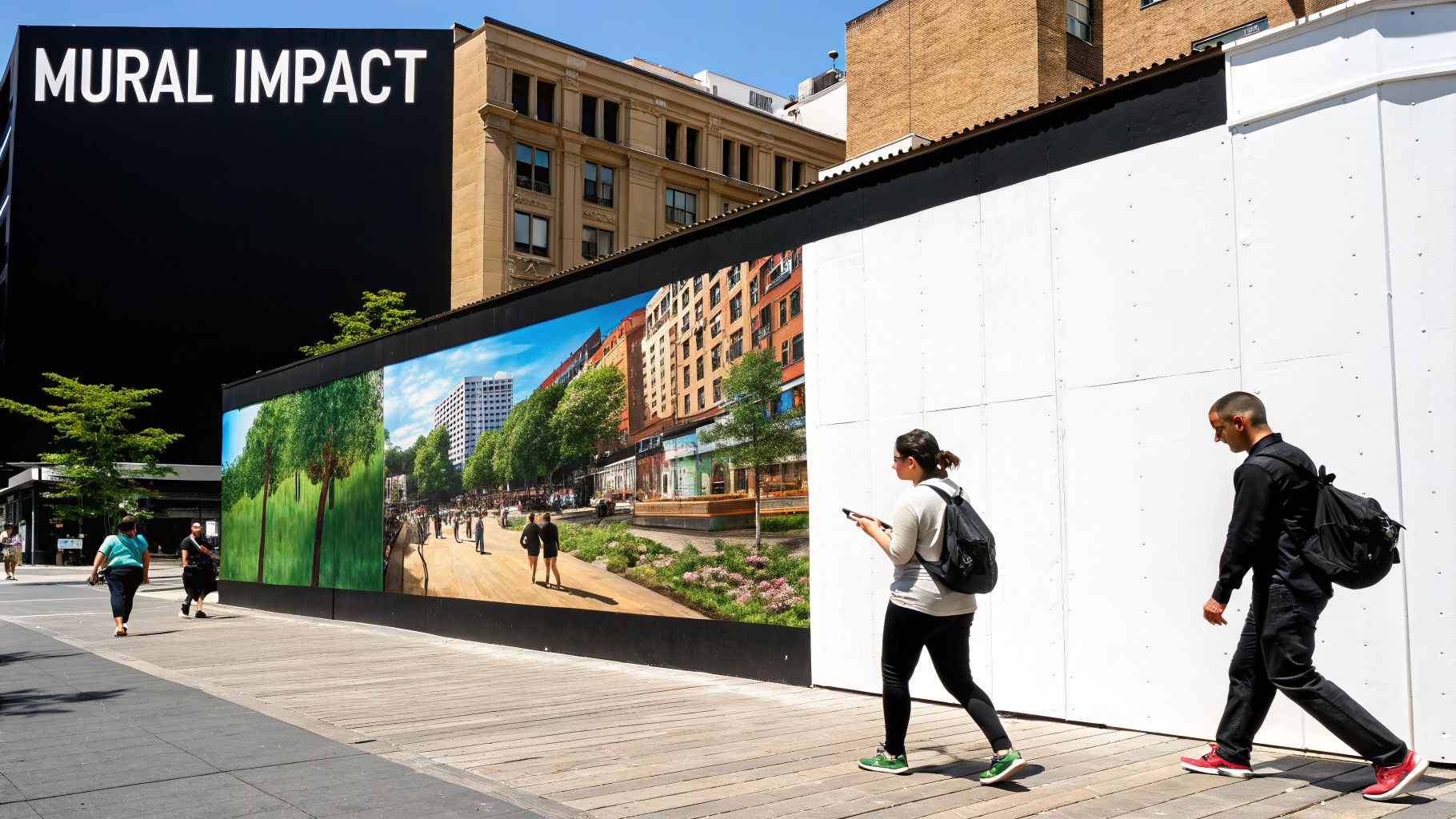
These graphics are powerful storytelling tools, allowing businesses to showcase brand identity, product imagery, or cultural themes on a massive scale. By turning a blank wall into a destination, they not only attract attention but also foster community engagement and encourage social sharing, amplifying brand reach organically.
Best Use Cases & Practical Tips
Murals are particularly effective for businesses aiming to create a unique atmosphere. Urban craft breweries use them to establish an artistic brand identity, while fashion retailers create Instagram-worthy backdrops that attract younger shoppers. Tech companies can display bold corporate imagery, and restaurants often use them to reflect culinary or cultural themes that enhance the dining experience.
To ensure your mural is a success, follow these practical steps:
- Choose a Visible Canvas: Select a wall with high foot and vehicle traffic for maximum exposure. A side wall facing a busy intersection is a prime example.
- Design for Social Media: Create a design that people will want to photograph and share, incorporating a clear spot for your logo or brand name.
- Use Durable Materials: Opt for high-quality, UV-resistant paints or vinyl to protect your investment from fading and weather damage.
- Consider Community Context: Ensure the design resonates positively with the local neighborhood and secure any necessary community or historical board approvals.
- Schedule Maintenance: Plan for professional touch-ups or cleaning every 2-3 years to keep the mural looking fresh and vibrant.
Key Insight: A wall mural's value extends beyond simple advertising; it becomes a local landmark. The initial investment creates a long-lasting visual asset that builds brand affinity and can generate significant word-of-mouth and online promotion.
8. Backlit Blade and Fascia Signs
A premier solution for professional and upscale branding, backlit signs create a distinguished "halo" effect. This is achieved by mounting dimensional letters or logos slightly off a blade sign or fascia panel, with internal lighting directed backward onto the surface. The light reflects off the wall, outlining the sign in a soft, elegant glow. Blade signs project perpendicularly from a building, while fascia signs are mounted flush, both offering a sleek appearance that boosts brand visibility for pedestrians and passing vehicles.
The subtle yet powerful illumination delivers excellent nighttime visibility without the direct brightness of front-lit options. This makes them one of the most effective storefront signage ideas for businesses wanting to convey prestige and sophistication. The dimensional quality adds depth and architectural interest to a storefront, making a memorable impression.
Best Use Cases & Practical Tips
Backlit signs are popular among businesses aiming for a high-end feel. Professional services like law firms and medical offices use them to signal credibility, while boutique shops and upscale restaurants employ them to create an exclusive ambiance. They are also a staple for hotels and financial institutions looking to project stability and quality.
To ensure your backlit sign performs optimally, consider these practical tips:
- Assess Wall Structure: Confirm your building’s facade can safely support the weight of the sign, especially for heavier projecting blade signs. A brick or concrete wall is ideal.
- Maximize Sightlines: Position the sign for maximum visibility from primary traffic routes and pedestrian walkways, ensuring it is not blocked by trees or other structures.
- Plan Electrical Access: Work with your sign provider to plan for the necessary electrical wiring during the design phase to ensure a clean, seamless installation.
- Color Psychology: Choose colors for the sign and the backlighting that align with your brand identity and evoke the desired emotional response. For example, a warm white glow can feel more inviting than a stark blue light.
Key Insight: The success of a backlit sign depends heavily on the mounting surface. A smooth, light-colored wall will reflect the light most effectively, creating a crisp and pronounced halo, whereas a dark or textured surface like rough brick will absorb light and diminish the effect.
9. ADA-Compliant Signage Solutions
Essential for any public-facing business, ADA-compliant signage is designed to meet the requirements of the Americans with Disabilities Act. These specialized signs feature Braille, high-contrast colors, and tactile (raised) lettering, mounted at accessible heights to ensure everyone can navigate your space safely and independently. Far more than a legal formality, incorporating these elements into your storefront signage ideas is a clear statement of your commitment to customer care.
Modern ADA signage proves that function and form can coexist beautifully. Designers can integrate required accessibility features into your brand’s aesthetic, creating a cohesive look that serves all customers. These signs are critical for wayfinding, room identification, and communicating safety information, making them a non-negotiable part of a comprehensive sign strategy.
Best Use Cases & Practical Tips
ADA signage is a legal requirement for public accommodations and commercial facilities, making it universally applicable. You will find it used for restroom identification in restaurants, floor and suite directories in office buildings, and accessible entrance markers at retail stores. Healthcare and educational institutions rely heavily on ADA-compliant systems for campus-wide wayfinding.
To ensure your signs are both compliant and effective, follow these key steps:
- Consult the Standards: Refer directly to the 2010 ADA Standards for Accessible Design to understand specific requirements for text size, contrast, and placement.
- Partner with Experts: Work with an experienced sign manufacturer that specializes in ADA compliance to avoid costly errors and ensure your signs meet all regulations.
- Check Contrast Ratios: Ensure the color of your text and symbols has a high contrast against the background for maximum legibility. A common compliant example is matte black text on a non-glare white background.
- Verify Mounting Locations: Install all signs at the correct, unobstructed heights as specified by ADA guidelines, typically next to the latch side of the door they identify.
Key Insight: Proactive implementation of ADA-compliant signage not only prevents legal issues but also builds significant goodwill. A well-designed, accessible environment tells every customer they are valued and welcome, strengthening brand reputation.
10. Dimensional Logo and 3D Letter Signs
A powerful way to make your brand tangible, dimensional logo and 3D letter signs turn your company’s emblem into a physical, standalone sculpture. These are not just signs; they are architectural features that create memorable brand experiences. Installed as building-mounted elements or as freestanding monuments, these eye-catching installations serve as focal points for customer photography and social media sharing.
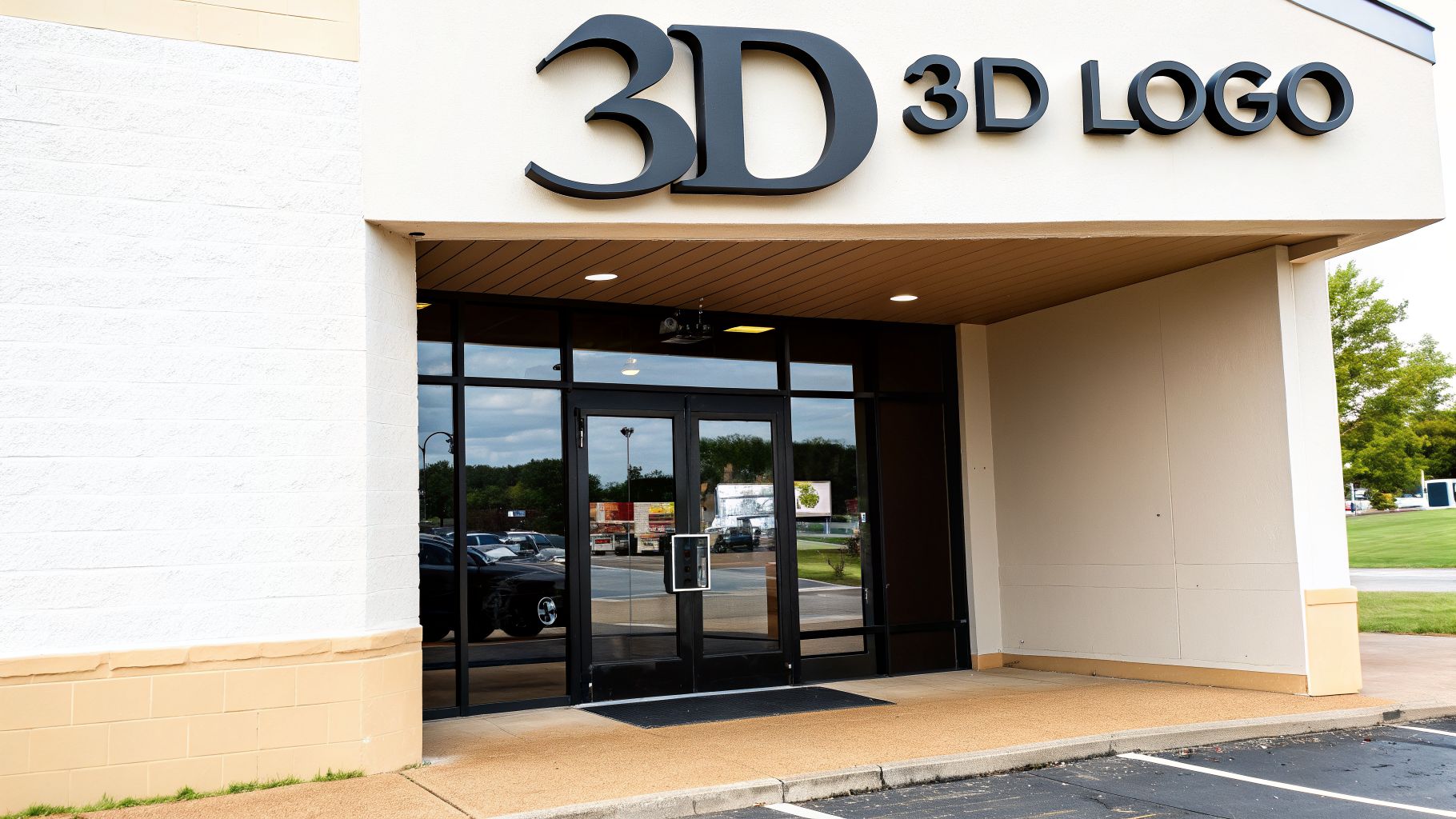
Unlike flat signs, 3D fabrications offer significant depth and presence. The ability to use a wide array of materials like metal, acrylic, foam, and even concrete allows for immense creative freedom. This flexibility makes dimensional logos and letters one of the most versatile storefront signage ideas for businesses wanting to project a modern and confident image.
Best Use Cases & Practical Tips
These installations are ideal for businesses looking to make a bold statement. Tech companies often use them to manifest their iconic logos at corporate headquarters, while high-end retail boutiques create branded letter features that become popular photo backdrops. Restaurants can even commission sculptures of their signature dishes, creating an unforgettable visual landmark.
Follow these practical steps to ensure a successful installation:
- Design for Impact: Create a design that is visually interesting and recognizable from multiple angles, not just head-on.
- Material Selection: Choose materials that match your brand aesthetic and are durable enough for your local climate conditions. For example, use brushed aluminum for a sleek, modern look or routed wood for a rustic feel.
- Plan for Lighting: Incorporate halo-lighting or uplighting to enhance drama and ensure your sign is a beacon after dark.
- Structural Soundness: Verify that the installation location, whether a wall or the ground, can safely support the weight of the sign.
Key Insight: Dimensional logos create a destination, turning your storefront into a landmark. This encourages user-generated content on social media, providing organic marketing that extends far beyond your physical location.
Storefront Signage: 10-Item Comparison
| Sign Type | Implementation Complexity 🔄 | Resource Requirements ⚡ | Expected Outcomes 📊 ⭐ | Ideal Use Cases 💡 | Key Advantages |
|---|---|---|---|---|---|
| LED Channel Letters | Medium–High — electrical & professional install | Medium–High cost; LED maintenance; permits possible | ⭐⭐⭐⭐⭐ — High day/night visibility; strong brand ID | Retail, restaurants, professional services | High visibility; energy-efficient; customizable |
| Monument Signs | High — engineering, foundation, permits | High capital; landscaping & long-term upkeep | ⭐⭐⭐⭐ — Strong curb presence; long lifespan | Office parks, medical centers, shopping centers | Durable, prominent, multi-tenant capacity |
| Window Graphics & Decals | Low–Medium — fast install; pro application advised | Low cost; quick replacement; 3–5 year lifespan | ⭐⭐⭐ — Flexible promos; good street-level impact | Retail boutiques, cafes, seasonal campaigns | Cost-effective; fast updates; UV protection options |
| Pylon Signs | Very High — structural engineering & strict permitting | Very high cost; specialized maintenance; tall foundations | ⭐⭐⭐⭐⭐ — Extreme-distance visibility; high ROI on busy corridors | Highways, shopping centers, car dealerships | Dominant skyline presence; multi-tenant & long-range reach |
| Interactive Digital Displays & Menu Boards | Medium–High — hardware + content systems | High initial cost; ongoing power/internet & content creation | ⭐⭐⭐⭐ — Dynamic engagement; measurable analytics | Fast-casual restaurants, retail, theaters | Content flexibility; real-time updates; analytics |
| Sidewalk & A-Frame Signs | Low — no install, immediate deployment | Very low cost; portable; minimal maintenance | ⭐⭐⭐ — Strong pedestrian engagement; impulse-driven | Coffee shops, restaurants, local retail | Cheap, flexible, no permits (usually); easy to update |
| Wall Murals & Large-Format Wall Graphics | Medium–High — access (scaffolding), approvals | Medium cost per sq ft; long-duration projects; touch-ups | ⭐⭐⭐⭐ — Dramatic visual impact; social media appeal | Breweries, fashion brands, restaurants | Memorable, high visual reach; cost-effective per area |
| Backlit Blade & Fascia Signs | Medium — mounting & electrical work | Moderate cost; requires building support & permits | ⭐⭐⭐⭐ — Multi-angle visibility; good nighttime presence | Boutiques, professional services, hotels | Compact footprint; upscale look; 24/7 visibility |
| ADA-Compliant Signage Solutions | Medium — regulatory specs & certified production | Moderate premium (20–40%); precise installation heights | ⭐⭐⭐⭐ — Legal compliance; accessible wayfinding | All public buildings, healthcare, education | Ensures compliance; serves all customers; reduces liability |
| Dimensional Logo & 3D Letter Signs | Medium–High — custom fabrication, possible engineering | High cost for large pieces; professional install | ⭐⭐⭐⭐ — Distinctive landmarks; photo-worthy appeal | Tech HQ, luxury retail, entertainment venues | Memorable branding; scalable; photogenic presence |
From Idea to Installation: Bringing Your Vision to Life
We have explored a broad spectrum of storefront signage ideas, from the commanding presence of Pylon and Monument Signs to the dynamic appeal of Interactive Digital Displays and the classic elegance of Dimensional Logos. Each option offers a unique way to communicate your brand's identity and capture the attention of potential customers. The key takeaway is that your sign is not merely a marker; it is your business’s most consistent and hardworking ambassador.
Choosing the right type of sign, whether it's glowing LED Channel Letters for nighttime visibility or detailed Window Graphics for a street-level promotion, is just the first step. The real success of your project hinges on a well-managed execution that considers every detail from fabrication to final placement. The difference between a sign that simply exists and one that truly performs lies in this professional oversight.
Key Considerations Before You Begin
Executing a signage project involves many moving parts. A misstep in any of these areas can lead to costly revisions, frustrating delays, or a sign that fails to meet local regulations. Before moving forward, remember to account for:
- Material Durability: The materials selected, from acrylics and metals to high-performance vinyl, directly impact your sign's lifespan and its ability to withstand weather and environmental factors. A cheaper material might save money initially but could lead to higher maintenance and replacement costs down the road.
- Permitting and Code Compliance: Every municipality has its own set of rules governing sign size, placement, illumination, and structural requirements. Navigating this bureaucratic process is often the most challenging part of any signage project. Professional guidance here is not just helpful; it is essential to avoid fines and forced removals.
- Structural and Electrical Engineering: Many signs, especially larger Pylon, Monument, or Blade Signs, require specific structural footings or electrical connections. These elements must be engineered correctly to ensure safety and long-term stability, protecting both your property and the public.
- Brand Cohesion: Your storefront sign must work in harmony with your overall brand identity. The fonts, colors, and design style should be consistent with your other marketing materials to build a strong, recognizable brand presence.
Crucial Insight: An effective sign is a product of careful planning, not just creative design. The best storefront signage ideas are those that are brought to life through a process that respects budget, brand standards, and building codes in equal measure.
Ultimately, your storefront sign is a direct investment in your business’s growth and visibility. It works for you 24/7, making a first impression on every person who passes by. Whether you are launching a new retail shop, rebranding a multi-site commercial property, or simply upgrading your current look, the goal is the same: to create a sign that is memorable, professional, and effective. By understanding the full scope of the project, from the initial brainstorming of ideas to the complexities of installation and maintenance, you set your business up for success.
Ready to turn your storefront signage ideas into a powerful asset for your business? The team at On Display Signs, Inc. manages every aspect of your project, from design and permitting to fabrication and installation, ensuring a seamless process and an exceptional result. Visit On Display Signs, Inc. to schedule a consultation and see how our end-to-end services can bring your vision to life.