When it comes to outdoor signage, most effective options boil down to three main types: ground-mounted signs for a landmark presence, wall-mounted signs to define your storefront, and digital signs to grab attention with motion and light. Picking the right one is the first real step in turning a passerby into a loyal customer.
Why the Right Outdoor Sign Is Your Best Salesperson
Stop thinking of your outdoor sign as just a marker—it's your most reliable, 24/7 salesperson. It’s the first handshake, the first impression, and it works around the clock long before anyone even considers walking through your door. A great sign does more than display your name; it broadcasts your brand's personality, builds immediate trust, and can genuinely influence a customer's decision to stop and engage.
The numbers don't lie. Research has shown that for a new business, a staggering 45% of first-time customers come in simply because they saw the on-premise sign. That statistic alone moves your sign from the "expense" column straight into the "revenue-generating asset" column. A tired, faded, or poorly placed sign isn't just invisible; it can actively push people away, while a bold, professional one acts as a constant welcome mat.
Setting the Stage for Success
The world of outdoor signage can feel a little overwhelming at first, but it gets a lot simpler when you break it down into three main families, each designed to solve a different problem.
Throughout this guide, we’ll dive deep into these categories:
- Powerful Ground-Mounted Signs: Think of monument and pylon signs. These are the heavy hitters—the anchors of a commercial property that establish authority and command attention from a distance.
- Versatile Wall-Mounted Signs: These are the signs attached directly to your building, like channel letters and cabinet signs. They are absolutely essential for defining your entrance and creating that critical storefront appeal.
- Dynamic Digital Signs: Modern LED and digital displays offer incredible flexibility. You can change your message on a whim, promote daily specials, or engage the community with vibrant, eye-catching content.
Your business's exterior is its most potent marketing tool. The sign is the focal point of that tool, acting as a constant invitation and a reflection of the quality within.
Choosing the right type of outdoor sign is all about balancing your location’s unique quirks, your brand's identity, and what you’re trying to achieve. The outward appearance of your business plays a massive role in this, a concept explored in guides on Mastering Exterior Designs of Restaurants. This article will give you a clear roadmap to making an unforgettable first impression.
Building Authority with Ground-Mounted Signs
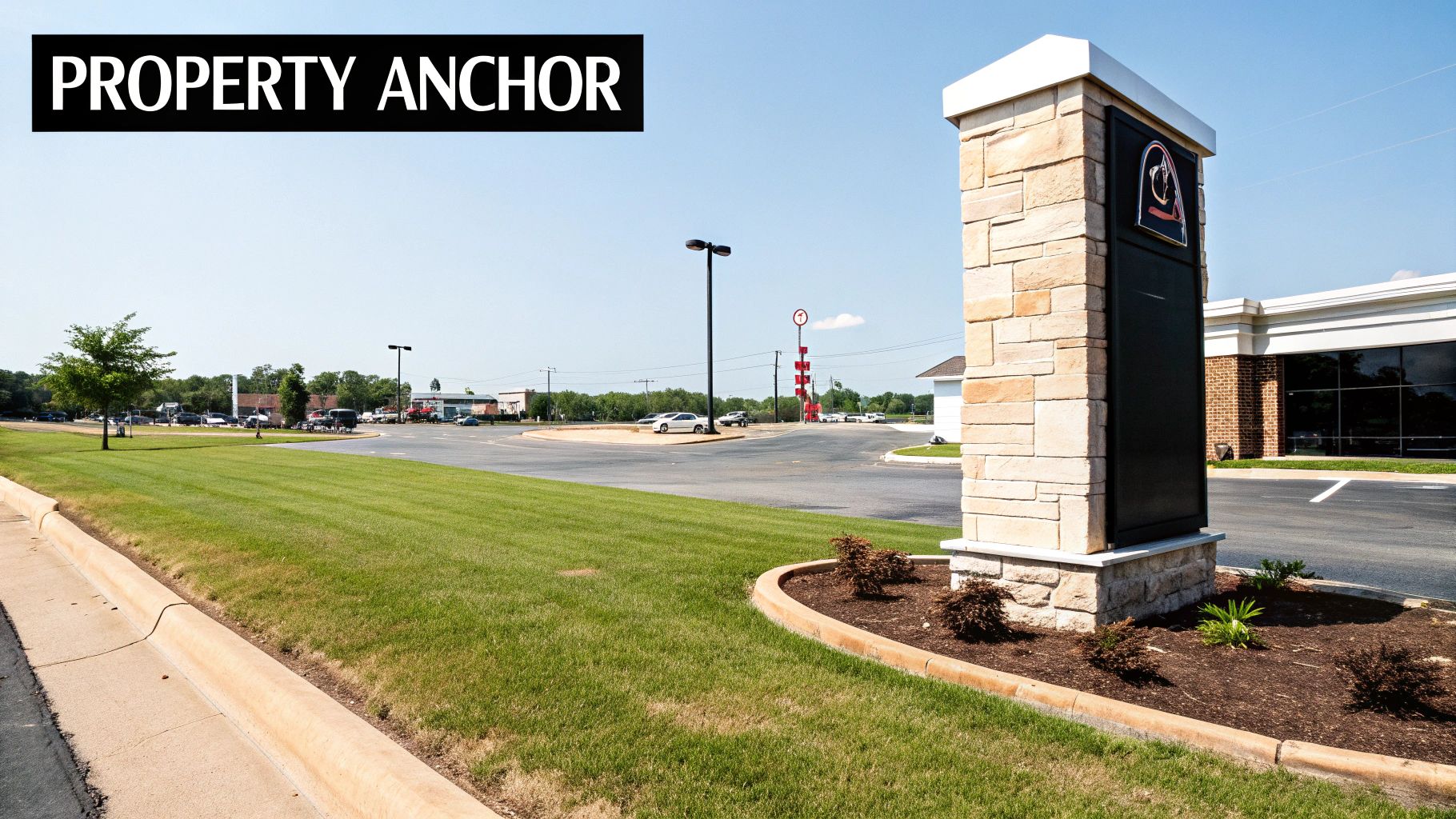
When your business is set back from the road or tucked inside a sprawling commercial park, a sign on the door just isn't enough. You need an anchor—a landmark that plants your flag and guides customers with absolute confidence. This is exactly where ground-mounted signs, the heavyweights of the signage world, come into play.
These freestanding structures, mainly monument and pylon signs, are built right into the ground to act as the property's official welcome. Because they aren’t attached to the main building, they have a commanding presence that builds immediate authority. Think of them as the stone pillars of your physical brand identity.
The Monument Sign: A Statement of Prestige
A monument sign is like a sophisticated landmark. It's a low-profile, permanent structure, usually built from durable materials like brick, stone, concrete, or high-density urethane (HDU) that beautifully mimics masonry. Its purpose isn't to tower over the competition but to convey a deep sense of permanence, quality, and prestige.
These are the kinds of signs you’ll often see at the entrance of:
- Corporate Campuses: A sleek, branded monument sign sets a professional tone before a visitor even finds a parking spot.
- Upscale Residential Communities: Stone or brick signs create an exclusive, welcoming feel for residents and their guests.
- Professional Services: Law firms, medical centers, and financial institutions use them to project stability and trust.
Because they’re grounded and substantial, monument signs integrate seamlessly with the surrounding landscaping. They feel like a natural, intentional part of the property’s design, sending a powerful message that your business is established and here to stay.
A monument sign doesn’t shout for attention; it earns it. Its solid, grounded presence communicates a level of professionalism and permanence that taller signs can't always match.
This grounded presence is also why a solid foundation is non-negotiable. Just like any serious construction project, proper groundwork is what guarantees stability and longevity. You can learn more about the essential site preparation for ground-mounted structures to understand just how critical those first steps are.
The Pylon Sign: A Beacon for Visibility
If a monument sign is a landmark, then a pylon sign is a towering beacon. Also known as pole or freestanding signs, pylons are engineered for one primary goal: maximum visibility from a distance. They are designed to grab the attention of fast-moving traffic on highways, busy streets, or in massive retail plazas.
A pylon sign is essentially a large, often internally illuminated sign cabinet held high by one or two tall poles. They are the absolute workhorses for any business that depends on roadside visibility to pull customers in.
You'll see pylon signs working hard for:
- Shopping Centers and Retail Plazas: A single pylon can act as a directory, displaying logos for multiple tenants and benefiting everyone.
- Gas Stations and Fast-Food Restaurants: Their height is crucial for attracting travelers from far down the highway.
- Hotels and Car Dealerships: In crowded commercial areas, a tall pylon sign is what helps them stand out from the noise.
These signs have proven to be incredible assets, evolving from simple wayfinding tools into high-ROI brand builders. In fact, studies show that for some retailers, 35–45% of new customers first discovered the location simply because they saw a roadside sign.
Weighing the Pros and Cons
Choosing between these powerful sign types really comes down to your location and your goals. While both deliver unmatched visibility, they come with their own set of considerations. For a deeper dive, you can explore our in-depth article on monument signs for business.
Advantages of Ground-Mounted Signs:
- Unmatched Visibility: Both types are masters at getting seen from a distance, dramatically increasing how easily customers can find you.
- Brand Authority: Their permanent, professional look builds serious brand credibility and trust.
- Durability: Built from robust materials, they are designed to withstand the elements for years and years.
Potential Disadvantages:
- Higher Initial Investment: Their size, materials, and construction requirements mean a larger upfront cost.
- Complex Permitting: Local zoning laws heavily regulate their height, size, and placement, which often leads to a thorough and lengthy permitting process.
- Maintenance Needs: Illuminated signs need electrical upkeep, and the structures themselves may require periodic cleaning or repairs.
Defining Your Storefront with Wall-Mounted Signs
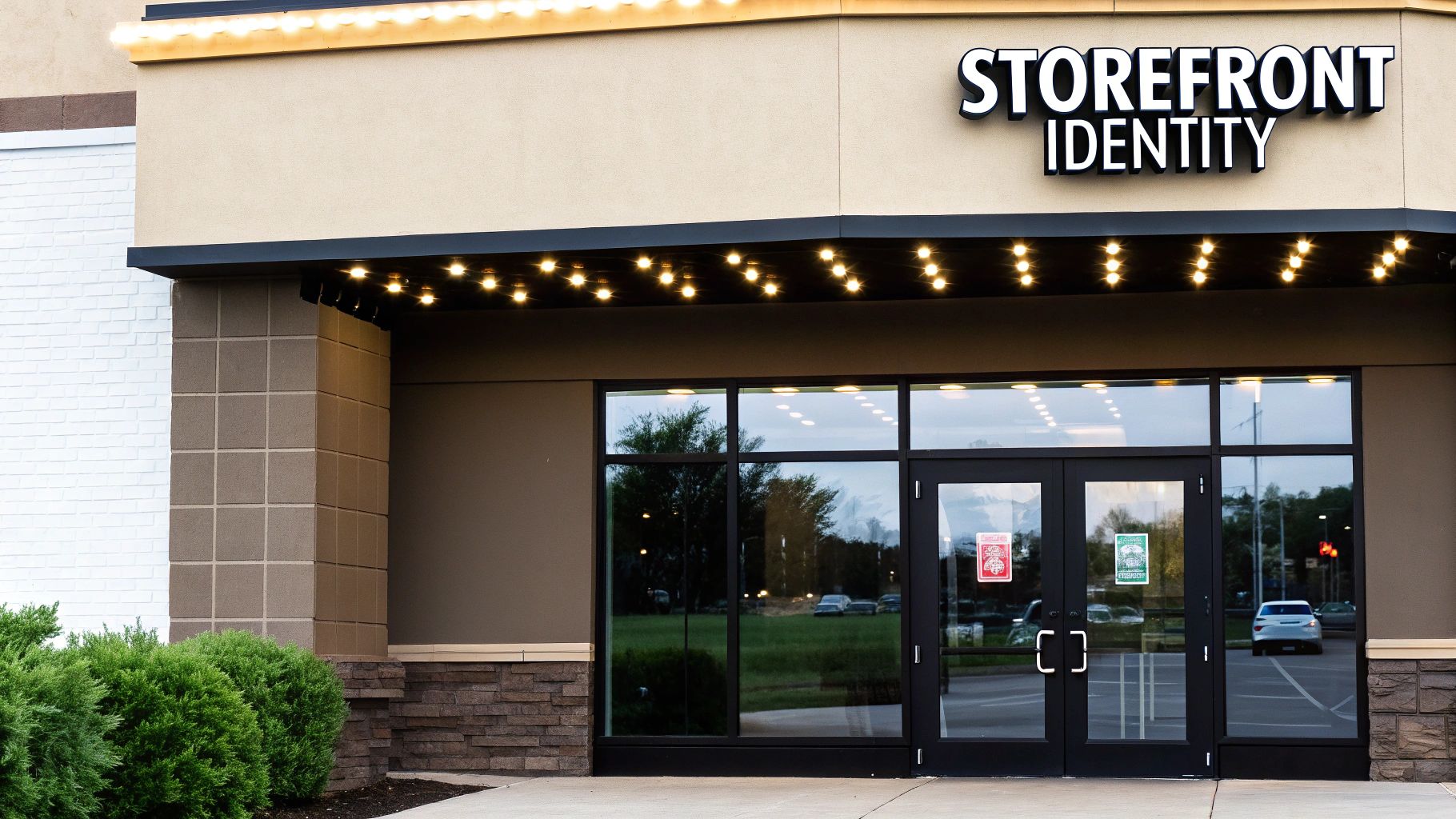
While a big sign by the road grabs cars, a wall-mounted sign works on a much more personal level. Think of it as the face of your business, attached right to your building's facade. It’s the official handshake that greets every customer, defines your entrance, and convinces someone passing by to step inside.
For any business with a physical storefront, these signs are non-negotiable. They do more than just announce your name; they create an immediate impression of quality and professionalism. A clean, well-designed wall sign is a direct invitation, signaling that you are open, established, and ready for business.
Channel Letters The Premium 3D Look
Channel letters are easily one of the most popular choices for storefronts, and it's easy to see why. These are custom-made, three-dimensional letters, numbers, or logos that are mounted individually onto your building. Each character is its own separate piece, which creates a clean, sophisticated, and distinctly high-end look.
Picture the sleek, glowing logos on an upscale retail store or a modern corporate office—that’s the powerful effect of channel letters. They give you a refined appearance that avoids the boxy feel of other sign types, making them the top choice for brands aiming for a premium image. Most are built from rugged aluminum with acrylic faces for durability.
There are a few key ways to light them up, which makes them incredibly versatile:
- Face-Lit: This is the classic style. Light shines through the front (the face) of each letter, creating a bright, crisp, and highly visible effect day or night.
- Halo-Lit (or Reverse-Lit): Instead of lighting up the front, the LEDs are aimed backward. This casts a soft, elegant glow onto the wall behind the letters, creating a stunning "halo" that’s subtle yet impossible to ignore.
- Combination-Lit: For maximum impact, this style does it all. It combines both face-lit and halo-lit techniques for a dramatic, multi-dimensional look that really pops off the wall.
Cabinet Signs The Versatile Workhorse
Cabinet signs—often called "box signs" or "lightboxes"—are another cornerstone of storefront signage. Just like the name suggests, they're built as a single metal cabinet or frame that holds the lighting elements, with a translucent face panel where your logo, text, and graphics are applied.
Their biggest strength is versatility. A cabinet sign gives you one large, uninterrupted canvas, which is perfect for businesses with complex logos, detailed graphics, or more information to display than just a name. They're also incredibly cost-effective for their size, delivering a massive visual punch without the higher fabrication cost of individual channel letters. You can see more great examples in our gallery of outdoor wall signage.
A wall-mounted sign is arguably the highest-return marketing asset many small businesses own. It’s a one-time investment that works tirelessly to bring customers to your door day after day.
The numbers back this up. For many businesses, a good on-premise sign can be responsible for 15–45% of walk-in traffic, especially for restaurants and local service shops. Upgrading to a high-quality illuminated sign often leads to revenue gains of 5–10%.
Blade Signs The Classic Pedestrian Catcher
Blade signs stick out perpendicularly from a building's facade, specifically designed to catch the eye of foot traffic on the sidewalk below. Think of the classic, often decorative signs hanging above the doors of old-world pubs, barbershops, or downtown boutiques. They are almost always double-sided, so people walking in either direction can see them clearly.
While your main channel letter sign talks to people across the street or in the parking lot, a blade sign speaks directly to the person walking right past your door. It’s a more intimate, direct form of advertising that perfectly complements your primary storefront sign. In historic districts or dense urban shopping areas, a blade sign is often essential for standing out in a crowded row of businesses.
Making The Right Wall Sign Choice
Choosing the right wall-mounted sign can feel overwhelming, but it really comes down to matching your brand, your building, and your budget. To make it a little easier, here’s a quick comparison of the three main types.
Comparing Popular Wall-Mounted Sign Types
| Sign Type | Best For | Typical Cost | Visual Impact |
|---|---|---|---|
| Channel Letters | Premium brands, modern buildings, and businesses wanting a sophisticated, high-end look. | $$$ | High |
| Cabinet Signs | Businesses with complex logos, detailed graphics, or those needing a large, budget-friendly canvas. | $$ | Medium-High |
| Blade Signs | Capturing pedestrian traffic in dense urban areas, historic districts, and retail strips. | $ | Medium |
Ultimately, channel letters deliver that premium, modern feel. Cabinet signs offer a practical and versatile canvas. And blade signs are the perfect tool for grabbing attention at eye level. The key is to pick the one that best tells your brand’s story and extends a warm welcome to the customers you want to attract.
Capturing Attention with Digital and LED Signs
While a traditional sign establishes your brand's physical footprint, a digital sign turns your location into an active conversation. Think of these displays less as static markers and more as dynamic platforms, broadcasting your message with vibrant color and eye-catching motion.
Imagine changing your sign's content from your office computer to announce a flash sale, showcase daily lunch specials, or share a community message in real time. That's the power you get. This technology lets you cut through the visual noise of a busy street and gives you an incredible level of control. A café, for example, can schedule coffee deals for the morning rush, lunch combos at noon, and happy hour promotions in the evening—all running on autopilot.
The Power of Dynamic Messaging
The real game-changer with digital signage is its incredible flexibility. A printed sign is what it is. But a digital display is a living, breathing part of your marketing that can adapt in an instant, making it perfect for any business with constantly changing information.
Just think about the possibilities:
- Restaurants and Cafes: Show mouth-watering videos of your food, promote limited-time offers, or update your menu on the fly.
- Schools and Universities: Announce upcoming games, celebrate student achievements, or broadcast important campus alerts.
- Event Venues and Theaters: Run trailers for upcoming shows, display ticket availability, and provide event schedules.
Digital and LED signs are the fastest-growing category in our industry for a reason. Retailers and quick-service restaurants have seen firsthand how running time-of-day offers and price changes on an LED message center drives sales. In fact, case studies consistently report sales lifts of 8–15% after swapping out old-school static reader boards for full-color digital units, especially along high-traffic roads. You can dig into more data on the impact of modern signs in this market insights report.
Digital signs shift your marketing from a monologue to a dialogue. They let you respond to customer needs, market changes, and even the time of day with relevant, timely messaging that commands attention.
This adaptability makes them one of the most effective tools for businesses today. If you want to get into the technical nitty-gritty, our complete guide on digital signs and LED message centers takes a much deeper dive into the technology and how to use it.
Key Types of Digital Displays
Digital signage isn't a one-size-fits-all product. The most common setup we see for outdoor use is a full-color LED message center built right into a monument or pylon sign. This approach gives you the best of both worlds: the permanent authority of a ground-mounted sign combined with the flexibility of a digital screen.
Another hugely popular option is a high-impact digital window display. These are super-bright screens placed inside a storefront window, facing out. They are perfect for urban businesses with heavy foot traffic, letting them grab the attention of passersby with video and animation without needing a permit for a large exterior sign.
Balancing the Pros and Cons
Like any major investment, digital signs have their own set of trade-offs. The high engagement and flexibility are massive upsides, but you need to go in with a clear understanding of the costs and local rules.
Advantages of Digital and LED Signs:
- Unmatched Flexibility: You can update content instantly from anywhere with an internet connection, giving you total control over what you say and when you say it.
- High Engagement: Movement and bright colors grab attention far better than static images, making you much more visible.
- Cost-Effective Over Time: The initial investment is higher, but you eliminate the recurring costs of printing and installing new banners or sign faces for every promotion.
Potential Disadvantages:
- Higher Upfront Cost: A quality, outdoor-rated digital display is a significant investment compared to a static sign.
- Municipal Restrictions: Many cities have strict codes regulating everything from brightness and animation speed to how often a message can change, all to prevent distracting drivers.
- Technical Learning Curve: While modern content management systems are getting easier to use, there is still a learning curve to get the most out of them.
Navigating Permits, Codes, and Maintenance
A brilliant sign design means nothing if it violates local laws or falls apart after a year. This is the unglamorous but critical side of sign ownership—the part that protects your investment, keeps your business compliant, and prevents costly headaches down the road.
Think of your sign as a permanent fixture in the community, just like an extension on your building. Municipalities have a vested interest in regulating them to ensure public safety, maintain a consistent look in commercial areas, and give every business a fair shot. Getting this part right from day one is just as important as choosing the perfect font.
Understanding Your Local Sign Codes
Before you get too attached to a design, you have to dig into the local rules. Every single city, county, and sometimes even a specific shopping district, has its own unique sign ordinance. These codes dictate nearly everything about what you can and can't install on your property.
Almost every ordinance will regulate these key factors:
- Sign Height: How tall your pylon or monument sign is allowed to be.
- Total Square Footage: The maximum allowable size of your sign's face.
- Placement Setbacks: How far the sign must be from the road, property lines, and other buildings.
- Lighting Levels: Strict rules on brightness (nits) and animations to avoid distracting drivers or creating light pollution.
Trying to make sense of these regulations can feel like untangling a giant knot, especially if you have locations in multiple cities. This is where partnering with an experienced sign company is a game changer. They know how to research the local codes and can manage the entire application process, making sure your design gets approved without any frustrating delays. For a deeper dive, check out our guide on sign permit requirements.
Protecting Your Investment with Ongoing Maintenance
Once your sign is installed and fully compliant, the work isn't over. Proper maintenance is the key to getting the most out of your sign's lifespan and making sure it always represents your brand in the best possible light. A dirty, flickering, or peeling sign sends a clear—and negative—message to every potential customer who drives by.
A well-maintained sign is a direct reflection of a well-run business. Neglecting it is like leaving the front door dirty—it suggests a lack of attention to detail that customers will absolutely notice.
Putting a simple maintenance schedule in place can save you a fortune on major repairs later on. It doesn’t need to be complicated.
A Simple Maintenance Checklist:
- Regular Cleaning: Plan for a professional cleaning at least twice a year to wash away the dirt, pollen, and grime that can make your colors and materials look dull and faded.
- Electrical Checks: For any illuminated sign, have the wiring and connections inspected periodically, especially after a big storm. This ensures everything is running safely and efficiently.
- Structural Inspection: Look for any signs of damage, fading, or general wear and tear. Catching small issues early is the best way to prevent them from becoming big, expensive problems.
This proactive approach ensures your sign remains a powerful asset, working hard to attract customers and build your brand's presence for years to come.
How to Choose the Right Outdoor Sign for Your Business
Picking the right outdoor sign is a big deal. It’s where your brand, your physical location, and your business goals all meet. Instead of getting buried in options, just ask yourself a few key questions. This approach will quickly narrow down the choices and point you straight to the perfect sign.
Think of this as turning a vague idea into a solid plan. It’s how you make sure your investment actually brings the right customers through the door. Let’s walk through the essential questions that will simplify your decision.
What Is Your Main Goal?
First things first: what does a "win" look like for you? Pinpointing your primary objective is the fastest way to figure out which sign category makes sense. Are you trying to flag down cars speeding by on the highway, or are you trying to reel in pedestrians who are just a few feet away?
- Highway Visibility: If you need to be seen from a distance by fast-moving traffic, a pylon sign is your best bet. Nothing beats its height for roadside awareness.
- Property Landmark: For a high-end property set back from the road, a monument sign creates a feeling of authority and permanence. It says you're here to stay.
- Storefront Foot Traffic: For any business that counts on walk-in customers, channel letters and blade signs are non-negotiable. They define your entrance and grab attention from the sidewalk.
- Dynamic Messaging: If you need to advertise daily specials, upcoming events, or other changing information, a digital LED sign gives you incredible flexibility.
What Is Your Budget and Property Profile?
Next, it's time for a reality check. Your budget and the physical realities of your property will have a massive say in what's possible. A giant pylon sign is a serious investment that needs a lot of space, while a simple blade sign is a much more modest addition.
Don't just think about the upfront cost of making and installing the sign. You also have to consider long-term upkeep. Illuminated and digital signs come with ongoing energy bills and maintenance, while the materials you choose will determine how long the sign lasts. Our guide to durable exterior sign materials can help you find the right balance between cost and performance.
Choosing a sign isn’t just about what looks good; it's about what works for your specific location, budget, and brand. Answering these questions honestly is the first step toward a successful project.
Finally, think about your brand's personality. A law firm projects stability and trust with a classic stone monument sign. A cutting-edge tech company, on the other hand, might go for sleek, halo-lit channel letters to reflect its modern vibe. The sign you choose is a direct reflection of the experience customers can expect inside.
Outdoor Sign Selection Guide
To make it even simpler, this table matches common business goals with the most effective sign types.
| Business Goal | Primary Sign Choice | Secondary Sign Choice |
|---|---|---|
| Maximize Highway Visibility | Pylon Sign | Digital LED Sign |
| Attract Pedestrian Foot Traffic | Channel Letters | Blade Sign |
| Establish a High-End Brand Presence | Monument Sign | Halo-Lit Channel Letters |
| Promote Daily Specials/Events | Digital LED Sign | A-Frame/Sidewalk Sign |
| Mark a Storefront in a Dense Area | Blade Sign | Awning Sign |
This guide is a great starting point, but every business is unique. A professional sign partner can help you dig into the details and ensure your project is a success, from the first sketch to the final, flawless installation.
Frequently Asked Questions About Business Signs
Putting up a new sign is a big move for any business, so it's only natural to have a few questions before you get started. We've been through this process thousands of times, so we've put together some straightforward answers to the questions we hear most often.
Before diving in, take a look at this decision tree. It's a simple way to see how your main goal—whether it's grabbing highway traffic, making your storefront pop, or showing dynamic messages—points you toward the right type of sign. It cuts through the noise and helps you focus on what really matters.
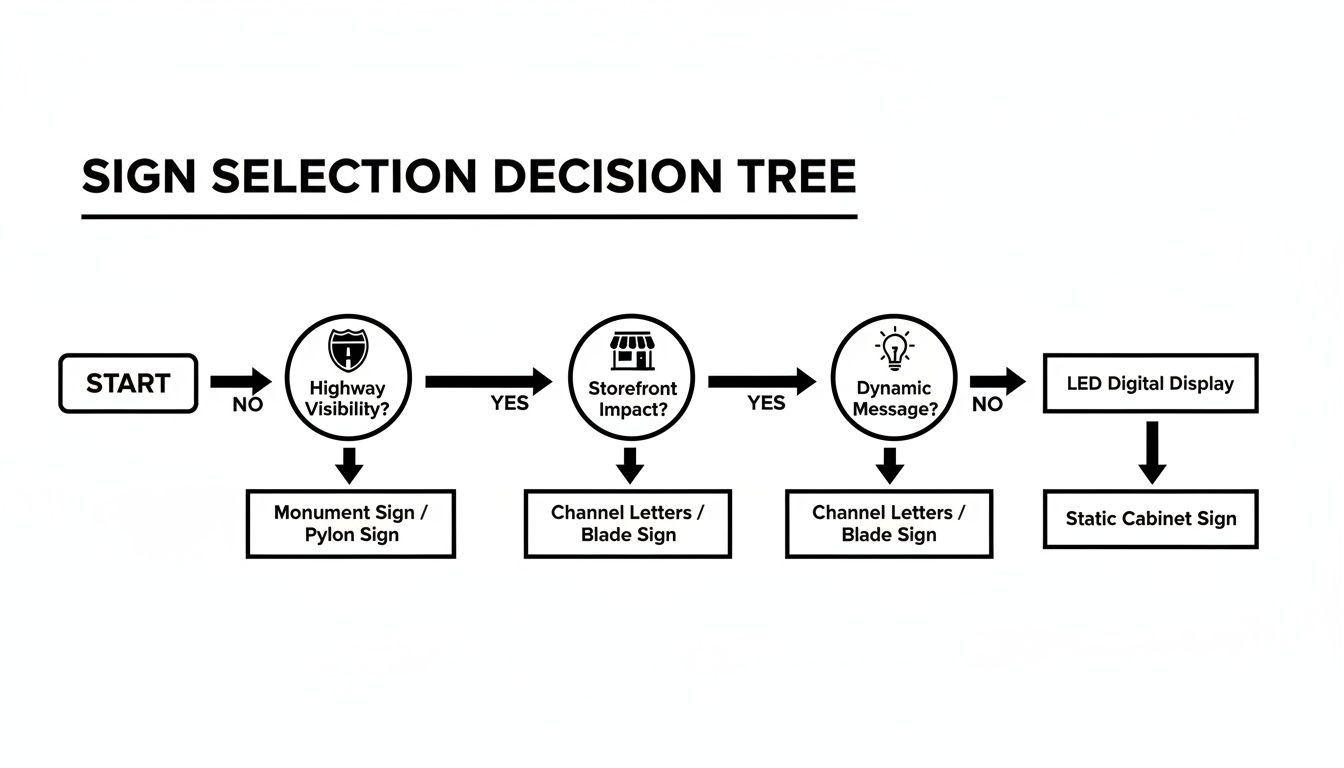
This visual makes it pretty clear: let your goals lead the way. That's how you ensure your investment pays off.
How Much Does a Business Sign Cost?
This is the big one, and the honest answer is: it varies—a lot. The final price tag is a mix of size, materials, lighting, and how complex the design is. A simple, non-lit wall sign might start in the low thousands, but a towering pylon sign with a full-color digital display is a much larger investment.
Think of it like buying a vehicle for your business. A small delivery van and a heavy-duty dump truck do different jobs and come with very different prices. It’s always best to get a custom quote, but don't forget to factor in the long-term running costs, like electricity and routine upkeep.
What Materials Last the Longest Outdoors?
When you want a sign that’s built to last, you can't go wrong with materials like aluminum, steel, and high-density urethane (HDU). Aluminum is probably the most popular workhorse because it’s light, won’t rust, and laughs off most weather, making it perfect for channel letters and cabinet signs.
If you’re going for a monument sign that needs to convey permanence and prestige, materials like brick, stone, and precast concrete are in a league of their own. They offer incredible longevity and a high-end feel. The best choice always comes down to a balance between your local climate, your brand’s personality, and your budget.
Choosing durable materials isn't just about saving money on replacements; it's about protecting your brand's image. A sign that withstands the elements reflects the strength and stability of your business.
How Long Does the Sign Process Take?
From start to finish, getting a new sign can take anywhere from a few weeks to several months. The timeline really depends on a few key stages, and some can move faster than others.
- Design and Approval: This part is usually pretty quick, maybe one to two weeks, depending on how fast we can nail down a design you love.
- Permitting: Here’s the wild card. Getting the green light from your local government can take just a couple of weeks or drag on for two months or more. It all depends on their workload and how complex your project is.
- Fabrication: Once we have the permits, our team gets to work. Building your sign typically takes about three to five weeks.
- Installation: The final piece of the puzzle! Installation is usually done in just a day or two.
The big takeaway? Start the process early. Those potential permitting delays are the number one reason to get the ball rolling sooner rather than later.
A great sign is a powerful asset, but it takes an experienced partner to get it right. At On Display Signs, Inc., we handle every single detail—from the first sketch and navigating the permit office to fabrication and the final installation. We’re here to make sure your project is a success from day one. Let us help you create a sign that elevates your brand and brings customers through the door. Let's build your new sign together.