Managing a retail strip center means balancing two competing needs: maintaining a cohesive, professional look for the property while giving individual tenants the high-visibility signage they demand. When store owners feel hidden, they complain. But when every tenant installs clashing signs, the entire property looks cluttered.
At On Display Signs, we help property managers and national developers solve this challenge. We design and fabricate exterior signage for multi-unit complexes across Kentucky and Indiana. From establishing clear tenant criteria to building illuminated monument signs, we work with you to ensure your center attracts traffic, promotes your property's brand, and keeps your tenants visible.
Designing Monument Signs for Multi-Tenant Visibility
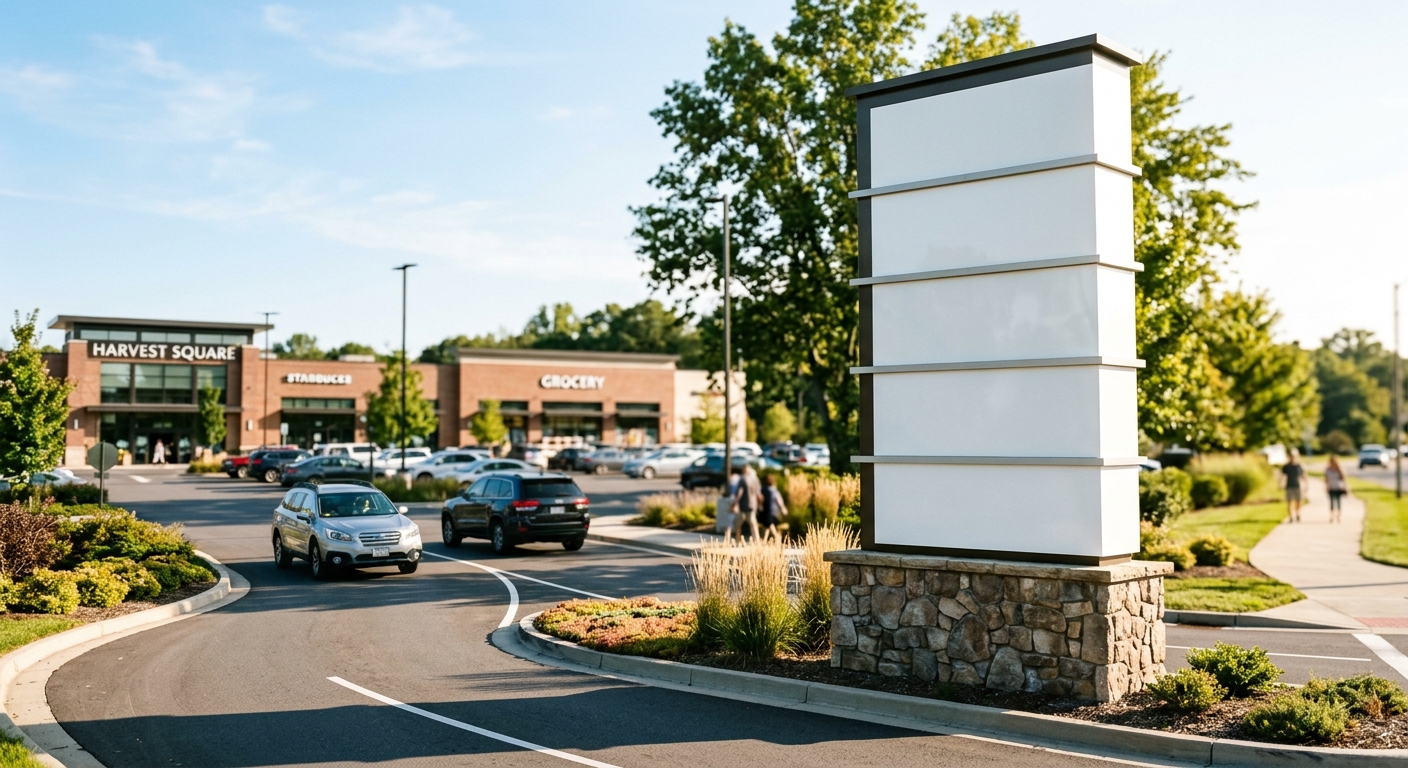
When developing signage for retail strip centers in Kentucky and Indiana, the primary challenge is balancing the property’s overarching brand with the visibility of individual businesses. As a national signage company that frequently partners with commercial developers and property managers, we know that the structural framework must clearly identify the retail center itself while providing equal, legible space for the businesses operating inside.
Balancing Center Branding with Tenant Visibility
The foundation of a successful multi-tenant sign is a clear visual hierarchy. The top section of the structure should be dedicated entirely to the retail center's branding. We often use dimensional letters, cloud signs, or a distinct illuminated cabinet sign for the property's name to separate it from the individual store listings below. By establishing the center's identity at the top, you create a cohesive landmark for drivers.
The lower sections then house the individual tenant panels. Your dedicated Project Manager will handle every part of this coordination for you, ensuring the architectural elements of the sign—such as brick, stone, or metal bases—complement the exterior of your specific building and keep your overarching brand intact.
Choosing Between Monument and Pylon Signs
Depending on your property's location and the speed of passing traffic, you will typically choose between a monument sign or a pylon sign to display your tenant roster. We fabricate both types to accommodate varying property layouts and budgets.
| Sign Type | Height & Visibility | Best Use Case | Multi-Tenant Capacity |
|---|---|---|---|
| Monument Signs | Low profile, eye-level visibility | Centers close to the roadway with slower-moving traffic | Moderate (typically 3 to 6 tenant panels) |
| Pylon Signs | High profile, visible from a distance | Centers near highways, interstates, or high-speed traffic | High (can accommodate large rosters of 6+ tenants) |
Design Principles for Multi-Tenant Panels
Cramming too many logos onto a single structure creates visual clutter. To ensure each tenant is effectively promoted, we guide our clients through a smooth, stress-free process using these core design principles:
- Consistent Illumination: We utilize back-lit signs or illuminated cabinet signs to ensure every tenant panel receives even lighting. This prevents dark spots and ensures all businesses remain visible after hours.
- Panel Hierarchy: We structure the acrylic signs so that anchor tenants receive larger panels, while smaller in-line spaces share uniform, secondary panel sizes.
- Color and Contrast Control: While tenants want to use their specific brand colors, we recommend enforcing high-contrast background rules (such as all-white or all-black backgrounds) across all acrylic panels to maintain the center's unified look.
- Legibility Over Complexity: We work with you and your tenants to prioritize clear, bold text over intricate logos that become unreadable to drivers passing by at highway speeds.
Failing to establish a unified background color for individual tenant panels will result in a cluttered, disjointed sign that diminishes the overall professional appearance of your retail center.
Establishing Clear Sign Criteria for Tenant Storefronts

The Value of Uniformity in Retail Centers
When national developers and property managers lease out a retail strip center, allowing tenants free rein over their storefront displays can quickly lead to a chaotic, disjointed exterior. Establishing strict sign criteria is essential to maintaining a uniform, professional look across the entire property. As a national signage and graphics company, we frequently consult with commercial businesses to develop and implement these guidelines. Proper criteria ensure that every tenant’s branding aligns with the architectural aesthetics of the building, ultimately protecting the property's value and curb appeal. When a strip center looks cohesive, it attracts better foot traffic and higher-tier commercial tenants.
Comparing Common Storefront Sign Types
Property managers typically mandate either channel letter signs or illuminated cabinet signs for their storefronts. Understanding the differences between these two options helps in drafting clear, effective guidelines for incoming businesses.
| Feature | Channel Letter Signs | Illuminated Cabinet Signs |
|---|---|---|
| Visual Profile | 3D, individually fabricated letters and logos | Single architectural box structure with a flat or pan face |
| Illumination | Front-lit, back-lit (halo effect), or combination | Internal LED illumination glowing through an acrylic face |
| Mounting | Flush to the facade or mounted on a raceway | Flush wall mount |
| Customization | Highly customized to exact brand fonts and shapes | Standard geometric shapes utilizing custom vinyl graphics |
| Property Fit | Upscale, modern retail and mixed-use developments | Cost-effective applications and traditional strip centers |
Key Elements of a Signage Criteria Document
To prevent misunderstandings and streamline the fabrication process, your property's sign criteria must be highly specific. We recommend detailing the exact specifications tenants are allowed to use. Essential elements to define include:
- Proportional Sizing: Establish maximum height and overall square footage limits based on the linear frontage of the tenant's specific leased space.
- Mounting Requirements: Specify whether channel letters must be flush-mounted directly to the building or if raceways are required to minimize wall penetrations. If raceways are used, mandate that they be painted to match the building facade.
- Illumination Rules: Clearly outline acceptable lighting methods. Many upscale centers require halo-lit dimensional letters and strictly prohibit exposed neon or flashing lights.
- Material and Color Restrictions: Define acceptable materials, such as acrylic faces or specific metal finishes, and restrict trim cap or return colors to a palette that complements the building.
Navigating these rules can be challenging for new retail tenants. Because each client at On Display Signs gets one dedicated Project Manager, we handle every part of the process for them. We review the landlord's criteria, guide the tenant through the design phase, and ensure the final product is effective, engaging, and fully compliant with the property's standards.
Failing to establish and enforce strict sign criteria early on often results in a cluttered, mismatched facade that can deter high-quality tenants and shoppers from your property.
Maximizing 24/7 Impact with Illuminated Signage
Driving Day and Night Foot Traffic
Retail strip centers rely heavily on passing vehicles and pedestrians. If your signage fades into the background after dusk, your tenants lose valuable exposure. High-contrast, illuminated signage ensures that a retail center remains visible and inviting 24 hours a day. At On Display Signs, we serve commercial businesses across Kentucky and Indiana, guiding national developers and property managers through the process of selecting lighting solutions that cut through visual clutter. Effective illumination captures attention regardless of the time of day. It does more than just light up a tenant's name; it reinforces brand identity, signals that a business is open, and draws traffic directly from the road to the parking lot.
Comparing Illuminated Signage Options
Different retail environments and tenant branding guidelines require specific lighting strategies. We design, fabricate, and install a variety of illuminated options to maximize visibility for strip center storefronts. Cloud signs, back-lit signs, and illuminated cabinet signs each offer distinct advantages for catching the eye of passing traffic. Because there is a lot to creating a sign, your dedicated Project Manager handles every part of the selection and fabrication process for you.
| Sign Type | Lighting Style | Visual Effect | Best Strip Center Application |
|---|---|---|---|
| Cloud Signs | Internal illumination | A single, glowing contoured shape housing the entire logo or wordmark | Bold, unified brand displays that need to stand out from flat storefronts |
| Back-lit Signs | Halo illumination behind letters | A distinct, sophisticated glow projecting onto the wall behind the sign | High-end retail tenants wanting a premium, architectural look |
| Illuminated Cabinet Signs | Internal illumination through a translucent face | Large, bright rectangular or custom-shaped glowing surface | Maximum brightness for primary center identification or large anchor tenants |
Designing for Maximum High-Contrast Impact
Simply adding lights to a storefront sign does not guarantee it will be effective. To ensure your retail strip center captures attention, the design must prioritize high contrast between the illuminated elements and their surroundings. Our smooth, stress-free process ensures that you get a sign that helps promote your brand effectively. We work with you to make sure your sign is engaging, highly readable, and within your budget.
When planning illuminated signage for 24/7 impact, we focus on several critical design factors:
- Color Selection: We pair light, translucent colors for the illuminated faces with dark, opaque backgrounds to make the text or logo stand out sharply at night.
- Material Finishes: Using matte finishes on the non-illuminated surrounding wall surfaces and sign returns prevents harsh glare and reflection from streetlights or passing headlights.
- Lighting Consistency: We ensure internal lighting components are spaced correctly within cloud signs and cabinets to prevent bright hot spots or dim shadows, creating a smooth, even glow across the entire graphic.
- Day-to-Night Reversal: We frequently utilize specialized perforated vinyl on acrylic faces; this material appears dark for daytime contrast but glows bright white at night when illuminated from within.
Failing to account for daytime visibility when designing illuminated signs is a common mistake; a sign must have strong natural color contrast to remain legible when the internal lights are turned off during the day.
Guiding Traffic with Post and Panel Wayfinding Signs
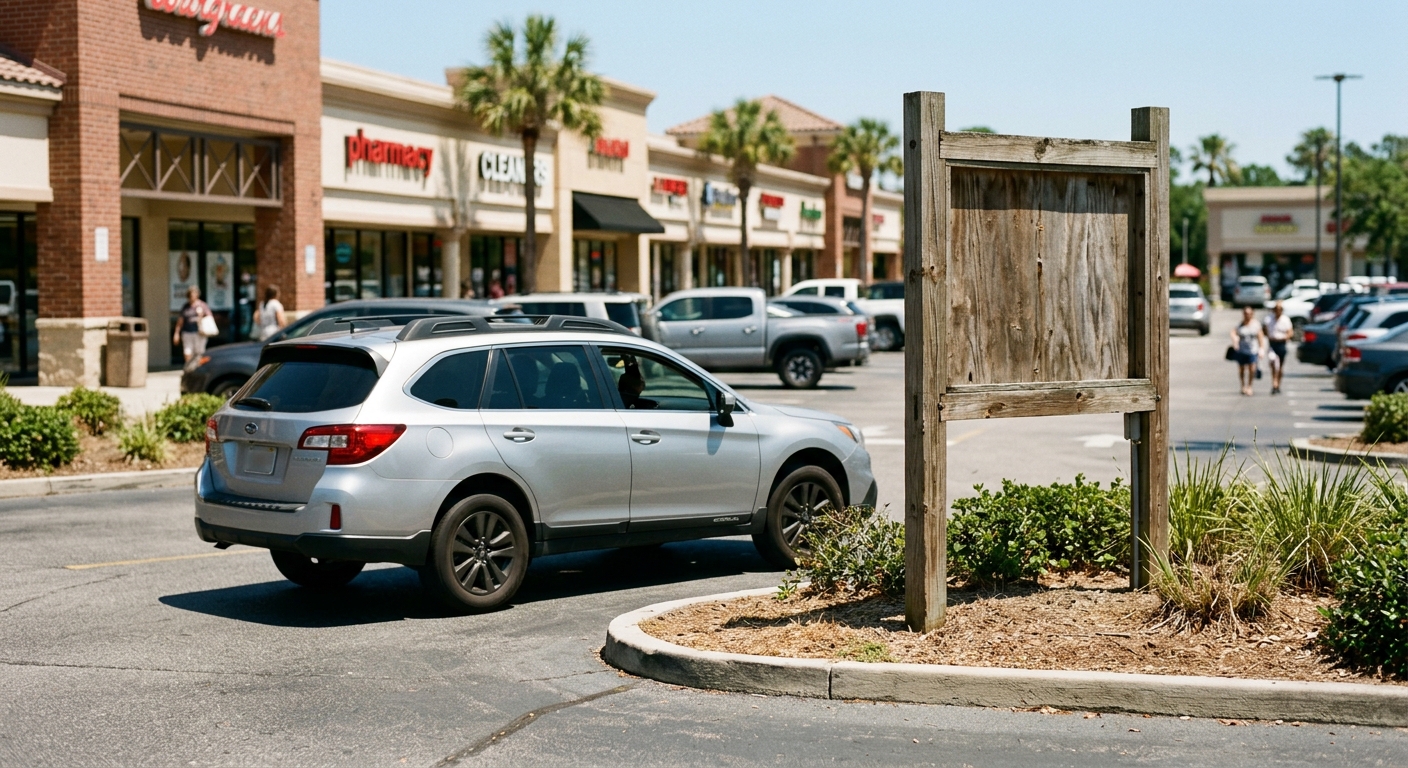
Managing traffic in a busy retail strip center is critical for both safety and customer satisfaction. For property managers, post and panel signs offer a practical, highly visible way to organize the flow of vehicles and pedestrians from the moment they enter your parking lot.
Directing Vehicular and Pedestrian Flow
Without clear directions, a sprawling parking lot quickly becomes frustrating for drivers and unsafe for pedestrians. Post and panel signs placed at key intersections within your property help eliminate this confusion. At On Display Signs, we work closely with national developers and property managers to map out optimal sign placements that keep traffic moving safely and smoothly.
To ensure an organized environment, we recommend using post and panel signs to clearly mark the following critical areas:
- Entrances and exits: Clearly define inbound and outbound lanes to prevent wrong-way traffic.
- Specialty parking zones: Designate specific areas for curbside pickup, short-term parking, or ADA accessibility.
- Pedestrian walkways: Highlight crosswalks connecting the parking lot to the retail storefronts to alert drivers to foot traffic.
- Service routes: Direct delivery trucks and vendor vehicles to loading zones at the rear of the strip center, keeping them away from customer parking.
Highlighting Anchor Tenants
Retail strip centers often rely on one or two anchor tenants to draw the majority of daily visitors. While your main roadside signage brings customers onto the property, post and panel signs guide them to the exact location of these major stores. By placing directional arrows alongside the anchor tenant's branding on interior wayfinding signs, you reduce driver hesitation and prevent bottlenecks near the storefronts.
There is a lot to creating an effective wayfinding system, but your dedicated Project Manager will handle every part for you with consistent communication throughout the process. Our smooth, stress-free process ensures that you get a sign package that you love and that helps promote the brands within your center. We will work with you to make sure your directional signage is effective, engaging, and within your budget.
Comparing Post and Panel Configurations
Because post and panel signs are highly customizable, they can easily be adapted to fit your specific layout. When we design and fabricate these signs for commercial businesses across Kentucky and Indiana, we evaluate a few standard configurations based on their intended location.
| Configuration | Best Used For | Key Advantage |
|---|---|---|
| Single-Sided Panel | Perimeter landscaping or facing one-way traffic lanes. | Cost-effective for areas where rear visibility is unnecessary. |
| Double-Sided Panel | Medians, main lot intersections, and pedestrian paths. | Captures driver and pedestrian traffic approaching from opposite directions. |
| V-Shape Panel | Corners or angled intersections within the parking lot. | Provides clear directional visibility from multiple distinct vantage points. |
Failing to scale the text size to the speed of passing parking lot traffic is a critical wayfinding mistake that renders even the best-placed post and panel signs useless to drivers.
Streamlining Multi-Tenant Coordination with a Project Manager
A Single Point of Contact for Complex Projects
Retail strip centers require balancing the branding needs of individual commercial businesses with the property manager's overarching sign criteria. When multiple tenants need channel letter signs, illuminated cabinet signs, or updates to an existing pylon sign, the coordination can quickly become overwhelming. At On Display Signs, we assign you one dedicated person you work with throughout the entire project. Instead of bouncing between a designer, a fabricator, and an installation crew, you work with a single expert who understands your retail center's specific goals and budget. We have experience designing signs for every size business in every industry, making us well-equipped to handle the diverse needs of a multi-tenant property.
Coordinating Approvals and Fabrication
There is a lot to creating a sign, especially when national developers, local property managers, and individual business owners are all involved. Your dedicated Project Manager keeps the project moving smoothly by managing the specific requirements of multi-tenant signage. Our process ensures consistent communication as we guide you through the following phases:
- Consultation and Design: We work with you to design signs that are effective and engaging, ensuring they meet the specific branding needs of both new start-ups and large corporations within your center.
- Criteria and Permitting: We coordinate directly with local municipalities in Kentucky and Indiana to secure permits, while verifying that every tenant's sign aligns with the landlord's established criteria.
- Fabrication Oversight: Your Project Manager monitors the manufacturing of your acrylic signs, dimensional letters, or cloud signs, ensuring the final product is exactly what your company deserves.
A Stress-Free Approach to Installation
Installation at a busy retail strip center requires careful scheduling to minimize disruption to active businesses and their customers. Without centralized management, property managers often find themselves mediating between tenants and sign installers. We eliminate this friction.
Here is how a dedicated Project Manager changes the experience compared to managing the process without a central contact:
| Project Phase | Without a Dedicated Project Manager | With an On Display Signs Project Manager |
|---|---|---|
| Communication | Property managers juggle calls between separate sales, design, and installation teams. | You have one single, consistent point of contact from start to finish. |
| Approvals | Developers must independently chase down individual tenants and city permit offices. | We handle local permitting and coordinate design approvals directly with stakeholders. |
| Installation | Uncoordinated vendor schedules cause parking disruptions and tenant complaints. | We schedule installation smoothly, minimizing the impact on retail traffic and operations. |
| Quality Control | Miscommunications across different vendors lead to final products that deviate from the budget. | We guide the process to ensure the final sign stays on budget and matches the approved design. |
By consolidating these responsibilities, our smooth, stress-free process ensures that you get a sign that you love and that helps promote your brand seamlessly across the entire property.
Attempting to coordinate multi-tenant signage without a single, dedicated project manager often results in delayed installations, budget overruns, and inconsistent storefront branding.