Think of a pylon sign as a tall, freestanding landmark built to do one thing exceptionally well: get your business noticed from a distance. It’s essentially a beacon, supported by one or two large poles, that guides customers off busy roads and straight to your door. Unlike monument signs that sit low to the ground, pylon signs tower over the landscape, making them a powerful tool for any business that needs to cut through the visual noise.
The Role of Pylon Signs in Business Visibility
In practical terms, a pylon sign is the first handshake your business makes with a potential customer, often long before they can even see your building. For locations tucked away in a shopping plaza or set back from a main road, these signs aren’t just advertising—they’re a critical piece of directional infrastructure.
Their height is their superpower. It allows your brand to rise above trees, other buildings, and the endless stream of competing signs. This ensures your business is seen by thousands of drivers on nearby highways and busy streets, cementing your location in their minds and making you impossible to miss.
To help you quickly grasp their core purpose, here is a simple breakdown of what makes a pylon sign so effective.
Pylon Sign At-a-Glance
| Characteristic | Description | Actionable Insight |
|---|---|---|
| Dominant Height | Towers over the landscape for visibility from far away. | Your sign needs to be taller than surrounding obstructions like trees and other buildings. |
| Freestanding Build | Self-supported on steel poles, independent of any building. | Place it at the edge of your property closest to the highest-traffic road for maximum impact. |
| Distance Readability | Designed for quick recognition by fast-moving traffic. | Use a simple, bold font and high-contrast colors. Avoid cluttering the sign with extra words. |
| Location Marker | Acts as a powerful landmark and directional tool. | It makes your business the "one with the big red sign," making it easy for customers to find you. |
These features combine to create a powerful, always-on marketing asset for your physical location.
Key Characteristics of Pylon Signs
While no two pylon signs are identical, they all share a few core traits that define their function and deliver their value.
- Significant Height: These signs are built to be tall, often reaching heights between 20 and 80 feet, depending on what local zoning laws permit.
- Freestanding Structure: They are engineered to be completely self-supported, anchored by one or two steel poles set deep into a concrete foundation.
- Long-Distance Visibility: Every design choice, from large fonts to high-contrast colors, is made to capture the attention of drivers from far away.
A well-placed pylon sign acts as a 24/7 salesperson for your physical location. It’s a one-time investment in permanent visibility that works tirelessly to drive foot traffic and build brand recognition.
For a practical example, a hotel or gas station located just off a major interstate depends on its pylon sign to signal its services to fast-moving cars. Without it, travelers would speed past, unaware of the available services. In the same way, a multi-tenant pylon sign in a retail center gives every business an equal chance to be seen from the road. While incredibly powerful, they are just one of many effective outdoor business signs you can use to build a comprehensive visibility strategy.
Exploring the Anatomy of a Pylon Sign
To really get what makes a pylon sign work, you have to look under the hood. These towering structures are far more than a box on a stick; they're carefully engineered systems where every single part is chosen for durability, safety, and making your brand impossible to miss. The whole assembly is built to stand strong against the elements for years, often for decades.
It all starts deep underground with a massive concrete foundation. This is the unsung hero of the whole operation, custom-engineered to anchor the sign and give it the stability to stand up to high winds and whatever else the weather throws at it. From this base rise the heavy-duty steel poles, the structural backbone that gives a pylon its impressive height and strength.
The Heart of the Sign Cabinet
The part everyone sees is the sign cabinet—the big box that holds your branding and lights up the night. Think of it as a protective, weatherproof housing for all the critical components inside.
It’s almost always built from tough, corrosion-resistant materials to guarantee a long life. The most common choices are:
- Aluminum: Lightweight yet incredibly strong, aluminum is a go-to for sign cabinets. It won't rust and can be easily shaped into custom designs. You can see more on how this versatile material works in our guide to aluminium composite signage.
- Steel: For exceptionally large or heavy-duty signs, a steel frame is often used inside the cabinet to provide that extra bit of structural muscle.
The Face and Illumination
The front of the cabinet is the sign face, which is where your logo and message live. These are typically made from incredibly resilient materials like polycarbonate or acrylic, picked specifically for their ability to take a beating from impacts and UV rays without cracking or fading. This ensures your brand stays looking sharp and vibrant.
Behind that face is where the magic happens: the illumination system. Today, LED technology is the standard for visibility and efficiency. The LED pylon sign niche is expanding fast, creating displays that are up to 80% brighter while using 50% less energy than older fluorescent tubes. This is part of a larger trend, with the global smart pole market projected to grow from USD 6.07 billion in 2025 to USD 25.17 billion by 2034, according to Fortune Business Insights research on smart pole technology.
This simple concept map breaks down how a pylon sign's core attributes work together.
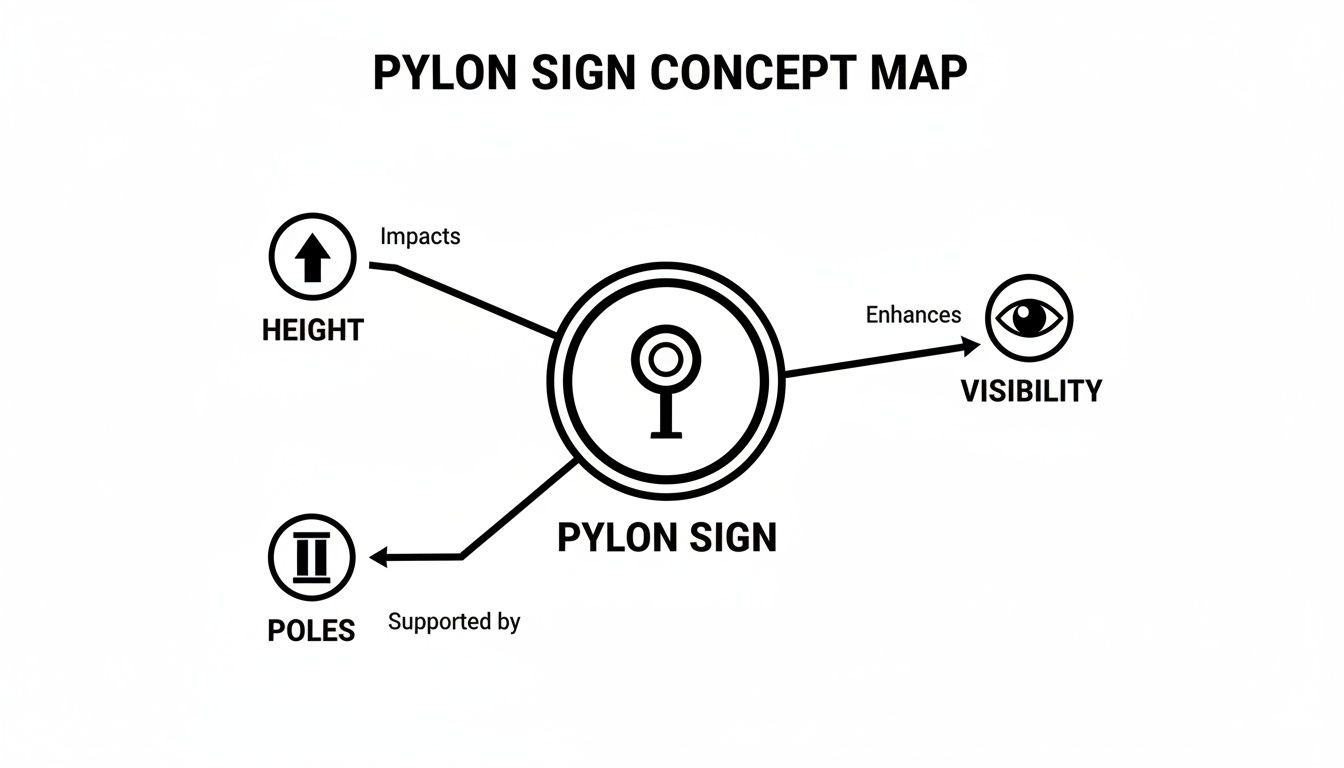
As you can see, the sign’s height and its support poles are the foundation—literally—that enables its primary function: creating powerful, long-distance visibility. From its concrete base to its illuminated face, every part of a pylon sign works in concert to build a lasting landmark for your business.
The Tangible Business Benefits of Pylon Signs

Putting up a pylon sign isn't just a design choice—it's a direct investment in your business's visibility and bottom line. Their single greatest strength is the sheer visibility they command. By design, their height lifts your brand identity high above the visual clutter of nearby buildings and traffic, making sure you’re seen from major highways and distant intersections.
This towering presence acts like a beacon, capturing the attention of thousands of potential customers driving by every single day. For any physical business, that kind of constant exposure is a powerful tool for building location awareness. It makes your business impossible to miss.
Ultimately, this visibility translates directly into what matters most: foot traffic. A pylon sign becomes a local landmark, guiding new and returning customers right to your door and turning passing motorists into paying patrons.
Solidify Your Brand and Establish Dominance
A great pylon sign does more than just give directions; it cements your brand as a stable and credible part of the community. Its impressive size alone sends a powerful message of professionalism and permanence, telling everyone that your business is established and here to stay.
Think of your pylon sign as your hardest-working salesperson—one that works 24/7. It never stops:
- Reinforcing Brand Recognition: Consistently showing your logo and colors makes your brand stick in customers' minds.
- Creating a Landmark: Your sign becomes an easy reference point, making your business simple for people to find and recommend.
- Building Trust: A substantial, well-built sign signals quality and reliability, which builds immediate customer confidence.
This constant reinforcement helps you claim your territory in a crowded market. You’re carving out a piece of the local skyline that is unmistakably yours, giving you a powerful competitive edge. While pylon signs are built for long-distance impact, it's also worth knowing how they differ from their shorter counterparts. You can learn more about what makes business monument signs effective for ground-level branding.
A Powerful Return on Investment
While a pylon sign is a significant upfront purchase, the long-term financial payoff is undeniable. Unlike digital ad campaigns or other recurring marketing costs, a pylon sign is a one-time capital investment that continues to deliver value for years, and often decades, to come.
Pylon signs have become a cornerstone of commercial branding, with some businesses reporting a staggering 40-60% uplift in foot traffic after installation.
This makes them a game-changer for standing out. For example, a new restaurant in a competitive area might see an immediate surge in dinner traffic simply because drivers who previously never noticed it can now see it clearly from the main road. The numbers back it up: the global pylon market was valued at USD 5.2 billion in 2024 and is expected to hit USD 9.1 billion by 2033, growing at a strong compound annual rate of 6.5%. You can explore more about these market trends on verifiedmarketreports.com. This growth shows just how much businesses recognize the value these signs bring. When you weigh the initial cost against the steady stream of customers it attracts, the return on investment speaks for itself.
Choosing the Right Type of Pylon Sign
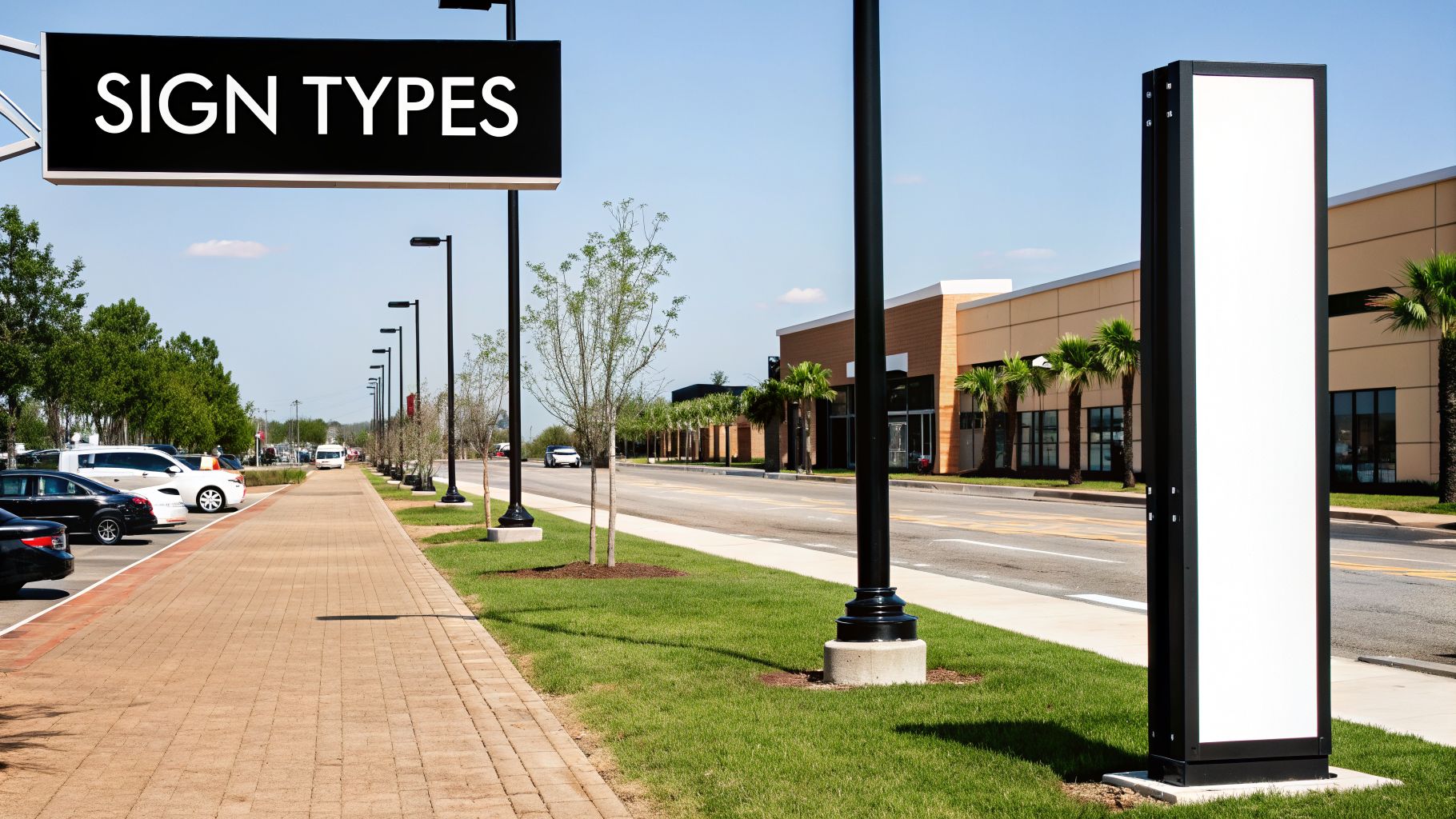
So you know you need a pylon sign. The next question is, which one? The term "pylon sign" isn't a one-size-fits-all solution; it’s an entire family of signs, each built for a different job.
Picking the right style is where the real strategy comes in. Your final choice will hinge on your location, your brand’s personality, and whether you're a single business or part of a bustling commercial center. Let's break down the main players you’ll see out in the wild.
Single-Pole Mount Pylon Signs
Think clean, focused, and modern. A single-pole mount does exactly what it sounds like—it uses one big, heavy-duty post to hold up your sign cabinet. This minimalist approach is a perfect fit for a standalone business that needs to make a big statement without taking up a massive footprint.
You’ll see this workhorse style everywhere, especially for:
- Fast-food restaurants
- Gas stations
- Banks
- Individual retail stores
Its streamlined look fits beautifully with modern buildings, giving you that critical roadside visibility without cluttering the property. It’s often the most direct and cost-effective way for one business to grab the attention of passing traffic.
Covered-Pole and Twin-Pole Designs
For a look that feels more permanent and high-end, you have covered-pole and twin-pole signs. Instead of a bare steel post, the support structure is wrapped in architectural materials—like brick, stonework, or custom aluminum panels—to seamlessly match the building it represents.
A covered-pole pylon sign transforms a simple directional tool into a branded architectural feature. It signals a greater sense of permanence and quality, making it a favorite for hotels, corporate campuses, and upscale retail centers.
Twin-pole designs, on the other hand, use two posts for extra stability. This provides a balanced, powerful foundation needed for exceptionally wide or oversized sign cabinets.
Multi-Tenant Pylon Signs
This is the undisputed champion of the shopping plaza and business park. The multi-tenant pylon sign is the big directory you see at the entrance, designed with one clear goal: to give every business in the complex its own slice of the spotlight.
A practical example is a new retail center going up. That tall sign at the entrance with ten glowing slots is a multi-tenant pylon. One slot goes to the anchor grocery store, another to the coffee shop, and another to the gym. It gives every business an equal shot at being seen from the street, ensuring traffic flows to all tenants.
Seeing how these different pylons work can help you understand where they fit in the larger world of business signage. If you're curious, our guide to the different types of outdoor business signs shows how it all comes together.
Navigating Pylon Sign Design and Permitting
A successful pylon sign project is won long before the first piece of steel is ever cut. The two most critical phases are design and permitting, and getting them right from the start is the only way to avoid costly headaches and major delays down the road. A great design isn't just about looking good; it's about instant, clear communication.
Think about it from the driver's perspective. For someone speeding down a busy road, your message must register in a matter of seconds. This means every design choice must prioritize one thing: immediate legibility. Get this right, and your investment starts working for you.
Essential Design Principles
To make your sign readable and impactful from hundreds of feet away, stick to these tried-and-true rules:
- High-Contrast Colors: Use bold, simple combinations that pop. Think black on white, yellow on black, or white on a deep blue. These pairings stand out in any light, from bright sun to a gloomy, overcast day.
- Simple, Bold Fonts: This isn't the place for thin, decorative, or script fonts. Stick with thick, clean san-serif fonts like Helvetica or Arial that stay crisp and clear from a distance.
- Concise Messaging: Less is always more on a pylon sign. It should feature your business name and logo—that’s it. Trying to cram a list of services onto the sign face makes the entire thing unreadable and defeats the purpose.
The Challenge of Permitting and Regulations
While a strong design is crucial, the biggest hurdle is often navigating the complex web of local regulations. Nearly every city and county has strict zoning laws and building codes that govern every aspect of outdoor signage. These rules aren't suggestions; they're the law.
Zoning and building codes are non-negotiable. They determine everything from a sign’s maximum height and total square footage to its required distance from the road and neighboring properties.
Trying to bypass these rules is a recipe for disaster, often leading to hefty fines, forced removal of your new sign, and a completely wasted investment. This is exactly where partnering with an experienced sign company becomes invaluable. A true professional will manage the entire process, from ensuring code compliance and handling permit applications to filing for variances if your design requires an exception. In some cases, verifying site compliance can even be streamlined with tools like drone inspection services.
An expert handles all these bureaucratic details so your project moves forward smoothly and legally. To get a better sense of what this involves, take a look at our guide on sign permit requirements and see what the process really entails.
Frequently Asked Questions About Pylon Signs
Any business owner or developer considering a landmark signage project is bound to have a few big questions. Before you invest, you need to be clear on cost, longevity, and how different signs serve very different purposes. Let's clear the air on the most common questions we hear about pylon signs.
The first question is always about the price tag. The honest answer is that the cost of a pylon sign has a huge range, depending on its final height, the materials used, whether it's single or double-sided, and if you add features like a digital message board.
It's better to think of it not as an expense, but as a capital investment in your brand’s physical footprint and long-term visibility.
How Long Do Pylon Signs Last?
Another major question we get is about durability. A properly built pylon sign is engineered from the ground up to last. Think structural steel poles and rust-proof aluminum cabinets—these aren't temporary signs. They’re built to handle tough weather for years on end.
With professional installation and some basic, routine maintenance, a pylon sign can easily have a lifespan of 10 to 20 years or more. This kind of longevity makes it a permanent asset for your property, one that works around the clock to bring in customers for decades.
Pylon Sign vs. Monument Sign: What Is the Difference?
It’s easy to get pylon and monument signs confused, but they have completely different jobs. The main distinction boils down to height and strategic purpose.
A pylon sign is your long-range beacon, while a monument sign is your ground-level handshake. One is for attracting attention from afar, the other is for identifying an entrance up close.
- Pylon Signs: These are the tall, towering structures, often reaching 20 to 80 feet high. They are built for one reason: to be seen from a great distance, capturing the attention of fast-moving traffic on highways and major roads.
- Monument Signs: These are low-profile signs, usually only a few feet tall, that sit at the entrance to a property. Their job is to identify a business, office park, or campus at eye level for visitors who are already pulling in.
At On Display Signs, Inc., we manage every detail of your pylon sign project, from design and permitting to fabrication and installation. Get in touch with our team today to build a landmark for your business.