
In a world of constant communication, a church's physical presence speaks volumes. Your signs are often the first handshake with a potential visitor and a daily reminder of your mission for the community passing by. Effective signage goes far beyond simply listing service times; it creates a welcoming atmosphere, simplifies navigation for newcomers, and powerfully communicates your identity and values. A thoughtfully placed sign can be the difference between a first-time visitor feeling confused and one feeling immediately at home.
This comprehensive guide moves past generic advice to offer specific, actionable church signage ideas designed for immediate impact. We will explore a curated collection of concepts organized by their function, from dynamic digital displays that capture attention to foundational wayfinding systems that make every guest feel at ease. Consider this your roadmap for transforming your campus into a more inviting and communicative space.
You will learn practical implementation details for each type of sign, including recommendations for materials, illumination, and budgeting. This article is designed to equip church leaders, facility managers, and volunteer committees with the knowledge needed to make informed decisions. We will cover everything from prominent monument signs that establish your presence to the subtle interior signs that guide and inform, ensuring your church's message is seen and felt long before the first worship song begins. Let's delve into the strategies that will make your signage a powerful extension of your ministry.
1. Digital LED Message Boards
Digital LED message boards are one of the most dynamic and effective church signage ideas available today. These electronic displays leverage bright, high-contrast Light Emitting Diodes (LEDs) to communicate everything from service times and event announcements to inspirational quotes and welcome messages. Their key advantage is the ability to be updated remotely and in real-time, allowing church staff to keep content fresh and relevant with minimal effort. This makes them a powerful tool for engaging both the congregation and the surrounding community.
Why Choose a Digital LED Sign?
Unlike static signs that require manual changes, a digital LED board acts as a 24/7 communications hub. Churches like Houston's Lakewood Church use large-format outdoor displays to broadcast messages to thousands of passersby daily, while others use them to post frequently changing schedules and ministry updates. This technology ensures your message is never stale and can adapt instantly to new events, sermon series, or even weather-related closures. The high visibility, even from a distance or in bright sunlight, ensures your message gets noticed.
Actionable Implementation Tips
To maximize the impact of your digital sign, consider these practical strategies:
- Brevity is Key: Messages should be short and easily digestible, especially for traffic. A good rule of thumb is the 3×5 rule: three lines of text with five words per line. For example: "New Sermon Series / The Book of John / Sundays at 10 AM".
- Update Routinely: Change the content at least once a week. This trains regular commuters to look at your sign for new information, increasing its effectiveness.
- High-Contrast Design: Use bright, bold colors with simple backgrounds. Text should stand out clearly. A practical example is using bright yellow text on a black background for maximum readability. Avoid complex graphics or overly busy animations that can distract from the core message.
- Strategic Scheduling: Use the sign’s software to schedule specific messages for peak traffic times. For example, display a "Welcome!" message before services and a youth group announcement during school dismissal times.
Digital LED signs represent a significant investment, but their versatility and high impact offer a substantial return. They are a cornerstone of modern church outreach and an invaluable tool for community engagement. If you are exploring this option, you can find a comprehensive guide to the benefits of digital LED message boards to help with your planning.
2. Directional Wayfinding Signs
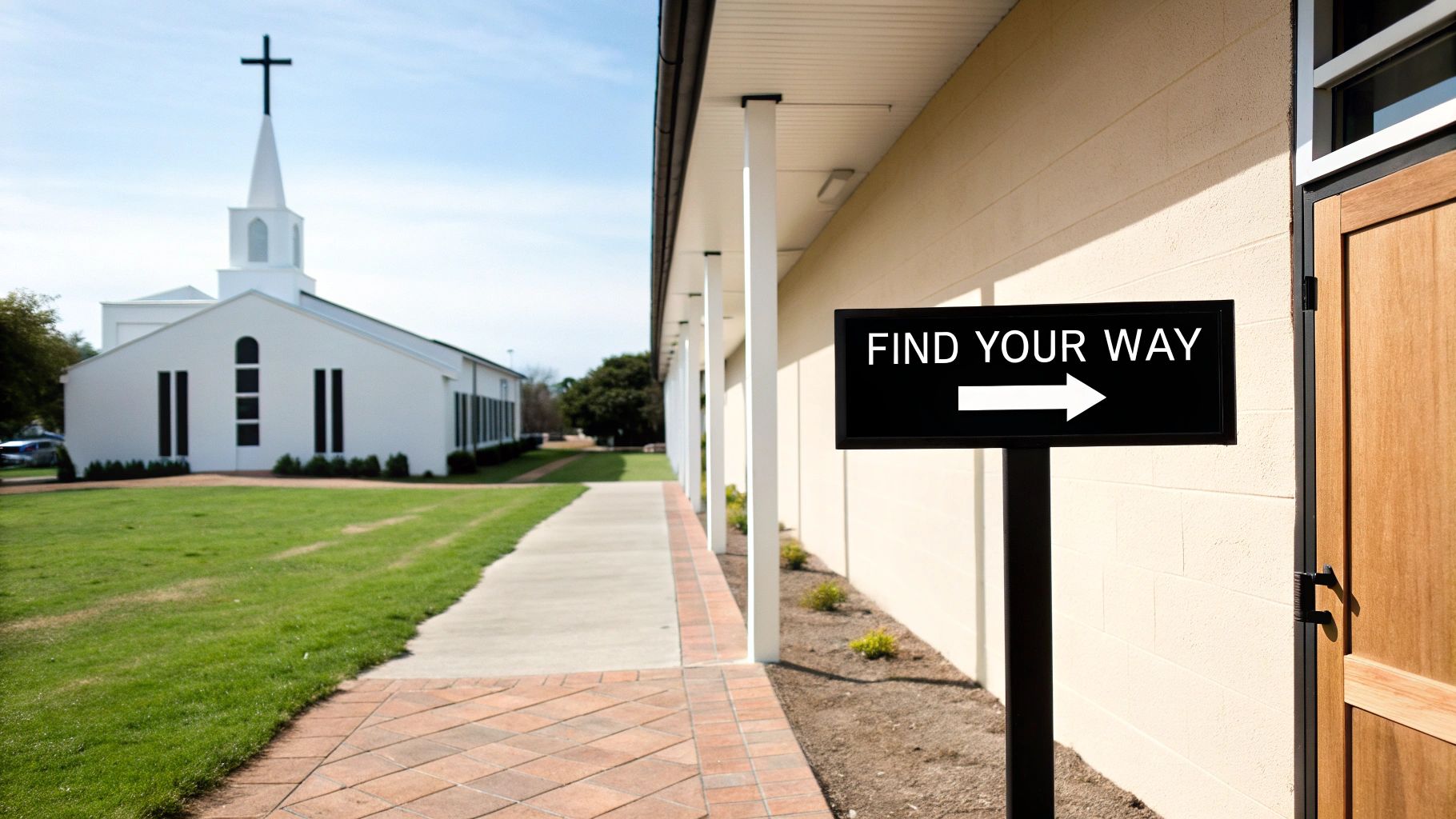
A positive visitor experience often begins before the service even starts, and directional wayfinding signs are a crucial part of that welcome. This comprehensive signage system guides members and first-time guests seamlessly from the parking lot to their final destination, whether it's the sanctuary, nursery, restrooms, or classrooms. Effective wayfinding reduces confusion and anxiety, allowing people to feel comfortable and cared for from the moment they arrive on your property.
Why Choose Directional Wayfinding Signs?
A confusing layout can be a significant barrier for newcomers. A well-planned wayfinding system is one of the most practical church signage ideas for fostering a welcoming environment. Churches with large or multi-building campuses, like the Church of the Resurrection in Kansas City, rely on extensive interior signage to make their large facilities feel accessible. By anticipating where a visitor might hesitate or feel lost, you can proactively provide clarity and direction, which is a subtle but powerful act of hospitality. This system ensures a smooth flow of traffic and helps events and services start on time by getting everyone where they need to be efficiently.
Actionable Implementation Tips
To develop a wayfinding system that truly serves your guests, consider these practical strategies:
- Conduct a Visitor Walk-Through: Ask a first-time visitor to navigate your campus from the street to a specific classroom. Note every point where they hesitate or look for a sign, as these are critical placement locations.
- Maintain Brand Consistency: Use the same fonts, color schemes, and logos across all wayfinding signs. This creates a cohesive, professional look that builds trust and makes the signs instantly recognizable as part of a unified system.
- Use Icons for Clarity: Supplement text with universally understood pictorial icons (e.g., a stroller for the nursery, male/female figures for restrooms). This is especially helpful for multi-lingual congregations and young readers.
- Place at Decision Points: Install signs at key intersections, such as hallway junctions, doorways, and stairwells. A practical example is placing a sign that reads "Sanctuary ->" right where a hallway splits in two directions. The goal is to provide the right information at the exact moment a person needs to make a decision.
Directional wayfinding is a foundational investment in visitor experience. It communicates care and thoughtfulness before a single word is spoken. For those looking to implement a system, you can explore this detailed guide on the fundamentals of wayfinding signage to inform your strategy.
3. Monument/Exterior Marquee Signs
A monument or exterior marquee sign is a foundational piece of church signage that establishes a permanent, professional presence in the community. These large, freestanding structures are typically placed at the entrance of the church property, featuring the church's name and often incorporating a changeable message board for service times, sermon series, or special events. They act as a landmark, reinforcing the church's identity and serving as a primary point of contact for passersby.

Why Choose a Monument/Exterior Marquee Sign?
Unlike temporary banners, a monument sign conveys permanence, stability, and a deep-rooted commitment to the local area. Prominent churches like Cornerstone Church in San Antonio use large marquee displays to create an unmistakable landmark that is both informative and welcoming. This type of sign works around the clock to ensure your church is visible, making it easy for first-time visitors to find and for the community to recognize. It is one of the most effective church signage ideas for building brand recognition and communicating core information.
Actionable Implementation Tips
To ensure your monument sign is effective and compliant, consider these key steps:
- Verify Zoning Laws First: Before spending any money on design, visit your local city planning or zoning department to get a printed copy of the sign ordinances. These laws dictate sign size, height, placement, and lighting, so early verification is crucial to avoid costly mistakes.
- Choose Climate-Appropriate Materials: Select durable materials like brick, stone, or high-density urethane (HDU) that can withstand your local climate, whether it's intense sun, heavy rain, or snow.
- Prioritize Nighttime Visibility: Incorporate external or internal illumination. A practical example is using ground-mounted spotlights angled up at the sign, which is often a cost-effective and permitted lighting solution.
- Maintain Message Freshness: If your sign includes a changeable message board, update it at least weekly. This encourages regular commuters to look for new information and shows the church is active and engaged.
A well-designed monument sign is a long-term investment in your church’s visibility and community outreach. If you want to dive deeper, you can find out more about what is a monument sign to guide your project.
4. Service Time and Welcome Signs
Service time and welcome signs are often the first direct communication a potential visitor has with your church. Placed strategically at property entrances, parking lots, and building entryways, these signs do more than just list schedules. They set the tone for the entire visitor experience, offering a warm greeting and essential information that makes a first visit feel less intimidating and more inviting. This type of signage is a fundamental component of effective church hospitality and outreach.
Why Choose Service Time and Welcome Signs?
These signs are non-negotiable for any church looking to grow. They immediately answer the most common questions a newcomer has: “When are the services?” and “Am I in the right place?” By clearly communicating this information, you remove barriers and show that you are actively thinking about your guests. For example, Hillsong Church is known for placing simple yet prominent welcome and service time signs at every key decision point, from the street to the sanctuary doors, ensuring no one ever feels lost. This simple act of clear communication conveys a powerful message of care and organization.
Actionable Implementation Tips
To ensure your welcome signs are effective, focus on clarity, warmth, and strategic placement. Consider these practical tips:
- Placement is Paramount: Position signs at every vehicle entrance and main pedestrian walkway. A practical example is placing an A-frame sign on the sidewalk near the main entrance that says, "Welcome! Service Starts at 10 AM."
- Use Inviting Language: Swap formal church-speak for warm, conversational phrases. "You're welcome here!" is more engaging than "All are welcome."
- Keep Information Current: Nothing deters a visitor faster than showing up for a service time that has changed. A practical tip is to assign one specific volunteer the task of updating all service time signs every time a schedule changes.
- Include Key Details: Add your church's website, phone number, and social media handles. Also, include information on accessibility, such as wheelchair ramp locations or designated parking.
- Design for Readability: Use large, high-contrast fonts that are easy to read from a distance or a moving vehicle. A simple white background with bold black or dark blue text is a proven, effective combination.
Well-executed service time and welcome signs are essential church signage ideas that function as your frontline hospitality team. They are a low-cost, high-impact investment in making visitors feel seen and valued from the moment they arrive. For more inspiration on creating an inviting atmosphere, you can explore some of the best examples of modern church signs.
5. Information Kiosk Displays
Information kiosk displays are dedicated, self-service stations that act as a central hub for church-related information. Typically placed in high-traffic lobbies or gathering spaces, these kiosks provide visitors and members with easy access to details about ministries, event sign-ups, volunteer opportunities, and community resources. They effectively centralize communication, empowering people to find the information they need at their own pace and reducing the burden on welcome staff to answer every question.
Why Choose an Information Kiosk?
In a busy church environment, an information kiosk streamlines the flow of information and helps newcomers navigate the complexities of a vibrant community. Instead of searching for the right person to ask, a visitor can simply walk up to a well-organized display to find brochures, sign-up sheets, and program schedules. This approach is particularly effective for churches with extensive ministry portfolios or multi-campus locations, like those seen in the Calvary Chapel movement, which often use standardized systems to ensure consistent communication and help people get connected. A kiosk serves as a permanent, reliable information point that’s always available before and after services.
Actionable Implementation Tips
To create an effective information kiosk, focus on organization and accessibility with these strategies:
- Organize by Journey: Structure materials based on a person's level of engagement. A practical example is using three clear brochure holders labeled: "I'm New," "Get Involved," and "Ready to Serve" to guide people logically.
- Keep Content Current: Assign a specific staff member or dedicated volunteer to maintain the kiosk. This person should perform a check every Sunday morning to remove outdated flyers and replenish materials, ensuring all information is accurate and relevant.
- Use QR Codes: Bridge the physical and digital gap by adding QR codes to printed materials. These can link directly to your church website, event registration pages, or online sermon archives, providing instant access to more detailed information.
- Consider Digital Integration: For a more dynamic experience, incorporate a small digital screen. This can display a rotating slideshow of upcoming events, highlight key announcements, or offer interactive menus. You can discover more about the uses of interactive screens in our guide to digital signage in educational settings.
An information kiosk is more than just a table with flyers; it's a strategic tool for connection and one of the most practical church signage ideas for fostering an informed and engaged congregation. It shows you value clear communication and want to make it as easy as possible for people to become part of your church family.
6. Event and Announcement Banners
Event and announcement banners are a highly effective and budget-friendly church signage idea for promoting specific occasions. These temporary or semi-permanent signs, typically made from durable vinyl or fabric, are perfect for creating excitement and communicating important dates for upcoming sermon series, missions trips, conferences, or seasonal initiatives. Their versatility allows them to be displayed both inside and outside the church, capturing the attention of members and the local community alike.
Why Choose Event and Announcement Banners?
Unlike permanent installations, banners offer unmatched flexibility and cost-effectiveness for time-sensitive promotions. A well-designed banner acts as a large-format invitation, creating a sense of anticipation and ensuring key details are not missed. For example, a vibrant "Vacation Bible School" banner hung across the church entrance in early summer immediately informs passing families, while a banner in the lobby promoting a Christmas Eve service reminds the congregation to invite friends and neighbors. This approach allows your church to maintain a dynamic and current visual presence without the expense of permanent signage changes.
Actionable Implementation Tips
To maximize the impact of your event banners, focus on clear communication and strategic placement:
- Design for Readability: Keep the design clean and uncluttered. A practical tip is to focus on the "Who, What, When, Where." For example: "Men's Breakfast / Sat, June 15th @ 8 AM / Fellowship Hall".
- Strategic Placement: Hang outdoor banners in high-visibility areas like near the main road or over the primary entrance. Inside, place banners in high-traffic zones such as the welcome center, lobby, or fellowship hall.
- Plan Ahead: Order your banners at least 4-6 weeks before the event. This provides ample time for professional design, printing, and any necessary revisions, ensuring a high-quality final product is ready when you need it.
- Create Reusable Templates: For recurring annual events like Easter services or fall festivals, work with a designer to create timeless templates. A practical example is a banner that says "Fall Festival" with a blank space or velcro area where you can attach the new date each year.
Event banners are an indispensable tool for targeted church marketing. They provide a powerful visual cue that something important is happening, driving engagement and participation for your most significant events. For more ideas on effective banner design, you can review some helpful tips for church outreach.
7. Ministry Department and Classroom Signs
Ministry department and classroom signs are essential interior wayfinding tools that bring clarity and organization to a church’s physical space. These signs identify specific ministry areas, classrooms, administrative offices, and multi-purpose rooms, helping members and first-time visitors navigate the building with confidence. By clearly labeling each area, these signs reduce confusion, create a more welcoming environment, and direct people efficiently to their intended destinations, whether it's the children's ministry wing or a specific Bible study classroom.
Why Choose Ministry and Classroom Signs?
Effective interior signage is a hallmark of a well-organized and hospitable church. When newcomers can easily find the nursery or a specific meeting room, they feel more comfortable and cared for. Churches like Saddleback Church in California utilize a cohesive system of interior signs to guide their large congregation across a multi-building campus, ensuring every ministry area is clearly marked. This approach transforms a potentially confusing building into a user-friendly space, reinforcing a sense of order and intentionality that reflects well on the church's operations.
Actionable Implementation Tips
To create a functional and aesthetically pleasing interior sign system, consider these strategies:
- Establish Sign Standards: Develop a simple, one-page document that dictates fonts, colors, materials, and mounting heights for all interior signs. For example: "All classroom signs will use Arial font, size 72pt, and be mounted 60 inches from the floor." This ensures a consistent, professional look.
- Use Thematic Elements: For children's and youth ministry areas, incorporate fun, age-appropriate themes, colors, and graphics into the signage. This creates an exciting and inviting atmosphere for younger members.
- Color-Code for Clarity: Assign a specific color to different ministry zones (e.g., blue for children's ministry, green for adult education). This visual cue helps people navigate large buildings more intuitively.
- Include Room Details: Add practical information where needed, such as room capacity numbers for safety compliance or the name of the ministry leader associated with a specific office. This adds another layer of helpfulness to your signage.
Well-executed ministry and classroom signs are a fundamental part of the visitor experience. They are a practical investment in hospitality and organization that significantly impacts how people interact with and perceive your church home.
8. Mission and Vision Statement Displays
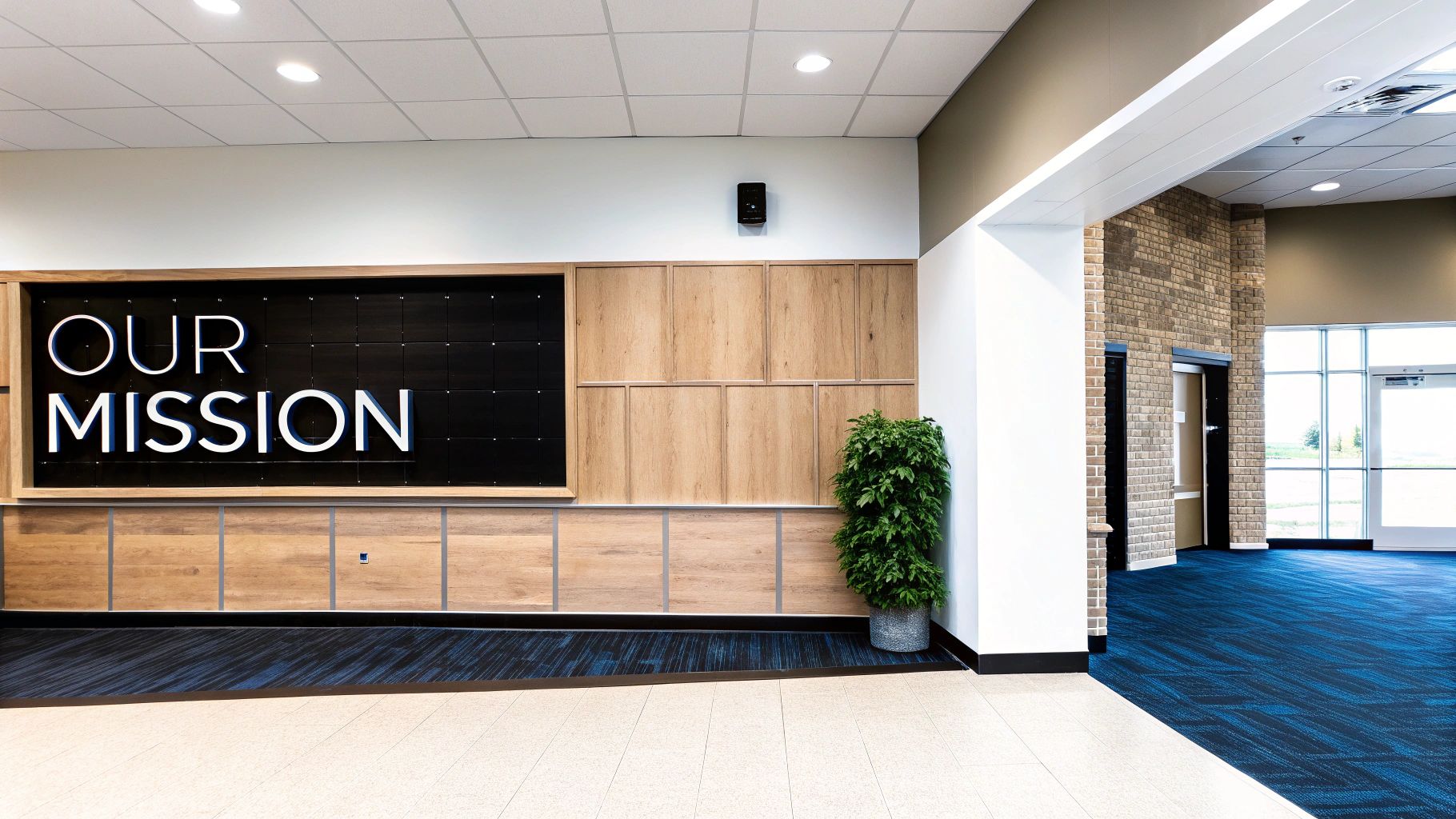
Displaying your church's mission, vision, or core values is a powerful way to reinforce your identity and purpose. These signs go beyond simple announcements, serving as foundational statements that communicate what your church stands for. Placed in prominent locations like the lobby, sanctuary, or exterior walls, these displays constantly remind members and inform visitors of the church's guiding principles, helping to foster a unified and purpose-driven community.
Why Choose Mission and Vision Displays?
This type of signage is crucial for aligning your congregation and clarifying your church's direction for newcomers. It acts as a compass, ensuring everyone is moving toward the same goals. For instance, Summit Church in North Carolina effectively uses values-driven displays throughout its campuses to visually articulate its core tenets. This constant reinforcement helps embed the mission into the church culture. Whether it's a key scripture verse or a concise statement, this signage transforms a wall into a declaration of purpose.
Actionable Implementation Tips
To create impactful mission and vision displays, consider these strategies:
- Keep it Concise: Your mission or vision statement should be memorable. A practical goal is a statement under 25 words that is easy to understand and recall, such as "To Know Christ and to Make Him Known."
- Choose a Timeless Design: Work with a professional designer to create a look that reflects your church's character but won't appear dated in a few years. Materials like acrylic, brushed metal, or quality wood can achieve this.
- Strategic Placement: Install the display in a high-traffic, well-lit area where it will be seen frequently. The main foyer, a large wall in the worship center, or an exterior facade are all excellent choices. For highly customizable visual messaging and branding, explore the potential of wedding gobo lighting to project your church's emblem, messages, or seasonal themes.
- Involve Stakeholders: Develop the statement with input from church leadership, staff, and long-time members to ensure it accurately reflects your theological identity and community spirit.
Mission and vision statements are more than just words; they are a public commitment. By displaying them prominently, you create a powerful visual anchor for your church’s identity and one of the most meaningful church signage ideas you can implement.
8-Point Church Signage Comparison
| Sign Type | Implementation Complexity 🔄 | Resource Requirements ⚡ | Expected Outcomes 📊 | Ideal Use Cases 💡 | Key Advantages ⭐ |
|---|---|---|---|---|---|
| Digital LED Message Boards | High — electrical, mounting, software setup, permits 🔄 | High — $2k–$15k+, ongoing power & IT support ⚡ | Very high visibility and timely messaging; strong outreach impact 📊 | Large campuses, outreach events, emergency alerts | Eye-catching; remote updates; scheduled messaging; accessibility ⭐⭐⭐⭐ |
| Directional Wayfinding Signs | Medium — design, ADA planning, coordinated placements 🔄 | Low–Medium — design time, durable materials, translation as needed ⚡ | Reduces visitor confusion; improves safety and flow 📊 | Multi-building campuses, first-time visitor orientation | Clear navigation; low maintenance; affordable; accessible ⭐⭐⭐⭐ |
| Monument/Exterior Marquee Signs | High — custom design, construction, zoning/permits 🔄 | High — $3k–$20k+, landscaping, lighting, professional install ⚡ | Strong community recognition and street visibility 📊 | Establish identity, roadside discovery, long-term branding | Permanent presence; professional curb appeal; brand reinforcement ⭐⭐⭐⭐ |
| Service Time and Welcome Signs | Low — simple design/placement, frequent updates 🔄 | Low — inexpensive materials, seasonal updates ⚡ | Quickly communicates availability; improves first impressions 📊 | Parking lots, entryways, newcomer welcome points | Cost-effective; clear service times; welcoming tone ⭐⭐⭐ |
| Information Kiosk Displays | Medium — content organization, optional digital integration 🔄 | Medium — kiosk unit, printed materials, optional touchscreen ⚡ | Centralizes info; reduces staff queries; supports engagement 📊 | Lobbies, multi-ministry churches, volunteer recruitment | Self-service hub; combines print & digital; program visibility ⭐⭐⭐ |
| Event and Announcement Banners | Low — design/print/hang; temporary use 🔄 | Low–Medium — printing, mounting hardware, storage space ⚡ | High short-term visibility; boosts event attendance 📊 | Seasonal campaigns, conferences, VBS, mission promotions | Flexible; high-impact for short runs; reusable for recurring events ⭐⭐⭐ |
| Ministry Department & Classroom Signs | Low–Medium — many locations, coordinate standards 🔄 | Low — $20–$100 per sign; design standards reduce rework ⚡ | Better organization and quicker wayfinding within building 📊 | Interior room identification, ministry branding, classrooms | Inexpensive; consistent branding; improves visitor/staff navigation ⭐⭐⭐ |
| Mission & Vision Statement Displays | Medium — message vetting, design and placement 🔄 | Medium–High — $500–$5k+, quality materials and lighting ⚡ | Reinforces identity and values; inspires congregation 📊 | Lobby, sanctuary focal points, leadership messaging | Clarifies purpose; enduring inspiration; anchors culture ⭐⭐⭐⭐ |
Putting Your Signage Plan into Action
Transitioning from inspiration to implementation is the most critical step in transforming your church's physical presence. This extensive roundup of church signage ideas was designed not just to showcase possibilities but to provide a strategic blueprint. We’ve explored everything from the high-impact visibility of Digital LED Message Boards and foundational Monument Signs to the crucial, often overlooked, details of interior Directional Wayfinding and Ministry Department identifiers. Each sign type serves a unique purpose in a larger, cohesive system.
A powerful monument sign acts as your handshake with the community, while clear, welcoming service time signs are the initial invitation through the door. Once inside, an effective wayfinding system reduces visitor anxiety, and well-placed mission and vision displays quietly reinforce your purpose. Banners and informational kiosks keep your congregation informed and engaged with current events. The ultimate goal is to create an environment where every sign, from the parking lot to the classroom, works in harmony to communicate welcome, clarity, and purpose.
From Vision to Reality: Your Next Steps
The difference between a collection of signs and a true signage strategy lies in intentional planning. Avoid a piecemeal approach where signs are added sporadically without a unifying vision. Instead, take a moment to audit your current signage and identify the most significant gaps or opportunities for improvement based on the ideas discussed.
A Practical Action Plan:
- Define Your Primary Goal: What is the most pressing need? Is it to increase first-time visitor attendance, improve internal navigation for a growing congregation, or enhance community awareness of your events and services? Your primary objective will dictate your first project.
- Conduct a Campus Walk-Through: View your facility through the eyes of a first-time visitor. Where is there confusion? What questions arise? Note every point of friction, from finding the right entrance to locating the children’s ministry check-in. This exercise will reveal your most urgent wayfinding and informational needs.
- Establish a Budgetary Framework: Signage is an investment in your ministry's outreach and hospitality. Determine a realistic budget, considering that different solutions have vastly different costs. For churches planning extensive signage projects, such as new monument signs or digital displays that might involve structural changes, researching grants specifically for church buildings can provide valuable financial support for capital improvements.
- Prioritize for Phased Implementation: You don't have to overhaul everything at once. Create a phased plan. Perhaps Phase One is a new, illuminated monument sign to boost street visibility. Phase Two could be a complete interior wayfinding system, followed by a digital information kiosk in Phase Three. This makes the project manageable and financially feasible.
The Lasting Impact of Strategic Signage
Ultimately, your signage is a powerful ministry tool. It is a silent host that greets newcomers, a helpful guide that directs the lost, and a constant communicator of your church's identity and mission. When executed thoughtfully, your signs do more than provide information; they cultivate a sense of belonging, reduce barriers for guests, and reflect the excellence and care you put into every aspect of your ministry.
By embracing these church signage ideas, you are not merely updating your building's aesthetics. You are stewarding your physical space to be as welcoming and effective as possible. This investment pays dividends in the form of a more engaged congregation, a more welcoming atmosphere for visitors, and a stronger, more visible presence in your community.
Ready to bring your vision to life with professional, durable, and impactful signage? The experts at On Display Signs, Inc. specialize in turning church signage ideas into reality, managing everything from design and permitting to fabrication and installation. Contact On Display Signs, Inc. today for a consultation and see how they can help you create a welcoming and effective environment for your congregation and community.