In a competitive market, your business sign is the first handshake with potential customers. It serves as a silent salesperson, a 24/7 brand ambassador, and a critical tool for driving foot traffic and establishing your physical presence. But with an overwhelming number of options available, from materials and lighting to placement and design, choosing the right signage can be a significant challenge for any organization. This guide moves beyond generic advice to provide a comprehensive roundup of actionable, industry-specific sign ideas for business owners looking to make a lasting impression and achieve a tangible return on their investment.
This listicle is designed to be a practical resource. We will break down the most effective and impactful sign types, from commanding pylon and monument signs that anchor a property to dynamic digital displays that capture immediate attention. Whether you operate a retail shop, a restaurant, an office park, or a warehouse, you will find targeted solutions tailored to your specific needs. At its core, business signage is a powerful form of what is visual communication, designed to convey your message instantly and effectively to your audience.
Each entry in our curated collection includes practical details and actionable insights to guide your decision-making process. We cover essential considerations like recommended materials, strategic placement, illumination options, and typical maintenance requirements. By exploring these diverse concepts, you'll gain the necessary insights to select and implement the perfect signage solution that not only elevates your brand’s visibility but also actively contributes to your bottom line.
1. Monument/Pylon Signs
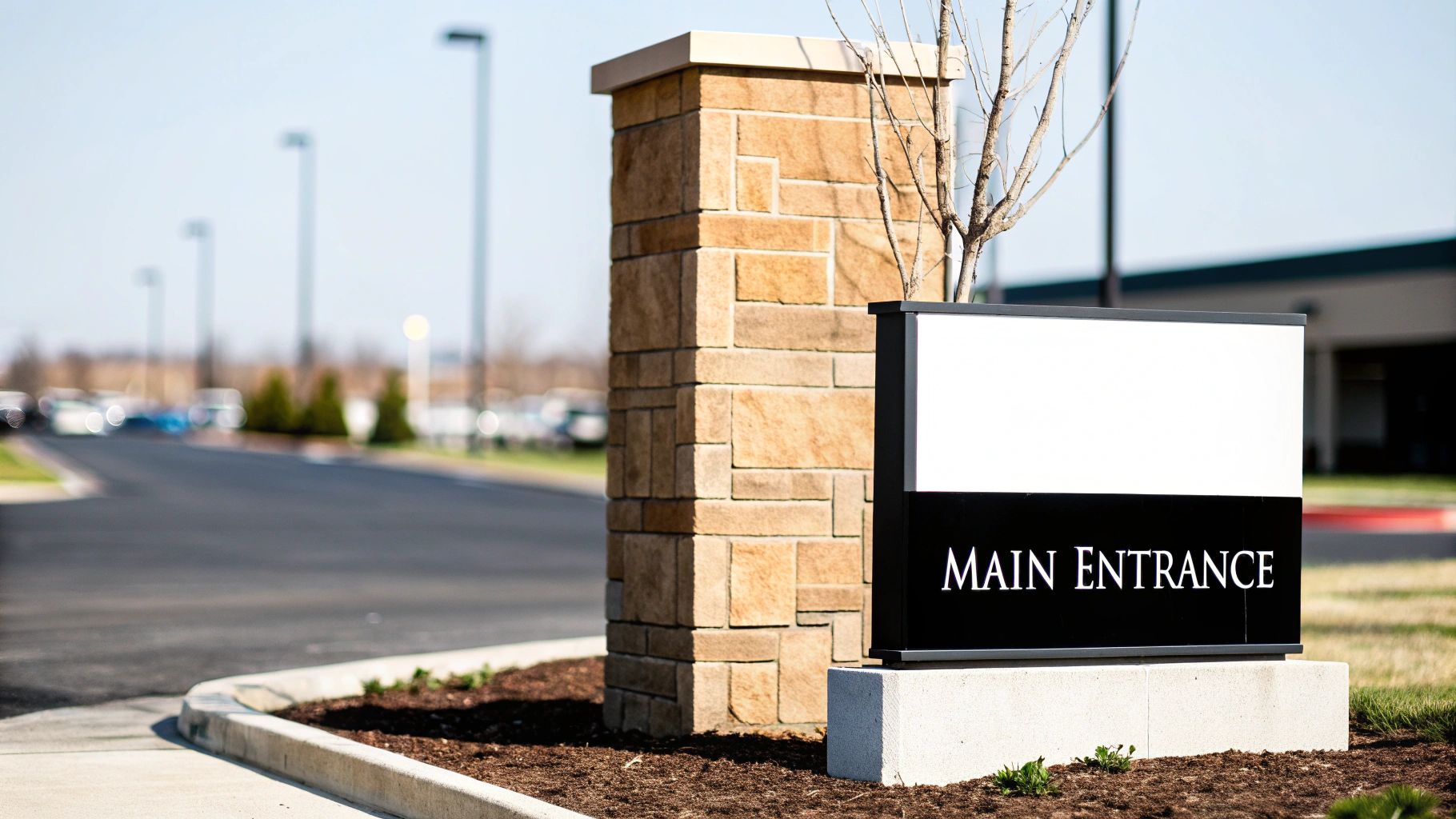
Monument and pylon signs are powerful, freestanding structures that serve as a primary identifier for a business or property. Typically positioned near the main entrance or along a major roadway, these signs are built for longevity and high visibility. They are often constructed from durable materials like stone, brick, concrete, or high-density urethane (HDU), seamlessly integrating into the surrounding architecture and landscape.
These signs are one of the most effective sign ideas for business properties set back from the road, such as corporate campuses, shopping plazas, or medical complexes. Their substantial size and permanent nature convey a sense of stability, professionalism, and permanence, making a strong first impression on visitors and passersby before they even reach the front door. For example, a law firm might use a brick monument sign with classic gold lettering to project authority and tradition.
Key Considerations & Execution Checklist
- Goal: Establish a landmark presence, improve brand visibility from a distance, and guide traffic to your location. This sign acts as a beacon for your brand.
- Best For: Office parks, retail centers, industrial facilities, hospitals, and standalone businesses with significant road frontage.
- Materials & Illumination: Combine a sturdy base of brick, stone, or precast concrete with an aluminum sign cabinet. Utilize internal LED illumination or external ground lighting to ensure 24/7 visibility and grab attention after dark.
- Actionable Insight: Position the sign at the primary entrance with a clear line of sight from the busiest adjacent roads. Consider traffic patterns and speeds; a sign on a 55-mph road needs to be larger and simpler than one on a 25-mph street.
- Permitting & Maintenance: These structures almost always require detailed engineering plans and municipal permits due to their size, foundation, and electrical components. Regular maintenance involves cleaning, inspecting lighting, and ensuring the base remains structurally sound. Learn more about the intricacies of sign permit requirements on ondisplaysigns.com.
2. Digital/LED Display Signs
Digital and LED display signs are dynamic electronic messaging centers that use light-emitting diode (LED) technology to showcase changeable content. Unlike static signs, these displays can broadcast full-color videos, animations, real-time updates, and rotating promotional messages, capturing attention with movement and light. This technology transforms a simple sign into a versatile marketing tool that can be updated instantly from a computer.
These signs are incredibly effective for businesses that have time-sensitive offers, frequent specials, or need to communicate diverse information. A practical example is a fast-food restaurant displaying its daily lunch deals or a gas station showing fluctuating fuel prices. Digital displays provide unmatched flexibility and allow a business to become a dynamic source of information, drawing the eye far more effectively than a traditional sign.
Key Considerations & Execution Checklist
- Goal: Capture immediate attention, promote time-sensitive offers, and deliver multiple messages in a single location. This sign acts as a direct, real-time communication channel with customers.
- Best For: Retail stores, restaurants, gas stations, event venues, schools, and any business with frequently changing promotions or information.
- Materials & Illumination: Features an electronic message center (EMC) comprised of LED modules housed in a weather-resistant aluminum cabinet. Pixel pitch (the distance between LEDs) determines resolution; a lower number means a sharper image, which is crucial for close-up viewing.
- Actionable Insight: Position in high-traffic areas where dynamic content will have the most impact. Ensure the viewing angle is not obstructed and the sign's brightness can be adjusted to be visible during the day without causing glare at night. For businesses looking to maximize their impact with dynamic content, exploring the capabilities of digital signs is crucial, including a look at the top digital signage solutions for retail.
- Permitting & Maintenance: Local zoning regulations for digital signs are often strict, governing brightness, message hold times, and transition effects. Permits are almost always required. Maintenance involves software updates, periodic diagnostics, and potential module replacement. Learn more about the technical specifications of digital and LED signs from ondisplaysigns.com.
3. Storefront/Window Signs
Storefront and window signs are the direct-to-consumer billboards of the brick-and-mortar world. This category includes a versatile range of applications like vinyl decals, static clings, and painted glass graphics. Placed directly on your business’s façade and windows, these signs are the primary interface between your establishment and potential customers on the sidewalk, turning empty glass into valuable marketing real estate.
This sign type is one of the most cost-effective sign ideas for business owners looking to communicate essential information and capture impulse traffic. They instantly tell passersby who you are, what you offer, and why they should step inside. For example, a retail store can use large, colorful vinyl graphics to announce a "50% Off Spring Sale," directly translating foot traffic into sales by showcasing promotions, listing hours, and reinforcing brand identity at eye level.
Key Considerations & Execution Checklist
- Goal: Capture the attention of pedestrians, communicate immediate offerings and key information (hours, sales), and create an inviting atmosphere. This sign converts street traffic into foot traffic.
- Best For: Retail boutiques, restaurants, coffee shops, salons, fitness studios, and any street-level business that relies on walk-in customers.
- Materials & Illumination: High-quality vinyl (opaque, translucent, or perforated) is the most common material for its versatility and durability. For a classic look, consider professional hand-painting. To stand out at night, use simple, strategically placed interior lighting that shines through the graphics.
- Actionable Insight: Apply graphics at eye level for maximum readability from the sidewalk. Use upper window sections for branding that can be seen from across the street. Ensure that your designs don't completely block the view into your business, as an open, visible interior is often more welcoming.
- Permitting & Maintenance: While simple vinyl lettering rarely requires a permit, larger graphics or changes to a historic building's facade often do. Check with your local municipality and landlord before installation. Maintenance involves regular cleaning of the glass and inspecting vinyl for peeling or fading, especially in direct sunlight.
4. Directional/Wayfinding Signs
Directional and wayfinding signs are the unsung heroes of customer experience, designed to guide visitors, employees, and clients seamlessly through a physical space. These practical signs eliminate confusion and frustration by providing clear, concise directions to key destinations like parking areas, specific departments, restrooms, or exits. A well-executed wayfinding system enhances accessibility and reflects a business's commitment to thoughtful organization.
From complex hospital corridors to sprawling corporate campuses, these sign ideas for business are essential for creating a welcoming and efficient environment. A practical example is placing clear, branded signs in a large warehouse store that point customers to "Lumber," "Gardening," and "Checkout." By strategically placing markers at key decision points, you empower visitors to navigate your property with confidence, which improves traffic flow and builds a more positive perception of your brand.
Key Considerations & Execution Checklist
- Goal: Improve visitor experience, enhance traffic flow, and reduce confusion within a property. The primary goal is to make navigation intuitive and stress-free.
- Best For: Hospitals, airports, corporate offices, large retail stores, educational campuses, and multi-building industrial facilities.
- Materials & Illumination: Use durable and easy-to-read materials like acrylic, brushed aluminum, or PVC. For outdoor systems, weather-resistant metals and HDU are ideal. Illumination is crucial for 24-hour facilities; consider internally lit sign boxes for directories or backlit lettering for key markers.
- Actionable Insight: Position signs at every major decision point: intersections, lobbies, elevator banks, and entrances to large wings or floors. Conduct a walkthrough from a first-time visitor's perspective to identify points of potential confusion.
- Permitting & Maintenance: While individual interior signs rarely need permits, exterior directional systems and large directories often do. ADA compliance is non-negotiable, dictating specific requirements for text height, color contrast, and braille. Maintenance involves regular cleaning and updating signs as building layouts change.
5. Illuminated Channel Letter Signs
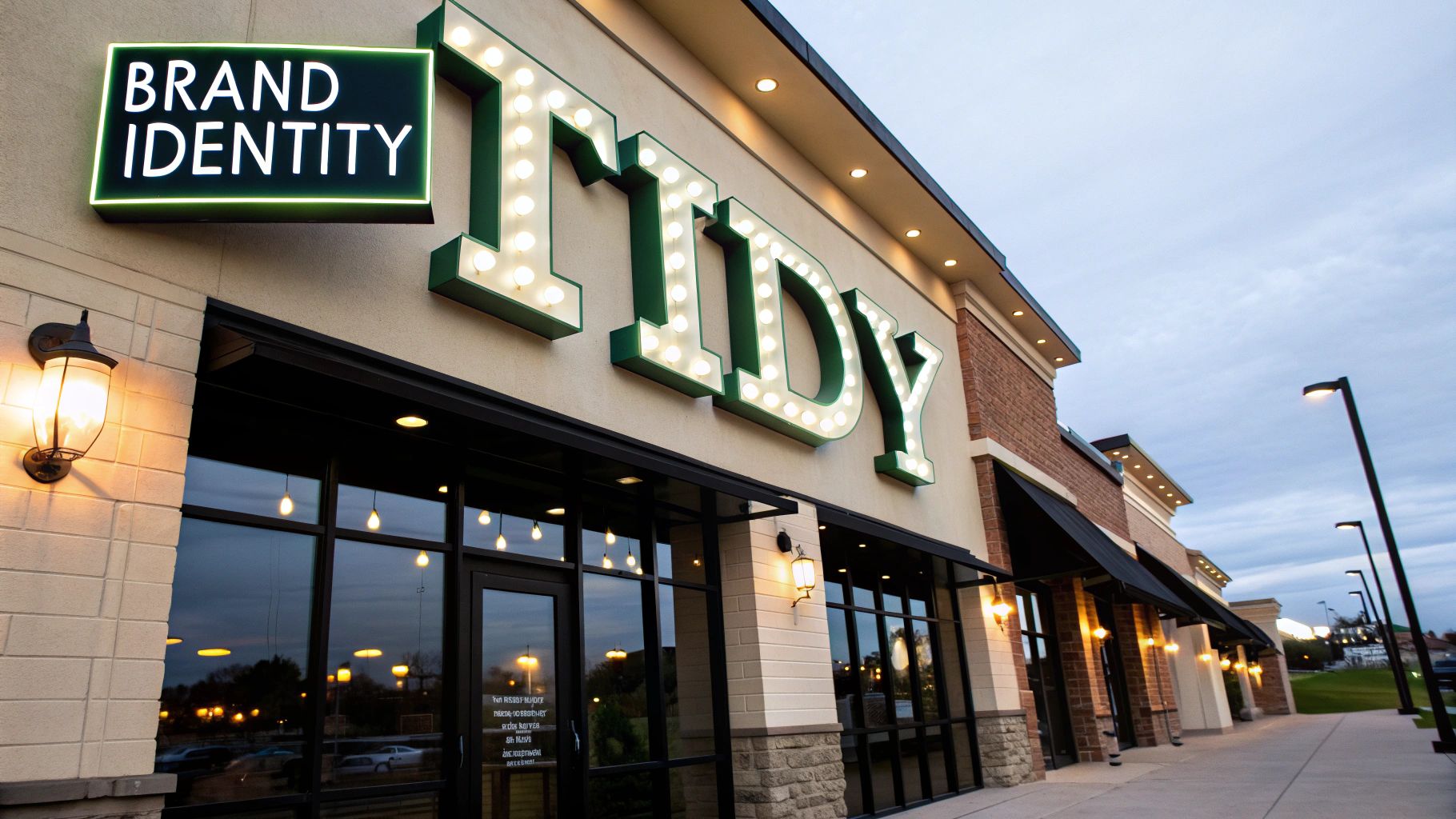
Illuminated channel letter signs are three-dimensional, individually fabricated letters and logos that create a sophisticated and highly visible brand statement. Mounted directly to a building’s facade, these signs use internal LED lighting to stand out, offering a premium and professional appearance. The lighting can be customized to be front-lit (shining through the face of the letter), halo-lit (backlit, creating a glow effect), or a combination of both.
This type of signage is a top choice for businesses aiming to convey a sense of quality and permanence. For example, an upscale retail store on a busy street might use halo-lit channel letters to create an elegant, high-end nighttime appearance. Their sharp, clean lines and brilliant illumination ensure your brand name is prominent and legible both day and night, making them one of the most impactful sign ideas for business storefronts.
Key Considerations & Execution Checklist
- Goal: Create a high-end, professional brand presence that is highly visible 24/7. This sign enhances architectural features and elevates the perceived value of your business.
- Best For: Luxury retail, law firms, financial institutions, hotels, modern corporate offices, and any business located on a busy commercial street.
- Materials & Illumination: Typically fabricated from aluminum with acrylic faces. Long-lasting, energy-efficient LEDs are the standard for illumination. Choose a lighting style that fits your brand: front-lit for boldness, halo-lit for an elegant, subtle glow.
- Actionable Insight: Mount directly on the primary building facade above the main entrance or along the most visible wall. Ensure the size and font are legible from the intended viewing distance, considering both pedestrian and vehicle traffic.
- Permitting & Maintenance: Installation requires electrical work and adherence to local building and electrical codes, making permits essential. A professional installation is non-negotiable. Maintenance includes occasional cleaning and checking electrical connections, though LEDs are very low-maintenance. Find expert guidance from these channel letter sign companies on ondisplaysigns.com.
6. A-Frame/Sidewalk Signs (Sandwich Boards)
A-frame signs, often called sidewalk signs or sandwich boards, are versatile, portable, and freestanding displays designed to capture the attention of pedestrians. Shaped like the letter 'A', they feature two faces for displaying messages and are typically placed directly in the path of foot traffic near a storefront or entrance. Their temporary and easily changeable nature makes them perfect for dynamic, day-to-day advertising.
These signs are indispensable marketing tools for street-level businesses. A cafe, for instance, can use a chalkboard A-frame to creatively display its "Latte of the Day" and a witty message to entice passersby. They excel at communicating timely information such as daily specials or flash sales, effectively turning the sidewalk into an extension of the business's marketing space and stopping potential customers in their tracks.
Key Considerations & Execution Checklist
- Goal: Drive immediate foot traffic, advertise daily promotions, and communicate timely information to passersby. This sign acts as a personal, street-level invitation.
- Best For: Restaurants, coffee shops, retail stores, salons, and any business with significant sidewalk exposure seeking to attract walk-in customers.
- Materials & Illumination: Options range from classic chalkboards and whiteboards for handwritten charm to durable plastic or metal frames with interchangeable sign inserts. For inserts, corrugated plastic is a lightweight and weather-resistant choice.
- Actionable Insight: Position the sign in a high-traffic pedestrian area, ensuring it doesn't obstruct the walkway or violate local ordinances. It should be close enough to your entrance to guide customers directly to your door.
- Permitting & Maintenance: While major permits are rare, many municipalities have strict regulations regarding the size, placement, and hours of operation for sidewalk signs. Always check with your local city government. Maintenance involves daily cleaning, updating messages, and securing the sign against wind or theft. Explore the benefits of using corrugated plastic for your inserts by learning about the Coroplast printing process on ondisplaysigns.com.
7. Wall/Exterior Painted Murals and Graphics
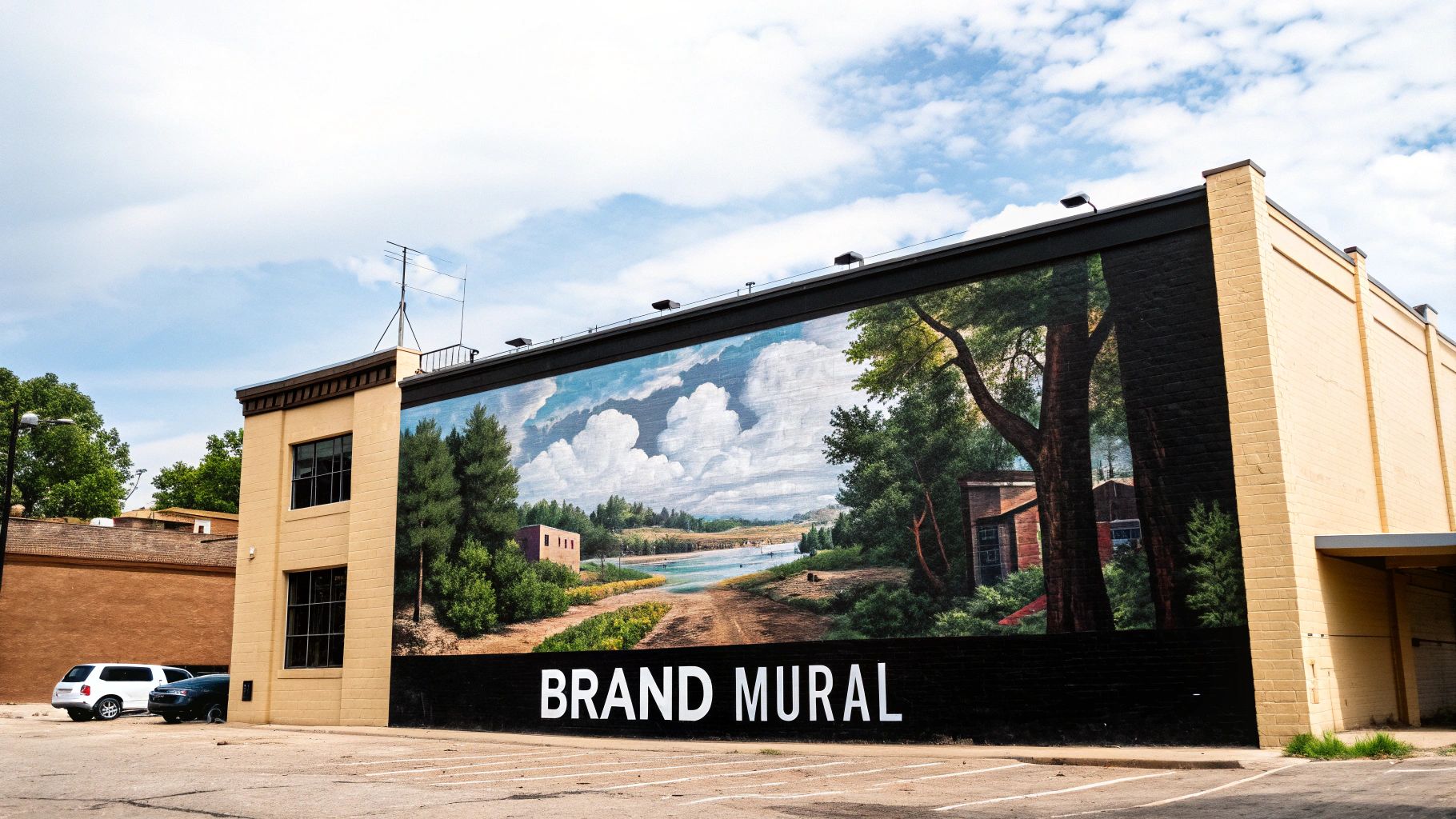
Wall murals and large-format exterior graphics transform a building's entire facade into a dynamic canvas for branding and artistic expression. This sign idea for business involves painting or applying high-resolution graphics directly onto exterior walls, creating an immersive brand statement that is both a landmark and an advertisement. These designs can range from a sophisticated logo integrated into the architecture to a full-scale artistic mural that tells a brand's story.
This approach is highly effective for businesses aiming to become a local destination. For example, a craft brewery could commission a vibrant mural depicting the brewing process, turning a simple building into a photo-worthy backdrop that generates organic social media buzz and makes a memorable, artistic impression. This not only enhances brand recognition but also fosters community engagement.
Key Considerations & Execution Checklist
- Goal: Create a visually stunning landmark, express brand personality, and generate community buzz. This turns your building into an unforgettable brand asset.
- Best For: Restaurants, breweries, retail boutiques, tech companies, and any business in an urban or high-traffic area looking to make a bold statement.
- Materials & Illumination: Use high-quality, weather-resistant acrylic or latex paints formulated for exterior use. A protective anti-graffiti and UV-resistant topcoat is crucial for longevity. For illumination, use strategically placed uplighting or directional floodlights to dramatically highlight the artwork at night.
- Actionable Insight: The most visible exterior wall with significant foot or vehicle traffic is ideal. Consider the wall's texture and condition before starting, as smooth surfaces yield the best results. The design should complement the building's architecture and the neighborhood's aesthetic.
- Permitting & Maintenance: Many municipalities classify murals as signs and require permits, often with design reviews to ensure they align with local character. Partnering with a professional muralist is key for a successful, long-lasting installation. Plan for periodic cleaning and potential touch-ups every 5-10 years to combat fading and weathering.
8. Menu Boards and Information Displays
Menu boards and information displays are specialized signs designed to clearly present product lists, services, pricing, and key operational details. These signs are crucial for communicating transactional information efficiently, ranging from static printed boards and classic chalkboards to dynamic digital screens and changeable letter signs. They are a fundamental tool for any business where customers make selections on-site.
These displays are essential for improving customer flow and decision-making in fast-paced environments like restaurants, coffee shops, and service-based businesses. By organizing complex information into an easily digestible format, they enhance the customer experience, reduce staff inquiry time, and can directly influence purchasing behavior by highlighting specials or high-margin items. This makes them one of the most functional sign ideas for business operations. A practical example is a digital menu board in a cafe that rotates to feature a profitable seasonal drink every few seconds.
Key Considerations & Execution Checklist
- Goal: Streamline the ordering process, inform customers of options and pricing, and upsell products or services. These signs guide immediate customer decisions.
- Best For: Restaurants (QSR and dine-in), cafes, salons, auto repair shops, medical clinics, and any business offering a list of services or products.
- Materials & Illumination: Options range from traditional materials like wood and chalkboard to modern solutions like printed PVC or acrylic panels. Digital displays use LCD or LED screens, offering maximum flexibility for content changes. Backlighting or direct illumination is critical for readability in all lighting conditions.
- Actionable Insight: Position displays at key decision-making points, such as near the entrance, over the service counter, or in the waiting area. Ensure the text is large and clear enough to be read from a typical customer viewing distance.
- Permitting & Maintenance: Static signs generally do not require permits unless they are large or externally illuminated. Digital displays may have specific electrical code requirements. Maintenance involves keeping the sign clean, ensuring information is 100% accurate and current, and, for digital boards, regularly updating software and content.
9. Entrance/Door Signage and Graphics
Entrance and door signage consists of the critical graphics and information displayed directly on or around your main entryways. This category includes everything from vinyl door decals listing business hours to elegant transom signs etched above the door, all designed to create a welcoming and informative transition into your space. These signs are often the first physical interaction a customer has with your brand.
This type of signage is fundamental for setting customer expectations and communicating essential details at the point of entry. For example, a retail boutique might use a clean, stylish vinyl decal with its logo, hours, and social media handles. For a medical office, it’s the suite number and doctors' names. These details remove friction from the customer journey, reinforcing professionalism and making the business feel accessible and well-managed from the very first step.
Key Considerations & Execution Checklist
- Goal: Welcome visitors, provide crucial information (hours, contact), reinforce brand identity, and ensure accessibility. This is your business's handshake.
- Best For: All brick-and-mortar businesses, especially professional services (law firms, clinics), retail stores, restaurants, and corporate offices with public-facing entrances.
- Materials & Illumination: High-quality cut vinyl is the most common and versatile choice for glass doors and windows. For a more premium feel, consider etched or frosted vinyl, dimensional letters mounted beside the door, or a custom-painted transom sign. Illumination is typically indirect from storefront or lobby lighting.
- Actionable Insight: Apply graphics at eye level on the main entrance door or adjacent windows. Ensure push/pull indicators are clearly visible. Place suite numbers and directories in a logical, easy-to-spot location next to the door frame.
- Permitting & Maintenance: Simple vinyl graphics rarely require permits, but signs with electrical components or those projecting from the building might. Regular cleaning of the glass is essential to maintain a professional appearance. It's also important to ensure all entrance signage meets ADA (Americans with Disabilities Act) requirements for accessibility, which dictate character height, contrast, and placement for tactile signs.
10. Portable Trailer Signs
Portable trailer signs offer a flexible and high-impact solution for temporary advertising needs. These signs are mounted on wheeled trailers, making them easy to move and position in different high-visibility locations. They typically feature large, changeable letter tracks or printed banner faces, perfect for announcing grand openings, special sales events, or directing traffic for a limited-time function.
This is an extremely practical sign idea for businesses that need to capture attention for a specific period without the cost of a permanent installation. For instance, a real estate developer can place a large trailer sign at the entrance of a new subdivision to announce "Now Selling" or direct potential buyers to a model home. Their mobility and large format make them an effective tool for time-sensitive promotions and location-based marketing.
Key Considerations & Execution Checklist
- Goal: Announce special events, drive traffic to a specific location for a limited time, and advertise promotions with maximum flexibility.
- Best For: Grand openings, seasonal businesses (like fireworks stands or Christmas tree lots), construction sites, real estate developments, and special event promotions.
- Materials & Design: The structure is a steel trailer frame. The sign face can be a traditional changeable letter board, a printed flexible banner, or even a digital LED display on higher-end models. The design should be bold and simple, with a clear call to action that can be read quickly from a distance.
- Actionable Insight: Position the trailer sign for maximum visibility from the target roadway, ensuring it is perpendicular to the flow of traffic. Check local ordinances, as many municipalities have specific rules regarding the placement and duration for temporary and portable signs.
- Installation & Maintenance: Installation is as simple as towing the sign into place and securing it. Maintenance involves updating the message as needed, ensuring the sign is clean, and checking that it remains securely anchored, especially in windy conditions. Explore options for custom signage for trailers on ondisplaysigns.com to create a professional look for your mobile advertising.
10-Item Business Sign Comparison
| Sign Type | 🔄 Implementation Complexity | ⚡ Resource Requirements (cost / needs) | ⭐ Expected Outcomes (effectiveness) | 📊 Ideal Use Cases | 💡 Key Advantages / Tips |
|---|---|---|---|---|---|
| Monument / Pylon Signs | High — permanent foundation, permits, professional install | High cost ($3,000–$15,000+), durable materials, zoning/maintenance | ⭐⭐⭐⭐ — excellent long‑distance visibility & brand presence | Building entrances, shopping centers, corporate campuses | 💡 Place in high‑traffic spots, add LED, verify local codes |
| Digital / LED Display Signs | High — electrical, software integration, skilled install | Very high cost ($2,000–$50,000+), power, software, ongoing maintenance | ⭐⭐⭐⭐⭐ — very engaging; great for dynamic promotions & real‑time info | Restaurants, retail promotions, venues, transit hubs | 💡 Keep messages concise, use professional CMS and support |
| Storefront / Window Signs | Low — simple install, quick updates | Low–Medium cost ($500–$3,000), vinyl/printed materials, occasional upkeep | ⭐⭐⭐ — strong for sidewalk engagement and seasonal offers | Retail boutiques, cafes, quick‑service restaurants | 💡 Maintain cleanliness, ensure text is readable from sidewalk |
| Directional / Wayfinding Signs | Medium — requires planning and consistent system design | Low–Medium cost, standard materials, periodic updates | ⭐⭐⭐⭐ — improves navigation, reduces staff queries & liability | Hospitals, airports, malls, corporate campuses | 💡 Follow ADA standards and place signs at decision points |
| Illuminated Channel Letter Signs | High — precision fabrication, electrical hookup, pro install | High cost ($5,000–$25,000+), electrical infrastructure, maintenance | ⭐⭐⭐⭐ — premium 24/7 brand visibility, upscale appearance | High‑end retail, hotels, corporate facades | 💡 Choose brand‑appropriate fonts, plan electrical and maintenance |
| A‑Frame / Sidewalk Signs (Sandwich Boards) | Low — portable, minimal setup | Low cost ($100–$500), lightweight, weather‑vulnerable | ⭐⭐ — very effective for pedestrian traffic and short‑term promos | Cafes, small retailers, events, daily specials | 💡 Check sidewalk rules, use bold short copy, secure against wind |
| Wall / Exterior Painted Murals & Graphics | Medium–High — artist/contractor work, possible permits | Medium cost (varies by size), long‑lasting paints and sealants | ⭐⭐⭐⭐ — highly memorable, builds unique visual identity | Breweries, creative brands, hospitality, urban storefronts | 💡 Hire professional muralists, use UV‑resistant coatings, plan upkeep |
| Menu Boards & Information Displays | Low–Medium — static easy, digital adds complexity | Low to High (static inexpensive; digital higher), update effort | ⭐⭐⭐ — essential for purchase decisions and upselling | Restaurants, coffee shops, clinics, service counters | 💡 Use clear fonts, keep content current, organize logically |
| Entrance / Door Signage & Graphics | Low — straightforward install, quick changes | Low cost ($200–$1,500), vinyl/metal options, occasional upkeep | ⭐⭐⭐ — shapes first impression and sets expectations | Offices, retail entrances, healthcare clinics | 💡 Display hours clearly, ensure ADA compliance, coordinate with storefront |
| Portable Trailer Signs | Low — requires towing and placement | Low–Medium cost ($1,000–$5,000), minimal maintenance | ⭐⭐⭐ — excellent for temporary events and special sales | Grand openings, real estate, seasonal businesses | 💡 Check local temporary sign ordinances, use large, bold text |
From Idea to Installation: Making Your Signage a Reality
We have explored a comprehensive spectrum of sign ideas for business, moving from the commanding presence of towering pylon signs to the intimate, welcoming detail of custom door graphics. The journey through these options reveals a fundamental truth: a sign is never just a sign. It is a silent salesperson, a constant brand ambassador, and an essential tool for navigating, informing, and engaging your audience. Whether you are guiding visitors through a sprawling warehouse, capturing foot traffic for your retail shop, or establishing your corporate identity, the right signage is a powerful catalyst for growth.
The key takeaway is that strategic signage is an integrated system. A stunning illuminated channel letter sign loses its impact if customers cannot find your entrance due to poor wayfinding. A dynamic digital menu board is less effective if your exterior storefront fails to draw people inside in the first place. Each sign type, from the grand mural to the humble A-frame, plays a specific role. The most successful businesses understand how to orchestrate these elements into a cohesive and functional brand experience.
Key Insights for Actionable Signage Strategy
The most impactful signage strategies are not born from a single great idea, but from a deliberate process of planning and execution. As you move from concept to reality, remember these critical principles we've discussed:
- Goal Alignment is Non-Negotiable: Every sign must have a purpose. Are you trying to increase brand awareness, drive direct sales, or improve operational efficiency? Define the primary goal for each sign before you even consider design elements. A directional sign’s primary goal is clarity, while a monument sign’s is brand presence.
- Material and Illumination Matter: The choice between aluminum, acrylic, wood, or high-density urethane is not merely aesthetic. It is a decision that impacts durability, maintenance requirements, and brand perception. Similarly, illumination-whether halo-lit, face-lit, or via an external LED display-radically alters visibility and mood, especially after dark.
- Location Dictates Design: A sign designed for a pedestrian-heavy downtown street will differ significantly from one meant to be seen from a highway. Consider viewing distances, traffic speeds, and the surrounding visual landscape. Your sign must compete for attention effectively without contributing to visual clutter.
The Bridge Between Concept and Completion
Navigating the path from a brilliant concept to a flawless installation involves several crucial, often overlooked, stages. This is where many well-intentioned projects encounter friction. The complexities of local zoning laws, permitting processes, and structural engineering requirements can quickly overwhelm even the most organized business owner.
Crucial Insight: Professional execution is what transforms a good sign idea into a great business asset. The difference lies in expert project management, from ensuring code compliance and securing permits to fabricating with precision and installing safely.
Think of the entire process as a series of connected checkpoints. A design is only as good as its material integrity. The material is only as effective as its fabrication. And the final product is only as impactful as its professional installation. Skipping or rushing any of these steps introduces risk-risk of delays, budget overruns, non-compliance, or a final product that simply fails to meet expectations. Partnering with seasoned professionals mitigates these risks, ensuring your investment yields the maximum possible return. Your focus should be on your business; let an expert team handle the intricate logistics of bringing your brand’s physical voice to life.
Ready to turn these sign ideas for business into a tangible, high-impact asset? The team at On Display Signs, Inc. specializes in managing the entire signage lifecycle, from initial design and fabrication to navigating permits and final installation. Let us help you create a powerful first impression that lasts.