Your business sign is more than just a marker—it’s your handshake with the community. It’s often the very first impression a customer gets, and the sign board materials you choose say a lot about who you are. The right choice projects quality and permanence; the wrong one can make you look temporary.
Choosing the Right Foundation for Your Brand's Voice
Picking the perfect material isn't just about looks. It’s a strategic decision that balances aesthetics, function, and your budget. This choice is the difference between a sign that looks great for a decade and one that fades and cracks after a single harsh winter.
And it’s a big deal. The global sign board market, driven by material choices like metal, plastic, and wood, was worth USD 45.7 billion in 2023. It’s projected to climb to USD 68.5 billion by 2032, which tells you just how critical this decision is for businesses everywhere.
Key Factors to Consider
Before you get lost in the sea of options, let's nail down the fundamentals. Answering these questions first will instantly narrow your choices and help you avoid some common, costly mistakes.
- Location and Climate: Is the sign going indoors or out? An outdoor sign in Arizona needs UV-resistant materials to fight the sun, while one in Seattle needs to be waterproof and rust-proof to handle the rain. A practical example is choosing painted aluminum for a coastal business to prevent rust from salty air.
- Desired Aesthetic: What’s the vibe you're going for? A cozy, rustic café might look great with a carved wood sign, but a modern tech firm would probably lean toward brushed aluminum or sleek acrylic. Check out our small business branding tips for more on matching your look to your brand.
- Longevity and Budget: Are you after a quick, temporary sign for a weekend event or a permanent monument sign meant to last for years? You have to weigh the upfront cost against how long you expect the sign to last and what it will take to maintain it. For instance, a one-time event sign might only need cheap Coroplast, saving you money for more permanent branding.
Choosing a sign material is like picking the right suit for a job interview. It needs to fit the occasion, project confidence, and be durable enough to make a lasting positive impression.
Thinking about how your sign fits into your bigger brand picture is smart. You can find some great ideas on signage branding solutions that tie everything together. This guide will walk you through each material, so you can pick an option that not only looks fantastic but works hard for your business for years to come.
Durable and Professional Metal Sign Materials
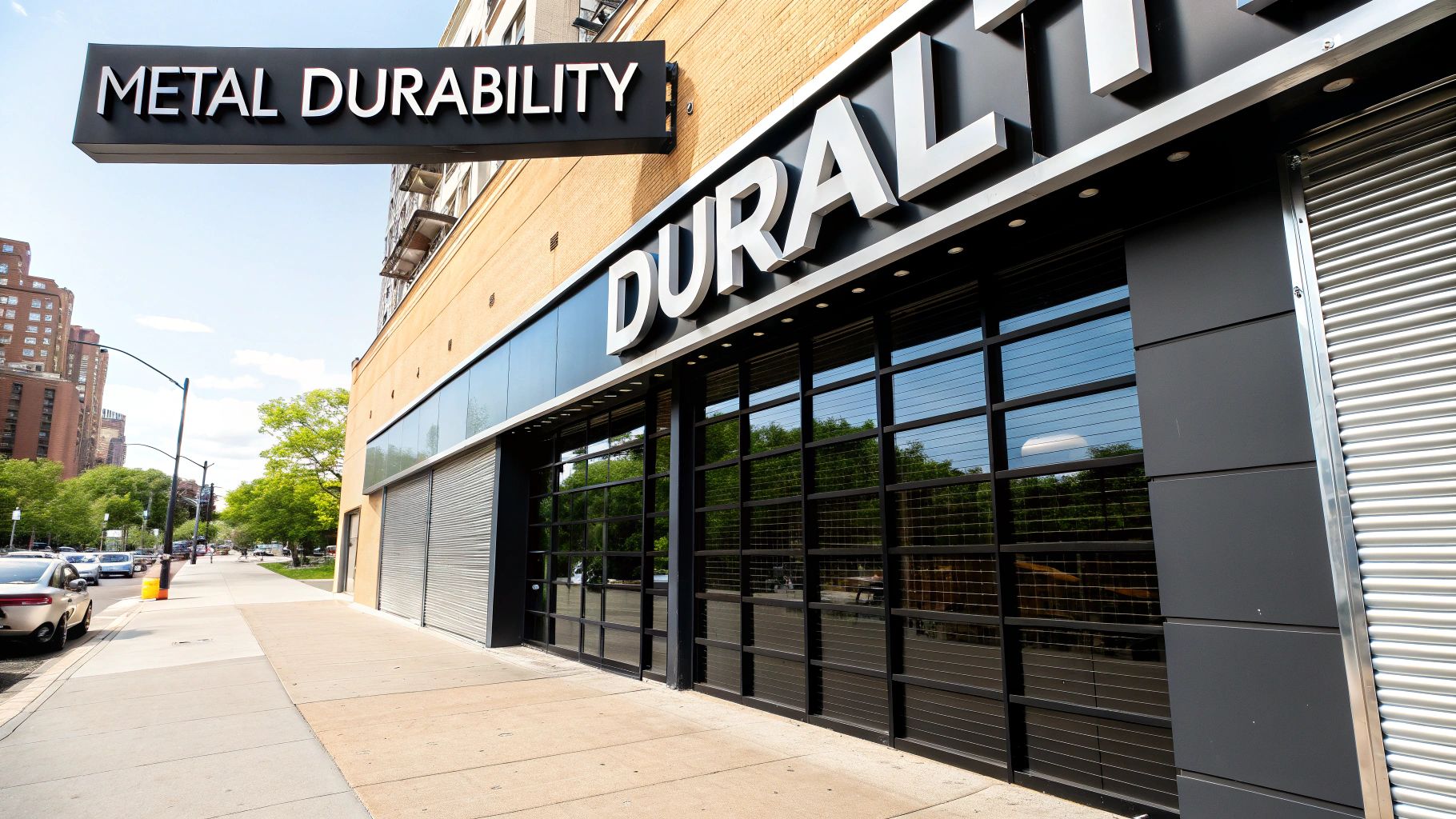
When your brand needs to project an image of permanence and authority, nothing beats metal. These sign materials are the industry benchmark for toughness, professionalism, and long-term value. Unlike other options that can fade or warp, metal signs are built to shrug off harsh weather and keep looking sharp for years, making them a seriously smart investment.
This incredible resilience makes them perfect for your most important signs—storefront branding, building markers, and permanent wayfinding systems. Choosing metal sends a clear message: your business is established, serious, and committed to quality. Let's dig into the best metal options out there.
Aluminum The Versatile Workhorse
Think of aluminum as the all-star player in the sign world. It’s hands-down one of the most popular materials, and for good reason. It offers an unbeatable mix of strength, light weight, and a natural ability to resist rust, making it a fantastic choice for just about any outdoor sign, from real estate panels to parking lot signs.
Because it doesn't rust, aluminum signage performs beautifully in rainy or humid climates without demanding a lot of upkeep. Its smooth, professional surface is also the perfect canvas for high-quality graphics and crisp lettering, making sure your message always comes through loud and clear.
Actionable Insight for Aluminum:
- Rust-Proof: Aluminum naturally forms a protective oxide layer that stops corrosion in its tracks, making it a reliable outdoor performer in any weather. Use it for signs near sprinklers or in rainy climates.
- Lightweight: It’s surprisingly light for its strength, which makes installation easier and more affordable, especially for large signs mounted on buildings.
- Highly Durable: While light, it’s a tough, rigid material that stands up to impacts and general wear, often lasting 10 years or more.
For businesses chasing a modern, sophisticated vibe, the finish of the metal can make all the difference. You can see just how much a specific finish matters by checking out these examples of brushed aluminium signs and how they elevate a brand's entire look.
Aluminum Composite Material (ACM) for Superior Rigidity
Now, picture this: take two thin sheets of aluminum and sandwich a solid plastic core between them. That’s the simple yet ingenious idea behind Aluminum Composite Material (ACM), often sold under brand names like Dibond. This layered structure makes ACM signs exceptionally rigid and perfectly flat.
This unique design is the go-to solution for large signs that absolutely cannot be allowed to warp, bend, or ripple. It delivers the premium appearance of solid metal but with superior structural integrity, which is why it's a favorite for architectural signs, huge storefront panels, and high-end displays where a flawless surface is non-negotiable. For jobs that demand extreme durability and a sleek finish, you can't go wrong with Dibond board signs.
Think of an ACM panel like a structural I-beam. The core creates separation and stability, while the outer aluminum faces provide the strength and finish. The result is a product that’s stronger and more rigid than a solid sheet of the same weight.
Stainless Steel for a Premium Statement
When you need to make an undeniable statement of luxury and prestige, stainless steel is the only answer. It has that distinct, high-end look that people instantly associate with quality and success. This is why it's the material of choice for corporate headquarters, law firms, and luxury retailers who want their signage to reflect their top-tier brand.
Beyond its stunning appearance, stainless steel is incredibly resistant to corrosion, scratches, and dents. While it does come with a higher price tag upfront, its extreme longevity and near-zero maintenance needs often make it a cost-effective choice in the long run. This is the material you pick when you want your sign to last as long as the building it’s attached to, broadcasting a message of ultimate strength and permanence.
Versatile and Vibrant Plastic Sign Materials
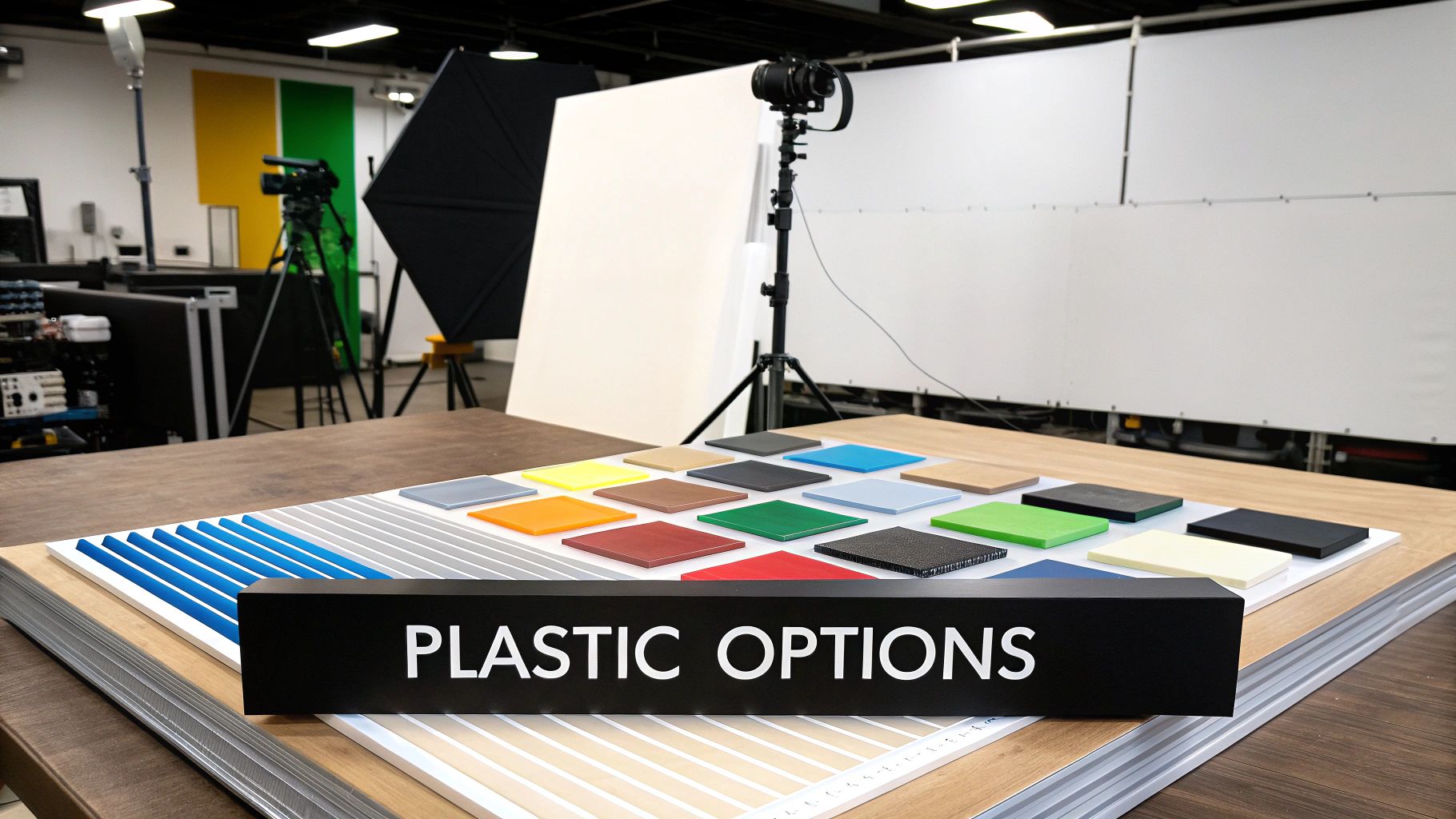
While metal projects strength and permanence, plastic sign materials bring a totally different kind of value to the table: an incredible mix of versatility, eye-popping color, and cost-effectiveness. From sleek interior displays to durable temporary outdoor signs, there's a specialized plastic solution for almost any business need. This is where creative brand visions really come to life, as these materials can be fabricated into nearly any shape or size imaginable.
This flexibility is a huge reason plastics are such a dominant force. The global signage industry is on a massive growth trajectory, projected to jump from USD 52.7 billion in 2025 to USD 97.3 billion by 2035. To put their role in perspective, plastic composites and PVC alone made up 38.54% of all printed signage in the US in 2024. That tells you just how essential these materials are for modern businesses.
Acrylic for a Sophisticated, Glass-Like Finish
When you want the sharp, elegant look of glass without the fragility and weight, acrylic is the undisputed champion. Also known by brand names like Plexiglas, this material delivers a high-gloss, sophisticated finish that instantly elevates any indoor space. Its perfectly smooth, non-porous surface is an ideal canvas for crisp, vibrant graphics.
Think of acrylic as the go-to for professional lobby signs, dimensional lettering behind a reception desk, or high-end retail displays. It's shatter-resistant and optically clear, making it a fantastic choice for creating a look of modern luxury.
Practical Applications for Acrylic:
- Lobby and Reception Signs: Creates that polished, welcoming first impression for corporate offices and professional services.
- Illuminated Channel Letters: Acrylic faces allow light to shine through evenly, perfect for backlit and front-lit signs that need to be seen at night.
- High-End Retail Displays: Its premium feel complements luxury goods and upscale branding efforts.
Acrylic signage is like a perfectly tailored business suit—it’s crisp, professional, and projects an image of quality and attention to detail. This makes it a powerful tool for reinforcing your brand's credibility.
The crystal-clear quality of this material offers a unique canvas for branding. For a deeper look into its applications, our guide on clear acrylic signage provides excellent examples and inspiration.
Expanded PVC for Lightweight Rigidity
Expanded PVC, often called by brand names like Sintra or Komacel, is a lightweight but surprisingly rigid plastic foam board. It features a smooth, matte finish that kills glare and provides an excellent surface for high-resolution printing. That makes it the perfect choice for signs that need to be detailed and easy to read up close.
Unlike standard foamboard, its solid plastic composition makes it resistant to moisture, giving it a longer life for both indoor and short-term outdoor use. Best of all, it's so light that hanging, mounting, and transporting it is a breeze.
Where Expanded PVC Shines:
- Trade Show Displays: Easy to pack up and set up, providing a professional backdrop for booths that won't break your back.
- Point-of-Purchase (POP) Signs: Its print quality is perfect for in-store displays and promotional signs hanging from ceilings or attached to shelves.
- Menu Boards: The non-glare surface ensures menus in restaurants and cafes are easy to read from any angle.
Corrugated Plastic The Go-To for Temporary Signs
If you've ever seen a "For Sale" sign on a lawn or a directional sign for a weekend festival, you’ve seen corrugated plastic. Widely known by the brand name Coroplast, this material is basically a plastic version of cardboard, with hollow flutes running through its core.
It's ridiculously lightweight, completely waterproof, and extremely budget-friendly, making it the king of temporary outdoor signage. While you wouldn't use it for a permanent monument sign, its ability to stand up to rain and sun for short periods makes it the perfect, no-nonsense solution when you need to get a message out quickly and affordably.
High-Density Urethane A Superior Wood Substitute
For businesses that love the classic, dimensional look of a carved wood sign but dread the constant maintenance, High-Density Urethane (HDU) is the modern answer. This rigid, closed-cell foam is completely waterproof and won't rot, get eaten by insects, or crack under the sun.
HDU can be carved, routed, and sandblasted just like wood, allowing for beautifully intricate and textured designs. Once it's painted and finished, it's almost impossible to tell it apart from real wood—except it will outlast its natural counterpart by years with almost no upkeep. This makes it a smart long-term investment for monument signs, community entrance signs, and any business wanting a timeless, handcrafted look without the headaches.
Timeless Aesthetics with Wood and Specialty Materials
While modern metals and plastics are workhorses, some brands need a different voice—something classic, organic, or uniquely tactile. For businesses looking to create a more personal connection, specialty materials like wood and foamboard offer distinct aesthetics that cut through the noise.
Opting for one of these isn't just a design choice; it's a deliberate brand statement. It signals a commitment to tradition, creativity, or a specific kind of customer experience. But getting it right means understanding their unique rules for use and care.
The Rustic Charm of Wood Signs
There’s a warmth and authenticity to a real wood sign that no other material can touch. The natural grain and texture immediately create a sense of craftsmanship and tradition. It's the perfect choice for businesses going for a rustic, organic, or high-end natural vibe.
Think of that cozy coffee shop, a mountain lodge, or a boutique farm-to-table restaurant—wood speaks their language fluently. But to make it last, you have to pick the right kind.
- Cedar and Redwood: These are the top-tier choices for outdoor signs. Their natural oils make them inherently resistant to rot and insects, giving them a serious advantage against the elements.
- MDF and Plywood: These are much more budget-friendly but are strictly for indoor use. They can't handle moisture, which will quickly cause them to swell and warp.
The single most important factor for a wood sign's survival is its finish. A quality sealant is its armor against moisture and UV rays, preventing the wood from graying, cracking, or rotting. Regular maintenance, like re-sealing it every couple of years, is non-negotiable if you want to preserve its beauty.
Foamboard: The Go-To for Temporary Indoor Displays
On the complete opposite end of the spectrum is foamboard—an incredibly lightweight and cheap material built for one job: short-term indoor displays. It’s a simple construction of a polystyrene foam core sandwiched between two sheets of paper, which makes it perfect for one-day events, conference presentations, or temporary retail promotions.
Its smooth paper face is fantastic for printing high-resolution graphics, delivering vibrant and crisp visuals. The real sell here is portability and low cost, making it the ideal solution for signs you only plan to use once or twice.
However, you have to know its weaknesses, because they are significant.
Critical Foamboard Weaknesses:
- Vulnerability to Moisture: The paper exterior will bubble and fall apart if it gets wet. It is 100% unsuitable for outdoor use.
- Easily Dented: The soft foam core is fragile. It can be dented or crushed with very little effort, so it requires careful handling to keep it looking sharp.
- Not a Permanent Solution: This is a temporary material, plain and simple. It lacks the structural integrity for any kind of long-term display.
Knowing when to use these specialty materials is everything. For instance, if you need a sleek, modern indoor sign with more staying power than foamboard, a custom acrylic standoff sign offers a far more durable and professional alternative. By weighing the unique strengths and clear limitations of each material, you can make a strategic choice that truly aligns with your brand’s message and your practical needs.
A Practical Framework for Your Material Decision
Choosing the right material for your sign is a strategic business decision that goes way beyond just picking a color you like. Get it right, and you’ve got a 24/7 salesperson. Get it wrong, and you’re looking at a costly mistake that can hurt your brand and your budget.
To avoid the headaches, it’s best to walk through a few key questions first. Think of this as a simple checklist to make sure you’ve covered all your bases before committing to a material that will represent your business for years to come.
Evaluating Durability And Expected Lifespan
The very first question you need to ask is: "How long do I need this thing to last?" The answer to that question alone will knock a bunch of options off your list.
If you're looking for a permanent fixture, something that can take a beating from the elements for a decade or more, you're in the territory of solid aluminum or ACM. These materials are engineered for the long haul. On the flip side, if you just need a sign for a one-day conference, something like foamboard is perfect—it’s designed to be temporary and disposable.
And then you have materials like wood, which looks fantastic but needs regular maintenance to stay that way. Or you could go with High-Density Urethane (HDU), which gives you that same classic carved look but with almost zero upkeep.
Matching The Material To The Environment
Next up: where is this sign going to live? The demands of an indoor lobby are worlds apart from a storefront facing sun, wind, and rain all year.
- Indoor Use: Inside, your sign is protected. This opens up a whole world of material options, from lightweight foamboard to polished acrylic that looks incredible under controlled interior lighting.
- Outdoor Use: Outdoor signs have to be warriors. They need to stand up to brutal UV rays without fading, shrug off moisture without rotting or rusting, and handle temperature swings without cracking. This is where the tough guys—aluminum, ACM, PVC, and HDU—really earn their keep.
This decision tree gives you a quick visual of how the simple choice between indoor and outdoor immediately points you in the right direction.
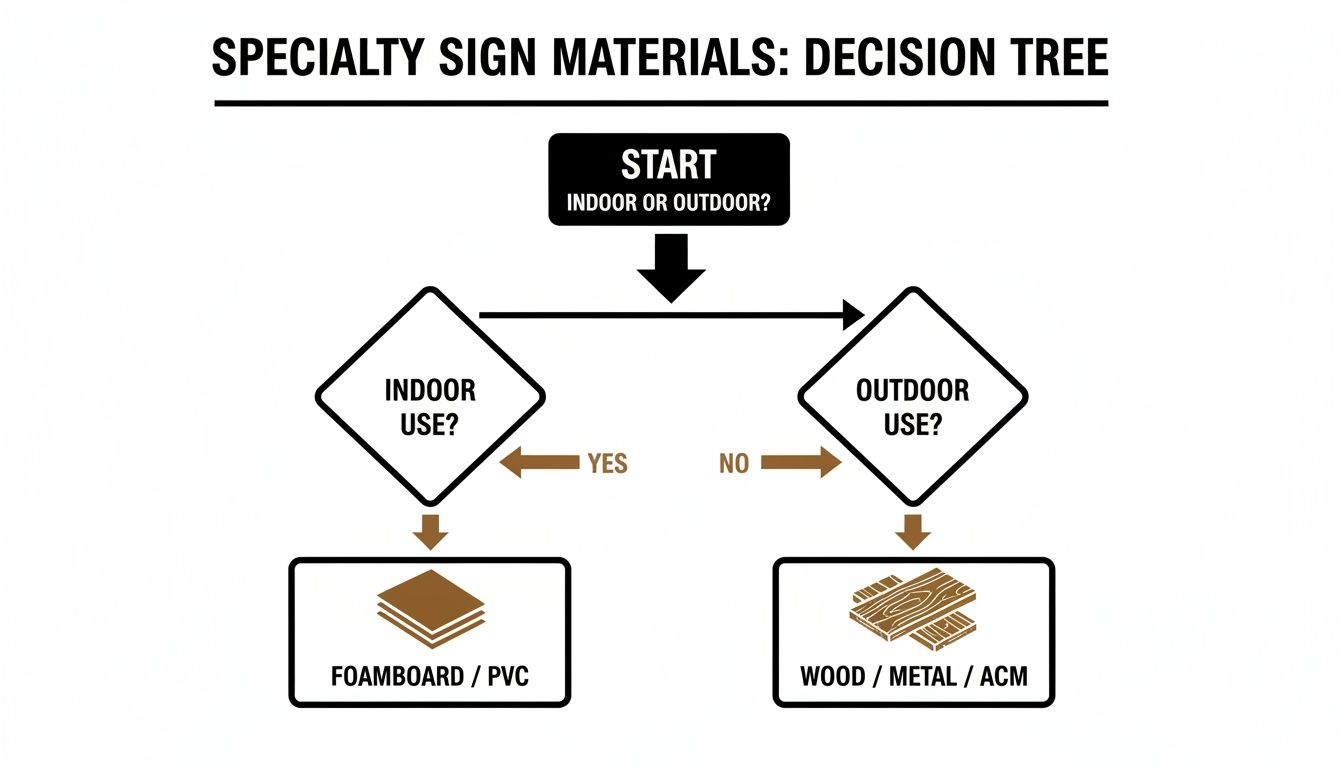
The takeaway here is simple: the environment is the single biggest factor that separates the indoor-only lightweights from the durable, long-term outdoor solutions.
Considering Fabrication And Illumination Needs
How do you want your sign to look, and does it need to light up at night? The answers will steer your material choice, because each one has its strengths. If you’re after a dimensional, rustic texture, nothing beats the look of carved wood or sandblasted HDU.
But if illumination is on your wish list, acrylic is the undisputed champion. Its incredible optical clarity lets light shine through evenly, making it the go-to for backlit channel letters and lightboxes. The metal part—usually aluminum—forms the structural "can" that protects all the wiring and electrical bits inside.
The demand for printed signage is projected to grow a steady 3.01% through 2030, but the real action is in backlit displays, which are growing even faster at 3.44%. This trend, detailed in this printed sign market report, shows just how critical it is to pick materials that play well with light.
A material's properties dictate its potential. You can't expect the intricate carving detail of HDU from corrugated plastic, nor the brilliant illumination of acrylic from a solid wood plank. Matching your creative vision to the material's capabilities is essential for success.
Balancing Cost And Long-Term Value
Finally, let’s talk money. It’s easy to get fixated on the upfront price tag, but you need to think about the total cost over the sign's lifetime.
Sure, a corrugated plastic sign is cheap, and it’s the perfect choice for a weekend "For Sale" sign. But if you try to use it as your main storefront sign, you'll be replacing it constantly, and that cheap sign suddenly becomes a recurring expense.
On the other hand, a material like ACM might seem expensive at first, but its 10+ year lifespan and near-zero maintenance needs often make it the cheaper option in the long run. Good signage project management is all about weighing that initial cost against the long-term value to make a smart financial decision for your business.
Material Selection Checklist by Sign Application
To pull all this together, think about the job your sign needs to do. A massive pylon sign has a totally different set of requirements than a small directional sign in a hallway. The right material choice depends entirely on the application.
This table breaks down some of the most common sign types and matches them with the materials that are best suited for the job.
| Sign Type/Application | Primary Recommended Material | Secondary Option | Key Consideration |
|---|---|---|---|
| Retail Storefront | ACM/Dibond | Aluminum, Acrylic | Durability, UV resistance, and premium brand perception. |
| Monument Sign | HDU Foam / Brick / Stone | Aluminum, Wood | Weatherproof, low maintenance, and high-impact ground-level visibility. |
| Pylon Sign | Aluminum & Acrylic | Steel & Polycarbonate | Structural integrity for height and wind loads; illumination is key. |
| Channel Letters | Aluminum (Cans) & Acrylic (Faces) | Stainless Steel | Perfect for illumination; needs to be lightweight enough for mounting. |
| Wayfinding/Directional | PVC or Aluminum | ACM/Dibond | Clarity and readability are paramount; must withstand high traffic. |
| Temporary/Event Signs | Corrugated Plastic (Coroplast) | Foamboard (Indoor) | Low cost, lightweight, and easy to transport for short-term use. |
Use this as a starting point. By matching the sign’s purpose with the material’s strengths, you’re already halfway to making a choice that will serve your business well for years to come.
Making a Confident Final Choice
You've done the homework. Now you're equipped with a solid understanding of the go-to sign materials and the real-world factors that separate a great sign from a mediocre one. It's time to shift from just comparing options to making a strategic decision that will pay dividends for years.
The main takeaway is refreshingly simple: the "best" material doesn't exist in a vacuum. It’s the one that clicks perfectly with your specific brand, budget, location, and long-term vision.
View Your Sign as an Investment, Not an Expense
It's absolutely critical to stop thinking of your sign as a one-time cost. See it for what it is: a long-term investment in your brand's visibility and reputation. A cheaper sign that has to be replaced every couple of years will almost always end up costing more over a decade than a durable one that's done right from the start.
Your sign is your silent salesperson, working for you 24/7. Investing in the right material ensures it's always sending a message of quality and permanence—not one that says you're just temporary.
The Final Step: Talk to a Pro
While this guide gives you a strong foundation, nothing beats hands-on expert advice. The final, non-negotiable step is to sit down with a professional sign company. Here’s why that conversation is so important:
- See and Touch the Real Thing: They can hand you material samples. Feeling the weight of brushed aluminum or seeing the gloss on acrylic is invaluable for judging the true finish and quality.
- Get True Local Expertise: A local pro knows exactly how the summer sun will affect vinyl or what the city inspector will be looking for. That kind of insight is gold.
- Receive an All-Inclusive Quote: They'll provide a precise quote that covers everything from fabrication to the final installation bolt. No surprises.
This final consultation is what ties everything together, ensuring you make a decision you're truly confident in. By partnering with an expert, you can be certain your chosen sign material won't just look good on day one—it will represent your brand effectively for years to come.
Frequently Asked Questions About Sign Board Materials
Even with all the options laid out, you probably still have a few questions rolling around in your head. That's completely normal. Choosing the right sign material is a big decision, so we've put together some straight-to-the-point answers for the questions we hear most often.
What Is the Most Durable Material for Outdoor Signs
When you need a sign that will stand up to the elements for years to come, aluminum and Aluminum Composite Material (ACM) are your best bets, hands down.
Solid aluminum is your classic workhorse—it's naturally rust-proof and weather-resistant, easily lasting over a decade with almost no upkeep. ACM gives you that same toughness but with superior rigidity, which is a must-have for larger signs that need to stay perfectly flat against wind and sun.
If you’re after that classic, hand-carved look without the headaches of real wood, High-Density Urethane (HDU) is a game-changer. It’s completely waterproof and won’t rot, warp, or crack, giving you the best of both worlds.
What Is a Cost-Effective Material for a Professional Lobby Sign
You don't have to break the bank to make a strong first impression indoors. For a high-end look that’s also budget-conscious, acrylic and Expanded PVC are fantastic choices.
Acrylic offers that sleek, glass-like finish that’s perfect for dimensional logos and letters. You can even backlight it for a truly impressive visual pop. On the other hand, Expanded PVC has a modern, non-glare matte finish. It’s incredibly lightweight and perfect for printing sharp, high-resolution graphics, giving any space a clean, professional feel.
Key Takeaway: A sign's real value isn't its price tag—it's how well it reflects your brand's quality. Both acrylic and PVC deliver a premium look that far outweighs their cost, making them a smart investment for any reception area.
How Does Climate Affect My Choice of Sign Material
Ignoring your local climate when choosing a sign material is a recipe for disaster. It's one of the most critical factors and can be the difference between a sign that lasts for years and one that fails in a season.
- Sunny Regions: For places with relentless sun, you need materials with built-in UV resistance. Think factory-painted aluminum or premium-grade acrylics that won’t fade or turn yellow.
- Humid or Rainy Areas: Here, waterproof is non-negotiable. Stick with aluminum, PVC, or HDU to prevent any chance of rust, rot, or water damage.
- Extreme Temperature Swings: If you deal with hot summers and freezing winters, you need a material that won't expand, contract, or warp. ACM is the hero here, as its layered construction keeps it dimensionally stable.
Should I Choose Corrugated Plastic or Foamboard for My Event
This one's simple: it all comes down to where you'll be using the sign.
Corrugated Plastic (you probably know it by the brand name Coroplast) is your go-to for the outdoors. It’s waterproof and tough enough to handle being stuck in the ground as a yard sign or used for temporary event directions.
Foamboard, however, is strictly for indoor use. Its paper surface is extremely vulnerable to moisture and dents easily. It's perfect for a welcome sign on an easel inside a conference room, but a single rain shower would ruin it.
Ready to create a sign that elevates your brand and stands the test of time? The experts at On Display Signs, Inc. manage every step of the process, from design to installation, ensuring you get the perfect material for your needs. Explore our custom signage solutions today!