Think of your restroom signs as more than just a legal box to check. They're one of the quietest—but most consistent—ways you communicate with customers and staff. A well-designed, professional sign sends a clear message of quality and care, while a cheap or non-compliant one can sour an experience before a visitor has even had a chance to engage with your core business.
Why Your Restroom Signs Matter More Than You Think
It’s easy for business owners to see restroom signs as a minor detail, something to grab off a shelf and forget about. But the truth is, these signs are one of the most common touchpoints in any facility. They do more than just point the way; they silently reflect your company’s standards.
Picture this: a high-end spa that invests in elegant, brushed aluminum signs reinforces its promise of a luxury experience from the moment you walk in. Now, imagine that same spa with a flimsy plastic sign taped to the door. The message is instantly confused, and the premium feel is broken. Custom restroom signs keep that message consistent.
More Than Just a Label
Your signage is a silent ambassador for your brand. It’s a chance to build a cohesive environment where every little detail feels deliberate and professional. That attention to detail goes a long way in shaping how people see your business.
For facility managers and developers, this is a detail you can't afford to get wrong. The wrong signs can lead to failed inspections, expensive replacements, and an environment that looks disjointed. Investing in quality custom restroom signs from the very beginning saves headaches and money while boosting the property's overall appeal.
A sign isn't just a sign; it's an extension of your brand's promise. When a customer interacts with your signage, they are interacting with your brand. Ensuring that interaction is positive, clear, and professional is essential.
Guiding Visitors and Ensuring Comfort
Beyond the branding, the core job of these signs is simple: to help people find their way. Good signage is the backbone of a building’s navigation. As you map out your facility, understanding the basics of wayfinding can make all the difference. To dive deeper, you can explore what is wayfinding signage and see how it shapes a visitor’s entire experience.
Clear, well-placed signs cut down on confusion and make a space feel more welcoming for everyone. This is especially true in large or complex venues like:
- Manufacturing Plants: Getting employees and visitors where they need to go efficiently is critical for both safety and productivity. For example, clear signs help a delivery driver find the guest restroom without wandering into a restricted production area.
- Retail Centers: When shoppers can easily find restrooms, they have a better experience and are more likely to stay longer. Practical signs in a mall prevent customer frustration and keep the focus on shopping.
- Churches and Community Centers: Helping newcomers and regulars navigate with ease makes them feel right at home. A family with young children will appreciate clearly marked facilities during a busy event.
Ultimately, custom restroom signs bridge the gap between a legal requirement and a smart branding opportunity, turning a simple marker into a powerful tool for your business.
Navigating ADA Compliance and Local Signage Codes
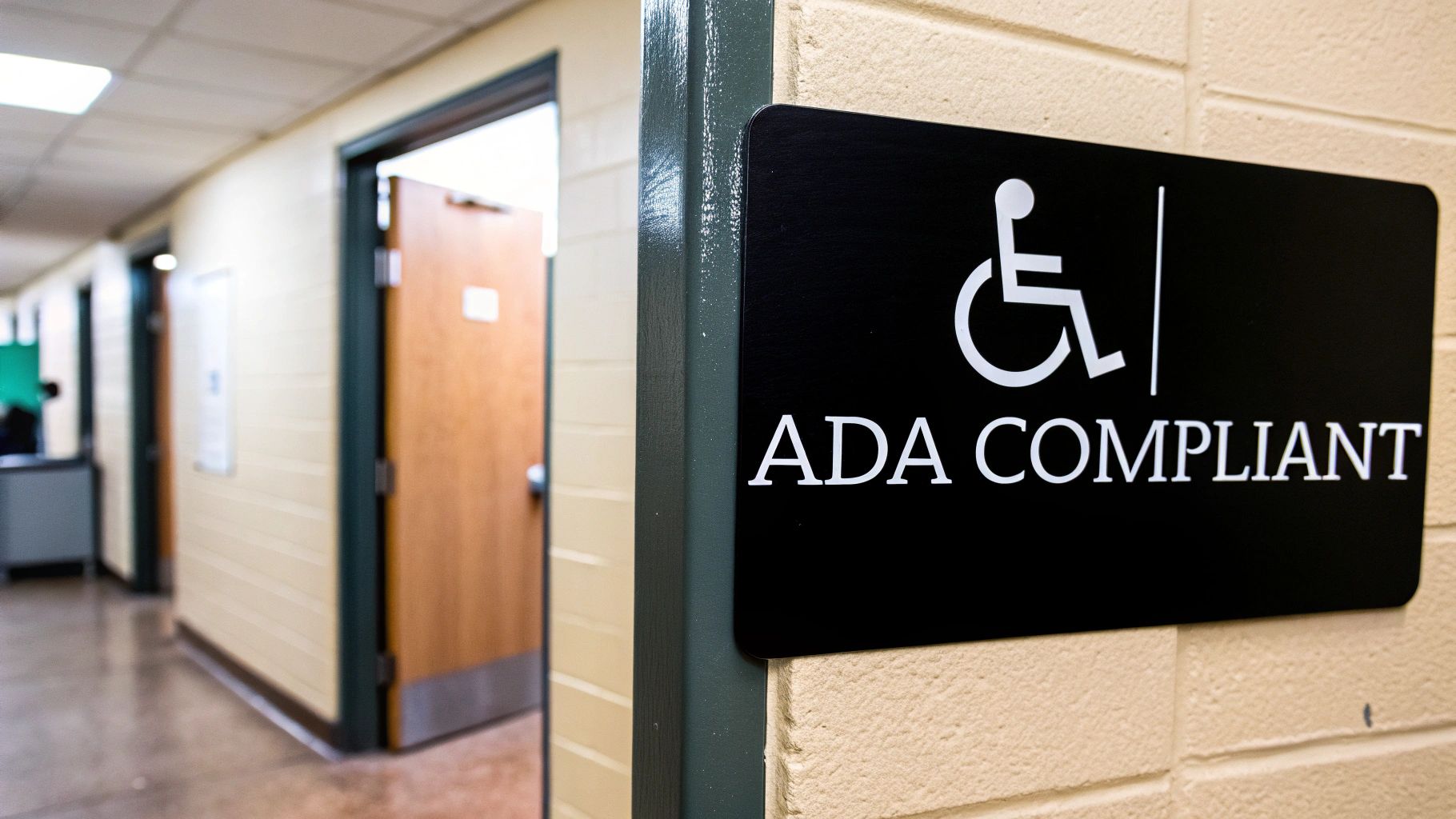
It’s one thing to design a custom restroom sign that looks great and fits your brand. It’s another challenge entirely to make sure it meets every last legal requirement. Getting the rules wrong isn't just an aesthetic oops—it can mean failed inspections, surprise fines, and a bad experience for your visitors.
The absolute foundation for these rules is the Americans with Disabilities Act (ADA), the federal law that sets the standard for accessible signage. Think of these guidelines as non-negotiable. They are detailed, specific, and mandatory for any public space, all to ensure that everyone, including those with visual impairments, can navigate your facility with confidence.
The good news? Following the rules doesn't mean your signs have to be boring. The ADA provides a framework, but you still have plenty of creative freedom with materials, colors, and design to make your signs your own.
Key ADA Requirements for Restroom Signs
Getting your head around the core parts of an ADA-compliant sign is the first step. These rules touch everything from the lettering to the finish. Let's break down the must-haves for your custom restroom signs.
The non-negotiable features include:
- Tactile Characters: The letters and symbols must be raised by at least 1/32 of an inch. This tiny detail is crucial, as it allows people to read the sign by touch.
- Grade 2 Braille: Every tactile sign needs Grade 2 Braille text located directly underneath the raised characters.
- Non-Glare Finish: Both the background and the characters need a matte or non-glare finish. This prevents reflections from bright lights, which can make a sign impossible to read.
- High Color Contrast: There has to be a strong visual contrast—around 70%—between the characters and the background. Think classic combinations like white on black or dark text on a light surface.
If you want to go deeper on the technical specs, our guide on ADA signage requirements has all the details you’ll need.
Correct Mounting Location Is Not Optional
You can have a perfectly designed sign, but if you hang it in the wrong spot, it will fail inspection every time. The ADA is incredibly specific about where and how high signs should be mounted to make sure they're easy to find and read.
An ADA sign's value is completely lost if it's placed out of reach or in a location where it's easily blocked. Proper installation is the final, critical step in ensuring your facility is truly accessible and compliant.
One of the most common mistakes we see is mounting signs directly on the door. Since a door is always moving, the sign becomes hard to find and can even be a hazard.
The correct spot is on the wall right next to the latch side of the door. This keeps the sign in a fixed, predictable location. The height is just as important: the baseline of the tactile text must be between 48 and 60 inches from the floor, putting it within reach for people standing or in a wheelchair.
Beyond Federal Rules Look to Local Codes
While the ADA sets the national standard, don't forget that it's not the only rulebook. Many states, and even individual cities, have their own building codes that can add another layer of requirements on top of the federal ones. Some jurisdictions, for instance, have unique rules for pictograms or demand specific contrast ratios.
The whole world of custom restroom signs is evolving alongside these safety and accessibility standards. With the U.S. signage market projected to hit USD 119.28 billion by 2026, the focus on getting compliance right has never been stronger. In fact, Braille compliance in new buildings has jumped 25% since 2020, and over 70% of U.S. warehouses have noted better safety after installing custom, compliant signage.
Overlooking these local codes is an easy and expensive mistake. Before you order anything, always check the specific rules for your city and state. Your signs aren't just for restrooms; they're a key part of your building's overall safety, something that gets looked at closely during comprehensive life safety inspections. A good sign partner will help you navigate these local rules to get it right the first time.
Choosing the Right Materials for Durability and Style
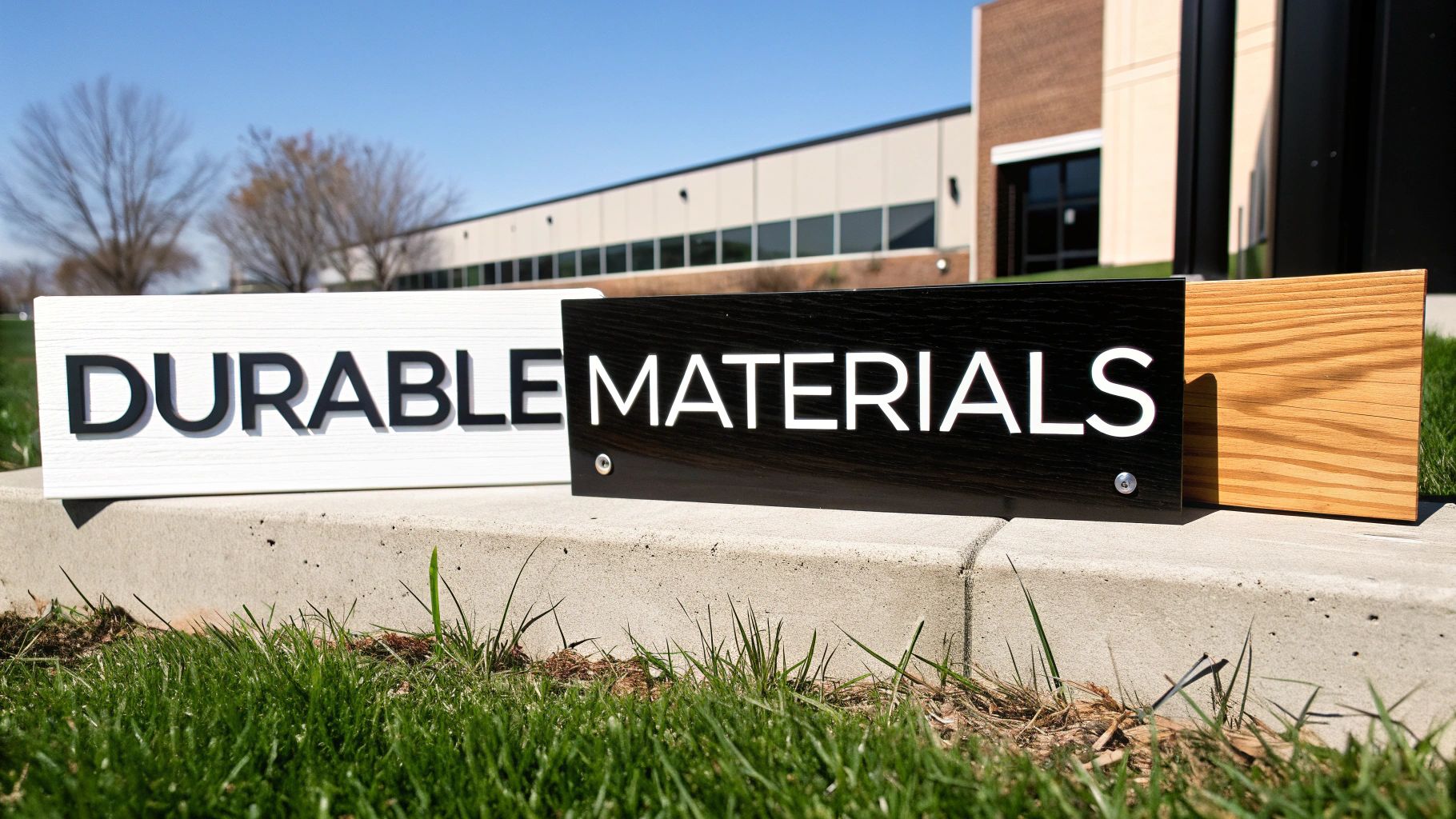
The material you choose for your restroom signs is one of the most powerful, yet subtle, branding tools you have. It’s about more than just looks; it silently tells every visitor a story about your company’s standards and attention to detail. This decision directly impacts how long your signs last, how easy they are to clean, and the overall feel of your space.
From a sleek, modern tech office to a tough-as-nails industrial warehouse, the right material feels like it belongs. Get it wrong, and a cheap or out-of-place sign can cheapen your entire aesthetic and need constant replacing. Get it right, and it elevates the environment and lasts for years.
The Modern Workhorse: Acrylic and Engraved Plastics
Acrylic is hands-down one of the most popular choices for custom restroom signs, and for good reason. It gives you that clean, professional look of glass without the fragility or the weight. This makes it a fantastic option for busy hallways and high-traffic areas where signs are bound to get bumped or touched.
Engraved plastics, also known as laminated plastics, are another go-to for reliability. They're built in layers—a colored core with a different colored top layer. When we engrave your design, that core color shows through, creating a sharp, permanent contrast that won't ever peel or fade. It's an incredibly durable and easy-to-clean solution.
- Acrylic: Perfect for achieving a modern, clean look. We can back-paint it to match your brand colors or mount it with standoffs for a cool, floating effect.
- Engraved Plastic: The undisputed champion of function and durability. It stands up to scratches and cleaning chemicals, making it ideal for schools, hospitals, and manufacturing plants.
The Timeless Appeal of Metal and Wood
For businesses aiming for a more upscale or classic atmosphere, nothing beats metal or wood. These materials bring a texture and character that plastics just can't imitate.
Brushed aluminum and stainless steel signs project a feeling of strength and sophistication. They’re a favorite for corporate headquarters, law firms, and high-end restaurants for a reason—they signal permanence and quality.
Wood, on the other hand, brings a natural warmth and an organic touch. It’s the perfect fit for businesses wanting to create a cozy, rustic, or eco-friendly vibe, like a local coffee shop, a boutique hotel, or a day spa. The unique grain in every piece means no two signs are ever completely identical.
Your sign material is a physical handshake with your visitors. Metal conveys precision and stability, while wood offers warmth and authenticity. Choose the material that best reflects the brand identity you want to communicate.
Matching Materials to Your Business Environment
The "best" material is simply the one that ticks all the boxes for your specific needs: durability, style, and budget. There's a whole world of options out there, and you can get even more ideas by exploring a deep dive into sign board materials.
To help narrow it down, here’s a quick look at how some of the most popular choices stack up.
Comparing Popular Restroom Sign Materials
This table offers a quick look at common materials for custom restroom signs, comparing their durability, cost, and best uses for different business environments.
| Material | Durability | Aesthetic | Typical Cost | Best For |
|---|---|---|---|---|
| Acrylic | High | Modern, Clean | $$ | Offices, Retail, Healthcare |
| Engraved Plastic | Very High | Functional, Classic | $ | Industrial, Schools, Government |
| Aluminum | High | Sleek, Professional | $$$ | Corporate, Financial, Tech |
| Stainless Steel | Very High | Premium, Strong | $$$$ | Luxury Brands, Architecture |
| Wood | Medium | Warm, Rustic | $$$ | Cafes, Spas, Boutiques |
Don’t forget the finish, either. A matte or non-glare finish is a must-have for ADA compliance, ensuring the sign is easy to read from any angle. For non-ADA decorative elements, however, a gloss finish can add a subtle touch of elegance. At the end of the day, picking the right material and finish is all about striking the perfect balance between function, branding, and long-term value.
Designing Signs That Reinforce Your Brand
Think of every sign in your building as a tiny billboard for your brand. While big lobby signs get all the attention, it’s the humble restroom sign that most visitors see up close. It's a massive missed opportunity to treat them as just a utility. Instead, they can be a powerful, subtle touchpoint that reinforces your brand identity.
The trick is to weave your company’s personality into a design that’s still professional and fully compliant. Your brand has a visual language—your logo, colors, and fonts tell a story. Custom restroom signs let you keep telling that story consistently, making your entire space feel thoughtfully designed.
Integrating Your Brand Identity
Let’s be clear: this isn't about slapping your logo on an ADA sign and calling it a day. It's about smartly merging your brand elements with the legal requirements.
For instance, you can absolutely use your brand colors for the background and text, as long as they meet the required 70% contrast ratio for readability. While your custom brand font probably isn't ADA-compliant for the tactile lettering, you can still use it for non-regulated parts of the sign or on a matching directional sign nearby.
This is where a good design partner really shines. They’ll help you find that sweet spot between a compliant navigational tool and a subtle nod to your brand.
- Logo Placement: The main ADA sign needs to be clean and easy to read. But you can add a secondary sign above it with your logo, or subtly place the logo on a plaque below the compliant elements.
- Color Palette: Use your primary and secondary brand colors to hit that contrast requirement. A modern tech company might go for a sleek charcoal grey with crisp white text, while a playful children’s store could use a bold—but still compliant—color scheme.
- Material and Finish: As we talked about earlier, the material itself sends a message. Brushed aluminum feels high-end and sophisticated. Natural wood gives off a warm, earthy vibe perfect for a spa or a farm-to-table café.
Your restroom sign isn't just a label on a door; it's a micro-interaction with your brand. A well-designed custom sign communicates quality and attention to detail, reinforcing the trust a visitor has in your business.
Real-World Branding Examples
You can see this in action everywhere. A rustic brewery might use custom-engraved wooden signs to match its taproom decor, driving home that handcrafted feel. A sterile, modern medical facility, on the other hand, would likely choose clean acrylic signs with sharp, minimalist fonts to project precision and cleanliness. Every choice is intentional.
If you’re looking for more creative ways to approach this, you can find inspiration in these sign design ideas and adapt them to your industry.
The impact here isn’t just aesthetic. As the global signage market is projected to jump from USD 52.7 billion in 2025 to USD 97.3 billion by 2035, smart businesses are recognizing the value of these details. Branded restroom signage can lift brand awareness by as much as 18%, and effective signs guide 30% more customers to amenities—improving their experience and reinforcing your brand in the process. At the end of the day, a consistent look across all your business signage ensures every little detail works together to tell a powerful, unified brand story.
From Design Proof to Final Installation
Taking a brilliant design concept and turning it into a perfectly installed set of custom restroom signs can feel like a maze of details. But with a proven process, every step—from legal checks to brand consistency—is handled, saving you from headaches and costly surprises down the road. Knowing how this workflow operates helps you and your sign partner work together seamlessly.
The whole journey begins with detailed consultation and design proofing. This is, without a doubt, the most important part of the entire project. It's where your vision gets translated into a practical, buildable sign. Your sign partner will help you nail down the right materials, colors, fonts, and layouts, making sure everything is a perfect match for both your brand and the strict rules of the ADA.
The Critical Proofing Process
Before a single piece of material is touched, you’ll get a digital proof. Think of this as your last chance to go over every detail with a magnifying glass. Are the brand colors spot-on? Is every word spelled correctly? Are the tactile letters and Braille dots placed exactly where they need to be?
Don't rush this. A tiny mistake caught on a digital proof is a simple, quick fix. That same mistake found on a finished sign could mean redoing the entire order, leading to frustrating delays and extra costs.
The design proof is your final checkpoint before production begins. Treat it as the blueprint for your project—approving it means you are giving the green light for the exact specifications shown.
Navigating Permits and Code Checks
Once you’ve signed off on the design, the focus shifts to getting all the legal ducks in a row. While most interior restroom signs don’t need a permit, things can get tricky with larger directional signs or monument signs outside that point people to the facilities. Local rules can vary wildly, so this is no place for guesswork.
An experienced sign company takes this whole burden off your shoulders. They’ll:
- Check Local Rules: Figure out exactly which signs, if any, require permits based on your city and county codes.
- Handle the Paperwork: Manage the entire application, submitting detailed drawings and specs to the local planning department.
- Schedule Inspections: After installation, they'll coordinate with city inspectors to get the final sign-off.
Having a pro manage this saves you from getting tangled in bureaucratic red tape and keeps your project moving forward without any legal snags.
Manufacturing and Quality Control
With all approvals in hand, your custom signs head to the production floor. Here, skilled fabricators use precision tools to bring the proof to life, whether they're engraving acrylic, cutting metal, or routing wood. At every stage, quality control is paramount.
This hands-on approach ensures that tactile elements are raised to the correct height, Braille dots are perfectly rounded, and colors match your brand palette exactly.
The image below breaks down the essential elements that come together to create a sign that’s both compliant and a perfect brand ambassador.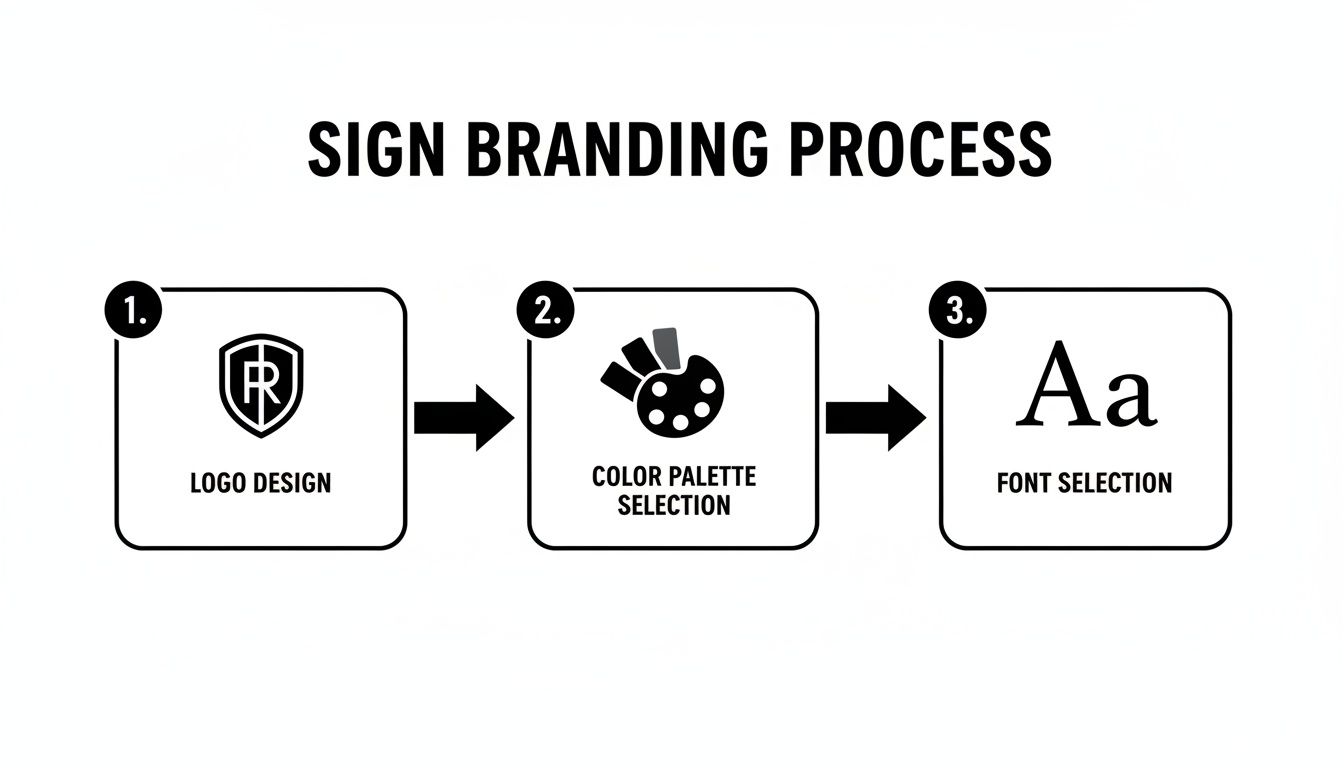
As you can see, your logo, brand colors, and fonts are the building blocks for a professional and cohesive signage strategy.
Professional Installation and Multi-Site Rollouts
The final step is often the one that makes or breaks compliance: professional installation. You can have a perfectly crafted ADA sign, but if it's installed at the wrong height or on the wrong side of the door, it’s a violation. Certified installers know the rules inside and out, ensuring every sign is mounted precisely—typically between 48 and 60 inches from the floor to the baseline of the text, on the latch-side of the door. You can learn more about what a commercial sign installation involves to understand why leaving it to the pros is so critical.
For businesses with dozens or hundreds of locations, a national rollout adds another layer of complexity. Custom restroom signs have become an industry staple, blending function with branding. Following the ADA's enactment in 1990, the demand for compliant, custom signage skyrocketed, sparking a 15% yearly jump in orders from commercial developers. Today, specialized firms are masters at managing these large-scale projects, ensuring every single site is 100% compliant and perfectly consistent with your brand. A dedicated project manager coordinates all the logistics, from local code variations to installation schedules, delivering a flawless result nationwide.
Common Questions About Custom Restroom Signs
When you're sorting out the details for new custom restroom signs, a few questions almost always come up. Getting those answers sorted out early on makes it much easier to budget, plan your timeline, and make sure the final signs are exactly what you need. Let’s walk through the most common things we hear from business owners and facility managers.
How Much Should I Expect to Pay?
The price for custom restroom signs can swing quite a bit depending on what you’re looking for. A simple, engraved plastic ADA-compliant sign is your most straightforward, budget-friendly choice. On the other hand, if you're aiming for a high-end look with brushed aluminum or real wood and a complex design, the cost will naturally be higher.
A few things really drive the final price tag:
- Material Choice: Acrylic and engraved plastics are always more economical than materials like stainless steel or custom-fabricated metals.
- Size and Complexity: The bigger the sign or the more intricate the logo and color scheme, the more labor and material it will take.
- Order Quantity: Just like with most things, ordering in bulk for a large building or a multi-location rollout will bring down the cost per sign.
What Is the Typical Turnaround Time?
The timeline from your first call to the final installation really hinges on the scope of your project. Once you give the thumbs-up on the final design proof, a standard order for acrylic or plastic signs usually takes a few weeks to produce. If your project involves custom metals, unique shapes, or a massive quantity, you'll need to plan for a longer lead time.
It pays to plan ahead. Factoring in potential shipping delays and the installer’s schedule helps your project stay on track without any last-minute headaches, especially if you're up against an opening day or inspection deadline.
Don't forget about permits. If your project includes other signs that need local approval, like wayfinding or exterior signs, that process can add several weeks. A good sign partner will handle this for you, but it’s a critical piece to build into your schedule.
Can I Install ADA Restroom Signs Myself?
While it might seem like a simple job you could knock out yourself, we always recommend leaving ADA sign installation to the pros. The mounting rules are incredibly strict—getting the height or placement off by even an inch can lead to a failed inspection. That means you’ll be patching up the wall and paying to have it installed all over again.
Professional installation is your guarantee that every sign is mounted at the exact right height (between 48 and 60 inches from the floor) and on the correct latch-side of the door. It ensures you’re fully compliant and gives you that clean, perfectly finished look.
Do Single-User Restrooms Need Different Signs?
Yes, they do. Signage for single-user restrooms has its own set of rules to keep things clear and compliant for everyone. These signs typically show a male pictogram, a female pictogram, or both, depending on local codes and the facility's designation. Of course, the wheelchair accessibility symbol is added if it applies.
Simple, direct text like “Restroom” is key. This approach makes sure everyone can find the facilities without any confusion.
At On Display Signs, Inc., we take the guesswork out of getting compliant, beautiful, and brand-consistent signage. Our team handles every detail, from the initial design concept to a flawless final installation. Contact us today to get started on your project.