A lot of commercial properties have the same problem. The building is fine, the parking works, the tenants are signed, and the road traffic is there. But from the street, the site still feels easy to miss.
That is where an illuminated pylon sign earns its keep. It does not just mark an address. It gives the property a visible presence before a driver reaches the entrance, after sunset, and during bad weather. For a retail center, church, warehouse frontage, restaurant, or multi-tenant development, that visibility often decides whether people turn in or keep driving.
The mistake I see most often is treating the sign as the final decorative item on a punch list. In practice, the sign affects site planning, electrical coordination, permitting, installation sequencing, tenant visibility, and long-term operating cost. The earlier you make the right calls, the fewer expensive corrections you face later.
What Is an Illuminated Pylon Sign
An illuminated pylon sign is a freestanding sign mounted on one or more structural supports and designed to be seen from a distance. It typically sits near a road entrance, above parked cars and other site features, so drivers can identify the property without having to search for the building.
If your site is set back from the road, this sign acts like a landmark. A wall sign only helps once a visitor is already close. A monument sign can look excellent, but it sits lower to the ground and may disappear behind traffic, shrubs, or adjacent development. A pylon sign solves a different visibility problem. It reaches farther.

What separates it from other sign types
A pylon sign stands apart because of three things:
- Height for long-range visibility. It is built to be read before a driver reaches your driveway.
- Freestanding structure. It does not rely on the building facade for support.
- Integrated lighting. It keeps working after dark, not just during business hours.
Some pylon signs are simple single-tenant identifiers. Others are multi-tenant directories for shopping centers, office parks, or industrial campuses. Some use exposed poles. Others use a monolith style that conceals the structure for a cleaner architectural look.
Why businesses still rely on them
This is not a new idea. The illuminated sign industry experienced explosive growth between 1924 and 1929, growing from an estimated $50,000 annually to over $18 million, and that period helped establish large illuminated signs as primary marketing tools in American commerce, according to this history of signage materials and illuminated display growth.
That history matters because it explains why pylon signs still solve a basic business problem so well. People notice what they can find quickly. A visible site feels easier to access, more established, and more trustworthy.
Where they work best
An illuminated pylon sign is especially useful when:
- Your building sits far back from the road
- Traffic moves quickly past the property
- Multiple tenants need roadside identification
- Your business operates in the evening or early morning
- Nearby buildings, trees, or parked vehicles block lower signage
Tip: If a first-time visitor can miss your entrance while looking straight ahead, you likely have a pylon sign problem, not just a branding problem.
If you need a quick visual breakdown of pylon sign basics, this overview of what a pylon sign is is a helpful companion.
Designing Your Pylon Sign for Maximum Impact
A good pylon sign is not just tall. It is readable, brand-consistent, and buildable.
Developers often focus on height first. That matters, but legibility usually matters more. If the sign is large but cluttered, drivers still will not process it in time to react. Every design choice should answer one question. Can someone understand this sign quickly from the road?
Start with the viewing moment
Think about how the sign will be seen. Drivers are not standing still in front of a rendering. They are approaching from an angle, dealing with traffic, looking for a turn lane, and making a decision in seconds.
That means the sign face should prioritize:
- One primary message. The property name, anchor tenant, or main brand should dominate.
- Strong contrast. Dark letters on a light field or light letters on a dark field usually read better than low-contrast palettes.
- Simple typography. Decorative fonts often collapse at distance.
- Clean hierarchy. The most important name gets the best position and size.
A common mistake in multi-tenant signs is giving every tenant equal visual weight. That sounds fair, but it usually creates noise. Anchor tenants, major traffic drivers, and the property name need a clear order.
Match the structure to the property
The support system changes both appearance and performance.
Single-pole signs
These work well when footprint is tight and the sign face is relatively simple. They can look clean and efficient, especially for a standalone retail site or service business.
Twin-pole signs
These usually make more sense when the cabinet is larger or the site faces tougher wind conditions. They also help visually balance a broader sign face.
Monolith and covered-pole designs
These hide the structural supports behind architectural cladding. They cost more than a basic exposed-pole design, but they often fit better on higher-end developments, churches, medical sites, and branded campuses.
A sign should look like it belongs to the property. If the building uses modern finishes and the sign looks like a generic afterthought, the whole site feels less coordinated.
Choose materials with maintenance in mind
Most owners look at materials for appearance. Project managers also look at serviceability.
A practical pylon sign package often includes aluminum cabinets, steel supports, and durable sign faces built for long outdoor exposure. The exact face material and finish depend on the lighting method, local climate, and how often tenant panels may need updates.
Use this filter when reviewing material options:
| Design choice | Best question to ask |
|---|---|
| Cabinet material | Will it resist weather and stay square over time? |
| Pole finish | Can it be refinished or touched up easily? |
| Sign face | Will it hold color and remain readable when lit? |
| Tenant panels | Can names be changed without rebuilding the whole face? |
| Architectural cladding | Does it add value or just cost? |
Avoid three expensive design errors
Overloading the sign face
If you try to include too many names, logos, taglines, and directional notes, the sign loses its roadside function.Designing before checking the site
Trees, utility lines, grade changes, and entrance geometry can make a beautiful concept perform poorly in life.Ignoring future tenant changes
A directory sign should be built for updates. If every change requires a custom rebuild, tenant turnover becomes costly and slow.
The strongest designs balance branding and practicality. They look sharp in a rendering, but they also permit cleanly, install safely, and stay useful years later.
Understanding Pylon Sign Lighting and Technology
Lighting is where many owners either save money for years or inherit maintenance headaches. The right system makes the illuminated pylon sign visible every night. The wrong one creates uneven brightness, service calls, and operating costs that keep showing up long after installation.
Why LED has become the standard
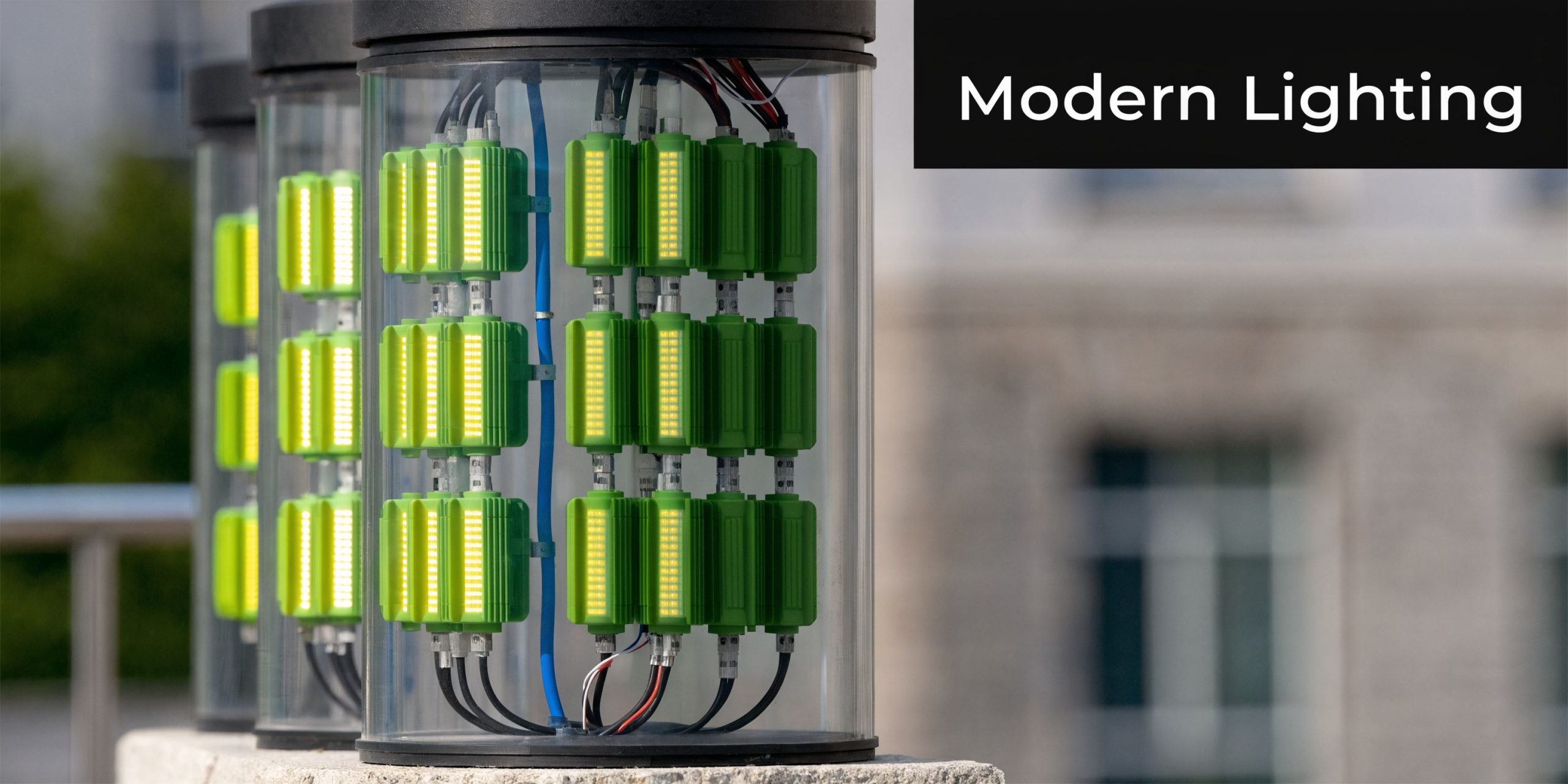
For most projects today, LED is the practical choice. According to Image National’s pylon sign guide, modern illuminated pylon signs using LED modules deliver 24/7 visibility with an 80% energy reduction compared with fluorescent or neon predecessors. The same source notes efficiency of over 150 lumens per watt, lifespans exceeding 50,000 hours, and monthly operating costs that can drop from $50+ to as low as $5-15 for a standard sign.
That matters for more than utility bills. Lower heat, fewer replacement cycles, and steadier light output make LED easier to own across the full life of the sign.
If you want a simple outside explanation of why LED generally beats older lamp technologies, this comparison of Halogen vs LED Lights gives useful context on efficiency and operating logic.
How illuminated sign faces work
Not every lighted sign looks the same at night. The lighting method changes the visual effect.
Standard internal illumination
This is the workhorse option. LEDs sit inside the cabinet and illuminate the sign face evenly. It is reliable, readable, and usually the easiest system to maintain.
Best fit:
- Multi-tenant directories
- Retail center IDs
- Warehouse and industrial frontage
- Churches and schools that need clear nighttime identification
Push-through letters
This creates a more premium look. The main face stays more controlled visually, while acrylic letters or logo elements project light through the surface. It can make the brand mark stand out without lighting the entire panel equally.
Best fit:
- Branded campuses
- Medical and professional properties
- Higher-end commercial developments
Digital message sections
Some pylon signs add a digital LED section for changing messages. This can help with promotions, event announcements, fuel pricing, tenant updates, or service hours. It also adds a layer of code review and content management that static signs do not require.
Before choosing digital, ask who will update the content, how often, and whether local code limits brightness, animation, or message timing.
What to review before approving a lighting package
A rendering can hide technical weaknesses. Push your team to answer these practical questions:
- Will the face illuminate evenly? Hot spots make a new sign look cheap.
- How will the cabinet be serviced? Access matters when modules or power components need attention.
- What happens if one component fails? Modular service is easier than replacing major assemblies.
- Is the color temperature right for the brand? Crisp white light can look modern. Warmer tones can feel softer and more traditional.
- Can the system be dimmed if local code requires it? This becomes more important in mixed-use areas.
Here is a useful visual overview of electric sign considerations:
For a broader look at illuminated sign systems used in commercial settings, this page on electric signs for business is worth reviewing.
Key takeaway: Choose lighting based on ownership cost, service access, and code fit, not just on how bright the mockup looks.
Engineering Your Sign for Safety and Visibility
The sign face gets attention. The engineering keeps the sign standing.
An illuminated pylon sign is a structural installation exposed to wind, moisture, temperature swings, and vibration from nearby traffic. If the engineering is weak, the property owner eventually pays for it through repairs, delayed permits, redesigns, or site risk.
Wind load is not a paperwork detail
The structural design must match local conditions. According to the SunRail pylon signage specification, illuminated pylon signs may need to withstand wind loads such as 130 mph, and twin-pole configurations can reduce deflection by 40% to 50% under gusts compared with single-pole designs for larger signs in high-wind regions, as noted in this professional pylon signage standard.
That is not just an engineer’s concern. It directly affects your choice of sign type, pole configuration, foundation scope, and permit package.
If your property is in a coastal market, open corridor, or tornado-prone area, this issue moves to the front of the decision list. A more rigid structure can protect the investment and reduce future service disruption.
Placement drives business performance
A structurally sound sign can still fail if it sits in the wrong place.
I tell developers to review sign placement from the driver’s perspective, not from the civil plan alone. Check the approach from each direction. Look at turning lanes, medians, nearby trees, future landscaping, neighboring signs, and utility conflicts. The best location is often not the most obvious one on paper.
Site survey items to verify early
- Sightlines from all major vehicle approaches
- Setbacks required by local zoning
- Utility conflicts that could affect excavation or electrical routing
- Grade changes that alter effective viewing height
- Entrance geometry so the sign helps visitors react in time
Tip: Stand where inbound traffic first has a chance to decide. If the sign cannot be read there, moving it later will cost much more than studying it early.
Foundations and field coordination
A pylon sign depends on what happens below grade as much as above it. Soil conditions, rebar layout, anchor placement, and electrical stub-ups must line up with the engineered drawings. If they do not, crane day becomes a problem day.
This is one reason installation planning should start before fabrication is complete. Foundation work, curing time, inspections, and lift access all affect schedule.
A qualified installer should also review field conditions after site prep and before final set. Small discrepancies in alignment or conduit placement can create major delays if no one catches them until the sign arrives.
If you are evaluating how this stage is usually handled on commercial projects, this overview of commercial sign installation gives a practical baseline.
Budgeting for Your Pylon Sign and Maximizing ROI
Owners sometimes ask for the cheapest illuminated pylon sign that will “still look good.” That question usually leads to the wrong sign. A better question is this. Which version will create the strongest business result without adding unnecessary complexity?
A pylon sign is a capital asset. It affects traffic capture, property identity, tenant visibility, and brand recognition every day it stands.
What the market says about value
The spending is not hypothetical. According to Mega Sign, about 385,000 U.S. businesses use pylon signs and spend over $500 million annually on them. The same source reports that illuminated signs scored 6.27 out of 7 for enhancing brand recognition, and one fast-food franchise reported a 35% increase in drive-thru traffic after installing a custom pylon sign, as described in this pylon sign overview and ROI discussion.
Those figures matter because they tie the sign to outcomes owners care about. Not aesthetics alone. Recognition, traffic, and customer response.
Cost depends on feature set, not just size
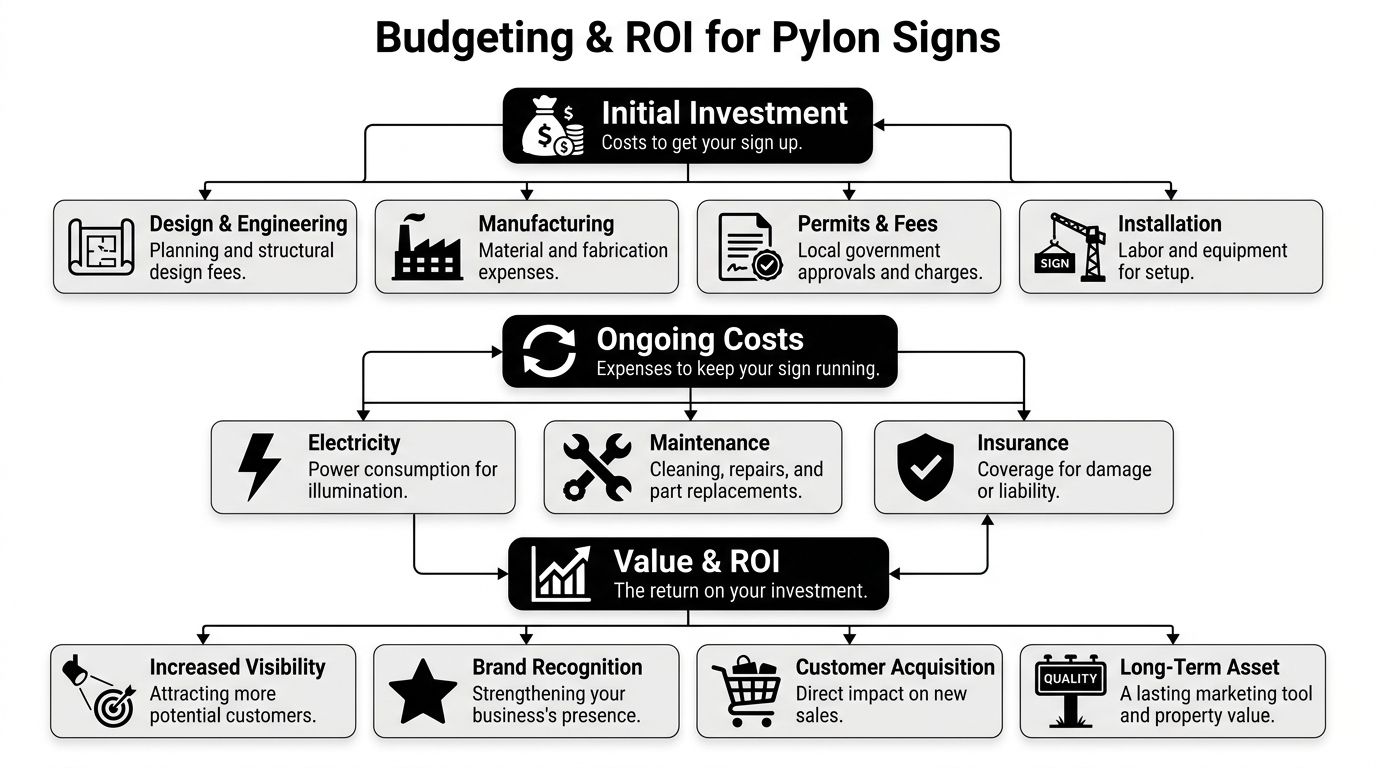
A budget conversation should separate the visible sign from the full project scope. You are not only paying for the cabinet. You are paying for design, engineering, permitting, fabrication, site prep, installation, and later serviceability.
Use this as a planning lens.
| Tier | Typical Size | Features | Estimated Cost Range |
|---|---|---|---|
| Entry | Small sign under 10 feet | Basic illuminated cabinet, simpler structure | $5,000 to $10,000 |
| Mid-range | Medium sign 10 to 20 feet | Larger cabinet, stronger structure, more design flexibility | $10,000 upward |
| Premium | Larger or more complex custom sign | Architectural finishes, multi-tenant layout, advanced integration | $8,000 to $200,000 or more |
Those ranges come from the same Mega Sign source referenced above. The wide spread is normal. A simple roadside sign for one business and a custom multi-tenant illuminated structure are not comparable products.
Where budgets go wrong
The most common budget failures happen before fabrication.
Underestimating permitting and engineering
Owners sometimes assume these are minor line items. They are not. If engineering changes after a permit review, your schedule and fabrication path can both shift.
Designing for looks instead of updates
A beautiful directory sign that is painful to reface becomes expensive every time a tenant changes. Build for change if the property will evolve.
Ignoring access and maintenance
If service access is awkward, every future repair becomes slower and more expensive. That should be considered during design, not after install.
A practical ROI lens for developers
A sign creates value in several ways at once:
- It makes the site easier to find
- It reinforces the property brand every day and night
- It supports tenant leasing by improving roadside presence
- It keeps working without requiring repeated media buys
That is why I advise clients to compare the sign against the cost of being overlooked, not just against the fabrication invoice.
If the property depends on passing traffic, poor visibility is already costing money. The sign makes that hidden cost visible.
How to budget intelligently
Approach the project in three buckets.
Initial project cost
This includes design, engineering, fabrication, permits, and installation.
Operating cost
This covers electricity, inspection, cleaning, and repairs over time.
Opportunity value
This is the business result. Better visibility, stronger tenant identity, more direct traffic, and a more established property presence.
When comparing proposals, ask each vendor to clarify:
- What is included in engineering
- Whether permit support is part of the scope
- How service access is handled
- What warranty coverage applies
- How tenant panel changes are managed later
For a deeper budgeting reference, this guide on the cost of signage for business helps frame the full investment rather than just the fabrication quote.
Navigating Permits Installation and Long-Term Care
Many illuminated pylon sign projects do not run late because fabrication took too long. They run late because approvals, paperwork, and field coordination were treated as secondary tasks.
That is a mistake. Permitting and installation are where otherwise solid projects get stuck.

Why permits delay so many sign projects
A 2024 Sign Research Foundation report noted that 35% of sign projects are stalled by permitting issues, and illuminated signs often require additional review, including UL 48 certification for electrical safety, along with compliance on height, size, and energy rules, according to this summary on San Diego pylon sign permitting and code issues.
That tracks with what project teams see in the field. The sign itself may be straightforward, but the jurisdiction may want revised drawings, lighting details, structural calcs, landlord approvals, or site plan updates before it will issue the permit.
What should be assembled before submittal
A smooth permit package usually depends on organized documentation. At minimum, the approving authority often wants:
- Site plan showing the sign location on the property
- Elevation drawings with dimensions and sign area
- Structural engineering for the support system and foundation
- Electrical details for the illuminated components
- Landlord or owner authorization when required
- Code review notes for height, setbacks, and lighting limits
If your team is trying to understand the compliance side of listed electrical components, this overview of UL certification costs can help explain why certification planning should happen early rather than after the design is finalized.
Installation works best as a sequence
The physical install is not one event. It is a chain of handoffs.
Pre-install coordination
This includes layout verification, utility checks, engineering approval, and confirmation that the electrical feed and anchor conditions match the approved drawings.
Foundation and electrical prep
The footing is formed and poured, anchors are set, conduit is placed, and inspections are completed. Errors here can stop the project before the sign ever leaves the shop.
Sign set and connection
The installer uses lift equipment or a crane to place the structure, secure it, connect power, and verify illumination. Final punch review should happen before demobilization.
Closeout
Closeout should include photos, permit sign-off if required, and a maintenance record the owner can keep on file.
Tip: Do not schedule tenant grand-opening marketing around an installation date until permits, inspections, and site conditions are confirmed. Sign projects move smoothly when the paperwork is ahead of the crane, not behind it.
Long-term care protects the original investment
Once the sign is up, ownership shifts from construction mode to asset management. The best maintenance plans are simple and repeatable.
A sensible long-term routine includes:
- Cleaning the sign face so dirt does not dull nighttime output
- Checking illumination performance for dark areas or uneven brightness
- Inspecting access panels and seals to keep weather out
- Reviewing the base and finish for corrosion, impact damage, or movement
- Documenting tenant panel updates so future service calls are easier
This is also why a complete permit and as-built file matters. Years later, when a panel changes or a component fails, organized records save time.
If you want a practical overview of documentation and review items, this page on sign permit requirements is a useful reference.
Frequently Asked Questions About Pylon Signs
The questions below come up after the concept is approved and the primary ownership decisions start.
| Question | Answer |
|---|---|
| Should a developer choose a single-tenant or multi-tenant illuminated pylon sign? | Choose based on how the property creates value. A single-tenant sign works when one brand drives the site. A multi-tenant sign makes more sense when roadside visibility supports leasing, wayfinding, and tenant retention. Build flexibility into tenant panels if occupancy may change. |
| Is a taller sign always better? | No. Height only helps if the sign remains readable, properly placed, and code-compliant. A sign can be tall and still underperform if landscaping, approach angle, or cluttered graphics reduce legibility. |
| When does a twin-pole design make more sense? | It usually makes sense when the sign face is larger, heavier, or exposed to stronger wind conditions. It can also help visually balance a wide directory cabinet. |
| Are digital message sections worth adding? | They can be, but only if someone will manage the content well and local code allows the intended use. A poorly managed digital panel becomes dead space. A well-managed one can support promotions, tenant messaging, and event communication. |
| How should owners plan for tenant turnover? | Use a directory system designed for updates. Ask how faces or panels are replaced, how long updates take, and whether a single change affects the whole cabinet. Update strategy should be discussed before fabrication, not after the first tenant leaves. |
| What is the biggest mistake first-time buyers make? | They approve artwork before confirming engineering, permitting conditions, and service access. That often creates redesigns later. The strongest projects lock in site facts before finalizing the visual package. |
| How do you judge whether a sign proposal is solid? | Look beyond appearance. Review engineering scope, permitting support, material durability, illumination method, maintenance access, warranty terms, and who will coordinate installation. A lower price can hide scope gaps that become change orders later. |
| How often should the sign be checked after installation? | Build a regular inspection habit tied to your property maintenance schedule. Owners should look for fading, lighting issues, water intrusion, surface damage, and tenant panel wear before small issues become expensive repairs. |
A well-run pylon sign project works because the decisions are connected. Design affects permitting. Engineering affects installation. Lighting affects long-term operating cost. Service access affects ownership experience. When those choices are coordinated early, the sign becomes an asset instead of a recurring problem.
If you are planning an illuminated pylon sign and want end-to-end help from design through permitting, fabrication, installation, and maintenance, On Display Signs, Inc. can support the project nationwide. Their team manages the full lifecycle with dedicated project management, which is especially useful for developers, retail operators, churches, warehouses, and multi-site brands that need consistent execution across locations.