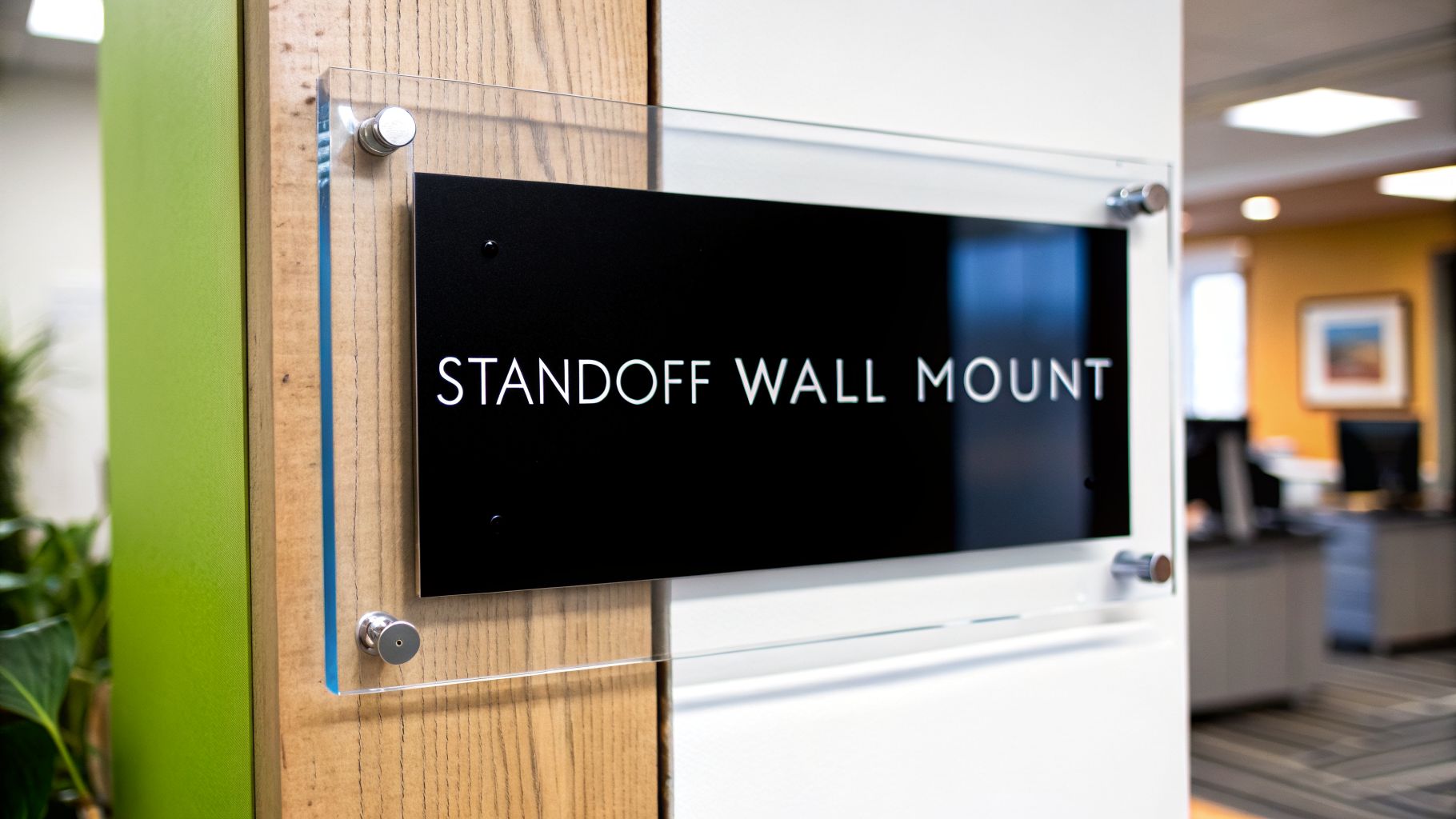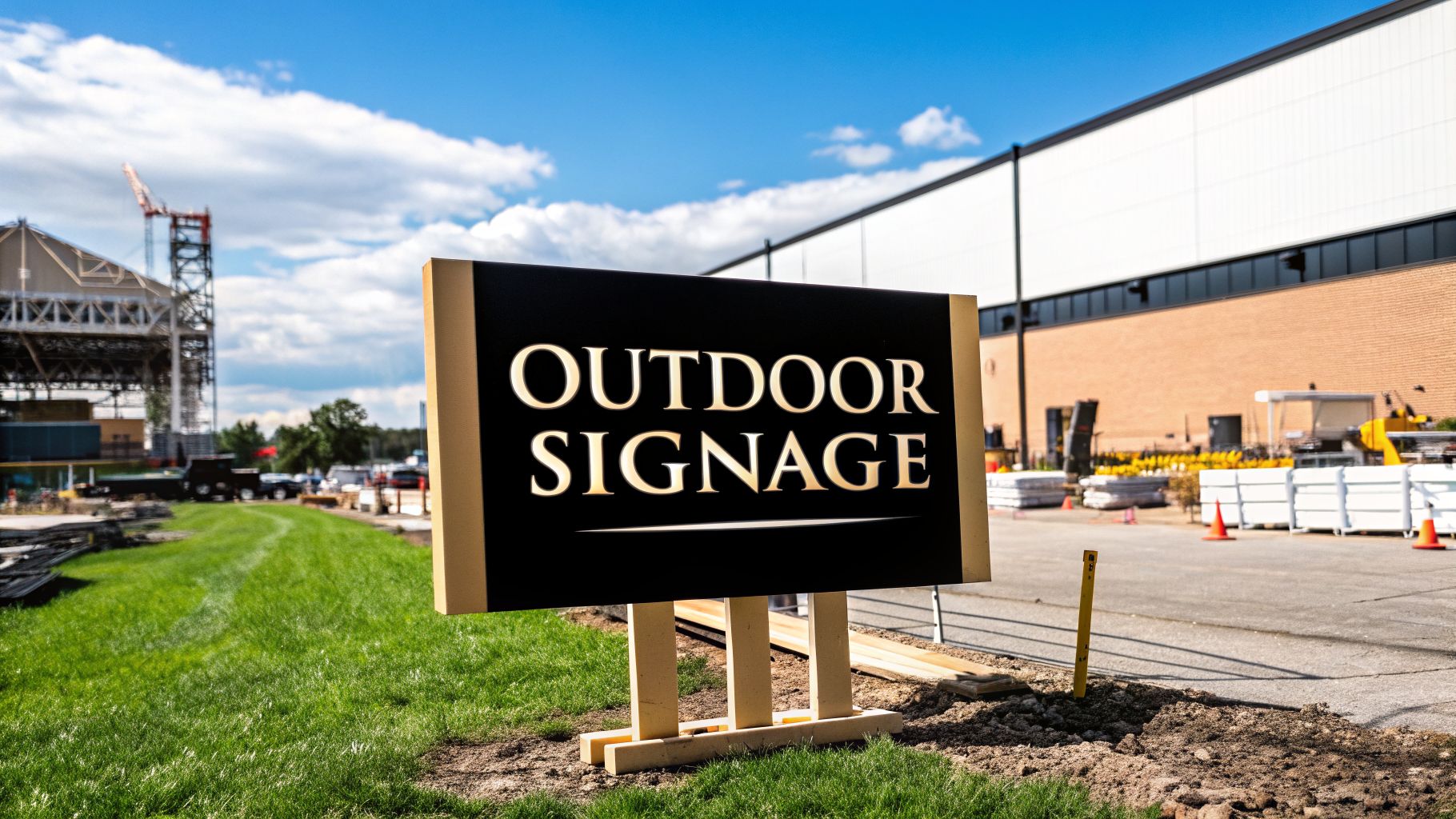
Your building sign is more than just a name on a wall; it's your hardest-working employee. It’s on the job 24/7, attracting customers and establishing your brand’s presence in the community.
Quality building signs for business are a core marketing asset. They build authority, drive foot traffic, and make a powerful first impression long before anyone ever steps through your door.
Your Sign The Silent Salesperson
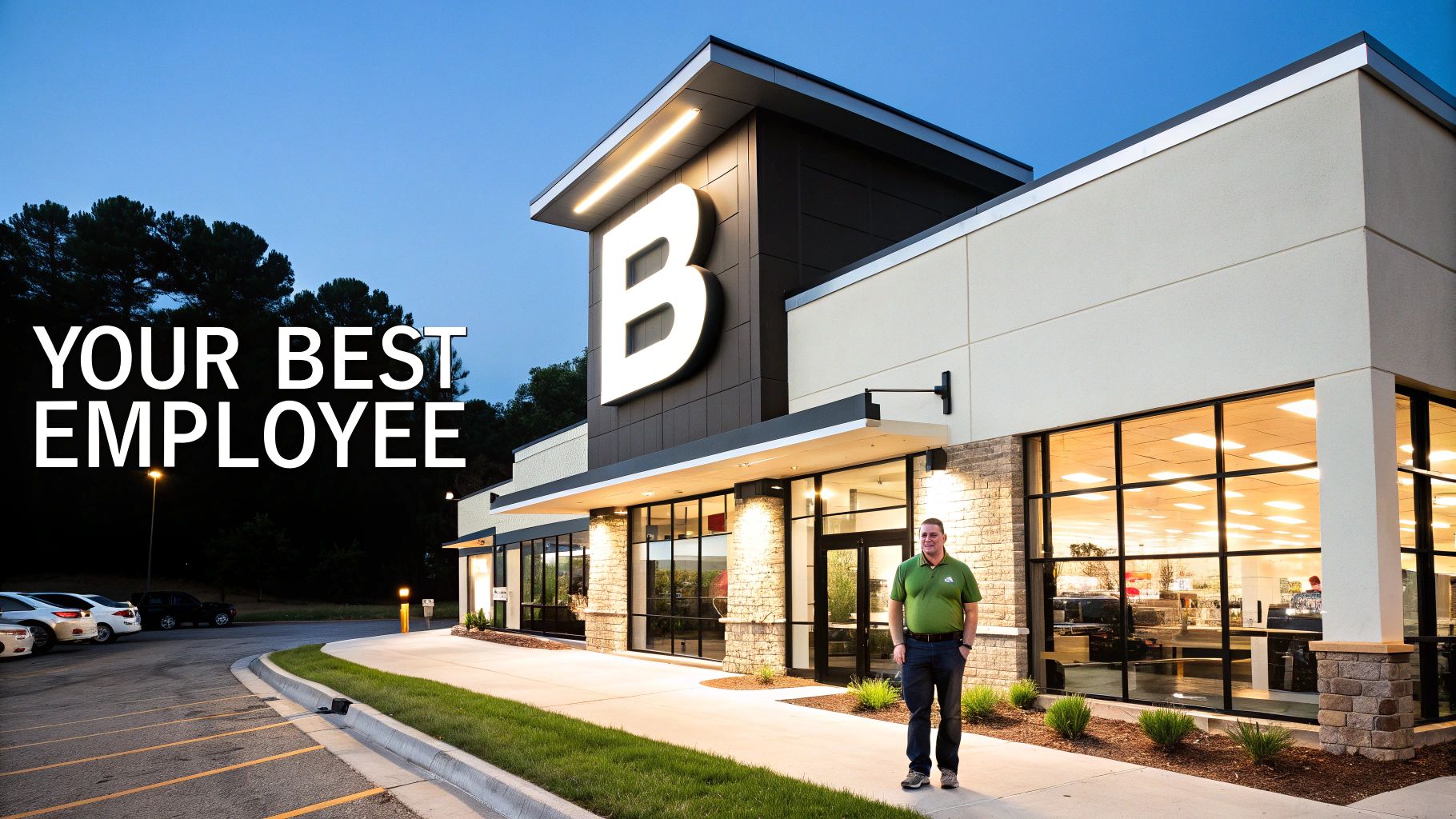
Stop thinking of your sign as a necessary expense and start seeing it for what it is: your most important brand ambassador. It's often the very first physical touchpoint a potential customer has with your company, and it speaks volumes about who you are.
The right sign doesn't just show people where you are—it sets expectations and shapes their entire perception of your brand.
For example, a law firm might choose classic, non-illuminated dimensional letters made of brushed aluminum to convey stability, tradition, and trustworthiness. In contrast, a new tech startup could opt for sleek, halo-lit channel letters with a modern font, communicating innovation and a forward-thinking vibe. Both are effective because they are perfectly aligned with their brand's message.
Shaping Customer Perception from the Curb
A well-designed sign does more than just look good. It acts as a beacon, guiding the right customers to your door and making them feel confident in their decision to choose you. This is especially true if you rely on local foot traffic. Studies have shown again and again that a huge percentage of first-time customers are drawn to a business simply because of its sign.
This is exactly why your sign needs to be viewed as a strategic investment that delivers continuous marketing value. The quality and design of your signage can directly influence:
- Brand Authority: A professional, well-maintained sign suggests a successful and reputable business. Simple as that.
- Customer Trust: Faded, broken, or just plain ugly signs can make customers question the quality of your services before they even give you a chance.
- Visibility and Reach: Your sign works tirelessly, making your business a landmark in the community even when you're closed.
Your building sign is your handshake with the community. It’s a constant, visible promise of the quality and professionalism customers will find inside. It’s not just about being seen; it’s about being remembered for the right reasons.
Of course, the sign is just one piece of the puzzle. A well-maintained exterior contributes significantly to your business's first impression. You might also want to learn how to enhance your property's overall curb appeal to create a completely polished look. For a deeper dive into the different options out there, our guide on signage for commercial buildings has you covered.
Choosing the Right Type of Building Sign
Picking the right sign isn’t about just putting your name on the wall—it’s a strategic choice. The perfect sign for a downtown boutique will look completely out of place at a corporate park set back from the highway. It all comes down to matching the sign's function to your location and your business goals.
The right sign needs to represent your brand and work hard to grab the attention of the right people. This isn’t just a hunch; the global signage market is expected to grow from USD 52.7 billion in 2025 to a massive USD 97.3 billion by 2035. That number tells a story: businesses are realizing that a great sign is a direct investment in visibility and growth.
Channel Letters for Maximum Storefront Impact
For retail stores, restaurants, or any business in a busy area, channel letters are the undisputed champs. These are the bold, three-dimensional letters you see on building facades and strip malls everywhere. They offer a clean, professional look that’s hard to miss.
Their biggest advantage is how they’re lit, and you’ve got a couple of great options:
- Face-Lit: This is the industry standard. Light shines through the front of the letters, making them bright, bold, and incredibly readable from a distance. It's the go-to for catching the eye of passing traffic. For example, a national chain like Target uses bright, face-lit channel letters so their stores are unmistakable from the road.
- Halo-Lit (or Reverse-Lit): Here, the light shines from the back of the letters, casting a sophisticated glow onto the wall. This "halo" effect is perfect for upscale brands like law firms, high-end boutiques, or restaurants that want a more refined, elegant vibe. Think of a high-end steakhouse with warm, glowing letters that create an exclusive atmosphere.
The choice really boils down to your brand’s personality. A fast-food spot needs the immediate punch of face-lit letters, while a luxury spa benefits from the subtle class of a halo-lit sign.
Monument and Pylon Signs for Distance Visibility
What if your business isn’t right on the street? If you’re tucked away in a medical complex, an industrial park, or a large apartment community, a monument or pylon sign is non-negotiable. They act as a landmark, guiding people to you long before your front door is in sight.
A monument sign is a low-profile, ground-level sign, often built from materials like brick or stone that match the building's architecture. It projects a feeling of permanence and credibility—think of a corporate headquarters with its name elegantly displayed at the property entrance.
A pylon sign, on the other hand, is that tall, towering sign you see from the highway. These are built for one thing: long-distance visibility. They're essential for hotels, gas stations, and shopping centers that need to grab the attention of fast-moving drivers. Many even have panels for multiple tenants, making them practical for shared properties.
The decision is simple: How far away do people need to see you? A monument sign greets them at the driveway. A pylon sign calls out to them from a quarter-mile down the road.
Blade Signs and Awnings for Pedestrian Traffic
For businesses in historic downtowns or walkable shopping districts, your main audience is on foot. That's where you need signs that work at a human scale.
A blade sign is a classic for a reason. It juts out from your building, perpendicular to the sidewalk, making your shop visible to people walking down the street. It’s a simple, effective tool for cafes, bookstores, and small retailers to stand out in a crowded row of storefronts. For instance, an old-fashioned barber shop might use a carved wooden blade sign to enhance its traditional appeal.
Awnings pull double duty. They offer customers shelter from the rain and sun while giving you a huge canvas for branding. A custom awning with your name and logo adds charm and character, making your entrance feel far more inviting. A bakery with a striped awning and its name printed on the valence is a perfect example of practical and effective branding.
To get a better sense of all the options out there, our complete guide on the many types of signage available is a great next step. It will help you narrow down the best fit for your specific location and budget.
Building Sign Comparison Guide
To make the decision a little easier, here's a quick-reference table that breaks down the most common sign types. Think of it as a cheat sheet for matching a sign to your specific business needs.
| Sign Type | Best For | Visibility Range | Typical Cost |
|---|---|---|---|
| Channel Letters | Retail storefronts, restaurants, high-traffic areas | Short to Medium (50-300 ft) | $$$ |
| Monument Signs | Corporate offices, medical parks, property entrances | Medium (100-500 ft) | $$$$ |
| Pylon Signs | Highway businesses, shopping centers, hotels | Long (500+ ft) | $$$$$ |
| Blade Signs | Pedestrian-heavy districts, downtown shops, cafes | Short (20-100 ft) | $$ |
| Awnings | Sidewalk cafes, boutiques, restaurants, service shops | Short (20-100 ft) | $$$ |
Use this table as a starting point. Your budget, local zoning laws, and brand identity will all play a role, but understanding these core differences is the first step toward making a smart investment.
Selecting Durable Materials and Effective Lighting
Once your design is locked in, you hit a critical fork in the road: choosing the right materials and lighting. This isn't just a technical detail; it's a decision that dictates how long your sign will last, how much maintenance it will need, and what its true long-term cost will be. A sign that looks brilliant on day one but is faded or failing in a few years is money down the drain.
The foundation of your sign is all about striking a balance between appearance, durability, and your budget. The materials you pick will determine if your sign can handle your local climate—be it relentless sun or brutal winters—and still look professional years down the line.
Choosing Materials That Last
For most outdoor signs, especially dimensional ones like channel letters, aluminum is the undisputed champion. Why? It's lightweight, incredibly strong, and fights off rust and corrosion like nothing else, making it a workhorse in almost any climate. When you see a sharp, professional sign that's clearly stood the test of time, there's a good chance it has an aluminum backbone.
If you’re going for a vibrant, modern aesthetic, acrylic is a fantastic choice. It's the go-to material for the faces of illuminated signs because of the way it diffuses light, giving you that bright, even glow that really catches the eye. It's also tough and weather-resistant, perfect for making bold, colorful designs pop day or night.
A tip from the field: If your business is located somewhere with intense sun or harsh weather, insist on a powder-coated finish for any aluminum parts. It adds a crucial layer of defense against fading, chipping, and environmental wear, which can easily double the life of your sign's finish.
To really get into the weeds on different substrates and what they’re best for, you can dig deeper with this guide on common sign board materials.
The Clear Advantages of LED Lighting
When it comes to lighting your sign, the conversation today pretty much starts and ends with LEDs. The days of finicky, high-maintenance neon are long gone. Modern Light Emitting Diodes (LEDs) win on every front.
First off, they are incredibly efficient, using up to 80% less energy than old-school neon or fluorescent bulbs. That translates directly into a lower power bill every single month, a saving that adds up fast. Plus, they last a long time—with an average lifespan of 50,000 to 100,000 hours, you won't be paying someone to climb a ladder to replace dead bulbs all the time.
LEDs also give you far more creative freedom. A restaurant trying to create a warm, inviting vibe can use warm-toned LEDs for a cozy glow. A sleek tech company, on the other hand, might opt for crisp, cool-white LEDs for a high-impact look that screams modern.
When you're trying to maximize visibility after dark, exploring options like light boxes is a smart move to make sure your sign is working for you 24/7.
While classic materials are the bedrock of the industry, there's a huge shift happening toward dynamic signs. The digital signage market was valued at a massive USD 28.8 billion in 2024 and is forecast to hit USD 45.9 billion by 2030. This isn't just hype; it's driven by results. A full 19% of consumers say they've made an impulse buy because of a digital ad, proving these signs are more than just pretty screens—they drive real revenue.
How to Navigate Sign Permits and Zoning Laws
Dealing with the paperwork for your building sign might feel like a chore, but it’s the one step that truly protects your investment. If you ignore the local rules, you're setting yourself up for expensive fines, a forced takedown of your brand-new sign, and weeks of painful delays.
The good news? A little bit of planning makes the whole process surprisingly smooth.
Your first move should always be a visit to your local municipality’s website. Find the planning, zoning, or building department pages, and look for the section on signage ordinances. This is the official rulebook for all building signs for business in your town, and it’s non-negotiable.
Starting with Zoning Regulations
Before you get attached to a specific design, you have to understand the zoning district your business is located in. A sign that’s perfect for a commercial or industrial zone could be completely illegal in a historic district or a mixed-use neighborhood.
For example, a boutique in a quaint, historic downtown might be limited to non-illuminated, wooden blade signs to preserve the area's charm. Just a few miles away, a big-box store on a busy commercial highway is probably encouraged to use large, brightly lit channel letters to grab attention.
You'll almost always run into these common restrictions:
- Size and Height: Ordinances will dictate the maximum square footage and height your sign can be. This is often tied to your building's street frontage—a common rule of thumb is one square foot of signage per linear foot of your storefront.
- Placement: There are specific rules for how far a sign must be set back from the property line and how high it can be mounted. A projecting blade sign, for instance, will have strict clearance requirements over the sidewalk to keep pedestrians safe.
- Illumination: Some zones ban flashing or animated lights entirely. Others might regulate the brightness (measured in nits or candelas) to make sure your sign isn't a dangerous distraction for drivers.
The Permit Application Process
Once you’re confident your sign idea fits within the local zoning laws, you can start the permit application. This isn't just a single form; it's a complete package of documents that proves your sign is safe, compliant, and professionally designed. Most sign companies will handle this for you, but it’s smart to know exactly what’s involved.
A complete and accurate permit application is your best tool for avoiding delays. Missing information or incorrect drawings are the top reasons applications get rejected, forcing you to start the process all over again.
Your application package will usually require detailed sign drawings, a site plan showing the building and sign location, and engineering specs if the sign is especially large or complex. For a deeper dive, you can learn more about the specific documents needed for sign permit requirements to make sure you have all your bases covered.
The flowchart below shows the basic workflow from materials to lighting, which only kicks off after all your permits are approved.
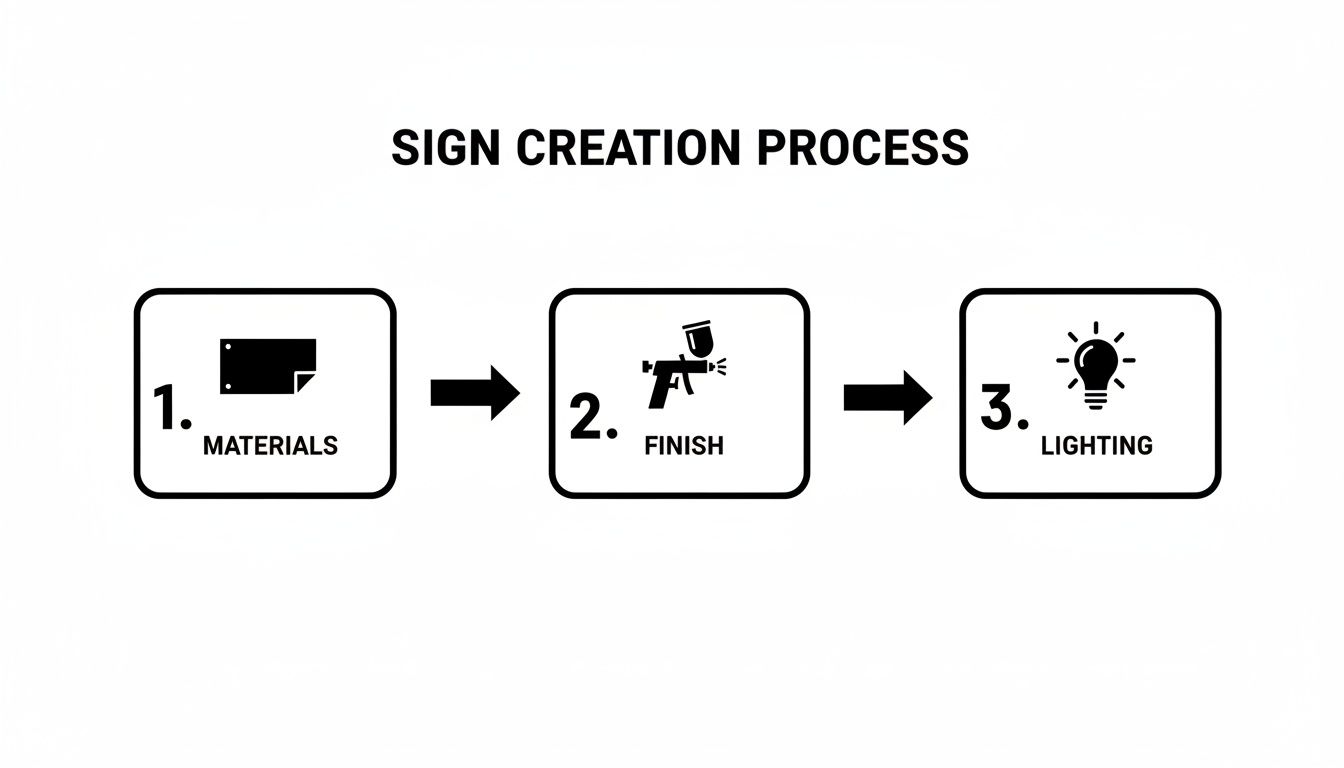
This visual breaks down the core fabrication stages, and every single one depends on the approved specifications in your permit.
Avoiding Common Pitfalls
Navigating local bureaucracy can be tricky, but a few smart moves can save you from major headaches down the road. The single biggest mistake we see business owners make is ordering a sign before getting the permit approved. This can be a devastatingly expensive error if the city rejects the design.
Always get written approval from your landlord or property management company before you even think about submitting your application to the city. Many commercial leases have their own sign criteria that are even more restrictive than local laws.
Finally, partner with a reputable sign company that has a long track record in your specific municipality. Their firsthand experience with local inspectors and unwritten rules is absolutely invaluable.
Budgeting for Your Sign and Choosing a Vendor

This is where the rubber meets the road. Setting a realistic budget and finding the right partner are the two steps that will make or break your signage project. The price of building signs for business can swing wildly, and the company you hire will ultimately define the quality, durability, and success of your investment.
A sign isn't an off-the-shelf product; it’s a custom-fabricated asset. The final price is a direct reflection of the materials, labor, and expertise that go into it.
Key Factors That Influence Your Sign Budget
The price tag on a business sign isn't just a number pulled out of thin air. It’s a calculated sum based on tangible elements that drive both its visual punch and how well it holds up over time. Getting a handle on these variables is the key to setting a smart budget.
The four biggest drivers of cost are pretty straightforward:
- Size: It’s simple—bigger signs need more materials, more fabrication time, and often specialized installation equipment like a crane. All of that adds up.
- Materials: Premium materials like thick-gauge aluminum and high-performance acrylics will cost more upfront than thinner, less robust options, but they pay for themselves in longevity.
- Complexity: A simple, flat-cut dimensional letter set is worlds away from an intricate, halo-lit channel letter logo with multiple colors. The more complex the design, the more skilled labor is required.
- Lighting: Adding illumination involves LEDs, power supplies, and the technical skill to wire everything correctly and safely. This can be a significant portion of the total project cost.
It's easy to get fixated on the initial quote, but a high-quality sign is a long-term investment. Going cheap on materials or hiring a less experienced company almost always leads to faded colors, burnt-out lights, and higher repair bills down the road.
Creating a Clear Request for Quote
If you want accurate, comparable bids from sign companies, you need to give them a detailed Request for Quote (RFQ). A fuzzy request gets you a fuzzy price that's impossible to compare. Think of your RFQ as the blueprint for your project.
Make sure to include these key details:
- Your Contact Info and Business Address: This is non-negotiable for site surveys and checking local sign codes.
- Sign Type and Concept: Be specific. Do you want channel letters? A monument sign? Attach any design files, sketches, or inspiration photos you have.
- Approximate Dimensions: Give them the target height and width you’re aiming for.
- Material and Finish Preferences: If you have your heart set on brushed aluminum or a specific Pantone color, say so.
- Lighting Requirements: Is it illuminated? If so, is it face-lit, halo-lit, or something else?
- Installation Details: Describe what the sign is being mounted to—brick, stucco, a metal panel? Photos of the building facade are incredibly helpful here.
A solid RFQ forces every company to bid on the exact same specs, so you can make a true apples-to-apples comparison.
Vetting Potential Sign Companies
Choosing a vendor is about so much more than the bottom-line price; you’re looking for a partner you can trust. The Sign & Banner Shops industry is a big one, expected to hit a market size of $2.2 billion in 2025 with nearly 40,000 businesses in the U.S. alone. To find the right one in that sea of options, you need to ask the right questions.
When you're talking to potential companies, cut to the chase with these questions:
- Can you show me a portfolio of projects similar to mine? You need to see proof they've handled signs of the same type, scale, and complexity before.
- Do you manage the entire permitting process? A full-service shop that handles permits is worth its weight in gold. It saves you a massive headache and ensures everything is done by the book.
- What does your fabrication process look like? Ask where the sign will be built and what materials they prefer. Good companies are proud of their work and happy to tell you about it.
- Are your installers licensed and insured? This is a deal-breaker. It protects you, your property, and ensures the job is done safely and professionally.
- What kind of warranties do you offer? Look for a solid warranty on parts like LEDs and power supplies. It shows they’re confident in the quality of their components and workmanship.
Finding a vendor that offers dedicated signage project management can make the whole experience seamless. Having one point of contact from the first sketch to the final installation keeps communication clear and ensures your project stays on track and on budget.
Answering Your Final Questions About Business Building Signs
Even after you've nailed down the design and budget, a few practical questions always pop up. It's smart to get these sorted out before you sign on the dotted line. Think of this as your final check-in to make sure there are no surprises with timelines, durability, or upkeep down the road.
We’ve heard just about every question there is when it comes to a new sign. Here are the answers to the ones we get most often.
How Long Does It Take to Make and Install a Business Sign?
This is the big one, and the honest answer is: it depends. The timeline for a custom building sign is a mix of its complexity, the materials you pick, and—most importantly—how fast the local permit office moves.
A simple, non-lit sign, like dimensional letters for an interior wall, can be turned around pretty quickly. You're probably looking at just 2-4 weeks from design approval to installation day.
But for more complex building signs for business, the clock runs longer. An illuminated channel letter set or a monument sign that needs a concrete foundation will realistically take anywhere from 6 to 12 weeks. Sometimes even longer if there are hiccups.
The single biggest variable in any sign project is the permit approval time. Depending on your municipality, this step alone can range from just a few days to several weeks. A professional sign company will factor this into their project timeline.
A good sign partner will always give you a detailed schedule that breaks down every stage of the process:
- Design and Engineering: Finalizing the shop drawings and technical specs.
- Permit Application: Submitting all the paperwork to the city and waiting for the green light.
- Fabrication: This is when your sign is actually built in the shop.
- Installation: Scheduling the crew and getting the sign up on your building.
What Is the Average Lifespan of an Outdoor Building Sign?
A sign’s longevity really comes down to three things: the quality of the materials, the skill of the builder, and the local climate. A top-tier sign made from durable materials like aluminum and premium acrylic, finished with professional-grade coatings, should easily last 10-15 years or more if you take care of it.
The lights inside have their own lifespan, too. Modern LEDs are workhorses, typically rated for 50,000 to 100,000 hours of operation. If your sign is lit for 12 hours a night, that's more than a decade of performance before you’d even think about replacements.
On the flip side, signs built with cheaper materials like MDO (medium-density overlay) board or lower-grade plastics will start to show their age fast. Expect to see significant fading, cracking, or warping within just 3-5 years, especially if you're in an area with harsh sun or wild weather swings.
How Do I Maintain My New Business Sign?
Proper maintenance is the secret to protecting your investment. You want your sign looking as good in year five as it did on day one. For most signs, a simple cleaning with mild soap and water a couple of times a year is enough to wash off the road grime and dust.
Illuminated signs need a little more love. It’s smart to check the electrical connections periodically and make sure everything looks right. And after any big storm, it's always a good idea to do a quick visual inspection to see if there's any damage.
Many sign companies, including us, offer maintenance plans. These can be a fantastic investment. They usually cover professional cleaning, thorough electrical checks, and any needed repairs. It's a proactive way to keep your sign shining bright for years to come.
Your sign is a critical investment in your brand's visibility and success. At On Display Signs, Inc., we manage every detail—from design and permitting to fabrication and installation—to deliver signage that makes a lasting impression. Contact us today to start your project.