So, how do you get a sign made that actually works? It's never about just slapping your business name on a board. A great sign is a project—a calculated investment involving strategy, design, fabrication, and installation. Seeing it this way is the key to creating a sign that delivers a real return.
The Blueprint for a Sign That Gets Results
Thinking about how to make a sign that stops foot traffic and builds your brand means looking at the whole picture. Many business owners fixate on the final product, only to end up with a sign that misses the mark. The best signs always come from a deliberate, step-by-step process. A rushed sign is almost always a wasted opportunity.
Owners who bring a professional sign company into the conversation from day one are the ones who avoid expensive headaches down the road. An expert can guide you through every stage, making sure your sign becomes a landmark for your brand, not a maintenance nightmare.
The whole process breaks down into a few key stages, each one building on the last.
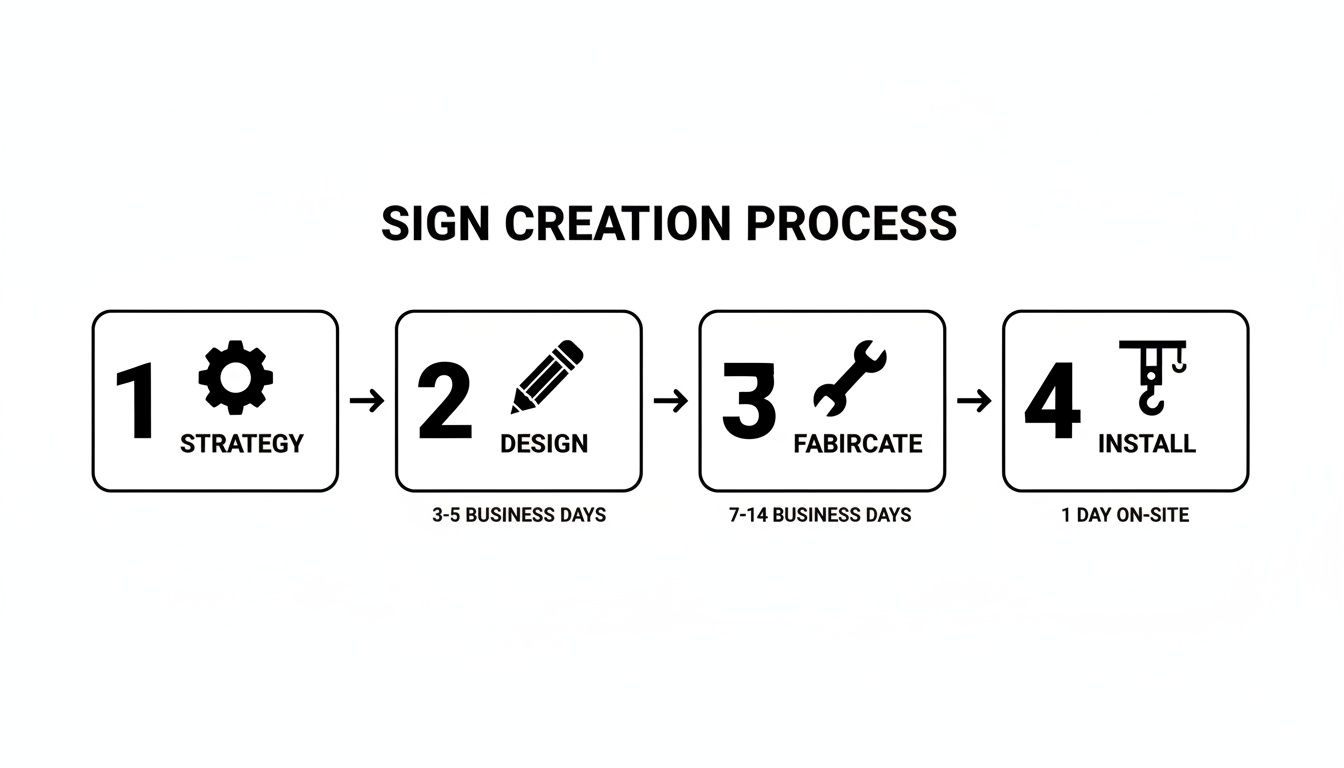
Understanding the Full Process
Getting from an idea to a finished sign on your building involves several critical steps. If you skip one, you risk undermining the whole project. Knowing what to expect from the start helps you plan your budget, timeline, and resources without any last-minute surprises.
For example, a new boutique might need a brightly lit channel letter sign to pull in evening shoppers. A corporate law office, on the other hand, might opt for a distinguished monument sign at its entrance. Both have completely different goals, materials, and installation needs.
Here are the key stages you can expect:
- Defining Your Strategic Goals: What is this sign’s #1 job? Is it to boost foot traffic by 20%? Is it for brand recognition, or simply to help people find your front door? A clear goal drives every other decision.
- Crafting a Compelling Design: This is more than just logos and colors. The design must be readable from a distance, instantly reflect your brand, and get its message across in seconds.
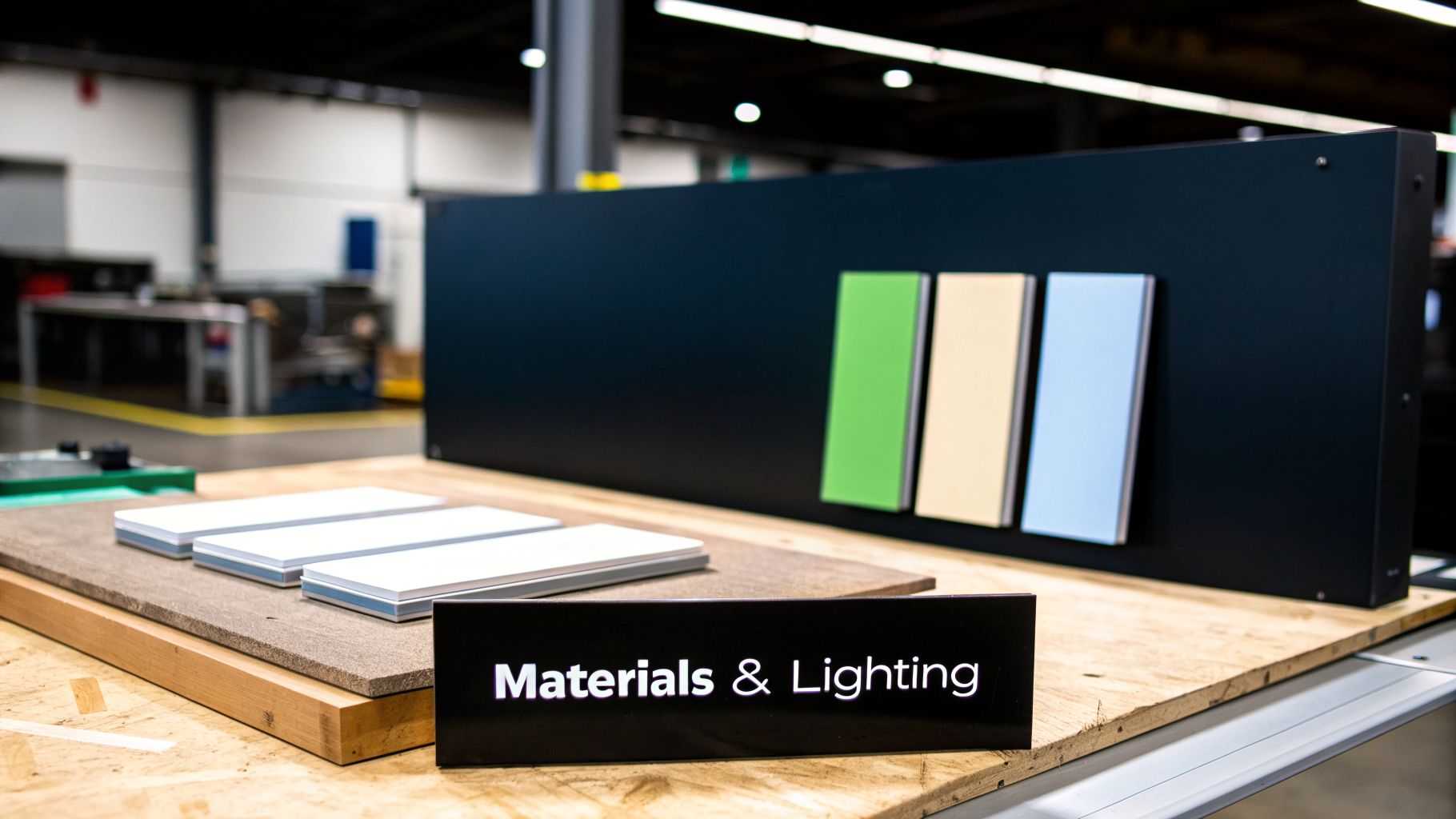
- Choosing the Right Materials: Your material choice impacts everything—durability, look, and long-term cost. Aluminum, acrylic, and high-density urethane (HDU) each have specific strengths for different environments and sign types.
- Fabricating with Precision: This is where the blueprint comes to life. Your sign is physically built using tools like CNC routers and professional-grade printing to ensure a high-quality, durable finish.
- Navigating Permits and Codes: Almost every permanent business sign requires a permit from your city or county. Skipping this step is a recipe for fines and being forced to take the sign down.
- Executing a Professional Installation: The final step is just as critical. Proper installation ensures your sign is secure, legally compliant, and looks exactly as it was designed to.
When you treat getting a sign made as a complete project, the return on your investment skyrockets. It stops being a simple purchase and becomes the engineering of a powerful marketing asset for your business.
Ultimately, your sign is often the very first handshake a customer has with your business. Taking the time to get it right pays for itself in visibility and credibility for years to come. To see more on how signs fit into your marketing plan, check out our guide on the role of signs in advertising. It’s this complete view that turns a simple sign into a true landmark for your brand.
Setting Your Signage Goals and Crafting the Design
Before you ever start thinking about fonts or colors, let’s talk strategy. A sign without a clear goal is just expensive decoration; a sign with a purpose is a hardworking employee that works for you 24/7. Your objective is the blueprint that will guide every decision you make down the line.
Are you trying to pull drivers off a busy highway? Or maybe your main priority is guiding visitors seamlessly through a sprawling corporate campus. For many businesses, the goal is simply to cement their brand’s presence in the local community.
Each of these goals demands a completely different approach. A highway sign needs to be massive, bold, and readable in a flash. Wayfinding signs require absolute clarity and consistency. A monument sign for a professional firm needs a design that conveys authority and trust.
Define Your Primary Signage Objective
First, ask yourself one simple question: What is the number one thing this sign must do for my business? And be specific. "Get more customers" isn't a goal; it's a wish.
Instead, think in terms of measurable outcomes. A practical example is a coffee shop owner who wants to attract more morning commuters.
- Increase walk-in traffic: "I need my new blade sign to boost foot traffic from the sidewalk by 15% in the next quarter." This tells you the sign has to be eye-catching and positioned perfectly to grab people's attention.
- Improve navigation: "Our directional signs need to cut down the number of lost visitors asking for directions at the front desk." This goal immediately puts the focus on clear language and smart placement at key decision points, like at the entrance to a parking garage or a building lobby.
- Boost brand recognition: "This monument sign should establish our new headquarters as a local landmark." That points you toward a unique, permanent design that feels like an extension of the building's architecture.
As you set these goals, think about accessibility from day one. A great sign works for everyone. Looking through a guide to products for vision impaired people can give you insight into using elements like high contrast and tactile features to make your sign more effective.
Crafting a Design for Maximum Impact
Once your goal is crystal clear, you can jump into the creative part. Effective sign design is a mix of art and science, and it’s all about getting your message across in three seconds or less. It’s not just about looking good; it's about performing a specific job.
The sign industry is booming for a reason. Projections show the global market hitting $56 billion in 2026 and climbing to an incredible $103.4 billion by 2036. Businesses are realizing that professional signage is critical, especially when you consider signs are responsible for up to 85% of a brand's first impression.
A successful design is one that is not only seen but understood almost instantly. If a potential customer has to squint, slow down, or struggle to read your sign, you've already lost them.
Always design with the "three-second rule" in mind. Someone driving or walking past your business only has a few moments to see your sign, process it, and decide whether to act. This means simplicity and readability are your top priorities. If you're looking for some inspiration, we've put together a collection of captivating sign design ideas.
Key Principles of Effective Sign Design
To make sure your sign does its job, nail these fundamental design elements. This is the secret sauce behind a sign that actually works.
- Readability From a Distance: Test your font choices. A clean, bold, sans-serif font like Helvetica or Arial is almost always better than a fancy script that turns into a blur from 50 feet away. Letter size is everything, and it’s directly tied to how far away people will be and how fast they're moving.
- High Color Contrast: This is non-negotiable. Your background and foreground colors need to pop. For example, the classic combinations of black on white, yellow on black, or white on blue are so common because they’re incredibly easy to read in almost any light.
- Simplified Message: Less is more. Your sign should quickly communicate who you are and what you do. Resist the urge to cram it with a list of services, your phone number, and your website. Your logo and a short, powerful tagline are often all you need. A great practical example is a bakery sign that just says "Fresh Bread Daily" under its name—it's simple and effective.
By focusing on a sharp, measurable goal and sticking to these proven design principles, you’re no longer just "making a sign." You’re creating a strategic asset that puts your brand's identity out in the world to work for you.
Choosing the Right Materials and Lighting Technology
Once you've nailed down your strategy and design, you get to the nuts and bolts of your project: what will your sign actually be made of? This decision is where your design concept meets the real world.
The materials and lighting you choose will define how long your sign lasts, what it looks like up close, and how much you'll spend maintaining it down the road. This is the practical side of how you make a sign that works as hard as you do.
Think of it as a balancing act between durability, aesthetics, and your budget. The single biggest factor? Location. A sign living in a climate-controlled lobby has a much easier life than one battling four seasons of sun, rain, and snow.
Matching Materials to Your Environment
A sign's material is its armor. Choosing something that can't handle your local weather is a recipe for a sign that looks faded, cracked, or just plain sad within a couple of years.
Different materials are built for different jobs. Understanding their strengths is key to making a smart investment.
- Aluminum and Aluminum Composite Panels (ACP): These are the absolute workhorses for outdoor signs. Aluminum is naturally rust-proof, surprisingly lightweight, and incredibly strong. ACP, which sandwiches a plastic core between two aluminum sheets, gives you fantastic rigidity for large signs without the heavy weight. For example, a large sign for an industrial park would benefit from ACP for its durability and resistance to bending.
- Acrylic: When you want a sleek, modern, high-gloss look, acrylic is the answer. It’s perfect for indoor lobby signs and dimensional letters, giving off that sophisticated, "floating" vibe. With a huge range of colors and finishes, it’s incredibly versatile.
- High-Density Urethane (HDU): This is the modern answer to classic wood signs. HDU can be carved, sanded, and painted to perfectly mimic handcrafted wood, but it will never rot, warp, or get eaten by insects. It’s the ideal choice for businesses in historic districts or anyone aiming for that timeless, traditional feel.
If you really want to get into the weeds on what holds up best against the elements, our guide to choosing exterior sign materials is a great resource.
The right material isn't just about surviving the weather. It’s about reinforcing your brand’s identity. The sleek finish of acrylic communicates modernity, while the carved texture of HDU suggests tradition and craftsmanship.
To help you visualize the trade-offs, here’s a quick comparison of the most common materials we work with.
Comparing Common Sign Materials
| Material | Best For | Durability | Typical Use Cases |
|---|---|---|---|
| Aluminum/ACP | Long-term outdoor use and large formats | High | Building signs, post and panel signs, directional signs |
| Acrylic | Modern, high-end interior applications | Moderate | Lobby signs, dimensional letters, illuminated sign faces |
| HDU | Replicating a traditional wood look outdoors | Very High | Monument signs, historical markers, rustic storefronts |
Choosing the right option from this list ensures your sign not only looks great on day one but continues to represent your brand well for years to come.
Illuminating Your Brand After Dark
If your business is open after the sun goes down, lighting isn't a "nice-to-have"—it's an absolute necessity. A well-lit sign keeps your best salesperson working for you 24/7, grabbing attention and guiding customers to your door.
This is a huge driver of growth in our industry. The global sign market is projected to hit USD 211.8 billion by 2034, with the printed signage segment alone valued at $40-41 billion in 2023. These numbers, highlighted in reports on the growing global sign market at Research and Markets, show just how critical high-visibility branding has become.
Here are the most common ways to make your sign shine:
| Lighting Type | How It Works | Best Suited For |
|---|---|---|
| Internal Illumination | LEDs are placed inside the sign structure (like channel letters), making the letters themselves glow. | Retail stores, restaurants, and any business on a busy road needing maximum visibility. |
| Backlit (Halo-Lit) | LEDs are placed behind opaque letters, casting a glow onto the wall and creating a "halo" effect. | Upscale businesses, law firms, and anyone wanting a subtle, more elegant nighttime look. |
| External Lighting | Spotlights or floodlights are aimed at the sign from the ground, a building, or a landscape feature. | Monument signs, unlit signs that need after-dark visibility, or as a cost-effective option. |
Today, LED technology is the undisputed champion. It’s incredibly efficient, often using 75% less energy than old-school neon or fluorescent bulbs. Plus, the long lifespan of LEDs means fewer maintenance headaches and lower replacement costs over the life of your sign.
For businesses that need to share timely information, nothing beats an LED message center. These digital displays let you instantly update promotions, announce events, or share community news. They're a powerful tool for engaging passersby and a common feature for schools, churches, and gas stations for a reason.
From Blueprint to Reality: Fabrication and Installation
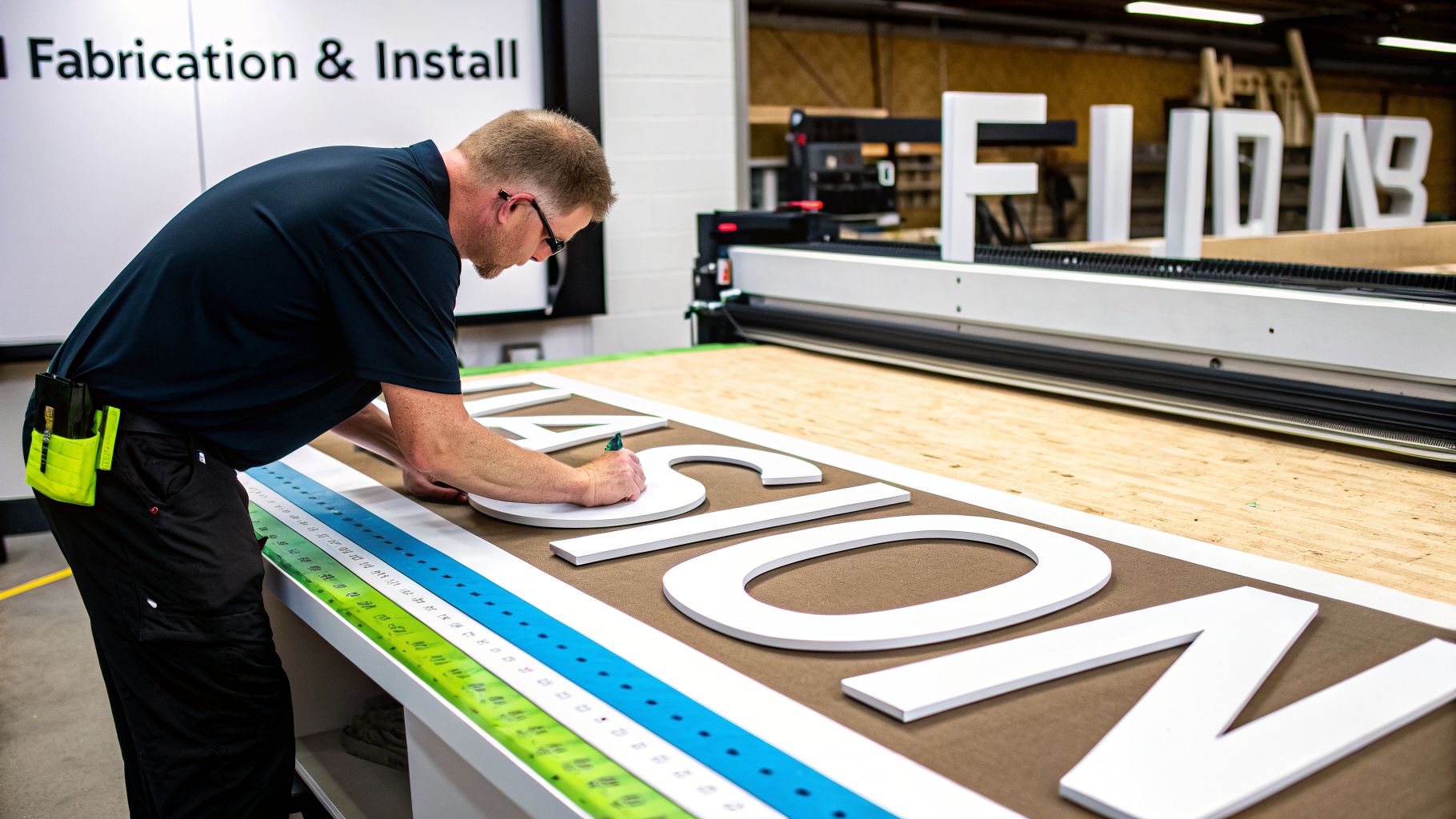
With your design approved and materials chosen, it’s time for the magic to happen. This is the fabrication stage, where your sign goes from a digital file to a physical object. It’s a fascinating blend of modern tech and old-school craftsmanship that brings your brand’s identity to life.
This is where all the planning pays off. A professional sign shop is a whirlwind of activity, transforming raw sheets of metal and blocks of acrylic into a polished, finished product. It’s far more than just assembly—it’s a carefully choreographed process.
A Look Inside the Sign Shop
Watching your sign take shape gives you a real appreciation for the quality involved. It’s a journey from a computer file to a tangible asset, made possible by a combination of skilled artisans and specialized equipment.
Here's a glimpse at the technology that makes it happen:
- CNC Routing: Think of these as robotic sculptors. Computer Numerical Control (CNC) routers take your design files and carve, cut, or etch materials with incredible precision, ensuring every curve of your logo is perfect.
- Large-Format Printing: For signs with photos, gradients, or intricate graphics, industrial UV printers are key. They print directly onto materials like aluminum or acrylic, and the ink is instantly cured, making it incredibly resistant to fading and weather.
- Welding and Metalwork: The structural skeleton of a large monument or pylon sign is built by expert welders. This is what gives the sign its strength to stand up to high winds and the elements for years to come.
- Painting and Finishing: In a dedicated, dust-free paint booth, your sign gets its final coat. We're talking automotive-grade finishes that perfectly match your brand colors and protect the sign from sun, rain, and grime.
This kind of advanced manufacturing is why the signage industry is projected to become a nearly $144 billion market by 2029. As you can see in these valuable signage statistics on uprinting.com, businesses are investing because they see the real-world impact of a well-made sign.
The Final—And Most Critical—Step: Professional Installation
Your sign is finally built and looks incredible. Now for the last piece of the puzzle: getting it on the wall. This is arguably the most important phase, and it’s one where you absolutely cannot cut corners.
An improperly installed sign isn't just an eyesore; it's a serious safety hazard and a huge liability for your business.
A beautiful sign is worthless if the installation is sloppy. It can ruin the design, void warranties, and create a dangerous situation for the public.
Think about the forces a sign has to endure. An exterior sign needs to be anchored to withstand years of wind, rain, and snow without budging. An illuminated sign involves high-voltage electrical work that must be safe, up to code, and reliable. This is not a DIY weekend project.
Why Expert Installation Is Non-Negotiable
The difference between a pro job and an amateur one is immediately obvious. Professional installers have the right equipment, the right training, and the right insurance to handle any challenge.
- Structural Integrity: An installer doesn't just drill a few holes. They analyze the wall, determine the correct anchors, and ensure that a heavy set of channel letters or a massive pylon sign is secured to withstand anything nature throws at it.
- Electrical Expertise: Any sign that lights up requires a qualified technician. They handle all the wiring, connect the power supply, and make sure every connection is safe, efficient, and compliant with local electrical codes.
- Code Compliance: Professional installers live and breathe local sign codes. They know the rules on placement, height, and setbacks, saving you from costly fines or the nightmare of having to tear your new sign down.
For a practical example, consider a nationwide rollout for a franchise. A professional team manages everything, from site surveys in different cities to renting cranes, ensuring every single sign is installed perfectly and legally. You can dig deeper into what this involves by reading about professional commercial sign installation. This final step is what guarantees your investment looks and performs exactly as you imagined from day one.
Navigating Permits and Planning for Long-Term Maintenance
Your sign is finally built and ready to go. It's an exciting moment, but this is where a project can go from a home run to a huge headache. Two critical steps remain: getting legal approval to install it and creating a plan to keep it looking great for years to come.
These are the final hurdles where many business owners stumble. They figure once the sign is made, the work is over. But navigating city permits and planning for maintenance is what separates a lasting asset from a future liability.
Demystifying the Sign Permitting Process
Before your sign ever gets installed, it almost certainly needs a permit from your local government. This isn't just red tape—it's a legal requirement to ensure public safety and community standards.
Skipping this step can be a catastrophic mistake. Imagine spending thousands on a beautiful monument sign only to get hit with steep fines and a takedown order because it violates a local code. It happens far more often than you'd think.
The permit process is the official green light for your project. A professional sign partner will handle this for you, acting as your advocate with city planners to ensure everything is submitted correctly the first time.
The application involves submitting detailed plans showing the sign’s design, materials, dimensions, and exact placement. This proves your sign meets all local codes for things like size, height, and electrical safety. You can learn more by checking out our guide on understanding local sign permit requirements.
Common Hurdles in Securing a Permit
Getting a permit can be tricky because the rules change dramatically from one town to the next. What's perfectly fine in one city might be completely banned just a few miles away.
Here are a few common snags that can slow down or even stop a project in its tracks:
- Zoning Restrictions: Your property's zoning (commercial, industrial, historical district) directly controls the types and sizes of signs you can have.
- Size and Height Limits: Most cities have strict rules on how large or tall a sign can be, especially near major roads.
- Illumination Codes: Some areas regulate the brightness or even the color of lighted signs to prevent distracting drivers.
- Setback Requirements: There are almost always rules about how far a sign must be from the road, property lines, and other buildings.
This is where an experienced sign company becomes your best asset. They know the local codes like the back of their hand and can spot potential problems before they cause weeks of frustrating delays.
Protecting Your Investment with Proactive Maintenance
Your sign is a major investment in your brand's visibility. Just like any valuable asset, it needs regular care to look its best. A dirty, flickering, or damaged sign sends the wrong message to every potential customer who sees it.
A proactive maintenance plan is the only way to protect that investment and make sure it keeps working hard for your business. Don't wait for something to break.
Long-term care starts with understanding your warranty. A reputable sign company will always provide a warranty covering defects in materials and craftsmanship. Make sure you read the details to know what’s covered and for how long.
Here’s a simple, actionable checklist to keep your sign in top shape:
- Routine Cleaning: Regularly wash the sign face and structure to remove dirt, pollen, and grime. A simple solution of mild soap and water is often all you need. This is a practical step you can schedule quarterly.
- Inspect for Wear and Tear: At least twice a year, get up close and look for peeling paint, cracked plastic, loose fasteners, or any signs of water damage.
- Check Electrical Components: For illuminated signs, periodically check that all lights are working and there's no flickering. It’s smart to have a technician do a professional electrical check every few years.
- Clear the Surrounding Area: Keep trees and shrubs trimmed back so your sign is always visible and safe from branch damage during a storm.
A well-maintained sign reflects a well-run business. By planning for permits and maintenance from day one, you ensure your new sign will be a source of pride and a powerful marketing tool for years to come.
Answering Your Top Questions About Making a Sign
When you start looking into a new sign for your business, you're bound to have questions. It’s a major investment, and you want to feel confident you’re making the right calls. I've heard just about every question in the book, so I’ve pulled together the most common ones to give you some clarity.
How Much Does It Cost to Make a Custom Business Sign?
This is always the first question, and the honest answer is: it depends. There's no flat rate because every sign is custom. A simple printed banner might only run a few hundred dollars, while a towering pylon sign with intricate lighting and digital displays can easily climb into the tens of thousands.
The final price tag really comes down to a few key ingredients:
- Size: It’s simple—bigger signs need more material and more labor.
- Materials: Premium materials like high-density urethane (HDU) or thick-gauge metal cost more upfront than a standard aluminum composite panel.
- Complexity: A basic flat sign is far more affordable to produce than multi-layered, individually illuminated channel letters.
- Illumination: Adding LEDs increases the initial cost, but the long-term energy savings are significant. It's a classic trade-off between the upfront investment and your ongoing operating budget.
Always insist on a detailed quote that separates the costs for design, fabrication, and installation. This keeps everything transparent so you know exactly what you're paying for.
How Long Does the Sign Making Process Take?
The timeline can swing from just a couple of weeks to several months. For example, a straightforward, non-lit wall sign can often be designed, built, and installed in about 2-4 weeks.
On the other hand, a complex monument sign that needs a new concrete footing, electrical trenching, and masonry work can easily stretch to 8-12 weeks or even longer. But the single biggest wildcard in any project schedule? The city permit office.
The permitting phase alone can take anywhere from two to six weeks, depending on the complexity of your project and the efficiency of your local government's planning department. This is often the longest and least predictable part of the process.
Working with a sign company that handles permitting for you is the single best way to avoid headaches and delays. They know the process, the paperwork, and how to keep things moving.
Can I Install My Own Business Sign to Save Money?
I’m going to be blunt: please don't. While it might seem like an easy way to trim the budget, the risks are huge and can end up costing you far more. Unless you're just hanging a temporary banner, professional installation isn't a luxury—it's a necessity.
Here’s why it’s a job for the pros:
- Safety: A sign that falls is a massive liability. It can cause serious injury or damage, and your business will be on the hook. Pros know how to mount a sign to withstand high winds, rain, and time.
- Code Compliance: Professional installers are experts in local building and electrical codes. Understanding the rules for things like electrical hazard signs is crucial, and a pro ensures everything is up to spec.
- Warranty Protection: Most manufacturer warranties become void if the sign isn't installed by a certified professional. If you damage the sign trying to hang it yourself, that's a mistake you'll have to pay for.
The cost of a lawsuit, a code violation fine, or a ruined sign is always higher than the cost of professional installation.
What Is the Difference Between a Monument Sign and a Pylon Sign?
Both are freestanding signs designed to grab attention from the street, but they're built for different jobs.
Monument Sign:
This is a low-profile sign, usually around eye-level. It’s built on a solid base that often uses materials like brick, stone, or stucco to match the building's architecture. Monument signs project a feeling of stability, quality, and permanence. They’re a favorite for corporate headquarters, professional practices, and upscale residential communities.
Pylon Sign:
This is the tall one. A pylon sign is mounted high up on one or two steel poles, built for one thing: maximum visibility from a distance. You see them along highways and busy commercial strips, advertising gas stations, hotels, and shopping plazas with multiple tenants. Their height lets them tower over the visual clutter and catch the eyes of drivers.
Your choice between the two will come down to local zoning laws (which often limit sign height), how far your building is from the road, and whether you need to be seen from a block away or a mile away.
At On Display Signs, Inc., we manage every step of the sign-making process, from navigating permits to final installation, ensuring your project is seamless and successful. Let's work together to create a sign that makes your brand stand out. Contact us today for a consultation.