Your deadline is close. The space is booked, the opening date is set, the trade show booth has to ship, or the contractor wants graphics on site before the next tenant walk-through. Then someone realizes the standard office printer, local copy setup, or low-resolution artwork won’t get the job done.
That’s usually when large format printing services stop feeling like a line item and start looking like an operations decision.
Professional large format work isn’t just “printing something bigger.” It’s the process of turning a digital file into a business asset that has to look right, fit the environment, survive handling, install correctly, and keep representing your brand after the launch day rush is over. If you’re ordering storefront banners, trade show backdrops, wall graphics, window displays, site signage, or rigid panels, the print itself is only one part of the result. Materials, finishing, freight, permitting, and installation often decide whether the project feels smooth or becomes a scramble.
Beyond the Office Printer An Introduction to Large Format Printing
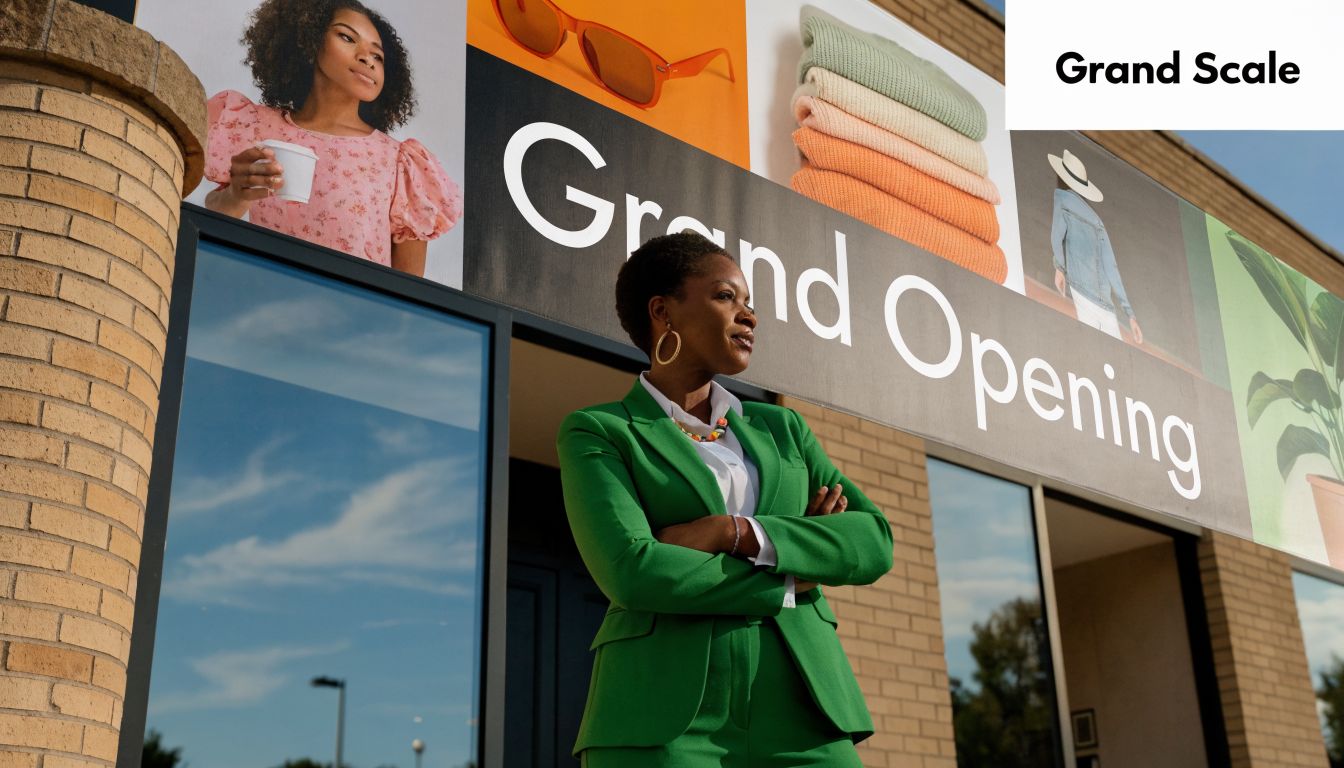
A new retail location is a common example. The lease is signed, fixtures are on the way, and the storefront still looks empty from the street. At that point, a temporary poster taped to the glass won’t carry the message. You need something visible from a distance, readable in passing traffic, and polished enough to signal that the business is ready. The same thing happens with church conferences, warehouse wayfinding, developer leasing centers, and trade shows. The need isn’t “a print.” The need is presence.
Large format printing has grown because businesses keep needing that kind of visibility at scale. The market was valued at approximately USD 10.13 billion in 2024 and is projected to reach USD 16.4 billion by 2033, with North America holding 34% of global market share in 2024, according to SkyQuest’s large format printers market report. That lines up with what commercial clients already know from experience. When a space has to communicate fast, size matters.
What large format printing is really for
The practical purpose is straightforward. Large format printing services help a business do one or more of these jobs:
- Announce a presence: grand openings, temporary closures, lease-up campaigns, event promotions
- Shape a space: walls, windows, directional graphics, branded environments
- Support selling: trade show backdrops, product displays, retail promotions
- Improve navigation: warehouse labeling, facility signs, temporary directional systems
- Extend brand consistency: matching visuals across multiple sites and installation conditions
A lot of buyers arrive thinking only about dimensions. The better question is where the graphic will live and what it needs to do. A lobby backdrop has different demands than a rigid exterior panel. A construction fence banner has different handling needs than a reception wall mural. If you start with use case instead of format, the rest of the choices get easier.
Professional large format work succeeds when the file, substrate, finishing, shipping method, and install plan are treated as one project instead of five separate tasks.
If your project includes art reproduction or decorative interiors, it can also help to review examples outside standard sign buying. A resource like extra large canvas printing shows how scale changes viewing distance, material choice, and presentation quality in ways many first-time buyers overlook.
For a baseline definition of the category, what large format printing is is a useful starting point. The important point for a commercial client is simpler: these projects are usually visible, public, deadline-driven, and expensive to redo. That’s why process matters as much as print quality.
Choosing the Right Foundation Printing Technology and Materials
A large format project usually goes wrong at the foundation, not the finish. Someone picks the cheapest substrate for an outdoor condition, chooses a flexible material when a rigid panel was needed, or approves a print method that looks fine on paper and underperforms in the field.
The easiest way to think about production is this. Some printers are built to print on rigid boards and panels. Others are built for flexible rolls such as banner media, adhesive vinyl, and fabric. The technology should match the job site, not the other way around.
UV and latex are not interchangeable
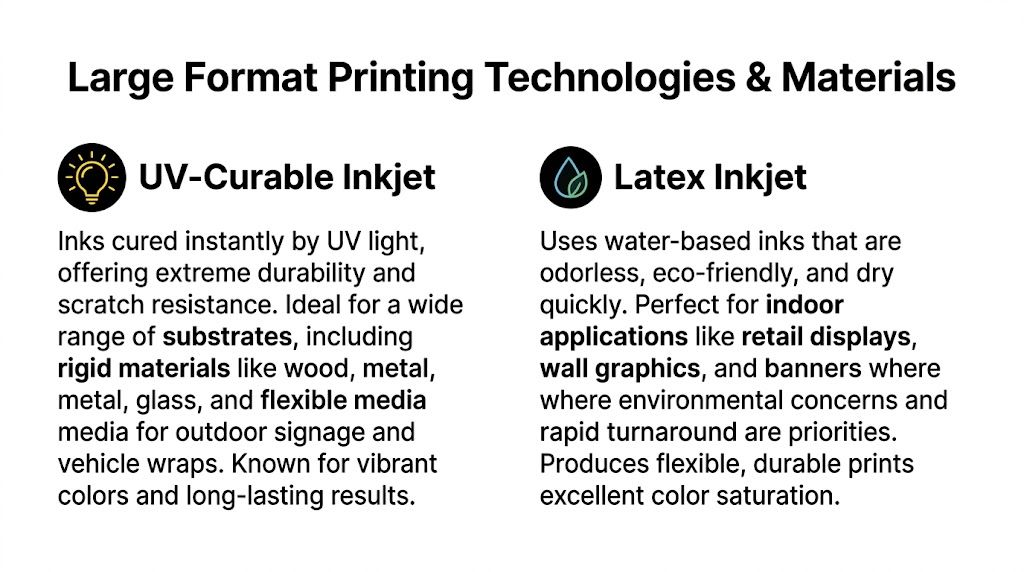
UV-curable inkjet is the workhorse for many rigid and demanding applications. The ink cures under ultraviolet light and forms a durable surface layer. According to Lahlouh’s guide to large format printing, UV-curable inks in flatbed printers outperform solvent alternatives in durability, provide UV fade resistance to over 3 years outdoors, and enable instant dry times that cut handling delays by 70% compared with solvent evaporation. That matters when you’re printing rigid boards, display panels, backlit faces, or other pieces that need to move quickly into finishing and shipping.
Latex inkjet is often a strong fit when you need flexible graphics, lower odor, and fast indoor deployment. It’s commonly used for retail graphics, banners, wall applications, and other work where material flexibility and cleaner handling are priorities. In practice, latex can be a smart choice for interior branding packages and short-turn campaigns, while UV often wins when the substrate or durability requirement is tougher.
Match the printer to the surface
Think of it this way:
| Print setup | Best fit | Common use |
|---|---|---|
| Flatbed UV | Rigid materials | Foam board, acrylic, metal, PVC, display panels |
| Roll-to-roll | Flexible media | Banners, adhesive vinyl, posters, window graphics |
| Hybrid systems | Mixed jobs | Shops managing both boards and rolls in one workflow |
That decision affects more than image quality. It changes scratch resistance, edge durability, production flow, and how the job gets packed.
Practical rule: If the graphic needs to hold shape by itself, start by evaluating rigid substrates. If it needs to bend, fold, tension, or wrap around a frame, start with roll media.
Material choice decides whether the project lasts
At this juncture, many buyers either protect their budget or burn it.
A banner material may be fine for a short promotion but wrong for a permanent-looking entrance display. A foam board panel can look clean indoors but won’t be the right answer where impact, moisture, or repeated handling are part of daily use. Acrylic can deliver a polished branded appearance. Aluminum composite gives you a tougher option when the panel has to stay flat and professional in a more demanding environment. Fabric can create a softer, upscale finish for conference backdrops and step-and-repeat style displays because it avoids the glare that glossy materials can create under event lighting.
Common commercial material choices
- Vinyl banner media: Good for temporary promotions, events, and outdoor announcements where portability matters.
- Mesh banner: Useful where wind load is a concern and airflow matters more than a fully solid image.
- Adhesive vinyl: Common for windows, walls, and other applied graphics where surface prep and installer skill matter.
- Foam board: Lightweight and clean for interior presentations or short-term displays.
- Acrylic panels: Strong visual impact for branded interiors and polished reception areas.
- Aluminum composite: A dependable choice for exterior-style rigid signage when you need stability and a more permanent feel.
- Fabric: Often the better-looking option for trade show backdrops and interior event graphics because it photographs well and packs efficiently.
A quick review of outdoor sign material options helps frame the trade-offs between appearance, weather exposure, and structural demands.
What works and what usually doesn’t
What works is selecting material based on exposure, handling, and replacement cycle. Temporary leasing graphics can justify a lighter solution. Exterior directional signs or long-term branded panels usually need a stronger substrate and a print method that won’t become the weak point.
What doesn’t work is buying on appearance alone. A material can look excellent in a proof and still be the wrong choice once installers handle it, freight stacks it, or weather starts working on the edges.
Putting Your Brand on Display Popular Large Format Applications
The fastest way to understand large format printing services is to look at where they solve real commercial problems. Most clients don’t start by asking for a substrate or print method. They start with a business need: cover construction, fill a blank wall, direct visitors, brand a booth, or make a storefront visible before opening day.
Storefront and window graphics
A new tenant often wants visibility before the interior is fully ready. Window graphics handle two jobs at once. They announce the brand to passing traffic and hide the unfinished interior from view. That’s especially useful for retail build-outs, restaurants preparing for opening, and church campuses promoting a coming event in a high-traffic area.
This kind of project works best when the messaging is large, the contrast is strong, and the install pattern is planned around door swings, mullions, and sight lines. What fails is overloading the glass with too much copy or using imagery that looks sharp on a screen but becomes muddy at full size.
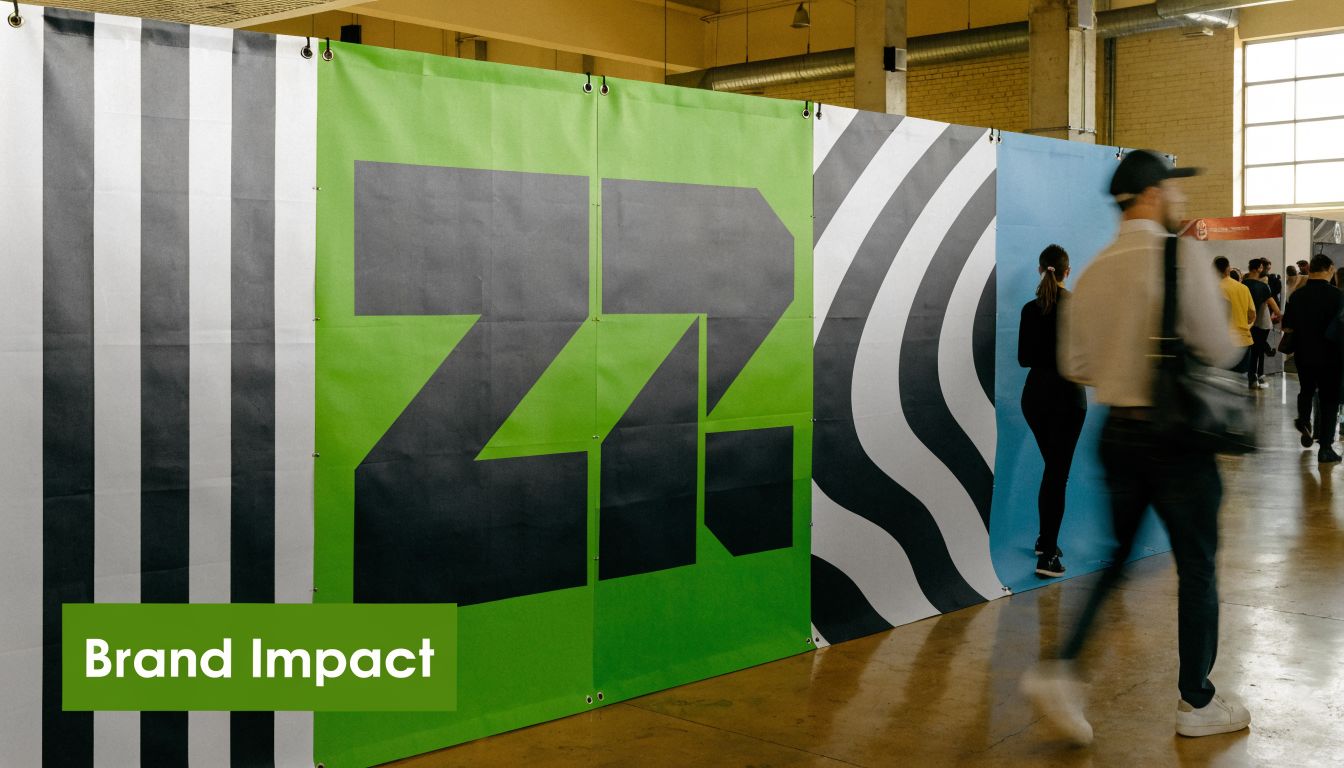
Trade show backdrops and event graphics
A trade show booth has only a few seconds to do its job. If the backdrop is wrinkled, underlit, or cluttered, people keep walking. If the graphics are clean and readable from a distance, the booth starts doing some of the selling before your staff says a word.
For brands evaluating booth visuals, trade show display printing is usually where the conversation becomes more tactical. The right combination of fabric backdrops, rigid panels, counters, and hanging or freestanding graphics changes how the booth photographs, how it packs, and how fast it can be set up on site.
A short visual example helps here:
Banners for openings, events, and site communication
Banners are often underestimated because they’re familiar. In practice, they’re one of the most useful tools in the category. A developer can use a site banner to communicate leasing. A church can use event banners to direct traffic and reinforce programming. A warehouse can use oversized hanging banners for internal wayfinding where standard-size signs would disappear into the environment.
A banner is only “simple” if no one has to read it from a moving car, across a parking lot, or under poor lighting.
The key trade-off is between short-term efficiency and presentation quality. A banner can go up fast and cover a lot of area. It won’t replace a permanent architectural sign, but it often solves the immediate communication problem at the exact moment the business needs visibility.
Wall murals and interior branding
Some of the highest-value applications are inside the building. A blank corridor in a school, an empty conference room wall, or a reception area with no visual identity can make a finished space feel unfinished. Large wall graphics change that quickly.
A manufacturer might use oversized wall panels for safety messaging and process flow. A retail tenant might use printed murals to tell a product story. A church lobby might use a branded backdrop wall that doubles as an event photo location. These projects work when the surface is prepared properly and the artwork is designed for the actual viewing distance. They fail when the wall texture, seams, or lighting are treated as afterthoughts.
Rigid signage and directional systems
Rigid large format prints also solve practical navigation problems. Distribution facilities, campuses, and multi-building properties often need signs that can be seen quickly and read without hesitation. Large directional panels, site maps, and branded wayfinding graphics create order in spaces where confusion costs time.
The strongest application is the one tied to a clear operational purpose. Good graphics don’t just decorate a facility. They reduce missed turns, support launches, improve first impressions, and help staff spend less time answering the same questions.
From Screen to Sign How to Prepare Your Artwork Files
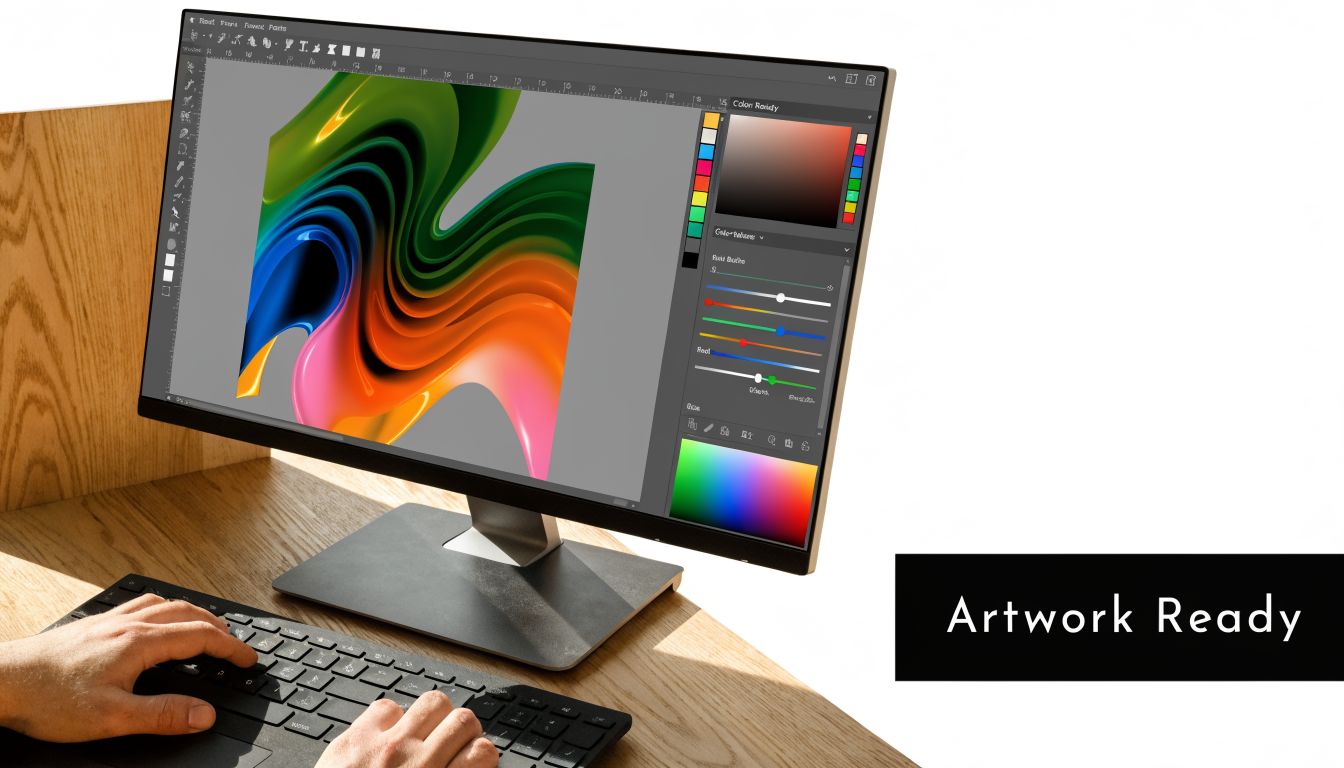
Artwork is where many large format projects either stay on schedule or fall apart. The printer can’t rescue a weak file. It can only reproduce it accurately, and that’s the problem. If the image is soft, the logo is low quality, or the bleed is missing, those flaws get enlarged right along with everything else.
Resolution is the first checkpoint
For large-format output, files need to hold 150 to 300 dpi at final print size to avoid visible pixelation, according to BostonRS’s explanation of large format printing. The same source notes that modern printers can reach up to 1440 dpi, but that hardware capability doesn’t fix poor source files. If you submit raster JPEGs below 150 dpi at 100% scale, detail on large banners can degrade by 20 to 50%.
That’s why a phone photo, web image, or screenshot often fails in production even if it “looks fine” in a slide deck.
Vector logos and raster photos are different assets
A logo should usually be supplied as a vector file, such as EPS or AI, because vectors scale without losing edge quality. Photos are raster files, which means they depend on pixel density. If your designer sends a tiny JPEG logo embedded inside a PDF, that logo is still tiny, no matter what the PDF says on the outside.
Use this quick reference:
| File type | Best for | Risk if misused |
|---|---|---|
| Vector EPS or AI | Logos, icons, line art, text elements | Usually the safest option for scaling |
| TIFF | High-quality photographic images | Large file size, but strong print reliability |
| Packaged layouts when built correctly | Can hide low-res linked images | |
| JPEG | Basic image sharing | Compression artifacts and soft detail |
Send the native logo file if you have it. Don’t pull the logo from your website and assume it’s print-ready.
If you’re trying to salvage a file that isn’t large enough, a technical primer like the Upscale Image For Print 300 Dpi Guide can help you understand the limits before you submit artwork for production.
CMYK, bleed, and sizing mistakes cause delays
Screen colors and print colors don’t behave the same way. Screens display in RGB. Printers are built around CMYK workflows. That doesn’t mean every color shift will be dramatic, but it does mean highly saturated screen visuals often need adjustment before print if brand accuracy matters.
The other common issue is bleed. If a graphic prints to the edge, the file must extend beyond the trim line. Without bleed, even a small finishing shift can create an unintended white edge. The verified production guidance in this category calls for CMYK TIFF or EPS files at exact size plus a 0.5-inch bleed for bleed-accurate output, especially when logos and edge-to-edge graphics are involved.
A practical preflight checklist
Before you hand files over, verify these points:
- Final size is correct: Don’t assume the printer will scale and recheck proportions for you.
- Resolution holds at full output size: Not at half size, not at mockup size.
- Logos are vector-based: If they aren’t, ask for the original brand files.
- Colors are prepared for print: Especially if you care about brand-critical tones.
- Bleed is included where trimming is required: Edge-to-edge graphics need room to cut.
- Fonts are outlined or packaged: Missing fonts can change spacing and line breaks.
- Linked images are embedded or provided: A packaged file with missing links is a production stop.
What works is early file review. What doesn’t is sending art the night before press and hoping production will “clean it up.” That usually creates proof cycles, schedule pressure, and avoidable reprints.
Managing Your Project Pricing Permitting and Installation
Most buyers start by asking for a price per square foot. That’s understandable, but it’s rarely enough to predict the actual project cost. Large format printing services are shaped by scope decisions that happen before and after the print itself. Material, finishing, packaging, freight, site conditions, permitting, and installation method all affect the total investment.
What actually drives pricing
The print area matters, but so do the surrounding details. A simple indoor poster on a standard substrate is one kind of job. A rigid branded panel that needs contour finishing, crating, site coordination, and professional installation is another. They may look similar in a rendering, but they won’t move through production or deployment the same way.
A few variables usually change price quickly:
- Material selection: Flexible media, rigid board, premium panels, specialty surfaces
- Finishing requirements: Hemming, grommets, mounting, trimming, edge treatment, laminate
- Quantity and consistency: One-off displays versus repeatable multi-location kits
- Packaging and freight: Flat packing, rolling, crating, and destination handling
- Installation conditions: Height, access, lift equipment, wall condition, glass condition, after-hours scheduling
Cheap material can become the expensive option
Durability has become a bigger buying factor, especially for outdoor and semi-permanent programs. Verified industry data cited by Solution 3 Graphics on large format printing says 68% of commercial developers and warehouses are seeking recyclable vinyl alternatives lasting 5+ years, while many providers still don’t offer clear durability metrics or lifecycle comparisons. The same verified data warns that premature failures and replacement costs can be double the initial investment.
That tracks with field reality. A low-cost material can look like savings until it fades early, curls at the edges, fails under exposure, or has to be removed and replaced long before the client planned.
If the graphic is expensive to access, expensive to reinstall, or critical to brand presentation, buying only on initial print price is usually a mistake.
Permitting changes timelines more than buyers expect
Outdoor signs and many permanent installations trigger code review. The challenge is that code requirements vary by city, county, landlord, and property type. One location may require straightforward submittals. Another may involve landlord approval, engineering review, illumination rules, setback requirements, or design revisions before the permit gets approved.
That’s why sign planning should include permit review as early as possible. If your project touches storefront exteriors, monument signs, pylon signs, or other fixed site elements, sign permit requirements are part of the schedule, not an afterthought.
Installation is a separate discipline
Clients sometimes assume installation is just the final hour of the job. In practice, it’s a trade. A banner in a simple interior setting may be manageable with basic hardware and a clear install plan. Wall graphics, oversized panels, raised signage, and multi-piece branding systems are different. Surface prep, alignment, seam control, safety procedures, and access planning all matter.
A practical way to divide it:
| Situation | Install approach |
|---|---|
| Temporary interior banner | Often straightforward if hardware and mounting points are ready |
| Window graphics | Best handled by installers who know glass prep and alignment |
| Wall murals | Installer skill strongly affects seams, bubbles, and finish quality |
| Rigid exterior or elevated signage | Requires professional install planning and safety controls |
The project runs better when these questions are answered early: who measures, who approves site conditions, who handles access, who coordinates with property management, and who signs off at completion. If those answers are vague, delays usually show up later.
Selecting the Right Partner for Your Large Format Project
A lot of print vendors can output a banner, panel, or poster. Fewer can manage the full lifecycle of a commercial project without creating work for your team. That difference matters most when the deadline is fixed, the locations are spread out, or the graphics have to survive beyond the launch window.
The practical test is simple. You’re not only buying print capacity. You’re choosing how much project risk you want to carry yourself.
The strongest partners reduce decision friction
A useful print partner asks better questions before production starts. They want to know where the graphics are going, how they’ll be installed, what the surface conditions are, who is approving proofs, whether any landlord or municipal review applies, and what happens if one site changes after the others are already in motion.
That’s not bureaucracy. It’s how rework gets prevented.
Verified industry data summarized by Color Reflections’ printing services reference identifies a major gap around multi-site rollout compliance. 42% of commercial clients face permitting hurdles, while only 15% of print provider websites mention dedicated project managers or code compliance services. That gap is easy to recognize in real projects. Many shops can print. Fewer can coordinate.
Questions worth asking before you sign off
Use these questions to separate a vendor from a project partner:
- Who owns project management? If there isn’t a named point of contact, communication usually fragments.
- How do you review artwork before production? File errors caught early are cheap. Field corrections are not.
- What materials do you recommend for this exact environment? The answer should change based on exposure and handling.
- Do you coordinate installation or only ship graphics? Those are very different service models.
- How do you handle multi-location consistency? Color, sizing, packaging, and install instructions have to repeat cleanly.
- What happens when local code or landlord requirements change the spec? Many rollout schedules often slip under these circumstances.
- What warranties or maintenance expectations apply? Long-term projects need clear ownership after install.
Multi-site rollout is where weak systems show up
Single-location jobs can hide process problems. A national or regional rollout exposes them fast. If one location receives the wrong panel size, another lacks permit approval, and a third has no site-ready contact when installers arrive, the issue isn’t “printing.” The issue is project control.
For distributed commercial work, I’d look for a provider that can handle these functions under one workflow:
- Preflight and proofing that’s standardized across all locations.
- Material discipline so one branch doesn’t get a substitute that changes appearance.
- Permit coordination when site conditions or codes differ by jurisdiction.
- Packaging by location so receiving teams aren’t sorting mixed kits on site.
- Installation scheduling tied to actual readiness, not just requested delivery dates.
That’s one reason some clients work with companies built around both fabrication and field execution. For example, On Display Signs, Inc. operates as a national sign company with project management, permitting, installation, and maintenance in addition to large format print production. That model fits buyers who don’t want to split responsibility across separate vendors.
The more locations, stakeholders, and deadlines you add, the less this is a print purchase and the more it becomes an execution problem.
Look for operational honesty, not just a low quote
A reliable partner is usually willing to say when a requested material isn’t appropriate, when a schedule is too tight for permit review, or when a site survey should happen before production. That kind of pushback saves money even when it feels slower in the moment.
The opposite approach is common too. A vendor quotes fast, promises broad capability, and leaves key assumptions unstated. Then the change orders begin. Freight is different than expected. Installation isn’t included. The substrate chosen for budget reasons won’t perform in the actual environment. The proof was approved, but the site dimensions changed.
That isn’t a printing problem. It’s a scope management problem.
What long-term value looks like
The right partner helps you avoid replacement cycles, compliance issues, and coordination waste. They document specs. They keep production notes. They can reproduce a program later without guessing what was used the first time. They know when to recommend a lighter temporary solution and when to insist on a more durable build because the access cost makes future replacement a poor bargain.
That’s the standard I’d use. If a provider can only talk about print size, turnaround, and unit price, you’re still missing a large part of what determines success.
If you need a partner that can manage large format printing services as a full commercial project, not just a press run, On Display Signs, Inc. handles design consultation, fabrication, permitting, installation, and maintenance for businesses across the United States. That’s especially useful for storefront programs, trade show graphics, facility branding, and multi-site rollouts where consistency and compliance matter as much as print quality.