Think of your outdoor event signs as the first handshake with every single attendee. They're not just there to point the way—they're your front line for building excitement, establishing your brand, and making sure everyone feels welcome. The right signage doesn't just inform; it sets the tone for the entire experience from the moment people arrive.
Making a Powerful First Impression With Your Signage
Your signs are your event's welcome committee. Long before anyone hears a speaker or visits a booth, they see your signs. That first visual encounter is what shapes their initial perception of your event, making professional, well-thought-out signage a non-negotiable investment.
Great signs are also silent ambassadors, working around the clock to prevent confusion, reinforce your brand, and build a positive energy. From a purely practical standpoint, they are the backbone of a well-run event, answering questions before they're even asked and guiding the flow of traffic without a hitch.
Setting the Stage for Success
Smart signage is a crucial piece of your larger event promotion strategy. It's not just about what happens on-site. Well-placed banners and flags can grab the attention of passersby, turning mild curiosity into actual attendance. For a deeper look at getting people in the door, learning how to advertise an event effectively can show you how signs fit into the bigger picture.
This isn't just a hunch; the market backs it up. The global outdoor signage market is expected to skyrocket, growing from USD 32.1 billion in 2025 to a massive USD 69.8 billion by 2035, as more brands realize the power of physical visibility. You can read more on this massive trend from Future Market Insights.
What This Guide Will Cover
To help you make an impact that lasts, this guide will walk you through everything you need to know about outdoor event signs. We'll skip the fluff and get straight to the practical advice you can use right away.
Your signs are an opportunity to communicate your event's value and professionalism at a single glance. They should be clear, compelling, and consistent with your brand's message.
Here's a look at what we'll explore:
- Choosing the Right Sign: Matching banners, A-frames, and feather flags to your specific event goals.
- Durable Materials: Selecting materials that can handle sun, wind, and whatever else the weather throws at them.
- Strategic Placement: Sizing and positioning signs for maximum visibility and impact.
- Actionable Design Tips: Creating clear, compelling messages that get noticed from a distance.
- Permits and Regulations: Navigating the maze of local rules to keep your event compliant.
Choosing the Right Type of Sign for Your Event Goal
Picking the right outdoor event signs isn't about what looks best—it's about choosing the right tool for the job. Every sign type has a specific purpose, and matching your choice to your event's goals is the only way to get a real return on your investment. Think of it like a toolbox: you wouldn't use a hammer to turn a screw.
First, get crystal clear on what you need each sign to accomplish. Are you trying to pull in drive-by traffic, point people to the right parking lot, or create a killer photo op? Answering that one question cuts through the noise and points you straight to the most effective solution.
A truly successful event needs signage that excites, brands, and guides people, creating a seamless flow from start to finish.
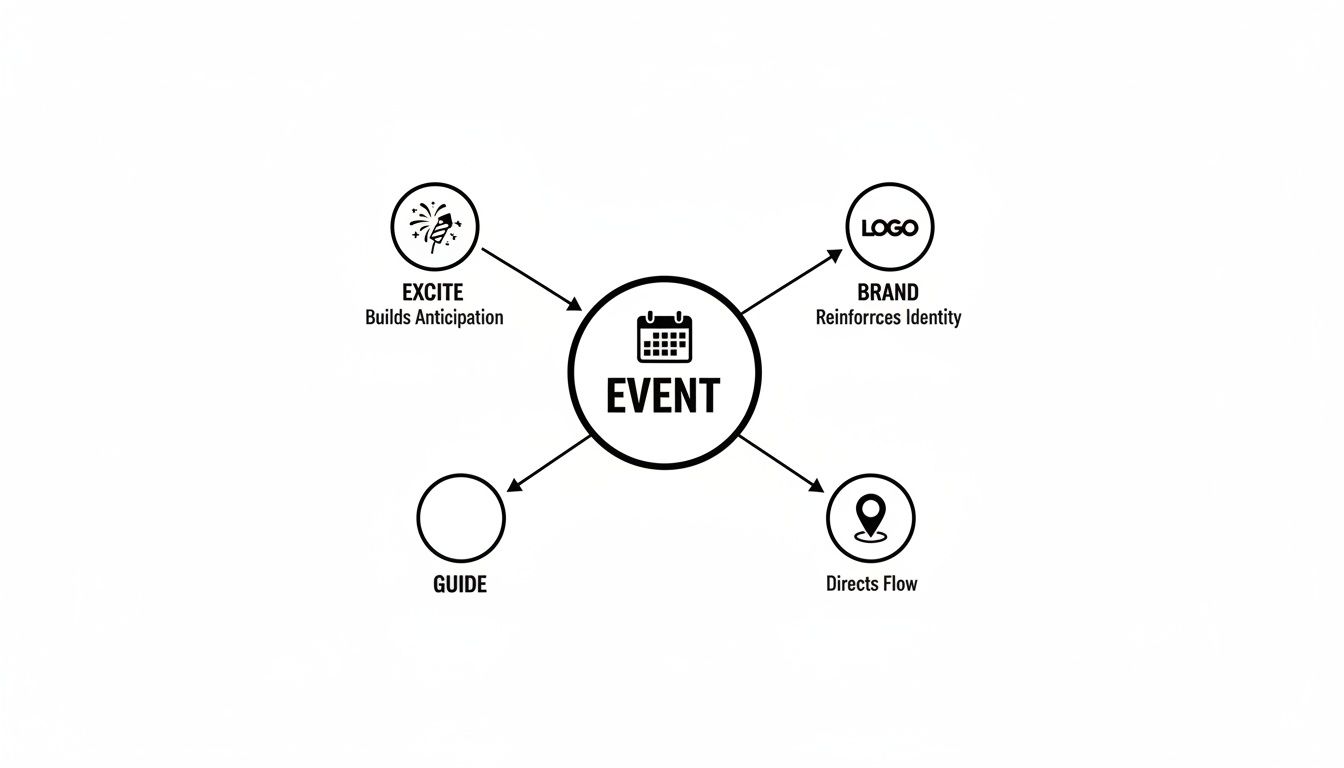
The secret is to build a balanced strategy that covers every part of the attendee's journey, from the moment they hear about your event to finding their way around on the day.
Signs for Building Awareness and Excitement
When your main goal is to generate buzz and draw a crowd, you need signs that are big, bold, and can't be missed. These are your heavy hitters, built to grab attention from a distance and make a powerful first impression. They’re the ones that scream, "Something important is happening here!"
- Large Banners: The go-to choice for a reason. Whether you hang a big vinyl banner across your storefront, between two poles, or on a long fence line, it’s a seriously cost-effective way to shout out your event name, dates, and key sponsors. For a grand opening or an annual festival, this is your promotional centerpiece.
- Feather Flags: These tall, brilliant flags are perfect for injecting energy and movement. Line them up along an entrance or sidewalk, and their constant flutter catches the eye, creating an atmosphere of pure excitement. They're a natural fit for farmers' markets, charity 5Ks, and big retail sales.
Signs for Guiding and Informing Attendees
Once people start showing up, their entire experience hinges on knowing where to go. Wayfinding signage is absolutely crucial for cutting down on confusion and keeping foot traffic moving smoothly. These signs are less about flash and all about function—delivering clear, simple information right where people need it most.
Clear directional signs are the unsung heroes of any well-organized event. Their purpose is to answer questions before they are asked, making guests feel confident and cared for from the moment they arrive.
Getting wayfinding right prevents annoying bottlenecks and frustration, which has a massive impact on how people remember your event long after it’s over.
- A-Frame Signs: Also known as sidewalk signs or sandwich boards, A-frames are the Swiss Army knife of event signage. Drop one on the sidewalk to point to the main entrance, list a schedule of speakers, or highlight a special offer. Best of all, they're portable, so you can move them wherever they’re needed most as the day goes on.
- Yard Signs: For events spread out over a large park, campus, or even a whole neighborhood, staked yard signs are a must. Use them to mark out parking areas, guide people down a walking path, or identify the registration tent. They’re an affordable and incredibly effective way to pepper the landscape with helpful info. To see a full range of possibilities, you can explore the different types of signage that can round out your event strategy.
To help you connect the dots, here’s a quick-glance table matching the most common outdoor signs to their best-fit roles.
Matching Outdoor Sign Types to Your Event Goals
| Sign Type | Primary Function | Best For (Example Events) |
|---|---|---|
| Banners | Mass awareness, announcements | Festivals, grand openings, community fairs |
| Feather Flags | Attracting attention, creating energy | Retail sales, car shows, farmers' markets |
| A-Frame Signs | Directional, informational (at eye level) | Restaurants, retail shops, conference entrances |
| Yard Signs | Wayfinding over large areas, promotion | Real estate open houses, political campaigns, parking |
| Barricade Covers | Branding, crowd control, sponsorship | Concerts, parades, marathons |
| Stage Backdrops | Branding, photo opportunities, atmosphere | Corporate events, speaker panels, awards shows |
Choosing the right mix ensures every dollar you spend on signage is actively working to make your event a bigger success.
Signs for Enriching the On-Site Experience
Beyond just getting people in the door and pointing them in the right direction, some signs are there to make the event itself better. These are the elements that build atmosphere, reinforce your brand, and create engaging moments for everyone there. They’re what turn a generic space into a branded, immersive environment.
Think about the background of every single photo people will take at your event. Signs like stage backdrops or branded barricade covers make sure your logo and sponsors get seen long after the event wraps. You're turning functional equipment into powerful branding tools. A plain stage instantly becomes a professional focal point with a custom backdrop, and crowd control barriers transform into promotional billboards.
It's these thoughtful touches that elevate the whole feel of your event, making it look and feel far more professional and memorable.
Selecting Durable Materials That Withstand the Elements
Your outdoor event signs are an investment, and that investment is completely wasted if it can’t handle a little wind, rain, or sun. Choosing the right materials isn't some minor technical detail—it's the one decision that ensures your signs look professional from the start of your event to the very end.
A flimsy, faded, or torn sign does more than just look bad. It sends the wrong message, reflecting poorly on your brand and the quality of your event. Let's break down the common materials so you can pick an option that stands up to the elements and keeps looking great.
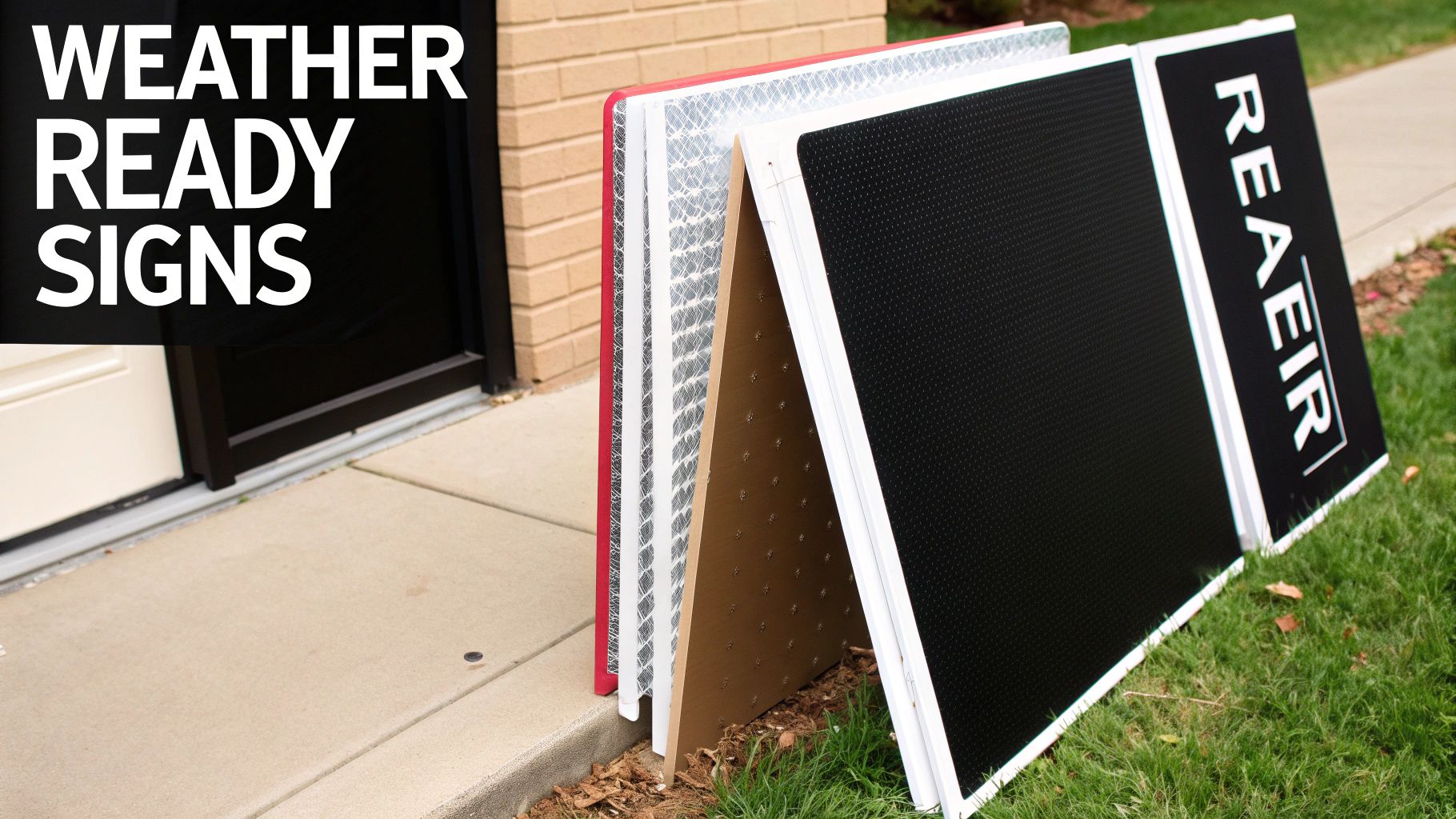
It’s no surprise that the demand for high-quality outdoor signage is booming, thanks to better printing tech and more durable materials. The outdoor printed signage market is on track to hit USD 57.09 billion by 2030, which shows just how valuable these signs are. To see the full picture, you can check out more insights on the outdoor printed signage market.
Common Materials for Outdoor Event Signs
Think of sign materials like you'd think about building a house. You wouldn't use drywall for an exterior wall, right? The same logic applies here. Each material is built for a specific job and environment.
- Coroplast (Corrugated Plastic): This is the undisputed workhorse for temporary outdoor signs, especially yard signs. Think of it as weatherproof cardboard. Its internal flutes give it rigidity without the weight, making it waterproof, affordable, and perfect for short-term events like a weekend festival or a real estate open house.
- Vinyl Banner Material: When you need to go big, vinyl is the answer. Standard scrim vinyl is a tough, solid sheet that gives you a fantastic surface for vibrant graphics. It's the go-to for hanging on buildings or fences where it has some protection from direct, heavy winds.
- Mesh Banner Material: If your banner is going up in an open, windy field, mesh is the only way to go. It’s perforated with thousands of tiny holes, allowing wind to pass right through. This simple feature prevents the "sail effect" that can rip a standard banner right off its grommets.
Choosing Materials for Longevity and Purpose
For signs that need to last a bit longer or just project a more polished, high-end vibe, you’ll want to step up from the basics. These materials bring extra durability and a much cleaner finish to the table.
The best material for your sign is one that balances your budget, your event’s duration, and the specific weather conditions you anticipate. A sign that fails halfway through your event is a waste of money, no matter how cheap it was initially.
For situations demanding something more robust, take a look at these options:
- Aluminum Composite Panel (ACP): This is the professional-grade choice for semi-permanent or upscale event signage. It’s made of two thin aluminum sheets sandwiching a solid plastic core, which makes it incredibly strong, flat, and resistant to warping. It's the perfect material for a main entrance sign or directional boards at a multi-day corporate conference.
- PVC (Polyvinyl Chloride): This rigid plastic offers a smooth, professional finish and is a lot tougher than Coroplast. It sits in that sweet spot, making it a great choice for A-frame inserts or informational signs that need to handle a bit more wear and tear.
You can learn more about the specific properties and best uses for different sign materials by exploring our complete guide on exterior sign materials.
Essential Finishes for Weatherproofing
The raw material is only half the battle. The right finish is your final line of defense against the elements, keeping your signs looking sharp and extending their life.
Key Finishes to Consider:
- UV-Protective Laminates: Think of this as sunscreen for your sign’s ink. Without it, even the brightest colors can start to fade after just a few days in direct sunlight.
- Grommets: These are the metal rings punched along the edges of a banner. They provide strong, secure anchor points for hanging with rope or zip ties and are essential for preventing the material from ripping.
- Wind Slits: Cutting half-moon slits into a large vinyl banner can help reduce wind pressure. It's a decent solution, but honestly, choosing a mesh banner from the start is a better-looking and more durable option.
Strategic Sizing and Placement for Maximum Visibility
You can have a brilliant sign design and the toughest material out there, but it all means nothing if people can't see it. The real success of your outdoor event signs boils down to two simple, make-or-break factors: how big they are and where you stick them. Nailing this is the difference between a sign that works hard and one that’s just background noise.
A sign’s impact is tied directly to its viewing distance—that is, how far away someone can be and still comfortably read your message. One of the most common mistakes we see is text that’s way too small for its location. A banner meant for highway traffic needs letters that are exponentially larger than those on a little A-frame sitting on a sidewalk.
The Science of Readability
There’s a dead-simple rule of thumb that sign professionals live by. For every 10 feet of viewing distance, your letters need to be at least 1 inch tall. This formula is your best friend for taking the guesswork out of sizing.
Let’s put it to work. Imagine you’re hanging a huge banner to announce a community festival, and you need drivers going 30 MPH to read it from about 100 feet away.
- Viewing Distance: 100 feet
- Minimum Letter Height: 10 inches (100 feet / 10 = 10 inches)
Just like that, you know that any small, fussy text is a complete waste of space. This forces you to focus on a bold, clean message that people can absorb in a split second.
A Practical Placement Checklist
Once you’ve got the right size locked in, your next mission is smart placement. A few key questions will help you pinpoint the best spots to grab attention and guide your guests without them even having to think about it. Before you put a single sign in the ground, run through this quick checklist.
A well-placed sign feels intuitive. It anticipates a person's line of sight and delivers the right information at the exact moment it's needed, creating a seamless and stress-free experience for your guests.
- Is it visible from key traffic routes? Think about both cars and pedestrians. Put your biggest, boldest signs where the largest flow of people will see them as they approach.
- Is it at a natural line of sight? Don't make people crane their necks or look down at their feet. This is why A-frame signs work so well—they sit right in a pedestrian's natural field of vision. Our guide to outdoor A-frame signs has more practical tips on using these workhorses.
- Are there any obstructions? Take a walk and look for trees, parked cars, or light poles that could block the view. Walk the exact path your attendees will take to catch any surprise blind spots.
- Is it placed at a decision point? Directional signs are most powerful at intersections, parking lot entrances, or forks in a path—anywhere someone has to make a choice.
This isn't just busywork; it's a strategic move. Outdoor advertising still commands massive attention, reaching an estimated 135 million people every week on a global scale. If you want to dive deeper, you can check out more insights on the growth of the outdoor advertising market and its incredible impact. By mastering sizing and placement, you ensure your signs are doing their job and contributing to that reach.
Actionable Design Tips for Clear and Compelling Signs
Let's be honest: even the most durable, perfectly placed sign is useless if the design is weak. Effective sign design isn't about winning art awards; it’s about instant, crystal-clear communication. Your audience is almost always on the move, distracted, and looking from a distance, which means you have just a few seconds to get their attention and deliver the message.
If there's one principle to tattoo on your brain, it's the three-second rule. If someone can't grasp your sign's main point in three seconds or less, it has already failed. This rule is your best friend—it forces you to cut the fluff and focus on what really matters.
Prioritize High Contrast for Instant Readability
The human eye is hardwired to notice contrast. For outdoor signs, this isn't a design trend; it's a non-negotiable part of making them work. High-contrast color pairings make your words pop right off the background, guaranteeing they can be read in a flash from across the parking lot.
There's a reason the classic, can't-miss color combinations have been around forever. They just work. They create the strongest possible visual separation between your message and everything else.
High-Impact Color Combinations:
- Black on Yellow: This is the undisputed champion of contrast, perfect for grabbing attention.
- Black on White: Clean, classic, and impossible to get wrong for any situation.
- White on Blue: A strong pairing that feels professional and authoritative.
- Yellow on Black: Another powerhouse that commands the eye and feels urgent.
On the flip side, some color combos are pure visual mud. Steer clear of low-contrast pairings like red on blue or green on orange, where the text just melts into the background and becomes unreadable from a distance.
Embrace Bold, Simple Fonts
When it comes to fonts for outdoor signs, simplicity is strength. That fancy, elegant script font might look great on a wedding invitation, but from ten feet away, it just turns into an unreadable smudge.
Your job here is clarity, not typographic creativity. Stick to the workhorses: bold, clean, sans-serif fonts like Helvetica, Arial, or Franklin Gothic. These typefaces were built for legibility, with strong, consistent lines that hold up from afar.
An effective sign is a silent messenger that speaks clearly and concisely. Clutter is its enemy. By stripping away non-essential information, you amplify the power of your core message.
This idea of stripping things back applies to your whole layout. Don't underestimate the power of white space—the empty area around your text and graphics. It gives your message room to breathe and directs the viewer’s eye exactly where you want it to go.
Craft a Clear and Focused Message
You’ve got your colors and fonts sorted. Now, let’s talk about the words. The three-second rule means you have to be absolutely ruthless with your message. A sign cluttered with three phone numbers, a long website address, and five bullet points is a guaranteed failure.
Figure out the one single thing you need people to know. Is it "Festival Entrance," "Free Parking," or "Tickets Here"? Make that your headline, and make it huge. Any other information should be dramatically smaller.
For more inspiration on creating signs that do more than just inform—they create an experience—check out these tips on crafting show-stopping signs for photo booths. The principles of creating a memorable moment apply to all event signage.
Let's look at two ways to handle a simple directional sign:
- Bad Design: "Welcome to the Annual Community Fair! Registration and check-in for all attendees is located in the blue tent. Please visit our website for more info."
- Good Design: A massive arrow pointing the right way, with one word in huge letters: REGISTRATION.
The second sign gets its job done in under a second. If you’re looking for more great business signs ideas, our team has pulled together more real-world examples to get your creative juices flowing.
Navigating Local Permits and Regulations
Stop treating local regulations as the last item on your to-do list. It’s one of the most overlooked parts of planning an event, but ignoring the rules can bring everything to a screeching halt. Think of a sign permit as an official permission slip from your city—it's what keeps your event running smoothly.
Getting the right permit isn’t meant to be a roadblock. These rules are in place to keep the public safe and stop streets from turning into a chaotic mess of visual clutter. Dealing with this upfront is the mark of a professional, and it protects the money you've invested in your signs.
Why Permits Are Often Necessary
Most towns and cities have specific rules for temporary signs, and your event signage falls right into that category. These ordinances are designed to prevent signs from blocking traffic, creating safety hazards, or just making the community look messy. Trying to fly under the radar is a gamble you don't want to take.
The fallout from ignoring the rules can be anything from a simple warning to hefty fines that blow a hole in your budget. In the worst-case scenario, city officials can show up and take down all your signs, leaving your event without the visibility it needs on the big day.
A Step-by-Step Guide to Compliance
The permit process is actually pretty straightforward once you know what to do. A little bit of planning is all it takes to avoid a last-minute scramble.
-
Find the Right Office: Start by figuring out who's in charge of signage where your event is happening. It’s usually the city’s planning department, zoning office, or code enforcement. A quick search on the city’s website will get you pointed in the right direction.
-
Know the Common Rules: While every city is different, they almost always care about the same things. Be ready to share details on your sign's size (height and square footage), its placement (how far from the sidewalk or street), and the duration (how many days it will be up).
-
File Your Application Early: Don't wait until the week before. Permit applications usually require things like a site plan showing where you’ll put each sign and mockups of the designs. Give yourself several weeks for the city to review and approve everything.
"A sign permit is more than just paperwork; it’s your assurance that your event's visibility won't be compromised by unforeseen legal issues. It's a critical step in risk management for any event organizer."
For a deeper dive into what officials will be looking for, our guide covers the essential sign permit requirements you’ll likely run into. Knowing these basics ahead of time makes the whole process feel less like a chore and more like just another checkbox to tick off.
A Few Common Questions About Outdoor Event Signs
Even with a detailed plan, a few practical questions always pop up. Let's clear up some of the most common ones we hear from event organizers to make sure your process is smooth from start to finish.
How Long Does It Take to Get My Signs Made?
This is one of the most critical questions for your timeline. For most standard outdoor signs—think vinyl banners, A-frames, and yard signs—you can generally expect a turnaround time of 5 to 10 business days once you’ve given the final thumbs-up on the artwork.
Of course, that timeline can shift based on a few things:
- Sign Complexity: A simple printed banner will always be faster than a custom-built stage backdrop.
- Order Size: A handful of yard signs for an open house will be ready much faster than hundreds of banners for a city-wide marathon.
- The Time of Year: Production schedules fill up fast during peak event seasons, so it pays to plan ahead.
The absolute best practice? Get your final designs approved and place your order at least three weeks before your event. That gives you a comfortable cushion for production, shipping, and any little hiccups along the way.
What Kind of Artwork File Do I Need to Send Over?
To make sure your signs look crisp and professional—not blurry and pixelated—the quality of your artwork file is non-negotiable. Your sign company is almost always going to ask for a vector-based file.
Vector files, which usually have extensions like .AI, .EPS, or .PDF, aren't made of pixels. Instead, they're built on mathematical equations, which means you can scale them up to the size of a billboard or down to the size of a business card without losing a single bit of quality. Sending a JPG or PNG you pulled from a website is a recipe for a fuzzy, unprofessional-looking final product. Always get the original vector source files from your graphic designer.
Are There Any Ways to Save a Little Money on My Sign Order?
Definitely. Being smart about how you order can make a huge difference to your bottom line without cutting corners on quality. The single most effective way to lower your cost is to order in bulk. The price per sign almost always drops when you order a larger batch because it makes the setup and printing process far more efficient for the sign shop.
Another great strategy is to think long-term. Design signs with evergreen messages like "Welcome," "Parking," or "Registration" that you can use again and again. This simple move turns a one-time cost into a lasting investment, seriously reducing the cost-per-use for your most essential informational and directional signs.
At On Display Signs, Inc., we take the guesswork out of creating outdoor signs that get noticed. Our team handles everything from design to installation, making sure your project is durable, compliant, and ready on time. Get a free quote for your next event today!