Stop thinking of your small business marketing budget as an expense. It's not. It's a strategic investment in the future of your company. For businesses with some history, a good rule of thumb is to put 5-10% of your total revenue back into marketing. If you're just starting out, it's often better to tie your spending directly to a clear goal, like what it will cost to land your first 100 customers.
Building Your Budget Without the Guesswork

It’s easy to feel stuck when you're staring at a blank spreadsheet, especially when every single dollar is critical. The whole point of a budget is to take the guesswork out of marketing and turn it into a predictable, reliable part of your operations.
Putting a formal budget in place gives you the framework you need to spend with confidence, figure out what's actually working, and double down on your most successful strategies. Forget complex formulas for now and start with a proven method that matches where your business is today.
Choose Your Starting Method
For most small businesses, one of two practical approaches is all you need to land on that initial budget number.
- Percentage of Revenue: This is the go-to method for any business with a steady sales history. You simply allocate a set percentage of your gross revenue—usually between 5% and 10%—to marketing. The beauty of this is that your marketing spend grows right alongside your business. A retail shop bringing in $300,000 a year, for example, would set aside $15,000 to $30,000 for marketing.
- Goal-Oriented (or Objective-Based): This is perfect for startups, new product launches, or any big push. Instead of looking back at revenue, you work backward from a specific goal. Say your objective is to get 50 qualified leads next month. If you know the average cost per lead in your industry is $40, your starting budget is $2,000 per month. This actionable approach directly ties spending to results.
A budget isn't just about putting a cap on spending. It’s about deliberately pointing your resources toward the activities that bring back the highest return. It turns a vague wish for "more sales" into an actual financial plan.
From a Number to a Plan
Once you've got that baseline number, it’s time to sketch out a broad strategy. Before you start assigning dollars to different channels, you need a clear game plan. For some great starting points, check out this guide on how to advertise a small business effectively.
Your plan needs to define what success actually looks like for you. Is it more people walking in the door because of new exterior signage? Is it a jump in online orders? Or is it becoming the most recognized service provider on your block?
For bigger jobs, like rolling out new branding across multiple locations, you absolutely need a dedicated plan to keep everything consistent and on track. If you're managing a project like that, our guide on signage project management is packed with actionable insights. This foundational work is what allows you to make smart, confident spending decisions that are truly aligned with your vision for the business.
Setting Practical Marketing Goals You Can Measure
Throwing money at marketing without clear goals is just wishful spending. It’s the difference between buying a billboard because it looks nice and investing in one because you know it will drive a specific amount of foot traffic. This is where you connect every dollar you spend to a real, tangible outcome.
Saying "I want more customers" is an ambition, not a goal. A real goal has teeth. Try this instead: "Increase new customer foot traffic by 15% in Q3." That simple shift gives you a finish line and makes your spending accountable. This is the core of building a smart small business marketing budget—it’s all about connecting money to results.
Applying the SMART Framework
There's a reason the SMART framework has been around forever—it works. It forces you to turn vague ideas into an actual plan. Let's break it down with a practical example for a local cafe looking to boost its evening business.
- Specific: Don't just aim for "more sales." Get granular: "Increase evening sales from our new dinner menu."
- Measurable: How will you know you succeeded? "Boost evening sales by 20% over our current baseline."
- Achievable: Is this realistic? A 20% jump is a healthy stretch, but it's not a fantasy.
- Relevant: Does this actually help the business? Absolutely. Extending hours with a dinner menu diversifies revenue streams.
- Time-bound: What's the deadline? "Within six months of installing our new illuminated sign."
See what happened there? The cafe isn't just buying a sign anymore. They're investing $3,500 in a marketing asset that’s directly tied to a $10,000 revenue goal. This is how you justify marketing costs and move from simply spending money to strategically investing it.
Your budget gains power when every line item can answer the question: "What business goal does this expense support?" If you can't answer it clearly, that expense might not be a priority.
Focusing on the Right KPIs
To set goals grounded in reality, you have to track the right numbers. These are your Key Performance Indicators (KPIs). For a small business, a few metrics matter far more than the rest, so don't get bogged down in vanity stats that don't impact your bottom line.
A local retail store, for example, should be obsessed with two main numbers when planning its marketing budget:
- Customer Acquisition Cost (CAC): This is your total marketing spend divided by the number of new customers you brought in. If you spend $500 on local flyers and get 25 new customers, your CAC is $20. This is a powerful, actionable metric.
- Conversion Rate: This tracks the percentage of people who do what you want them to do. For the retail shop, that could be the percentage of website visitors who sign up for a coupon or how many people walk in after seeing a new window display.
Knowing these numbers is a game-changer. If your CAC is $20, you now know exactly what you need to spend to hit a goal of getting 100 new customers next quarter. It removes the guesswork and turns your budget into a predictable tool for growth.
Where to Put Your Marketing Dollars for the Best Return
Alright, you’ve got a number. Now comes the real fun: deciding where to spend it. The key is creating a balanced marketing mix—a smart blend of foundational, one-time investments that work for you 24/7 and ongoing campaigns that actively hunt for new customers.
Think of it like an investment portfolio. A diversified approach means you aren’t putting all your eggs in one basket. If your Facebook ads suddenly stop performing, your other channels can pick up the slack, giving you a much more stable and predictable flow of leads.
Foundational vs. Active Marketing: What’s the Difference?
A practical way to think about marketing spend is in two main buckets: foundational assets and active campaigns. You need both, but they play very different roles.
-
Foundational Investments: These are your workhorses. Think of high-quality exterior building signs for business. You invest in it once, and it acts like a silent salesperson, building brand awareness and driving foot traffic around the clock. A great sign is a one-time spend that pays you back for years.
-
Active Campaigns: This is where you put money toward ongoing efforts like Google Ads, social media promotions, or sponsoring the local little league team. These are absolutely vital for reaching specific groups of people and getting an immediate response, but the results dry up the second you stop spending.
A smart budget finds the right balance. For instance, a new restaurant might sink a decent chunk of its initial budget into a stunning illuminated sign and professional window graphics. After that, they can dedicate a smaller, consistent monthly amount to running targeted ads on Instagram. This is an actionable strategy for maximizing impact.
No One-Size-Fits-All Answer
There’s no magic formula here; the right mix depends completely on your business model and who you’re trying to reach. A local HVAC company is going to have a wildly different marketing plan than a retail boutique.
For any business with a physical location or serving a specific area, solid Local SEO strategies are non-negotiable. It's how you show up when someone nearby pulls out their phone and searches for exactly what you sell.
A great way to stay on track is to tie every dollar back to a clear, measurable goal.
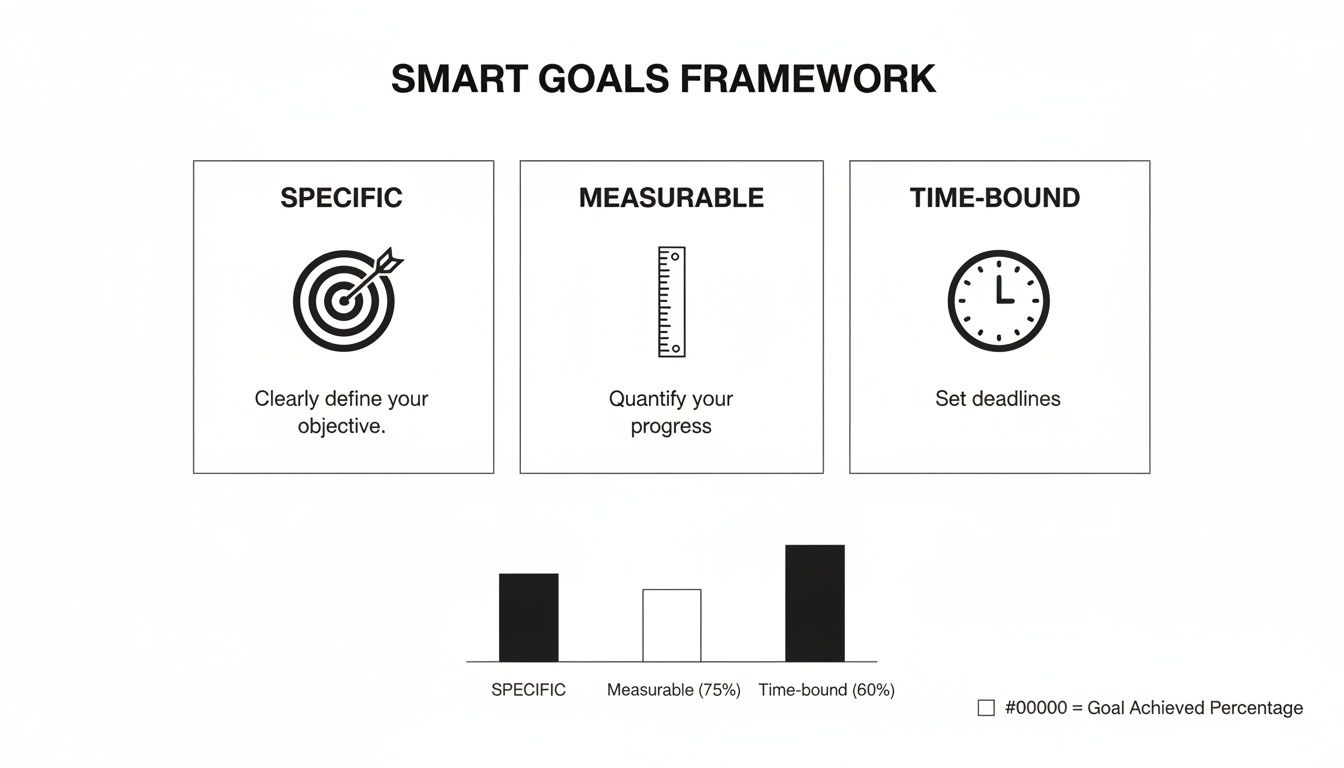
This framework forces you to connect your spending to an actual business outcome, making it much harder to waste money on things that don't move the needle.
The goal isn't just to spend money. It's to put each dollar where it has the best chance of bringing more dollars back. For a storefront, that might mean investing in an amazing exterior sign before pouring thousands into digital ads.
At the end of the day, your allocation is a strategic choice based on where your customers hang out. A local accounting firm might put 70% of its budget into digital channels like LinkedIn ads and local search. A neighborhood coffee shop? They might flip that and put 60% into physical marketing like incredible signage, branded cups, and sponsoring community events.
Sample Marketing Budget Allocation for a Small Retail Business
To make this more concrete, here’s a practical example showing how a small retailer might allocate their budget at three different spending levels. Notice how the percentages shift as the budget grows—more funds open up opportunities for channels like paid search and email marketing that require more consistent investment.
| Marketing Channel | Budget Tier 1 ($5,000/year) | Budget Tier 2 ($15,000/year) | Budget Tier 3 ($30,000/year) |
|---|---|---|---|
| Local SEO & Google Business Profile | $750 (15%) | $2,250 (15%) | $3,000 (10%) |
| Exterior & In-Store Signage | $1,500 (30%) | $3,000 (20%) | $4,500 (15%) |
| Social Media (Organic + Ads) | $1,000 (20%) | $3,750 (25%) | $7,500 (25%) |
| Email Marketing | $250 (5%) | $750 (5%) | $2,100 (7%) |
| Local Events & Sponsorships | $1,000 (20%) | $2,250 (15%) | $4,500 (15%) |
| Paid Search (Google Ads) | $0 (0%) | $1,500 (10%) | $6,000 (20%) |
| Print & Direct Mail | $500 (10%) | $1,500 (10%) | $2,400 (8%) |
These are just starting points, of course. Use them as a guide to think critically about where your own dollars can make the biggest impact based on your specific goals and customer behavior.
Budgeting for Signage: Your Hardest-Working Marketing Asset

If your business has a physical location, your sign is the most valuable employee on your team. It’s on the clock 24/7, advertising your brand to every single person who drives or walks past. But too often, this workhorse is treated like a one-off expense instead of a core part of the small business marketing budget.
Stop thinking of your sign as a capital expense. It’s a long-term marketing machine. A great sign doesn't just tell people where you are; it builds brand recognition, signals quality, and directly pulls customers through your door. It's a foundational investment with a very real return.
Understanding the True Costs
Budgeting for a new sign goes beyond the sticker price. A few key factors will shape the final number, and knowing them upfront makes planning a lot smoother.
- Sign Type and Materials: An illuminated channel letter sign for a bustling restaurant will carry a different cost than a classic, sandblasted wood sign for a law firm. Similarly, large-scale business monument signs are a bigger investment than simpler post and panel options.
- Permitting and Compliance: Don't forget the red tape. Nearly every city has its own codes and regulations for business signage. Your budget needs to cover permit application fees and any tweaks required to get that official stamp of approval.
- Installation: This is not a DIY project. Professional installation is essential for safety, longevity, and a polished look. This line item includes labor, specialized equipment (like bucket trucks), and any necessary electrical work for illuminated signs.
Shifting your mindset is crucial. You aren't just buying a sign; you're investing in a permanent piece of marketing infrastructure that generates visibility and foot traffic for years to come.
Justifying the Spend with ROI
So, how do you justify a multi-thousand-dollar investment? You work backward and calculate the potential return.
Here is a practical example: imagine a restaurant on a fairly busy road. A bold, well-lit sign could easily catch the eye of thousands of drivers every day. If that new visibility brings in just 10 extra tables per week with an average tab of $50, that’s an extra $500 in weekly revenue.
That comes out to $26,000 in new business over the course of a year. Suddenly, a $15,000 sign doesn't just seem reasonable—it looks incredibly profitable, paying for itself in well under a year. This is a clear, actionable way to think about ROI.
Making Premium Signage Attainable
That upfront cost can still feel like a major hurdle. According to data from UpFlip on small business spending habits, a staggering 66.3% of small businesses report spending less than $1,000 on marketing annually. This is exactly why financing options are such a game-changer. They break down a large capital expense into predictable monthly payments that fit neatly into your operational budget.
When you treat your sign like the strategic, revenue-generating asset it is, allocating the right funds becomes an easy decision. It’s the key to making sure your business gets the visibility it deserves.
Tracking What Works and Optimizing Your Spend
Your small business marketing budget isn't a "set it and forget it" document. Think of it as a living plan that gets smarter as you feed it real-world data. The most successful businesses have a simple rhythm for reviewing what works, what doesn’t, and then confidently moving money where it will get the best results.
This whole process doesn't require complex software. It’s really just about building a feedback loop that turns your marketing expenses into an engine for predictable growth.
Simple Tracking Methods for Real-World Results
You can start gathering priceless data right away with some surprisingly simple methods. The real key here is consistency. Make these tactics a part of your daily and weekly operations, and you'll soon get a crystal-clear picture of where your customers are actually coming from.
A few practical starting points include:
- Unique Offer Codes: When you run a local print ad or send out a mailer, toss in a specific discount code like "NEIGHBOR10." Tracking how many times each code gets used tells you exactly which campaigns are driving sales. It's direct, undeniable proof.
- The "How Did You Hear About Us?" Question: This one is pure gold. Train your team to ask this of every new customer, whether in person or on the phone. Keep a simple tally sheet by the register or in a shared Google Doc. You might be shocked to find your new monument sign is outperforming your paid social media ads.
- Website Analytics: Free tools like Google Analytics are incredibly powerful. A quick peek at the "Acquisition" report shows you where your website visitors are coming from—whether it's organic search, social media, or referrals from another local business's website.
The goal is to stop guessing and start knowing. Even simple data points, collected consistently, give you the hard evidence you need to justify shifting funds from an underperforming channel to one that’s clearly bringing people through the door.
Establishing a Rhythm for Optimization
Once you have some data trickling in, the next step is to schedule regular check-ins. For most small businesses, a quarterly review hits the sweet spot. It's frequent enough to catch problems before you waste a lot of money but long enough to gather truly meaningful insights.
During each review, look at which channels gave you the highest return on investment. Recent research shows that average marketing budgets have settled around 7.7% of company revenue, with many advisors suggesting a 5–10% range for small businesses. Tracking your own ROI helps you see how your spending stacks up and where you can get the biggest impact. If you want to dive deeper, you can find more small business marketing budget benchmarks to compare against.
This disciplined approach allows you to adjust your spending with real confidence. You might find that the money spent on a new, high-visibility digital sign or LED display generated a much higher return in foot traffic than an equivalent spend on paid search ads. With that data in hand, you can adjust your budget for the next quarter, doubling down on what’s proven to work for your specific business and audience.
Answering Your Top Marketing Budget Questions
When you're trying to nail down a small business marketing budget for the first time, it’s easy to get bogged down. Let's cut through the noise with some straight answers to the questions we hear most often.
How Much Should a Small Business Actually Spend on Marketing?
You've probably heard the old rule of thumb: set aside 5-10% of your total revenue. That's a solid starting point. If you're a brand-new business trying to make a splash or you're in a serious growth phase, you'll likely need to push that closer to 12-20% to get any real traction.
But don't get too hung up on percentages. A much smarter, more actionable way to think about it is to start with a clear goal and work backward. Say your objective is to land 50 new customers this quarter. Figure out what that's worth to you, then determine the investment needed to get there. This approach forces you to focus on the channels that will actually deliver.
What Are the Smartest Buys on a Shoestring Budget?
When every dollar counts, you need to invest in assets that work for you long-term, not just one-off campaigns that burn out.
- Your Google Business Profile: This is non-negotiable. Claiming and meticulously filling out your free profile is the single most powerful local marketing move you can make. It costs you nothing but time.
- Professional Signage: Don't skimp here. One excellent, well-placed exterior sign is a one-time purchase that becomes your 24/7 salesperson. It builds brand recognition and pulls people in for years to come.
- Digital Foundations: Keep it simple. Start an email list to stay in touch with customers, make it a habit to ask for online reviews, and pick just one social media platform where your customers actually hang out.
Master these basics before you even think about pouring money into paid ads.
When your budget is tight, prioritize assets that keep working for you long after you’ve paid for them. A great sign and a strong online reputation are marketing machines that don't need constant fuel.
How Often Should I Revisit My Budget?
A quarterly check-in is the sweet spot for most small businesses. It’s frequent enough that you can spot an underperforming campaign before it wastes too much cash, but it's also long enough to gather real data on what's working.
At the end of each quarter, sit down and be honest about the results. For example, if that local print ad isn't doing anything but your new A-frame sign is bringing people in the door, it’s time to shift that money over. You should also do a deeper annual review to map out your strategy and budget for the year ahead.
And remember, for bigger projects like new signage, do your homework on local rules first. You can get more information on navigating sign permit requirements to make sure your project doesn't hit any unexpected snags or costs.
At On Display Signs, Inc., we help businesses make smart, lasting investments in their most visible marketing assets. From design to installation, we create signage that gets results. https://www.ondisplaysigns.com