When you start searching for "LED sign companies near me," you’re looking for a partner who can take your project from a rough idea to a lit-up, installed reality. The best local providers act as your single point of contact, handling the headaches of permits and code compliance so your vision comes to life without a hitch.
This guide provides an actionable roadmap to finding that perfect, full-service partner.
Your Guide to Finding the Best Local LED Sign Company

Finding the right local sign company is more than a quick Google search; it's a smart investment that will represent your brand for years. A full-service provider is a game-changer, saving you from the logistical challenge of juggling separate vendors for design, manufacturing, and installation. That integrated approach prevents costly mistakes and guarantees a smooth project from start to finish.
The demand for dynamic, eye-catching advertising is growing. The global market for smart LED indoor signage recently hit USD 1.5 billion and is expected to climb to USD 8.0 billion by 2033. This shift is happening because modern LED displays can boost customer engagement by a staggering 40%, leaving old-school static signs behind.
What to Look for in a Signage Partner
A true partner does more than just sell you a sign. They guide you through the entire process, offering expertise that protects your investment and ensures it delivers a real impact. Before you get laser-focused on LED, it helps to understand the full spectrum of essential types of signage a versatile company might offer.
A top-tier local provider brings a few non-negotiables to the table:
- End-to-End Project Management: They handle everything from the first design conversation to flipping the switch on the final installation. For example, if a permitting issue arises, they call the city, not you.
- Permitting and Compliance Expertise: They have a deep, practical understanding of local zoning laws and will manage the entire permitting process on your behalf.
- Quality Materials and Fabrication: They use durable, weather-tested materials and modern production techniques to build signs that are made to last. For instance, they will use aluminum that resists rust instead of cheaper steel.
Your sign is often the very first impression a customer has of your business. A reliable local company ensures that impression is a powerful and positive one, reflecting the quality of your brand.
While a local focus is critical for most businesses, some projects do require a wider net. If your brand has locations in multiple states, it’s worth exploring the advantages that national sign companies provide for keeping your branding consistent across different markets.
How to Properly Vet Potential Signage Partners
You've done your "LED sign companies near me" search and have a shortlist. Now the real work begins. Moving past a company's polished homepage is the only way to find a partner who won't let you down.
The first move is to dive deep into their project portfolio. You're not just looking for pretty pictures; you're looking for work that mirrors your own needs.
For example, if you’re a restaurant owner, look for vibrant, durable menu boards or sharp channel letters on buildings similar to yours. A property manager for a retail plaza should look for a track record of complex, multi-tenant pylon signs, not just a few simple storefront jobs. This confirms they have the specific, relevant experience your project demands.
Verifying Credentials and Reputation
A professional sign company should be an open book. Ask for proof of current business licenses and, most importantly, their certificate of liability insurance. This isn't just a formality—it protects your business from any number of things that could go wrong during installation. An uninsured contractor on your property is a risk you cannot afford.
A company’s willingness to provide documentation quickly is a huge tell. If they drag their feet or make excuses, consider it a major red flag and move on to the next name on your list.
Online reviews and testimonials add another layer of insight, but you have to look for patterns. Is everyone praising their communication and project management? Or are there consistent complaints about missed deadlines? You should also notice how they present themselves online. Companies that show attention to detail by mastering business listing management across different platforms usually bring that same level of professionalism to their projects.
Asking the Right Questions
When you check references, go beyond the generic "Were you happy?" questions. You want to know how the company performs under pressure.
Actionable Questions to Ask Client References:
- Project Management: How did they handle unexpected issues? For example, "If a storm delayed the installation, how did they communicate the new plan?"
- Budget and Timeline: Did the final invoice match the quote? Were there any surprise charges? Did they finish on time?
- Post-Installation Support: Have you needed service since the sign went up? How quick were they to respond to a service call?
The answers to these questions will paint a much clearer picture of who you’re really dealing with. This detailed vetting process ensures the partner you choose not only builds a fantastic sign but delivers a smooth, professional experience. To better understand the hardware, you can learn more about what goes into a modern digital sign with LED and what makes the technology so effective.
Decoding Quotes and Understanding the Fine Print
Getting a few quotes from local LED sign companies is a great first step, but the real work starts when you lay them out side-by-side. The lowest bid is rarely the best value. A professional proposal should read like a clear roadmap for your project.
The fine print is where you uncover the real story. This is where you can see the true quality of the materials. Look closely at the specs. Is the sign’s frame built from durable, corrosion-resistant aluminum, or a cheaper composite material that could warp or fade? The quality of the LEDs is also a huge deal—premium modules last longer and keep their brightness, so your sign looks just as sharp in year five as it did on day one.
Comparing Two Real-World Quotes
Let’s walk through a practical example. Imagine you have two quotes for an illuminated channel letter sign for your storefront.
- Quote A: $8,500 – This proposal lists "aluminum composite material" and comes with a basic 1-year warranty on parts and labor.
- Quote B: $10,200 – This one specifies "extruded aluminum construction," premium weather-sealed LEDs, and a comprehensive 5-year warranty covering both parts and labor.
While Quote A looks better on paper, its cheaper materials and short warranty are red flags. You could be facing expensive repairs in just a couple of years. Quote B is a real investment in your brand’s future.
Before you even get to this stage, it's crucial to properly vet any potential partner.
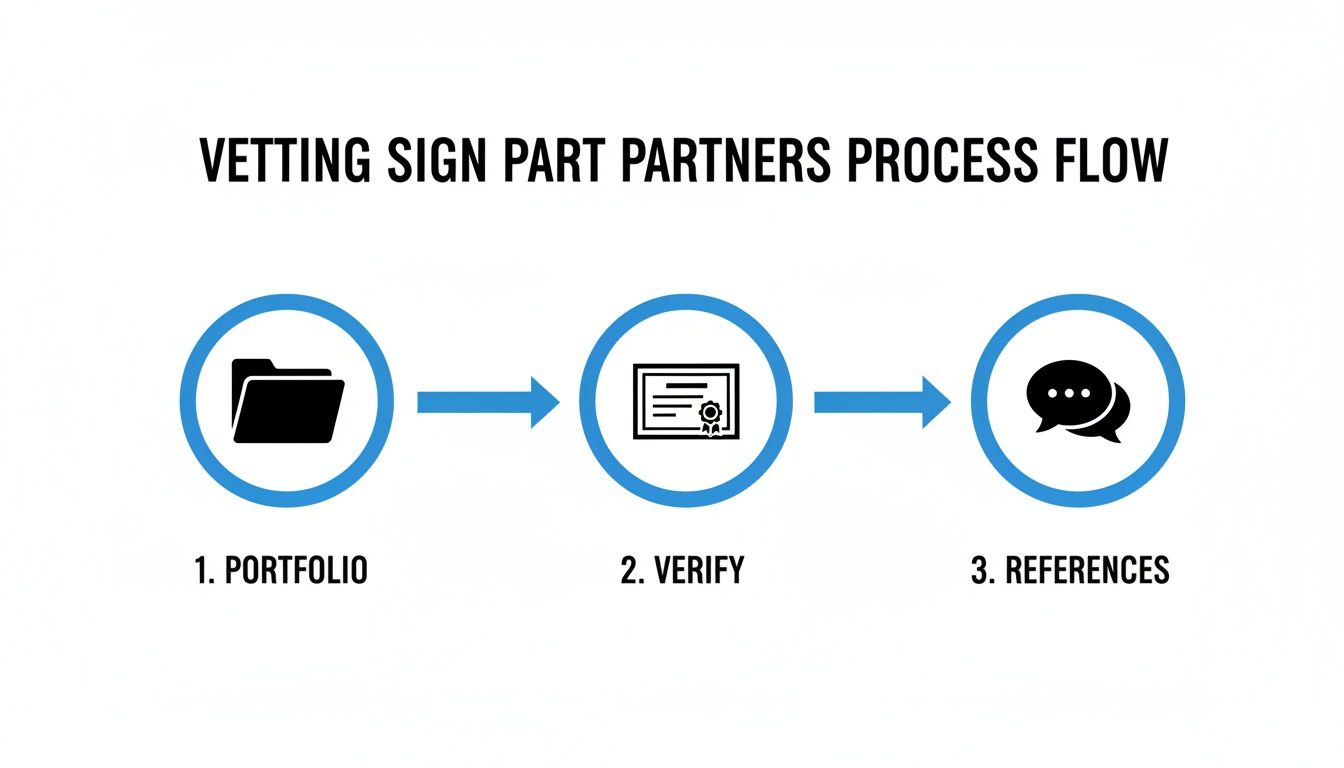
As this shows, you need to start by reviewing a company's past work, verifying their credentials, and actually checking their references. This process ensures you’re only getting quotes from truly qualified professionals.
Identifying Hidden Costs and Fees
A trustworthy quote is an all-inclusive one. Scrutinize every single line item to make sure there are no surprises. Hidden fees can turn a good deal into a budget-breaker.
Actionable Tip: Watch out for these potential hidden costs:
- Engineering Fees: If your city requires stamped engineering drawings, is that cost built into the quote?
- Permit Application Fees: Does the price cover the city's permit fee itself, or just the service of filing the paperwork?
- Disposal Fees: If you're replacing an old sign, does the price include the cost of hauling it away?
- Electrical Work: Does the quote include the final electrical hookup by a licensed electrician, or is that a separate cost you have to manage?
A solid warranty is your best insurance policy against future problems. Always insist on seeing a written warranty that clearly spells out what's covered for both parts and labor. A company that’s confident in its work will have no issue providing this.
Understanding the complete project scope takes a sharp eye. For a closer look at how the pros keep everything on schedule, check out our guide on effective signage project management to see how a smooth installation should unfold. Doing this homework now ensures you’re getting the best long-term value.
Navigating Local Permits and Zoning Regulations
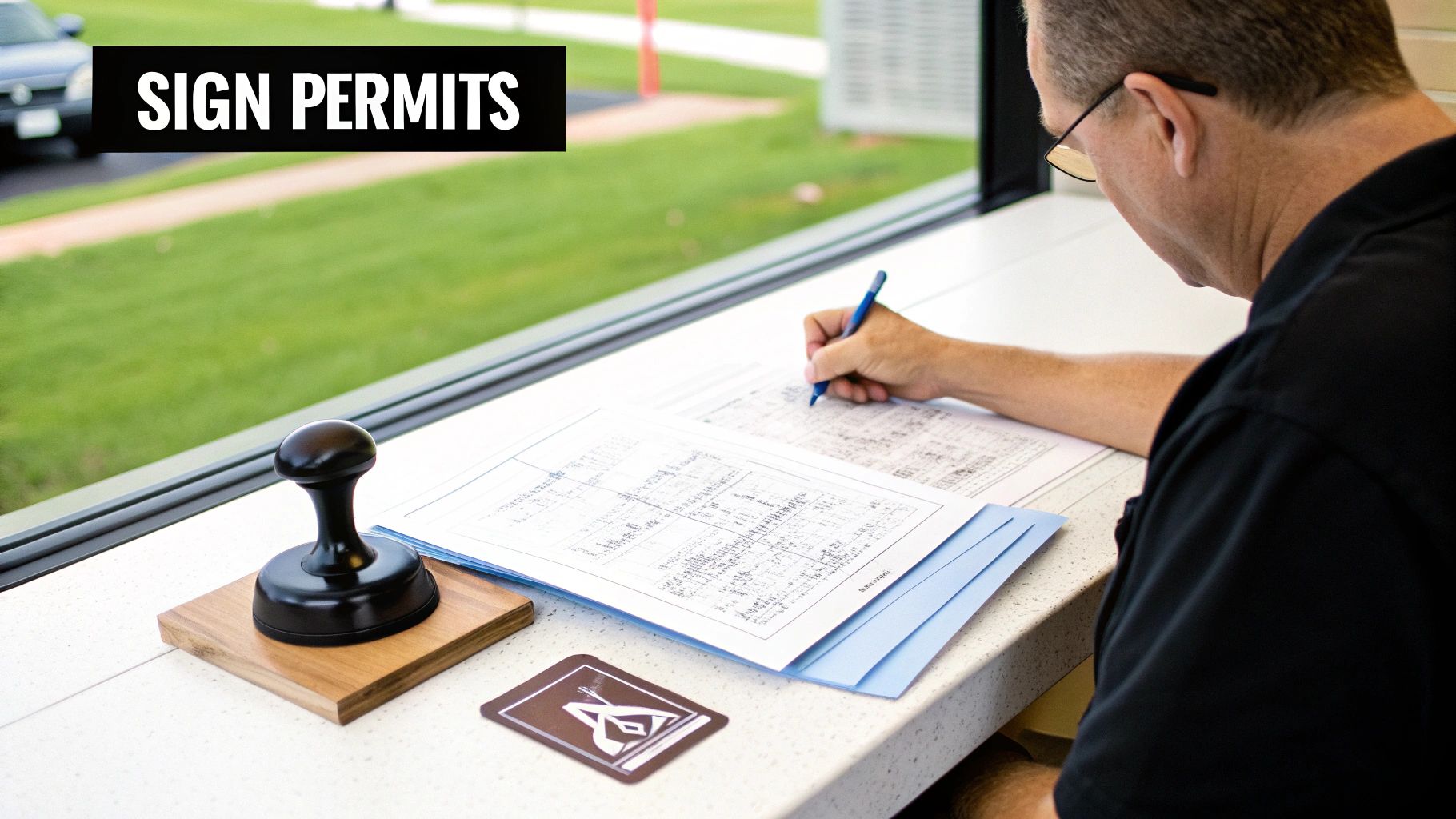
The sign permit process can be the most frustrating part of any project. It’s a maze of paperwork and codes. Getting it wrong can lead to fines or a city order demanding you tear down your new sign.
This is where a professional partner proves their worth. You shouldn't have to become an expert in municipal code. A full-service sign company takes this entire burden off your plate, using its local knowledge to make sure your project is legal and smooth.
Why Local Expertise Is Non-Negotiable
Every town, county, and historic district has its own rulebook. These regulations can drastically impact your sign’s design, size, and placement. A company with deep local roots won’t just be familiar with the codes; they’ll know the people at the municipal office who enforce them.
For instance, they will know that "City A" requires a licensed electrician to be on-site for the final inspection, while "City B" down the road does not. That established knowledge can be the difference between a quick approval and months of delays.
The right sign company doesn't just fill out paperwork—they act as your advocate. They should be ready to attend zoning board meetings on your behalf to present the project and field any questions from officials.
This hands-on approach is what separates a simple sign maker from a dedicated project partner. For a closer look at what this involves, you can explore the key sign permit requirements and see how an expert handles the fine print.
Common Regulations Your Sign Company Will Manage
Zoning codes are not standard. A sign that’s perfectly fine in one town could be illegal just a few miles away. Any experienced local company will perform a thorough code check before a single design is finalized.
Here are a few practical examples of restrictions they'll investigate for you:
- Size and Height Limits: Your storefront in a retail strip mall might be limited to 20 square feet of signage, while a standalone building could be allowed 100 square feet.
- Brightness and Illumination: Many towns have strict rules about how bright a sign can be, especially at night, to prevent distracting drivers.
- Placement and Setbacks: Codes dictate exactly how far a sign must be from the road, property lines, and other buildings.
- Message and Animation: The rules for digital LED signs are often even more detailed. Some areas limit message changes to once per minute or ban flashing animations altogether.
The global digital signage market is projected to hit USD 45.9 billion by 2030. This growth means cities are constantly updating their rules. Your partner’s job is to design a sign that not only grabs attention but also complies with every single local ordinance.
What to Expect on Installation Day and Beyond
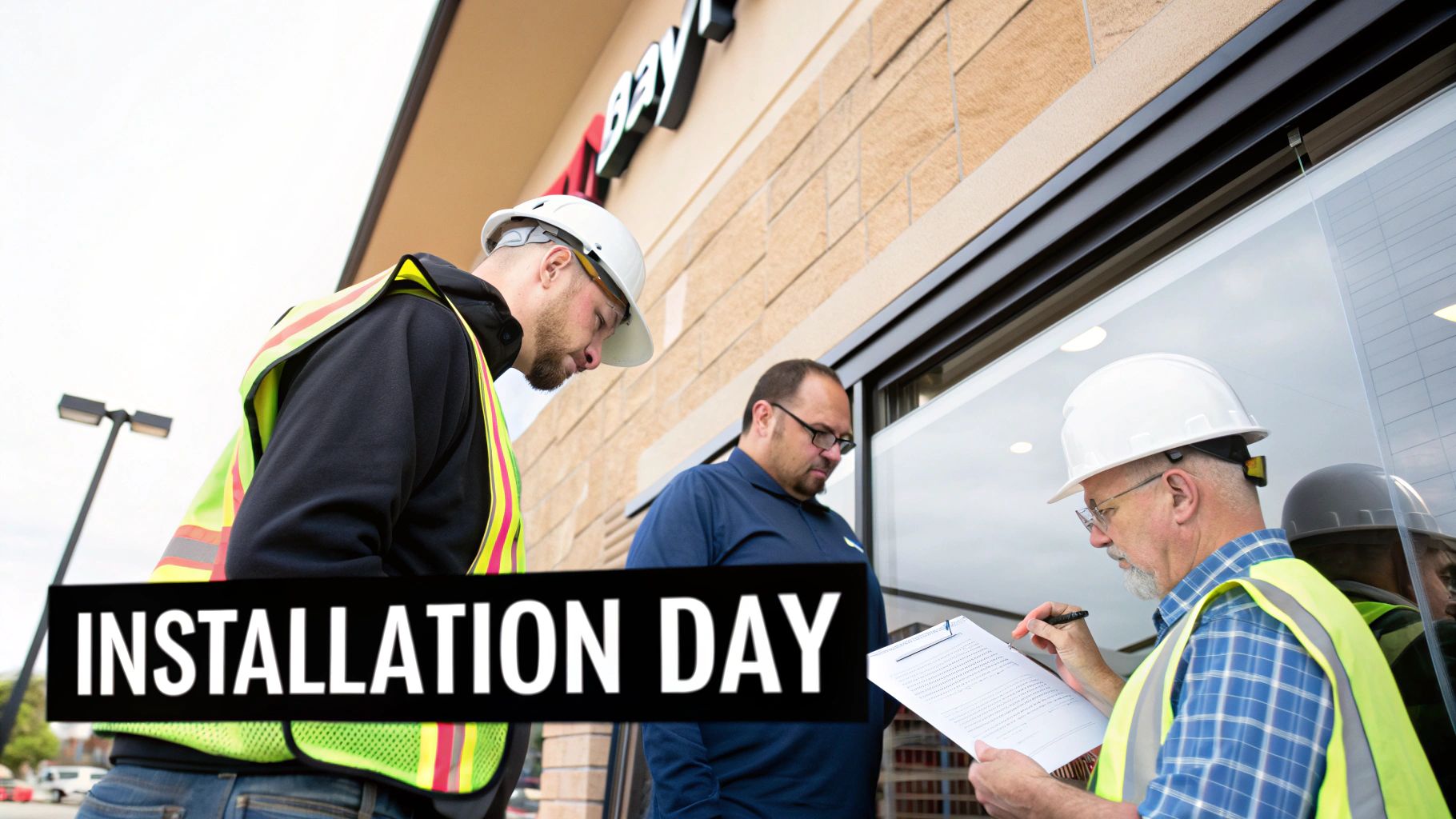
After all the planning and permitting, installation day is where your vision finally comes to life. A professional installation is a carefully planned event. The real work begins long before that day with a critical step called a technical site survey.
This is where an installation manager visits your property to confirm measurements, map out electrical access, and plan logistics. For example, they'll check for overhead power lines or soft ground that might prevent a crane from getting close to the building. This proactive step ensures the team arrives fully prepared.
The Installation Day Process
When the day arrives, a dedicated project manager should be your go-to person. They are the single point of contact who makes sure the crew knows the full scope of work and coordinates everything to keep disruption to your business to a minimum.
Safety is paramount. A professional crew will set up a secure work zone, use proper safety gear, and follow all established protocols. They should work efficiently to get your sign mounted, wired, and fully operational. For a closer look at what goes into a seamless install, you can learn more about the details of a professional commercial sign installation.
A great installation is one your customers barely notice. The team should be organized, clean, and respectful of your property, leaving behind nothing but a perfectly working new sign.
Thinking About Long-Term Support
The relationship shouldn't end when the installation crew leaves. A true partner will discuss ongoing support from the beginning. This is how you protect the long-term value of your investment.
Actionable Tip: Ask about these post-installation support elements:
- Maintenance Plans: Do they offer scheduled check-ups to clean the sign and inspect electrical components?
- Service Agreements: What is their guaranteed response time for a service call if a light goes out?
- Technical Support: Is there someone you can call for help managing your digital sign's software?
Choosing a sign backed by a strong maintenance plan is a smart financial move. Modern LEDs can slash energy use by 50-75%—a major saving for a sign that runs 24/7. It's no surprise the industrial and commercial LED market is projected to become a USD 162.1 billion industry by 2034. This commitment to service after the sale is what separates the best "LED sign companies near me" from the rest.
Putting Your Sign Project in Motion
You've done the homework. You know what separates a true sign partner from a simple vendor and how to look beyond the price tag to find real long-term value. Now it’s time to move from planning to action.
The goal isn't just to buy a sign; it's to find an expert who will own the entire process for you—from initial design and permits all the way through a professional, clean installation. With that in mind, you're ready for the most important step.
Start the Conversation
The single best action you can take now is to schedule an initial consultation or a site survey with one of the local companies on your shortlist. This is where your vision gets its first reality check and an expert can tell you what’s actually possible for your specific location.
A professional site survey isn’t just about taking measurements. It’s a chance for an experienced pro to spot potential installation headaches, check electrical access, and figure out the best placement for maximum visibility.
This first meeting cuts through the guesswork. It helps you nail down your ideas, set a realistic budget, and get your project started on the right foot. You've researched the "LED sign companies near me"—now it's time to actually talk to one.
Taking this step is what turns your idea into a tangible plan. The right LED sign is a serious investment in your brand’s future, and that investment starts with a simple conversation.
Common Questions About Choosing an LED Sign Company
When you start digging into local LED sign options, a few key questions always pop up. It’s a big investment, after all. To help you get some clarity, we've answered the most common things business owners ask.
How Long Does the Entire Process Take?
The timeline for getting a new LED sign can vary. A straightforward set of channel letters for a retail storefront might only take 4 to 6 weeks from design approval to final installation.
However, a more complex monument or pylon sign could easily take 12 weeks or more.
The biggest variable is almost always the local permit approval process. Depending on your city, getting that green light can take anywhere from a few weeks to a couple of months. A professional sign company handles all that for you, giving you a realistic schedule from day one.
What Kind of Warranty Should I Expect?
A solid warranty is one of the clearest signs that a company stands behind its work. For any new LED sign, you should never settle for less than a comprehensive warranty.
- Key Electronics: At a minimum, look for a 5-year warranty on the LED modules and their power supplies. These are the engine of your sign.
- Sign Structure: The physical craftsmanship—the box, the letters, the welds—should be covered for at least one year.
Always get the warranty details in writing. A good warranty spells out exactly what’s covered, including parts, labor, and any service fees. It's the peace of mind you need to know your investment is protected.
Can a Sign Company Help Me with the Design?
Absolutely. In fact, they should. The best local sign companies have in-house design services baked right into their process. It’s about more than just making your logo bigger. They're there to create a sign that’s effective, readable, and—most importantly—compliant with all local sign codes.
A good designer understands how different materials, lighting techniques, and color palettes look in the real world. For example, they can advise that yellow text on a white background is nearly impossible to read from a distance. Bringing them into the conversation early ensures your final sign is practical and within your budget.
Ready to turn your vision into a landmark for your business? The expert team at On Display Signs, Inc. manages every detail, from creative design and permitting to flawless installation and ongoing support. Start your project with a free consultation today.