Your outdoor storefront sign is your most dedicated employee. It’s a silent salesperson that works around the clock to grab attention, tell your brand’s story, and invite customers inside. A great sign is never just an expense—it’s the single most important marketing investment you can make.
Think of it as the cover of your business's book. It sets the expectation for everything waiting inside, long before a customer ever steps through the door.
Your Storefront's First Impression
An outdoor sign is the very first physical handshake a potential customer has with your brand. It’s the beacon that cuts through the noise of a busy street, distinguishing your business from all the others around it. That initial visual connection can be the single deciding factor between a customer walking in or walking right on by.
A well-designed sign does so much more than just display your name. It instantly communicates your brand’s personality. The colors, fonts, and materials you choose tell a story. For example, a law firm using classic serif fonts and brass lettering communicates tradition and stability. A kids' toy store using bright, primary colors and a playful, rounded font signals fun and energy. This powerful first impression is what attracts the right kind of customer.
Why Your Sign Is a Sales Tool
Investing in high-quality outdoor signage is a direct investment in your bottom line. An eye-catching sign isn't just for looks; it actively drives spontaneous foot traffic and puts money in your pocket. The data on this is compelling.
Studies show that a compelling sign can pull people right off the street, with as many as 76% of first-time customers admitting they walked into a store simply because the sign caught their eye.
This is a practical insight: your sign is not passive decoration. It is an active sales tool. To make it actionable, track the number of walk-in customers for a month before and a month after installing a new sign. The likely increase in foot traffic is a direct measure of your sign's return on investment. It validates that making a smart choice on your sign is one of the best moves you can make for your business.
The Foundation of Curb Appeal
Your sign might be the centerpiece, but it’s just one part of your storefront’s overall curb appeal. To really solidify that positive first impression, the entire presentation of your building has to work together. This means clean windows, a well-kept facade, and an entryway that feels welcoming. For more on this, it's worth reading about maintaining your commercial building's exterior.
Ultimately, a great sign works in harmony with its surroundings to build trust and signal professionalism from the moment a customer sees it. If you're looking for some real-world examples to get your own ideas flowing, check out our guide on creative storefront signage ideas.
Choosing the Right Type of Sign
Picking the right outdoor sign is less about decoration and more about giving your business a face. It’s the first handshake, the silent salesperson working 24/7 to turn passing cars and pedestrians into paying customers. There’s no single “best” sign—the perfect choice depends entirely on your location, your brand, and what you need that sign to do.
This isn't a small decision. The outdoor signage market is projected to hit $31.36 billion by 2025 for a reason. Studies even show that 76% of new customers are drawn into a business they’ve never visited before based on its sign alone. That's a massive return on a single asset.
Channel Letter Signs for Bold Visibility
Think of channel letters as custom-built sculptures for your brand. These are the three-dimensional, individually crafted letters you see on modern retail stores, professional offices, and restaurants. Each letter is fabricated on its own before being mounted, creating a powerful look of depth and permanence.
This style is the go-to for businesses that want a high-end, professional impression. When internally illuminated, channel letters are impossible to miss, providing brilliant visibility day and night. Your business name stays crisp and clear, no matter the time.
A practical example is a new dental clinic in a busy strip mall. By using illuminated channel letters, it projects a clean, trustworthy image that stands out to passing traffic, building credibility before a patient even walks in.
This flowchart can help you visualize which sign types might fit your business model, whether you're focused on grabbing attention for retail or building professional trust.
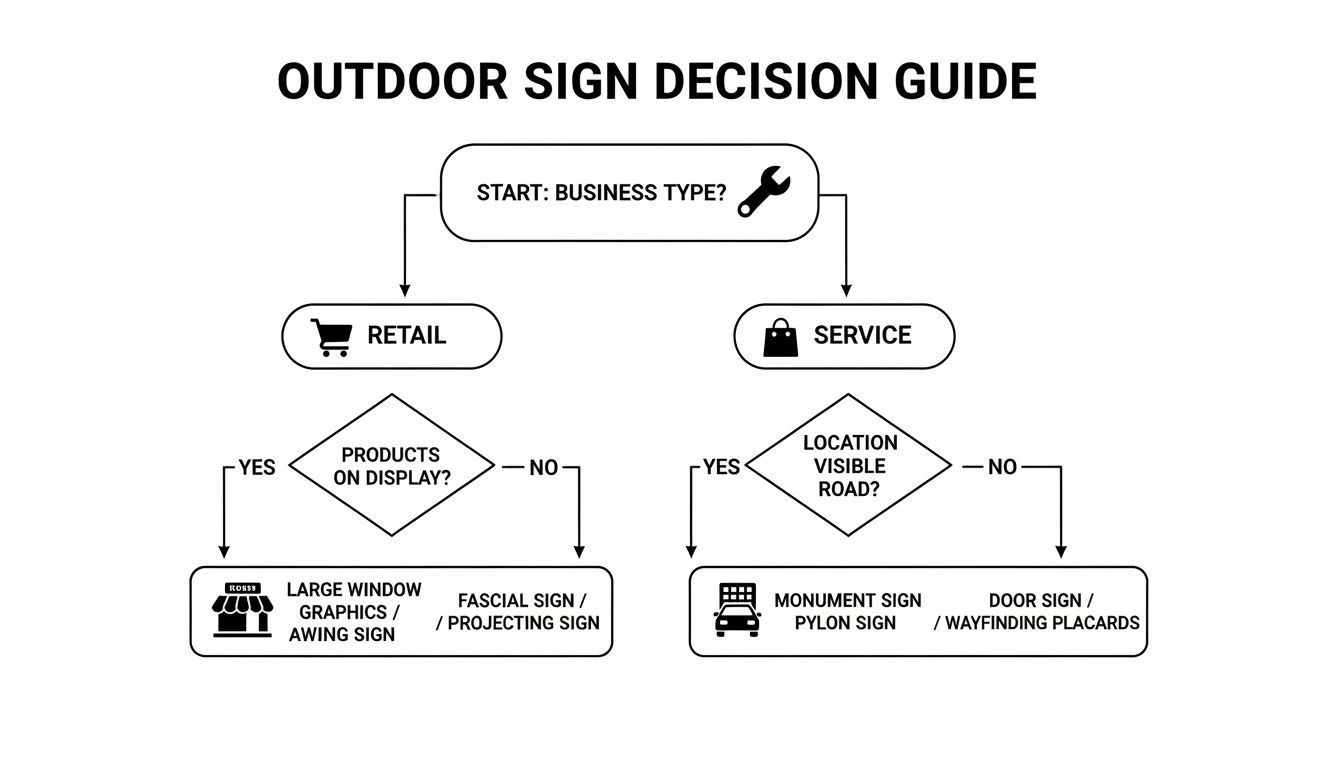
As you can see, the goal for an impulse-buy retail shop is very different from that of a service provider aiming to establish long-term confidence.
Cabinet Signs: The Versatile Workhorse
Cabinet signs, often called box signs, are the reliable workhorses of the sign world. They're built from a single box-like frame—usually aluminum—with a translucent face panel where your graphics and logo live.
Their biggest advantage is pure versatility. You can mount them on a wall, put them on a pole, or build them into a larger monument sign. They are also incredibly cost-effective for displaying complex logos, lots of colors, or more text than just a name.
A key advantage of cabinet signs is their serviceability and adaptability. The face panel can often be replaced without changing the entire sign structure, making it a smart choice for businesses in multi-tenant properties where occupants may change.
An actionable example is a local insurance agency in a shared office building. A bright, well-lit cabinet sign lets them display their logo, name, and key services clearly, giving them a professional identity that’s easy to update if they ever rebrand.
Blade Signs for Pedestrian-Heavy Areas
A blade sign is designed to do one thing exceptionally well: catch the eye of foot traffic. It juts out perpendicularly from a building's facade, making it impossible to miss for anyone walking down the sidewalk. In a dense downtown or historic district, this is a game-changer.
These signs add a classic, almost boutique feel to a storefront. They're the perfect fit for businesses like coffee shops, bookstores, and antique stores that depend on drawing in curious walkers.
Practical Application of Blade Signs
- A Downtown Coffee Shop: A simple blade sign with a coffee cup icon becomes an instant landmark for people needing their caffeine fix.
- An Independent Bookstore: A sign shaped like an open book immediately communicates what's inside, inviting browsers to step in.
- A Vintage Clothing Store: A retro-styled blade sign with unique typography perfectly captures the brand’s vibe before customers even see the clothes.
To go even deeper on these options, check out our full guide covering different types of outdoor signs for business.
Monument Signs for a Lasting Impression
Monument signs are freestanding structures built low to the ground, usually at the entrance of a property. Constructed from durable materials like brick, stone, or metal, they project an image of permanence and authority.
These are the standard for business parks, medical campuses, apartment complexes, and large corporate headquarters. A monument sign’s job is to identify a property from the road and guide visitors in, all while presenting an established, high-end image. When done right, it becomes a true landmark that blends seamlessly with the property’s architecture.
Illuminated and Digital Signage Options
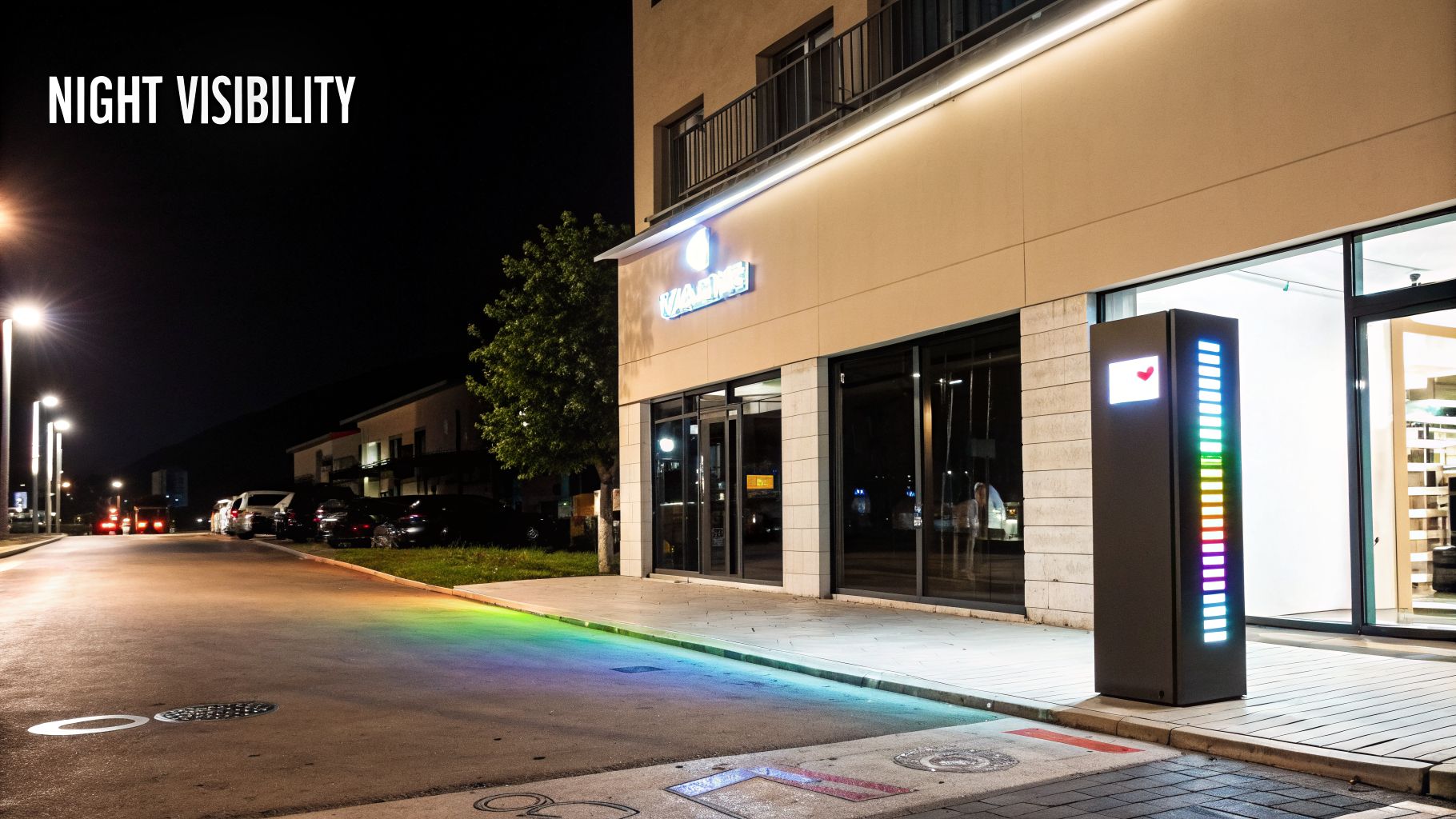
A great storefront sign shouldn't just clock out when the sun goes down. By adding illumination, your sign becomes a bright, welcoming beacon that works for you around the clock, projecting an image of safety and professionalism long after dark. This is non-negotiable for businesses that thrive in the evening, like restaurants, theaters, or convenience stores.
Think of an illuminated sign as your 24/7 marketing engine. It transforms a static piece of branding into an active tool for customer acquisition, grabbing the attention of passersby who might otherwise have driven right past.
Bringing Your Brand to Light with LEDs
Today, lighting up a sign almost always means one thing: Light Emitting Diodes (LEDs). This technology has all but replaced old-school options like fluorescent bulbs and neon for a few very practical reasons. LEDs are brighter, last incredibly long, and sip energy compared to their predecessors.
That efficiency means lower electricity bills for your business over the sign's entire life. While the initial investment might be a bit more than a non-lit sign, the returns from constant visibility and energy savings make it a smart financial move.
One of the biggest wins with LEDs is their rugged durability and low maintenance. Unlike fragile neon glass, LEDs are tough and weather-resistant, meaning your sign will keep shining brightly for years with minimal fuss.
Common Illumination Styles for Storefronts
When it comes to lighting your sign, you’ve got options. Each style creates a distinct mood that says something different about your brand.
Practical Lighting Method Examples:
- Front-Lit Channel Letters: Best for maximum visibility and impact. A retail store on a busy highway uses this to ensure its name is readable from hundreds of feet away, day or night.
- Halo-Lit (or Backlit) Channel Letters: Creates a high-end, sophisticated feel. A fine-dining restaurant or luxury spa uses this "halo" glow to suggest elegance and a premium experience.
- Exposed Neon or LED: Ideal for a retro or high-energy brand. A classic diner or an arcade bar uses exposed, shaped tubes to create a vibrant, fun atmosphere that is an attraction in itself.
You can dive deeper into these looks and find what fits your brand by exploring our guide on electric signs for business.
The Power of Programmable Digital Signs
Beyond static lighting, digital signage takes things to a whole new level. A full-color LED display is like having a billboard that you can update in real-time with just a few clicks. You can run promotions, announce events, or share community news instantly.
This adaptability makes digital signs an incredibly powerful tool. A practical example is a restaurant that advertises its lunch menu during the day and automatically switches to dinner specials in the evening, ensuring the message is always relevant.
The market for these dynamic signs is exploding, projected to grow from $23.47 billion in 2024 to $46.80 billion by 2033. This growth is driven by their proven impact—recent analysis shows that relevant, timely content can increase conversion rates by 15-20%. This kind of flexibility gives businesses a competitive edge that traditional signs just can't match. You can explore more about these trends and their business implications by reading about the latest findings in outdoor advertising.
Choosing Materials Built to Last
An outdoor storefront sign is an investment that has to win a daily battle against everything from relentless sun and wind to freezing rain. The materials you choose are the very foundation of your sign’s lifespan and appearance, directly shaping how it represents your business for years to come.
Think of it like buying a new truck. You could get a cheap, basic model to get you from A to B, but you know it won't have the performance or durability of a well-built vehicle. A quality sign is no different—investing in the right materials from the start saves you from costly repairs and a poor brand image down the road.
Core Materials for Durability and Impact
While there are budget-friendly plastics like polyvinyl chloride (PVC), they often become brittle and fade under constant UV exposure. For a professional, long-lasting storefront sign, you really need to look at high-performance metals and plastics.
These materials are the workhorses of the sign industry for a reason.
- Aluminum: This is the undisputed champion for most outdoor sign structures. It’s incredibly strong yet lightweight, and most importantly, it's naturally corrosion-resistant. That means no rust. It's the go-to material for building the bodies of channel letters and the frames of cabinet signs because it holds its shape and integrity in any weather.
- Acrylic: If your sign is going to be illuminated, acrylic is essential. Used for the faces of illuminated signs, this durable plastic is shatter-resistant and diffuses light beautifully for a bright, even glow. Unlike cheaper plastics, quality acrylic won't yellow or grow brittle after a few years in the sun.
- Steel: When you need sheer, brute strength—like for the internal support poles of a massive pylon or monument sign—steel is the only choice. It's much heavier and requires proper finishing to prevent rust, but its structural power is unmatched for large-scale projects.
Comparing Outdoor Sign Materials
To make the right choice, it helps to see how these common materials stack up against each other in terms of durability, cost, and their best applications.
| Material | Durability | Relative Cost | Best Use Cases |
|---|---|---|---|
| Aluminum | High | Moderate | Channel letters, cabinet signs, sign backer panels |
| Acrylic | High | Moderate | Illuminated sign faces, dimensional logos, high-end lettering |
| Steel | Very High | High | Structural supports for pylon and monument signs |
| PVC Plastic | Low | Low | Temporary signs, indoor displays, very short-term outdoor use |
Ultimately, a combination of materials often yields the best result. Using aluminum for the structure and acrylic for the face of an illuminated sign is a proven formula for a great-looking sign that lasts.
The real secret to longevity often lies not just in the base material but in its protective finish. When selecting materials for your storefront sign, exploring options from industrial coating suppliers can ensure durability and longevity with advanced finishes that resist fading, chipping, and environmental damage.
Choosing the right material is a critical step that balances your budget with your vision. To explore these options in more detail, our guide on choosing the best material for outdoor signs provides a deeper dive to help you match the right material to your specific needs and location.
The Sign Creation and Installation Process
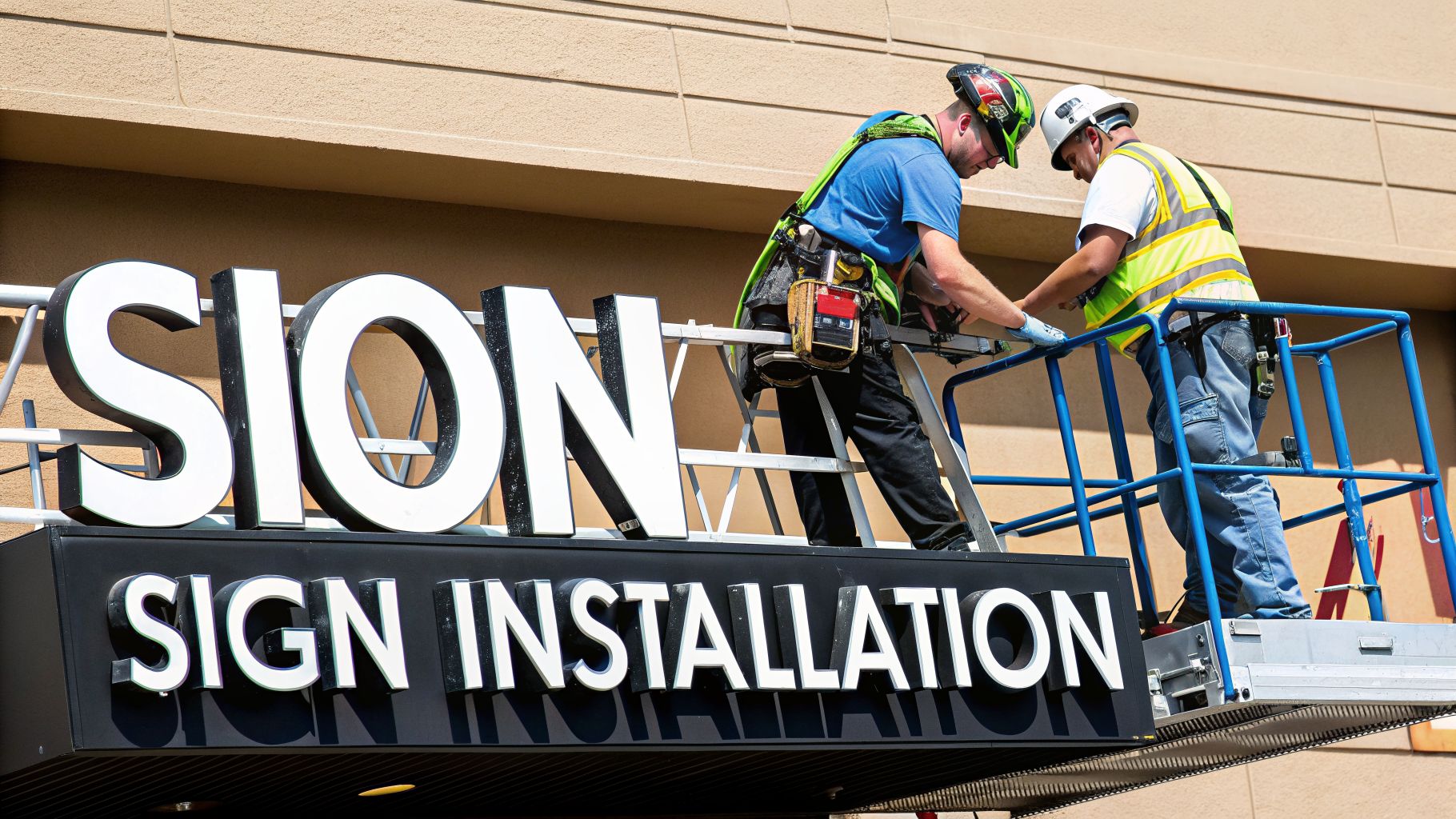
Getting that perfect sign from an idea onto your storefront is a lot like a mini construction project. It’s a journey with a clear path—from initial blueprint to final inspection—that involves design, legal approvals, and expert hands-on work.
Understanding this road map is key to working smoothly with your sign company. When you know what’s coming, you can avoid frustrating surprises and ensure the finished product is exactly what you pictured. A misstep anywhere along the way can mean delays, unexpected costs, or a sign that just doesn't deliver.
From Concept to Concrete Design
This first phase is where your brand’s personality gets turned into a real, workable blueprint. It’s more than just blowing up your logo; it’s a strategic exercise in visual communication, where an expert designer looks at every detail to make sure your sign works hard for you.
Here’s what they’re thinking about:
- Readability from a Distance: Your sign needs to be crystal clear to someone driving by at 40 mph, not just a person on the sidewalk. This dictates everything from font and letter size to spacing.
- Color and Contrast: High-contrast colors are your best friend for instant recognition—think dark letters on a light background or the other way around. Of course, these colors must also be a perfect match for your established brand palette.
- Simplicity: The most powerful storefront signs are clean and simple. Their main job is to identify your business in a split second. Loading it up with taglines, phone numbers, or complex art just creates clutter that's impossible to read quickly.
For instance, a retail shop on a busy street needs big, bold channel letters to stand out from afar. A law firm, however, might opt for subtle, refined halo-lit letters to project an image of authority and professionalism. Both signs do the same job—identification—but are built for their unique brand and location.
Navigating Permits and Zoning Codes
This is the step that trips up more business owners than any other, and it's absolutely non-negotiable. Almost every town and city has strict rules—zoning codes—that dictate the size, placement, lighting, and type of signs allowed. Trying to cut corners here is a recipe for a massive headache.
Installing a sign without the right permits can lead to heavy fines and a legal order to tear the sign down at your own expense. This is where a good sign company proves its worth. They’re experts in local codes and will manage the entire permitting process for you.
A professional sign company acts as your advocate with the city. They prepare and submit all necessary drawings, engineering specs, and application forms, ensuring your sign is 100% compliant before a single hole is drilled. This shields you from liability and costly delays.
Depending on the city's workload, this step can take several weeks. An experienced team knows exactly how to package an application to minimize questions and keep the project on track.
Professional Installation and Safety
The final stage is getting your outdoor storefront sign physically mounted on the building. This is absolutely not a DIY job. It takes specialized lifts, technical know-how, and a solid understanding of both structural engineering and electrical safety.
A professional installation crew ensures a few critical things:
- Structural Soundness: They evaluate the building’s facade to choose the right mounting hardware, making sure your sign stays put through high winds and rough weather.
- Electrical Safety: For any illuminated sign, all wiring has to be done to code by licensed experts. This prevents fire hazards and ensures your sign works reliably day in and day out.
- Proper Placement: The crew installs the sign exactly where the approved permit says it should go, guaranteeing full compliance and the best possible visibility.
Using a fully insured team is your safety net. If an accident happens during installation, their insurance covers it, not yours. This last step brings all the planning to life, turning your vision into a landmark that will define your business for years to come.
Understanding Sign Costs and ROI
Let's get right to the question on every business owner’s mind: "How much is this going to cost?" It's a fair question, but it's also the wrong way to look at it.
Think of your sign not as a one-time expense, but as your most reliable employee—one who works 24/7 without a break. Its price is a direct reflection of its size, the quality of its materials, and its overall complexity. These aren't just cost factors; they're the very things that determine how effectively it brings customers through your door.
Sure, a simple, non-illuminated sign has a lower initial price. But a large, custom-illuminated pylon sign buys you something invaluable: constant visibility and brand reinforcement. A great sign can boost sales by nearly 5% on its own, making it one of the most powerful marketing assets you'll ever own.
Breaking Down the Factors That Influence Price
The final price tag on your sign isn't pulled from a hat. It's the sum of several key decisions you'll make, each one affecting not just the upfront cost but the sign’s long-term performance and durability.
- Size and Scale: This one's simple. Bigger signs need more materials and more labor to build and install, which directly increases the cost.
- Material Quality: Opting for premium, weather-resistant materials like aluminum and high-grade acrylics costs more at the start but saves you a fortune in repairs and replacements down the road.
- Illumination: Adding LED lighting is an extra cost, but it's what turns your sign into a nighttime beacon. Whether it's for front-lit channel letters or a backlit cabinet, illumination dramatically increases your sign's working hours.
- Complexity: If your vision involves custom shapes, an intricate logo, or multi-layered elements, it will require more skilled fabrication time. That craftsmanship is reflected in the price.
If you’d like to see a more detailed financial breakdown, you can learn more about the cost of signage for a business in our in-depth article.
Measuring Your Sign's Return on Investment
When you frame the cost as an investment, the next logical step is to track its performance. Your sign's return on investment (ROI) isn't just a vague concept; it can be measured with tangible results that prove its value.
A new sign is essentially a new salesperson working 24/7. To measure its impact, start tracking foot traffic and new customer inquiries in the months after installation. A noticeable uptick is a clear sign that your investment is paying off.
Here is an actionable insight: start asking new customers, "How did you hear about us?" When you start hearing "I saw your sign" more and more, you have direct evidence it's working.
You can also pull your sales data from the months before the sign was installed and compare it to the months after. A clear correlation with revenue growth is the ultimate proof. With solid warranties protecting your asset and financing options available, a quality sign is a secure and powerful investment in your business's future.
Frequently Asked Questions
When you're ready to invest in a sign, a few practical questions always come up. Here are the straight answers to the ones we hear most often from business owners just like you.
How Long Does a Custom Outdoor Storefront Sign Take
This is the big one, and the timeline really comes down to two things: how complex the sign is and—most importantly—how fast the local permit office moves.
For a straightforward, non-illuminated sign, you could be looking at a turnaround of 2 to 4 weeks once the design is locked in. But for something more involved, like illuminated channel letters or a large pylon sign, the process can easily stretch to 8 to 12 weeks or more. The biggest wildcard is almost always the permitting phase. This is where having a pro in your corner pays off; a sign company that handles the paperwork can navigate the bureaucracy and keep your project from getting stuck in limbo.
What Are the Biggest Sign Design Mistakes to Avoid
The most common mistakes are the ones that stop a sign from doing its one essential job: getting noticed. It usually boils down to one of these three missteps:
- Poor Readability: Think of someone driving past your location. If you use thin fonts or put light gray letters on a white background, your sign becomes invisible. High contrast isn't just a good idea; it's a necessity.
- Brand Inconsistency: Your sign is your business's handshake. If its colors, logo, or font don't perfectly match the brand you've built everywhere else, it just creates confusion and weakens your identity.
- Information Overload: It's tempting to cram your phone number, website, and a list of services onto your sign, but this is a fatal flaw. A storefront sign is an identifier, not a brochure. All that clutter just becomes an unreadable mess, especially to someone in motion. Your name and logo are all you need.
The real job of your storefront sign is to identify your business and reinforce your brand in a blink. We use the "five-second rule"—if a potential customer can't figure out who you are in five seconds, the sign is too complicated.
Do I Really Need a Permit for My Outdoor Sign
In almost every single case, the answer is an emphatic yes. Most cities and counties have very specific zoning codes that dictate everything from the size and height of your sign to its placement and whether it can be illuminated.
Trying to bypass the permitting process is a huge gamble. You’re not just risking a fine; you could be hit with a legal order to tear down the brand-new sign at your own expense. A professional sign company won't even start building until the permits are approved, ensuring your investment is 100% compliant and built to last.
Ready to create a powerful first impression that drives results? The team at On Display Signs, Inc. manages every detail, from design and permitting to fabrication and installation, to deliver signage that makes your brand stand out. Learn more at https://www.ondisplaysigns.com.